


Whetstone Knife Sharpening Stones: A Buyer's Guide

Why a whetstone is still the standard
A whetstone knife sharpening stone is a simple tool: an abrasive block, water or oil, and a steady hand. It removes a small amount of steel to form a fresh edge. That sounds basic, and it is. The skill is in choosing a stone you will use, then learning to use it well. A kitchen knife sharpening stone does not need to be complicated, expensive or part of a large set. Most cooks are better served by one good medium stone, one finer stone and a way to keep the stone flat.
This guide covers stone types, grit, size, soaking, care and the practical limits of budget equipment. It also points out where a different choice makes sense, because a stone that suits a cleaver may not be the best first stone for a delicate gyuto.
What a whetstone does, and what it does not
Sharpening is abrasive work. The stone cuts steel at the edge, gradually thinning the bevel until the two sides meet. Honing is different. A honing rod realigns or lightly abrades an edge, but it will not restore a dull knife. If your knife will not cut tomato skin, use a stone. A whetstone sharpening stone also needs to be flat. Hollows and dishing stop the stone from reaching the whole edge. A flattening plate or wet and dry paper on glass can restore flatness. This is not optional housekeeping. It is part of sharpening. A cheap stone kept flat will outperform an expensive stone that is dished.
Water stones, oil stones, diamond plates and ceramic stones
Water stones are the usual choice for kitchen knives. They cut quickly, feel responsive and come in a wide range of grits. They need water, and some need soaking. Oil stones are slower and messy in a different way, but they last well and suit some traditional tools. Diamond plates are fast and stay flat, which makes them useful for repairs and flattening, though they can feel harsh. Ceramic stones are hard, fine and often splash and go, but they can be less forgiving for beginners.
For most home cooks, a water stone is the sensible centre of the kit. For a workshop that sharpens chisels, plane irons and damaged knives, a diamond plate plus a water stone is a practical pair. Buy for the work you do.
Grit: the number that matters most
Grit describes abrasive particle size on a standard scale. Lower numbers cut faster and leave a coarser scratch pattern. Higher numbers refine. The common mistake is buying too fine a stone too soon. A very fine stone on a dull edge is slow and frustrating. A medium stone does the real work.
- 220 to 400 grit: repairs, chips and resetting a badly worn bevel.
- 800 to 1500 grit: the main sharpening stone for most kitchen knives.
- 3000 to 6000 grit: refinement and a cleaner cut after the medium stone.
- 8000 grit and above: polishing and specialist edges, not a first purchase.
A 1000 grit stone and a 3000 grit stone will handle most home sharpening. If you maintain edges regularly, you may only need the 3000. If you buy older knives at markets, add a 400 grit stone or a diamond plate for repair. Do not collect grits unless you enjoy sharpening as a hobby.

Soaking, splash and go, and the water question
Some water stones are soaking stones. They need to sit in water until air stops bubbling, often around ten to fifteen minutes. Others are splash and go: wet the surface and start. Follow the maker's instructions rather than a rule from a video. Do not leave a soaking stone in water for days. It can soften, crack or grow unwanted smells. After use, rinse, dry at room temperature and store dry.
Oil stones use oil, not water. Mixing the two can clog the surface. Diamond plates need only water or a light rinse. Ceramic stones vary, so read the label. The best routine is the one you can repeat without making a mess.
Size, thickness and shape
A stone about 180mm to 210mm long and 60mm to 70mm wide is comfortable for kitchen knives. Thickness matters for life: a thin stone is light and cheap, but it may wear through sooner. A combination stone gives two grits in one block and saves space, though the two sides can wear at different rates. Small pocket stones are for travel and garden tools, not for learning on a chef's knife.
Rectangular bench stones are stable and easy to use. Angled or specialised stones can help with consistent angles, but they are not necessary. A stable base, a cloth and a flat surface matter more than a gadget.
Matching a stone to your knives
Japanese kitchen knives usually respond well to water stones. A medium grit stone followed by a finer stone gives a clean edge. Western knives can also be sharpened on water stones; they may need a slightly coarser medium stone if they are very dull. Carbon steel and stainless steel both sharpen on the same stones, but carbon steel needs prompt drying to avoid rust.
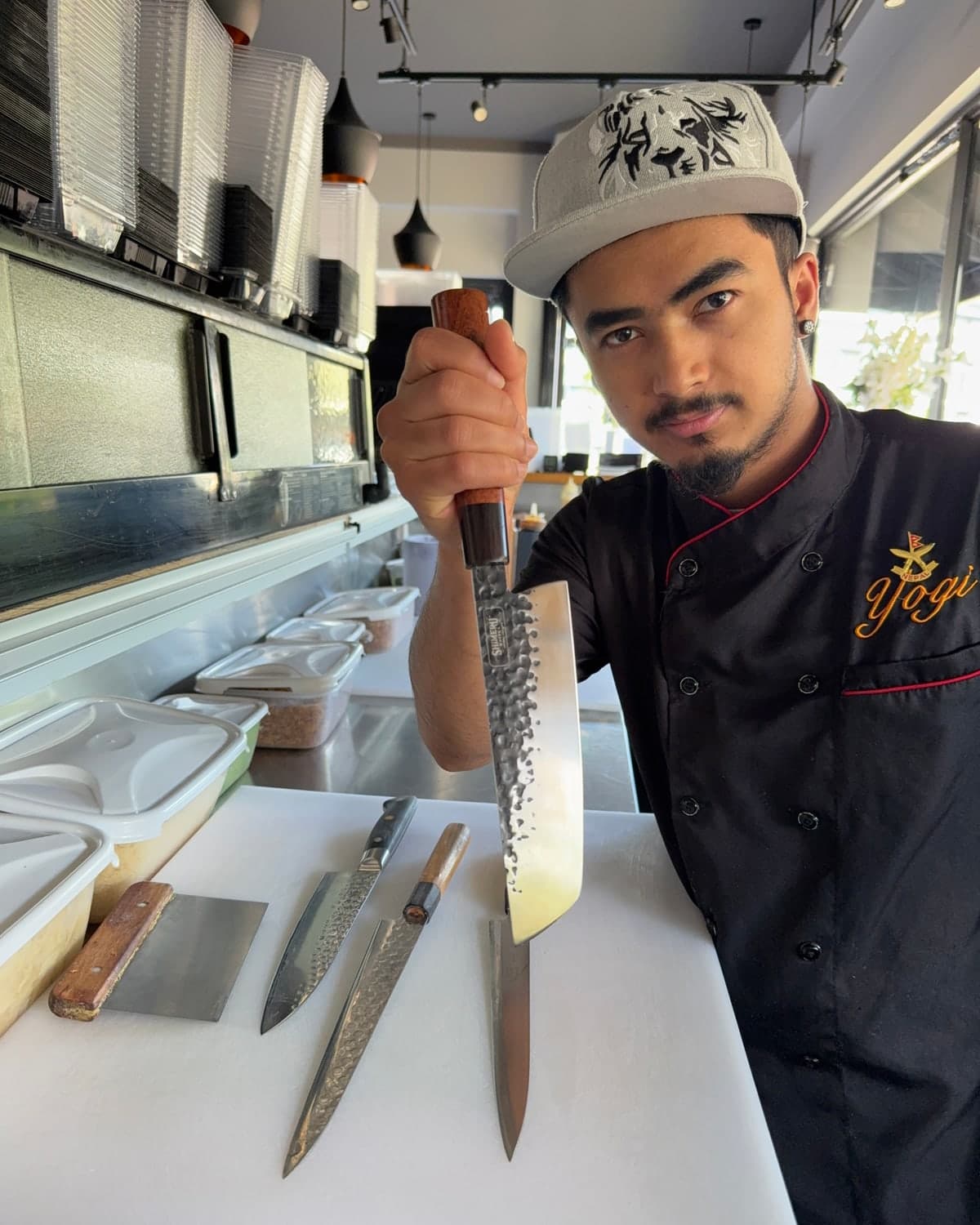
Think about the knife you reach for most. The 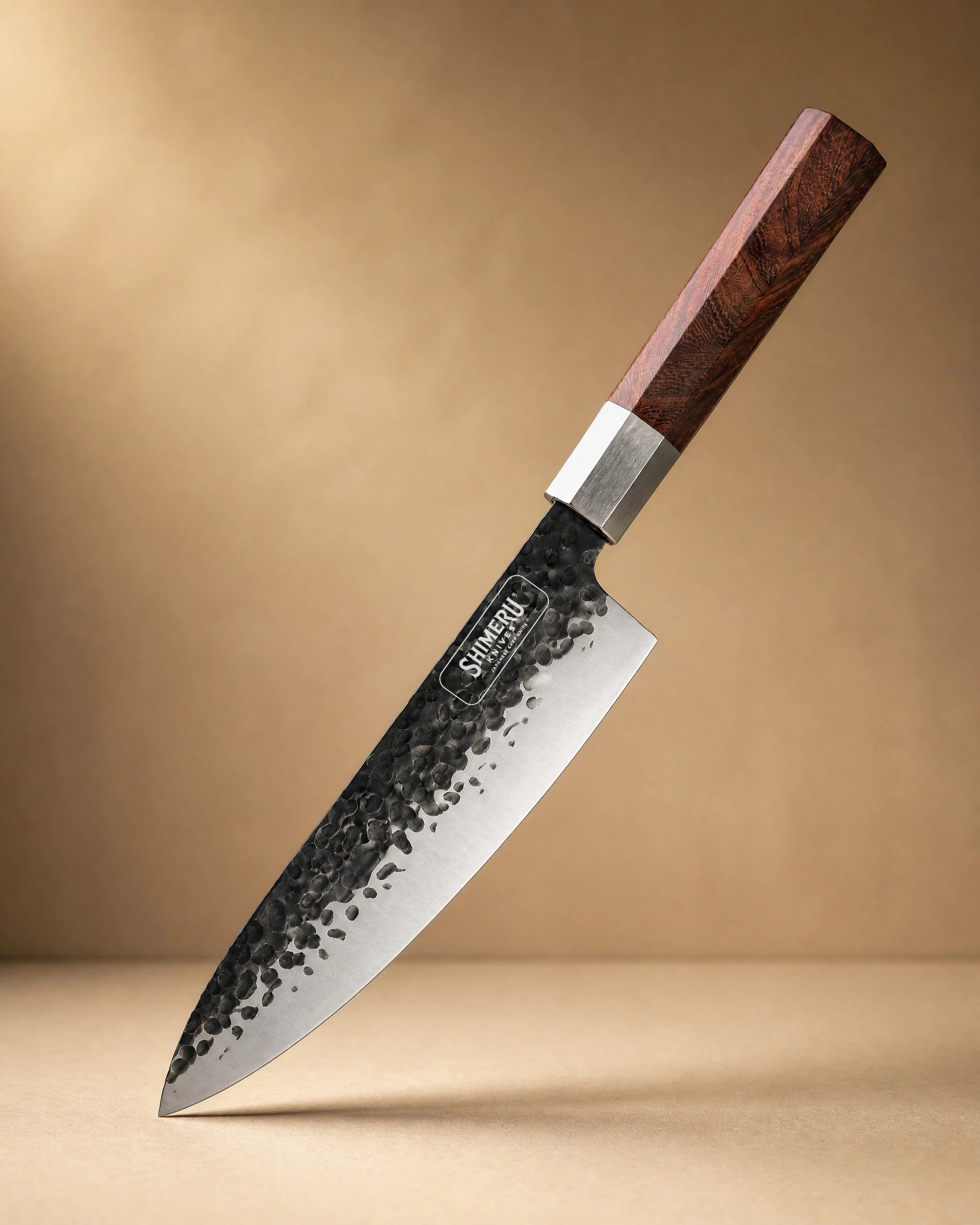 Sendai 8" Steel Gyuto Knife 牛刀£49.99View product → suits a simple 1000 and 3000 progression. The
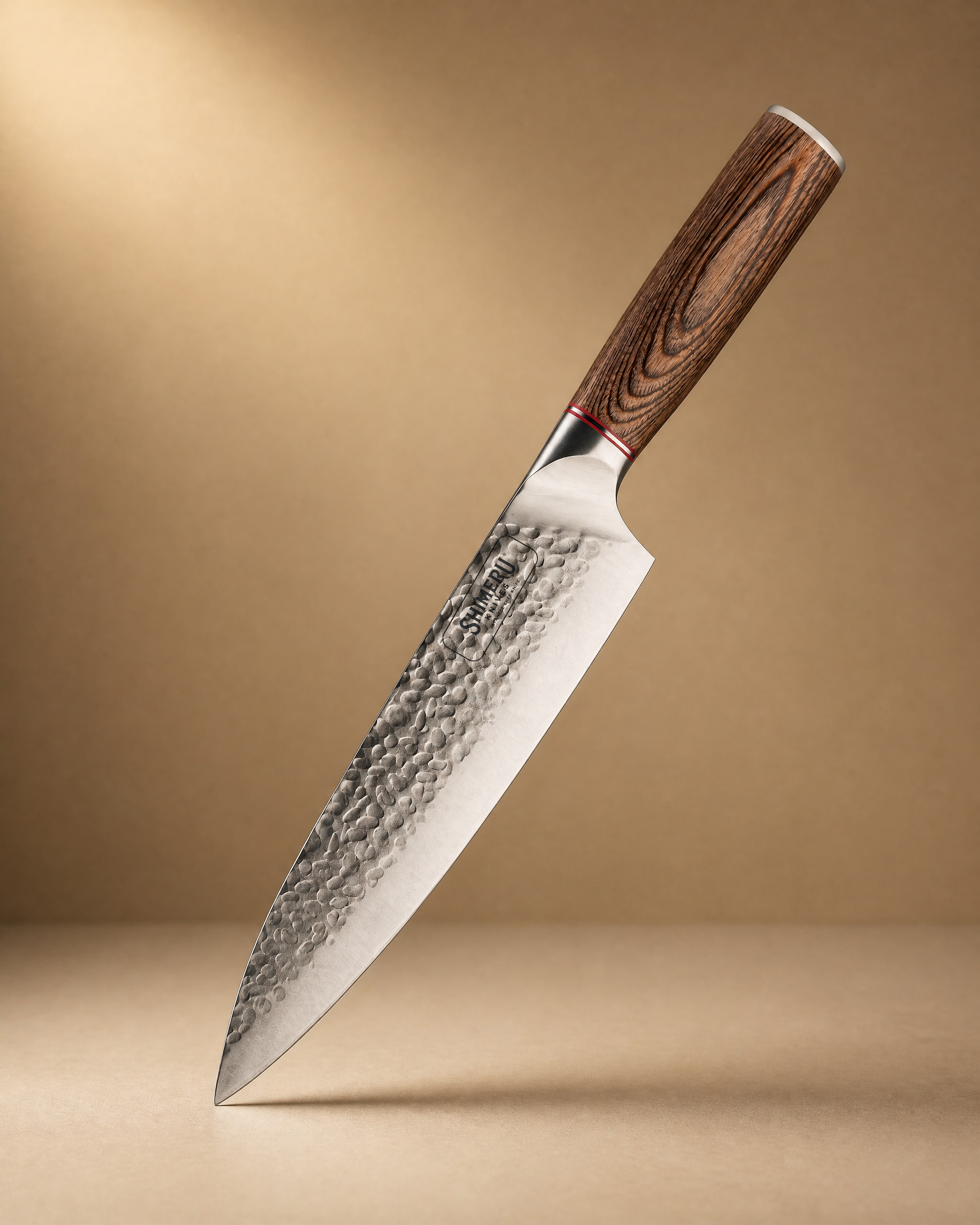 Akan 8'' Gyuto Knife 牛刀£49.99View product → is another gyuto option with a different handle. If you prefer a set to build around, the
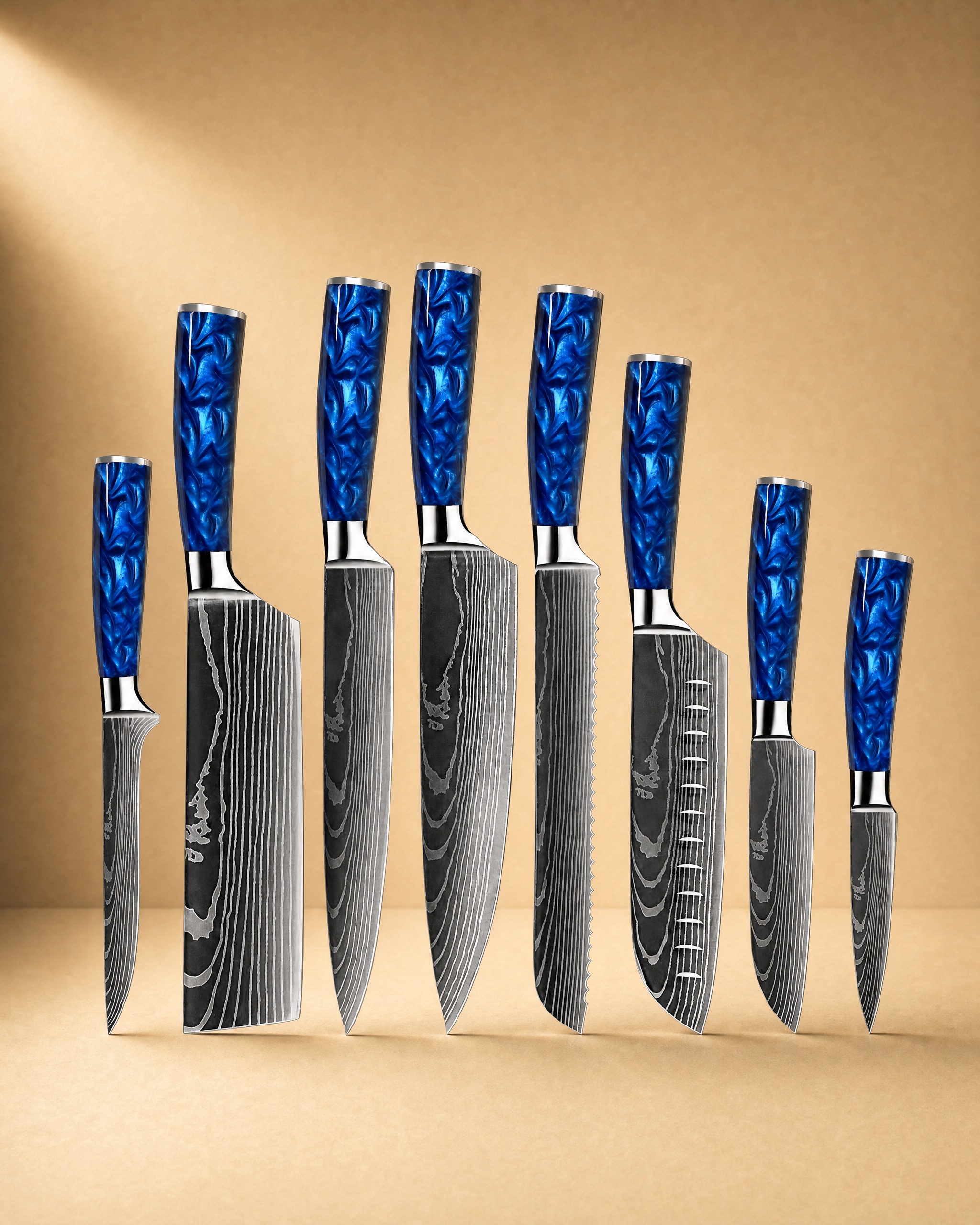 Shinano 信濃川 Damascus Pattern Stainless Steel Kitchen 8 Knife Set£149.99View product → offers a coordinated group of knives, and a medium water stone will cover their everyday maintenance. For heavier chopping and wide blades, the
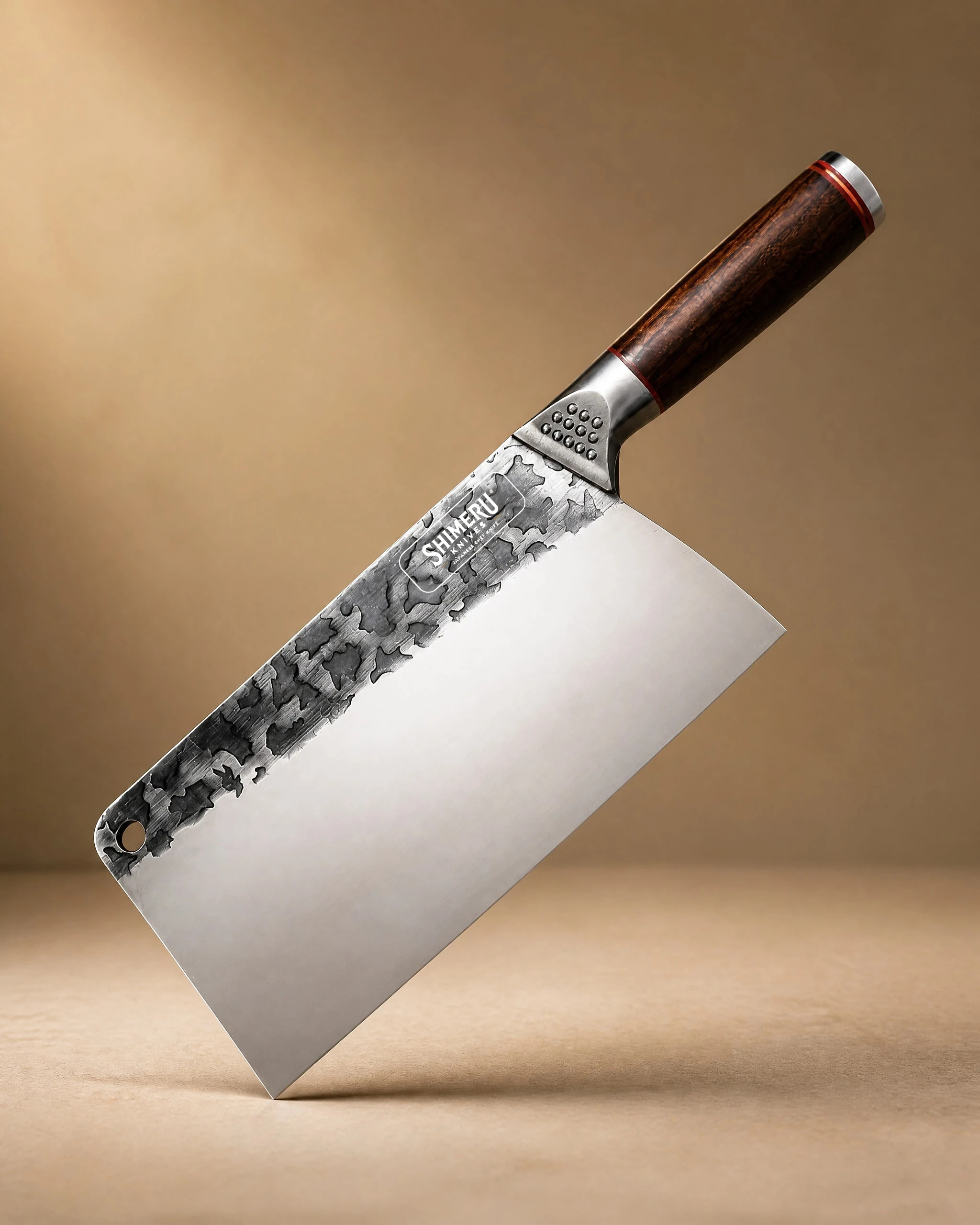 Saba 7" Stainless Steel Cleaver 中華包丁£44.99View product → benefits from a stable stone and a confident, flat stroke.
One good medium stone and one finer stone will sharpen all of the above. The knife changes the angle and the pressure, not the basic principle.
A practical first setup
Start with a 1000 grit water stone, a 3000 grit stone and a flattening method. Add a 400 grit stone only if you repair damaged edges. A stone holder or a damp cloth stops slipping. A sink bridge is useful if you sharpen at the sink, though a stable board works.
Spend more on the medium stone than on the fine stone. The medium stone does most of the work. A cheap fine stone is less of a problem than a cheap coarse stone that dishes in minutes. If you must choose one stone, choose a combination 1000 and 3000, or a single 1000 grit stone plus a strop.
Learning to sharpen without wrecking the edge
Soak or wet the stone as required. Place it on a stable surface. Hold the knife at a consistent angle. The common starting point for kitchen knives is around 15 to 20 degrees per side, but the right angle depends on the knife. Use light pressure and cover the whole edge from heel to tip. Raise a burr on one side, then repeat on the other. Remove the burr with light passes. Keep the stone wet or misted as you work.
Use a marker on the bevel if you are unsure. Colour the edge, take a few strokes, and look at where the colour has gone. That tells you whether your angle is too high or too low. Practice on an old knife first. A clean cut through paper is a better sign for a kitchen knife than the arm hair test alone. Our knife guide can help you choose the blade that suits your cooking, while the sharpening habit is learned on the stone.
Care, flattening and storage
Flatten the stone after every few sessions, or sooner if it dishes. Pencil lines across the surface are a simple guide: mark, flatten, and stop when the lines are gone. Rinse the stone after use. Dry it slowly away from direct heat. Store it dry, with space for air. Do not put a wet stone in a cupboard. Do not use soap on a stone unless the maker says so, as residue can affect the surface.
Knives need care too. Wash and dry them promptly, especially carbon steel. Store them so the edge is protected. Our knife care guide covers daily habits in more detail. A sharp knife is safer than a dull one because it goes where you aim it, but only if the edge is sound and the handle is secure.
Common buying mistakes
Buying a very high grit stone as a first purchase is the most common error. So is buying a coarse stone and treating it as a finishing stone. Ignoring flattening is another. A dished stone cannot sharpen well, no matter the grit. Buying a stone that is too small for comfortable work is a false economy. Buying a mystery stone with no grit label is a gamble. So is assuming a gadget will do the job of a stone.
Another mistake is over-soaking. Some stones are splash and go. Some are not. Read the instructions. Do not expect a mirror polish to equal a better kitchen edge. For cooking, a clean, slightly toothy edge from a medium or fine stone is often more useful than a highly polished edge that slips on tomato skin.
How to choose in the shop
Ask what steel your knives are, how dull they get and how often you will sharpen. A home cook with two good knives needs less than a keen hobbyist with ten. Check the stone's grit, size and soaking instructions. Check that a flattening method is available. If you are buying a knife at the same time, browse the full knife shop and match the blade to the stone.
A whetstone knife sharpening stone is a long term tool. Buy one that is flat, well labelled and suited to your knives. Then learn to use it. The results come from repetition, not from a bigger collection. A 1000 grit water stone, a 3000 grit stone and a flattening plate will serve most kitchens for years.
Photography: Zhao Wenjie via Unsplash.

