

Steak Knives Buying Guide for UK Dining Tables

A steak knife is the one knife in most UK kitchens that nobody actually chose. It arrived in a block, or in a drawer, or with a set of forks. It gets used, wiped and put back without a second thought. Yet it is the knife that meets your dinner most evenings, and the edge on it decides whether a piece of beef is cut cleanly or torn apart on the plate.
This guide is for anyone who would rather make a deliberate choice than replace one worn out set with another. We sell Japanese kitchen knives, and steak knives belong in that same conversation: small, sharp, and made to be used rather than displayed. Here is what genuinely matters at the table, what does not, and where most sensible decisions land.
What a steak knife is really for
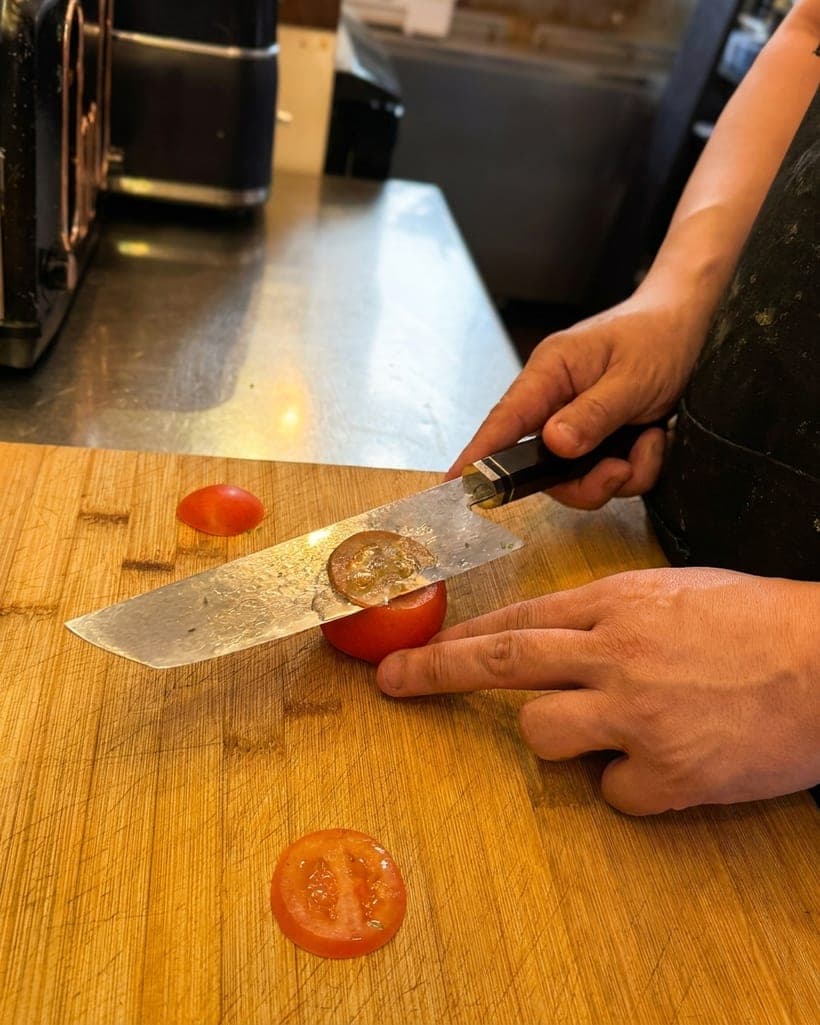
A steak knife has one job: to part cooked protein with the minimum of pressure and the minimum of damage. Meat that has rested and been sliced properly is tender, but it still has structure. A dull edge skates across the surface, then tears. A sharp edge bites, follows the grain, and leaves a clean face on the cut. The difference is not cosmetic. A clean cut keeps juices in the meat rather than on the plate, and it makes the whole plate feel better put together.
That job shapes everything else. A table knife needs to be short enough to control at an angle, stiff enough not to flex under pressure, and comfortable in a hand that is holding it differently from how it holds a chef's knife. Those three requirements are the whole brief.
Blade length and shape
Most steak knives sit between 4 and 5 inches. Shorter than 4 inches and you lose the reach to cut across a wide piece of meat in one stroke. Longer than 5 inches and the knife starts to feel like a small carving knife, which is unwieldy when you are sitting down with your elbows close to your body.
A 4.5 inch blade is a good working compromise. It gives you a full stroke across a sirloin or a rump steak, and it still feels like a table knife rather than a tool. Profile matters as much as length. A blade with a little belly and a fine tip lets you work around bone and through the natural seams in a piece of meat, rather than pressing down and hoping.
Steel and edge retention
Steak knives live harder lives than people assume. They meet ceramic plates edge first, they sit in drawers, and they are rarely sharpened until someone notices the resistance. A steel that holds a fine edge for a long time is therefore worth paying for, and a steel that dulls quickly will make you dislike the knife long before it wears out.
Hardness is the usual shorthand here, but the more useful question is what the steel was designed to do. A high carbon core clad in softer layers gives you a hard, keen edge with some protection around it. That structure is why Damascus style blades have become common in serious kitchen knives: the visible layers are a by-product of a practical construction, not just decoration.

Damascus steel at the dinner table
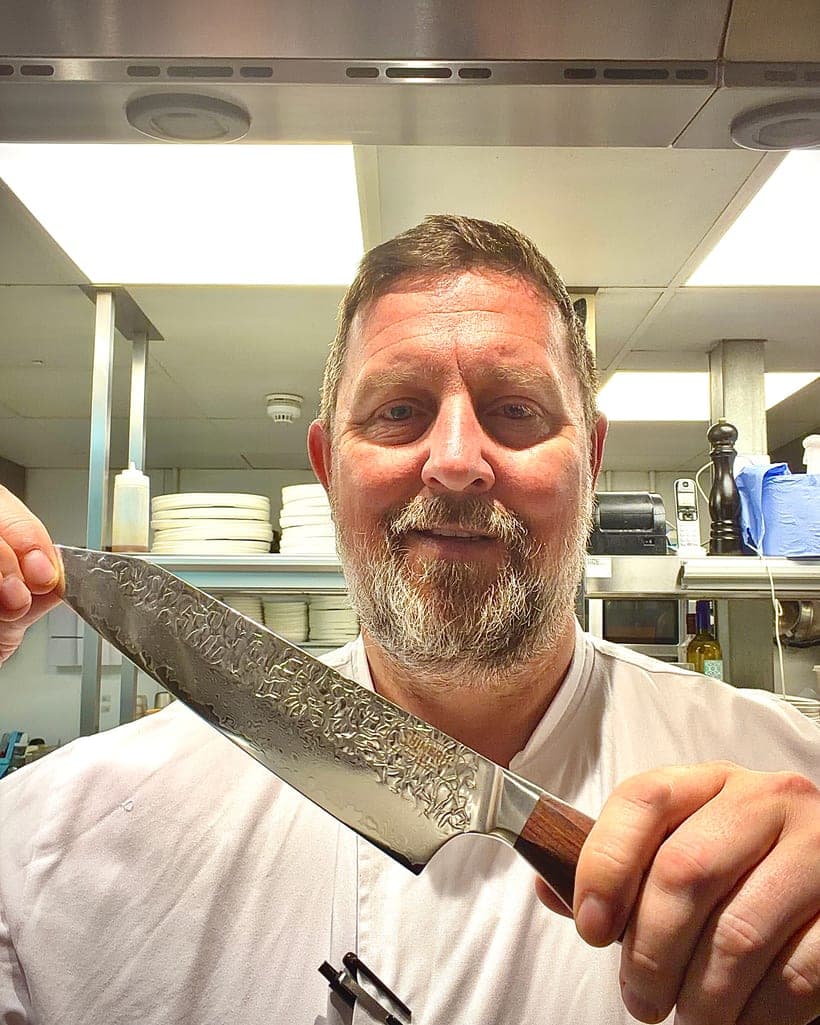
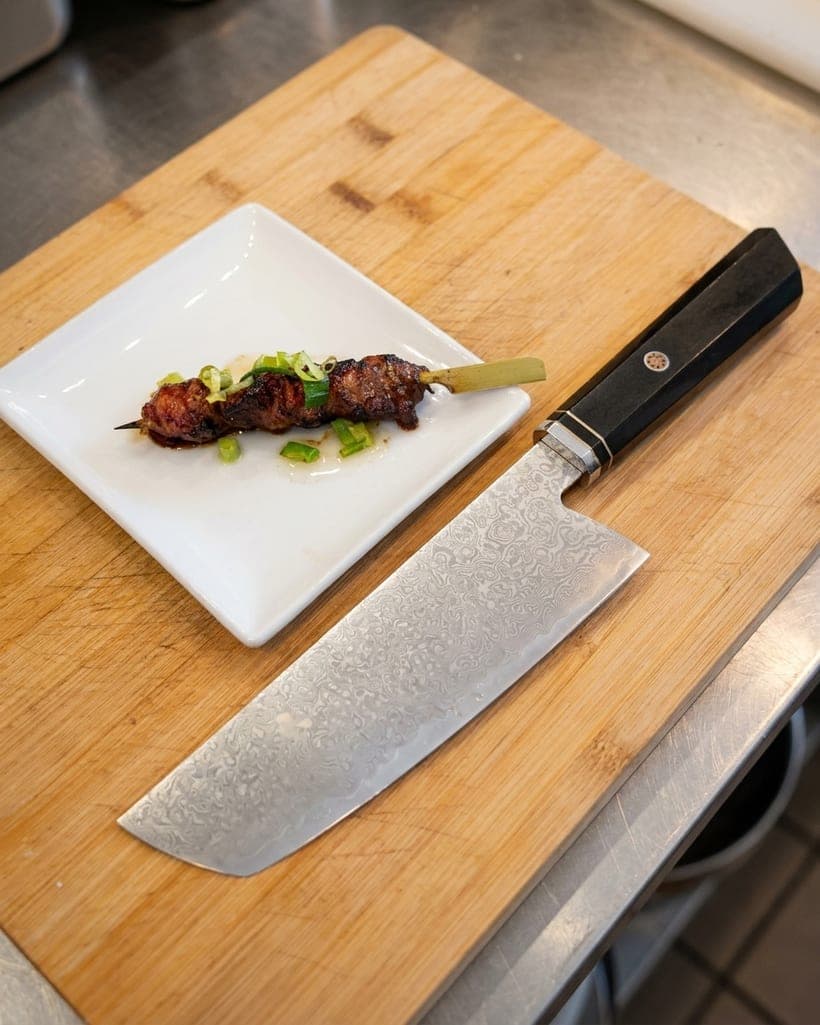
If you want a steak knife that cuts like a kitchen knife rather than a saw, a Damascus blade is a sensible place to look. The 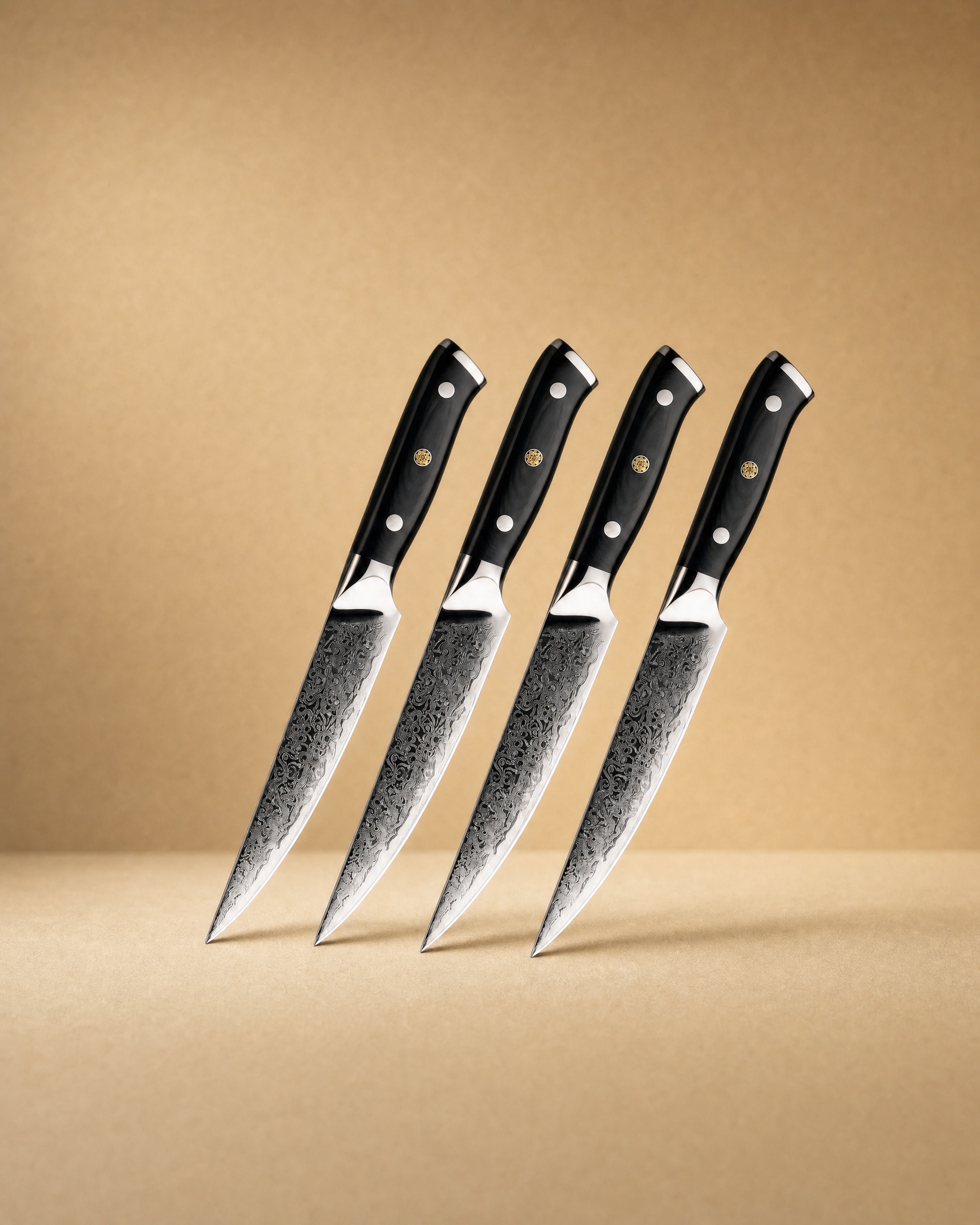 Suma 4.5" Damascus Steel Steak Knife Set 4 pieces ステーキナイフ£114.99View product → pairs a VG10 core with 67 layers of Damascus steel and a G10 fibre handle. The core gives you the edge, while the outer layers and the G10 handle give you something that will survive a decade of Sunday lunches and washing up. It is a four piece set, so it covers a family table without turning into a collection.
That is the practical argument. The other argument is that a well made steak knife simply feels different in the hand: balanced, solid, and quiet. You notice it every time you sit down, which is more often than you notice most of the kitchen equipment you own.
Serrated or straight edge
Serrated steak knives became standard because they stay useful without sharpening. The points of the teeth concentrate pressure and start a cut even when the rest of the edge is dull. That is a genuine advantage in a restaurant, where knives are used hard and sharpened rarely.
At home, the advantage mostly disappears. A serrated edge saws through the surface of the meat rather than slicing it, which leaves a rougher cut and a slightly ragged texture. It is also very difficult to sharpen properly without the right tools, so a serrated knife tends to have one long life at declining performance rather than a maintained edge.
A straight, finely sharpened edge cuts cleanly and can be brought back with a few passes on a honing rod or a stone. If you are prepared to look after a knife at all, straight edge is the better choice for meat. If you genuinely will never sharpen anything, serrated is the honest compromise, and worth admitting to yourself before you spend money.
Handles, balance and the table you actually have
Handle material is partly a matter of taste and partly a matter of washing up. G10 fibre is dense, stable, and comfortable with wet hands. Pakkawood and stabilised woods look warmer and suit a dining table better, but they reward a little more care. Neither is better in the abstract; they are different answers to the same question.
Balance matters more than most people expect. A steak knife should sit slightly forward so the blade does the work and your wrist does not. Pick one up, hold it as though you were about to cut, and see whether it wants to tip forward or sit back in your hand. That single check tells you more than any specification.
Buying a set or buying singles
Sets are cheaper per knife and match on the table, which matters if you host. The trade off is that you buy for the maximum number of guests rather than the number of people who live in the house. A four piece set covers most everyday dinners and a small gathering. Singles make sense if you want to add gradually, or if two people in the household want different handle finishes.
One honest point: if you cook steak once a month, a modest set looked after well will outperform an expensive set left in a drawer. Buy for how you actually eat rather than how you imagine you might.
Your steak knives are not the whole story
Most of the cutting happens before the plate reaches the table. A rested steak needs to be sliced across the grain with a long, thin blade, and that is a job for a chef's knife rather than a table knife. If you are building a set, the gyuto is the piece to choose carefully.
The 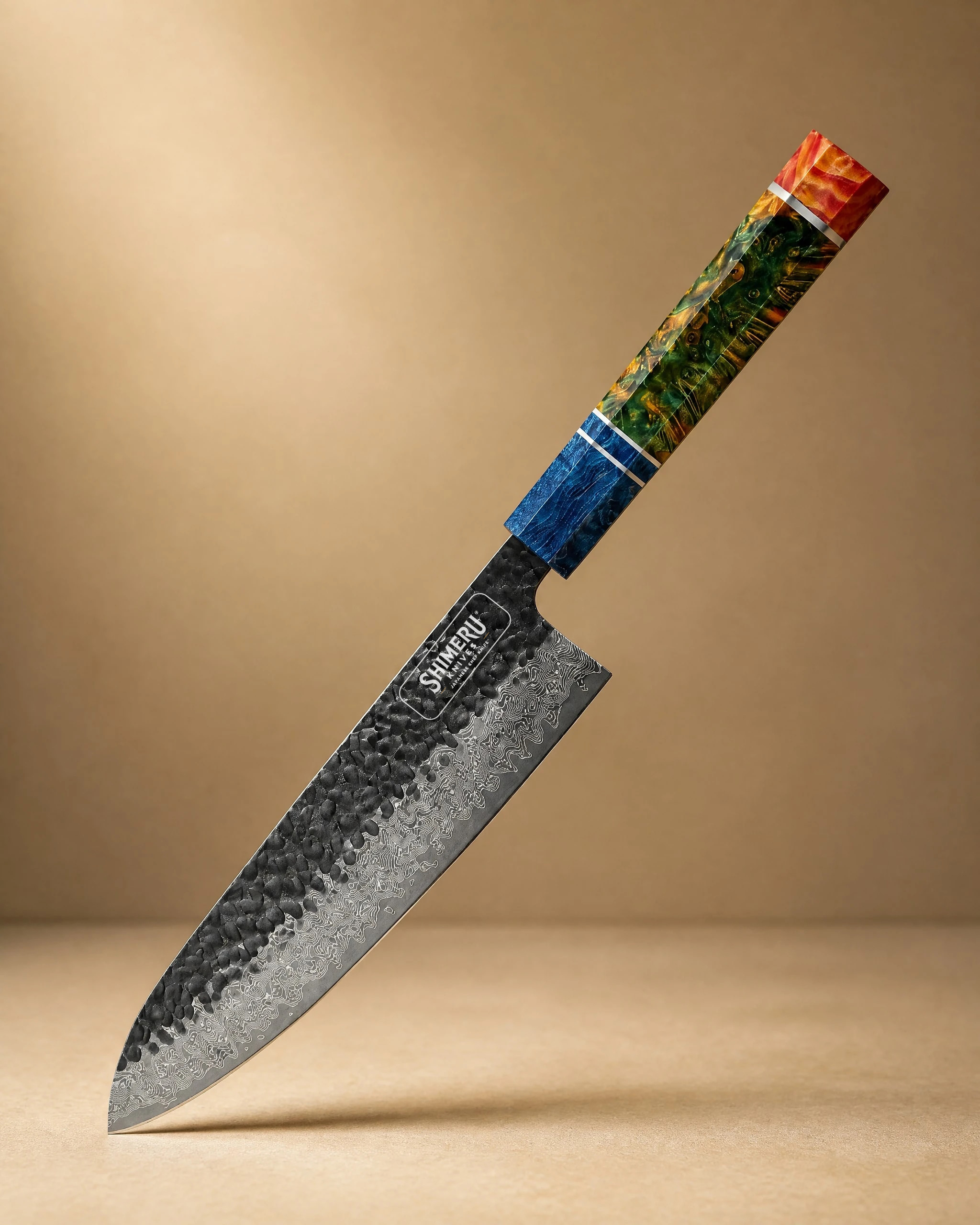 Yoshii 8″ Damascus Steel Gyuto Knife 牛刀£79.99View product → is an 8 inch Damascus gyuto with 67 layers and a wood and copper handle, suited to slicing and portioning meat as well as general preparation. If you prefer a stainless blade and a lighter feel, the
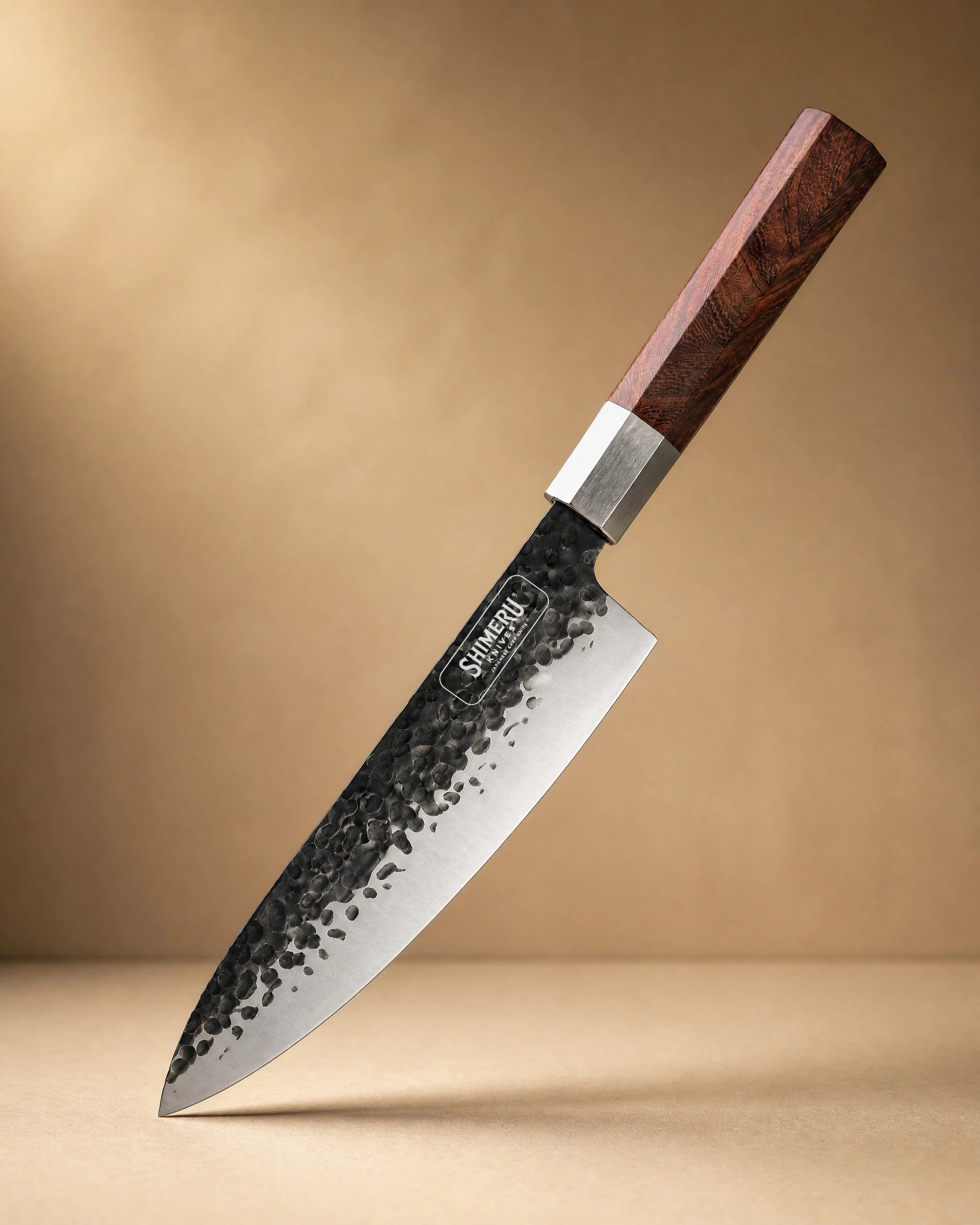 Sendai 8" Steel Gyuto Knife 牛刀£49.99View product → uses stainless steel with an Mkuruti wood handle and handles vegetables, herbs, meat and fish. The
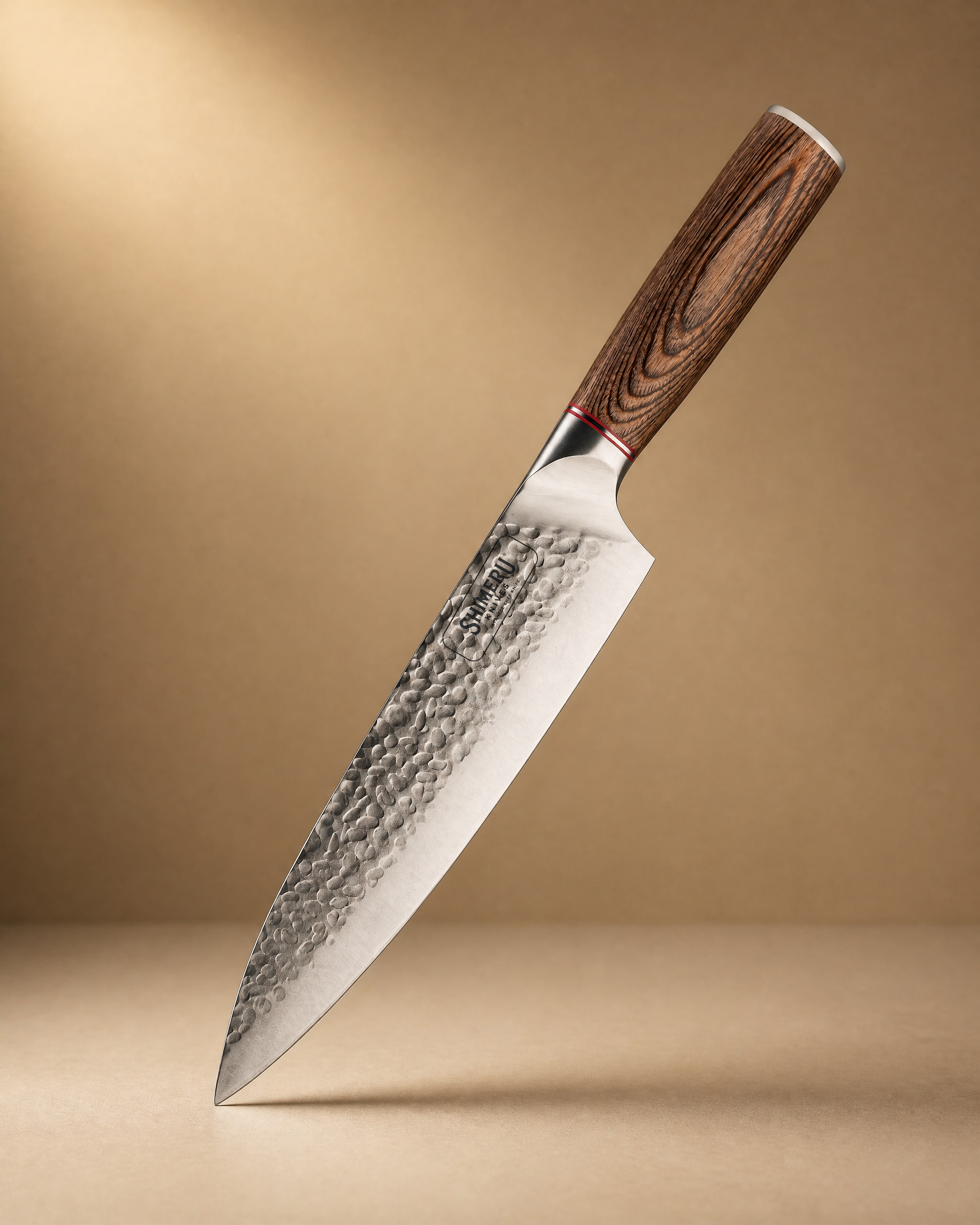 Akan 8'' Gyuto Knife 牛刀£49.99View product → is a similar 8 inch stainless gyuto with a Pakkawood handle, a straightforward all rounder for meat, fish and vegetables.
Any of those three will do the slicing; the steak knife then does the final cut at the table. Between them you cover the whole meal, which is a more useful way to think about a knife collection than buying one of everything.
Looking after them without fuss
Three habits cover almost everything. Wash and dry by hand rather than leaving knives in a sink or a dishwasher. Store them so the edges are not knocking against other metal. Hone regularly and sharpen when the edge starts to skate, rather than when it stops cutting altogether.
Damascus and high carbon cores need slightly more attention than a plain stainless blade, but not much: dry them promptly and keep them away from acidic residue. Our knife care guide covers the routine in detail, including what to do about a blade that has been left wet.
Mistakes worth avoiding
- Buying on looks alone without checking balance and handle comfort.
- Choosing serrated blades because they seem low maintenance, then never sharpening them either.
- Cutting on ceramic or glass boards, which destroy an edge faster than any meat will.
- Buying six matching knives when four people live in the house.
- Treating a Damascus blade as decoration and never using it.
Choosing with confidence
Start with the number of people you feed, then decide between serrated and straight edge, then set a budget you are happy to maintain. If you want to see the range, the steak knives category is the shortest route, and the full knife shop shows how a steak knife set sits alongside the gyutos. If you are still weighing up blade lengths and steel types, our knife guide will help you compare like with like.
A steak knife is a small thing that touches a lot of evenings. Choose one properly, look after it, and it will quietly do its job for years.
Photography: Emerson Vieira via Unsplash.

