











Best Whetstone for Chisels
If you have spent an afternoon flattening the back of a chisel on a stone that was never flat to begin with, you already know why this question matters. The best whetstone for chisels is not the most expensive one, and it is not the one with the most impressive grit number on the box. It is the one that stays flat, cuts your particular steel predictably, and is wide enough that you are not fighting the stone as much as the blade.
We sell Japanese kitchen knives, and our stones see daily use on gyutos and petty knives. The mechanics of a chisel edge and a knife edge are the same, and most of what follows comes from that shared ground. A chisel simply punishes bad habits harder, because you are registering a flat back against a flat stone rather than chasing an angle freehand.
What a chisel actually needs from a stone
Three things, in order of importance: flatness, width, and a grit that suits the steel.
Flatness first. A chisel is sharpened on two surfaces, the bevel and the back, and the back must be dead flat for the edge to be reliable. Any dish or hollow in the stone is transferred to the back, and a back that has gone out of flat takes a long time to correct. This is why a hard stone, or a softer stone you flatten regularly, beats a fast-cutting stone that hollows out after ten minutes.
Width matters more than people expect. A two inch wide stone will handle a one inch chisel comfortably. Three inches is better for wide bench chisels and for flattening. Narrow stones encourage the blade to rock, and rocking rounds over the corners of the back, which you will feel every time you pare.
Length is the quiet factor. Eight inches is the practical minimum: it gives you more strokes before the stone needs flattening and keeps more of the edge in contact with the surface. A six inch stone works, but you will spend more time managing it than using it.
One practical note before you buy anything. A new chisel often needs its back flattened before the bevel is worth honing. That is a coarse stone job, and it is the reason a 300 to 400 grit stone sits in so many workshops. Do the back once, properly, and you will not have to do it again on that chisel.
Grit progression that actually works
A sensible sequence for most bench chisels runs coarse to fine: a stone around 220 to 400 grit for reshaping a damaged edge or flattening a new back, a 1000 grit stone for the working edge, and something in the 3000 to 6000 range if you want a polished bevel. You do not need all three at once. Most people do ninety per cent of their work on a 1000 grit stone and only reach for the others when something has gone wrong.
Very fine stones above 8000 grit are a pleasure on a paring chisel where you want a mirror bevel, but they are a luxury rather than a requirement. An edge that has met a 1000 grit stone and a strop will cut end grain cleanly. Steel type shifts the balance a little: A2 and other alloyed tool steels wear a stone more slowly and reward harder stones, while O1 cuts quickly on almost anything you put in front of it.
Water stones, oil stones and diamond plates
Water stones cut fast, come in a wide range of grits and leave a fine scratch pattern. They also wear quickly and need soaking or a splash of water depending on the type. For most woodworkers they are the default choice, and they are the stones we know best.
Oil stones cut more slowly and stay flatter for longer. They need oil rather than water, which makes them messier to store, but they suit a workshop where a stone sits out on the bench permanently. Natural oilstones can be superb and they are also expensive and variable, so buy from someone who will tell you exactly what you are getting.
Diamond plates are not whetstones in the traditional sense, but every chisel sharpener should own one. A coarse diamond plate is the most reliable way to keep a water stone flat, and it will flatten a chisel back quickly when you have bought something second hand. Do not use one as your only fine stone: the scratch pattern is coarse and unforgiving on a fine edge.
How to choose without overspending
If you are buying one stone, buy a 1000 grit water stone, eight inches long and two to three inches wide, plus a diamond plate to flatten it. That pair will sharpen every chisel in a normal workshop and will not need replacing for years if you look after them.
If you are buying two, make the second one coarse rather than fine. A 300 to 400 grit stone earns its place the first time you buy a chisel with a chipped edge, and it saves hours on a neglected back. Buying a 10000 grit finishing stone before you own a way to flatten your 1000 grit stone is the most common mistake we see, and it is an expensive one.

Holding the stone steady
Most sharpening problems are really holding problems. If the stone shifts, your bevel angle shifts with it, and no amount of skill recovers a consistent edge. A stone holder with rubber feet is cheap and effective. A damp cloth under the stone on a flat board works nearly as well for a quarter of the price, provided the board itself cannot slide. Keep the setup at a height where your elbows are slightly bent, roughly bench height, and stand rather than sit for chisel work: you will keep the back flat far more easily.
The same stones, the same logic, on kitchen knives
Our own sharpening happens on kitchen knives, and the overlap matters. A chisel teaches you to feel when a stone is flat and when an edge has met the stone along its full length. That feel makes you faster and more accurate on a gyuto, and the reverse is true as well.
If you are setting up one sharpening station for bench and kitchen, it helps to have a knife worth the edge. The 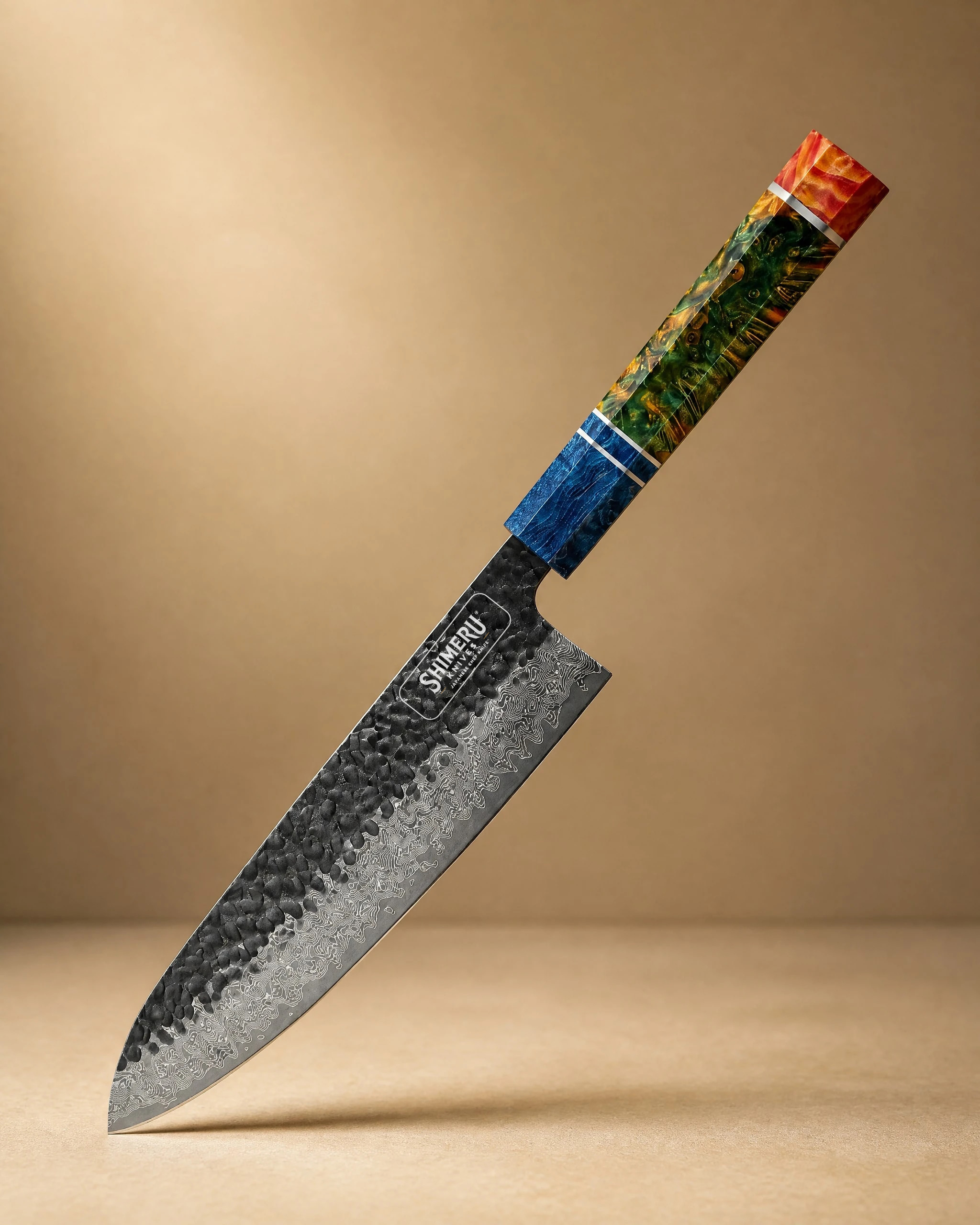 Yoshii 8″ Damascus Steel Gyuto Knife 牛刀£79.99View product → is an eight inch gyuto in 67 layer Damascus steel with a wood and copper handle, and it is the sort of knife that makes a rough edge obvious. The
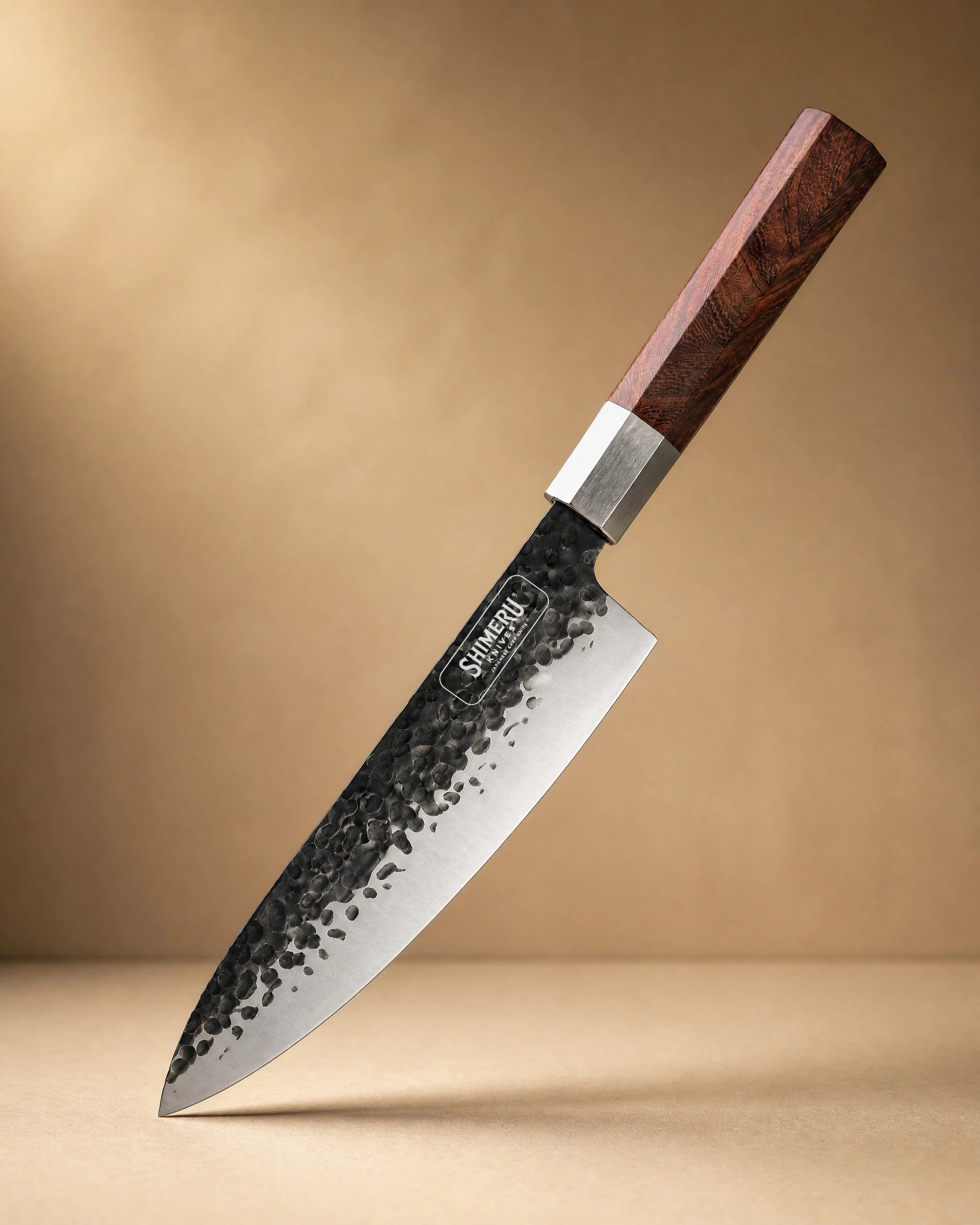 Sendai 8" Steel Gyuto Knife 牛刀£49.99View product → is a plainer eight inch stainless gyuto with a Mkuruti wood handle, and it is a good everyday knife to practise on.
Buying for a whole kitchen is a different decision. The 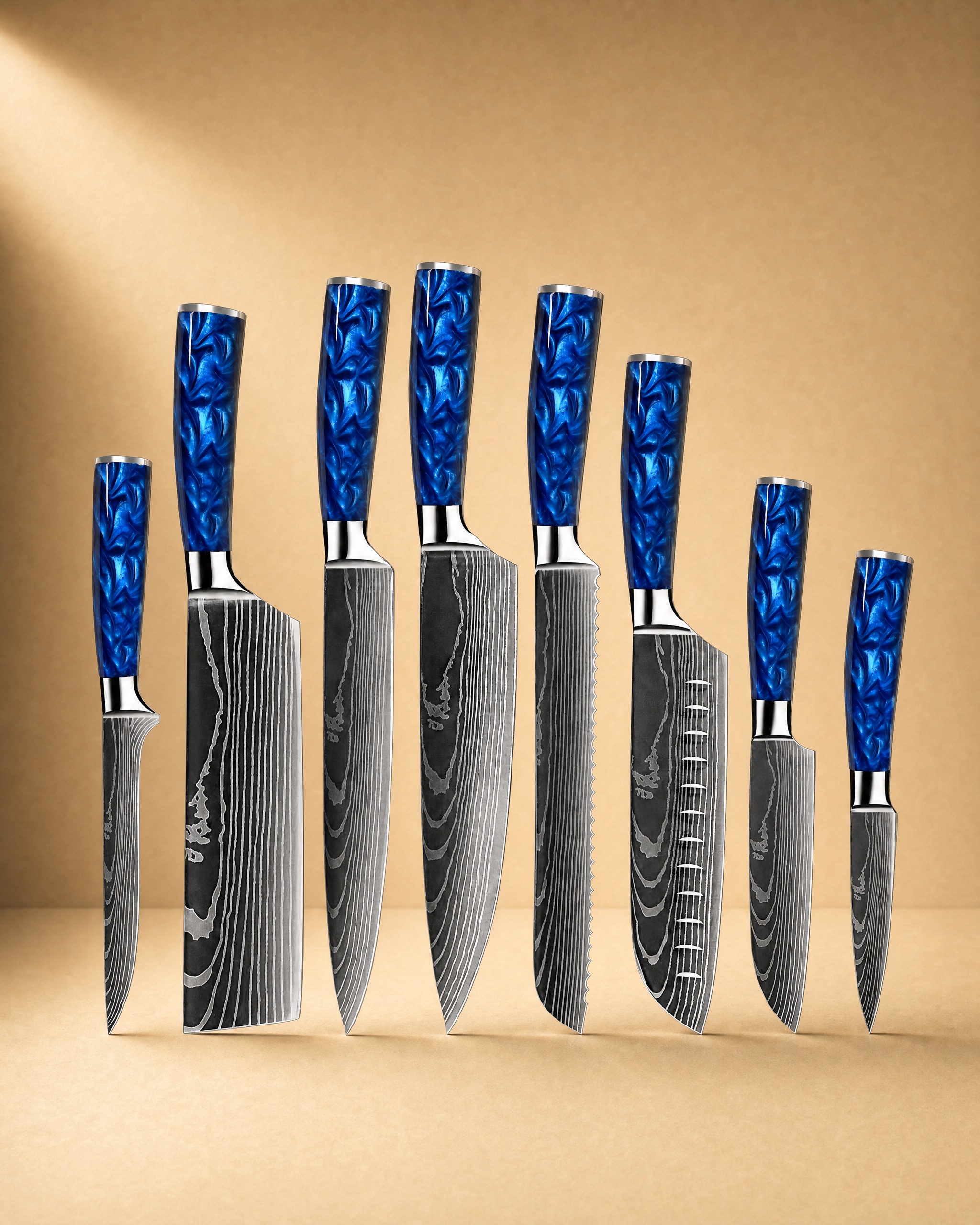 Shinano 信濃川 Damascus Pattern Stainless Steel Kitchen 8 Knife Set£149.99View product → is a Damascus pattern set of eight in high carbon steel, so it will want drying straight after washing, and the pattern shows every smudge. The
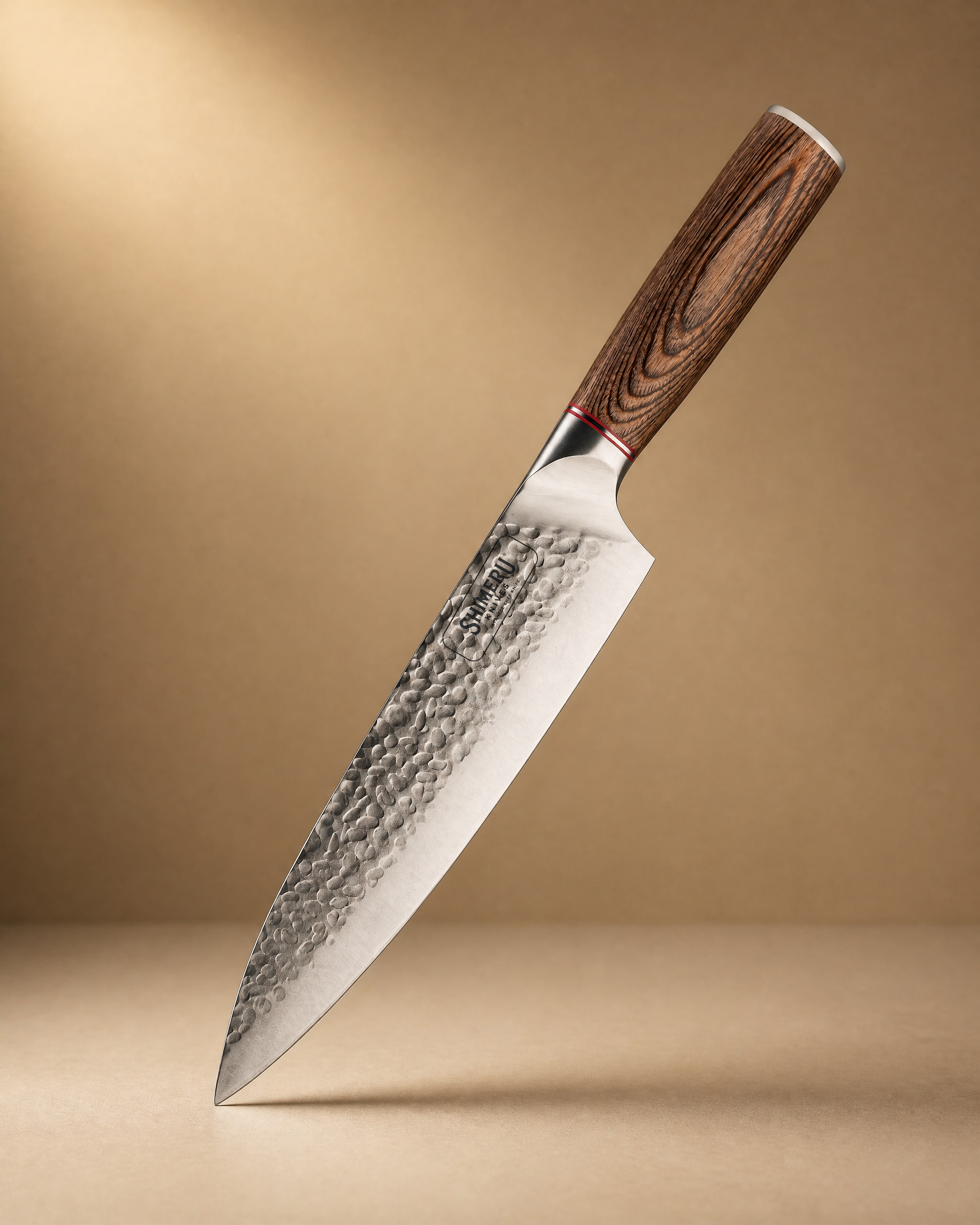 Akan 8'' Gyuto Knife 牛刀£49.99View product → is a stainless eight inch gyuto with a pakkawood handle, and stainless is the easier place to start if you are still building the habit of drying a blade properly.
There is more on angles, stones and daily habits in our knife care guide, and if you are still deciding which blade shape suits your cooking, the knife guide covers the main profiles. You can see the full range in our knife shop.
Looking after the stone
Flatten your stone at the start of every session, or at the very least after every heavy use. Pencil lines across the surface are the simplest check: draw a grid, work the stone on a diamond plate, and stop when the grid has gone. It takes a minute, and it is the single biggest improvement most people can make to their sharpening.
Store water stones so air can reach them and do not leave them soaking for weeks at a time. Let them dry slowly, away from direct heat and out of the sun. Oil stones should be wiped clean after use so that swarf does not clog the surface.
A short buying checklist
- One 1000 grit water stone, eight inches long and two to three inches wide.
- One coarse diamond plate, for flattening and for damaged edges.
- A stone holder or a damp cloth on a flat board, so the stone does not slide.
- Finer grits from 3000 to 6000, added only once your technique is consistent.
The best whetstone for chisels is, in the end, the one you bother to flatten. Buy modest, buy flat, and put the money you save towards a second stone once you know what you actually want. The same discipline will serve every edge in your workshop and every knife in your kitchen.


