




How to Choose the Best Cutting Board Material

A good knife and a bad board is an uneven partnership. You can spend a great deal on a gyuto, keep it honed and sharp, and still watch the edge fade within weeks because it has been meeting a sheet of glass or a hard bamboo block every evening. The board is the surface your edge touches most often, so its hardness, texture and hygiene matter far more than most buyers expect.
This guide works through the realistic options, what each one does to your knives, and which is genuinely the cleanest in a domestic kitchen.
Why the board matters as much as the knife
Every cut is a small abrasion. A knife edge is a thin wedge of steel, and it only stays keen if the surface beneath it gives slightly. On a soft board the edge parts the fibres and sinks in a fraction of a millimetre. On a hard board the edge has nowhere to go, so it rolls, folds or chips. Over a month of daily cooking, the difference between the two is the difference between a knife you touch up once a week and one you have to sharpen properly every fortnight.
The second job of a board is hygiene. Raw chicken, garlic, bread flour and beetroot all land on the same surface, and the material decides how easy it is to clean properly and how much it holds on to what it has absorbed.
The realistic options
Most kitchens settle on one of four materials: wood, bamboo, plastic, or composite rubber. Glass and stone boards exist, and they are the worst thing you can put a Japanese knife on. We would not recommend them for any knife you care about. Composite rubber boards sit between wood and plastic: soft, non-porous, often dishwasher safe and priced accordingly. They are a sensible professional choice and a reasonable one at home if the budget stretches.
Wood: the kindest surface for a sharp edge
Wood remains the reference standard. It is soft enough to protect an edge, heavy enough to stay put, and kind to the hand. Hardwoods such as maple, oak, beech, walnut and cherry all work well. Japanese kitchens have used hinoki for a long time because it is light, gentle on delicate edges and pleasant to work on.
Wood does need a little attention. It should never go in a dishwasher, it wants drying upright, and it benefits from an occasional food safe oil or wax. A wooden board left wet will split, and one left un-oiled will dry out and open small cracks. Our knife care guide covers the routine in more detail.
End grain versus edge grain
End grain boards are built with the fibres standing vertically, like a butcher's block. The edge slips between the fibres rather than across them, which is gentler still, and the board tends to close up after cuts. Edge grain boards, where the strips are laid flat, are cheaper, lighter and perfectly good for home use. If you only buy one board, a thick edge grain hardwood board is the sensible choice. End grain is a pleasant upgrade rather than a necessity.

Bamboo: hard, tidy, and slightly unforgiving
Bamboo is a grass rather than a timber, pressed and glued into boards. It is stable, cheap, widely available and handles moisture better than most woods. The catch is hardness. Bamboo is noticeably harder than maple or hinoki, and a very thin Japanese edge notices. It is a fine choice for vegetables, bread and general prep with Western knives, and a less good one for a laser-thin gyuto you want to keep at its best.
Plastic: hygienic in theory, honest in practice
Plastic boards are cheap, dishwasher safe and easy to colour code, which is why professional kitchens use them for raw protein. They are genuinely useful for that job. What they are not is kind to an edge, and they do not stay clean forever. Every knife stroke leaves a scratch, and those scratches become a home for bacteria that a rinse will not reach. A badly scarred plastic board should be replaced rather than scrubbed.
There is a practical point too. Plastic boards slide, especially on a wet worktop, and a sliding board is a safety issue before it is a knife issue. A damp cloth underneath solves it.
Which material is the cleanest?
This is the question that produces the most argument. The research picture is reasonably consistent: wood and plastic both clean up well when they are washed properly, and wood has a useful trick of drawing moisture and bacteria away from the surface into its structure, where they do not survive long. Plastic does not do this, and once it is scored it holds on to whatever it has met.
So the cleanest cutting board, in practice, is a clean one. A well maintained hardwood board, scrubbed with hot soapy water, dried upright and kept separate from raw meat, is as hygienic as anything in a home kitchen. The rules are simple. Use one board for raw meat and fish and another for everything else, or use a dedicated plastic board for protein and wood for vegetables, fruit and bread. Wash within the hour, dry properly, and oil the wood now and then.
Size, thickness and weight
Buy bigger than you think. A board should be roughly 45 cm by 30 cm for general purpose work; anything smaller and you will be working in a corner. Thickness matters for stability, so look for 3 cm or more in hardwood. Weight is the trade-off. A heavy board stays put, a light one is easier to lift to the sink. If you cook standing up for an hour at a time, that difference is real.
It is also worth considering a board with a juice groove, and one with feet or a slight recess if you like to lift it by the edge. Small details, but they decide whether a board gets used or gets in the way.
Matching the board to your knives
The right board depends on the edge you are protecting. A general purpose 8 inch stainless gyuto, like the 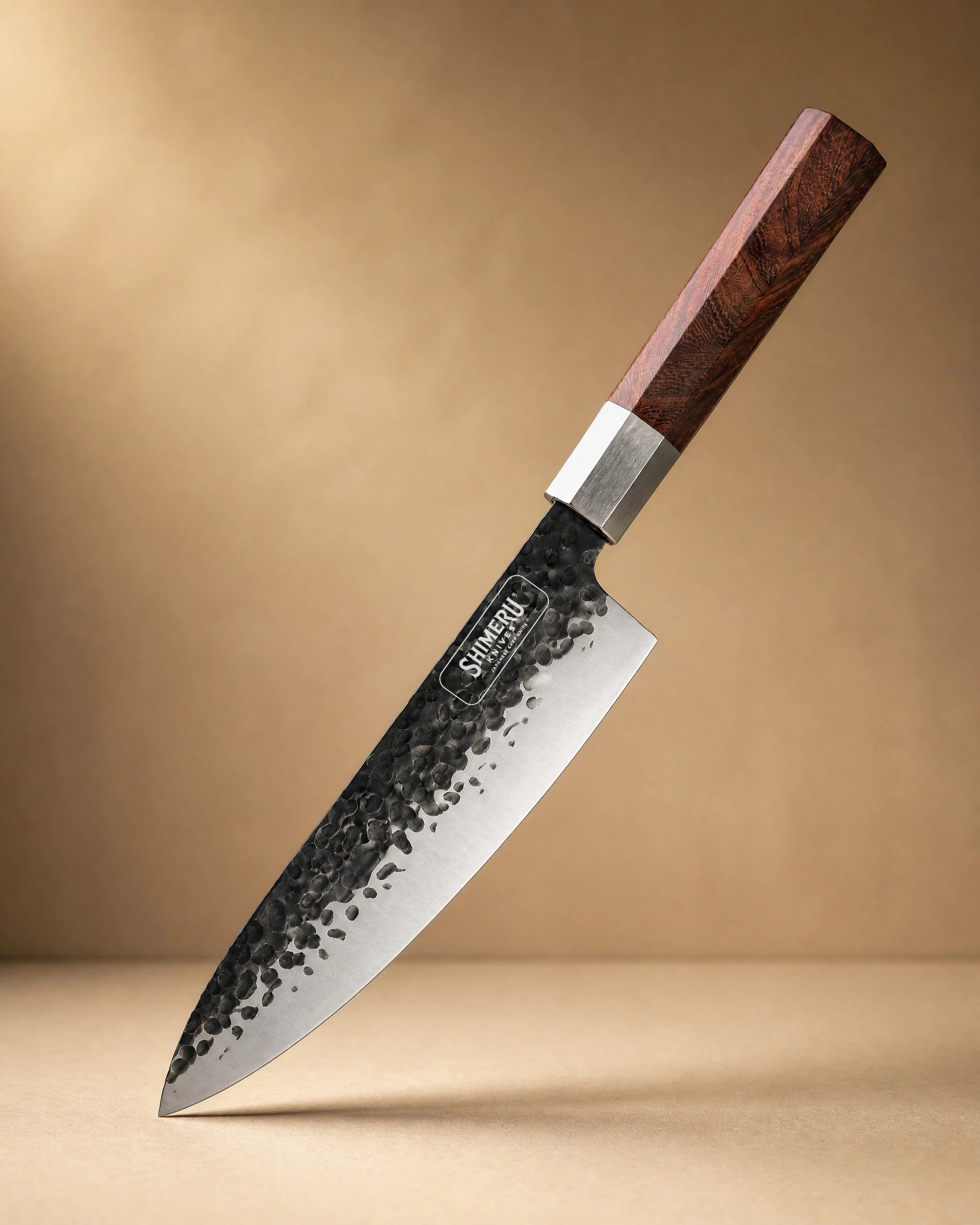 Sendai 8" Steel Gyuto Knife 牛刀£49.99View product →, is the knife most people reach for on a wooden board for vegetables, herbs, meat and fish all week. Its edge is thin but not fragile, and a hardwood board keeps it that way. The
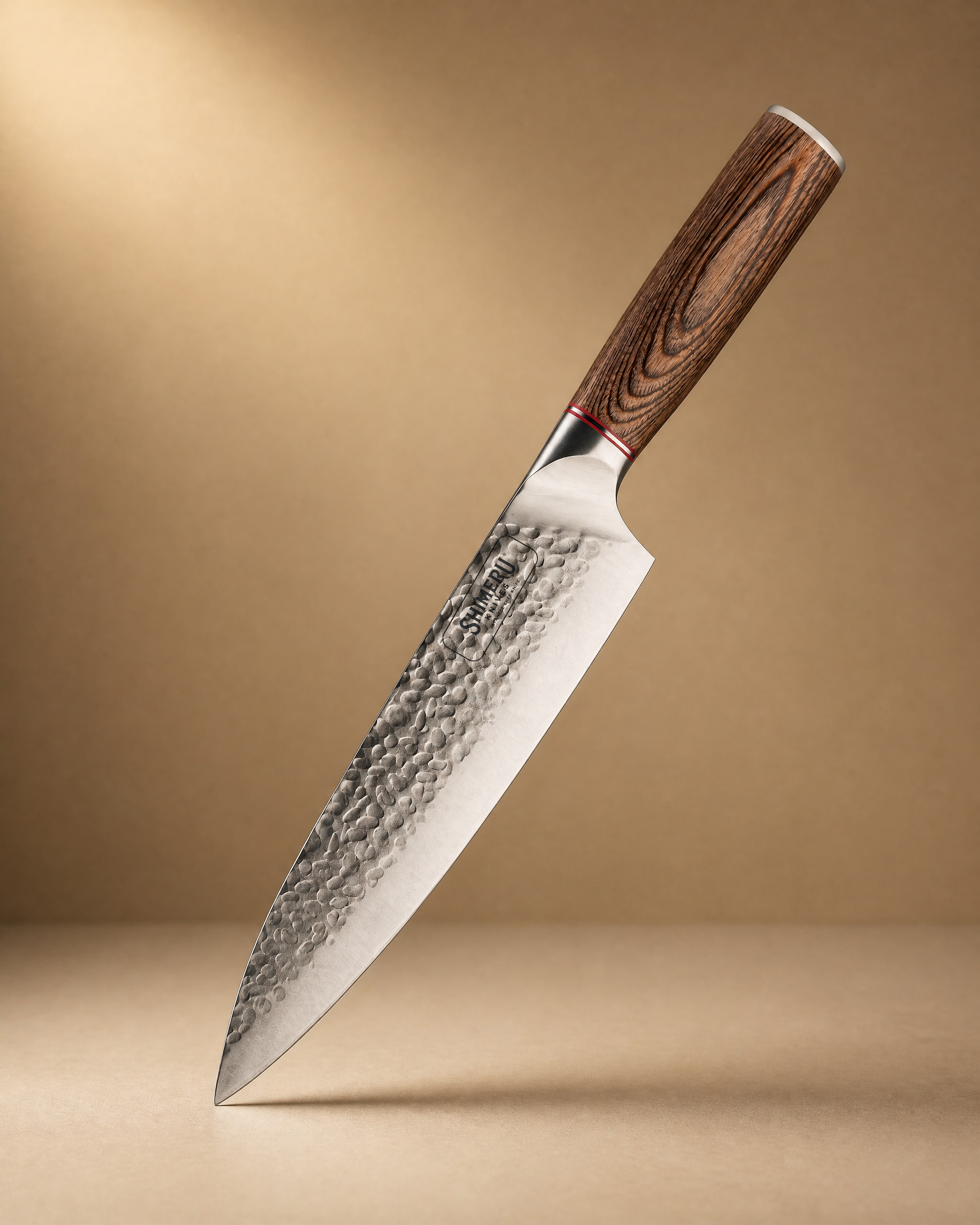 Akan 8'' Gyuto Knife 牛刀£49.99View product → plays the same role in a Pakkawood handled build, and either one will sit happily on maple, oak or hinoki for years.
If you cut a lot of crusty loaves, the 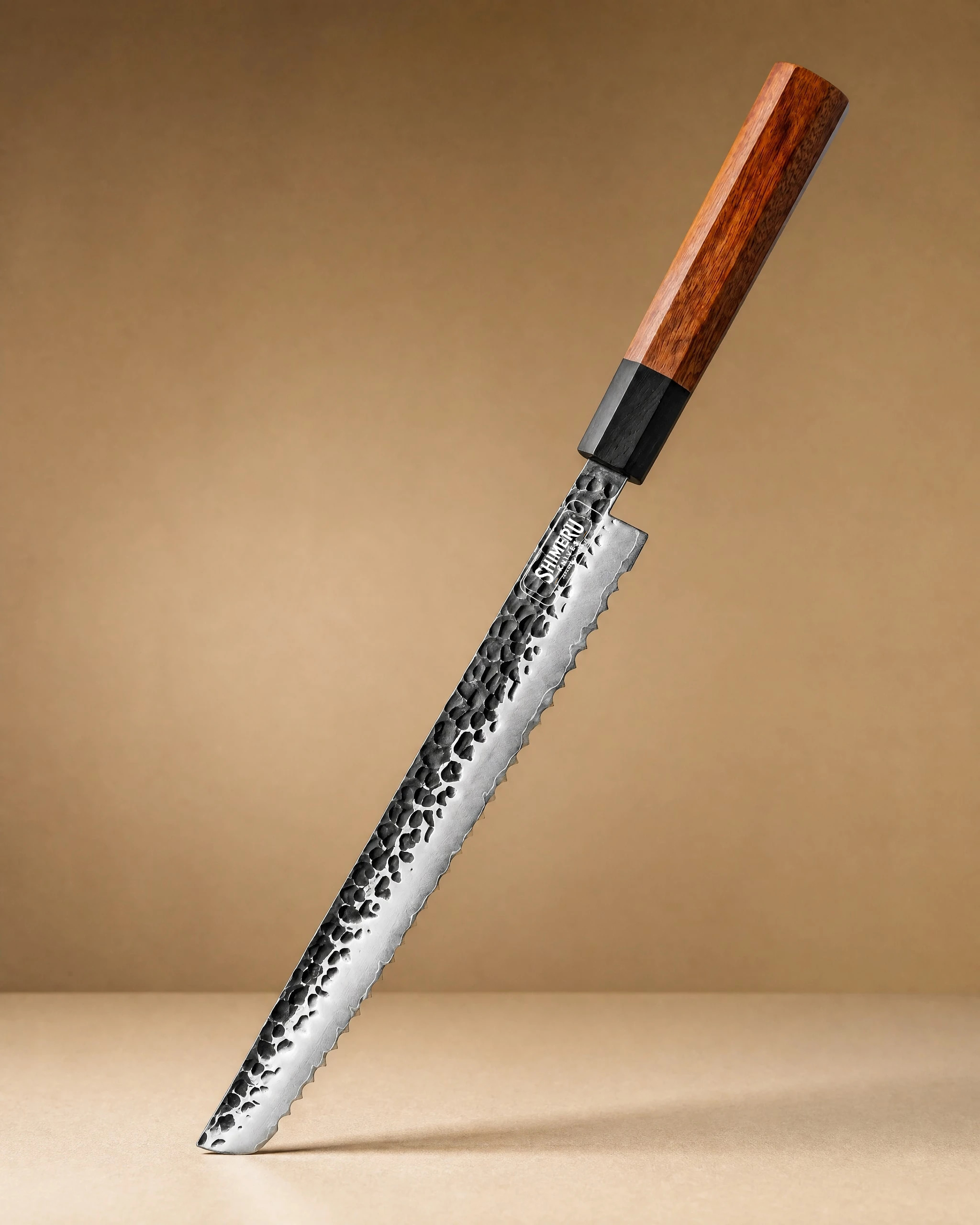 Rumoi 10" Japanese Bread Knife パン切りナイフ£59.99View product → is designed for bread, crusty artisan loaves and soft brioche. A bread knife on a soft wooden board is a comfortable pairing because you are sawing rather than pushing straight down, and bamboo is perfectly reasonable here too, since bread does not care much about edge retention.
If you are building a kitchen around one set, the 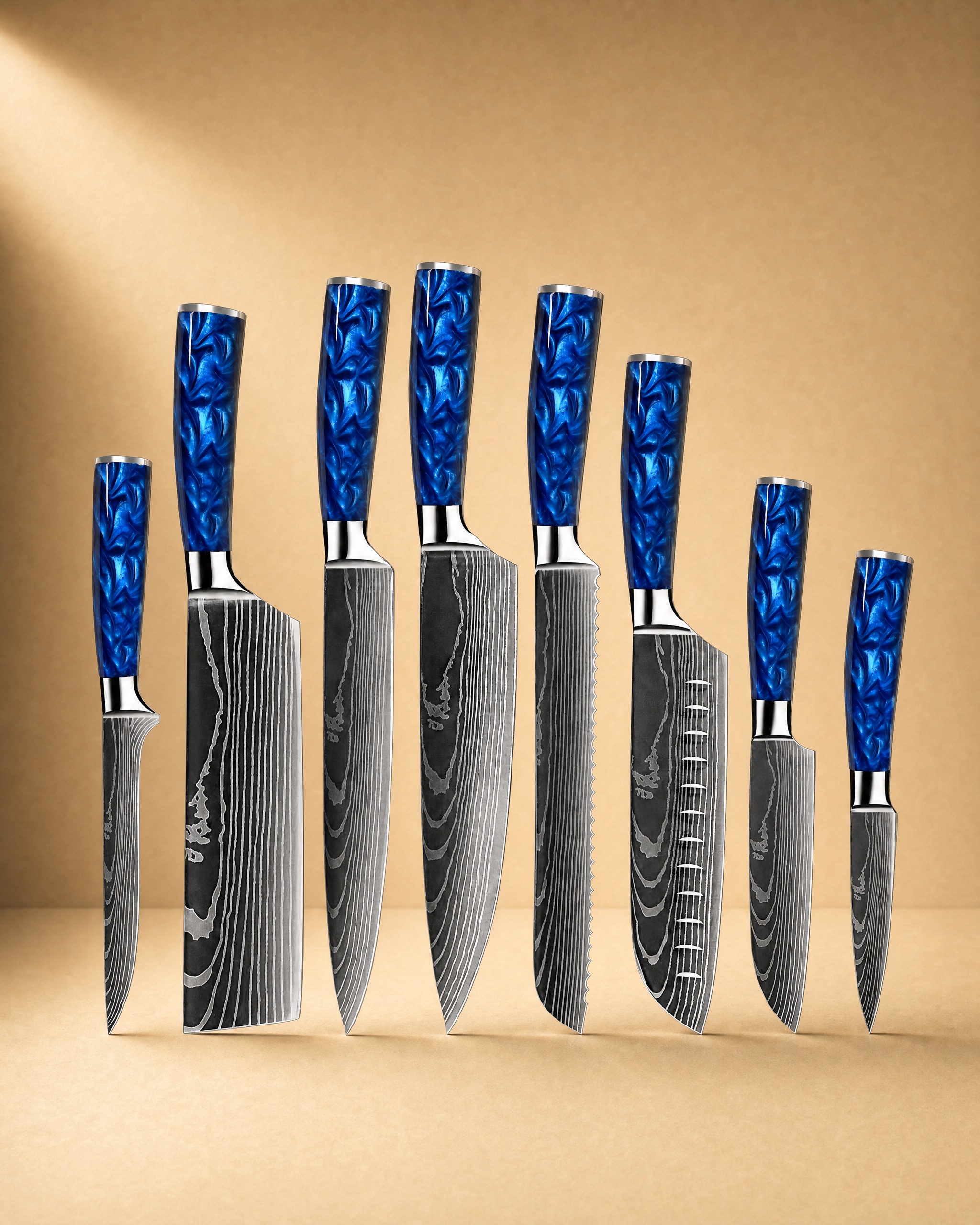 Shinano 信濃川 Damascus Pattern Stainless Steel Kitchen 8 Knife Set£149.99View product → covers the range in a single purchase, and one large hardwood board plus a small plastic board for raw protein will serve the whole collection better than a drawer of mismatched surfaces. If you are still working out which knives you actually need, start with our knife guide, then browse the full range at our product page.
A short buying checklist
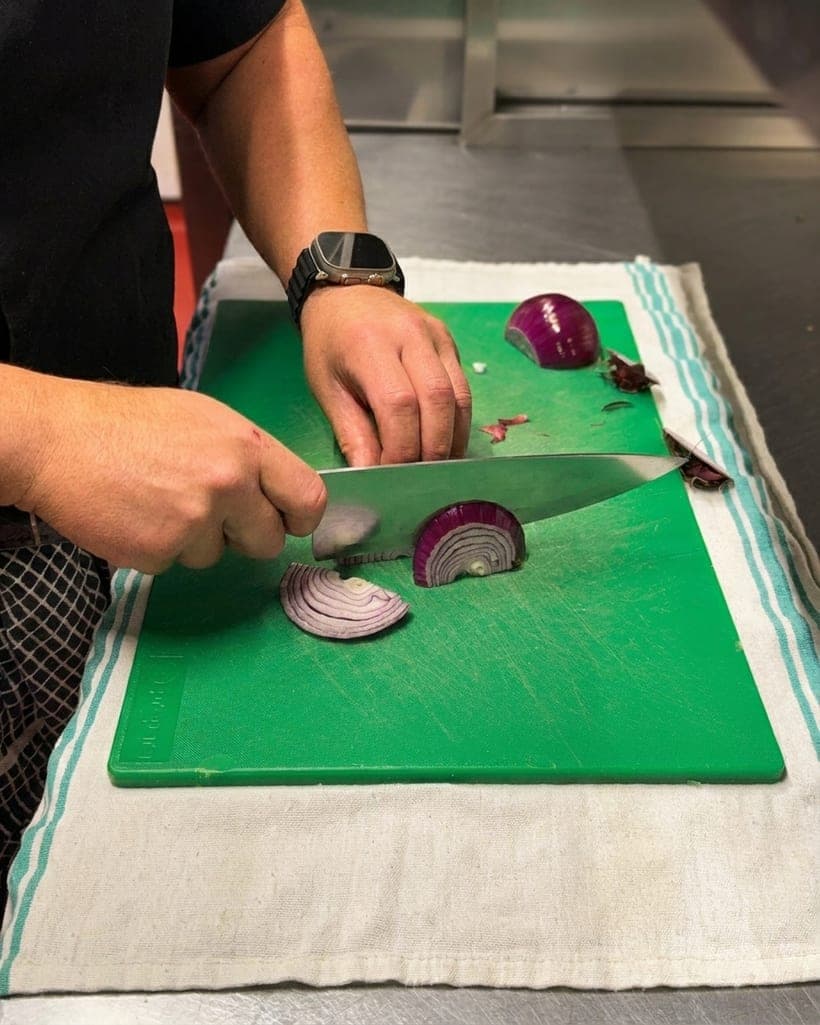
- Hardwood, thick enough to stay put, and big enough for a full onion plus a pile of greens.
- Soft enough for your thinnest knife, which usually means maple, beech, cherry, walnut or hinoki.
- A separate small plastic board for raw meat and fish.
- Food safe oil or wax, and the habit of drying the board upright.
- No glass, no stone, no ceramic.
The short version
If you want one answer: a thick hardwood board, end grain if the budget allows, kept dry and washed promptly, is the best cutting board material for the overwhelming majority of home cooks. Add a small plastic board for raw protein, keep both clean, and your knives will hold their edge far longer between sharpenings. The board is the cheapest upgrade in the kitchen, and the one most people skip.
Photography: Mike Gattorna via Unsplash.

