
What Is a Santoku Knife and What Is It For?

What Is a Santoku Knife?
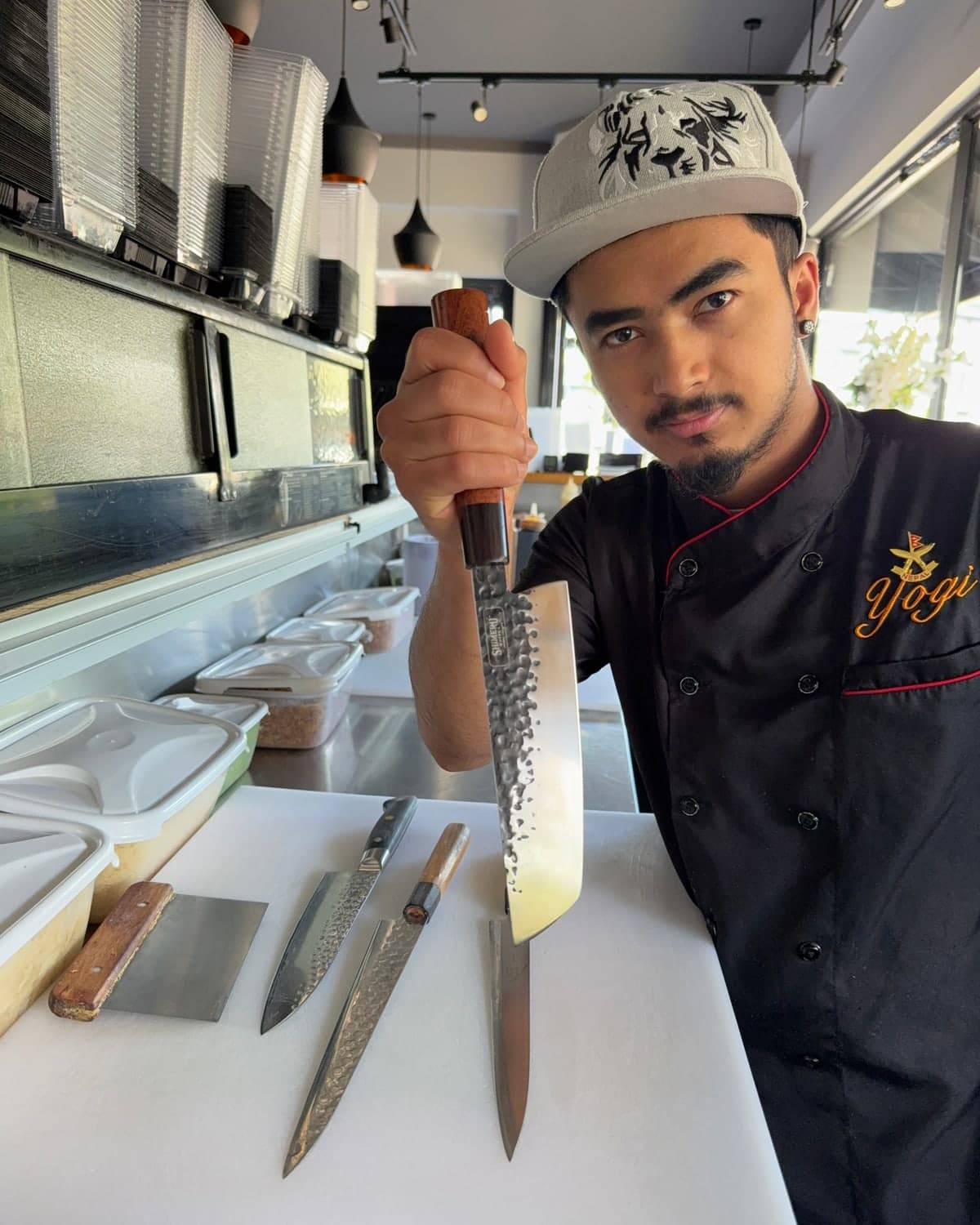
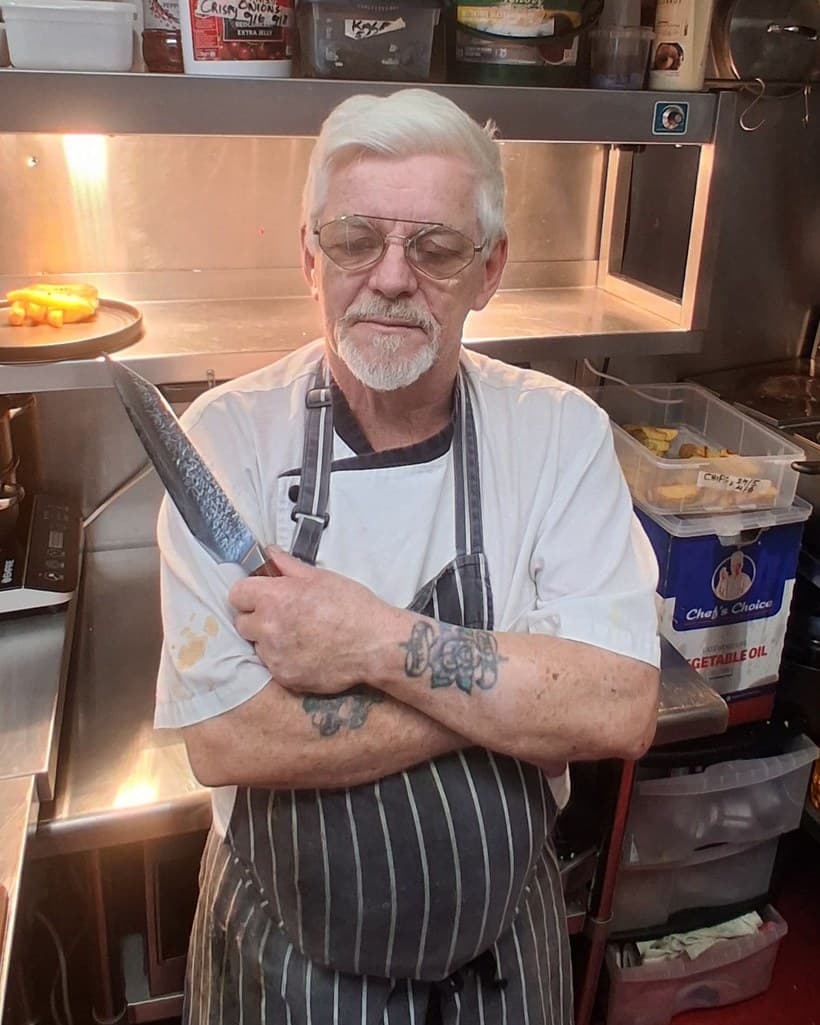
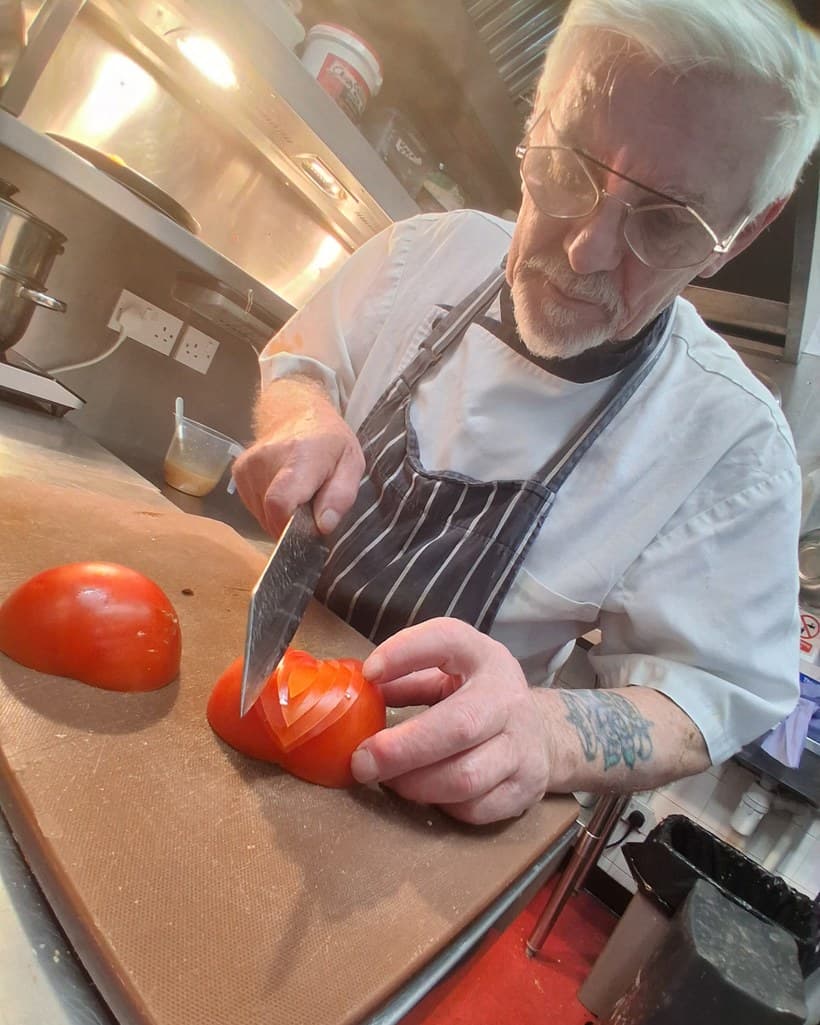
Santoku (三徳包丁) means roughly three virtues, or three uses, and the name tells you most of what you need to know. A santoku is a Japanese all-purpose kitchen knife designed to handle three broad jobs well: slicing, dicing and mincing. In a Western kitchen it sits somewhere between a chef's knife and a utility knife, and for a great many home cooks it becomes the knife they reach for first and put down last.
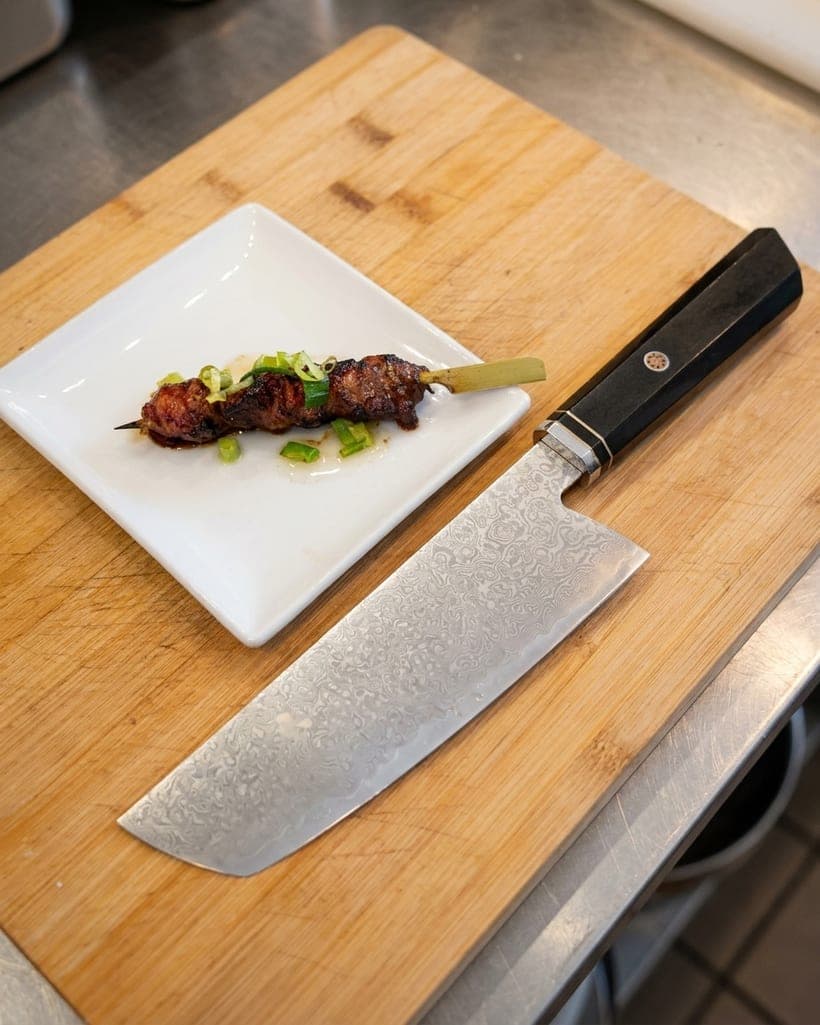
The blade is usually shorter than a European chef's knife, commonly 5 to 7 inches, with a straighter spine, a flatter cutting edge and a deeper belly than you might expect. That combination gives you a knife that chops cleanly on a board and still has enough curve to rock gently through a pile of herbs or garlic. The shape grew out of Japanese home cooking, where vegetables, fish and boneless meat are the everyday work, and it has travelled very well.
The Santoku Blade: Geometry and How It Cuts
Understanding the santoku blade helps you use it well, because the shape is not simply a scaled-down chef's knife. Three features matter most.
The santoku also takes some design cues from the gyuto, the Japanese take on a Western chef's knife, but it sits lower and flatter. Where a gyuto sweeps, a santoku presses. That single difference changes which cuts feel natural, and it is why so many people who own both still pick up the santoku for a quick dinner.
Profile and edge
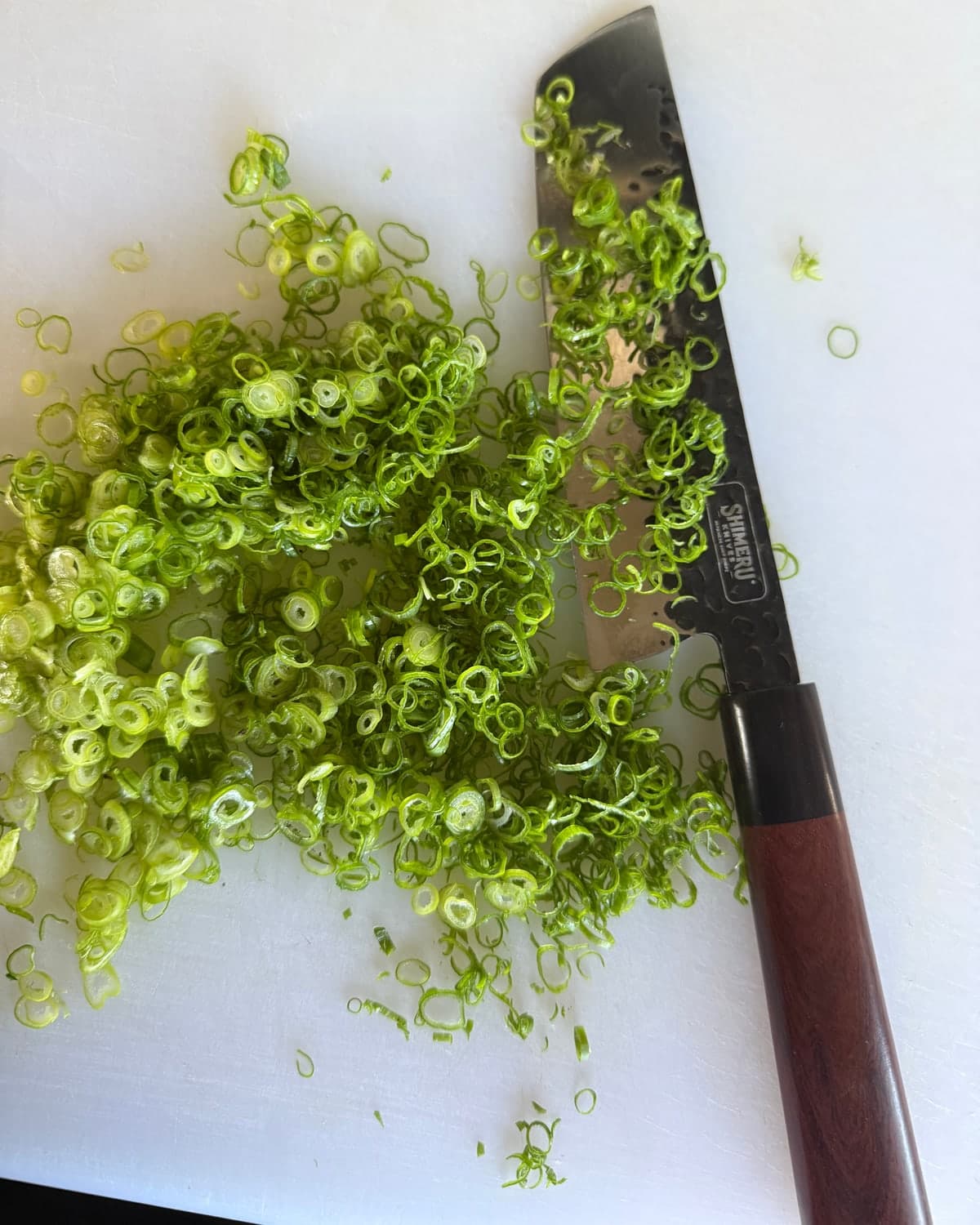
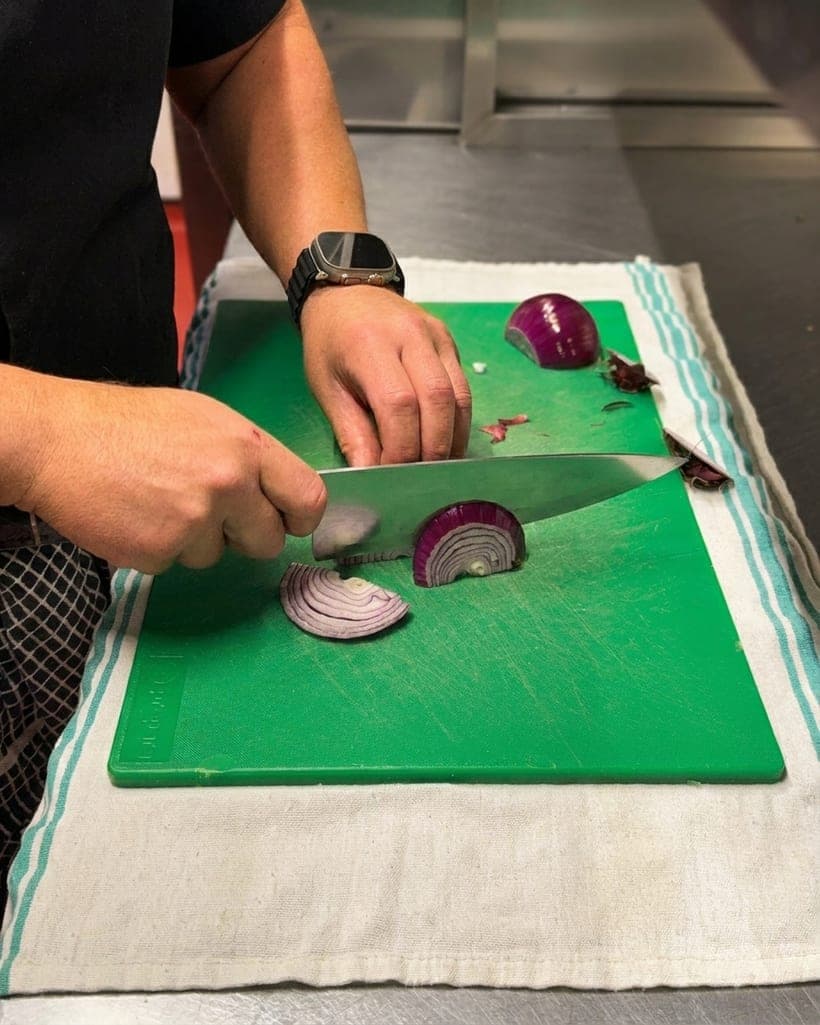
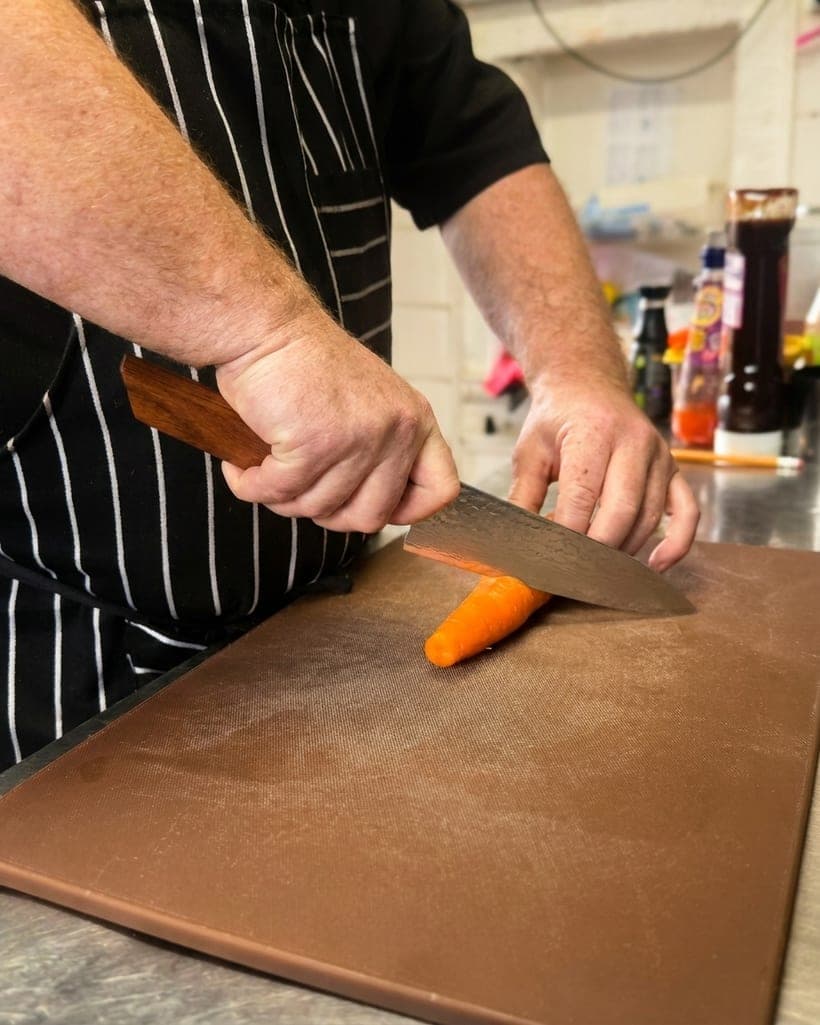
The edge is comparatively flat through the middle and rises toward the tip. That flat section is why a santoku excels at a straight push cut or a downward chop: a long stretch of edge contacts the board at once, so onions, cabbage and carrots come apart cleanly. The tip curves up into a short, fairly blunt point, which is more of a slicing point than a piercing one. Use it as a paring knife or a boning knife and you will feel the compromise immediately.
Blade height
A santoku is tall relative to its length, which leaves room for your knuckles above the board and gives you a broad surface to guide with your off hand. That height also lets you scoop chopped ingredients straight off the board with the blade itself, a small convenience you notice every time you cook.
Thickness behind the edge
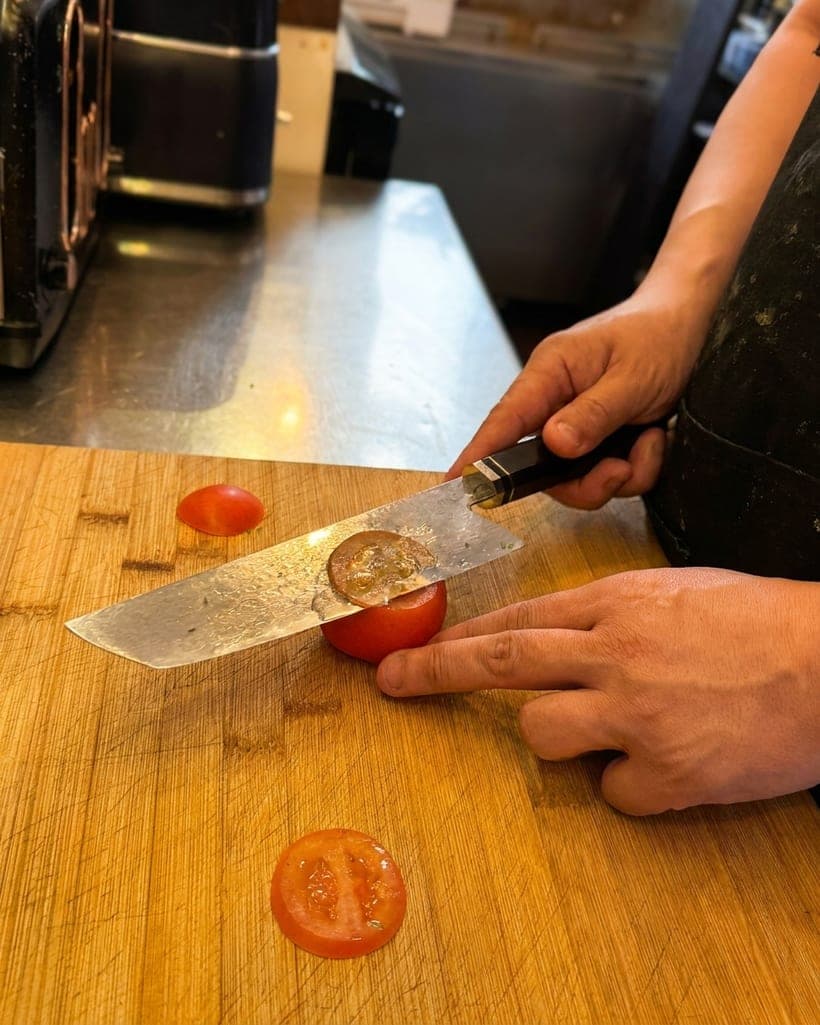
Japanese santoku knives are typically ground thin behind the edge, and that is where the clean, low-effort bite through onion skins, tomato skins and soft vegetables comes from. Thin grinds are efficient but less forgiving, so technique matters: straight down, no twisting, no lateral pressure.
Many santoku blades also carry a Granton edge, the row of hollowed dimples along the side. These reduce friction and help stop sticky slices from clinging to the blade, which makes a real difference with cucumber, potato and aubergine.
What Is a Santoku Knife Used For?
The santoku knife purpose is broad, but it is not unlimited. In practice you will use it for:
- Vegetables of every kind: onions, peppers, carrots, cabbage, mushrooms, courgette, potatoes
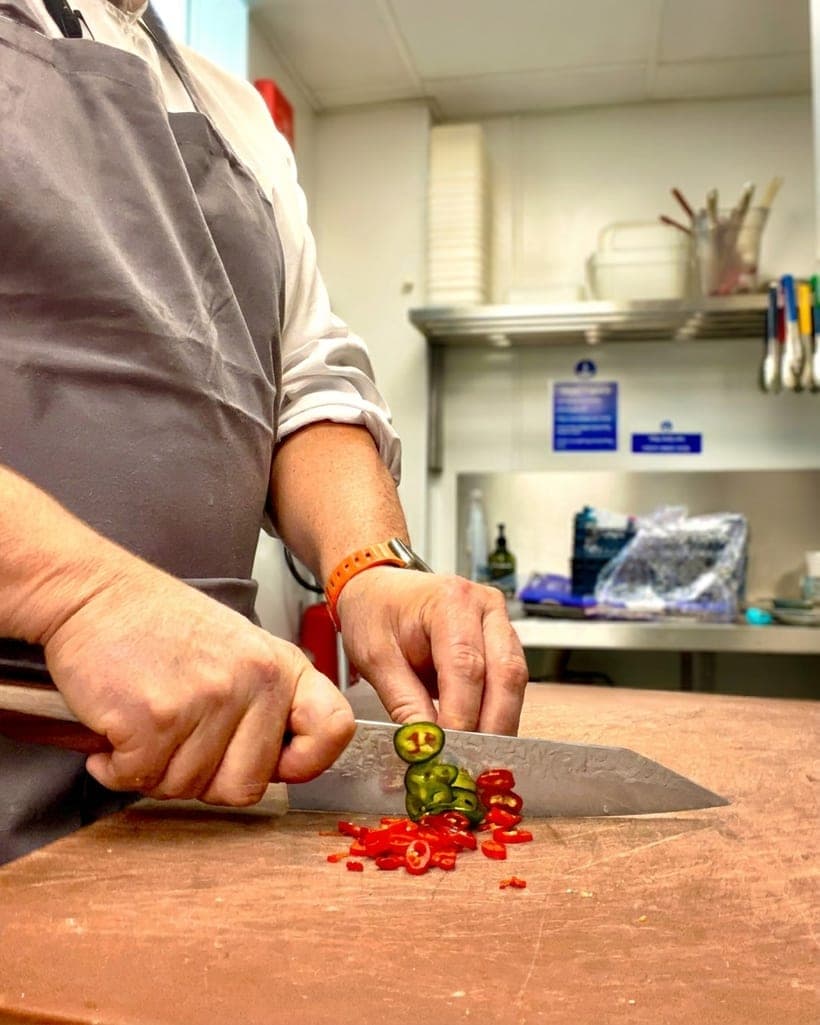
- Herbs, garlic, ginger and chillies, where the flat edge and a gentle rocking motion work well
- Boneless meat: chicken breast, pork loin, steak, trimming silverskin
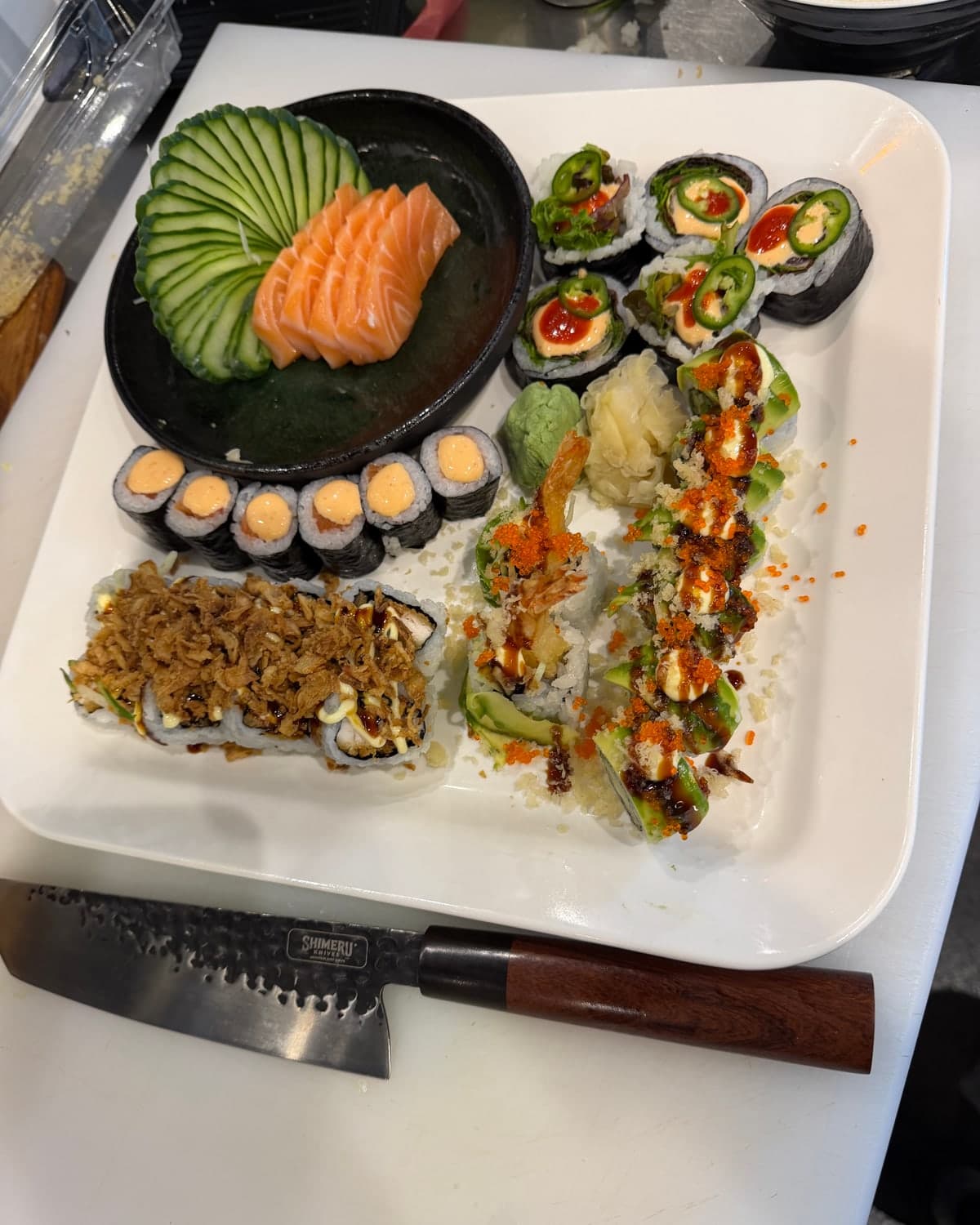
- Fish: portioning fillets, skinning, and slicing where a thin blade helps
- General prep: sandwiches, nuts, fruit, anything that needs a clean cut on a board
That list covers the vast majority of what most people do in a normal evening's cooking. The santoku knife use cases stack up because the blade is thin, the edge is flat enough to chop and the tip is fine enough to slice. Where a santoku stops being the right tool is equally worth knowing.
What a Santoku Knife Is Not For
Honesty saves knives. A santoku is not a cleaver and not a bone chopper. Do not take it through chicken bones, lamb shanks, frozen food, or hard squash that needs a wedge and a mallet. The thin, hard edge on a typical Japanese santoku will chip or roll under that kind of treatment, and no amount of sharpening removes a chip cleanly without shortening the blade.
It is not a flexible filleting knife either, and it is not a bread knife. Serrated crusts need serrations. If you regularly break down whole chickens or joint larger cuts, keep a heavier Western knife or a honesuki for that work and let the santoku handle the fine work it was built for.
Santoku or Chef's Knife: Which Do You Need?
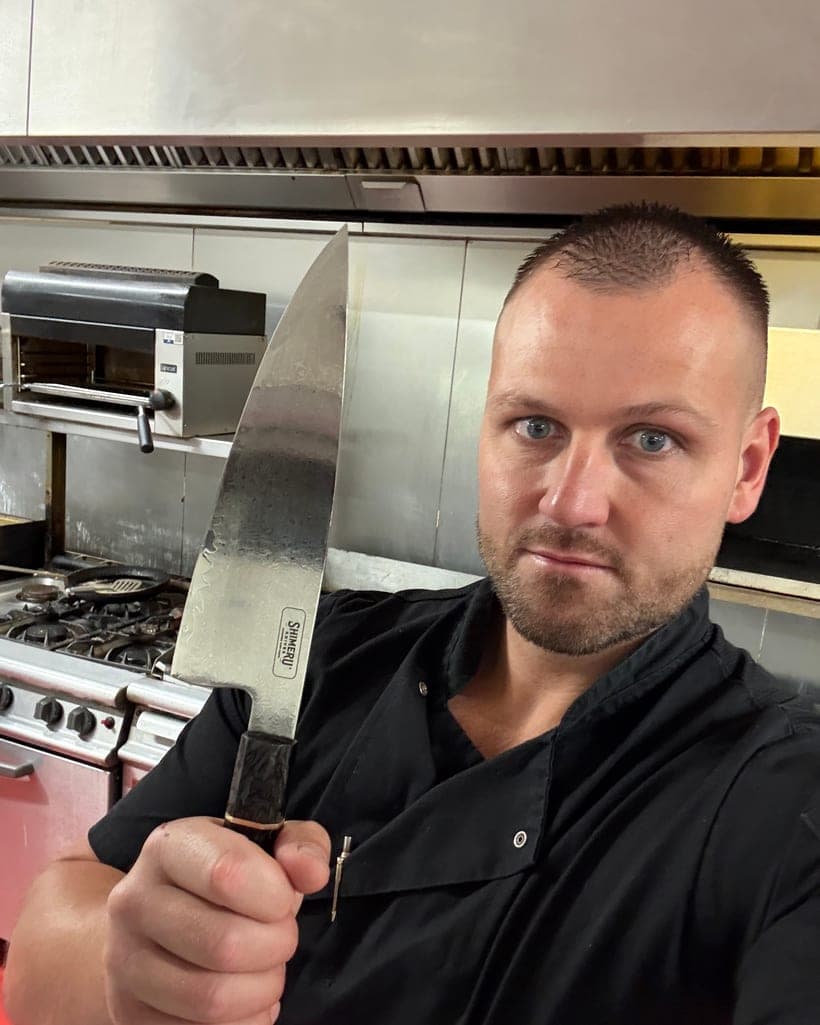
The chef's knife is longer, heavier and has a pronounced belly, which suits rocking cuts and high-volume prep. The santoku is shorter, lighter, flatter and thinner, which suits precision and vegetables. Many cooks end up owning both. If you cook mostly vegetables, fish and boneless meat in modest quantities, the santoku is often the more pleasant knife to use all evening. If you break down large roasts or chop in serious volume, a chef's knife earns its place. There is no wrong answer, only a mismatch between the knife and your habits. Our guide on how to choose a knife walks through the practical questions.

Choosing a Santoku: Size and Shape
Two decisions matter most: length and blade profile.
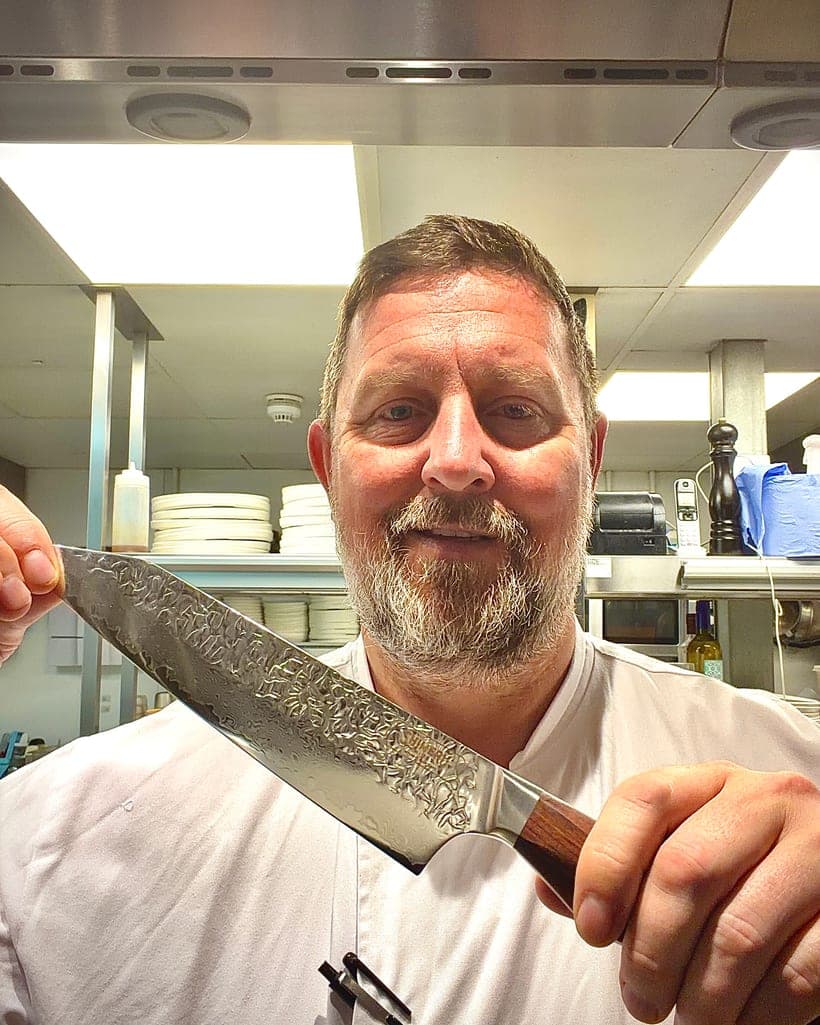
A 7 inch santoku is the classic all-rounder. It gives you enough length for cabbage and melon while staying nimble on a small board. The 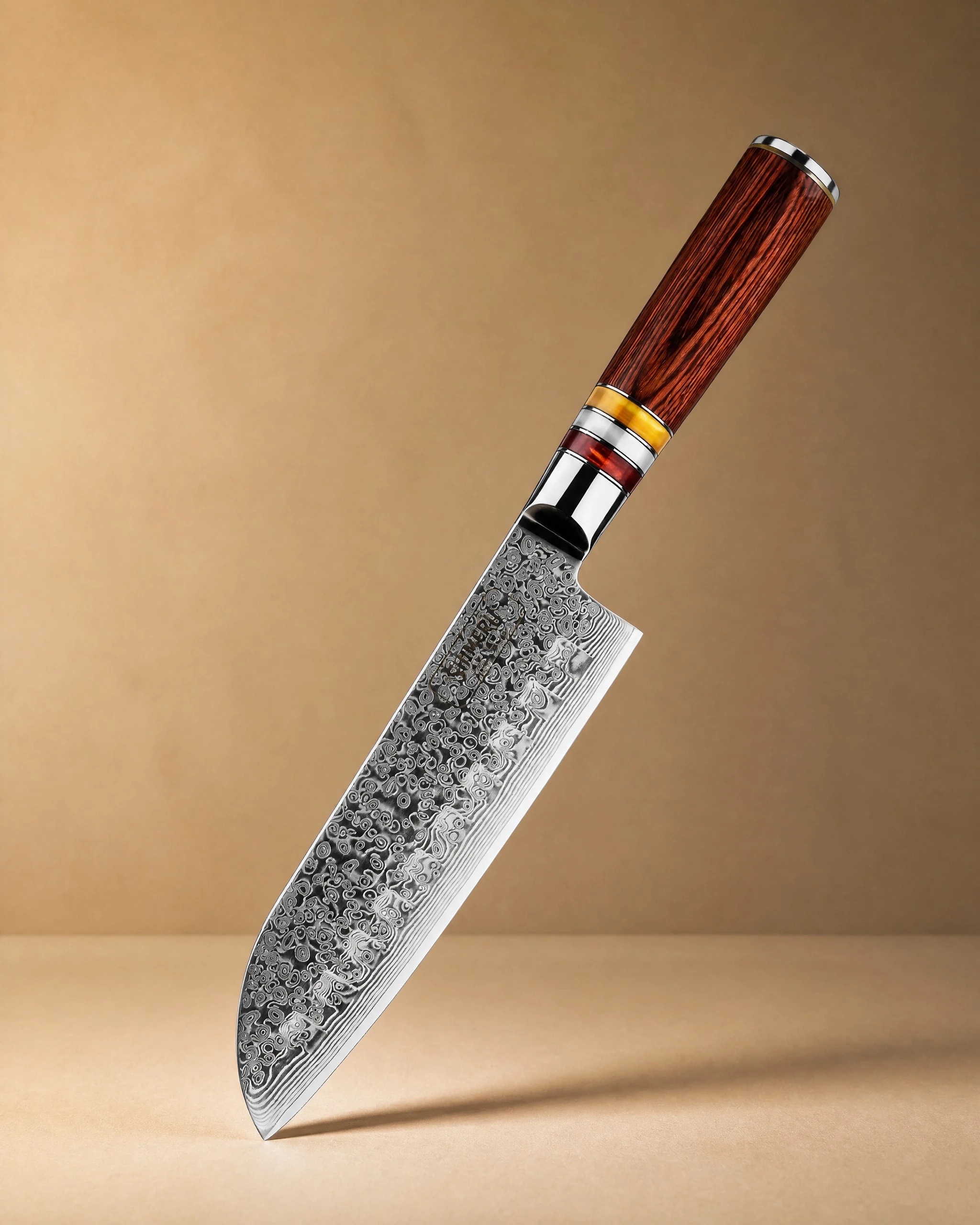 Hikari 光 7" Damacus Steel Professional Santoku Knife 三徳包丁£74.99View product → is a good example: a 7 inch blade in 67-layer Japanese Damascus steel around a VG10 core, with a pakka wood handle. VG10 takes a keen edge and holds it well, and the layered cladding adds corrosion resistance as well as looks. It suits meats and vegetables and will handle most of a week's cooking.
For a lighter, more compact option, a 5 inch santoku suits smaller hands, smaller boards and quick jobs: shallots, herbs, a single chicken breast. The 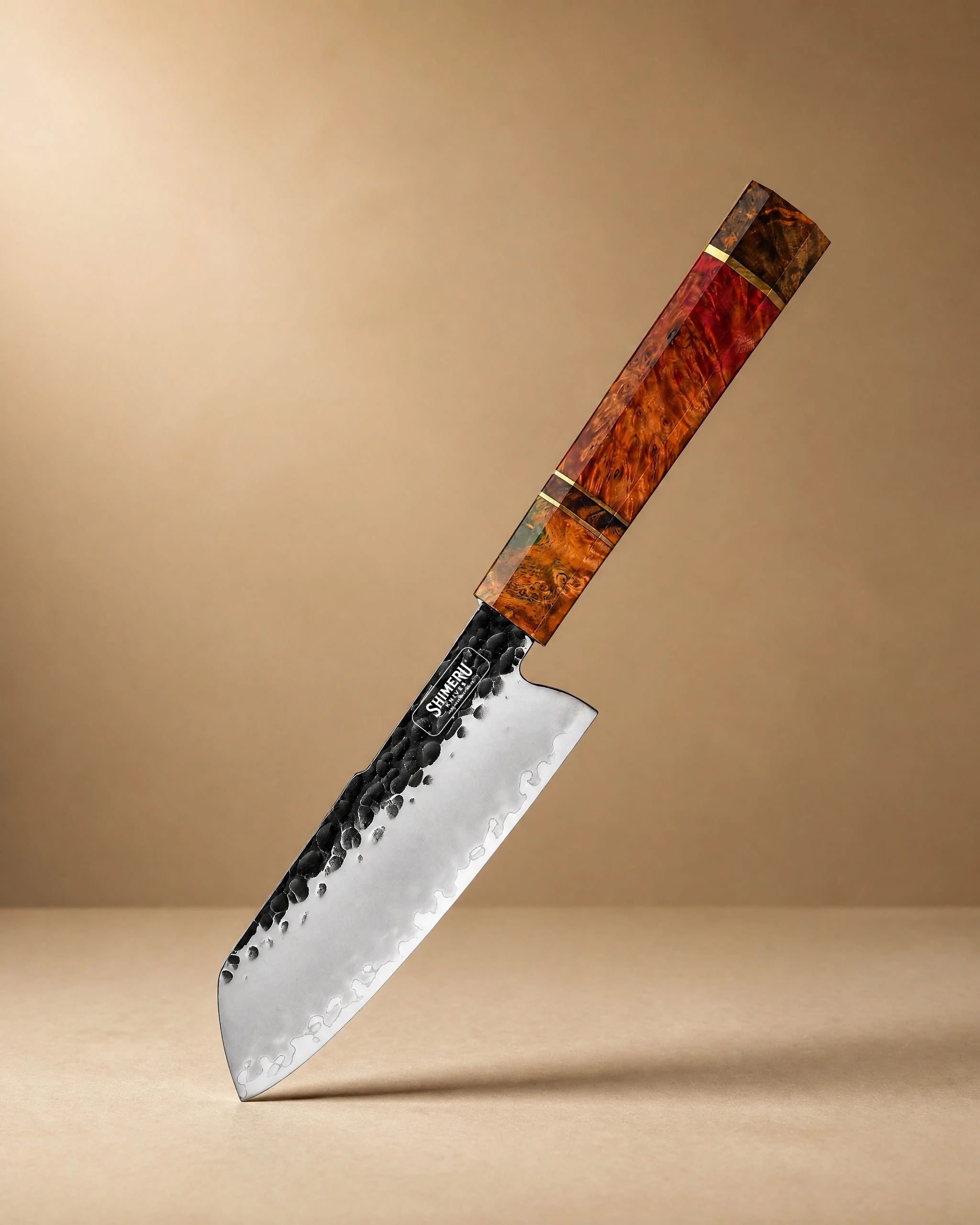 Ishikari 5" Santoku Knife 三徳包丁£64.99View product → in AUS stainless steel with a hardwood handle is a straightforward, low-maintenance choice if you want something easy to live with and easy to keep sharp.
Blade profile is the second decision. A standard santoku has a gently curved tip. A kengata santoku, sometimes called a kiritsuke-style santoku, has an angled, sword-like tip that gives you a sharper point for detail work while keeping the flat chopping edge. If you slice a lot of fish or want a finer tip, the kengata shape is worth trying. The 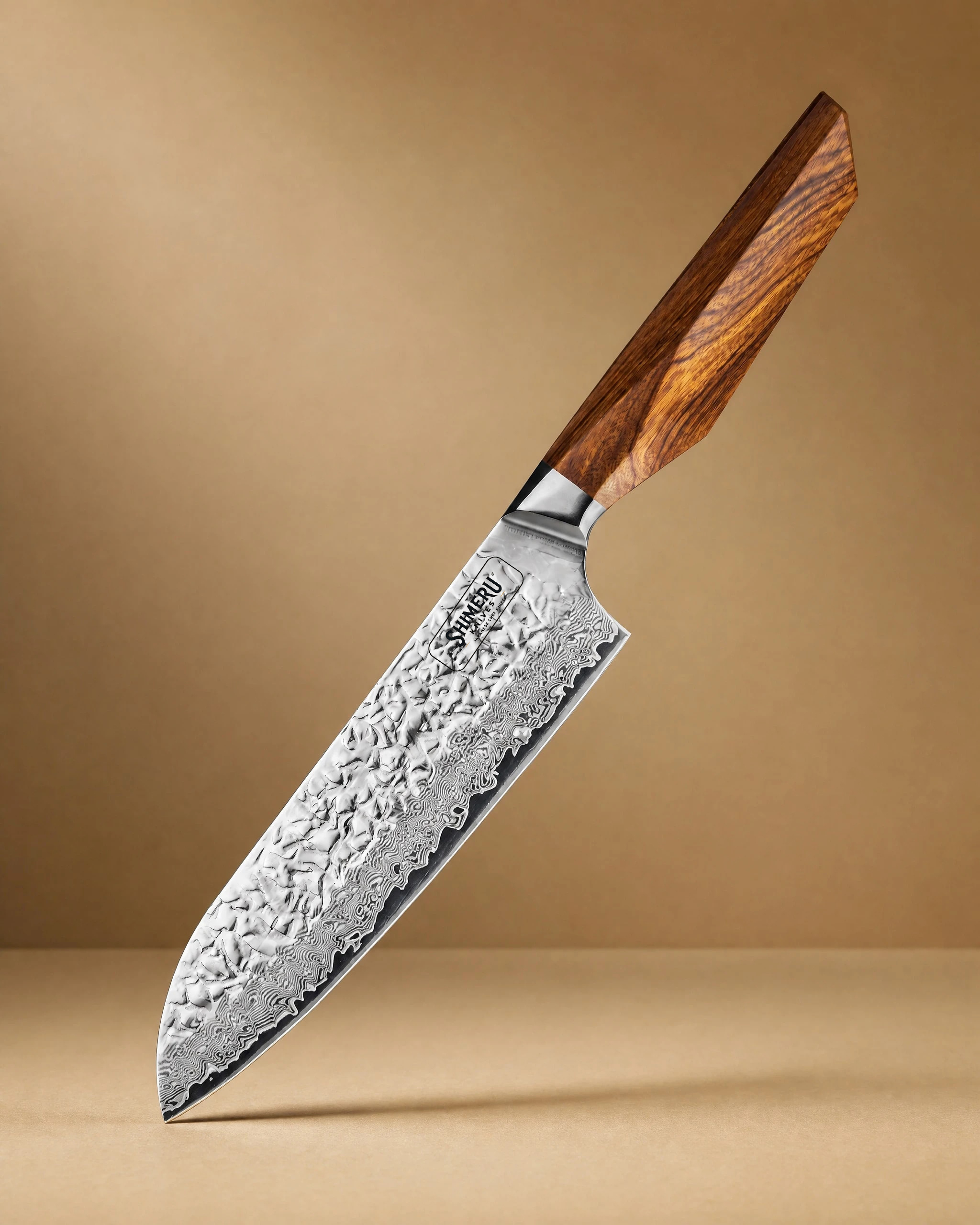 Shikoku 7" Damascus Steel Kengata Santoku 三徳包丁£79.99View product → is a 7 inch kengata in 67-layer AUS10 Damascus steel with a rosewood handle, built for vegetables, meat and fish.
If you prefer a darker, more understated look and a slightly more planted feel in the hand, the 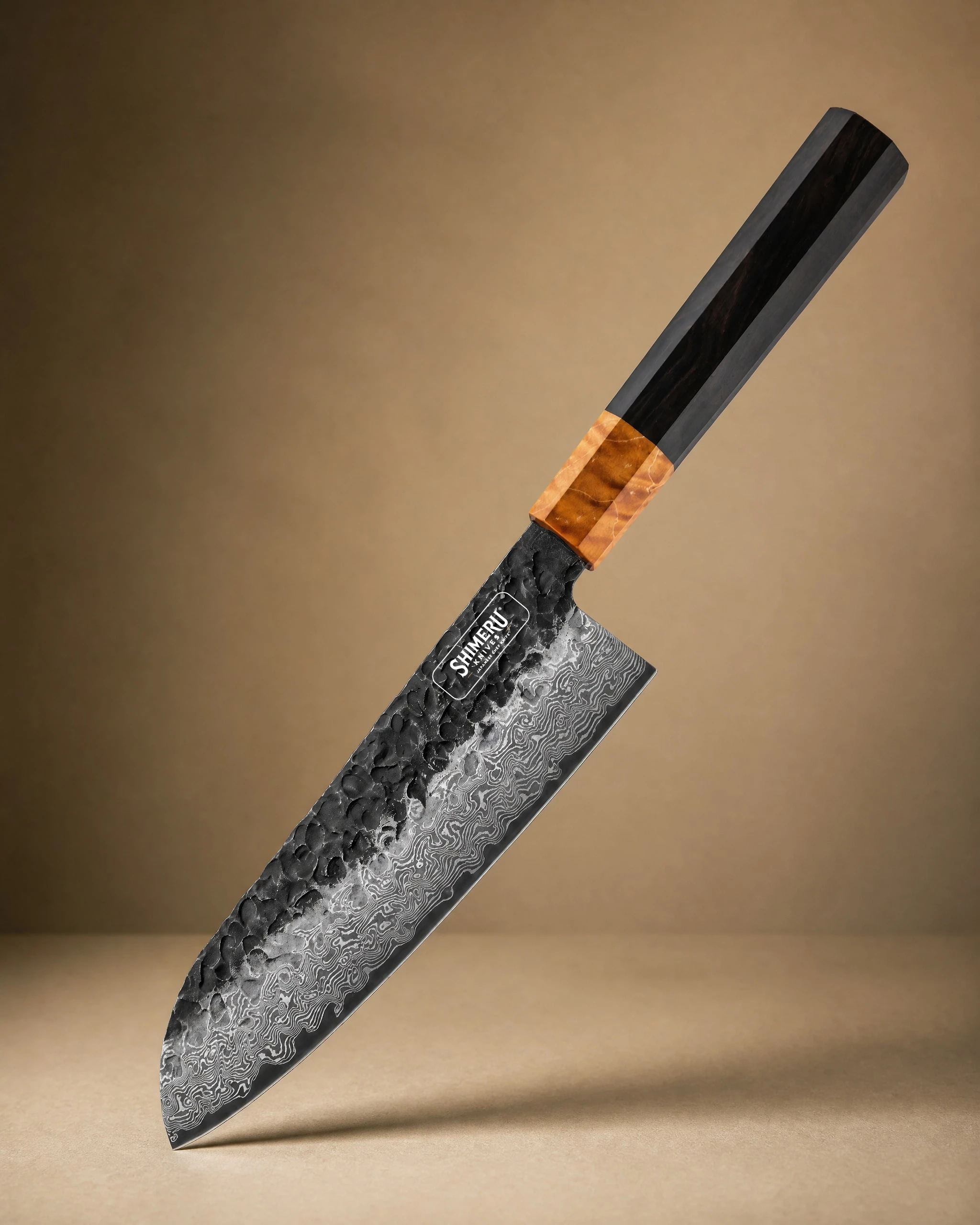 Dark Grain 7" Damascus Steel Santoku Knife 三徳包丁£79.99View product → pairs a 7 inch blade in 67-layer AUS10 Damascus steel with an ebony wood handle. It covers vegetables, meats and fish just as readily.
All four will do the same core job. The differences are length, steel, handle material and the shape of the tip. If you are unsure, start with 7 inches. It is the length most cooks settle on, and it is the easiest to use across a wide range of ingredients.
Steel and Handle: What Actually Matters
Steel choice affects edge holding, sharpening feel and rust resistance. VG10 is a well known Japanese stainless steel with good edge retention. AUS10 is a slightly softer, tougher stainless that sharpens easily and resists chipping. Damascus cladding is largely about corrosion resistance and appearance rather than cutting performance, though the layered construction is usually wrapped around a thin, hard core, and that core is where the cutting feel comes from.
Handles matter more than people admit. Pakka wood is dense, stable and water resistant. Hardwood and rosewood feel warm and traditional but want a little more care. Ebony is dense and dark and gives a heavier, more controlled feel. None of these are wrong. Pick the one that feels right in your hand, because a knife you enjoy holding gets used, and a knife that gets used gets sharpened, and a sharp knife is a safe knife.
Using and Caring for a Santoku
A few habits keep a santoku in good shape for years.
Cut on wood or soft plastic. Glass, stone and ceramic boards dull an edge quickly. Wash by hand and dry immediately, since dishwashers combine heat, moisture, detergent and knocking against other items, and thin Japanese edges do not enjoy any of that. Store the knife on a magnetic strip, in a block or in a saya, never loose in a drawer.
Hone lightly and sharpen properly. A santoku benefits from a few passes on a fine whetstone every few weeks rather than aggressive steeling. If you are new to stones, start with a 1000 grit and learn to feel for the burr. Our knife care guide covers sharpening angles, stone choice and daily habits in more detail.
Is a Santoku Right for You?
If you cook vegetables, fish and boneless meat, and you want one knife that is light, sharp and pleasant to use, a santoku is an excellent choice and often the only knife you need. If you regularly handle bones, frozen food or very large cuts, add a heavier knife for that work rather than asking the santoku to do it.
Browse the full range at all products, or go straight to the santoku category to compare lengths and steels side by side. Both pages show current specifications and prices, so you can match a knife to how you actually cook rather than to a description.
Photography: Kevin Doran via Unsplash.


