
What Is a Santoku Blade and What Is It Used For?

A santoku blade is one of the most useful shapes in a home kitchen, and one of the most misunderstood. The name means three virtues, and it points to the blade's original purpose: to handle meat, fish and vegetables with one practical knife. In Japan it became the everyday home knife, while the longer gyuto took on more of the professional chef's work. The useful question is not whether a santoku is better than a chef's knife. It is whether its shape matches the way you actually cut.
What a santoku blade is
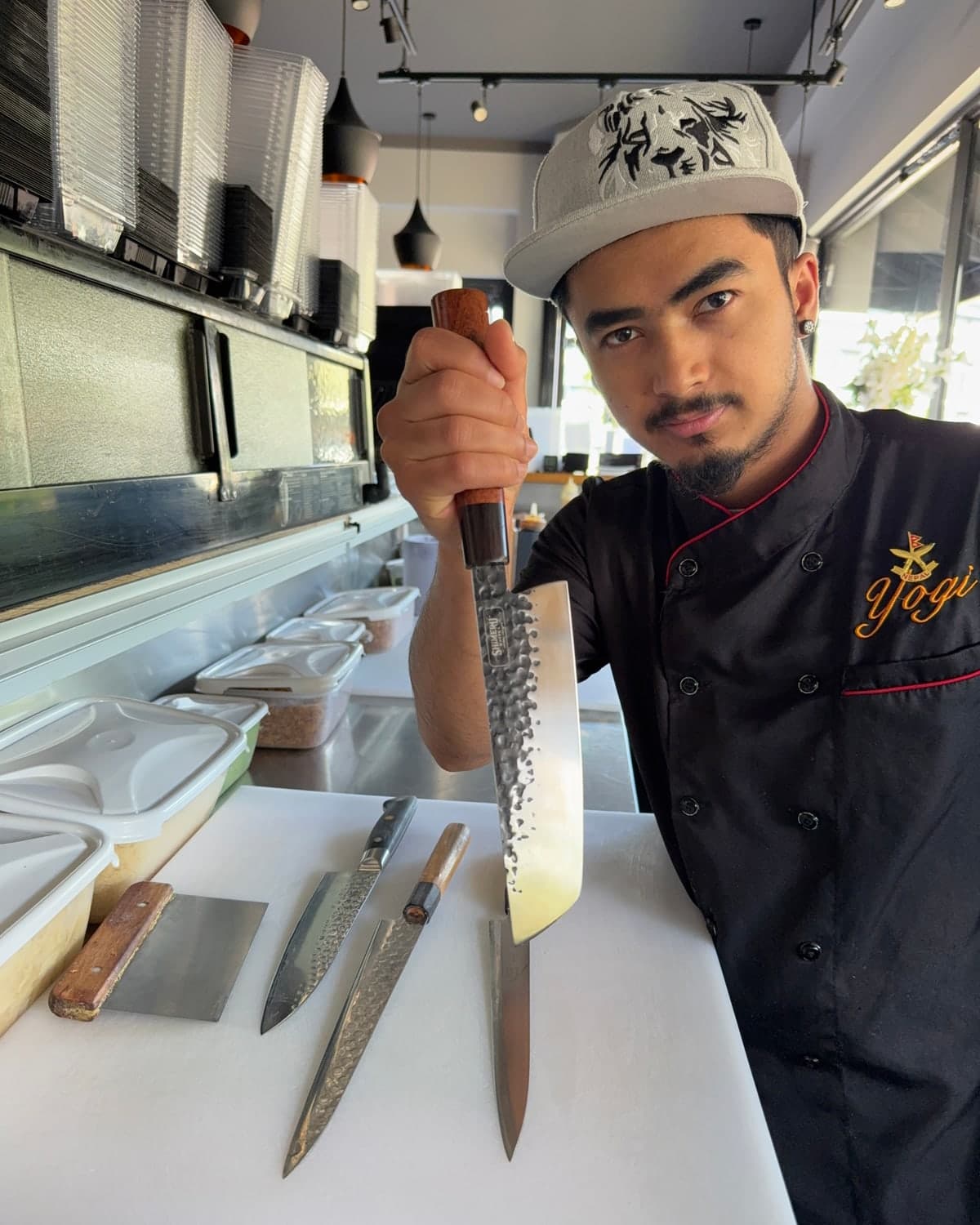
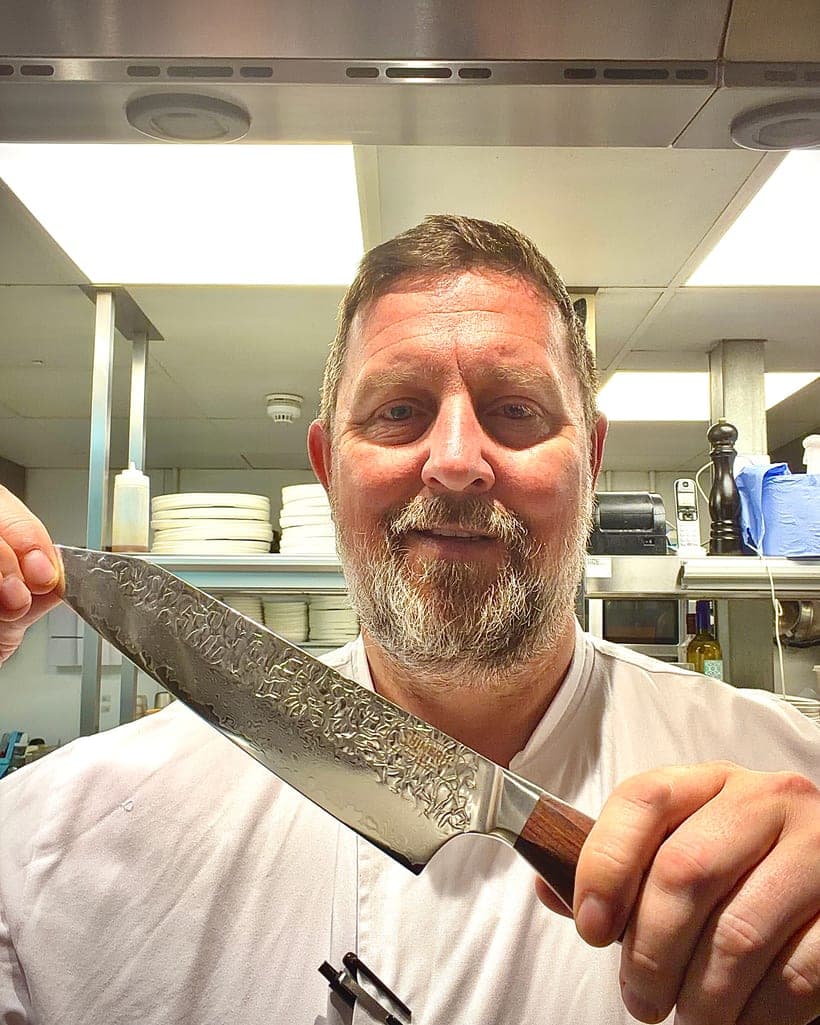
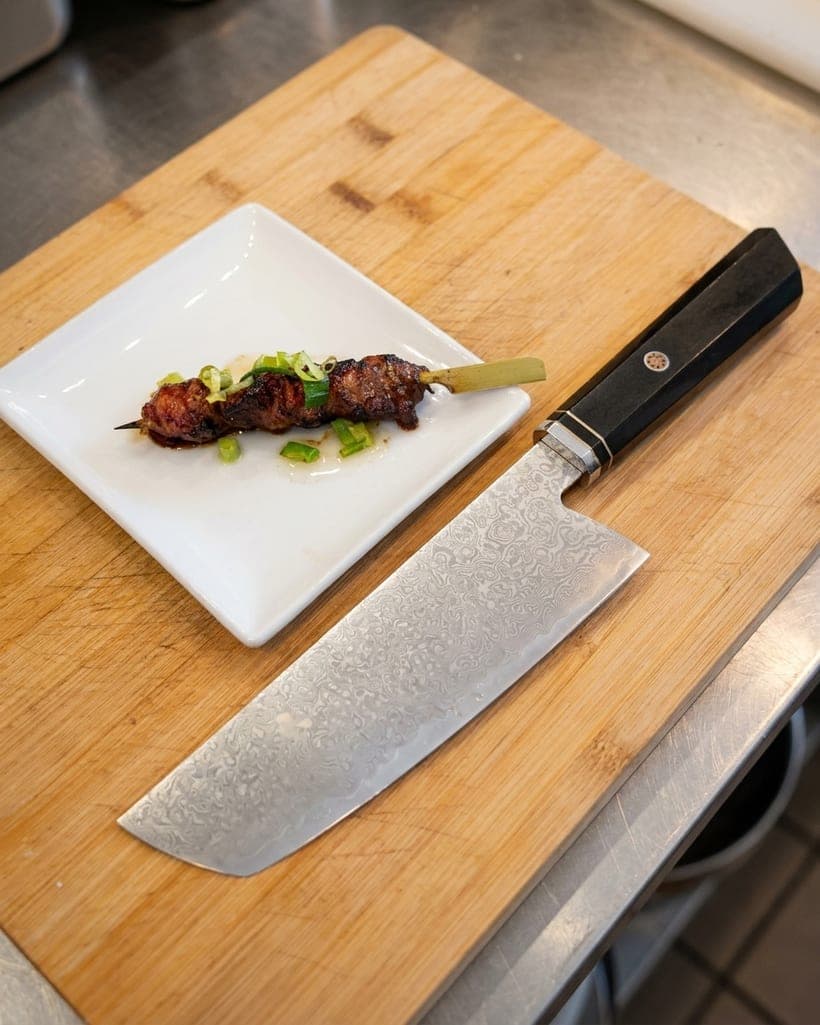
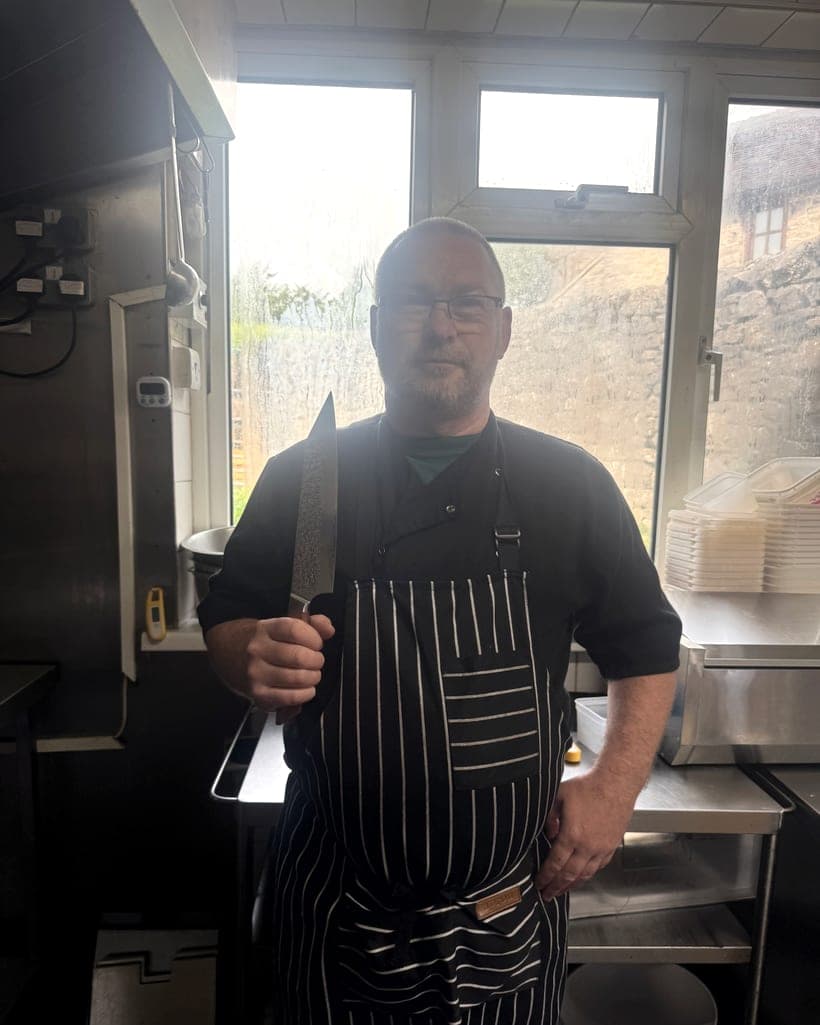
A santoku blade is a Japanese all-purpose kitchen knife, usually shorter and taller than a Western chef's knife. The edge is relatively flat, with a gentle curve towards the tip and a spine that drops down to meet it. That gives you a broad blade face, good clearance for your knuckles and a controlled, straight cut. Many santoku knives have small scallops along the side, often called a granton edge. They help food release, but they do not make the knife self-sharpening.
Most home santoku knives sit in the 165mm to 180mm range. A 180mm santoku is a sensible size for many UK kitchens: long enough for a cabbage or a bunch of parsley, short enough to feel nimble on a small board. The blade is often about 45mm to 50mm tall at the heel, which gives room for your fingers and makes scooping easier. Those dimensions are typical rather than fixed. A santoku is a pattern, not a single specification. The spine often has a gentle downward curve, and the tip sits close to the board when the heel is down. That shape encourages a straight cut rather than a long rocking stroke. The three virtues are usually given as meat, fish and vegetables, or as slicing, dicing and mincing. Both descriptions are reasonable. The point is that the knife is designed to be competent across everyday prep rather than specialised for one job.
What a santoku knife is used for
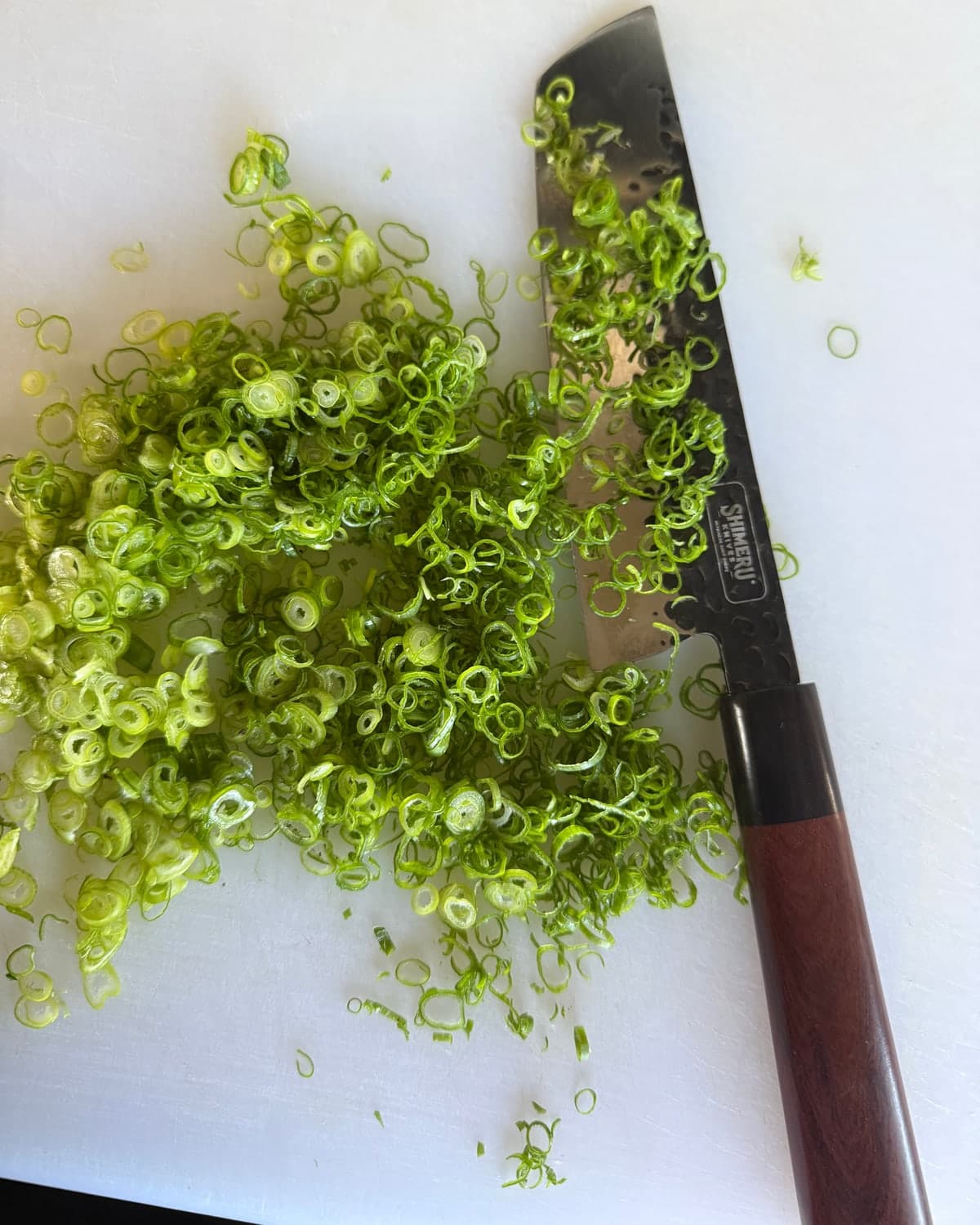
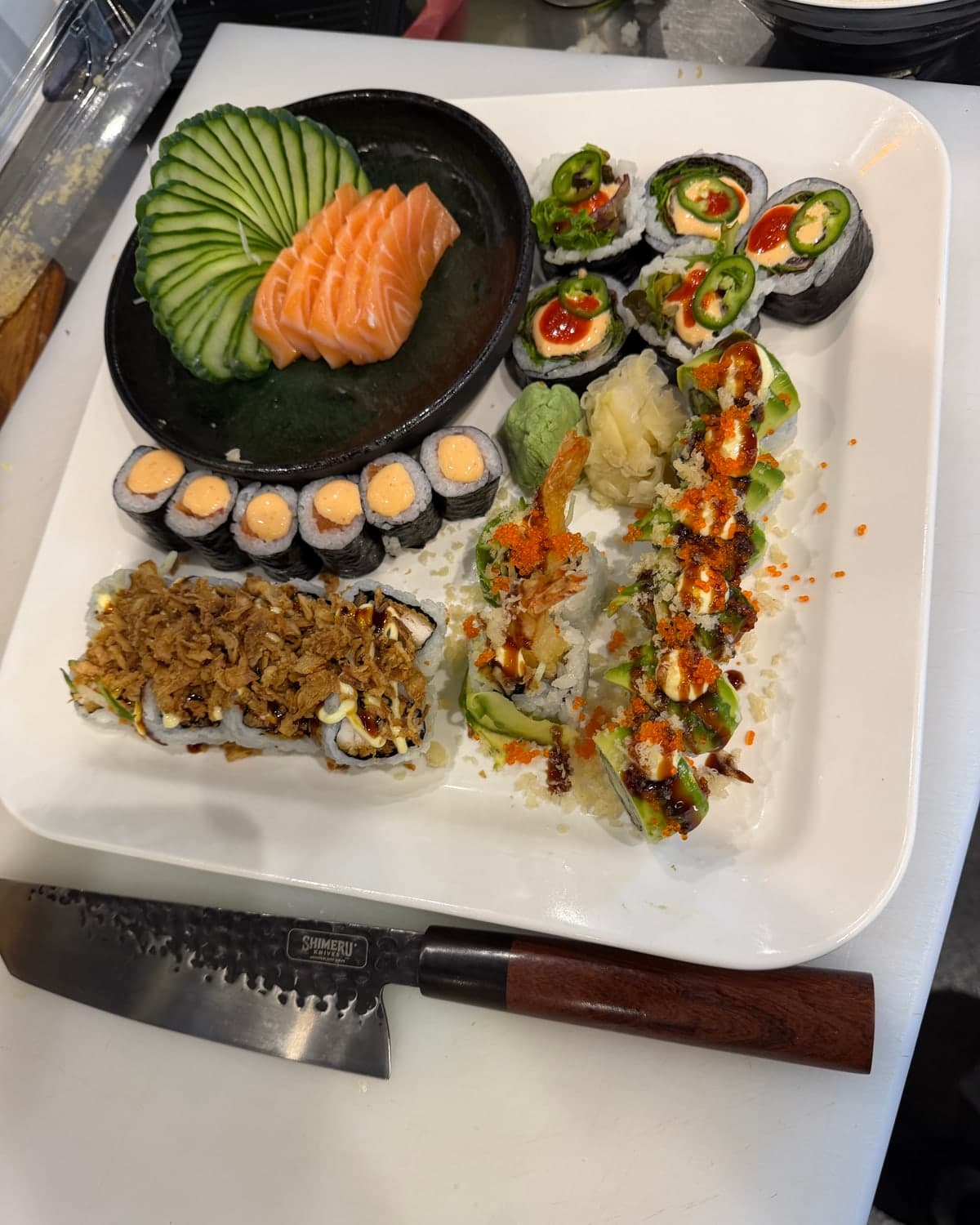
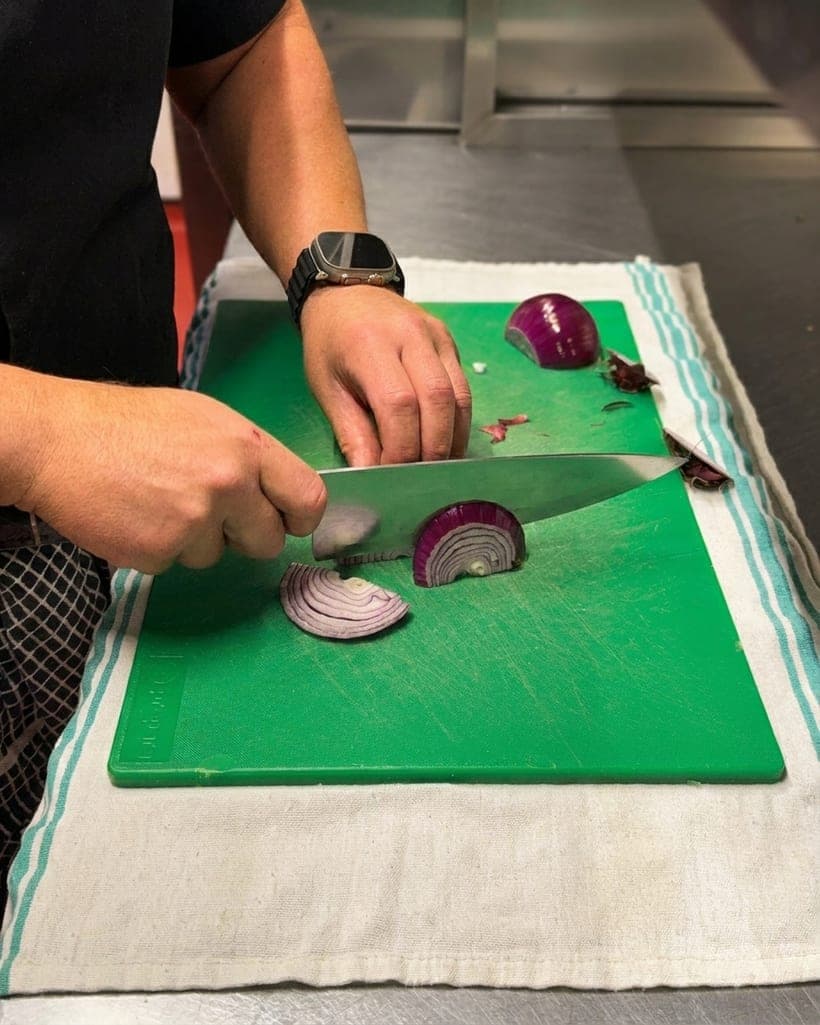
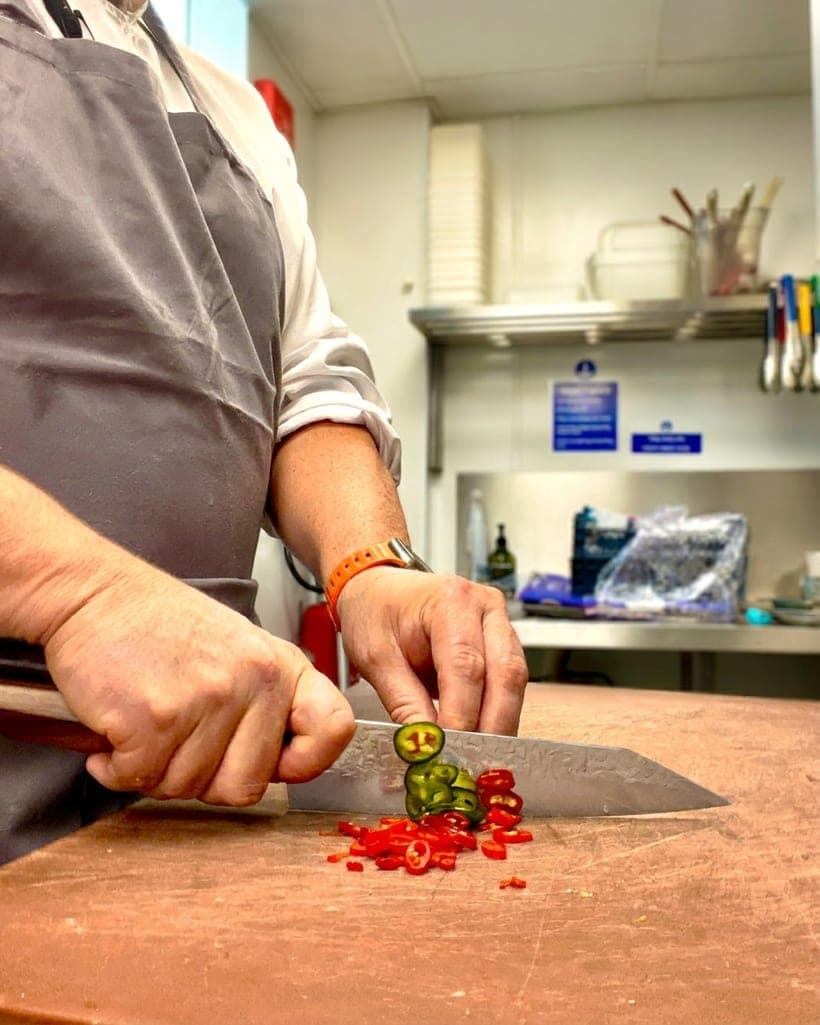
The santoku knife purpose is straightforward: everyday preparation. It is at its best with vegetables, herbs, boneless meat and fish fillets. The flatter edge makes it natural to push straight down through onions, carrots, courgettes and potatoes. The tall blade gives you space to use a pinch grip and a claw hand, which is safer and more accurate than holding the knife like a hammer. You can also use the blade face to scoop chopped food from the board, using the spine or the flat side rather than dragging the edge sideways.
- Vegetables: onions, leeks, carrots, cabbage, peppers, mushrooms and courgettes.
- Herbs: parsley, coriander, basil and chives, chopped with a light touch rather than a hard crush.
- Boneless meat: chicken breasts, steaks, pork loin and similar cuts, sliced or cubed.
- Fish: boneless fillets, sliced or portioned, though a dedicated fillet knife is better for intricate work.
- Fruit: apples, pears, citrus and soft fruit, depending on the size of the blade.
- Everyday sandwiches and salads: quick prep where a long chef's knife would feel unnecessary.
This is the practical santoku knife use: a knife you leave on the board because it handles most of the day's cooking. It is less suited to heavy rocking through a large bunch of herbs or a big roast. It is also not the knife for bones, frozen food, squash with a very hard skin or anything that needs a cleaver. Use for santoku knife work is mainly board work, and it rewards a light touch. Stay within those limits and it will feel like a sensible kitchen tool rather than a compromise.

Santoku blade versus a gyuto
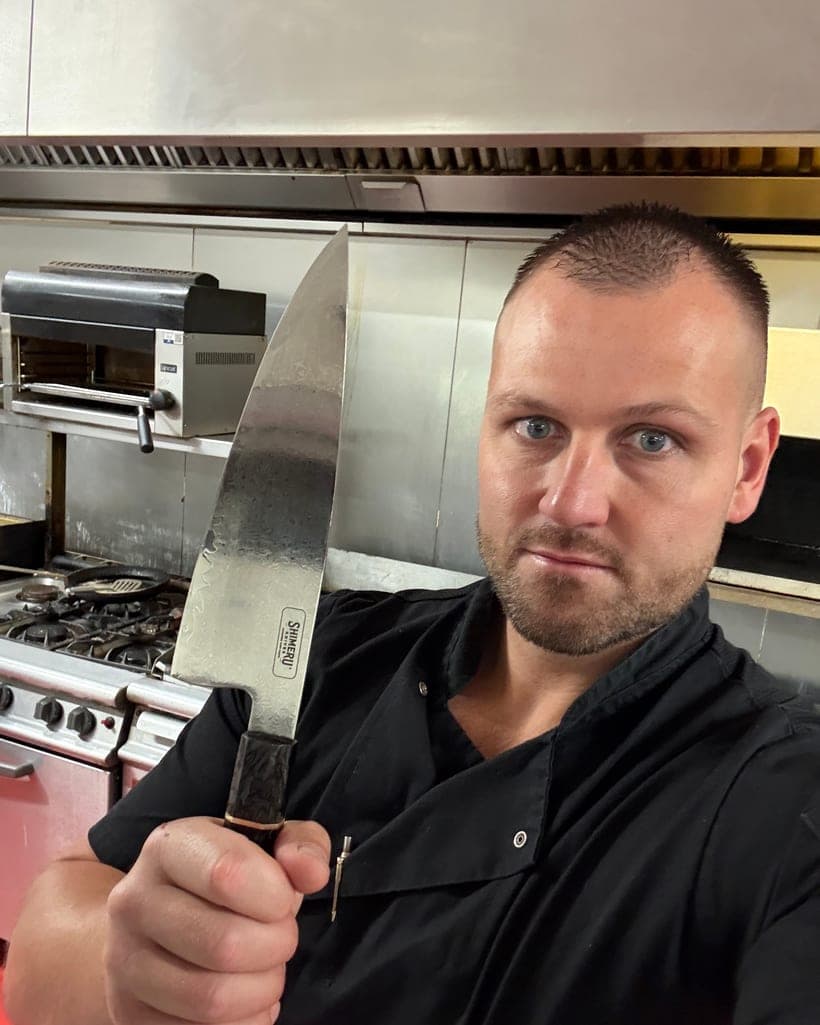
The gyuto is the Japanese take on a Western chef's knife. It usually has a longer blade, more belly and a more pronounced curve towards the tip. That makes it better for rocking cuts, long slicing strokes and larger pieces of meat. A santoku is shorter, flatter and often taller. It suits push cuts, downward chopping and precise vegetable prep. Neither is superior. They are different answers to the same question: what do you cook most often?
If you regularly carve roasts, slice large fish or cook with a rocking motion, a gyuto may feel more natural. Three options in our shop are 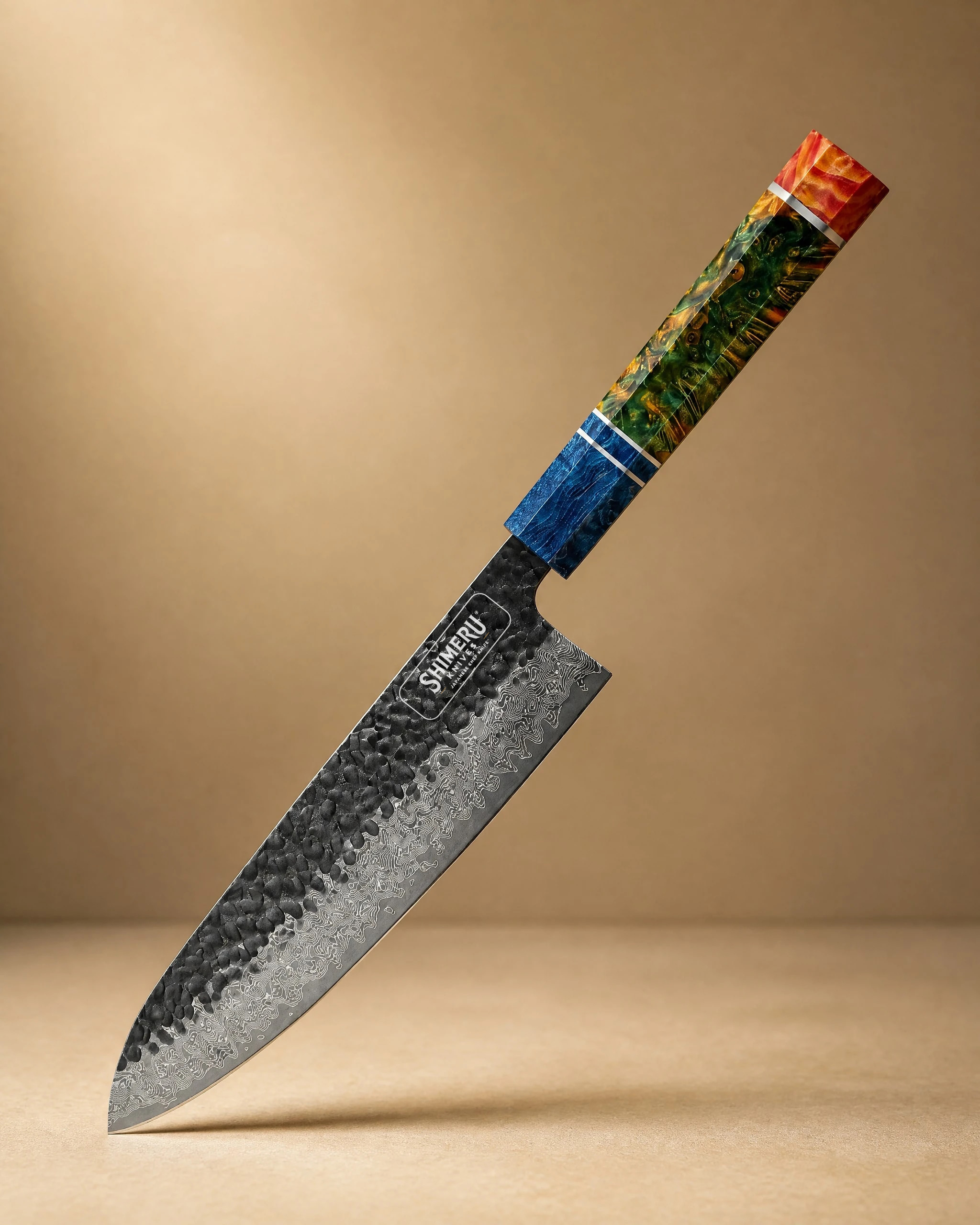 Yoshii 8″ Damascus Steel Gyuto Knife 牛刀£79.99View product →,
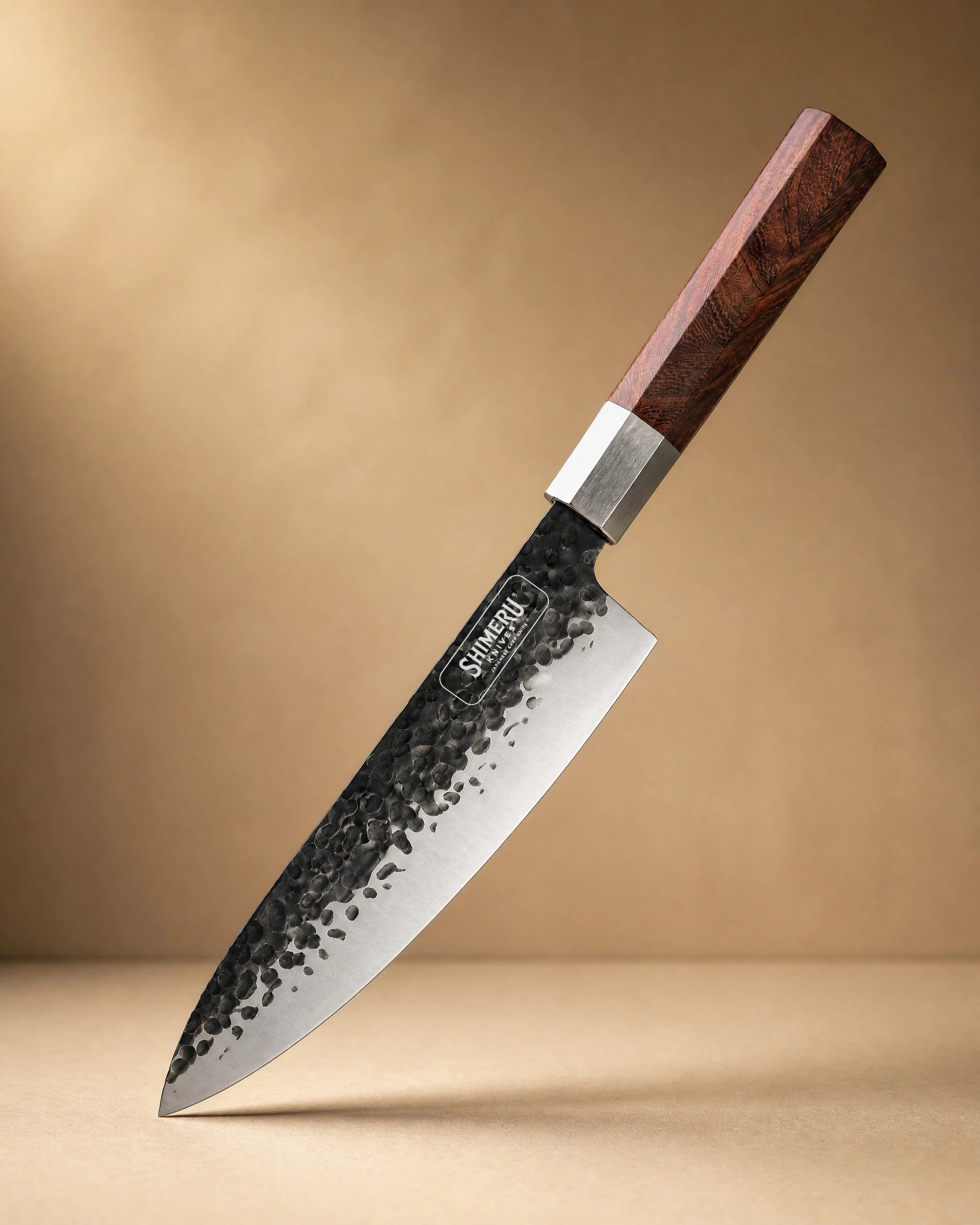 Sendai 8" Steel Gyuto Knife 牛刀£49.99View product → and
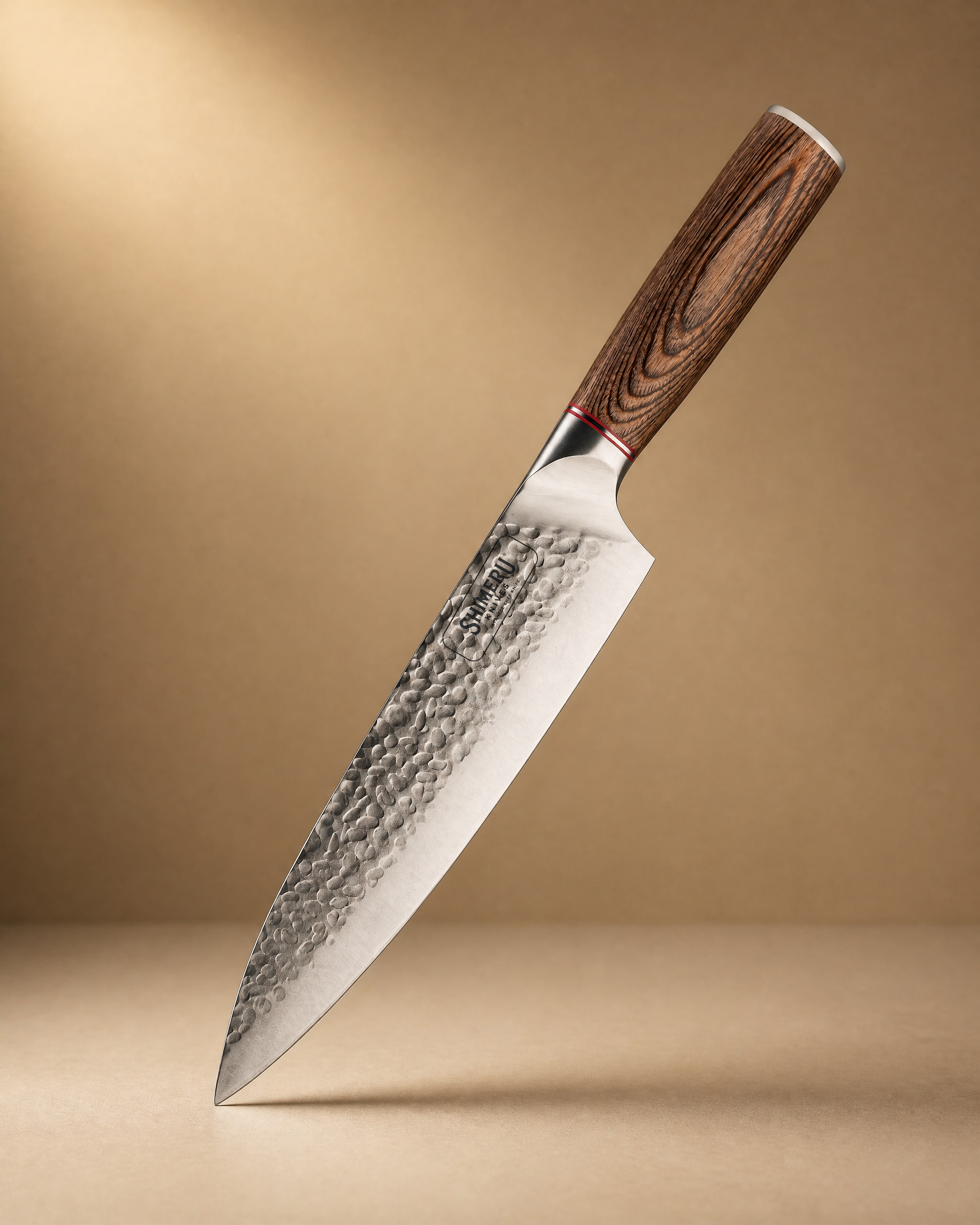 Akan 8'' Gyuto Knife 牛刀£49.99View product →. If you are setting up a kitchen from scratch, or buying for a household where several people cook,
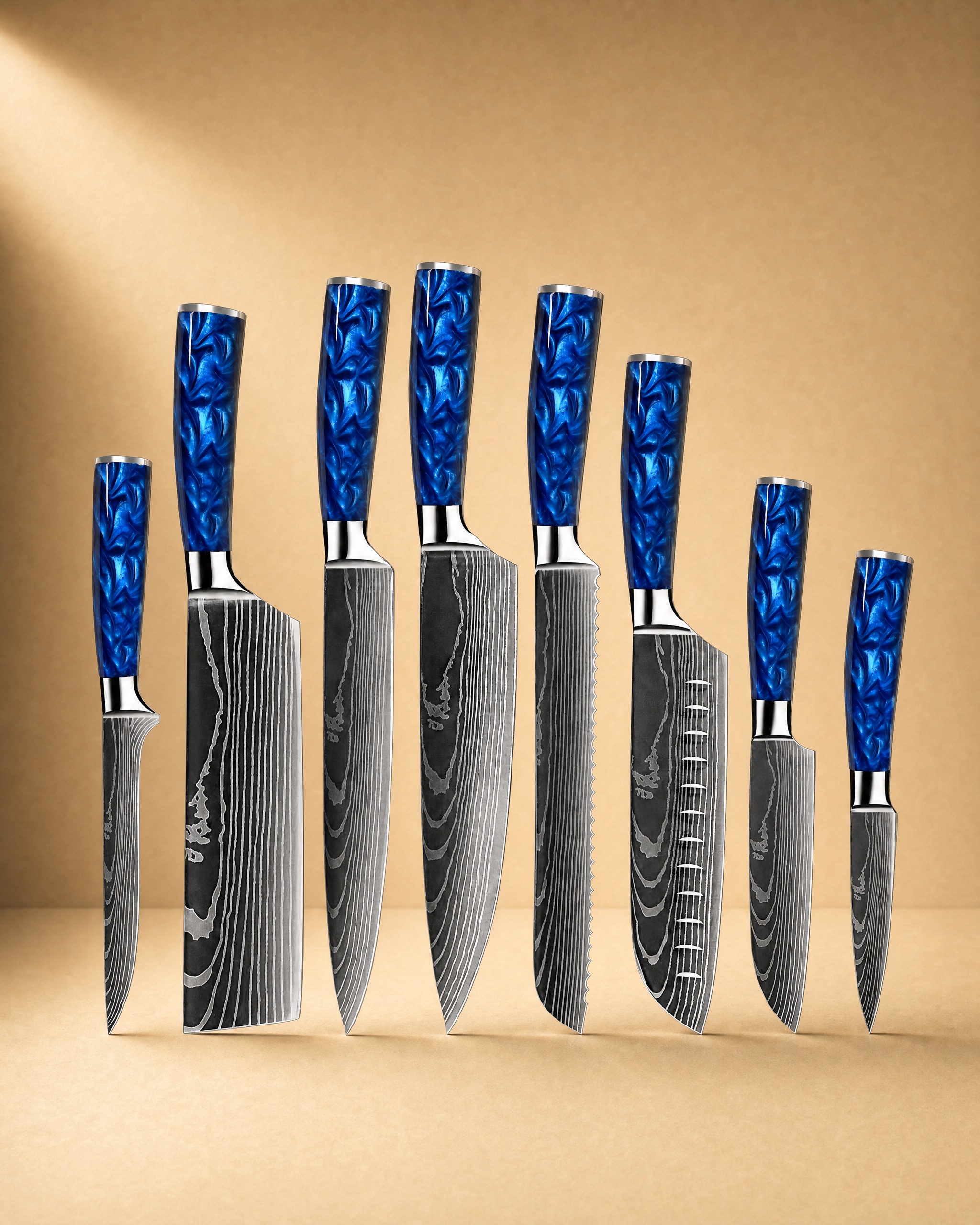 Shinano 信濃川 Damascus Pattern Stainless Steel Kitchen 8 Knife Set£149.99View product → may be more practical than adding another single knife. A santoku can still be the knife you reach for most days, with a gyuto alongside it for longer cuts. Many cooks end up with both because they do different jobs well. The trade-off is reach against control.
How to use a santoku properly
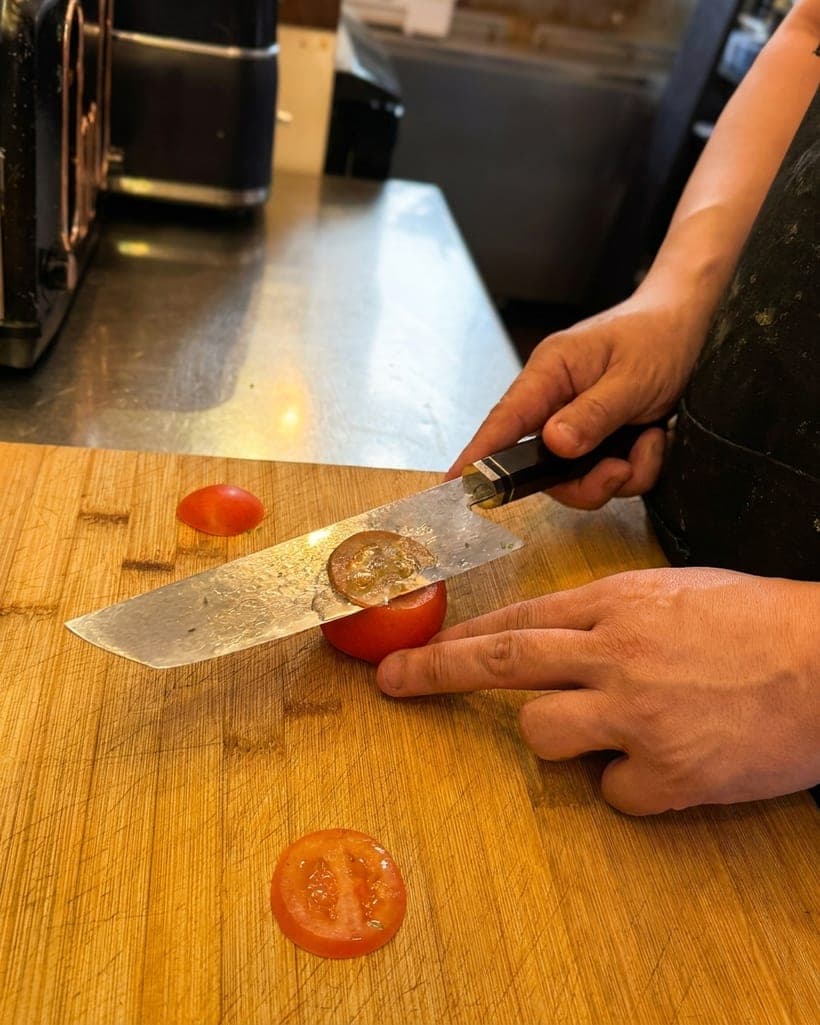
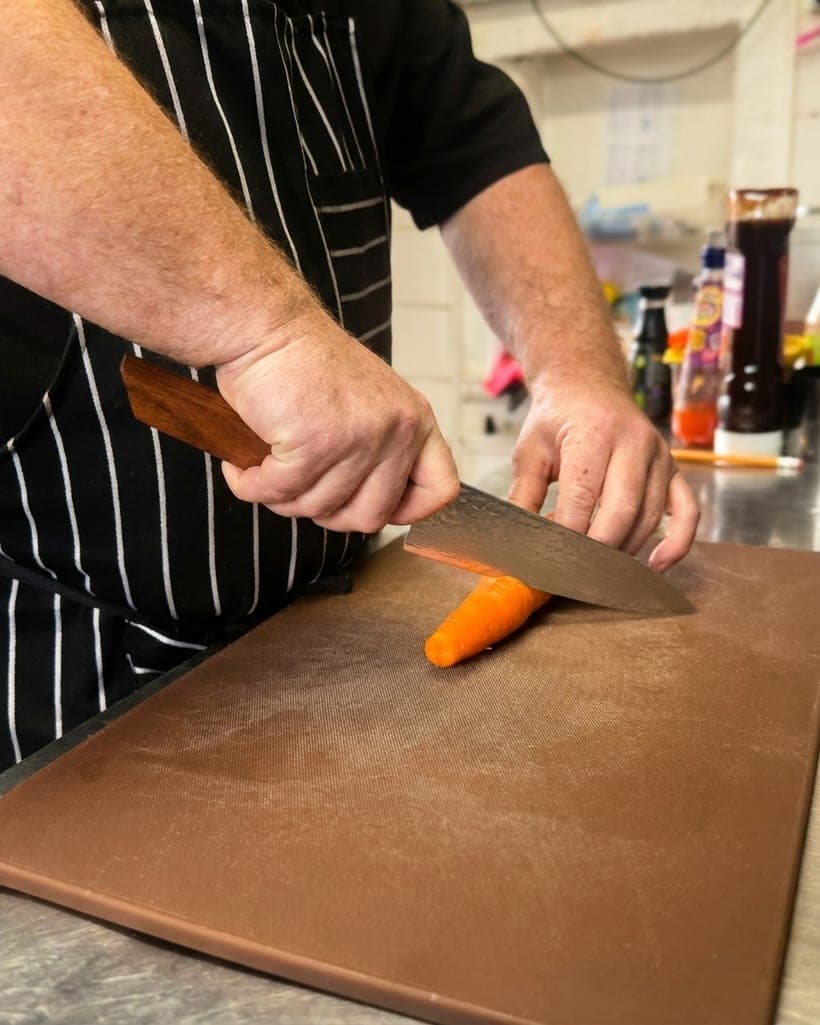
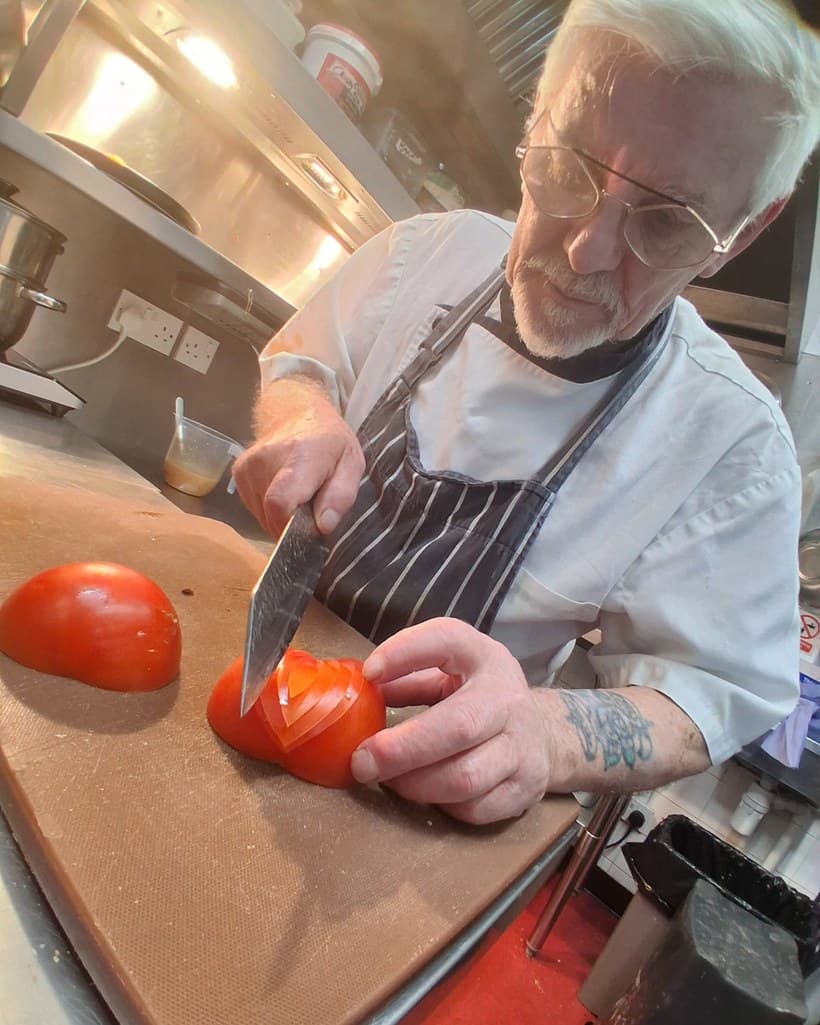
Start with a pinch grip: hold the blade between thumb and forefinger just ahead of the bolster or handle, with the other fingers wrapped around the handle. Curl the fingertips of your guiding hand into a claw, with the knuckles forward and the fingertips tucked back. The blade should ride against your knuckles, not your fingertips. For most santoku work, use a push cut. Place the tip or the middle of the edge on the food, then push forward and down. For taller vegetables, use the heel for the first cut and the tip for finer work. For meat, use a clean draw slice rather than pressing straight down.
Keep the board stable and use a surface that is kind to the edge. End-grain wood or a soft plastic board is better than glass or stone. Do not scrape the edge across the board to move food. Turn the knife over and use the spine, or use a bench scraper. These habits matter more than the brand on the blade.
Blade care and sharpening
A santoku can be made from stainless steel, high-carbon steel or a layered construction. Stainless steel is easier for most homes because it tolerates a little neglect. High-carbon steel can take a very fine edge but needs more attention. Whatever the steel, wash the knife by hand, dry it immediately and put it away. Do not leave it in the sink and do not put it in the dishwasher. Heat, detergent and knocking against other items are unkind to a thin edge.
For routine maintenance, a honing rod can realign an edge that has rolled slightly, but it will not sharpen a dull knife. Sharpening should be done on a whetstone or by a professional service. Our knife care guide covers washing, drying, storage and sharpening in more detail. If you are unsure whether to hone or sharpen, test the knife on a tomato. If the skin resists, it needs sharpening rather than more honing.
Choosing a santoku blade
Choose a length that fits your board and your cooking. A 165mm santoku is compact and good for smaller kitchens. A 180mm santoku gives more reach and is a better all-rounder for a family kitchen. Weight matters too. A heavier blade feels stable through dense vegetables; a lighter blade feels quicker for delicate work. Neither is wrong, but you should handle the knife if you can. A knife that feels clumsy in your hand will stay in the drawer. If you mostly cook for one or two people, a shorter blade can be easier to manage; for larger batches, more length helps.
Look at the handle as well as the blade. A handle that is too small or too smooth can make a safe grip harder. A handle that is too large can feel unwieldy. The transition between handle and blade should be smooth and comfortable for your grip. Our knife guide explains blade length, steel types and handle shapes. You can browse the full range at our knife shop. Buy for the cooking you do most, not for the cooking you imagine you might do one day. A santoku is a practical choice for a vegetable-heavy kitchen, a small board and a cook who likes control. A gyuto is a practical choice for longer cuts and rocking. Many homes are well served by one of each.
Common myths about the santoku
The scallops on a santoku blade do not make it self-sharpening. A santoku is not automatically better than a chef's knife, and a chef's knife is not automatically better than a santoku. The name does not guarantee that a knife is made in Japan. It describes a shape. A santoku is also not a cleaver. Do not use it on bones, frozen food or hard squash skins. It is not a bread knife, and it is not a filleting knife. It is an all-purpose home knife with a useful but specific set of strengths. If a knife is described as a santoku, ask what the blade length and steel are, not just the name.
The short answer
A santoku blade is a short, tall Japanese all-purpose knife for everyday prep. Its santoku knife purpose is to handle vegetables, herbs, boneless meat and fish with a controlled push cut. Use for santoku knife work is mainly board work: chopping, slicing and dicing at home. It is not a cleaver or a replacement for every knife, but it is a very good knife to reach for most days. If your cooking is vegetable-led and your workspace is modest, a santoku makes sense. If you regularly slice large roasts or prefer a rocking cut, choose a gyuto as well. Either way, buy a knife that fits your hand and your board, and keep it sharp.
Photography: Kevin Doran via Unsplash.

