


Whetstone Flattening Stone Guide
A whetstone is a consumable. Every sharpening session takes steel off your knife and abrasive off the stone, and the middle of the stone usually wears faster than the ends because that is where most of the blade travels. Over weeks and months, that wear turns into a shallow hollow. The trade calls it dishing, and it is the most common reason a stone stops giving clean, consistent edges.
This guide covers what a whetstone flattening stone does, how the main types compare, how to use one properly, and how often to do it. It is written for people who sharpen at home on a bench stone, not for professionals running a production line.
What Dishing Does to Your Edge
When a stone hollows, the blade only touches the raised sections at each end. The angle you set with your hands stays the same, but the surface under the edge is no longer flat, so the bevel that comes off it is not flat either. On a badly dished stone you end up with a rounded or uneven bevel, a weak spot near the heel, and a tip that never quite gets sharp.
The problem compounds. A dished stone encourages you to press harder into the hollow, which wears it faster still. A 1000 grit stone with a visible dip of a millimetre or so is already worth flattening, and coarse stones can reach that point in a handful of sessions.
What a Flattening Stone Is
A flattening stone, sometimes called a lapping stone, is a flat abrasive block used to grind your sharpening stone back to true. It is not a finer sharpening stone and it is not for sharpening knives. Its job is to remove the high spots from a water stone until the surface is flat again.
Two qualities matter: it must be flat itself, and it must be coarse and hard enough to cut water stone quickly without loading up. Most are silicon carbide. Diamond plates are the other common choice for the same job.
The Main Options Compared
- Silicon carbide flattening stone. Cheap, effective, works with a splash of water. It wears over time and needs replacing every year or two of regular use.
- Diamond lapping plate. Stays flatter for longer, cuts fast, works on the hardest stones. More expensive and can feel aggressive on soft stones.
- Wet and dry paper on glass. A sheet of coarse silicon carbide paper on a flat plate of glass. Cheap and very flat, but the paper tears and needs changing often.
For most home sharpeners with one or two water stones, a silicon carbide flattening stone is enough. If you own hard ceramic stones or sharpen often, a diamond plate earns its price.
Choosing the Right Size and Grit
Buy a flattener at least as long as your longest stone. A short block works, but it takes longer and you are more likely to work one area harder than the rest. Around 200 to 220 grit is typical for silicon carbide, coarse enough to cut quickly and fine enough to leave a usable surface.
Very coarse flatteners remove stone fast but leave a rougher face, which can feel different under the blade for the first few passes. Most people settle on one mid coarse block and use it for everything.
How to Flatten a Whetstone
The pencil grid is the method worth learning. It takes two minutes and removes all the guesswork.
Mark the stone. Draw a grid of pencil lines across the whole surface of the dry stone, roughly a centimetre apart. Use a soft pencil so the marks are clear.
Wet both stones. Soak a water stone as you normally would, then splash water on the flattening stone. Water keeps the abrasive cutting and carries the slurry away.
Work in figure eights. Rub the sharpening stone over the flattener in slow figure eights, turning the stone a quarter turn every so often. Keep the pressure even and let the abrasive do the work. Move across the whole surface of the flattener rather than working one spot.
Watch the pencil disappear. When every trace of pencil is gone, the stone is flat. If lines remain at the ends or in the middle, keep going. Rinse both stones and dry them.
Work outside or over a sink. The slurry is messy and mildly abrasive, so do not let it dry on your worktop.
How Often Should You Flatten?
There is no fixed schedule, because it depends on the stone, the grit, your pressure and how many knives you sharpen. Coarse stones dish much faster than fine ones. A 400 grit stone used for thinning can need flattening after a single long session, while an 8000 grit finishing stone may stay flat for months.
A sensible habit is to check once a month. Lay a steel rule across the stone against the light and look for a gap under the middle, or draw a quick pencil grid. Flatten when you see a dip, not on a fixed date. Flattening a stone that is already flat simply wears down both stones for nothing.
Keeping the Flattener Flat
A flattening stone is an abrasive block, so it wears too. Over time it can lose flatness, especially if you always rub in the same place. Check it with a straight edge occasionally. Some people rub two flattening stones together to true them; others accept the wear and replace the block once it is clearly out of flat.
Diamond plates hold flatness far better, but the diamond layer does eventually dull, particularly if you lean on it. Let the plate cut rather than forcing it.
Flattening, Truing and Lapping
The words get used loosely. Flattening means removing a dish so the surface is plane again. Truing is much the same job, usually applied to a stone that is out of shape rather than merely hollowed. Lapping can mean either, and it also describes conditioning the surface texture of a stone after flattening.
In practice, one pass with a coarse flattener does all three: it removes the hollow and leaves a fresh, slightly roughened face that grips water and cuts well.
Nagura Stones Are Not Flatteners
A nagura is a small stone used to raise slurry on a water stone before sharpening. It is useful, but it does not flatten anything. Using a nagura on a dished stone just makes slurry in a hollow. Keep the two jobs separate.
Which Stones Actually Need Flattening
Most synthetic water stones do, and coarse ones need it most. Very hard ceramic stones need it less often but are harder work when they do. Some natural finishing stones are deliberately kept slightly uneven, and some sharpeners never flatten them. If you are unsure about a particular stone, follow the maker's guidance.
Oil stones are a different case. Many are hard enough to stay flat for years, and a water stone flattener is not the right tool for them.
Why the Effort Is Worth It
A flat stone makes everything else easier. The bevel sits evenly, the burr forms predictably, and you spend far less time correcting mistakes. If you are working through the sharpening basics, our knife care guide covers the sequence from coarse stone to strop. If you are still choosing your first stone, the knife guide explains grit choices and what each one is for.
The knives benefit as much as the stones. A clean, flat bevel on a well made blade shows immediately in the cut, and a flat stone helps you get there. Something like the 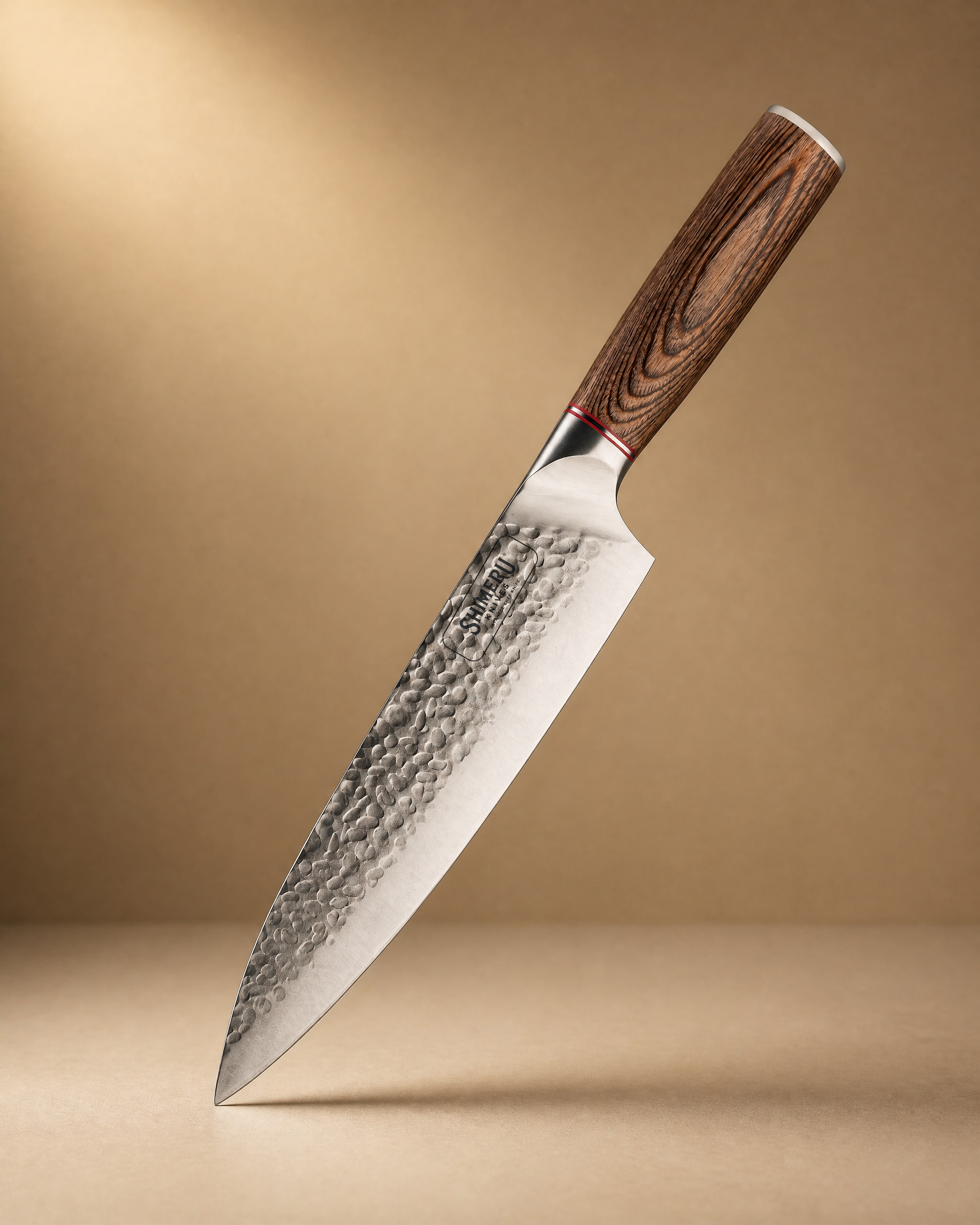 Akan 8'' Gyuto Knife 牛刀£49.99View product → takes a precise edge well because the bevel is easy to read on the stone. If you prefer a Damascus blade, the
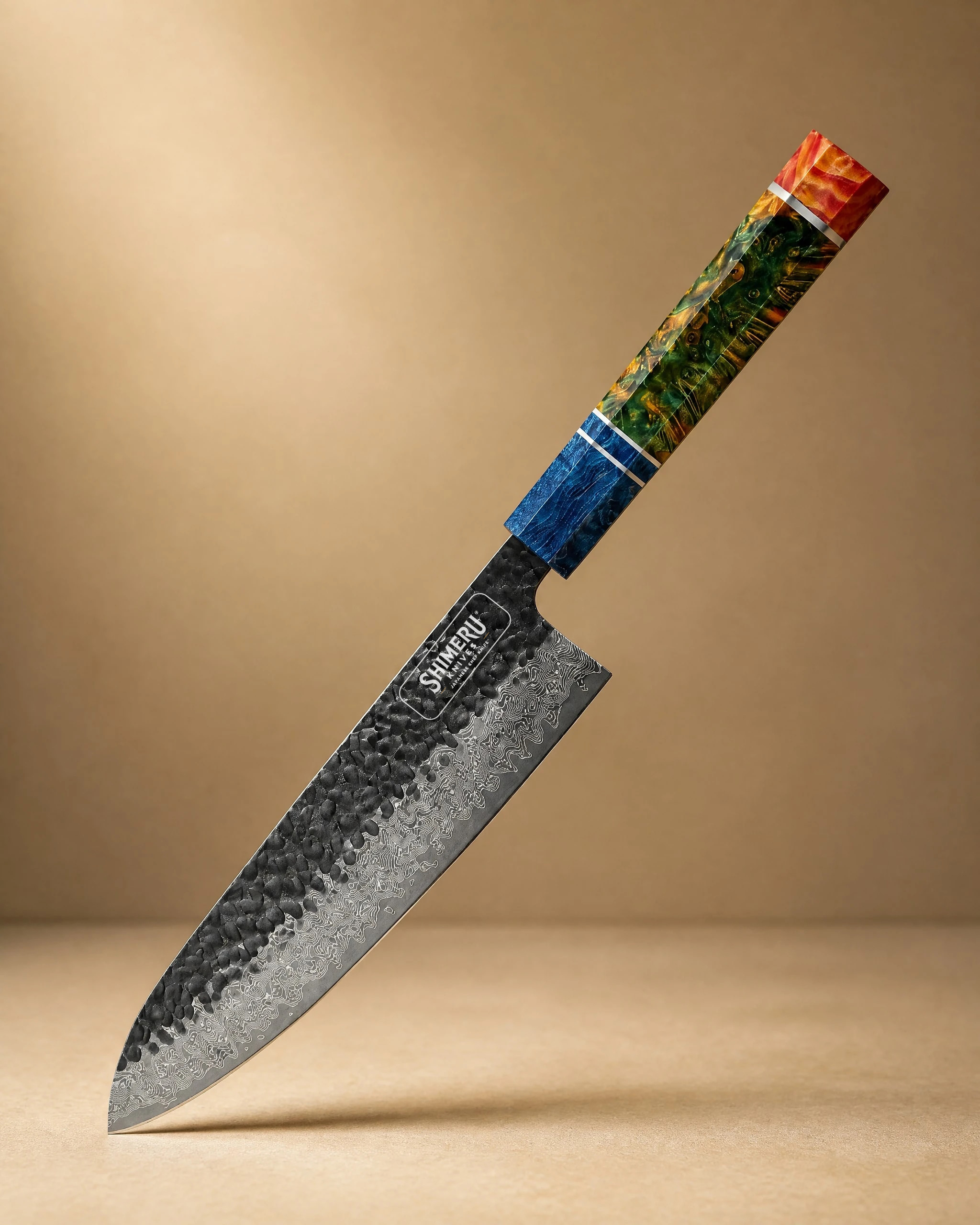 Yoshii 8″ Damascus Steel Gyuto Knife 牛刀£79.99View product → is the same story: a steady, flat bevel lets the layered steel show its best.
If you keep several knives going at once, flattening becomes part of a wider habit. A set such as the 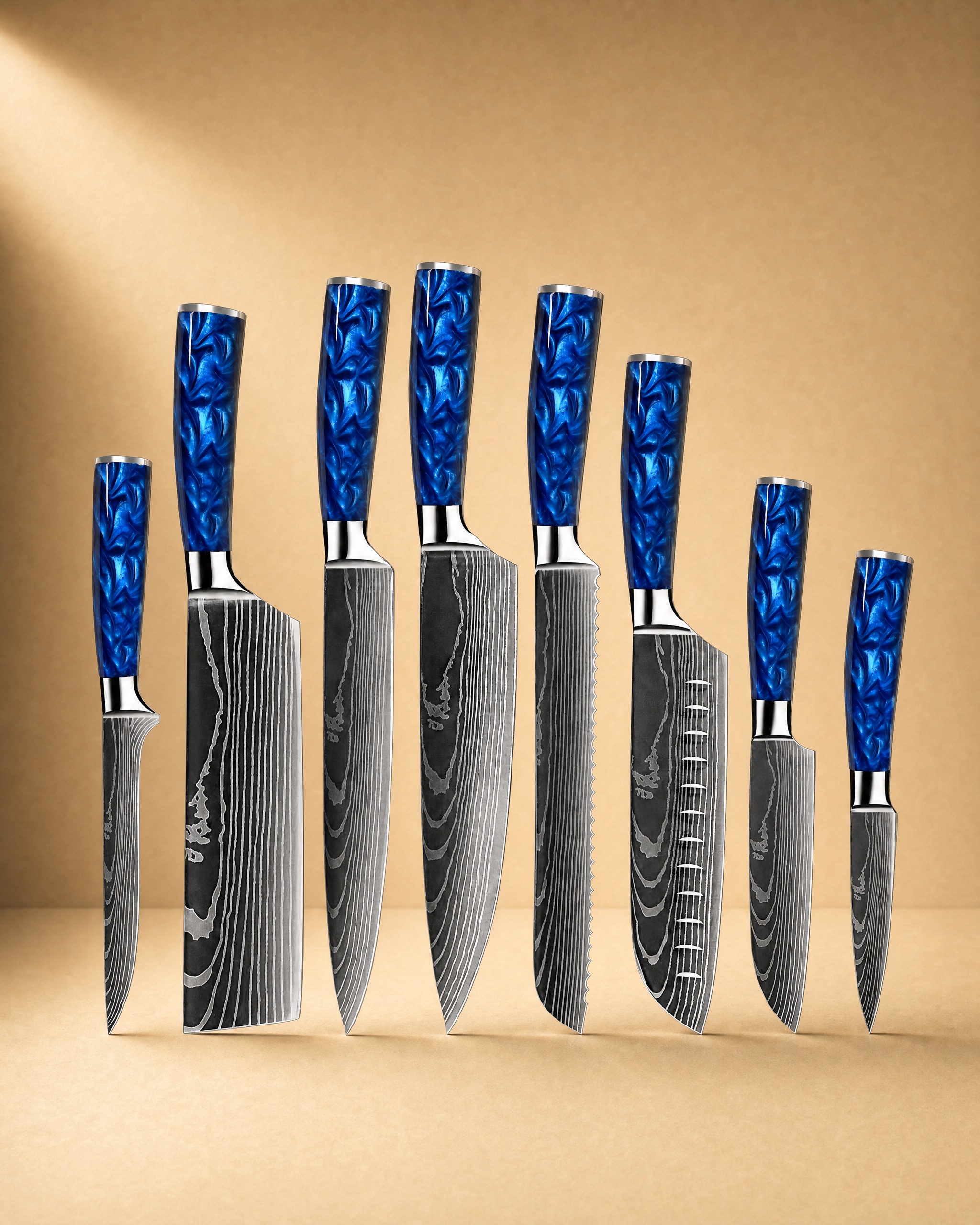 Shinano 信濃川 Damascus Pattern Stainless Steel Kitchen 8 Knife Set£149.99View product → means more knives on the stones, so check flatness a little more often. You can browse the full range in our knife shop.
Common Mistakes
Rubbing too hard is the usual one. Pressure does not speed up flattening much and it wears the flattener unevenly. Another is skipping the pencil grid, which leaves you guessing whether the stone is actually flat. A third is forgetting to rinse the slurry off both stones, where it dries hard and affects the next session.
Finally, do not flatten on a bench you care about without protection. A silicone mat or a damp cloth under the flattener keeps it stable and catches most of the mess.
A Simple Routine
Flatten at the end of a sharpening session, not the start. The stone is already wet, the slurry is already there, and you begin the next session with a true surface. Rinse, dry, and store the stones somewhere they will not freeze or sit in water.
That is the whole job: a coarse flat block, a pencil, a splash of water, and two minutes of figure eights. It is the least glamorous part of knife care and one of the most useful.


