
How to Sharpen a Knife with a Honing Rod

A honing rod, sometimes called a sharpening steel, is one of the most misunderstood tools in a kitchen. It gets used as a magic wand, three quick strokes and everything is sharp again, or it gets ignored entirely because someone once said it damages knives. Neither approach is right. The rod is a specific tool for a specific job, and once you understand which job that is, it becomes one of the most useful things you own.
This guide covers what a rod actually does, when it helps, and how to use one properly. It also covers the point where a rod stops being the answer, because pretending otherwise would waste your time and blunt your knives.
What a Honing Rod Actually Does
The edge of a kitchen knife is incredibly thin. At the tip it may be a fraction of the width of a human hair. That thinness is what makes a knife cut, and it is also what makes the edge fragile. Every time the blade meets a board, a bone, a crust or a pile of herbs, that fine edge bends slightly to one side. You cannot usually see it, but you can feel it: the knife starts to drag, skid or tear instead of slicing.
A honing rod, or sharpening steel, straightens that folded edge. The rod is harder than the blade, and when you draw the edge across it at the correct angle, the bent metal is pushed back into line. Some rods, particularly ceramic and diamond ones, also remove a little metal as they work. Their main job, though, is realignment.
Real sharpening is different. Sharpening removes metal to create a new edge, and it needs an abrasive surface: a whetstone, a diamond plate or a guided sharpener. If your knife is genuinely blunt, with a rounded edge, a rod will not fix it. It will skate over the top. This is the most important thing to know about how to sharpen a knife with sharpening steel: most of the time you are not sharpening, you are honing, and that is fine as long as you know the difference.
When a Honing Rod Is the Right Tool
Reach for the rod when the knife still cuts but feels tired. It slides off tomato skin, crushes basil instead of slicing it, or drags through an onion. That is a rolled edge, and a minute with a rod will bring it back.
Put the rod down when the knife cannot cut at all, when the edge looks shiny in the light, or when you can see chips and flat spots. Those are signs of a worn edge, and no amount of honing will help.
Blade type matters too. Thin Japanese knives respond beautifully to light, regular honing, but they dislike heavy-handed treatment. A gyuto such as the 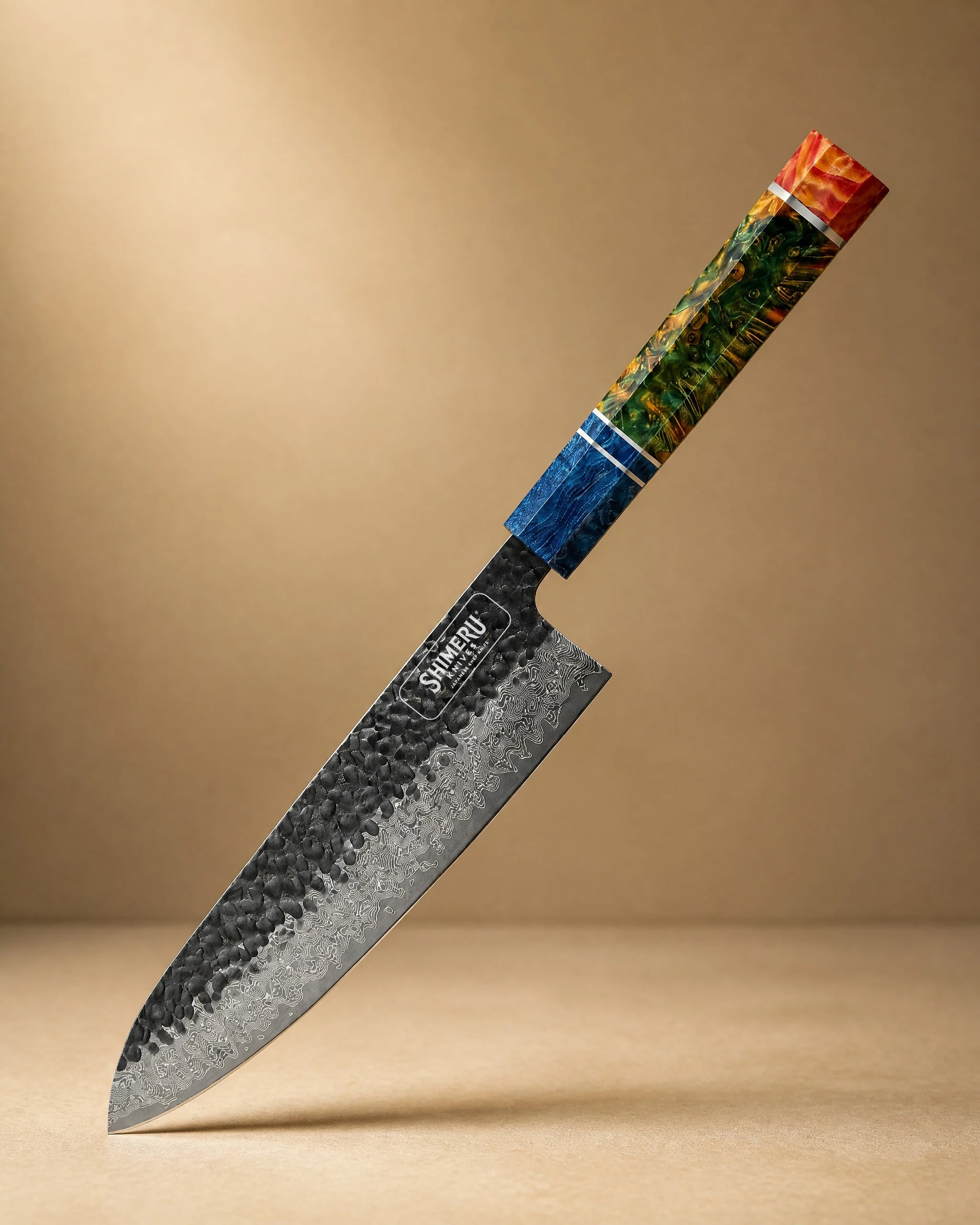 Yoshii 8″ Damascus Steel Gyuto Knife 牛刀£79.99View product → has a fine edge that repays a few gentle strokes on a fine rod. Something like the
 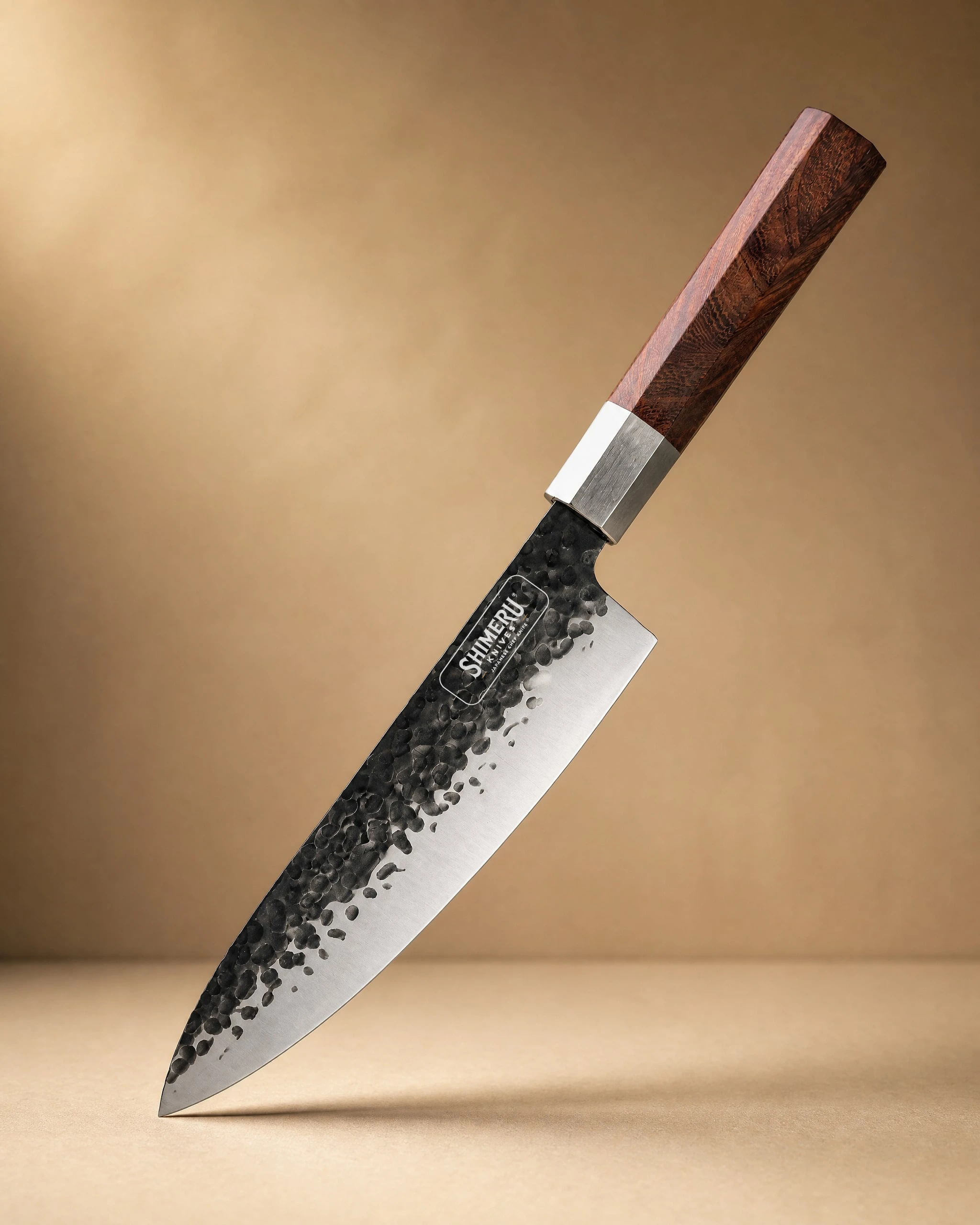 Sendai 8" Steel Gyuto Knife 牛刀£49.99View product → is a good everyday choice, and its stainless blade takes kindly to routine maintenance. With both, light and often beats hard and rare.
Which Rod Should You Choose?
Rods come in three main types, and they behave differently.
A steel rod, the traditional ribbed steel, is the gentlest. It mostly realigns and removes very little material, which makes it ideal for daily upkeep.
A ceramic rod is abrasive. It realigns an edge and also removes a fine amount of metal, so it can do light sharpening work as well.
A diamond rod cuts fastest of all. It is useful on a genuinely tired edge, but it is easy to overdo, and regular use will wear a knife down quickly. For most home kitchens, a fine steel or ceramic rod is the better routine choice.
Choose a rod longer than the blade you intend to hone. A short rod forces choppy strokes and makes a steady angle harder to hold.
The Angle Matters More Than Anything Else
Japanese kitchen knives are usually ground to a narrower angle than European ones. For Japanese blades, around 15 degrees per side is a reasonable working angle. European knives often sit closer to 20 degrees. You do not need to be exact, but you do need to be consistent.
If you are unsure of the angle, colour the edge bevel with a marker pen and take one light stroke on the rod. The marker will be rubbed away where the rod contacts the blade. Adjust until the whole bevel is being touched.
As a rough guide to 15 degrees, lay the blade flat on the rod, then lift the spine until the gap is about the thickness of two pound coins stacked. Hold that angle through the whole stroke rather than sawing back and forth with a wobble.

Honing Rod Technique, Step by Step
Set yourself up so the rod is stable and your hands are clear of the blade path. Hold the rod vertically, either with the tip resting on a folded tea towel on the board, or with the tip up and the handle held firmly. Both methods work. Pick the one that lets you keep your wrist relaxed.
- Hold the rod still. Any movement in the rod makes a steady angle impossible.
- Place the heel of the blade against the top of the rod at your chosen angle.
- Draw the blade down and across the rod, so the edge travels from heel to tip while the contact point slides down the rod. Finish with the tip near the bottom of the rod.
- Use almost no pressure. The weight of the knife is roughly enough. Pressing hard does not sharpen faster, it just folds the edge again.
- Repeat on the other side, using the same angle, the same light pressure and the same number of strokes.
- Three to five strokes per side is plenty for routine maintenance.
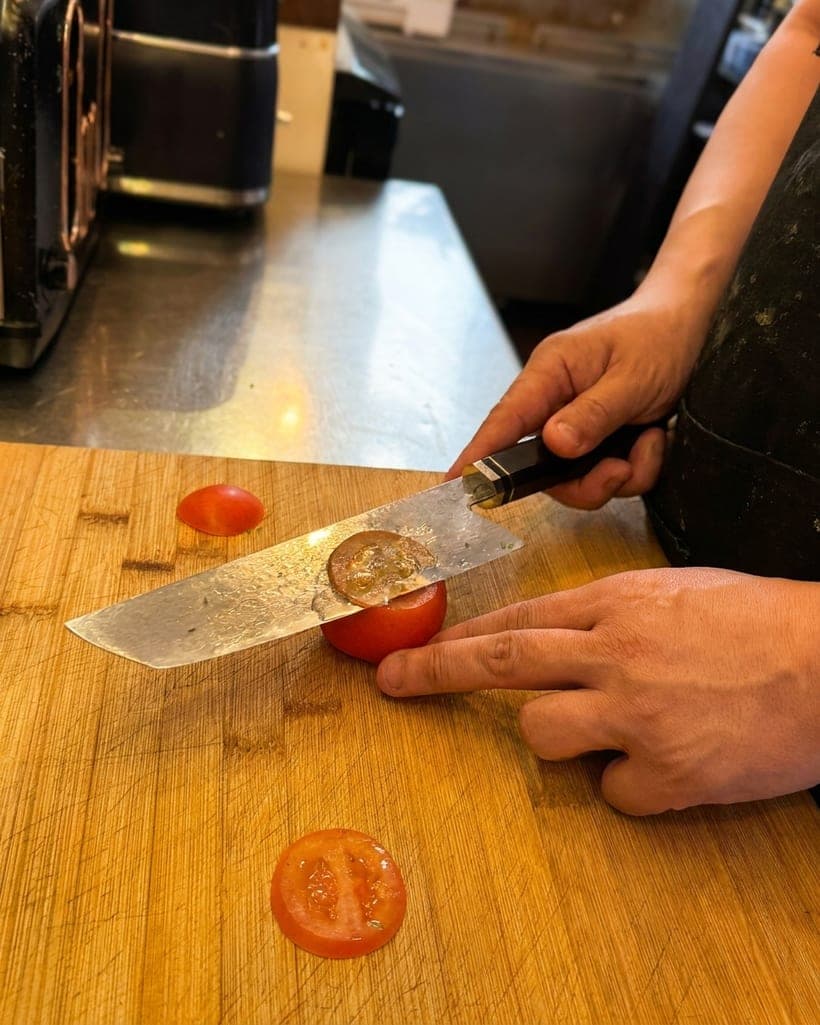
- Wipe the blade clean and test it. A sharp knife will bite into a tomato under its own weight.
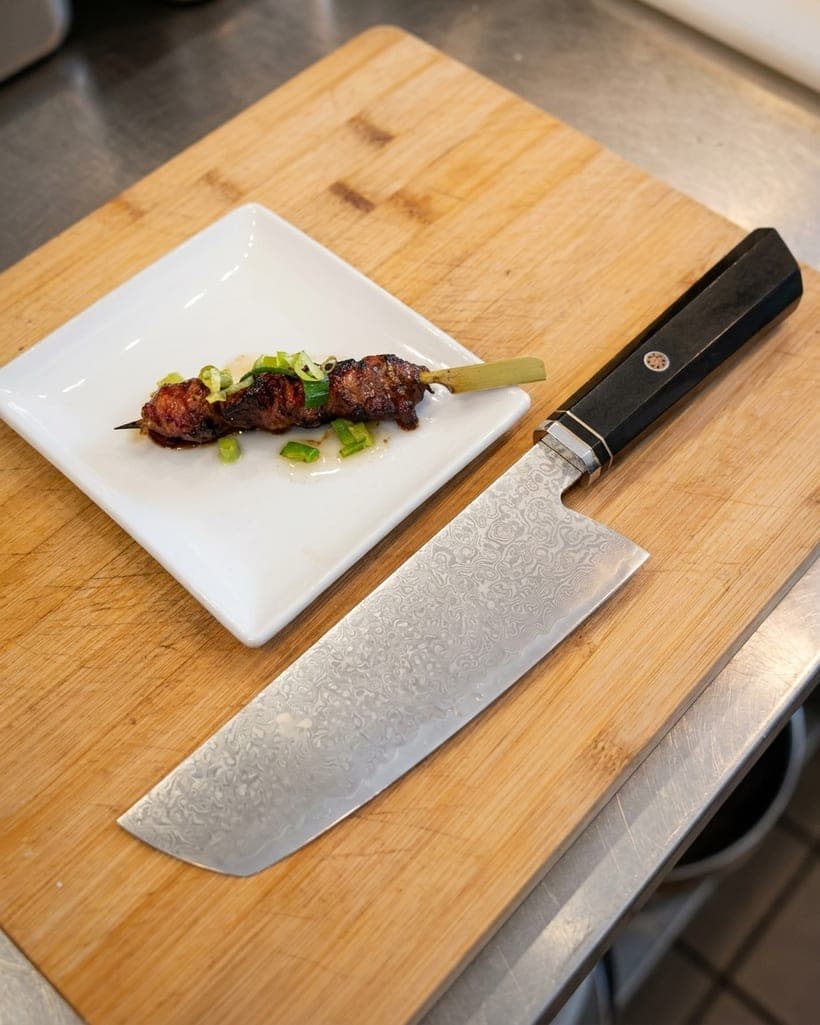
If you are honing a wide blade such as the 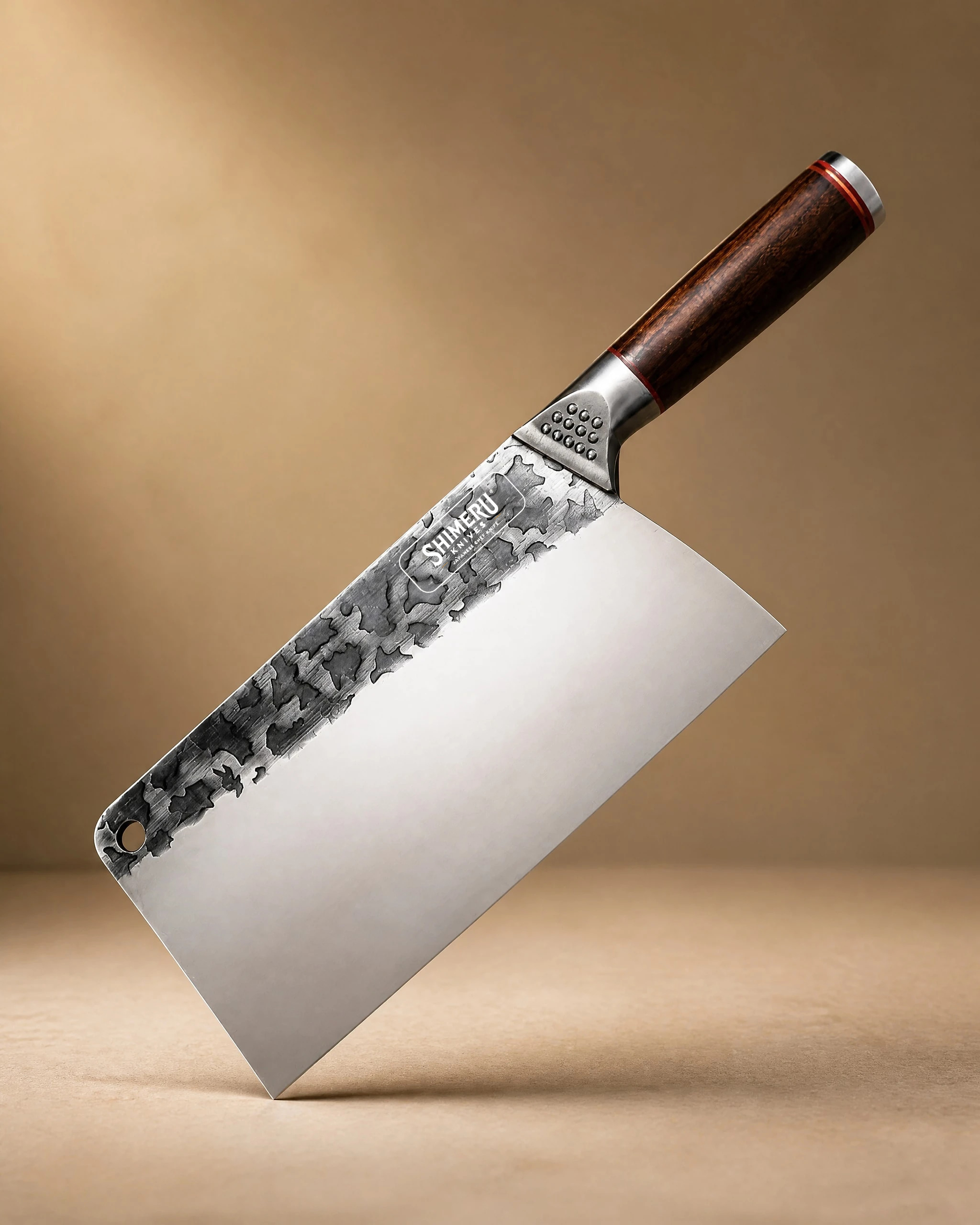 Saba 7" Stainless Steel Cleaver 中華包丁£44.99View product → cleaver, slow down. Wide blades are harder to keep flat against the rod, and a cleaver's geometry may differ from your gyuto. Take fewer strokes and check the result.
Common Mistakes
The most common mistake is pressure. A honing rod is not a grinding wheel, and leaning into it bends the edge again in the other direction. That is why some knives seem to get duller the more you hone them.
The second is inconsistency. A dozen strokes at a slightly different angle each time will round off the edge and undo the work. Fewer, cleaner strokes at a steady angle are far better.
Third is one-sided honing. Hone the left side ten times and the right side twice, and you will push the edge off centre. Keep the strokes even.
Fourth is using a rod on a serrated knife. Serrated edges are ground on one side only, and a rod will damage the teeth.
Fifth is over-honing. Hone every day with a diamond rod and you will wear the knife away in months.
How Often Should You Hone?
For a knife you use daily, four or five light strokes before you start cooking is ideal. It takes ten seconds and keeps the edge in line. For a knife you use a few times a week, honing once a week is plenty.
Do not hone as a reflex every time you pick up the knife. If it is cutting well, leave it. If it is dragging, hone it. The knife will tell you.
When the Rod Stops Working
Sooner or later, honing stops helping. The edge has been realigned so many times that it folds faster than before, or the blade has simply lost enough metal that the edge is thick behind the bevel. When a knife only stays sharp for a few minutes after honing, that is the signal to sharpen properly.
For that, you need something abrasive. A whetstone gives the best edge but takes practice. A rolling sharpener such as the 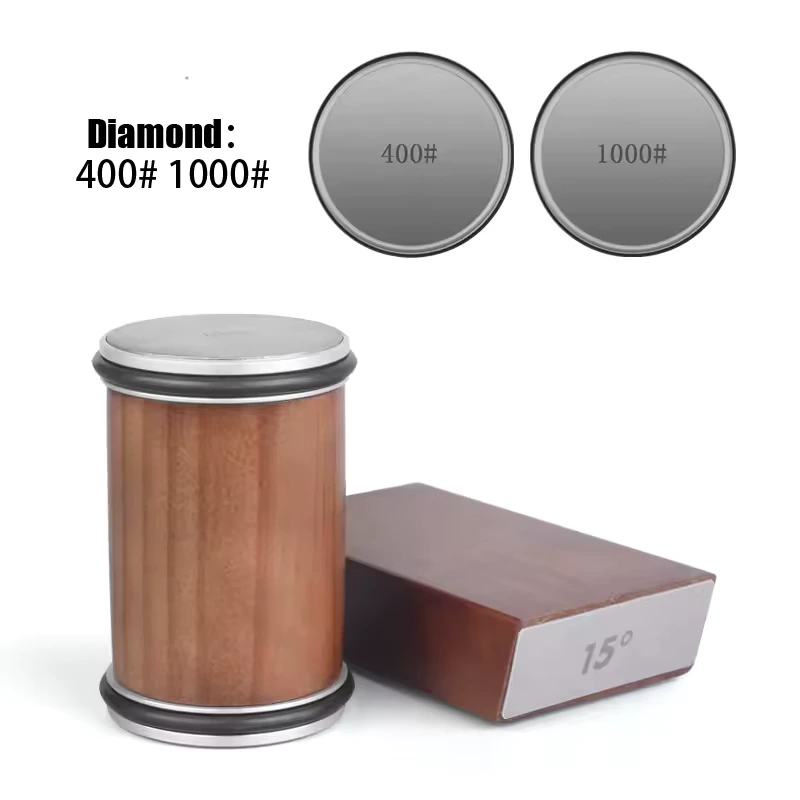 Magnetic Rolling Knife Sharpener£59.99View product → takes the angle out of your hands, and there is no shame in choosing that route. Our knife care guide covers both methods in more detail.
Looking After the Rod and the Knife
Clean the rod with a damp cloth and a little washing-up liquid after use, then dry it. Metal swarf and food residue build up on the surface, and a dirty rod will not grip the edge cleanly.
Wash and dry the knife by hand, store it so the edge touches nothing hard, and cut on wood or plastic rather than glass. Those habits keep an edge in line far longer and reduce how often you need the rod at all. There is more detail in our knife care guide. If you are still choosing knives, our knife guide covers blade shapes and steel types, and the full range is at our shop.
A Final Word on Technique
Honing is a small skill that takes about five minutes to learn. Get the angle right, use almost no pressure, keep the strokes even, and do it little and often. Do that, and your knives will cut well for far longer between real sharpenings.
If you take one thing from this guide, make it the difference between honing and sharpening. A rod keeps a good edge good. It does not rescue a bad one. Knowing which situation you are in tells you whether to reach for the rod or reach for something abrasive.
Photography: Richard Iwaki via Unsplash.

