
How to Sharpen a Knife Using a Sharpening Steel

A sharpening steel is one of the most misunderstood tools in a kitchen. Many people reach for it when a knife feels dull, give the blade a few quick strokes, and expect a new edge. Sometimes the knife feels better afterwards. Sometimes nothing changes. The difference lies in what a steel can and cannot do. This guide explains how to sharpen a knife with sharpening steel: how to use a honing rod to maintain an edge, keep the angle steady, and know when to stop and use a proper sharpener instead.
What a sharpening steel actually does
A sharpening steel, also called a honing rod or sharpening rod, is a maintenance tool. It does not remove enough metal to create a fresh edge from a blunt knife. Its main job is to realign a fine edge that has folded or leaned over in normal use. On some knives it also helps clean up a small burr. That is why a steel can make a knife feel sharper within seconds, provided the edge underneath is still in decent condition.
If the knife has lost metal through repeated use, has a visible chip, or will not bite into a tomato, a steel is the wrong tool. It may straighten the remaining edge, but it cannot replace missing steel. At that point you need a sharpening stone, a guided sharpener, or a professional sharpening service. A steel is for keeping a good edge good, not for rescuing a neglected one.
When to use a steel and when to leave it alone
Use a steel when the knife still cuts but feels slightly tired. Perhaps it glides over tomato skin rather than biting, or it struggles a little with herbs. A few light strokes on a honing rod can bring the edge back into line. This is especially useful during a long prep session when you do not want to stop and set up a stone.
Leave the steel alone if the edge is damaged. Chips, flat spots and a completely rounded edge need abrasive sharpening. Also leave it alone if you are unsure of the angle. A few careless strokes at too high an angle can round the edge and make the knife duller than before. It is better to practise slowly on a cheaper knife than to rush a good one.
There is also a limit to how often you need to hone. Hone when the edge feels tired, not because a rule says you must. Over-honing with a coarse rod can remove more metal than necessary and shorten the life of the edge.
Choosing a rod that suits your knives
A honing rod is not one universal tool. Smooth steels are gentle and suit regular maintenance. Fine grooved steels are more aggressive. Diamond and ceramic rods remove metal faster again. For most home cooks, a fine rod used with light pressure is enough. For hard Japanese knives, a smooth or fine ceramic rod is usually a safer choice than a coarse grooved steel. Aggressive rods can chip a hard, thin edge if used carelessly.
Match the rod to the knife and to your experience. If you are new to honing, start with a fine rod and learn to keep the angle steady. Speed is not a virtue here. A slow, controlled stroke at the correct angle is better than a fast stroke that wobbles. If you are building a small collection, choose knives you are happy to maintain. 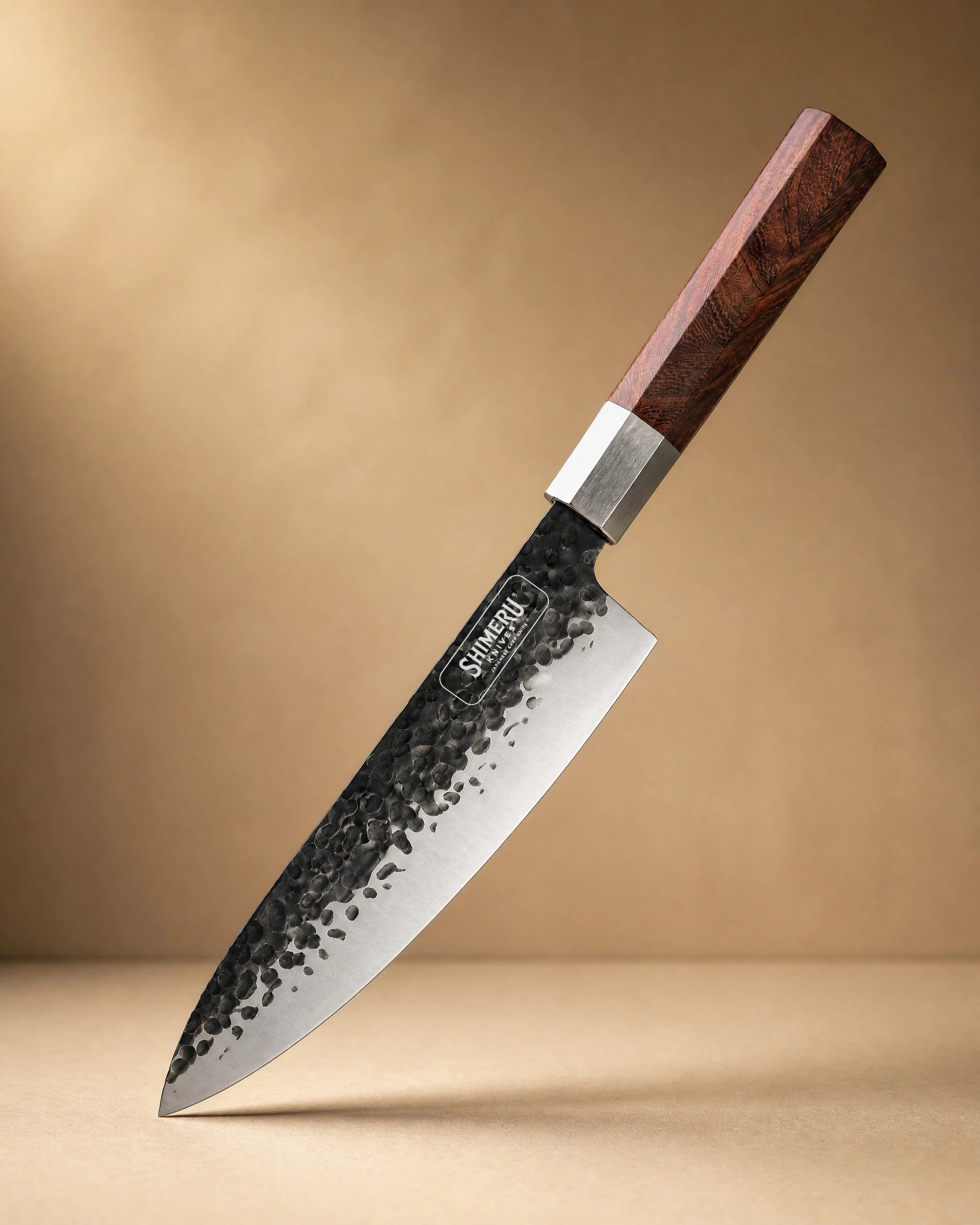 Sendai 8" Steel Gyuto Knife 牛刀£49.99View product → and
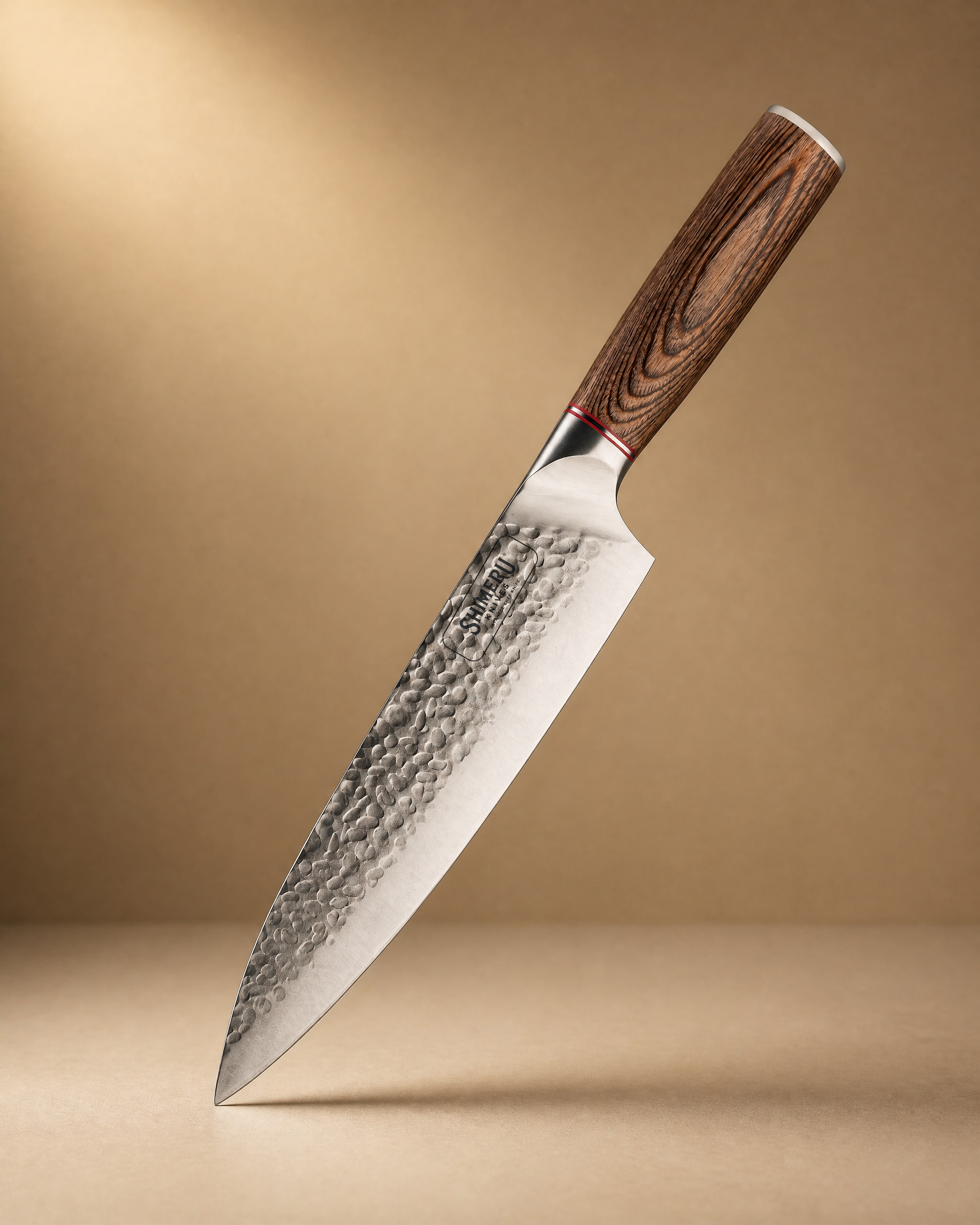 Akan 8'' Gyuto Knife 牛刀£49.99View product → are two everyday options to compare, and the right choice depends on what you prep most often and how the handle feels in your hand. You can see the wider range in the knife shop.
How to sharpen a knife with sharpening steel, step by step
Set yourself up properly before you touch the blade. Stand a stable board on a dry worktop. Hold the rod securely with your non-dominant hand. If you are using a rod with a guard, keep your fingers behind the guard. Keep the knife dry and keep your attention on the angle. A sharpening steel is simple, but it is not a tool for distracted speed.
First, find your angle. Most kitchen knives are sharpened somewhere between 15 and 20 degrees per side. If you know the maker's recommended angle, use it. If not, choose a modest angle and keep it consistent. A common way to learn is to place the blade flat on the rod, then lift the spine slightly until you have a small gap. That gap is your angle. The exact number matters less than consistency. A wobbly 15 degrees will do more harm than a steady 18 degrees.
Second, place the heel of the blade against the rod near the top. The edge should meet the rod at your chosen angle. Draw the knife down and across the rod so the edge travels from heel to tip. Use light pressure. You are not sawing a log. Let the edge pass along the rod in one smooth stroke. Keep the tip from sliding off the end. Repeat on the other side.
Third, alternate sides. Five to ten light strokes per side is a sensible starting point. Use fewer strokes if the knife only needs a small refresh. Use more only if the edge still feels tired and you are sure the angle is steady. Wipe the blade after honing and check it on paper or a tomato. If it still glides, stop. More strokes will not fix a blunt edge, and they may make it worse.
Fourth, clean and dry the knife. Honing can leave fine metal particles on the blade. Wash it, dry it properly, and put it away. Do not leave a knife wet on the board.

How to sharpen kitchen knives with rod: the light touch
The phrase how to sharpen kitchen knives with rod is common, but the wording hides an important point. A rod is usually a honing tool, not a sharpening tool. If you treat it as a sharpener, you will press too hard and use too many strokes. If you treat it as a maintenance tool, you will get better results and make your knives last longer.
Use light pressure. Let the rod do the work. Keep the stroke slow enough that you can see the edge travel from heel to tip. Do not stab the rod or bang the blade against it. Do not use a fast sawing motion. Do not hone only the middle of the blade and ignore the heel and tip. The whole edge needs the same treatment.
Testing the edge and knowing when to stop
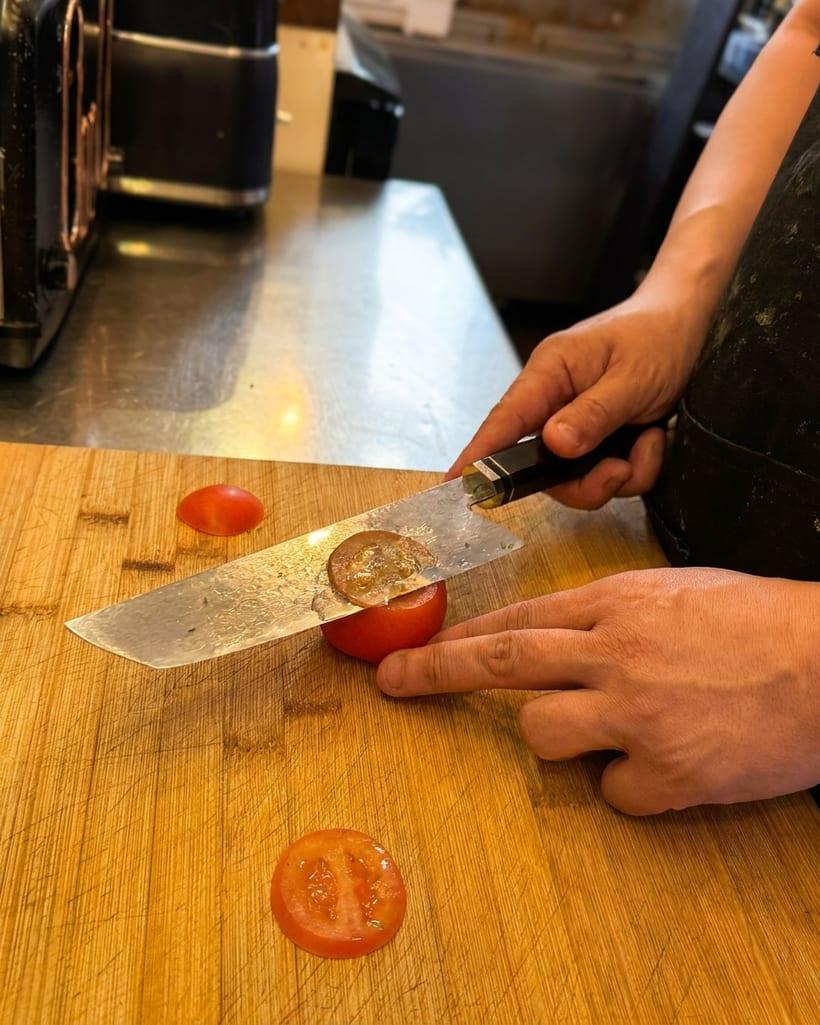
A paper test is a simple check. Hold a sheet of paper upright and draw the knife down through it. A maintained edge should bite and slice cleanly. A tired edge will slide or tear. A tomato is another useful test, though it can be messy. If the knife cannot bite the skin without pressure, honing may not be enough.
Stop when the knife cuts well. Do not keep going because the strokes feel satisfying. Over-honing is a real problem. It can round the edge, especially if you use a coarse rod or too much pressure. If ten light strokes do not help, more strokes are unlikely to be the answer. Move to a proper sharpening method instead.
Common mistakes with a honing rod
Most problems with a sharpening rod come from a small number of habits. Watch for these before you blame the knife:
- Using too high an angle, which rounds the edge instead of refining it.
- Pressing hard, which removes more metal and reduces control.
- Using a coarse rod on a hard, thin Japanese knife.
- Honing a chipped or badly blunt edge and expecting a repair.
- Rushing the stroke and letting the angle change from heel to tip.
If you recognise any of these in your routine, slow down. A honing rod rewards patience. It does not reward force.
When a steel is not enough
If the edge has a chip, a flat spot or a long history of neglect, use a sharpening stone, a guided sharpener or a professional service. The 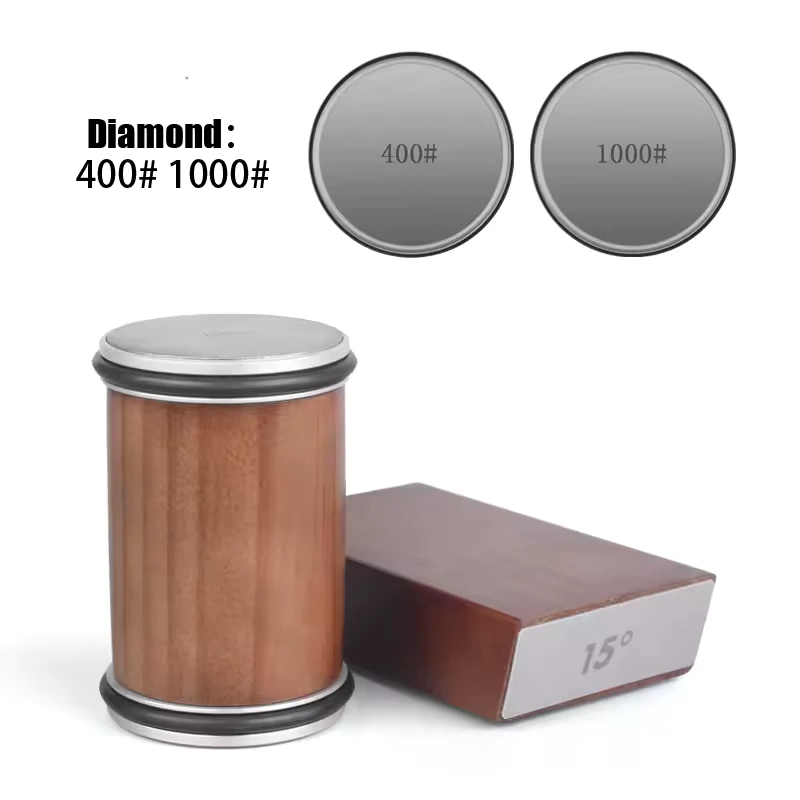 Magnetic Rolling Knife Sharpener£59.99View product → is a sharpening tool rather than a honing rod, so it belongs in that part of the routine. Use it as its instructions direct, and keep the rod for light maintenance between proper sharpenings.
This distinction saves money and frustration. A steel is quick to reach for. A sharpener removes metal and changes the edge. They are not interchangeable. If you are unsure which you need, read the knife care guide before you work on a good blade.
Looking after the edge between honings
Good cutting habits matter as much as the rod. Use a wooden or plastic board rather than glass or stone. Do not scrape the edge across the board. Wash and dry knives by hand. Store them so the edge is not knocking against other metal. These habits reduce the number of times you need to hone and sharpen.
If you are outfitting a kitchen, consistency helps. The 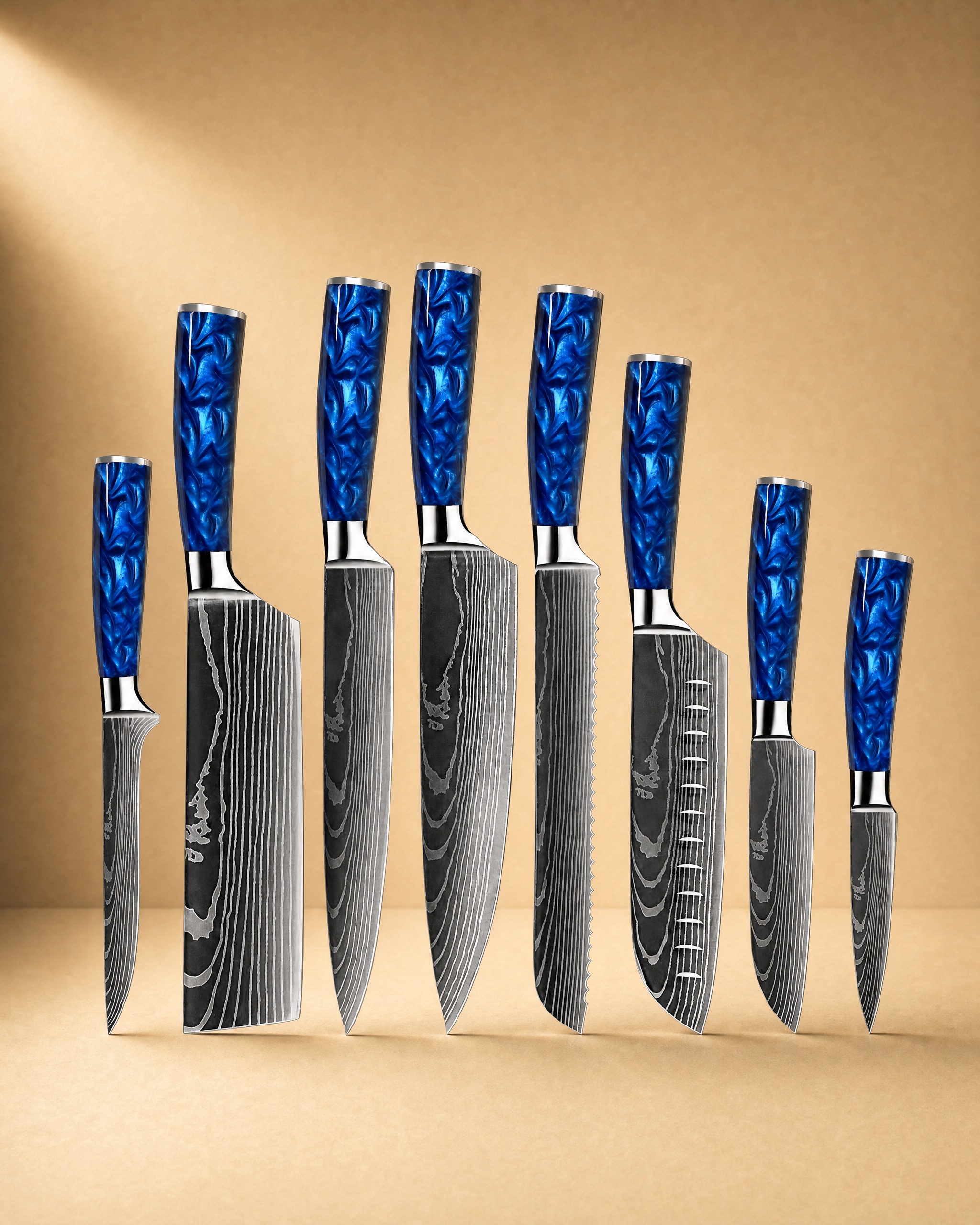 Shinano 信濃川 Damascus Pattern Stainless Steel Kitchen 8 Knife Set£149.99View product → is a set, so it makes sense to set one care routine for the whole group: hone lightly when needed, sharpen properly when required, and dry everything after washing. If you are still choosing knives, the knife guide explains what to look for before you buy.
A sharpening steel is a useful tool, but it is not magic. Learn what it does, keep the angle steady, use a light touch and stop when the knife cuts well. If the edge is damaged, use the right tool for the repair. That is the honest way to sharpen a knife with sharpening steel: not by forcing a new edge, but by maintaining the one you have.
Photography: Manki Kim via Unsplash.


