






Carbon Steel Japanese Knives: A Guide

Carbon steel is one of those subjects that divides knife buyers. Some people will not use anything else, and they are usually the ones who sharpen their own knives and enjoy the ritual of it. Others tried a carbon blade once, left it wet on the board, and never went back. Neither group is wrong. Carbon steel is a material with a very clear character, and once you understand what it does and what it asks of you, the choice becomes straightforward rather than mysterious.
This guide covers what carbon steel Japanese knives are, how they behave next to Japanese stainless steel knives, and how to decide which suits your kitchen. We sell both, so there is no reason here to push you one way.
What carbon steel actually means
In simple terms, carbon steel is iron with a small amount of carbon added and very little else. The carbon is what allows the steel to harden. More carbon, up to a point, means a harder blade that holds a finer edge for longer. Japanese smiths have worked with these steels for centuries, and many of the traditional hagane are still made in small batches by the same families, in the same small workshops.
Stainless steel is the same idea with chromium added, usually at 12 per cent or more. That chromium forms a thin, invisible oxide layer that resists rust. The difference sounds small, and metallurgically it is, but it changes how a knife behaves in daily use and how much attention it demands from you.
The steels behind the labels
Most carbon Japanese knives are made from one of the paper steels, so called because the mill grades them with a paper label. White paper steel is a pure carbon steel with very few impurities: it takes a superb edge and is forgiving to sharpen, but it is brittle and rusts readily. Blue paper steel adds a small amount of chromium and tungsten, which improves wear resistance and toughness at the cost of a little sharpening ease.
You will also see names such as Super Blue, or the Swedish and German carbon steels used by some makers. Those differences matter to a professional who sharpens daily and much less to a home cook who sharpens once a month. Any of them, properly heat treated, will cut better than you expect.
What carbon steel does well
The first thing people notice is the edge. Carbon steel takes a keener edge, and takes it faster. A knife that sharpens in five minutes on a 1000 grit stone rather than fifteen is a knife you will actually keep sharp, and a sharp knife is safer than a dull one.
The second is feedback. The blade tells you through the handle when it meets the board, when it bites into an onion, when it is starting to dull. Cooks who work by feel rather than by timers tend to prefer it for exactly this reason. The third is patina. A carbon blade discolours with use, moving from grey to blue to near black depending on what you cut. It is not rust and it does not affect performance, but it is a visible record of everything the knife has done.
The honest downside: rust and upkeep
Carbon steel will rust. Not instantly, and not from a moment's contact with water, but leave it wet on the draining board overnight and you will find orange spots by morning. Acidic foods, onions, citrus, tomatoes, speed the process up considerably. Cut a lemon, walk away for twenty minutes, and you may come back to a marked edge.
The routine is not difficult, it is simply non-negotiable. Wipe the blade dry as you go, wash and dry it immediately after use, and keep it out of the dishwasher permanently. A thin film of oil helps if the knife will sit unused for weeks. Our knife care guide covers the full routine, including what to do if a spot of rust does appear.
Be honest with yourself about this part. If you know you will not dry a knife after every use, carbon steel is the wrong material for you, and no amount of admiring the patina will change that. A knife that sits damp in a sink is a knife that will disappoint you.
Japanese stainless steel knives: the practical alternative
Modern Japanese stainless is not the soft, lifeless material it was thirty years ago. Good stainless from Japanese mills takes a very fine edge, holds it well, and tolerates being left damp while you finish plating. For most home cooks that tolerance is worth more than the last few per cent of sharpness.
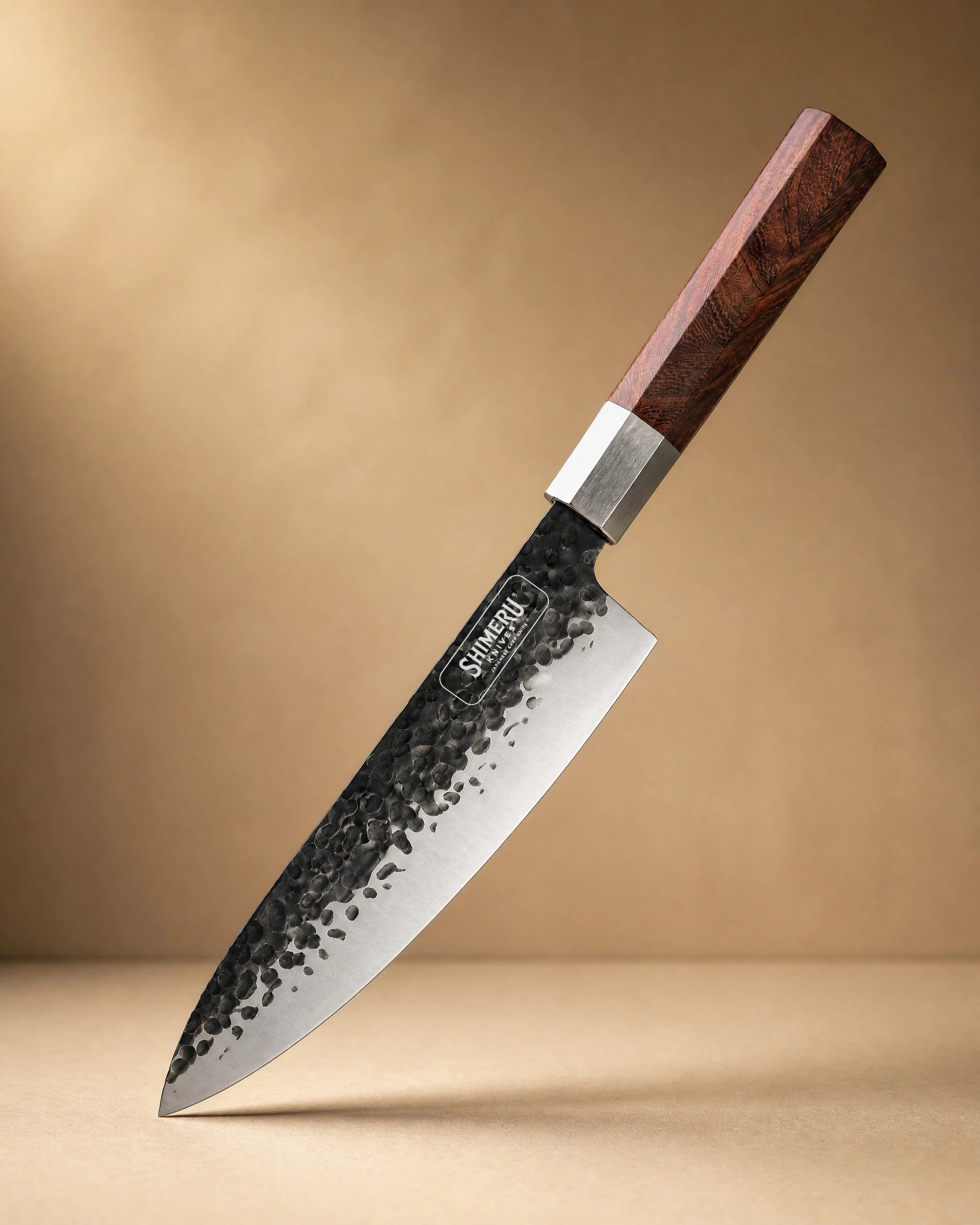 Sendai 8" Steel Gyuto Knife 牛刀£54.99View product → is a fair example of the type. It is an 8 inch gyuto in stainless steel with a Mkuruti wood handle, intended for vegetables, herbs, meat and fish, which is nearly the whole of everyday cooking. A gyuto is the Japanese answer to the chef's knife, and an 8 inch blade suits most hands on most boards. It asks nothing of you after dinner.
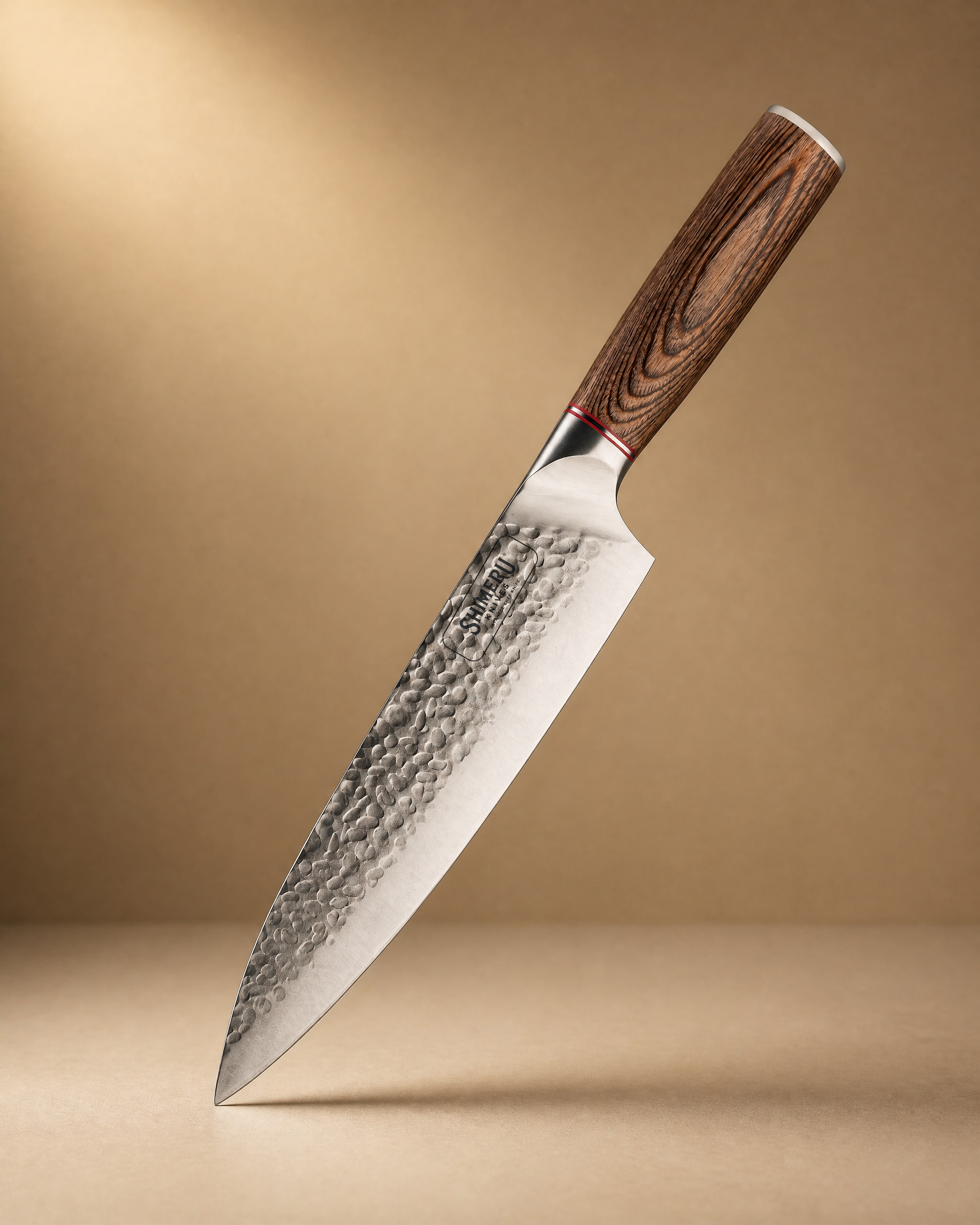 Akan 8'' Gyuto Knife 牛刀£54.99View product → follows the same logic in a different finish: an 8 inch gyuto in stainless steel with a pakkawood handle, suited to meats, fish, vegetables and fruit. Pakkawood is a laminated wood composite, stable when wet and comfortable in the hand, which is why it turns up on so many working knives. Between the two, the choice comes down to handle shape and balance, so handle both if you can, or read our guide on how to choose a knife.

Damascus, high-carbon and the language of listings
The wording on knife listings can mislead. Damascus refers to the layered pattern on the blade face, not to the steel that forms the cutting edge; many Damascus knives have a hard core wrapped in softer layers. High-carbon is used loosely, and a stainless steel can legitimately carry that label if it contains enough carbon, because chromium does not cancel carbon out. High-carbon stainless is a real category, not a contradiction.
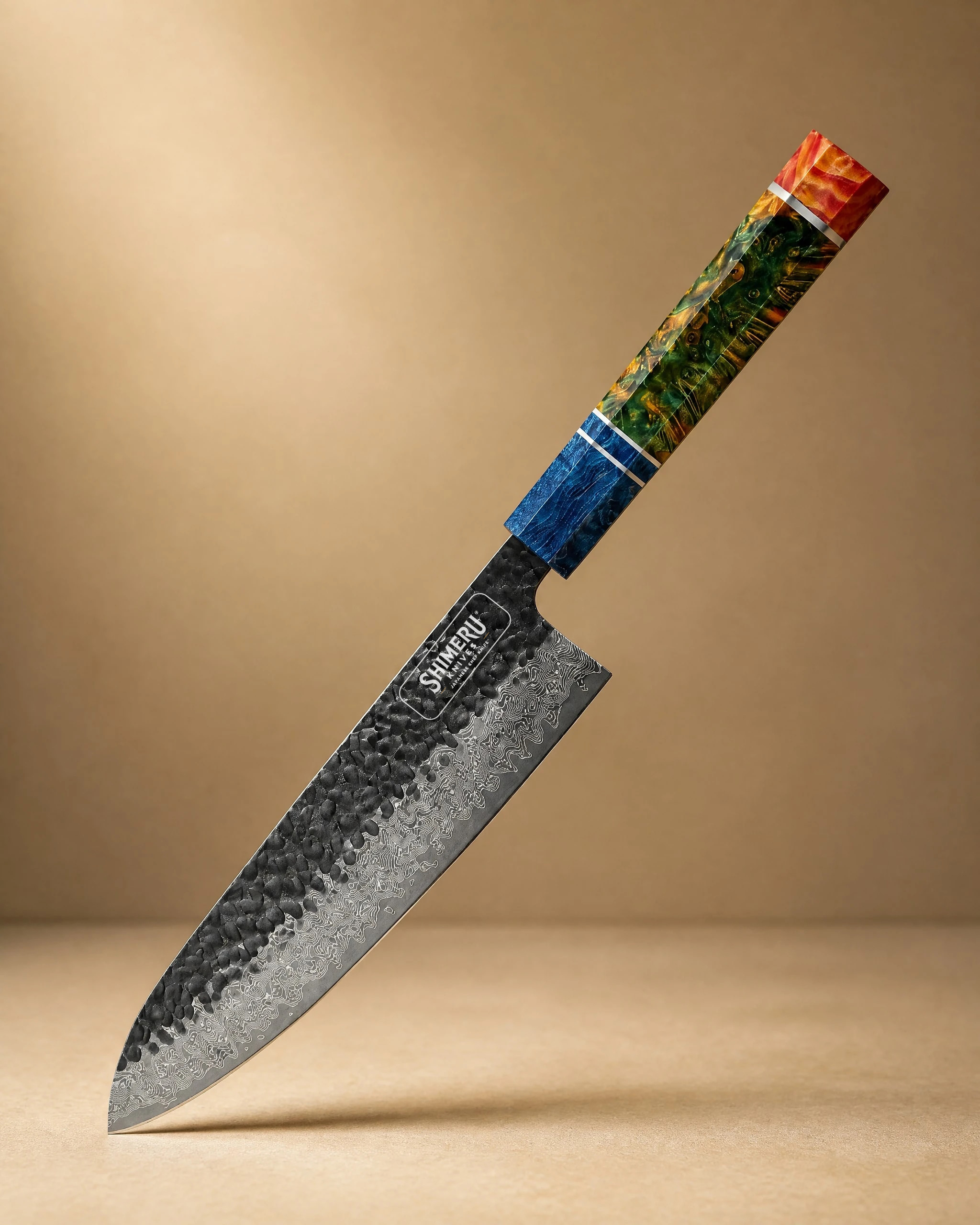 Yoshii 8″ Damascus Steel Gyuto Knife 牛刀£84.99View product → illustrates the point. It is an 8 inch gyuto with 67 layers of Damascus steel and a wood and copper handle, suited to slicing, dicing and chopping. The layered pattern is the visible part, but the cutting comes from the core and the geometry behind the edge. The copper in the handle will darken with use, which is worth knowing if you like a knife to stay factory fresh.
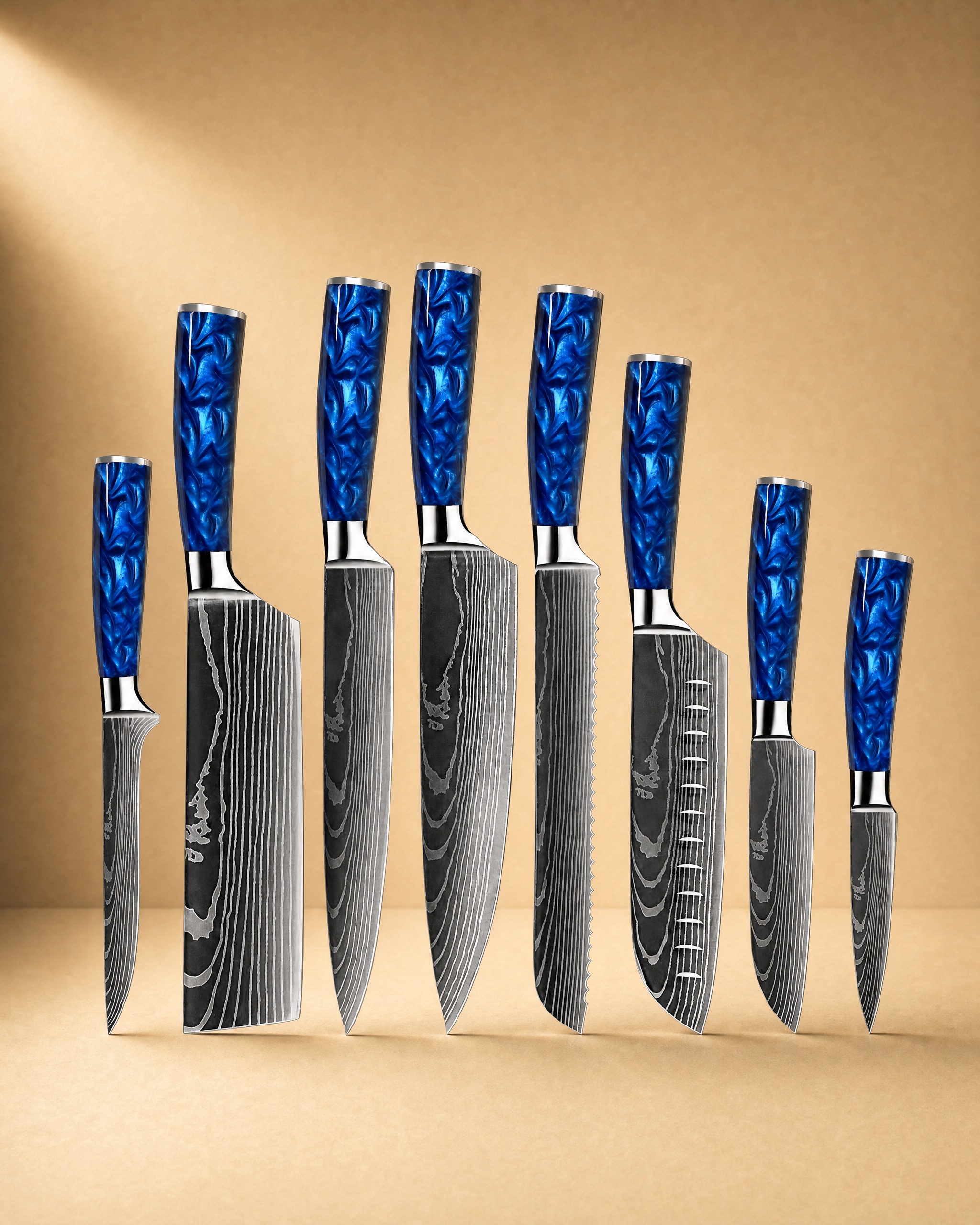 Shinano 信濃川 Damascus Pattern Stainless Steel Kitchen 8 Knife Set£154.99View product → takes another route: a Damascus pattern stainless steel kitchen knife set with a blue resin handle, described as high-carbon steel. A set makes sense if you are equipping a kitchen from scratch and want the small knife, the bread knife and the rest to match. Buying one good gyuto and adding to it slowly is the other path, and the one most experienced cooks take. Both are laid out in the full knife shop.
Geometry matters more than steel
It is easy to buy on steel type and ignore the shape of the blade, which is backwards. A thin knife behind the edge will outcut a thicker one made from more expensive steel, and a blade that is too thick for your kind of cooking will feel clumsy however good the steel is. Japanese gyutos are generally thinner behind the edge than European chef's knives, which is why they cut so cleanly through onions and why they should not be used on bones or frozen food.
Length matters as well. An 8 inch blade is the sensible default for most home kitchens, long enough for a cabbage and short enough to control.
How to decide between the two
Ask yourself three questions. How often will I sharpen? If the answer is rarely, or if you plan to use a pull through sharpener, buy stainless. Carbon steel rewards someone who maintains an edge regularly and punishes neglect visibly.
Will the knife be left wet? If you cook in a hurry, or share a kitchen with people who will drop the knife in the sink, stainless is the safer choice. Carbon steel works best where one person takes responsibility for the blade.
Do I want a project or a tool? Some cooks genuinely enjoy the upkeep, the oiling, the slow change of colour. If that sounds like a chore rather than a pleasure, do not buy carbon steel for the sake of authenticity. A well maintained stainless gyuto will outcut a neglected carbon one every time.
A short care routine that covers both
Whichever you choose, the basics are the same and they matter more than the steel:
- Wash by hand and dry immediately, whatever the material.
- Never put a Japanese knife in the dishwasher, as heat and detergent damage both the edge and the handle.
- Use a wooden or soft plastic board, not glass or stone.
- Hone lightly or strop, and sharpen on a whetstone a few times a year depending on use.
- Store dry, in a rack, a saya or on a magnetic strip, never loose in a drawer.
Carbon steel also benefits from a thin coat of camellia or mineral oil if it will sit unused for a long stretch. Stainless needs nothing beyond thorough drying.
A final honest answer
Carbon steel Japanese knives are excellent tools for cooks who will look after them and frustrating ones for cooks who will not. They sharpen beautifully, they cut with a clarity that is hard to describe until you have used one, and they ask for thirty seconds of attention after each session. If you can give that, you will be rewarded.
If you are unsure, start with stainless, learn what you like in a blade, and add a carbon knife later when you know you will enjoy it. There is no prize for buying the more demanding tool. Both are in the shop, and neither is the wrong choice if you are honest about how you cook.
Photography: Sergey Kotenev via Unsplash.

