
Top Rated Santoku Knives: What to Look For

A santoku is usually the first knife people reach for and the last one they think about replacing. It dices an onion, slices a chicken breast, shreds a cabbage and copes with a salmon fillet without complaint. It is also the knife category with the most noise around it, which is why searching for a top rated santoku knife returns a wall of five star badges and very little that helps you choose. Ratings tell you that a lot of people were satisfied. They do not tell you whether you will be.
This guide sets out what separates a good santoku from a mediocre one. If you would rather browse first, the range sits in our santoku collection.
What a rating can and cannot tell you
Buyer ratings measure satisfaction relative to expectation, not performance in absolute terms. Someone upgrading from a tired supermarket knife will rate almost anything five stars. Someone who has used Japanese steel for twenty years will be far harder to please. Both reviews sit on the same page, and the average hides the difference between them.
A best rated santoku knife is usually simply a well known one. Popularity drives review volume, review volume drives ranking, and ranking drives more popularity. That loop is not dishonest, but it is not the same as best for you.
What you can read usefully is the detail: how the knife behaved after six months, whether the handle stayed tight, whether the owner had to learn to sharpen differently. Those observations are worth more than the star count.
The core steel matters more than the layer count
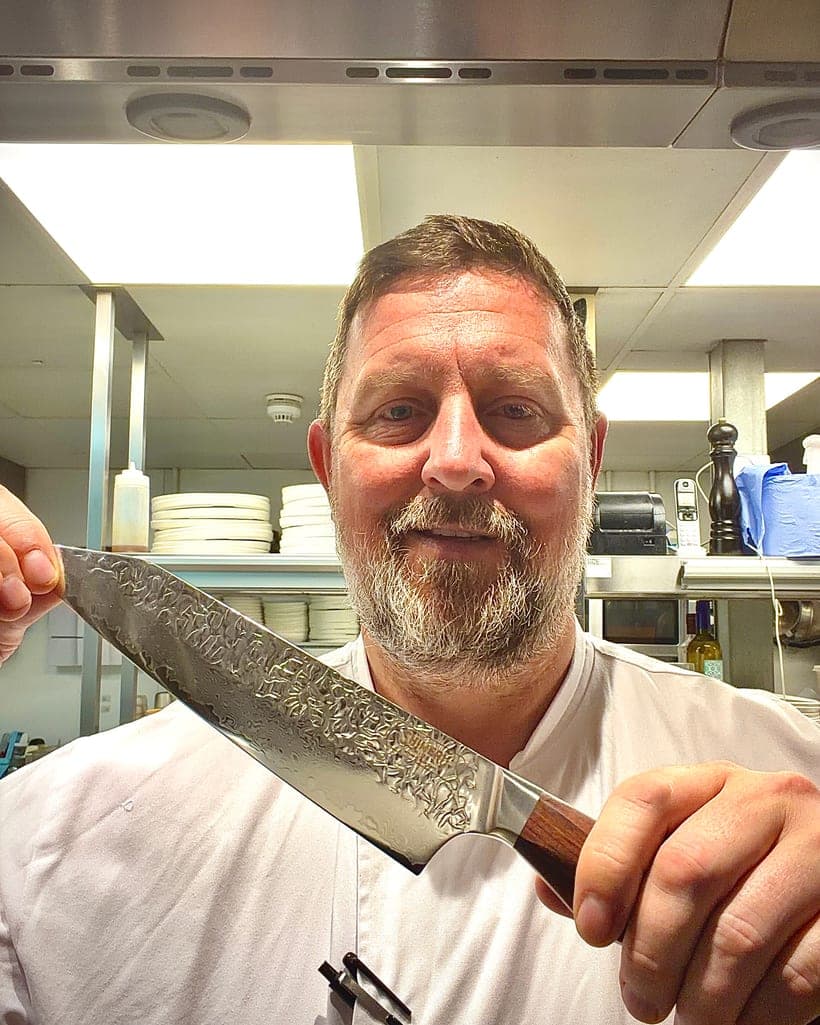
Almost every Damascus santoku is sold on its layers. 67 layers is a common figure and it sounds impressive. Understand what it means: the layers are cladding wrapped around a central core, and the core is the part that touches food and forms the cutting edge. The pattern is beautiful and the cladding adds protection, but it does not decide how the knife cuts.
VG10 is a stainless steel known for taking a fine, keen edge and holding it well through normal home use. AUS10 balances things slightly differently, a little more forgiving on the stones and more tolerant of rough handling. Neither is better in the abstract. If you enjoy sharpening and want the keenest edge you can get, VG10 suits. If you want a knife that shrugs off an occasional lapse in technique, AUS10 is the friendlier choice.
Length and profile: why seven inches keeps winning
A 7 inch santoku, roughly 180mm, fits most home kitchens. Long enough to take a cabbage or a chicken breast in one stroke, short enough to feel controlled on a shallot. Longer blades look impressive on a rack and then stay in it. Shorter ones feel nimble until you meet a butternut squash.
Height matters as much as length. A taller blade gives your knuckles clearance and lets you scoop chopped food off the board with the blade itself. A very tall santoku can feel clumsy in small hands, so handle one before you decide.
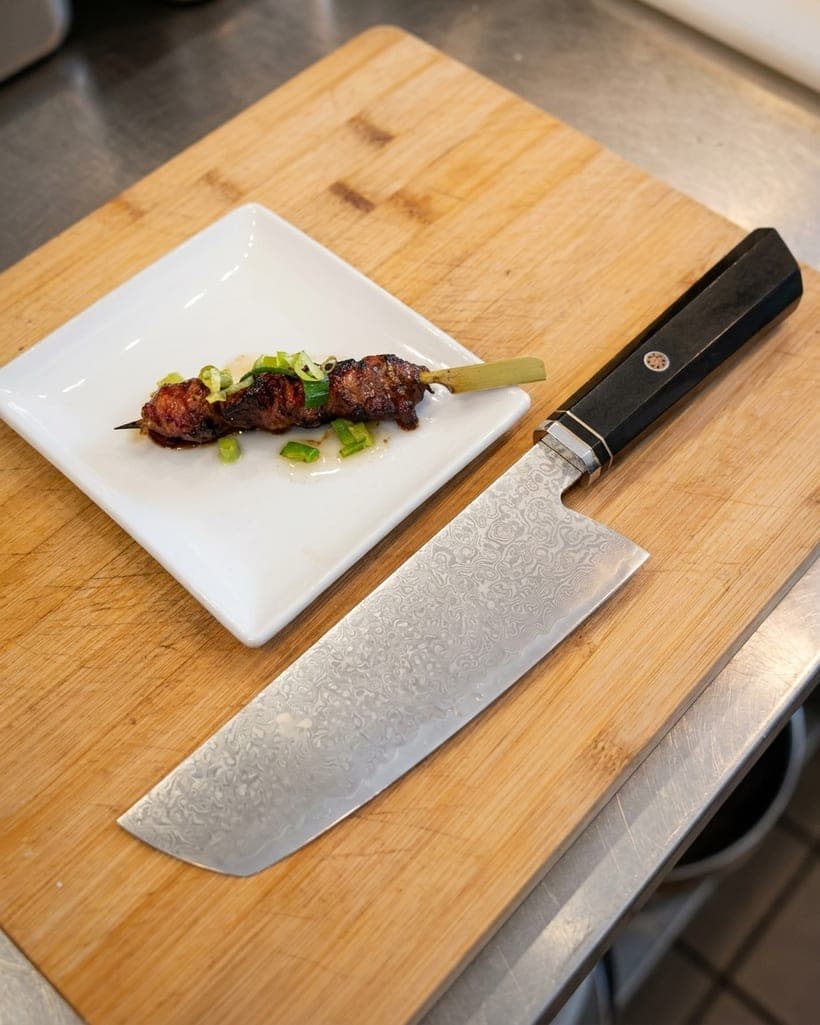
The classic santoku shape has a nearly flat edge with a gentle curve towards the tip, and a spine that drops down to meet it. That gives a long, stable section for chopping and a useful tip for detail work. It is a compromise design, and a good one.
Handle, balance and grip
The handle decides whether a knife disappears into your hand or announces itself on every cut. Japanese style handles are usually lighter and set slightly back, pushing the balance point forward towards the blade. Western style handles are heavier and shaped for a fuller grip. Neither is correct. The test is whether the knife feels like an extension of your hand where the blade meets the handle.
Material matters for maintenance as much as looks. Natural rosewood is warm, grippy and beautiful, and it is wood: it responds to a wipe of oil now and then, and it does not enjoy sitting wet in a sink. Stabilised resin is denser, unaffected by water and effectively maintenance free. A household where knives get washed and left on the drainer is better served by resin than by a lovely piece of rosewood.
If you are unsure which handle style suits your hand, our knife buying guide walks through grip, size and blade type properly.
Geometry: the part nobody advertises
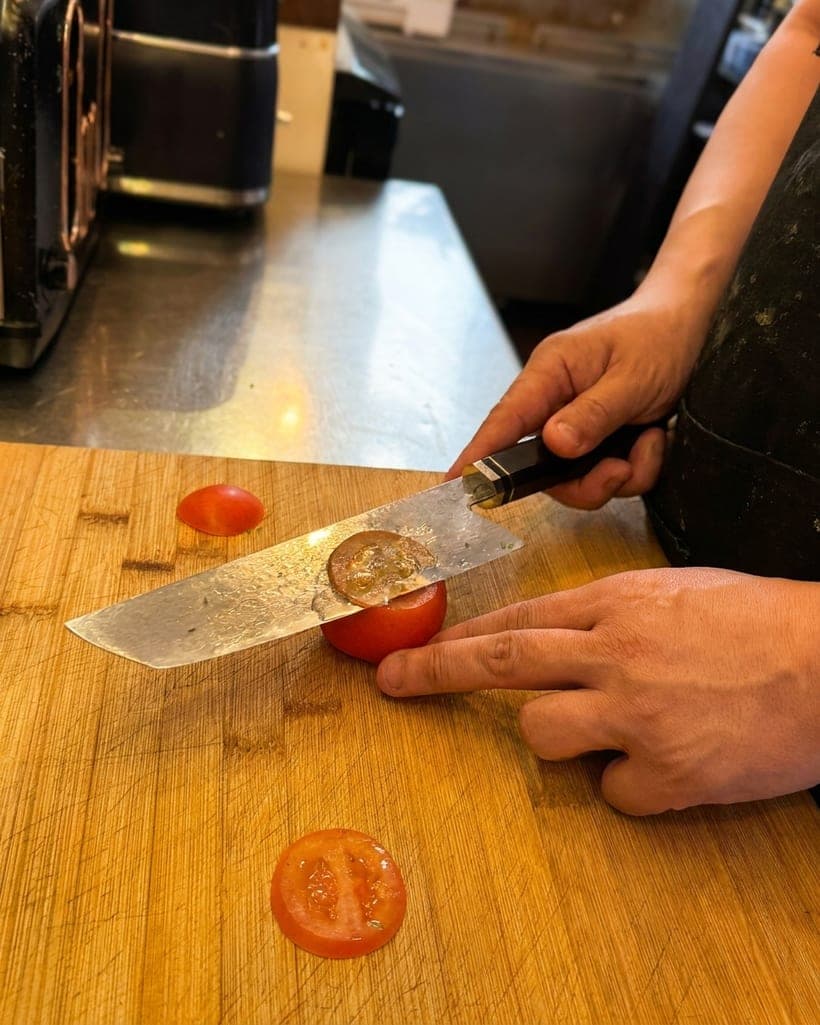
Two santoku knives can share steel, length and handle and still cut completely differently, because of what happens behind the edge. A blade ground thin behind the edge glides through onions and carrots. A blade ground thick is more robust and feels blunt by comparison, even when it is sharp.
You cannot measure this from a photograph. In a shop, look at the blade edge on, from tip towards handle. If it tapers to a thin line, it will cut well. If it looks like a wedge, it will split rather than slice. Japanese knives are often sharpened with a slight asymmetry, which is normal and something any decent sharpener can follow.

Four santoku knives worth shortlisting
Our own range is small on purpose. Each of these is a 7 inch Damascus santoku with a VG10 or AUS10 core, and the differences are mostly about how you want the knife to feel and how much upkeep you want to take on.
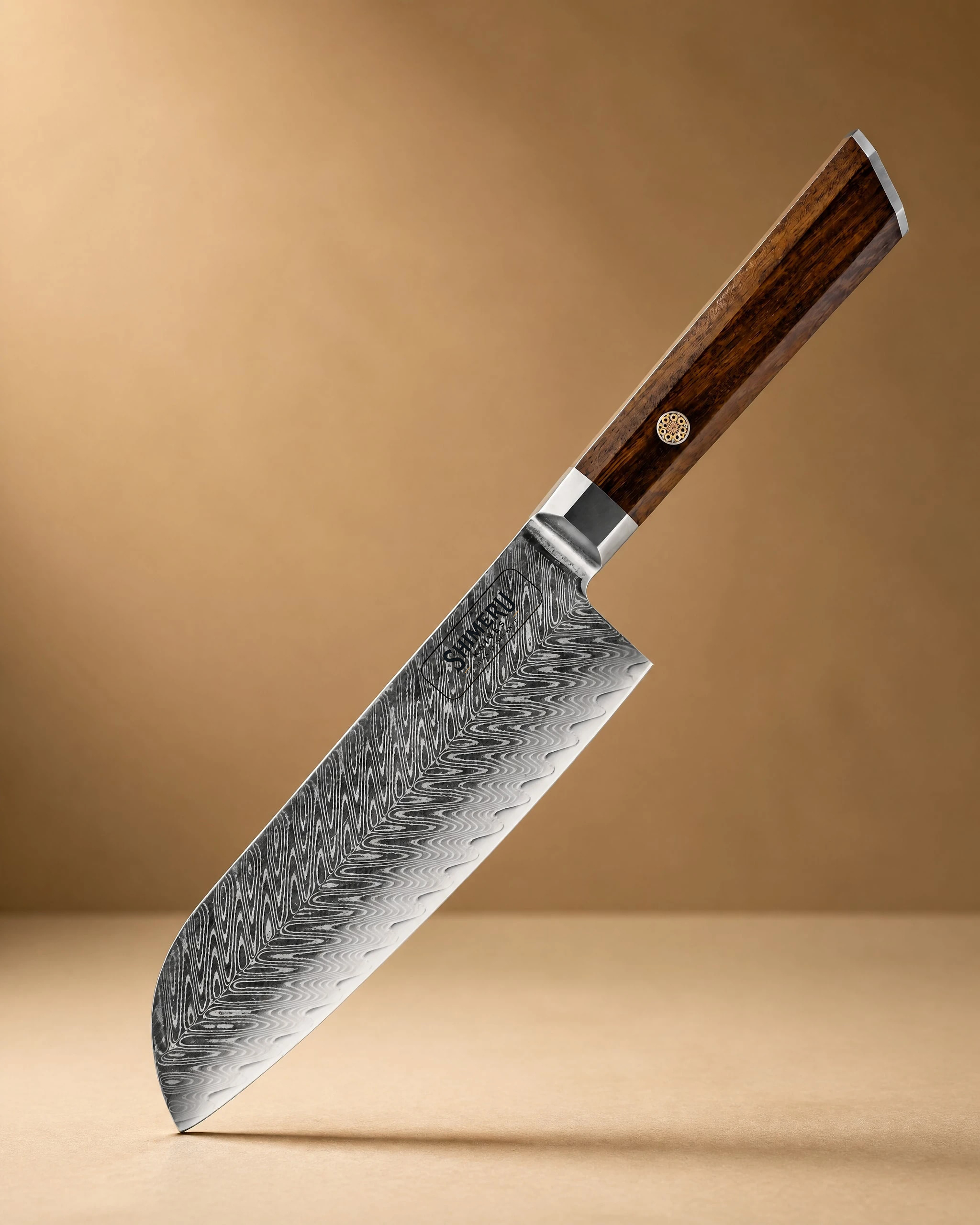 Komachi 小町 7″ Damascus Steel Santoku Knife 三徳包丁£74.99View product → is the straightforward choice: a 67 layer Damascus blade with a VG10 core and a rosewood handle. It slices, dices and minces without fuss, and the natural wood gives it warmth and grip. If you are happy to oil a handle a few times a year, it is a lovely thing to own.
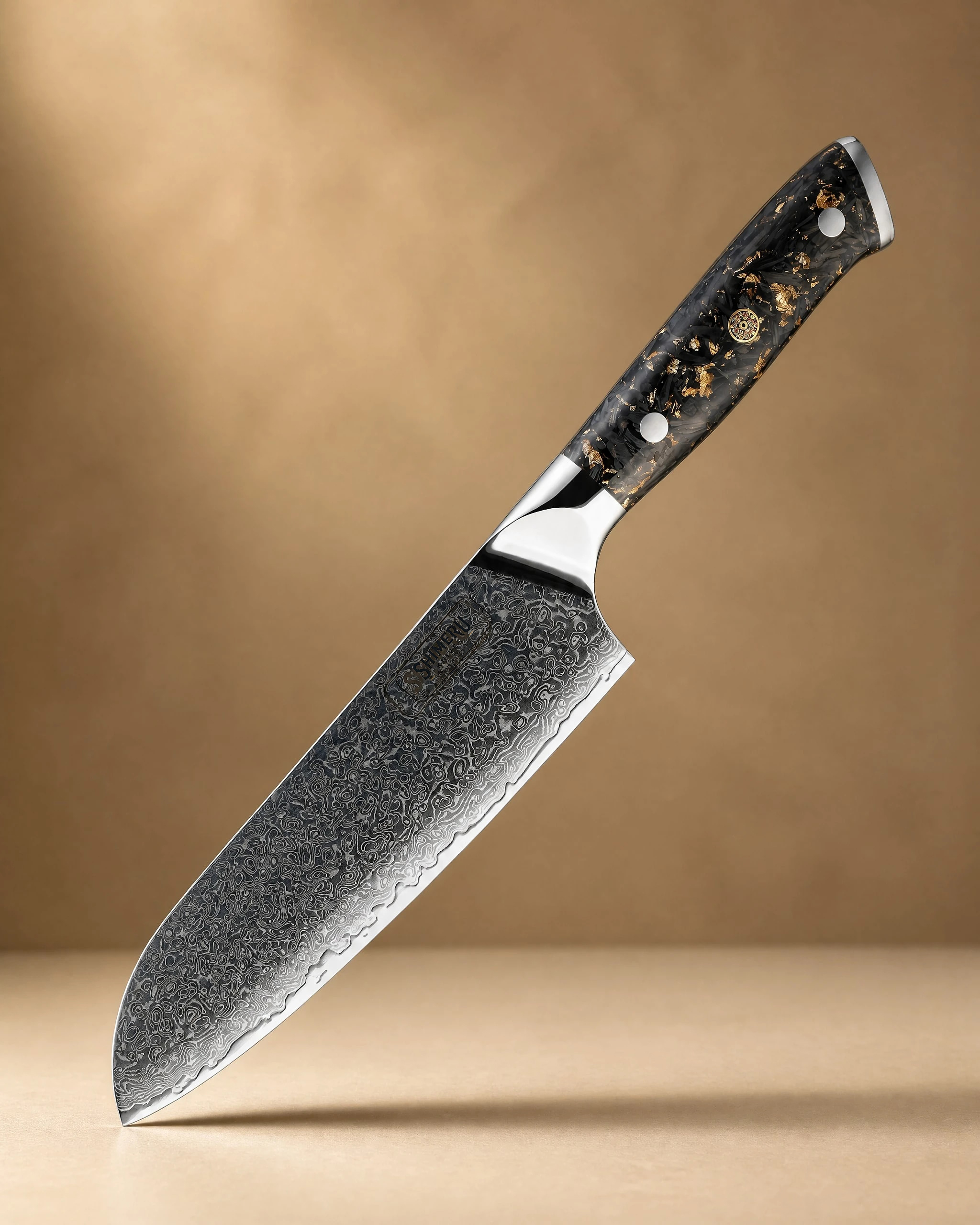 Asuka 飛鳥 7″ Damascus Steel Santoku Knife 三徳包丁£79.99View product → uses the same 67 layer Damascus construction and VG10 core, paired with a black resin handle flecked with gold. The look is bolder and the practical difference is real: resin does not care about water, so this is the one to choose if your knives get washed and put away damp.
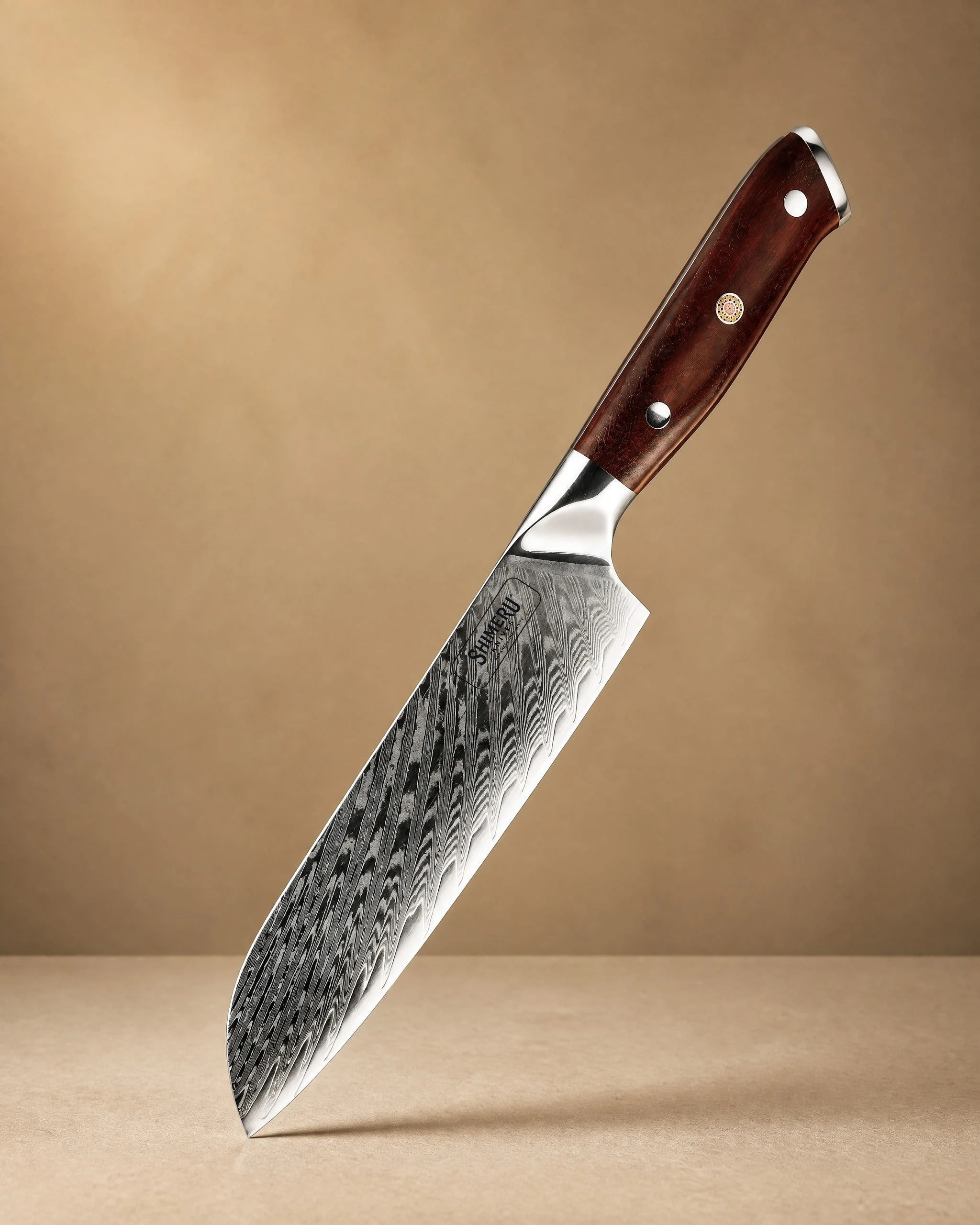 Mizuki 瑞樹 7″ Damascus Steel Santoku Knife 三徳包丁£79.99View product → sits between them. Same 67 layer Damascus and VG10 core, with a polished rosewood handle that is dressier than an oiled finish and a little more demanding of care. It is the one people pick when the knife will live on a magnetic rack rather than in a drawer.
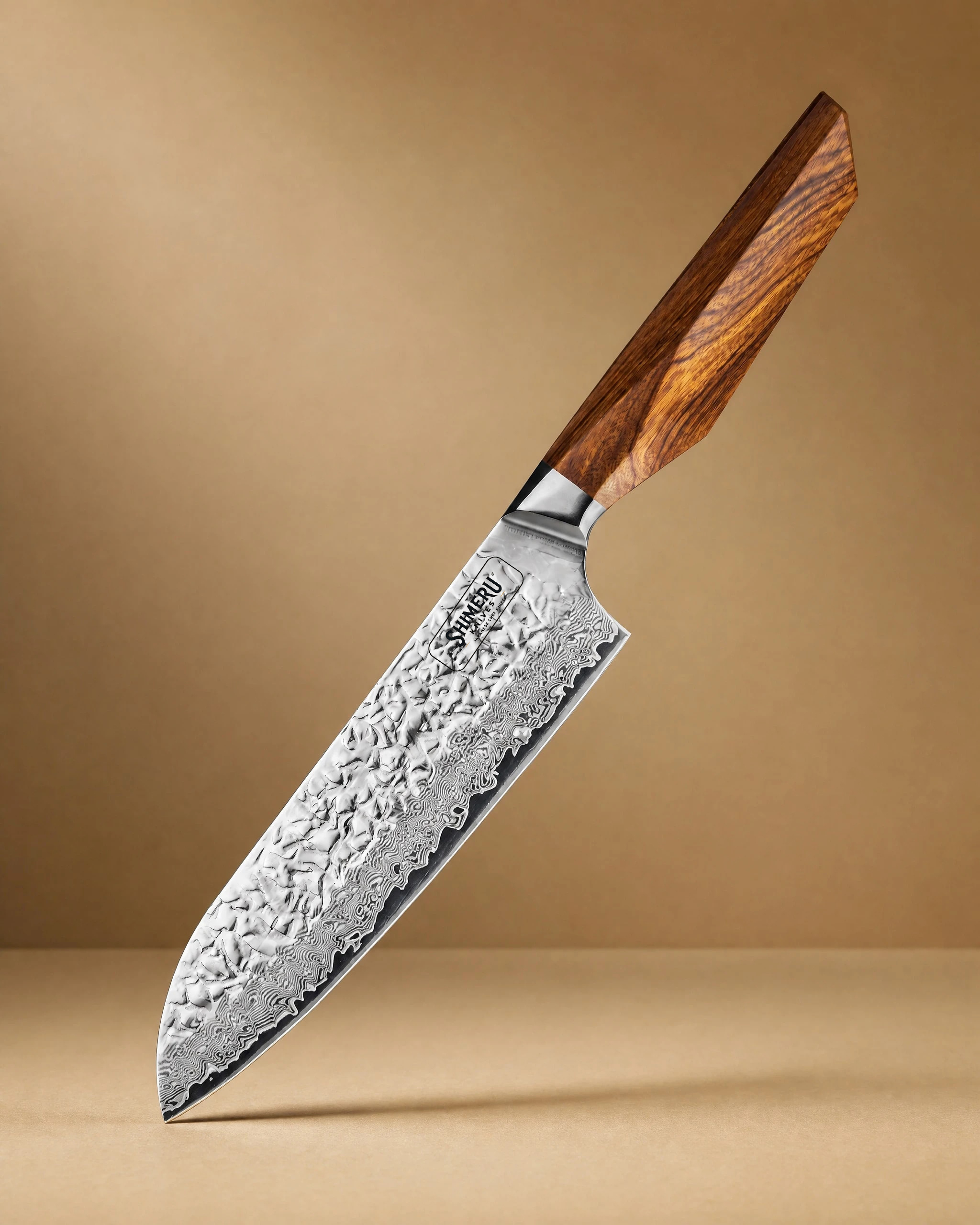 Shikoku 7" Damascus Steel Kengata Santoku 三徳包丁£79.99View product → is different in shape. It is a kengata santoku, built on 67 layer AUS10 Damascus steel with a rosewood handle. The AUS10 core is the more forgiving of the two steels, and the kengata profile trades the blunt tip of a standard santoku for a pointed one, which makes it easier to work into meat, trim fish and start a cut precisely.
Kengata, and when the pointed tip helps
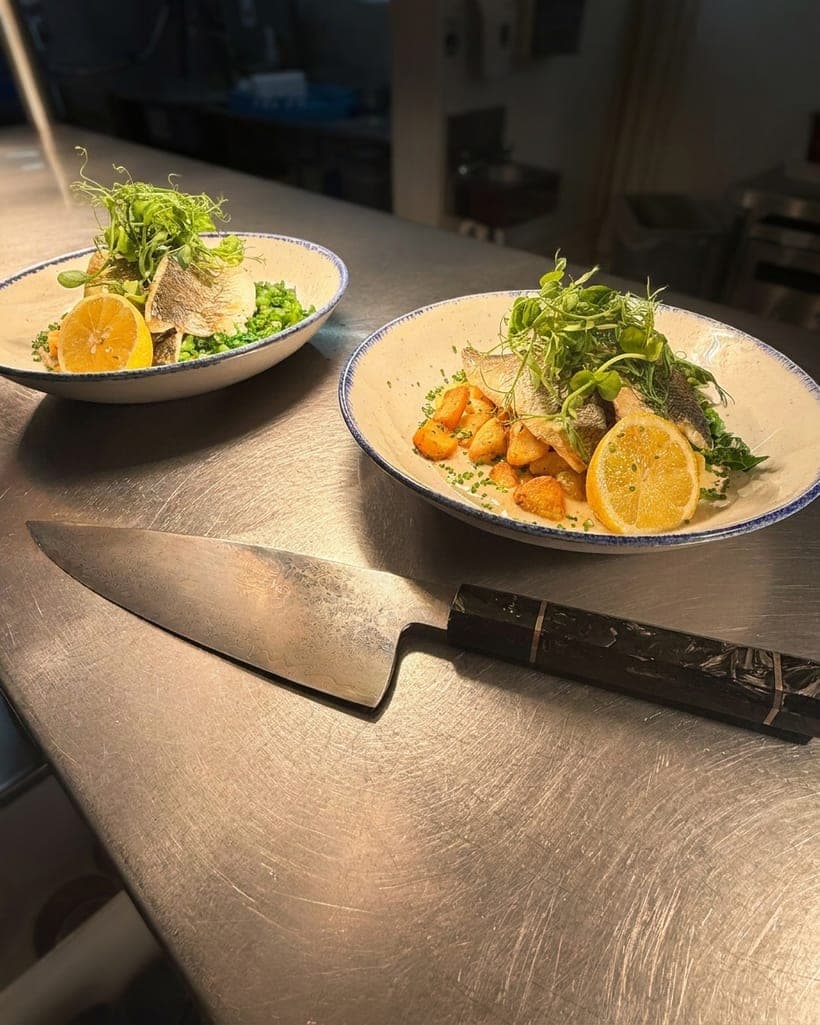
The kengata is sometimes called a sword tip santoku. The edge is broadly the same, but the spine sweeps down to a point rather than dropping squarely. That point is useful for piercing, scoring, working around a bone and the small precise cuts a blunt tip makes awkward.
The trade off is a shorter flat section along the edge, so rocking and heavy chopping feel slightly less natural. If your cooking is mostly vegetables on a board, a standard santoku is the better fit. If you break down meat, fillet fish or want one knife to do a bit of everything, the kengata is the more versatile shape.
Care decides how long a top rated knife stays top rated
Most disappointing Japanese knife stories follow the same script: a good blade, a wet drying rack, and a year of neglect. VG10 and AUS10 are stainless steels, which means they resist rust far better than carbon steel, but stainless is not stain proof and Damascus cladding has ridges where water sits.
Three habits keep a santoku in good order. Wash it by hand and dry it immediately rather than leaving it to drain. Keep it out of the dishwasher, which is hard on edges, handles and cladding alike. Cut on wood or soft plastic, never on glass, stone or ceramic, which will fold the edge over within a week.
Sharpening is the other half. A santoku used daily at home will want attention every few months, either on a whetstone or from someone who knows what they are doing. A honing rod is not a sharpener, and using one hard on a thin Japanese blade does more harm than good. Our knife care guide covers storage, sharpening and daily habits in full.
A short checklist before you buy
Rating badges are not a shortlist. These are the things that genuinely narrow the field:
- Core steel. VG10 for keenness and edge holding, AUS10 for forgiveness and easier maintenance.
- Blade length. 7 inches suits most home kitchens, and taller blades give your knuckles room.
- Handle material. Rosewood feels warmer and wants occasional oil, resin survives the sink.
- Profile. Standard santoku for board work, kengata if you want a pointed tip for meat and fish.
- Grind. Thin behind the edge cuts; thick behind the edge wedges, however sharp it is.
Everything else, the pattern on the cladding included, is decoration on top of those five things.
Choosing between them
If you want the simplest answer, match the handle to your habits and the profile to your cooking. A rosewood handled standard santoku such as Komachi 小町 7″ Damascus Steel Santoku Knife 三徳包丁£74.99View product → or Mizuki 瑞樹 7″ Damascus Steel Santoku Knife 三徳包丁£79.99View product → suits someone who enjoys the ritual of a good knife. A resin handled Asuka 飛鳥 7″ Damascus Steel Santoku Knife 三徳包丁£79.99View product → suits a busy kitchen where knives get cleaned in a hurry. The kengata Shikoku 7" Damascus Steel Kengata Santoku 三徳包丁£79.99View product → is the one to choose if your cooking leans towards meat and fish as much as vegetables.
Whichever you pick, hold it if you can, and buy the knife that fits your hand rather than the one with the loudest review count. The rest of the range is on the knife shop page.
One last honest note. A top rated santoku knife is not a magic object. It is a thin, hard piece of steel with a good handle, and it will cut beautifully for years if you dry it and sharpen it. That is the whole secret, and no rating badge can do it for you.
Photography: Kevin Doran via Unsplash.


