
Nakiri Knives: A Guide to Japanese Vegetable Blades

The nakiri is one of the most misunderstood knives in a Japanese kitchen. It looks almost unfinished: a rectangle of steel, a flat edge, a squared-off front and no tip at all. Cooks raised on a European chef's knife usually pick one up, notice the missing point, and set it down again. Give it a proper week of vegetable prep and the reaction tends to reverse.
What a nakiri actually is
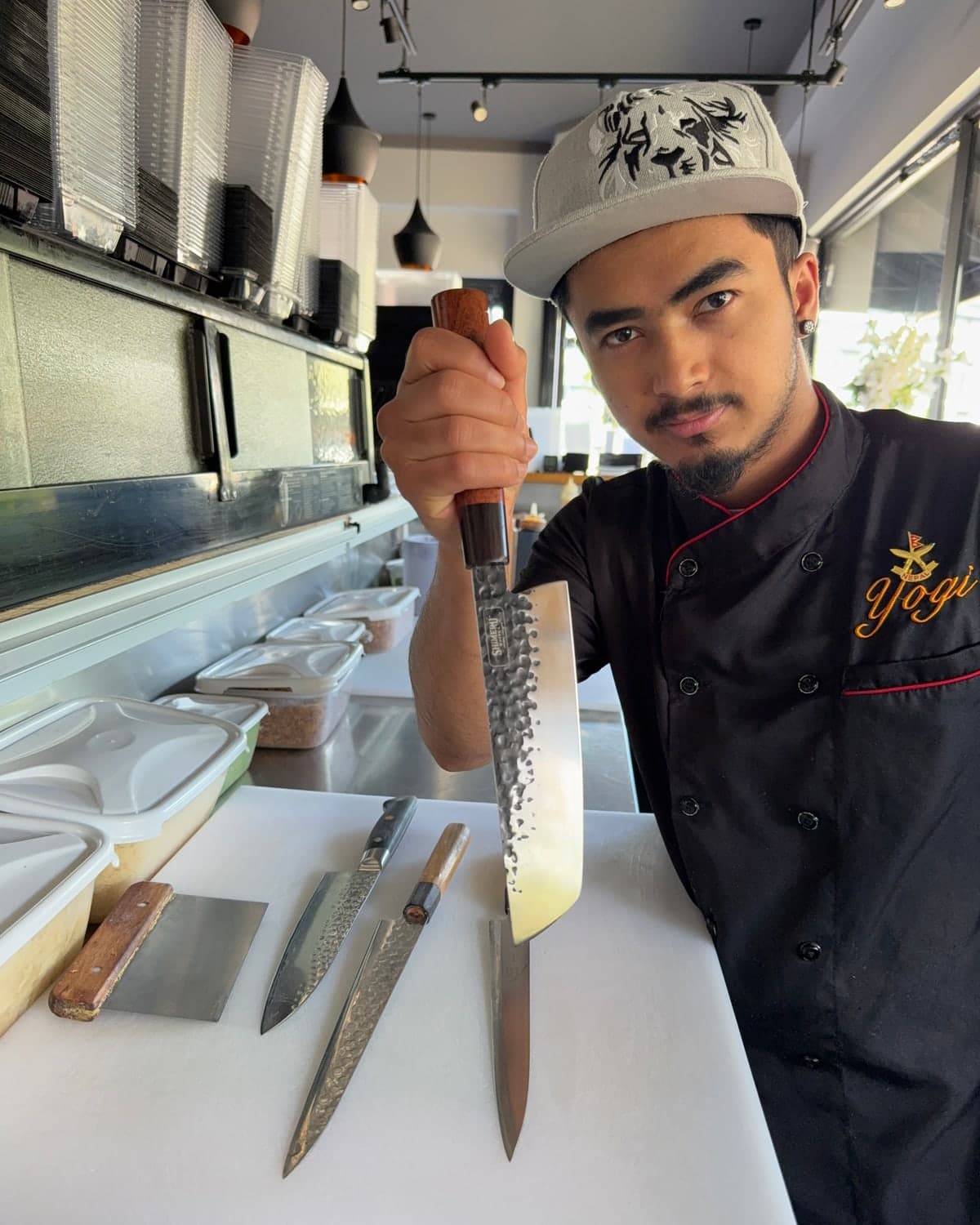
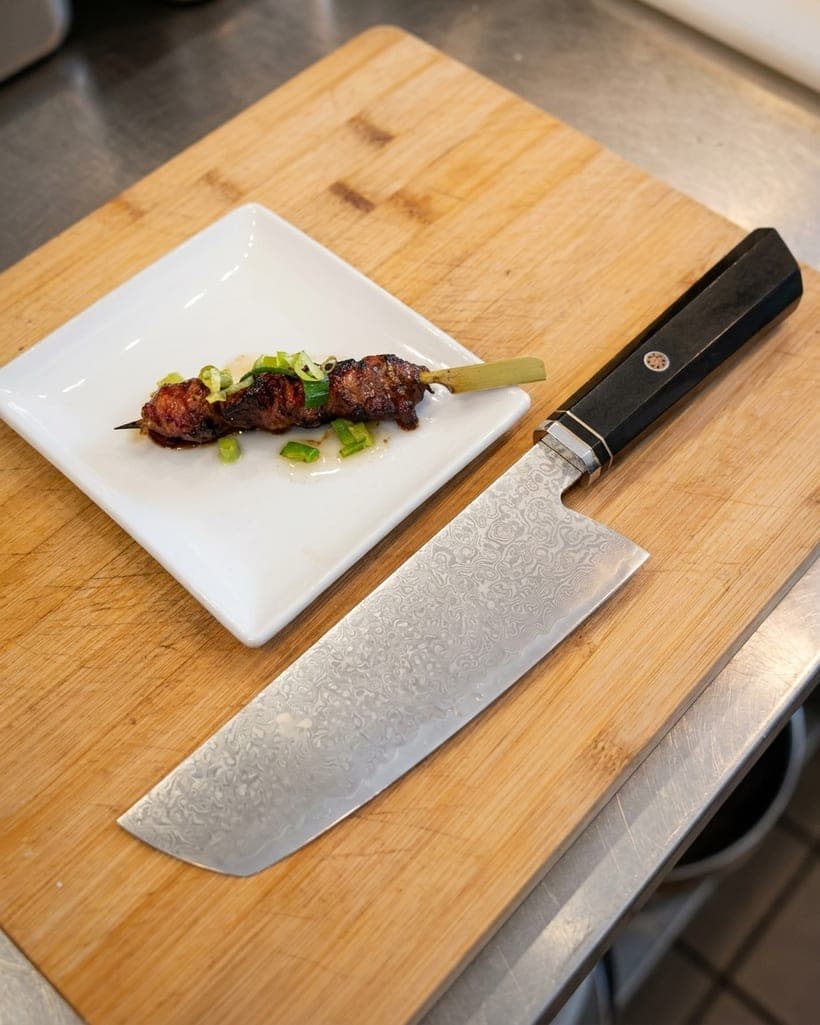
The Japanese name is written 菜切り包丁, which translates loosely as vegetable cutting knife. That is the entire brief. A nakiri is a double-bevel Japanese blade with a tall, flat profile, a straight cutting edge and a spine running almost parallel to it. Most are between 165mm and 180mm long, so a little under 7 inches, with a blade height that gives your knuckles clear room above the board.
Two features define how it behaves. The first is the flat edge. There is very little curve or belly, so the blade meets the board along its whole length rather than rocking on a pivot. The second is the height. A tall blade walls in what you have cut and lets you scoop it up with the flat of the knife, which saves reaching for a bench scraper.
The front of the blade is blunt. Not sharp-blunt, simply squared or lightly angled rather than pointed. Some nakiri have a gentle curve into the spine, others are almost perfectly rectangular. Either way, you are not going to pierce anything with the tip.
Why the shape works so well
Western knife technique is built around the rock chop. You keep the tip on the board and lift the heel, driving the blade down through the cut in an arc. That is efficient with a curved blade and hopeless with a nakiri, because a nakiri has no belly to rock on.
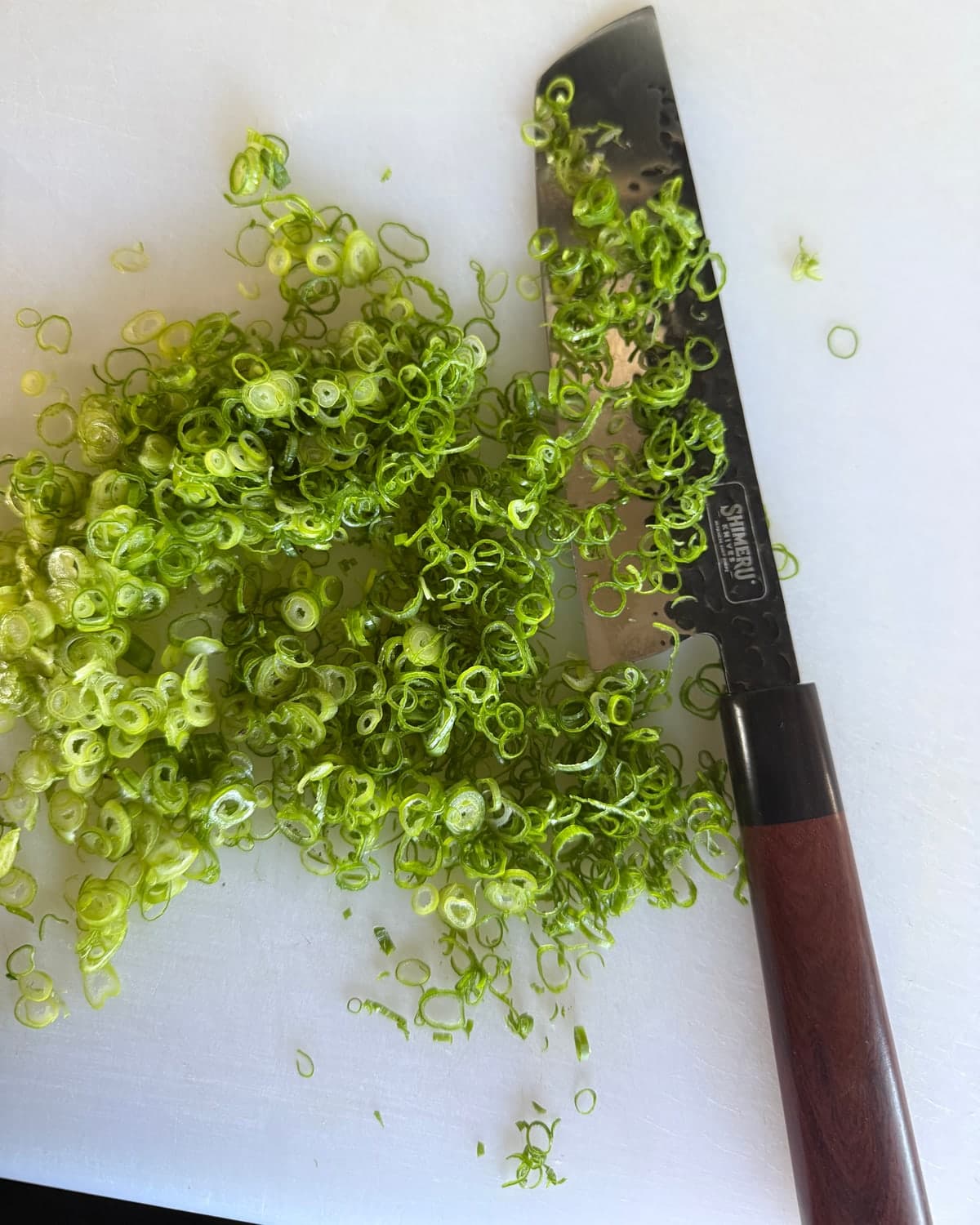
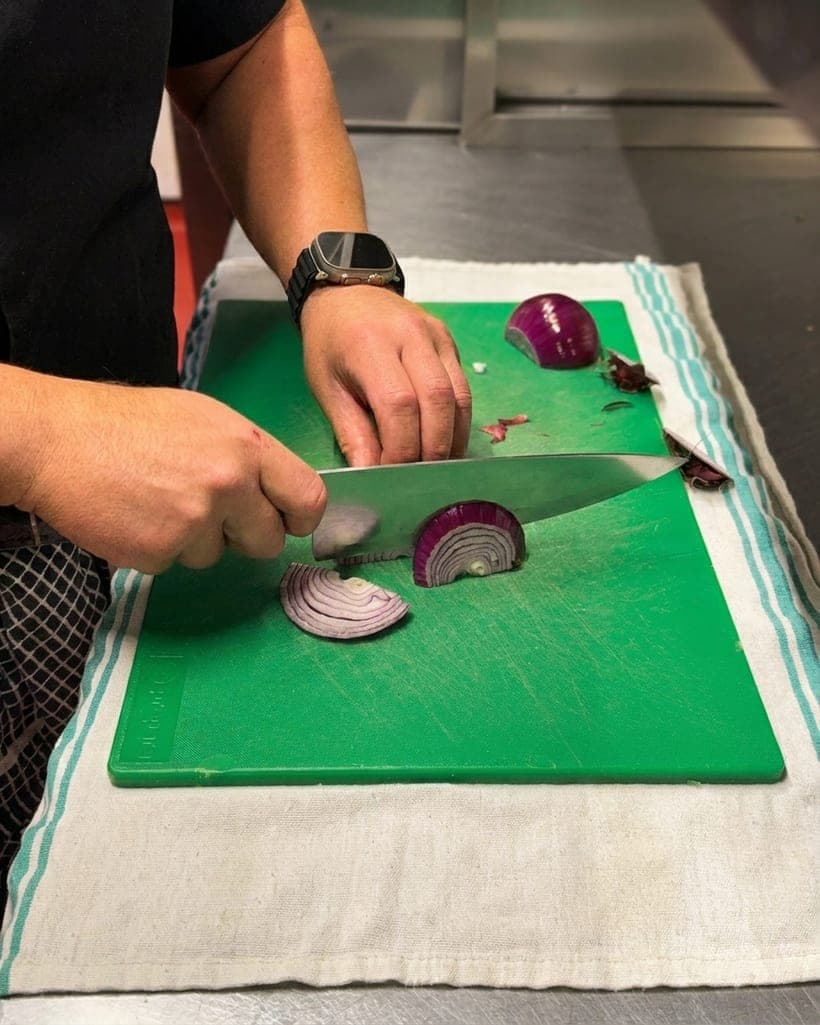
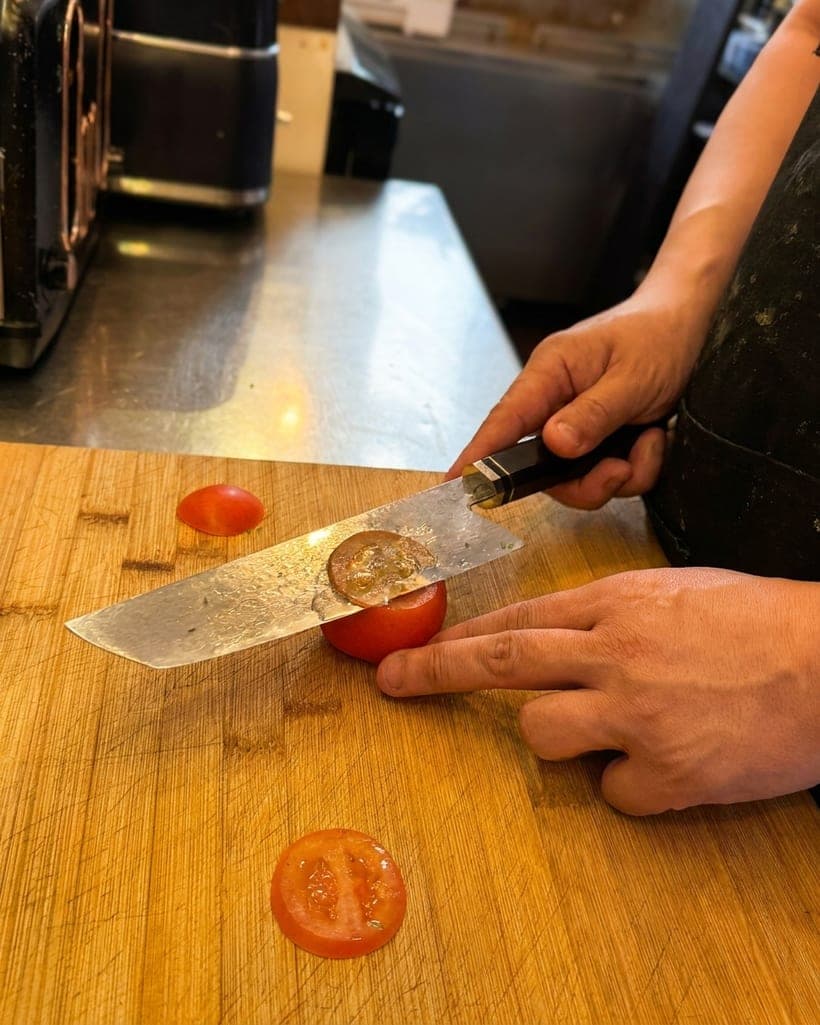
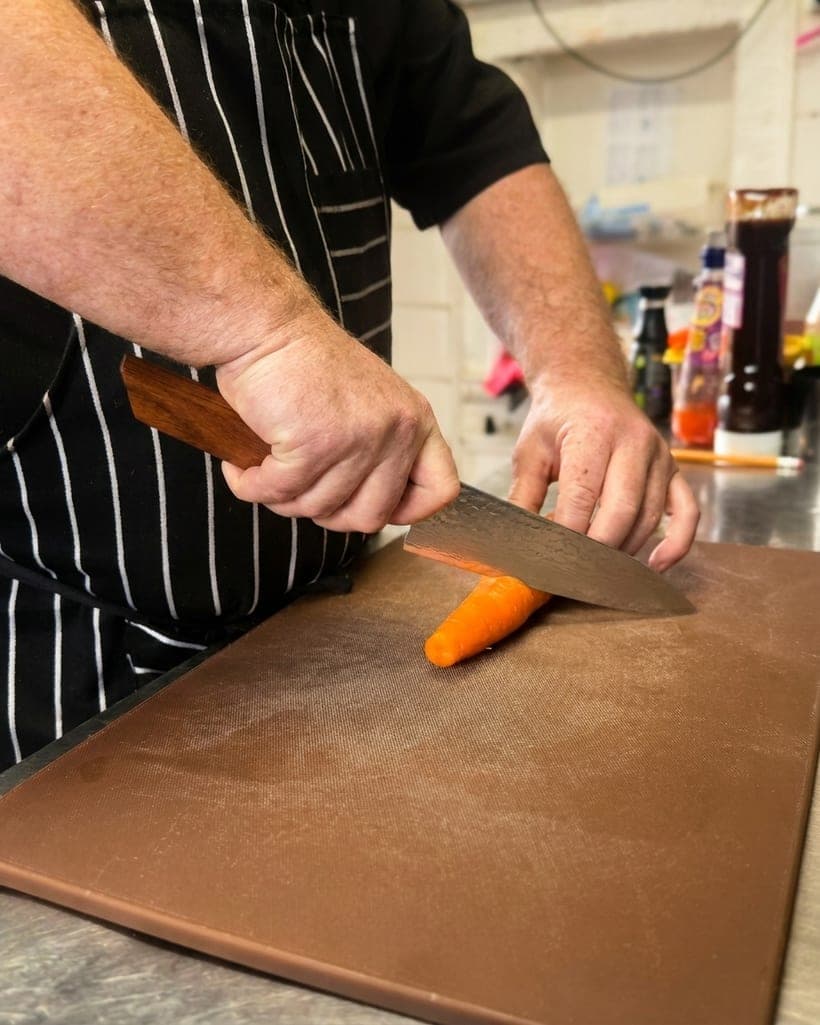
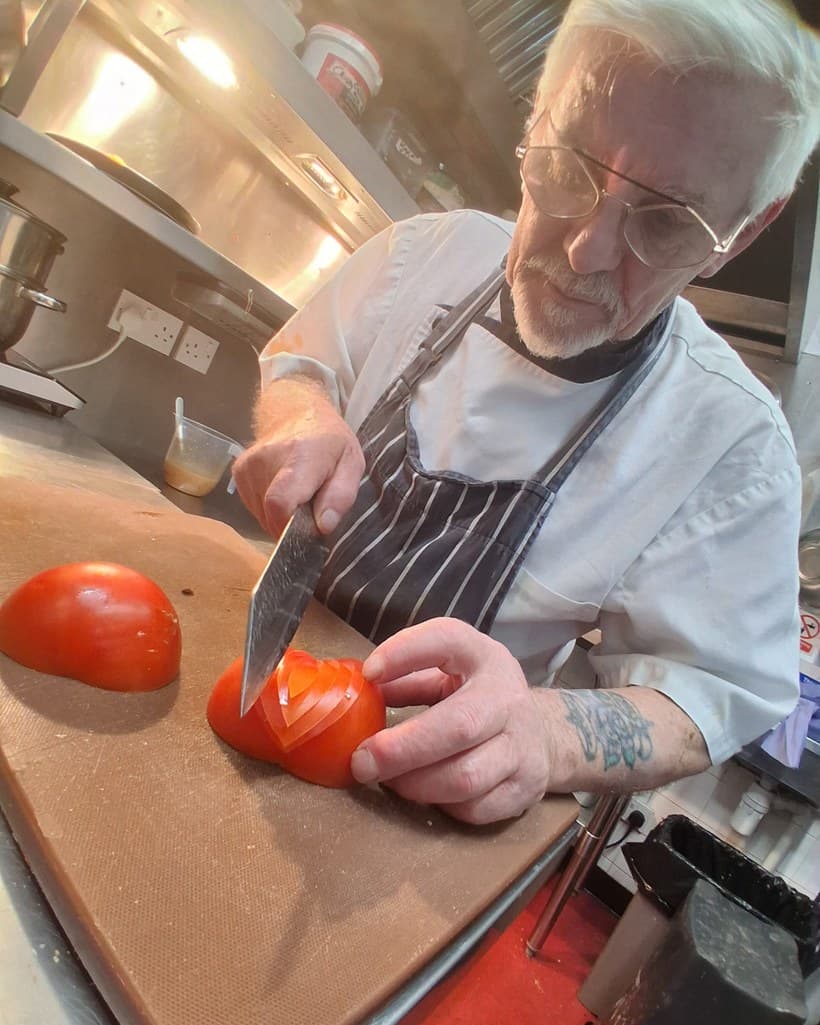
Japanese vegetable work uses a different motion: the push cut and the draw cut. You keep the blade vertical, place the edge on the onion or the carrot, and drive it straight down, or push it forward and down in one stroke. The flat edge gives you full contact with the board the whole way through, so the cut finishes cleanly and the pieces stay together until you move them.
The result is a knife that chops faster than it looks like it should. Onions, leeks, cabbage, carrots, courgettes, potatoes: a nakiri goes through them without the slight crushing that a thicker, curved blade can cause.
What a nakiri is used for
Vegetables, mostly. Soft ones, hard ones, leafy ones, alliums of every kind. The tall blade is particularly good with anything you shred or slice thinly, and the flat profile makes short work of herbs once you have them bunched.
- Onions, shallots, leeks and spring onions
- Cabbage, kale and greens, sliced fine
- Carrots, swede, celeriac and other root vegetables
- Courgettes, aubergines, peppers
- Potatoes, for chips, wedges and gratin
- Herbs, especially when you want a clean chop rather than a bruise
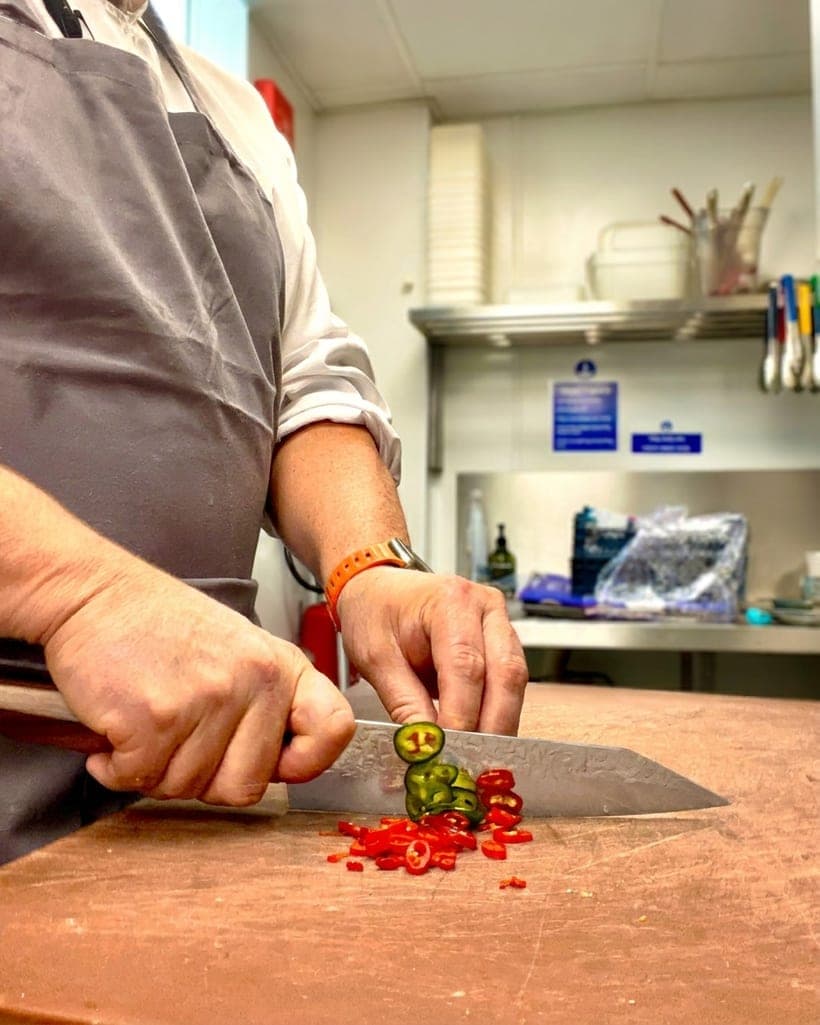
Some cooks also use a nakiri for garlic, ginger and chilli, though a small petty knife handles those with more precision.
The most common nakiri knife use is simple to describe: prep. It is the knife you reach for at the start of a meal, not the one you carve with. Cooks who buy a Japanese nakiri knife generally find it becomes one of the most used blades in the kitchen, second only to a gyuto.
What a nakiri is not for
Be honest about the limits. A nakiri has no tip, so it cannot pierce, and it cannot be used for boning, filleting or trimming silverskin. It should never touch bone, frozen food or a joint. The blade is thin behind the edge, which is exactly why it cuts so well, and exactly why levering or twisting in a tough cut will damage it.
It is also not a bread knife, not a carving knife, and not a substitute for a long slicer on a roast. If you want one knife that does everything, a gyuto or a santoku is the better answer. A nakiri is a specialist, and it is superb at its specialism.
Nakiri, usuba and bunka
Three Japanese shapes get confused with each other, so it is worth separating them.
A nakiri is double-bevel, so it is symmetrical and works for left and right handed cooks alike. An usuba is traditionally single-bevel, a professional vegetable knife from the Kansai region, sharper in the right hands and considerably fussier to maintain. The bunka is essentially a nakiri with a k-tip, giving you a point for detail work while keeping most of the flat edge.
For a home cook who wants to improve vegetable prep, the nakiri is the sensible entry point. It is the least demanding of the three.
A santoku sits between the two traditions. It has a flatter profile than a European chef's knife and a slight belly, plus a tip for detail work. If you want one knife for vegetables, fish and meat, a santoku covers more ground. A nakiri does less, and does the vegetable part better.

Steel, handle and balance
A nakiri Japanese knife is judged on its steel, not its shape. What separates a blade that stays sharp from one that goes dull in a month is the steel and the heat treatment behind it. The knives we stock use steels chosen for edge retention and everyday stain resistance, and they take a keen edge without being a nightmare to sharpen.
Handle choice matters more than people expect. A Japanese wa handle shifts the balance slightly forward, which suits the push cut. The two handle woods in our nakiri range are both hard, dense and comfortable in a pinch grip. One is the more figured of the two and darkens with use.
Balance point should sit just in front of the handle, where the blade begins. If it sits too far back, the blade feels dead and you will press harder than you need to.
Three nakiri knives worth looking at
The three below cover the same core job with slightly different characters, so the choice is mostly about steel preference and handle feel.
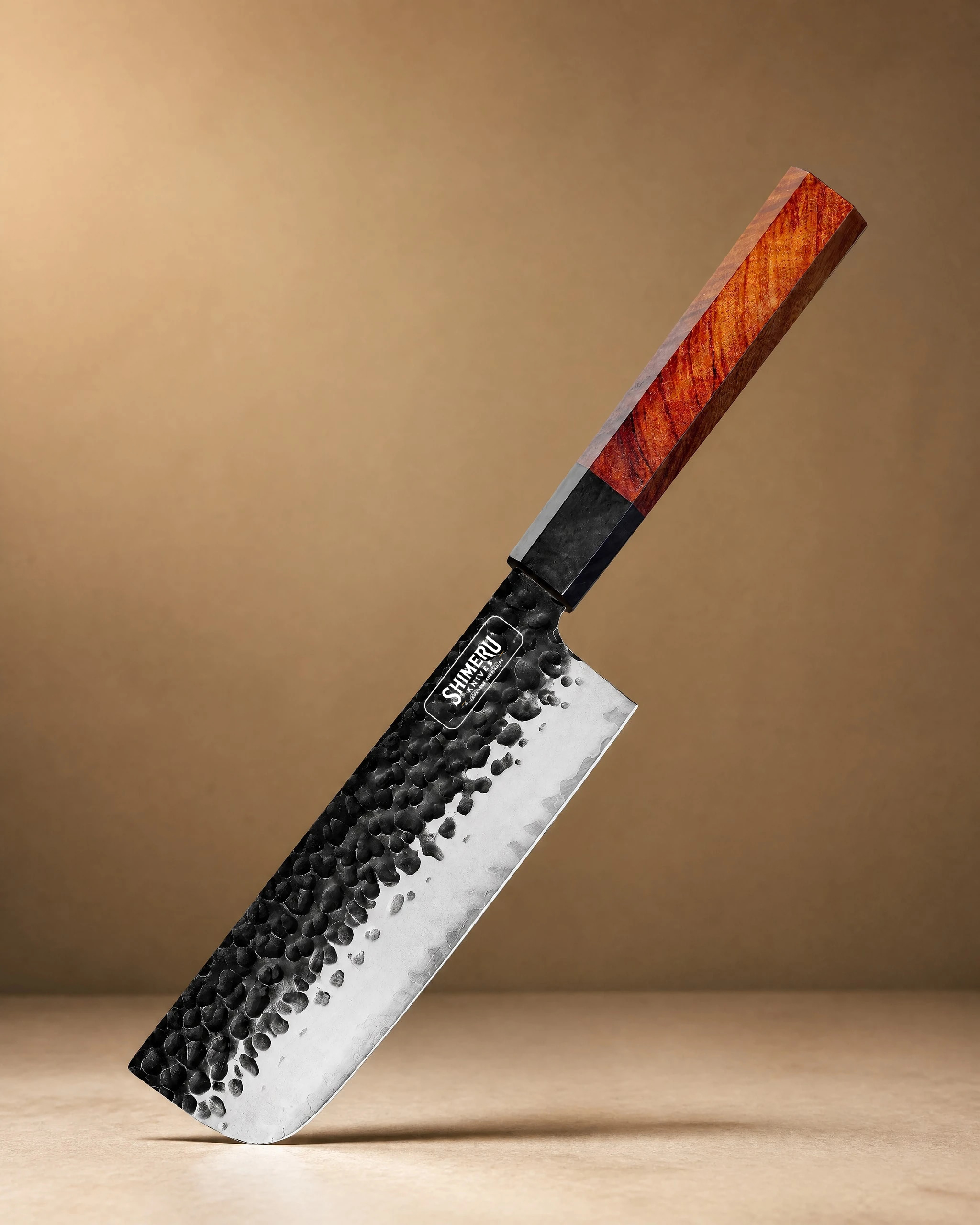 Kiso 7" Nakiri Knife 菜切り包丁£59.99View product → is the straightforward entry point. It handles vegetables, herbs and root vegetables without asking anything of you, and it is the one I would hand to someone buying their first nakiri.
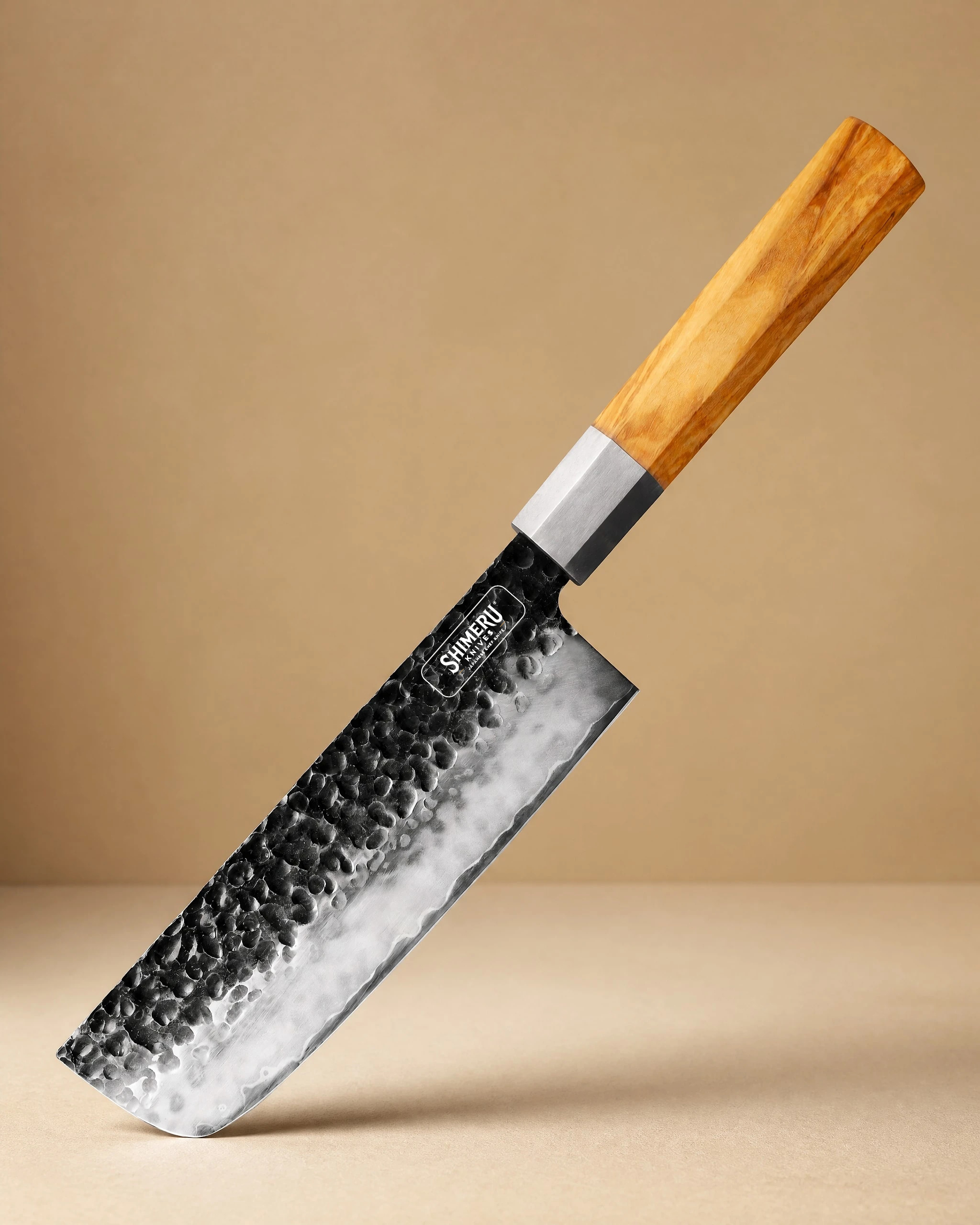 Chitose 7" Nakiri Knife 菜切り包丁£59.99View product → covers the same ground with a different handle in the hand. If you want a nakiri for longer chopping and slicing sessions, and you prefer the feel of natural wood, this is the one to look at.
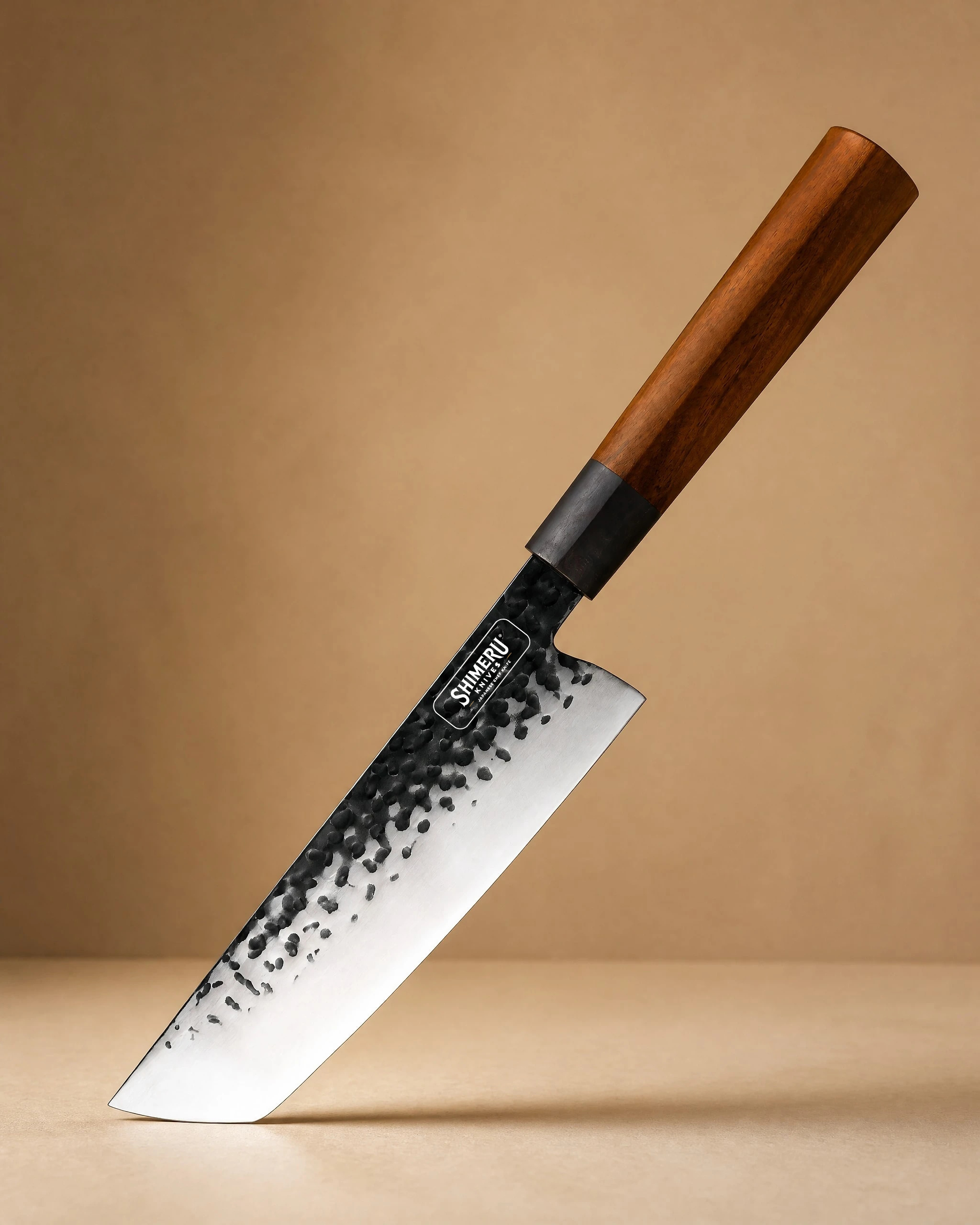 Ginsui 7" Nakiri Knife 菜切り包丁£54.99View product → is for the cook who enjoys the sharpening side of owning a Japanese knife and wants a blade that rewards a good stone. Everyday vegetable, herb and root vegetable work is its territory, the same as its two stablemates. The cards below each one carry the full specification, so you can compare them side by side.
Size: is 7 inches right?
For most home kitchens, yes. A 7 inch nakiri is long enough to deal with a whole cabbage and short enough to control on a small board. Shorter blades feel nimble but run out of length on bigger vegetables. Longer blades give you more cutting edge but a heavier, more unwieldy knife on a domestic worktop.
If you are cooking for one or two and your board is small, a shorter nakiri makes sense. If you cook in volume, go longer.
Using and looking after it
Keep the edge off the board's hard spots and it will reward you. Use a wooden or soft plastic board rather than glass or stone, which dull an edge quickly. Wash and dry by hand, especially with high-carbon steel, and put the knife away dry.
A quick hone on a fine rod keeps a nakiri in trim, but honing is realignment, not sharpening. Once the edge stops biting a tomato skin, it needs a stone. Our knife care guide covers sharpening angles, stones and daily habits in detail.
Is a nakiri the right next knife for you?
If you already own a chef's knife and a paring knife, and you cook a lot of vegetables, a nakiri is one of the few genuinely useful additions to a block. It will not replace your chef's knife, and it is not meant to. It will make one repeated task faster, cleaner and more enjoyable, and that is a good reason to own any knife.
If you are still working out which shape suits your cooking, our how to choose a knife guide walks through blade shapes, steel types and lengths. When you are ready, the full range sits in the nakiri category, and everything else we stock is in the knife shop.
Buy the knife that matches what you actually cook. For most people reading this, that means a nakiri earns its place.
Photography: Savernake Knives via Unsplash.

