










Best Quality Cutting Boards for a Lasting Kitchen

A good knife deserves a good surface. The best quality cutting board is not simply the heaviest or most expensive one on the shelf. It is the board that protects your edge, gives you enough room to work, stays stable on the counter and fits the way you actually cook. If you have spent money on a Japanese knife, a poor board can undo much of that investment in a few months of daily use.
This guide covers the practical points that matter: material, grain, thickness, hygiene and care. It is written for home cooks and keen prep cooks who want a board that will last, not a fashionable offcut that warps by Christmas.
What makes a cutting board good quality?
Quality starts with the material and how it is put together. A high quality cutting board should feel solid, have a consistent surface and show clean joins. It should not rock on a flat counter, smell of solvent, or have deep cracks that will open when it dries.
Density matters. Softer surfaces are kinder to a thin, hard Japanese edge. Very hard surfaces, including glass, stone and some ceramics, are the wrong choice for any good knife. They can chip or roll an edge and they give no grip to the food.
Thickness gives stability and room for resurfacing. A thin board can slide, flex or crack. A thicker board stays put and can be sanded back if it picks up scores. Weight is part of this: a board that is too light will move under the knife, especially during fast vegetable prep.
Construction matters as much as the species. Edge grain boards are made from strips glued side by side. End grain boards stand the fibres upright, so the knife edge parts them rather than cutting across them. End grain is usually more expensive and needs more care, but it can be gentler on an edge. A well made edge grain board is still a perfectly good choice for most homes.
Look at the finish. A high quality cutting board should be smooth but not glassy. Sharp corners and rough edges are a sign of rushed finishing. Check the end grain if it is visible: tight, even fibres usually point to better stock. Smell the board. A strong chemical smell may fade, but it is not a good sign in a food preparation surface.
Wood, bamboo, plastic or composite?
Wood is the classic choice for a good quality chopping board. It is warm under the knife, stable when thick enough and kind to a fine edge. It also needs hand washing, regular oiling and a dry place to stand. Do not soak it, do not put it in the dishwasher and do not leave it flat on a wet counter.
If you choose wood, ask how it has been finished. Some boards are sold with a heavy wax coat that feels slick at first. Others arrive dry and need oiling before use. Follow the maker's instructions rather than assuming. A board that is well cared for from the first week will stay flatter and look better for longer.
Bamboo is often sold as an eco option. It is hard, stable and usually affordable. Some bamboo boards are very hard and resin heavy, so check the finish and the joins. Bamboo can be a practical second board, but it is not automatically gentler on a knife than good wood.
Plastic is cheap, light and easy to clean. It is useful for raw meat and fish if you keep a separate board for those jobs. The weakness is scoring. Once a plastic board has deep cuts, it is harder to clean properly and should be replaced. Thin flexible plastic mats are handy for quick jobs but they slide and they do not give a pleasant cutting surface.
Rubber and composite boards sit between wood and plastic. They are often heavier, grippy and dishwasher friendly. They can be a good choice for a busy shared kitchen, though some are quite hard. Read the maker's care instructions rather than assuming every composite board behaves the same way.
The board and the knife edge
Japanese knives often have thin edges and hard steel. They reward a clean cut and a steady hand, but they do not enjoy being twisted on a hard board or chopped through bones. Use a board that gives a little, keep the knife straight and let the edge do the work.
For general prep, a large board and a gyuto are a natural pair. If you mostly slice vegetables, herbs, meat and fish, 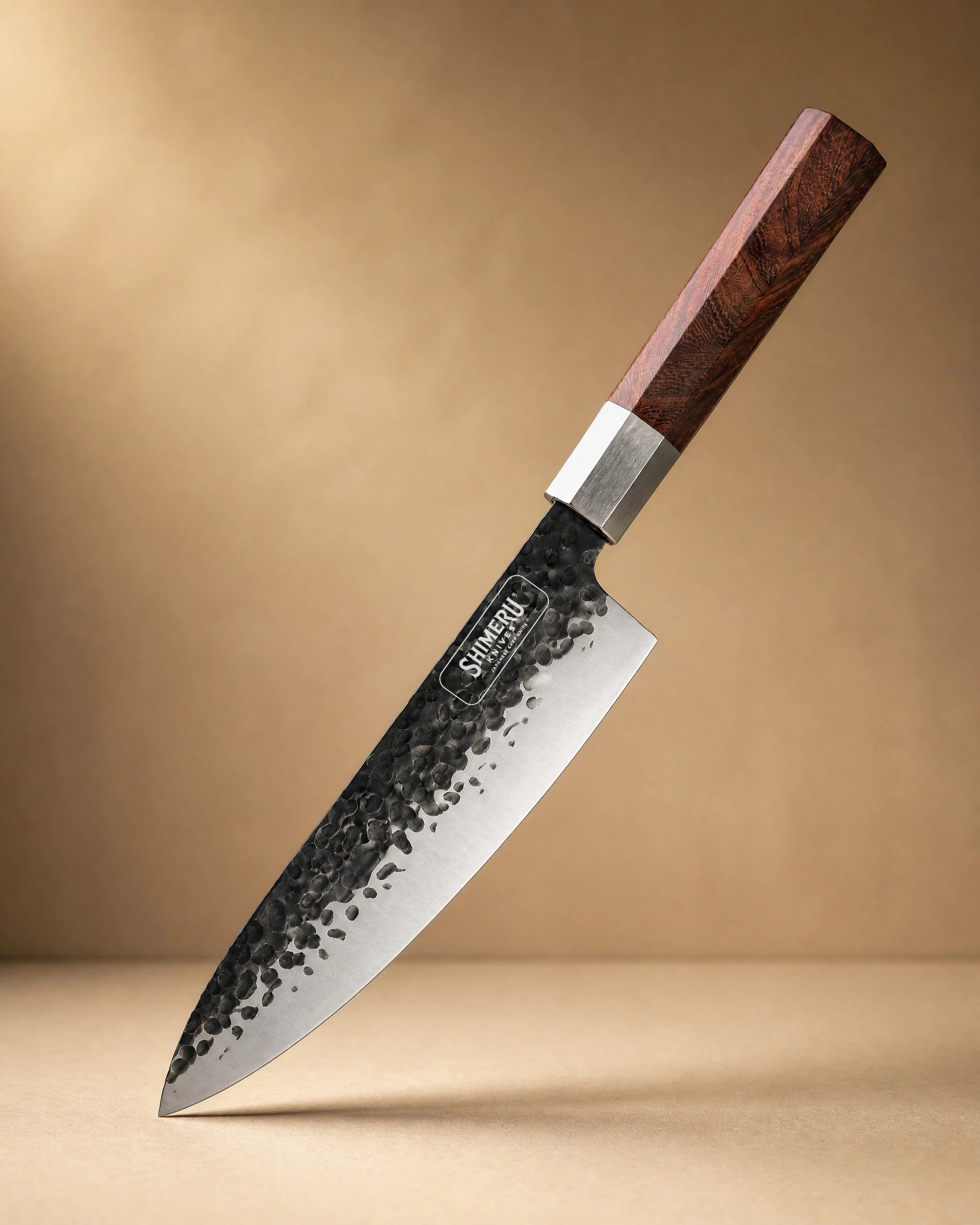 Sendai 8" Steel Gyuto Knife 牛刀£49.99View product → is a sensible starting point for that kind of work. If your cooking leans towards meats, fish and fruit as well as vegetables,
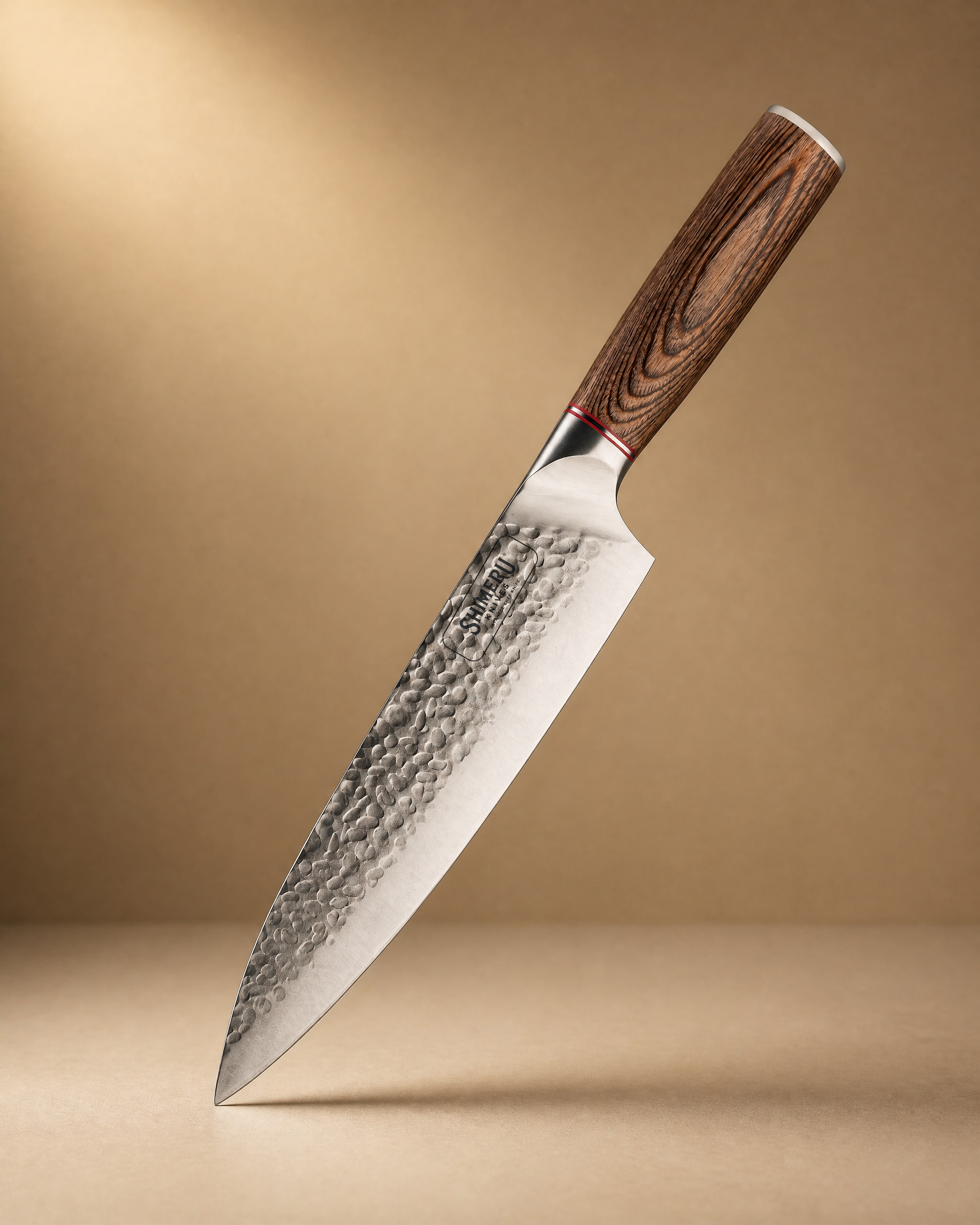 Akan 8'' Gyuto Knife 牛刀£49.99View product → covers a similar everyday role. Neither knife needs a fragile board, but both deserve better than glass or bare stone.
Size matters here. A board should give you room to move the knife without the food falling off the edge. A cramped board forces awkward cuts and makes you crowd the blade. For a family kitchen, one large board for vegetables and general prep plus a smaller board for raw meat is often more useful than three matching boards that are all too small.
Size, thickness and layout
Choose by the space you have and the food you cook. A board that fits beside the sink and can be lifted with one hand is more likely to be used than a huge block that lives in a cupboard. If you regularly roast meat, a juice groove is useful. If you chop a lot of vegetables, a flat surface with no clutter is better.
Feet or a non slip cloth help a board stay still. A board that slides is dangerous, especially with a sharp knife. Check that the board sits flat on your counter. A slight wobble will become annoying and then unsafe.
Thickness affects both stability and care. Thick boards can be sanded and re oiled for years. Thin boards are lighter but may cup or crack. If you have limited storage, measure the cupboard before you buy. A high quality chopping board that does not fit your kitchen will not get used.

Hygiene and everyday care
Wood needs a simple routine. Wash it by hand with hot soapy water, rinse, dry it with a cloth and stand it upright so air can reach both faces. Oil it when the surface looks dry, using a food safe board oil. Do not use olive oil, as it can turn rancid. Do not leave a wooden board soaking in the sink.
Plastic boards can usually go in the dishwasher if the maker says so. Wooden boards should not. If a board has deep grooves, dark stains or a sour smell that will not lift, replace it. Hygiene is not about appearance alone, but a worn surface is harder to keep clean.
Use separate boards for raw meat and ready to eat food, or wash and sanitise thoroughly between jobs. This is basic kitchen practice, not a criticism of your board. A good board makes the routine easier because it is stable and easy to clean.
Knife care and board care belong together. Our knife care guide covers sharpening, honing and storage in more detail. For everyday edge maintenance, a magnetic rolling sharpener such as 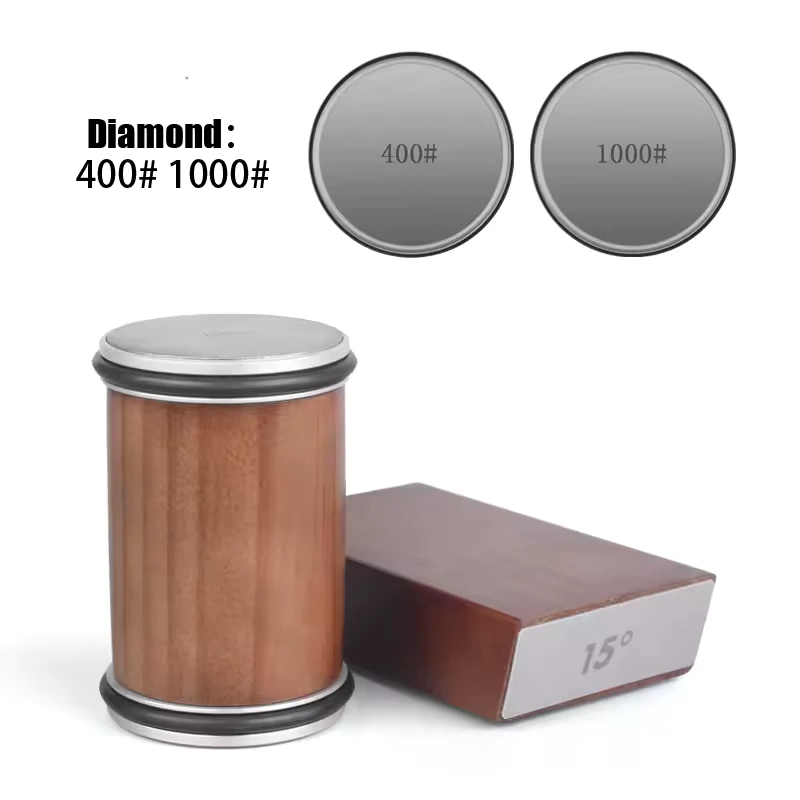 Magnetic Rolling Knife Sharpener£59.99View product → can be part of a simple routine, provided you follow the instructions and keep the angle consistent. A sharpener will not fix a chipped edge caused by a glass board, so start with the surface.
Choosing for a shared kitchen or a gift
A shared kitchen needs clear rules. One board for raw meat, one for vegetables and bread, and a routine for washing up. If several people cook, label the boards or choose different colours. It sounds fussy, but it prevents the usual argument about who used the onion board for chicken.
For someone building a first proper knife kit, a set can be useful. 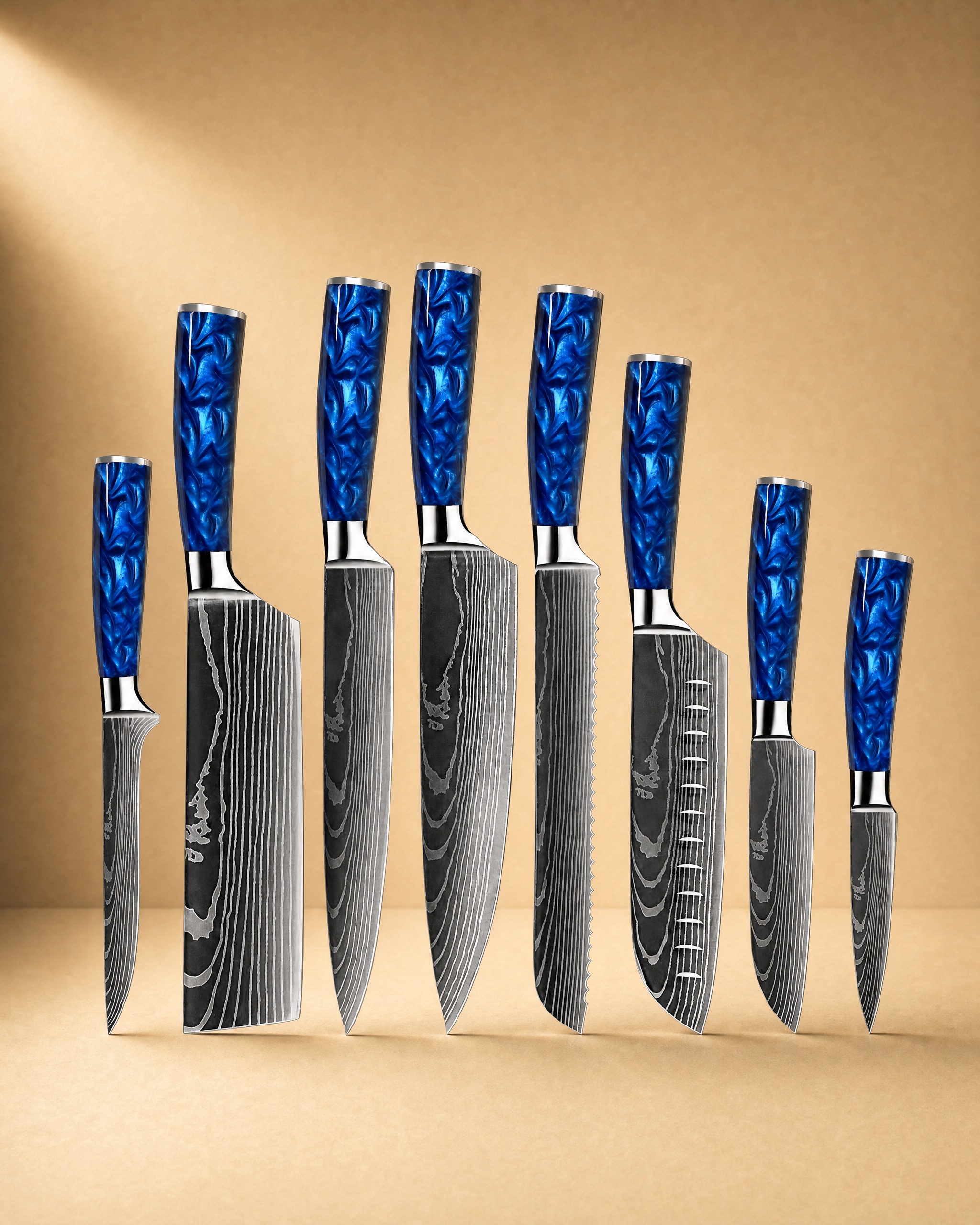 Shinano 信濃川 Damascus Pattern Stainless Steel Kitchen 8 Knife Set£149.99View product → is one option to look at if they want a matched set rather than buying one knife at a time. For a gift, a good quality chopping board is often more welcome than another mug. Buy a size that fits the recipient's kitchen, not your own.
If you are still choosing the knife itself, our knife guide explains blade shapes, steel and handle types in plain terms. You can also browse the full knife shop to compare styles. The right board and the right knife should feel like a pair, not two separate purchases.
Common mistakes to avoid
Glass and stone boards are the most common mistake. They look smart, but they are unforgiving on any edge. Dishwashing a wooden board is another. It strips the oil, opens the grain and shortens the board's life. Soaking is just as bad.
Buying too small is a quiet mistake. A board that cannot hold a pile of chopped vegetables will have you working in batches or letting food spill onto the counter. A board that slides is a safety problem, not just an annoyance. Not oiling wood is a slow mistake: the board dries, cracks and stains.
Finally, do not expect one board to do everything. A large wooden board for general prep, a plastic board for raw meat and a small board for fruit or bread is a practical setup. It is also easier to clean than one enormous board used for every job.
A simple buying checklist
Use this short list before you buy:
- Does the board sit flat and stay still on your counter?
- Is it large enough for the food you normally prep?
- Is the surface kind to a thin knife edge?
- Can you wash and dry it easily in your kitchen?
- Are the joins clean and the finish consistent?
- Will it fit your storage space?
A best quality chopping board should last for years, not months. It should be stable, easy to care for and suited to your knives. If you choose a sensible material, a useful size and a board you can actually wash, you will get more from every knife in the drawer. The best quality cutting board is the one that makes good cooking feel easier, day after day.
Photography: engin akyurt via Unsplash.

