
Naniwa Whetstones: A Sharpening Guide for UK Cooks
A Naniwa whetstone is not a shortcut. It is a simple water stone that rewards a little practice. If you cook in a UK kitchen with a Japanese knife, or you are moving from a pull through sharpener to something more honest, a Naniwa sharpening stone is a sensible place to start. The brand has a long reputation among people who sharpen regularly, but the stone does not do the work for you. Your angle, your pressure and your patience matter more than the label on the box.
Why a Naniwa Whetstone Makes Sense in a UK Kitchen
Most UK home cooks use stainless steel knives. They are tough, forgiving and easy to live with. They still respond well to a water stone. A Naniwa whetstone cuts steel with abrasive particles held in a softer binder, and water keeps the surface clear. You do not need oil, which is one less messy thing in a small kitchen. You do need water, a flat surface and a cloth.
Naniwa stones are popular because they are consistent. A consistent stone helps you learn. If the stone behaves the same way each time, you can change one thing, such as your angle, and see what happens. That is how sharpening improves. A stone that feels different every week makes learning harder. Naniwa has several ranges, and they do not all behave in the same way, so read the maker's instructions for the stone you buy.
There is also a practical point. A decent medium stone will handle most home sharpening. You do not need a rack of stones to keep a knife useful. You need one stone you understand, a way to keep it flat, and the habit of using it before the edge is completely gone.
What You Actually Need: Grits and Progression
Grit numbers are a scale, not a promise. A lower number is coarser. A higher number is finer. For most UK home kitchens, a 1000 grit Naniwa whetstone is the workhorse. It removes enough steel to revive an edge without taking off more than you need. If your knife is in good shape, you can finish on a 3000 or 5000 grit stone for a cleaner cut. If the edge is damaged, a 400 grit stone saves time, but it is not where you should live.
A simple progression looks like this:
- 400 grit: for chips, deep dullness or resetting a bevel. Use only when needed.
- 1000 grit: the main stone for most sharpening. This is the one to learn on.
- 3000 grit: an optional refinement for clean slicing and a polished edge.
- 5000 to 8000 grit: optional finishing, useful for some knives and some tasks, not essential for every cook.
Do not jump from a very coarse stone to a very fine one and expect a clean edge. Each stone should remove the scratches from the previous one. If you only own one stone, make it a 1000. Learn to raise a burr and remove it. Then decide whether you want a finer finish. A Naniwa sharpening stone in 1000 grit will teach you more than a full set you never use.
Soaking, Splash and Storage
Water stones are not all the same. Some need a soak before use. Some are splash and go. Some are happy with a short soak. Follow the instructions for your Naniwa stone rather than a rule you read online. If a stone is meant to be splash and go, soaking it for hours is not helpful. If it is a soaking stone, a few minutes in water may not be enough. The stone will tell you: it should feel ready, not dry in the middle.
Keep the stone on a stable, flat surface. A stone holder or a damp cloth stops it sliding. Use plenty of water while you work. If the surface starts to dry and the stone grabs, add water. Do not let slurry dry into a hard paste on the stone. Rinse it after use and dry it slowly, away from direct heat.
Flattening matters. A stone that has hollowed in the middle will not give you a consistent angle. A flattening plate or wet and dry paper on a flat surface will bring it back. Check it regularly, especially if you sharpen a lot of knives. A flat Naniwa whetstone is a much better teacher than a dished one.
The Sharpening Motion, Step by Step
Start with a clean knife and a stone that is ready. Put the stone in front of you, long edge running away from you or across, whichever feels stable. Place the blade on the stone. Find the angle by lifting the spine until you can see a small gap between the edge and the stone. Most Japanese kitchen knives are around 15 degrees per side, but use the maker's guidance for your knife. Keep that angle steady.
Use light pressure. Let the stone cut. Work in sections along the edge, from heel to tip. You can use a push and pull motion, or a sweeping motion, as long as the angle stays the same. Do not saw fast and hard. Slow, even strokes are better. Count your strokes if it helps, but listen and feel for the burr. The burr is a small ridge of steel on the opposite side of the edge. When you feel it along the whole edge, you have reached the edge on that side.
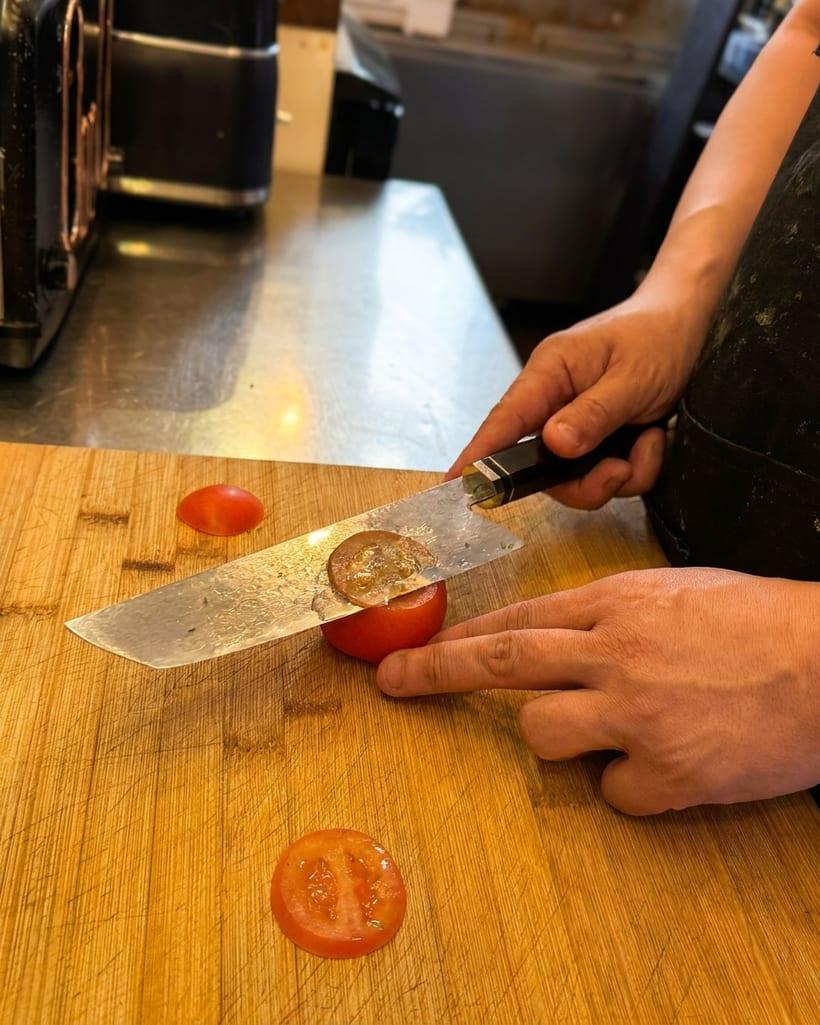
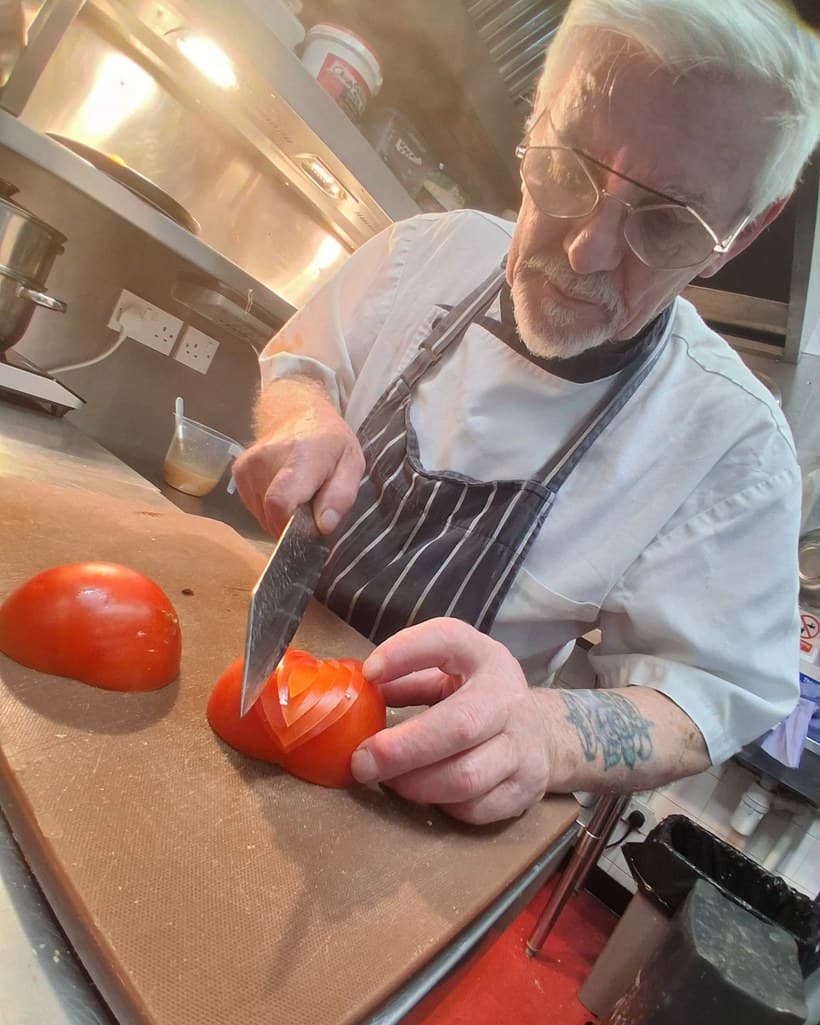
Turn the knife over and repeat on the other side. Keep the pressure light. The aim is to match the bevels and remove the burr, not to grind the knife away. Finish with a few very light strokes, alternating sides. If you are moving to a finer Naniwa stone, repeat the process with less pressure. Wipe the blade clean and test it on paper or a tomato. Do not test it by shaving hair unless you are confident; it is not necessary.
Choosing a Stone for Your Knives
If you are buying your first serious knife and your first stone, keep it simple. The 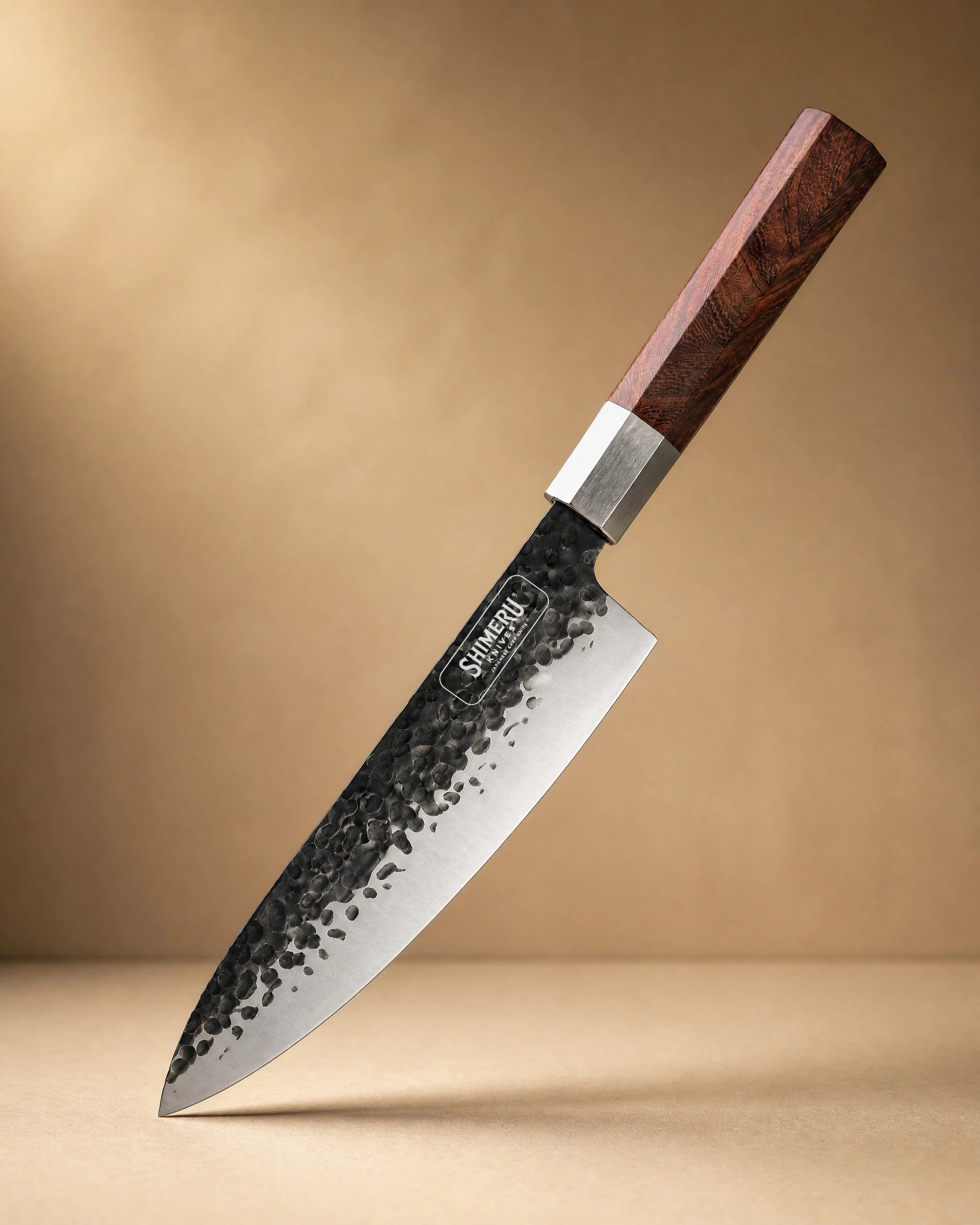 Sendai 8" Steel Gyuto Knife 牛刀£49.99View product → is a sensible first choice if you want one knife to learn with. Pair it with a 1000 grit Naniwa whetstone and learn the basics. The
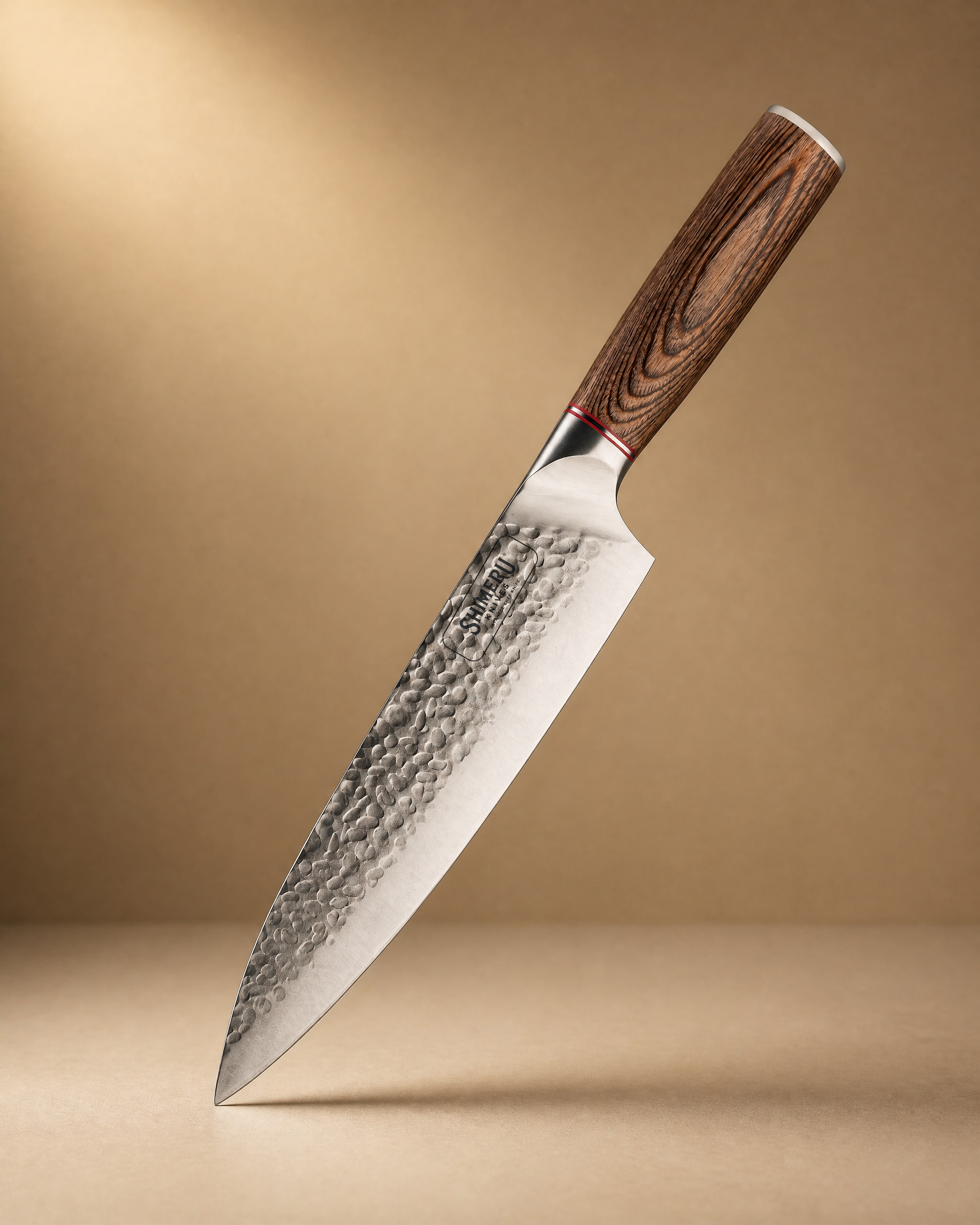 Akan 8'' Gyuto Knife 牛刀£49.99View product → is another good option for a home cook who wants a single knife. Neither knife needs a complicated stone collection. They need a clean edge and regular care.
If you already own a set, or you are buying for a household, the 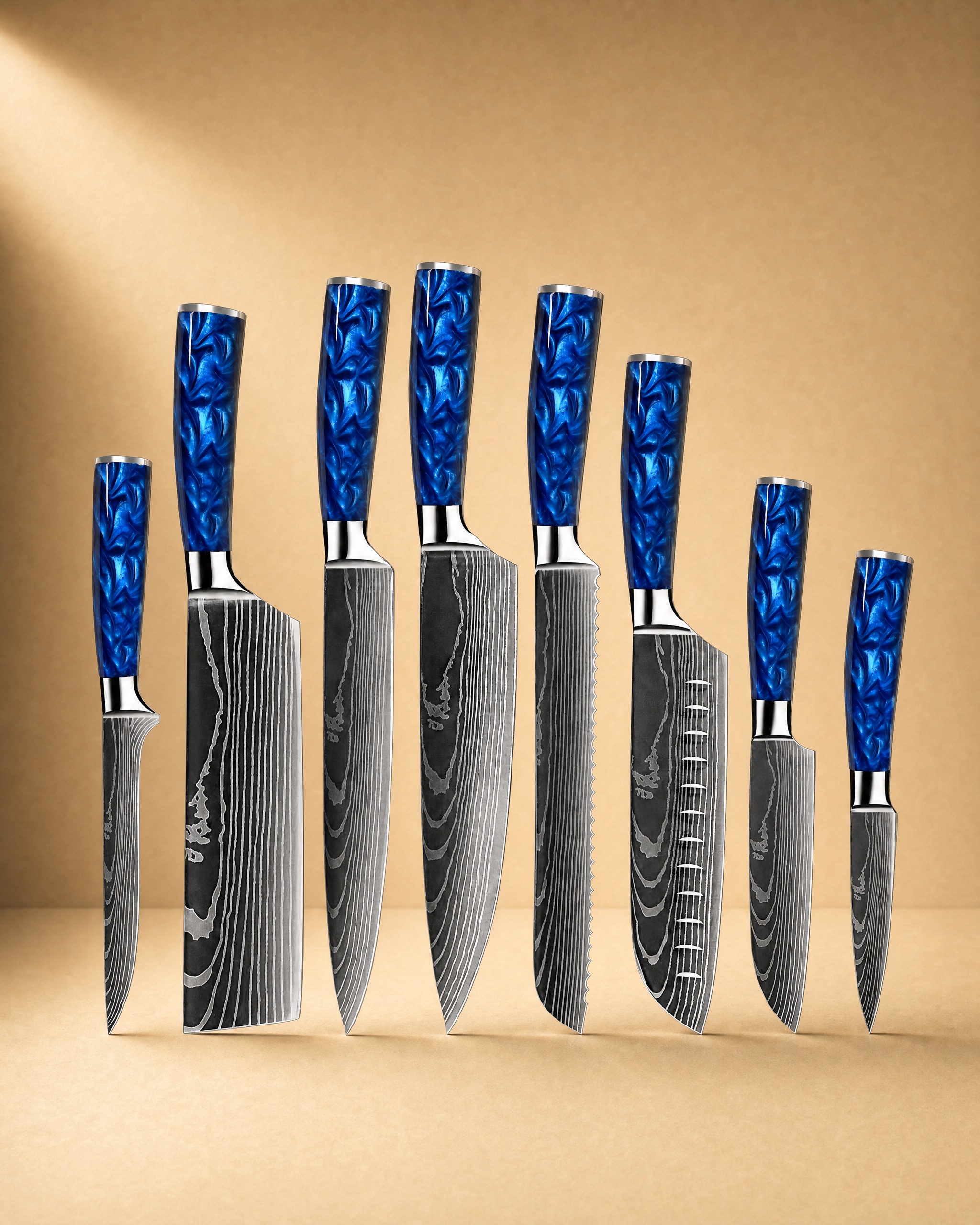 Shinano 信濃川 Damascus Pattern Stainless Steel Kitchen 8 Knife Set£149.99View product → gives you several knives to look after. A set is not an excuse to avoid learning. In fact, a set makes a 1000 grit stone more useful, because you can keep every knife in decent shape with one stone and a little time. Read our knife guide if you are deciding what to buy, and look through the full knife shop when you are ready.
Some people will not enjoy freehand sharpening, and that is fair. The 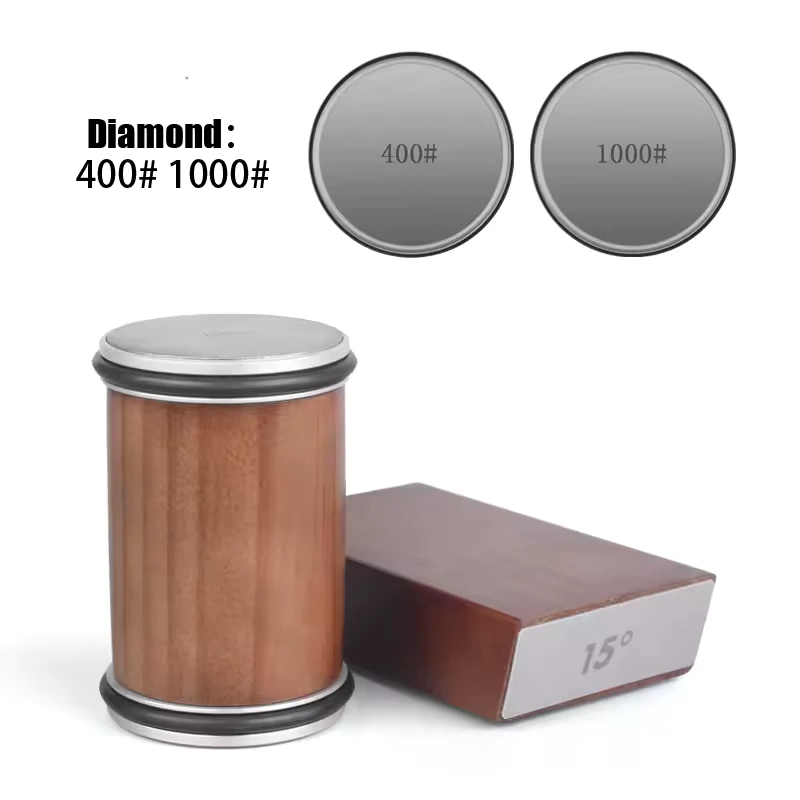 Magnetic Rolling Knife Sharpener£59.99View product → is a simpler option for people who want a quicker route. It is not a replacement for a Naniwa whetstone, and it will not teach you the same control. It can be useful for a quick touch up or for a knife you do not want to practise on. Be honest with yourself about the time you will give to sharpening. The best tool is the one you use.
Maintenance Between Sharpening
A sharp knife does not stay sharp because you sharpen it every day. It stays sharp because you use it on a board, not on glass or stone, and because you clean and dry it after use. A light hone can realign an edge, but heavy honing on a hard steel is not a substitute for sharpening. For Japanese knives, use a gentle touch and follow the maker's advice. Our knife care guide covers the daily habits that protect an edge.
Store knives so the edge is not knocking against other metal. Use a magnetic strip, a knife roll or a block. Wash by hand and dry straight away. Do not leave a knife soaking in the sink. These habits will not make a dull knife sharp, but they will mean your Naniwa sharpening stone has less work to do.
Common Mistakes UK Cooks Make
The first mistake is pressure. A whetstone is abrasive. You do not need to lean on it. The second is a changing angle. If your wrist rolls, the bevel becomes rounded. The third is skipping the burr. If you do not raise a burr on the first side, you may not have reached the edge. The fourth is ignoring the stone. A dished stone gives a poor result. The fifth is buying too many grits before learning one.
There is also the question of knife type. A very hard, thin Japanese knife can chip if you use it badly. A soft stainless knife can roll its edge. A Naniwa whetstone can help with both, but you need to match the stone and the pressure to the knife. If you are unsure, start with a 1000 grit stone and light pressure. Learn what a sharp edge feels like before you chase a polished edge.
A Simple Practice Routine
Set aside twenty minutes once a month, or when the knife starts to struggle with a tomato. Soak or splash the stone as needed. Flatten it if it needs it. Sharpen one knife slowly. Feel for the burr. Remove it with light alternating strokes. Clean and dry everything. That is enough. A Naniwa whetstone is a tool for a lifetime if you look after it, and the skill you build is more valuable than any single stone.
Buy your knives from a shop that will tell you the truth about maintenance. Use the knife care guide and the full product list to plan your setup. Then practise. A sharp knife is a calm kitchen tool, not a status symbol.


