





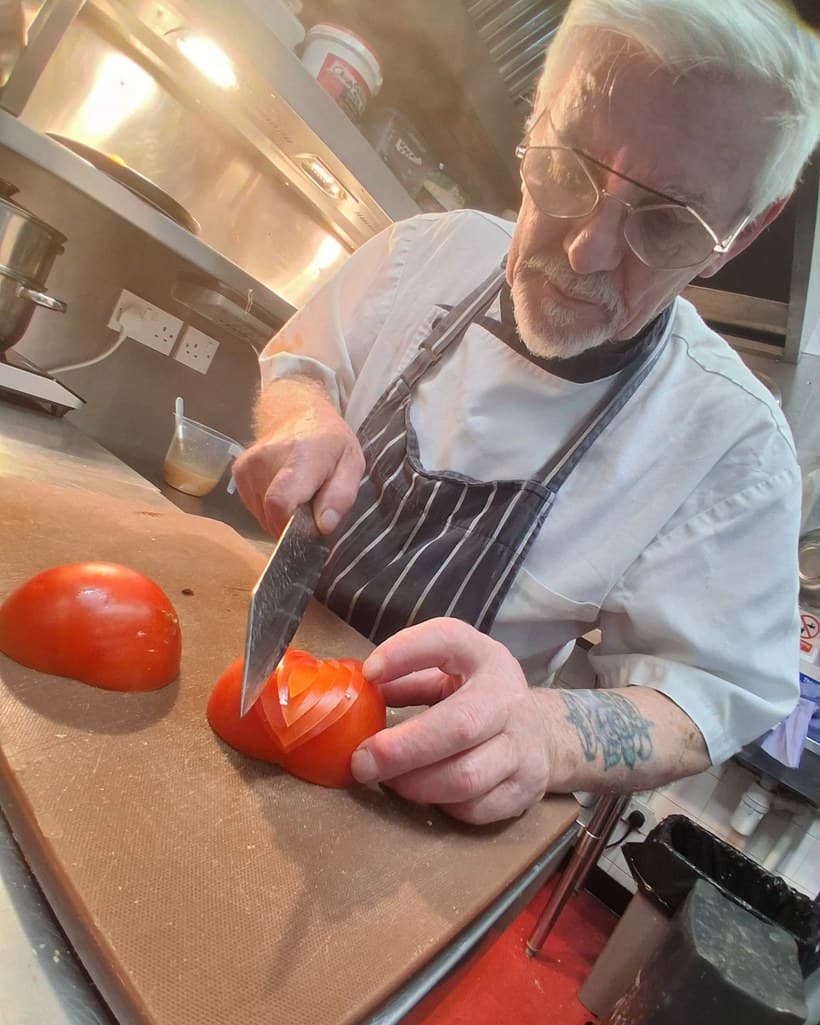
Best Chopping Board for Meat: Raw and Roast Cuts

Choosing a chopping board for meat is a practical decision, not a decorative one. You need a surface that is stable, easy to clean, and kind to your knife edge. Raw meat and roast cuts ask slightly different things of a board, so the most honest answer is that most kitchens benefit from two: one for raw preparation and one for carving cooked joints. A board that slides, retains water, or is too small for the joint will make the job harder and less safe. This guide explains the differences, the materials that work, and how to look after both.
Why Meat Deserves Its Own Board
Raw meat carries bacteria, and those bacteria must not travel to salad, bread or cooked food. A dedicated board for raw meat is the simplest way to reduce that risk. It also gives you a clear mental rule: this board is for raw protein only. A separate carving board for roast cuts is equally useful. Cooked meat releases juices, and a board with a groove keeps those juices from running across the worktop. For raw meat, the board must be washable after every use. For roast cuts, the board must hold the joint steady and catch the juices. If you have the space, two boards are better than one. If you do not, choose a board that is easy to scrub thoroughly and keep it solely for meat.
Wood or Plastic for Raw Meat?
Both materials can work, but they behave differently. Wood, especially end grain wood, is kind to a knife edge and has a natural ability to draw moisture away from the surface. It needs to be washed promptly, dried upright, and oiled occasionally. A wooden board that stays damp or is left dirty is not a safe board. Plastic is lighter, cheaper, and often dishwasher safe. It is a sensible choice for raw meat if you want the convenience of machine washing. The weakness of plastic is that knife marks can create fine scratches, and those scratches can hold bacteria if the board is not cleaned properly. Replace a plastic board when the surface becomes deeply scored. Glass, stone and ceramic boards are not suitable for meat preparation. They are hard, noisy, and unkind to a knife edge. If you are searching for the best cutting board for raw meat, start with your washing routine. A board you will scrub properly is better than a premium board you avoid cleaning.
What Makes a Good Carving Board for Roast Cuts
A carving board needs size and stability. A roast chicken, a leg of lamb or a rib of beef needs room to sit without overhanging the edge. Look for a board with a juice groove around the perimeter. The groove catches the juices that run out during resting and carving, which keeps your worktop cleaner and lets you spoon those juices back over the meat. Thickness matters too. A thick board sits more securely and gives you room to carve without the board flexing. A board with non slip feet, or one used on a damp cloth, is safer than a thin board that slides. A carving board with a slight recess or a well is easier to use than a flat board. The recess holds the joint steady, and the groove catches the juices. If your board has spikes, check they are not so aggressive that they tear the meat. For most home cooks, a simple grooved board is sufficient. The best carving board is not necessarily the largest one you can store. It is the one that fits your usual joint, stays put, and can be washed without a struggle.

Size, Thickness and Weight
For raw meat preparation, a board around 40cm by 30cm gives enough room for trimming, slicing and resting. For carving, go larger if your oven regularly produces big joints. A board of 45cm by 35cm is a practical middle ground. Thickness of 3cm to 5cm is comfortable for most home kitchens. Thicker boards are more stable but heavier to lift and harder to store. Weight is a trade off: a light board is easy to move, a heavy board stays put. If you carve at the table, choose a board you can carry safely when it is loaded with meat and juices. Measure your sink and your storage space before you buy. A board that does not fit either will become a nuisance.
How Board Choice Affects Your Knife
A soft board protects the edge. A hard board dulls it. This is why wood and quality plastic are better than glass or stone. End grain wood is particularly gentle because the knife edge passes between the fibres rather than across them. Edge grain wood is also perfectly serviceable and often more affordable. Bamboo can be harder than people expect, and some bamboo boards contain silica, which is abrasive to a fine edge. If you use a bamboo board, accept that your knife will need touching up more often.
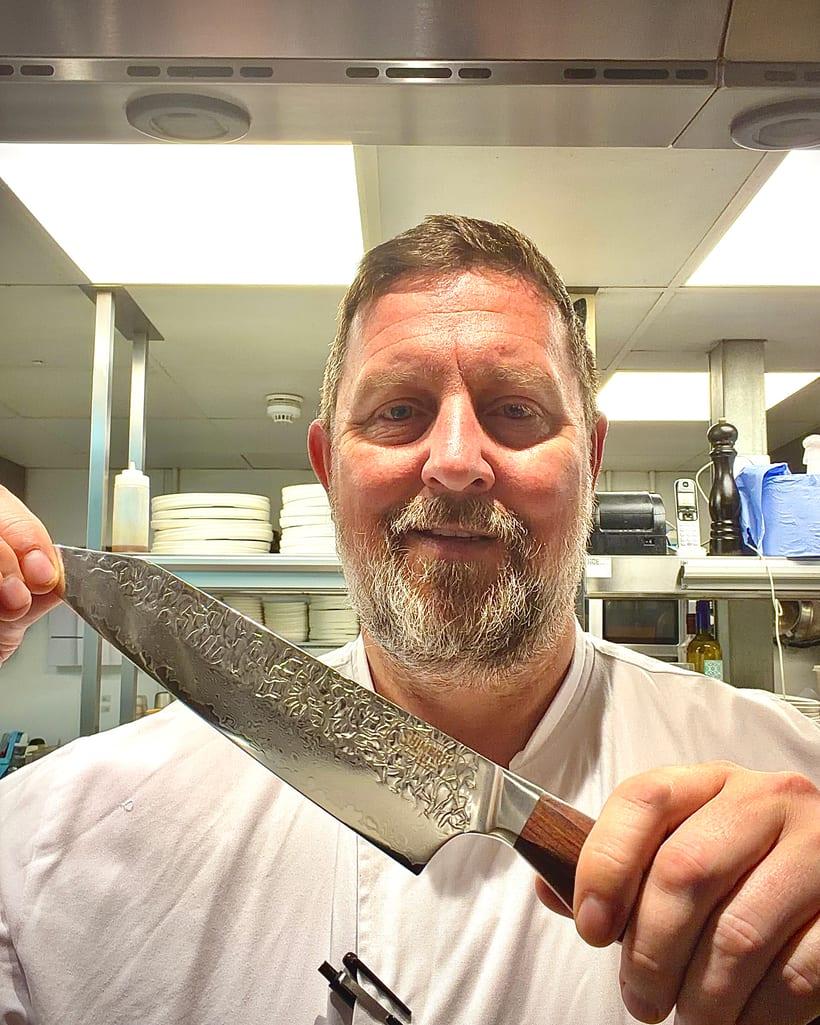
A meat board and a good knife work together. For raw preparation and slicing, a gyuto is the sensible shape: long enough for clean cuts, with a profile that suits both meat and vegetables. The 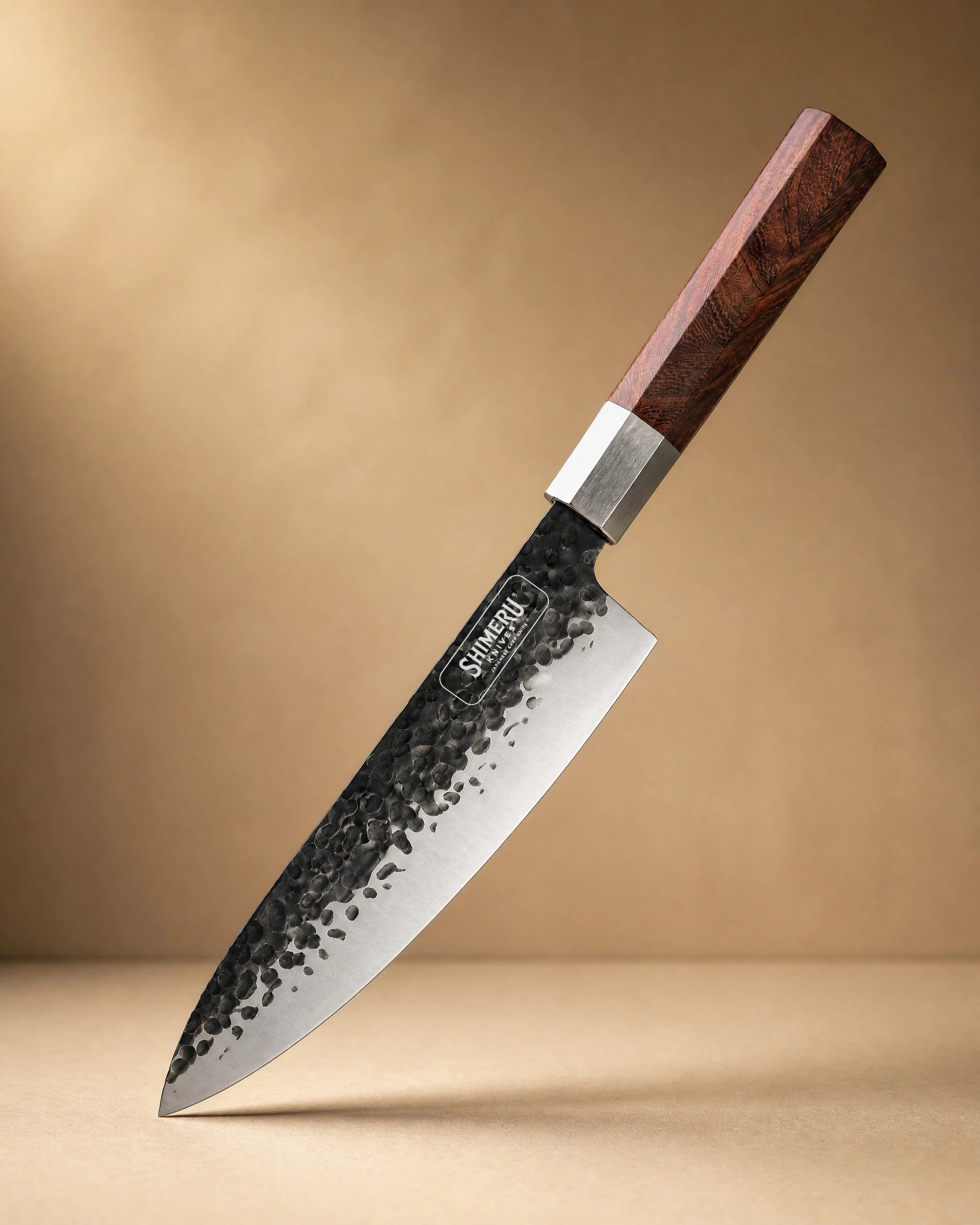 Sendai 8" Steel Gyuto Knife 牛刀£49.99View product → is a gyuto that suits meat and vegetables, and it is a natural match for a calm, uncluttered meat board. If you prefer a different handle feel, the
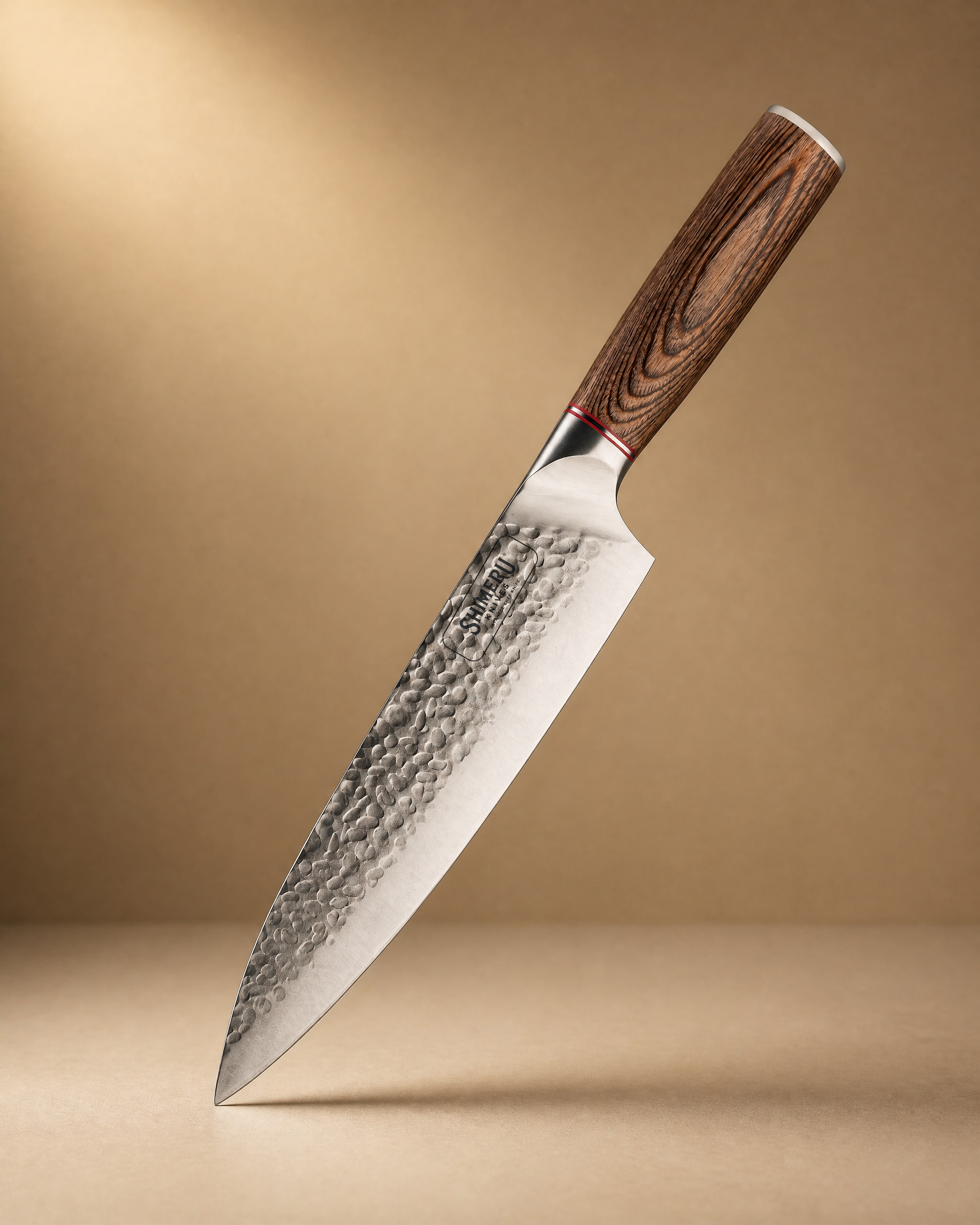 Akan 8'' Gyuto Knife 牛刀£49.99View product → is another gyuto aimed at meat, fish and vegetables. Neither knife needs a hard board. Both will reward a soft surface and regular care. If you are building a wider kitchen setup, the
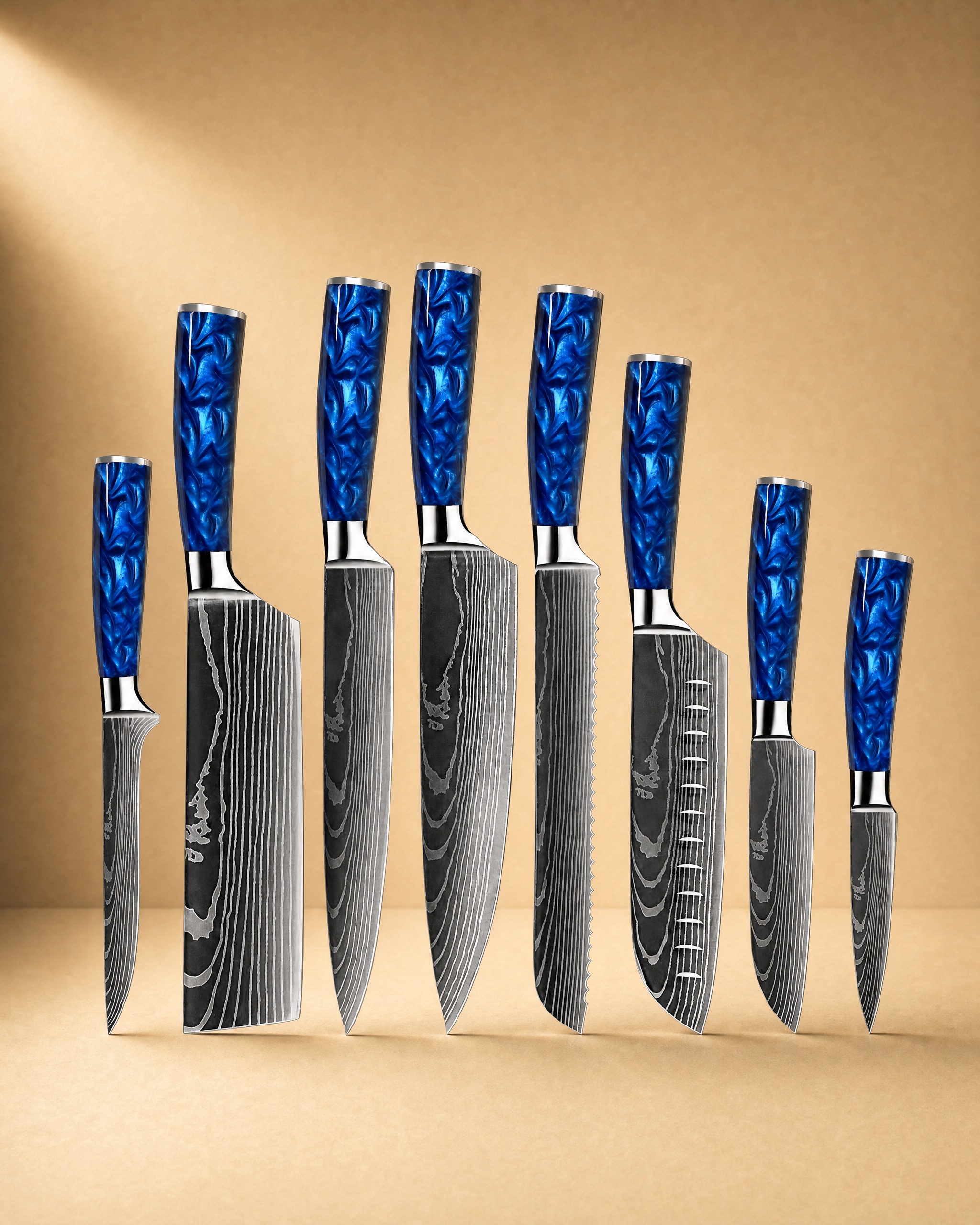 Shinano 信濃川 Damascus Pattern Stainless Steel Kitchen 8 Knife Set£149.99View product → gives you a set to work from, and the
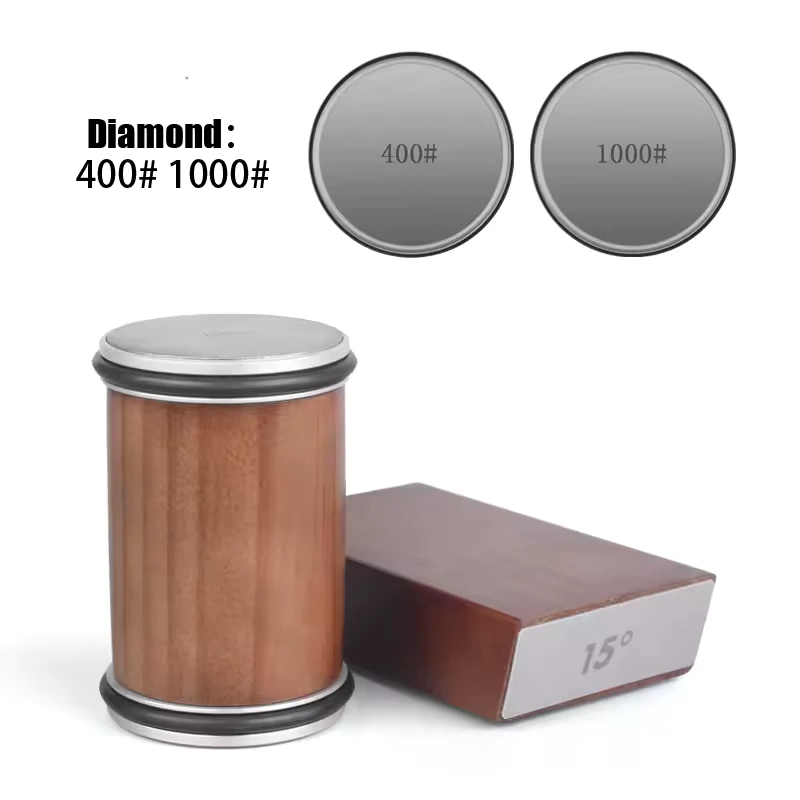 Magnetic Rolling Knife Sharpener£59.99View product → helps you keep an edge without sending knives away. After carving, wipe the blade and dry it before storing. Do not leave a knife in the sink or on the board. A sharp knife is safer than a dull one because it does not require force. If you notice the knife skipping on tomato skins or tearing meat, it needs attention.
Cleaning and Care for Meat Boards
Wash a raw meat board immediately after use with hot soapy water. Use a separate cloth or brush for meat boards, and do not dry them with the tea towel you use for plates. Plastic boards can usually go in the dishwasher, which is one reason they remain popular for raw meat. Wooden boards should be washed by hand, rinsed well, and dried upright so air can reach both faces. Do not soak wood. Do not leave it flat on a wet worktop. Once a month, or when the surface looks dry, oil a wooden board with a food safe mineral oil. For extra reassurance, sanitise a plastic board with a dilute bleach solution following the product instructions, then rinse thoroughly. Wooden boards can be sanitised with white vinegar, but vinegar does not replace washing. Never mix bleach with vinegar or other cleaners. A carving board used for cooked meat still needs washing, but it does not carry the same raw meat risk. Keep the two boards separate in use and in storage. For more on keeping knives and boards in good order, see our knife care guide.
Colour Coding and Storage
Some kitchens use colour coded boards: red for raw meat, green for vegetables. This is a professional habit that works at home if you have the space. If you do not, a single dedicated raw meat board is enough. Store boards upright with space between them so air can circulate. Do not stack a damp board against another. Keep raw meat boards away from boards used for ready to eat food. A simple rack or a gap in a cupboard is all you need.
Building a Simple Meat Board Setup
A practical setup does not need to be complicated. It needs to be clear and repeatable.
- One board for raw meat, either plastic for dishwasher washing or a well maintained wooden board used only for raw protein.
- One larger carving board with a juice groove for roast cuts, kept for cooked meat.
- A gyuto or carving knife that suits your hand, such as Sendai 8" Steel Gyuto Knife 牛刀£49.99View product → or Akan 8'' Gyuto Knife 牛刀£49.99View product →.
- A sharpener or stone to keep the edge in condition, such as Magnetic Rolling Knife Sharpener£59.99View product →.
- A routine: wash, dry, store separately, oil wood when needed.
If you are choosing knives to go with your boards, our knife guide explains the shapes and lengths without hype. You can also browse the full range at our knife shop.
Common Mistakes to Avoid
Using a glass board is the most common error. It is harsh on knives and offers no grip. Another mistake is cutting cooked meat on the board used for raw meat without washing it first. A third is leaving a wooden board to dry flat, which can warp it and trap moisture. Do not use a board that is too small for the joint; overhanging meat is harder to carve safely. Do not ignore deep scratches in plastic. Do not oil a board with cooking oil that can turn rancid; use a proper food safe mineral oil. Do not carve on a board that is too thin or unstable. Do not put a hot roasting tin directly onto a wooden board. Do not use the same board for raw meat and cooked meat without washing it in between. Do not assume a board is clean because it looks clean. Finally, do not expect one board to do everything well. A thin, small board is convenient, but it is not a carving board.
A Sensible Choice for Raw and Roast Cuts
The best chopping board for meat is the one you will clean properly and use consistently. For raw meat, choose a dedicated board that suits your washing habits: plastic if you want the dishwasher, wood if you will wash and dry by hand. For roast cuts, choose a carving board with enough room, a juice groove, and a stable base. If you are looking for the best chopping board for raw meat, put hygiene and size before appearance. Keep your knives sharp and your boards clean, and the rest is simple. A soft board, a sensible knife and a clear routine will do more for your cooking than any single expensive purchase.
Photography: engin akyurt via Unsplash.


