











Best Chopping Board Sets for UK Kitchens

Most kitchens have one board, often a thin plastic one that has seen better days, and it gets used for everything from raw chicken to sliced bread. The result is a surface that never quite dries, a knife edge that dulls faster than it should, and a quiet worry that food hygiene is being handled by hope rather than method. A proper chopping board set fixes all three at once, and it does not have to cost much.
This guide is about choosing a set that suits a real UK kitchen: how many boards you need, which materials genuinely work, what sizes deserve the worktop space, and how the board you pick affects the knives you use on it. If you are still working out which blade should sit on top of it, our knife buying guide covers the fundamentals.
Why a chopping board set earns its space
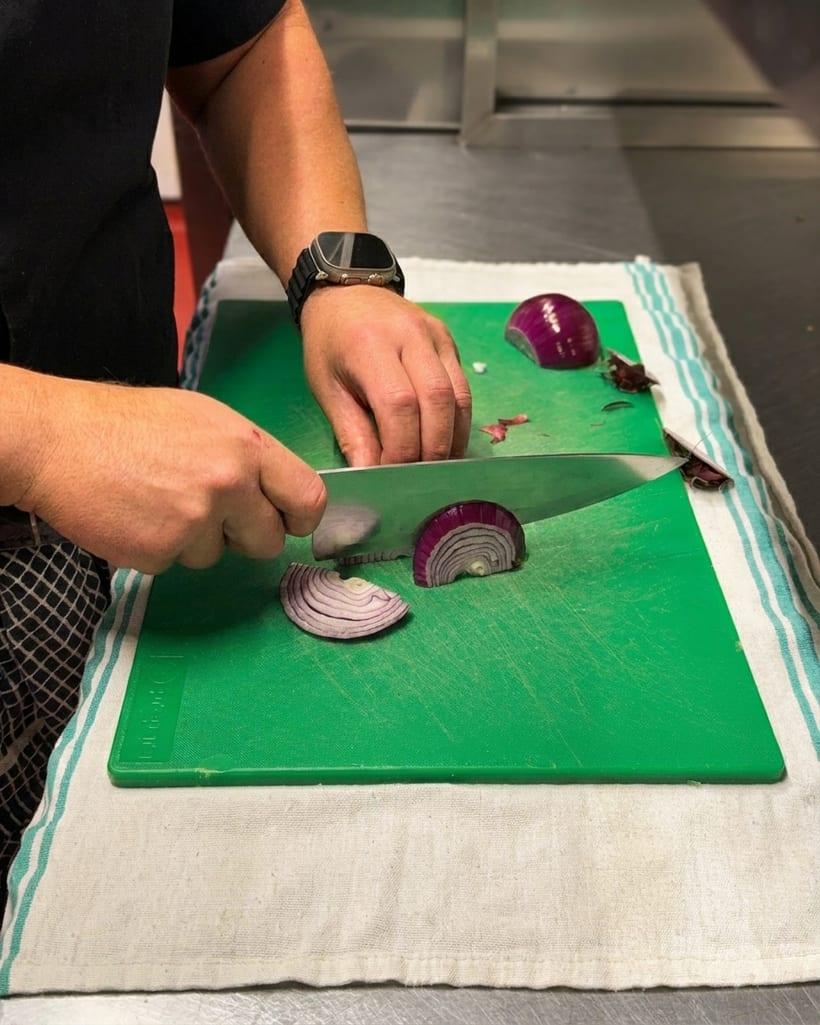
The argument for a set is separation. Raw meat, fish, vegetables and bread all behave differently and leave different residue behind. Colour coding is the simplest version of this: red for raw meat, green for vegetables, blue for fish. You do not need to follow a scheme religiously, but having two or three boards in rotation means you are never chopping salad on the surface that held a raw chicken ten minutes earlier.
The second argument is knife wear. The board is the other half of every cut. Glass and stone surfaces will roll or chip a fine edge within a few sessions, and they make a sound that should tell you something. A board with a little give lets the edge bite and release cleanly, which means fewer strokes, less effort and a longer interval between sharpenings.
There is a practical point about washing, too. A board you can lift with one hand, rinse and dry in under a minute gets washed properly every time. A heavy slab that only fits in the sink at an angle tends to get a wipe instead, and a wipe is not the same as a wash. Boards in rotation mean the one you have just used can be dealt with immediately while another takes over.
What separates a good set from a cheap one
Price alone is not a reliable guide. Two sets can look identical on a screen and behave very differently after a month of daily use. Four details matter more than branding.
- Thickness: thin boards bow, rock and slide, especially wooden ones.
- Grip: rubber feet or a textured underside stop the board skating on a damp worktop.
- Juice groove: genuinely useful on the meat board, pointless on the bread board.
- Finish: food safe oil on wood, a properly sealed face on composite, no sharp moulded edges on plastic.
Check the joinery as well. A board made from strips glued together should have tight, even seams and no visible gaps where water can sit. Moulded plastic should be flat, without raised lettering or decorative ridges in the cutting area that trap food. A small set with good materials beats a large set that was made to hit a price.
Wood, plastic or composite
Wood, usually beech, maple or acacia, is the kindest surface for a knife edge. It has just enough give to let the edge pass into the fibres rather than skid across them. It also looks after itself well if you oil it occasionally and never leave it soaking. Beech is the traditional UK choice and takes knocks without fuss; maple is denser and harder wearing; acacia is harder still and often prettier, though it can be more variable board to board. The trade off with any wood is weight and a little maintenance. End grain boards are gentler again, but heavier and more expensive, and better bought as one good board than as part of a set.
Plastic is cheap, light and dishwasher safe, which makes it the obvious choice for raw meat and fish. A plastic board that goes through a hot wash after handling chicken is genuinely hygienic, and that is the reason professional kitchens lean on it so heavily. Its weakness is knife wear: soft plastic scars quickly, and deeply scored plastic is difficult to clean properly, because the cuts hold onto both moisture and food. Replace it once the surface stops being flat rather than waiting for it to split.
Composite boards, usually wood fibre bonded with resin, sit between the two. They are denser than plastic, more water resistant than plain wood and often dishwasher safe. They are also firmer under the edge than a decent wooden board, so treat them as a practical workhorse rather than the surface you reach for when slicing something delicate. They are a good middle option for a household that wants wood-like looks without the oiling.

How many boards do you actually need?
Three is the sweet spot for most homes. One large wooden board for vegetables and general prep, one plastic board for raw meat and fish, and one small board for bread, fruit, cheese and garlic. Sets of three map neatly onto that pattern. Sets of four or five often include a board you will barely touch, so check the sizes rather than the count.
Size is where most people end up with regrets. A board should hold a whole head of cabbage or a pile of sliced onions without anything falling off the edge. As a rough guide, a main board wants to be at least the footprint of a sheet of A4, and a board closer to 40cm by 30cm is where prep stops feeling cramped. If your worktop is tight, buy two boards that fit properly rather than three that fight each other for space, and measure the cupboard they will live in before you order.
Matching boards to knives
The board and the knife are chosen together whether people admit it or not. A Japanese gyuto is a thin, hard blade that rewards a surface with a little forgiveness, and a large wooden board is the natural partner. Thin, hard edges hold their sharpness for a long time but have less tolerance for abuse, so a firm surface that lets the edge skid sideways is exactly what you want to avoid. We would rather you spent your budget on one good knife and two decent boards than the other way round.
If your prep is mostly vegetables, herbs and the occasional piece of fish, 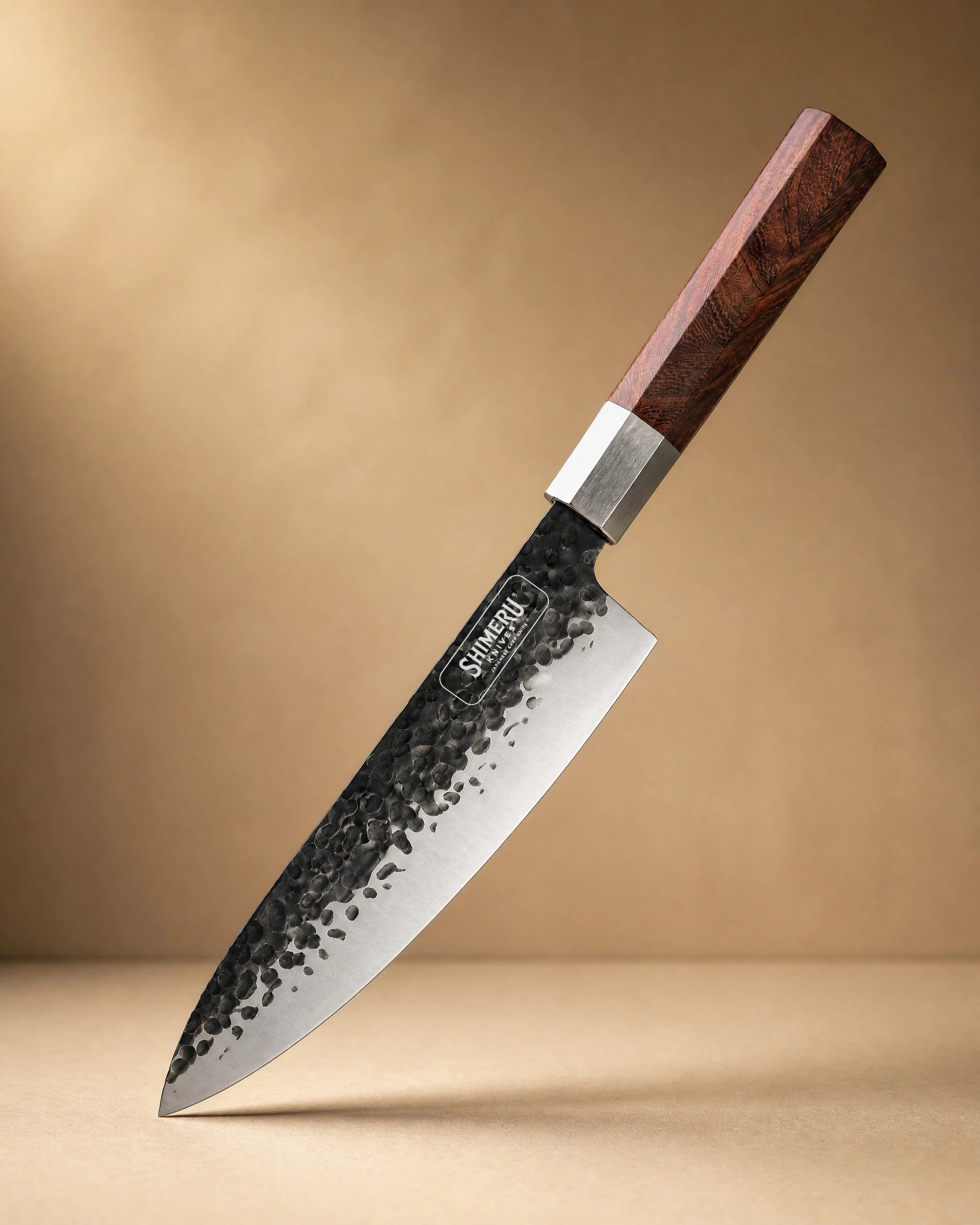 Sendai 8" Steel Gyuto Knife 牛刀£49.99View product → pairs well with a large wooden board and a small fruit board. If you cook more meat and want one knife that moves between protein and produce without fuss,
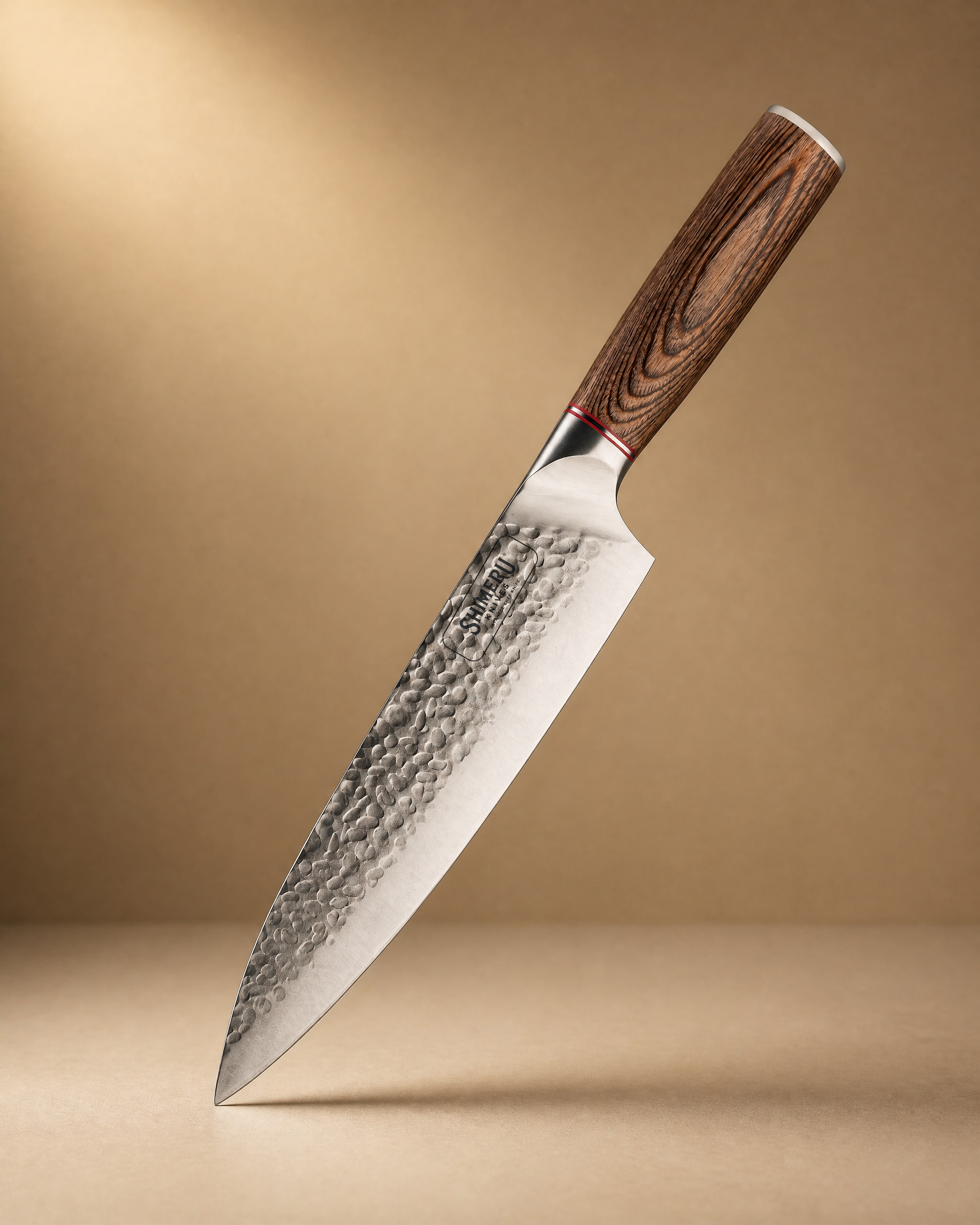 Akan 8'' Gyuto Knife 牛刀£49.99View product → is the broader all rounder, and it is the one we would hand to someone learning to sharpen properly.
Technique: cutting in a way that spares the board
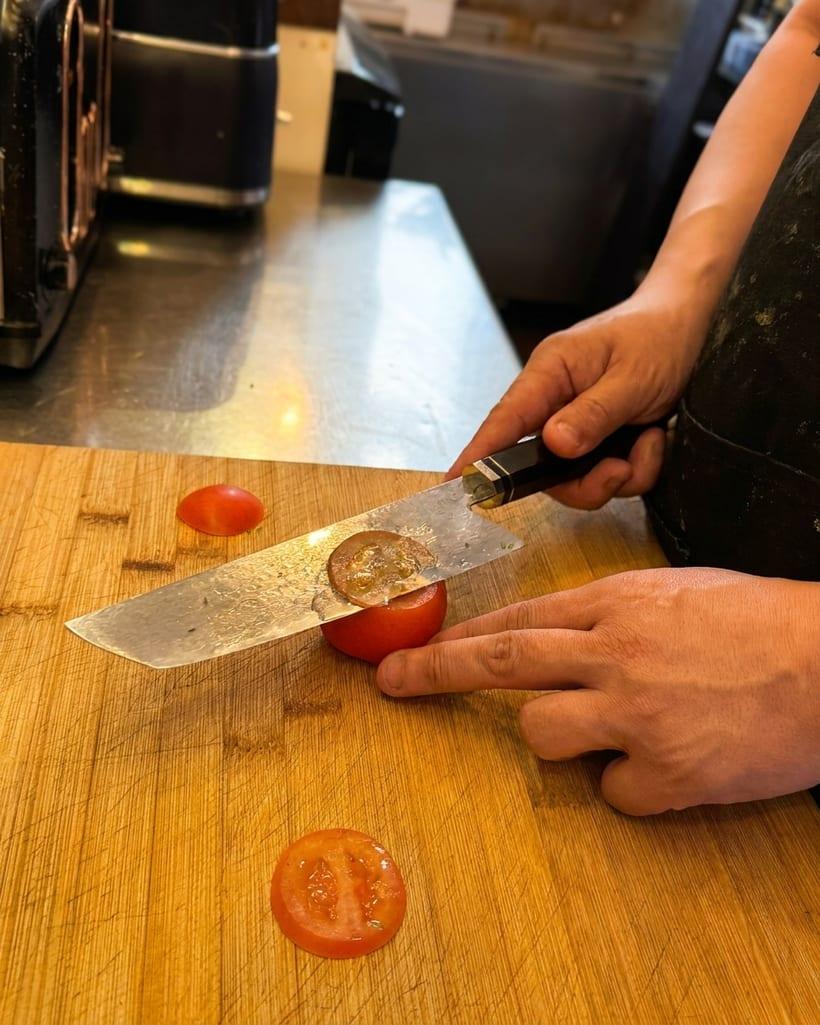
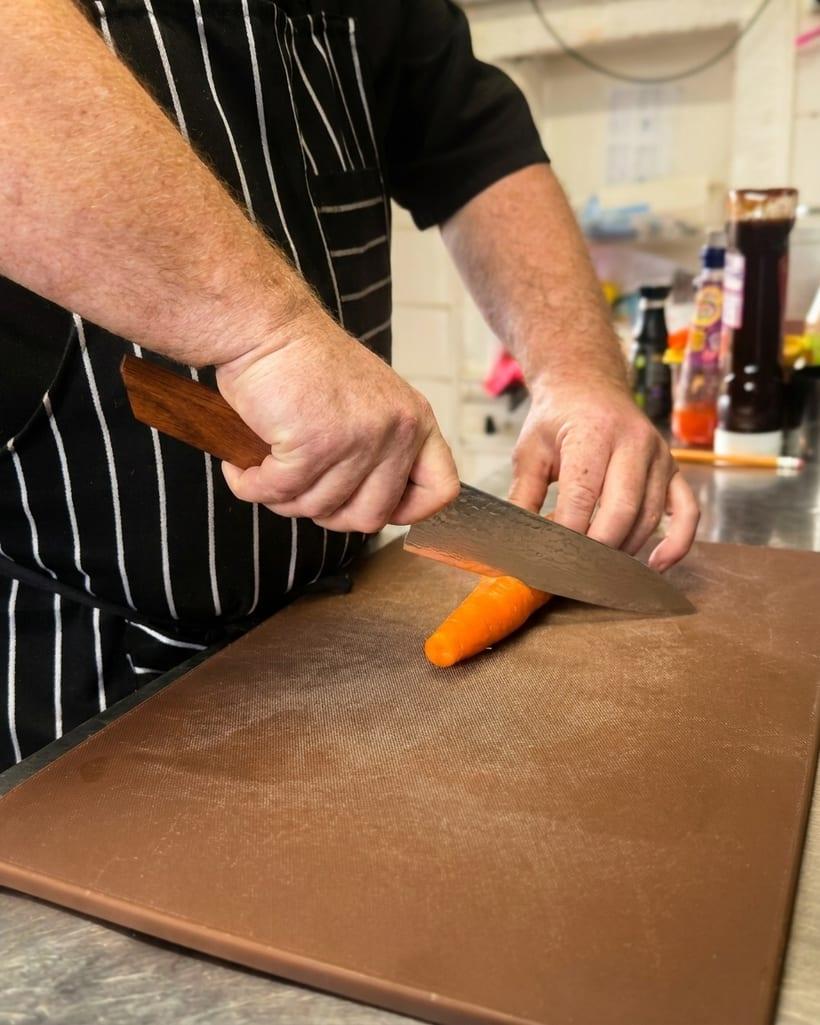
Small habits add years to both board and blade. Let the tip stay near the board and rock rather than lifting the whole knife and chopping straight down, which drives the edge into the surface on every stroke. Push cut when you need precision and use the heel for anything tough. Scoop chopped food with the spine of the knife or the flat of the blade, never with the edge, because scraping the edge across a board is one of the fastest ways to blunt a knife at home.
Keep the board still. A folded damp tea towel underneath does more for safety than any non-slip coating, and it stops the board moving while you work. Work towards the back of the board and keep your guiding hand in a claw so knuckles, not fingertips, face the blade. None of this is complicated, but it is the difference between a knife that still cuts cleanly in five years and one that needs sharpening every few weeks.
Care that keeps both board and blade working
Wooden boards want a thin coat of food safe oil once a month and a quick wash and dry after every use. Never submerge them and never leave them standing in water. Plastic boards can go in the dishwasher, which is the main reason to keep one for raw meat. Store boards on edge, not flat, so air can reach both faces, and keep them out of the drying rack slot where water pools at the base.
Knives need the same routine. Our knife care guide covers washing, drying and honing in detail. If you prefer a guided sharpener that is easy to use at the end of a long day, 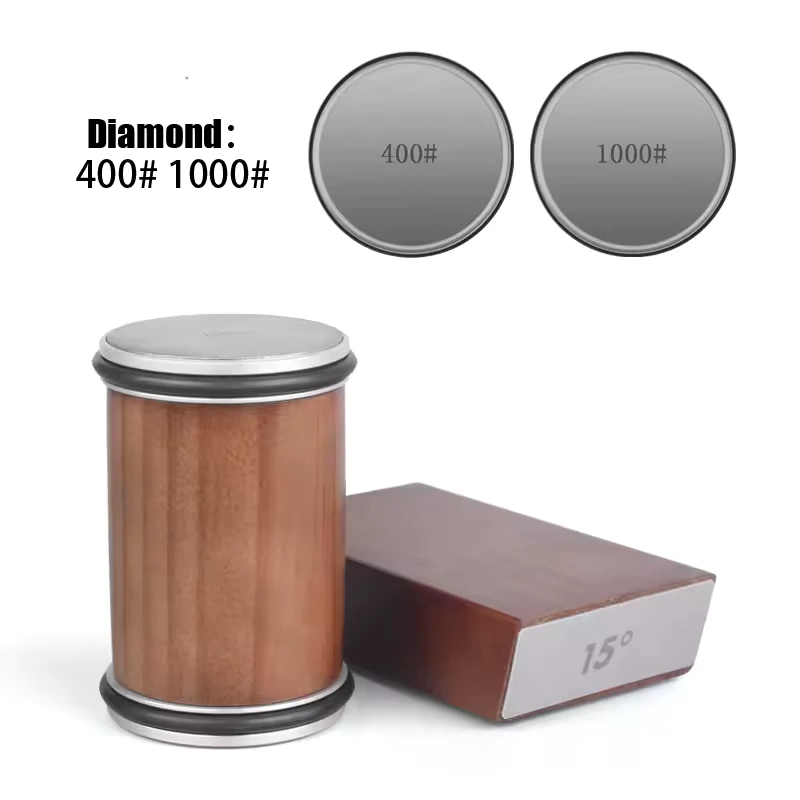 Magnetic Rolling Knife Sharpener£59.99View product → is a sensible option for keeping an edge in order between proper sharpenings.
If you are outfitting a kitchen from scratch
Buying boards and knives together is common when setting up a first kitchen or replacing a tired drawer. A matched set such as 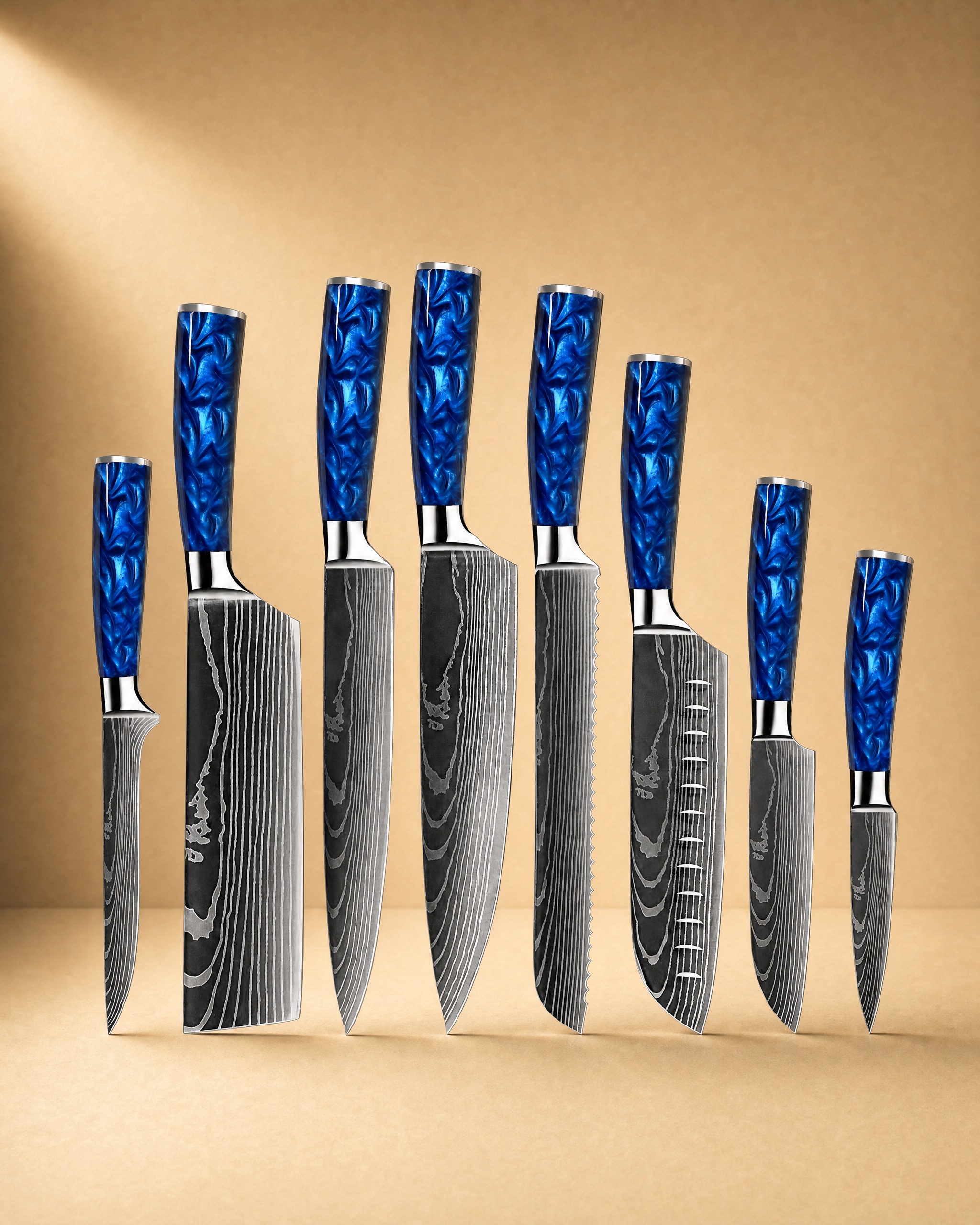 Shinano 信濃川 Damascus Pattern Stainless Steel Kitchen 8 Knife Set£149.99View product → can be a practical starting point, though most cooks find they use two or three knives from any set far more than the rest. Look at what you actually cook before you commit, and be honest about whether you will maintain a carbon steel blade. You can browse the full range in our knife shop to compare shapes and handles before deciding.
A short buying checklist
Choose boards that fit your worktop and your cooking, not the photograph. Prefer thickness and grip over colour. Keep one board for raw meat and wash it properly every time. Oil anything wooden. Measure before ordering, and buy the smaller set if your surface is short. And remember that a board is part of your knife kit: the wrong surface will undo a good edge faster than any other single thing in the kitchen. Get the boards right and the knives will last longer, cut better, and need less attention than you expect.
Photography: Mike Gattorna via Unsplash.

