



Best Cutting Boards for Meat, Raw and Roast

A good knife gets the attention. The board underneath it rarely does. Yet the best chopping board for meat will do two jobs at once: protect your knife edge and keep raw meat bacteria away from everything else in your kitchen. Choose poorly and you will be sharpening more often, scrubbing harder, or cross-contaminating a salad with raw chicken juices.
This guide is about boards for meat, both raw and roasted. We will cover materials, hygiene, carving boards and the knives that pair well with each. No hype, just what matters.
Why the board matters as much as the knife
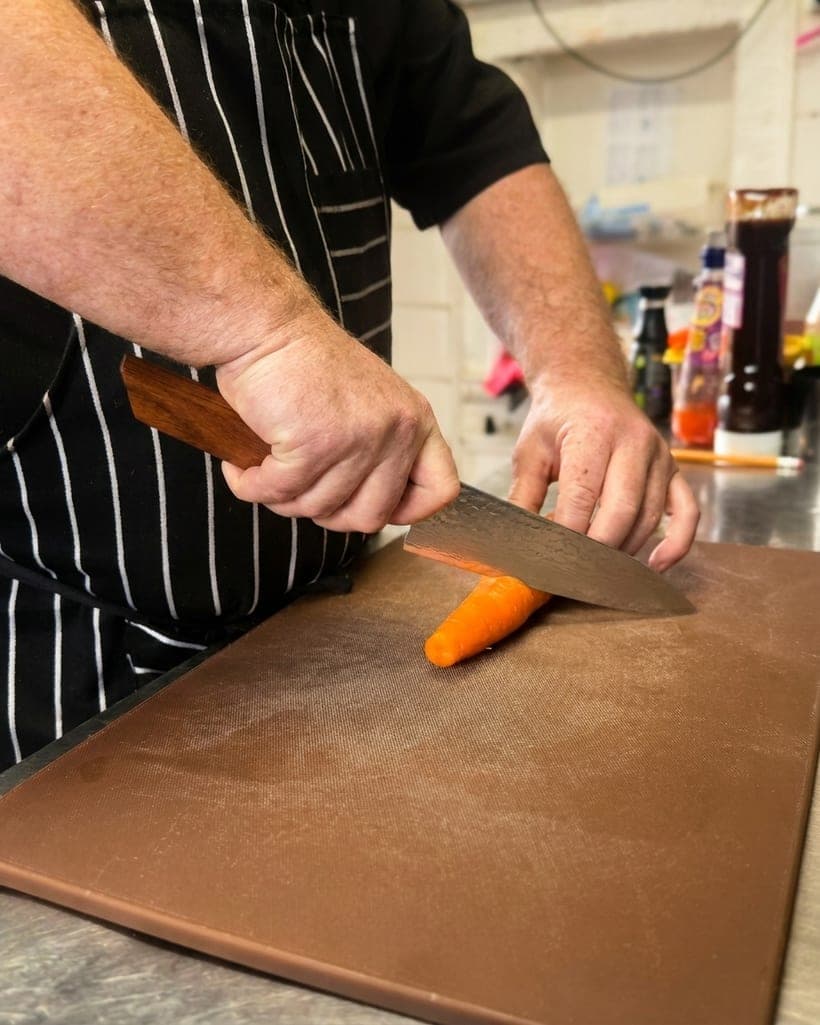
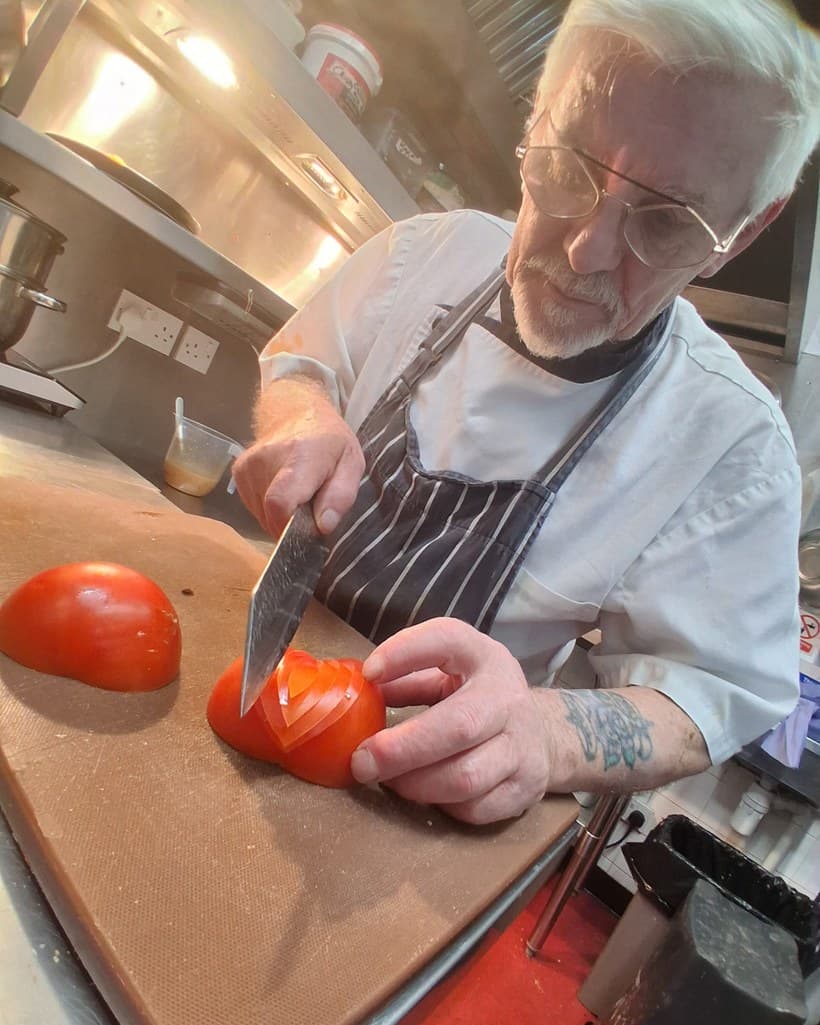
Every time a knife touches a board, the edge meets a surface. Glass, ceramic and hard stone boards are unforgiving. They roll or chip an edge quickly. Wood, plastic, bamboo and rubber are softer. They let the edge bite and release without damage.
Hygiene matters just as much. Raw meat carries bacteria. A board that is scratched, porous or poorly cleaned can hold those bacteria. Then you chop an apple on it and the bacteria transfer. Many cooks keep a separate board for raw meat. That is basic kitchen sense.
If you want to keep your knives in good condition, read our knife care guide. It covers sharpening, honing and storage. The board is part of that system.
Wood, plastic, bamboo and rubber: the honest trade-offs
Wood boards come in two main types: edge grain and end grain. Edge grain is made from strips of wood glued side by side. End grain is made from small blocks glued so the end of the grain faces up. End grain is gentler on knife edges because the fibres separate and close as the blade passes. It is also heavier and more expensive. Edge grain is cheaper, lighter and still kind to knives. Both need hand washing and occasional oiling.
Plastic boards are cheap, lightweight and dishwasher safe. They are easy to sanitise. The downside is that they can develop deep scratches. Those scratches can harbour bacteria if not cleaned properly. High-density polyethylene is the better plastic choice. Avoid very thin flexible plastic mats for raw meat. They slip and crease.
Bamboo is a grass, not a wood. It is hard, sustainable and often affordable. That hardness can be tough on very fine edges. A bamboo board is fine for everyday chopping but less ideal for a high-end Japanese knife. If you use bamboo, use a light touch.
Rubber boards are used in professional kitchens. They are non-porous, gentle on edges and can be dishwashed. They are heavier and more expensive. For raw meat, a rubber board is an excellent choice because it does not absorb juices.
No material is perfect. The best board depends on what you cut, how you clean, and your budget.
Raw meat: hygiene comes first
The best cutting board for raw meat should be easy to clean and not hold onto bacteria. A dedicated board is the safest approach. Use it only for raw meat, poultry and fish. Then use a separate board for vegetables, bread and cooked food.
Plastic and rubber are the easiest to sanitise. After cutting raw meat, wash the board with hot soapy water. For plastic, you can also use a diluted bleach solution, then rinse well. Some plastic boards are dishwasher safe, which adds a layer of safety.
Wood boards can be used for raw meat if they are well maintained. The key is to wash immediately with hot soapy water and dry thoroughly. Do not soak wood. Do not leave it wet. Oil it regularly to keep the surface sealed. A well-oiled wood board is less likely to absorb liquids. However, if the wood has deep knife scars or cracks, retire it from raw meat duty.
Never cut raw meat and then vegetables on the same board without washing it first. This is the most common cause of cross-contamination at home. It takes seconds to switch boards. It saves a lot of trouble later.
Roast meat and carving boards
Roast meat needs a different board. You are not dealing with raw juices in the same way, but you are dealing with a hot, heavy piece of meat and a lot of liquid. A carving board is designed for this. Look for a board with a juice groove around the edge. The groove catches the juices so they do not run onto your counter. Some carving boards also have spikes or a well to hold the meat steady while you slice.
Size matters. A roast chicken, a leg of lamb or a rib of beef needs a board with enough room to carve without the meat hanging off the edge. A board that is too small is dangerous. You will be sawing at an awkward angle and the meat may slip.
Stability is essential. A board that slides is a hazard. Look for a board with rubber feet or a non-slip mat underneath. If your board is thick and heavy, it will stay put better. End grain boards are often heavy, which helps here.
You can use the same board for raw and cooked meat if you clean it properly between uses. But many cooks prefer two boards: one for raw preparation, one for carving and serving.

Knives for raw and roast meat
The board protects the knife. The knife does the work. For raw meat, you want a sharp knife that can slice cleanly through sinew and muscle. A blunt knife tears meat and is more dangerous because it slips.
A gyuto, the Japanese chef's knife, is a great all-rounder for meat. The 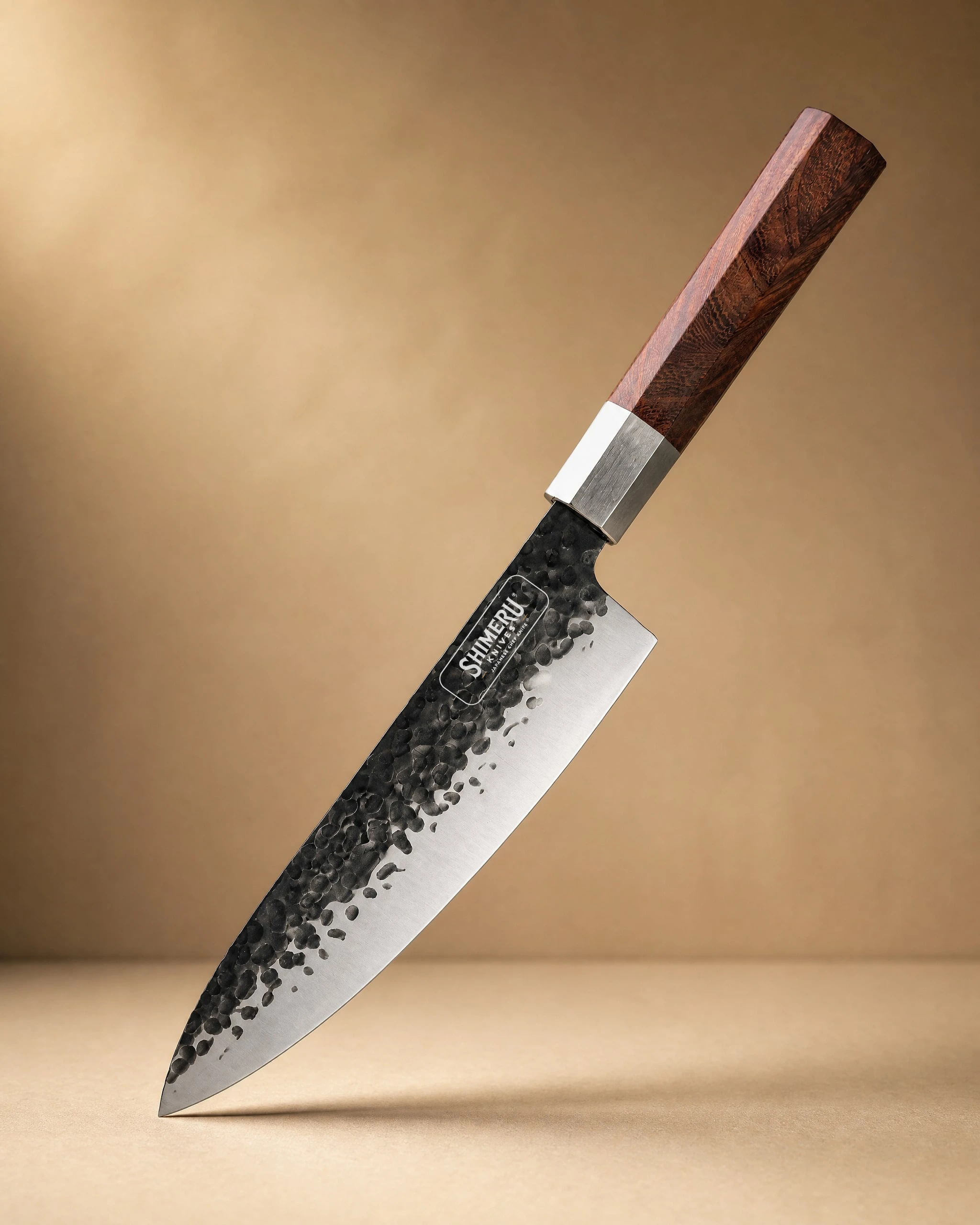 Sendai 8" Steel Gyuto Knife 牛刀£49.99View product → has a stainless steel blade and a Mkuruti wood handle. It is listed for vegetables, herbs, meat and fish, so it can handle raw chicken, beef and fish with ease. The 8 inch length gives you good reach for larger cuts.
If you prefer a shorter blade for trimming and dicing, a santoku is ideal. The 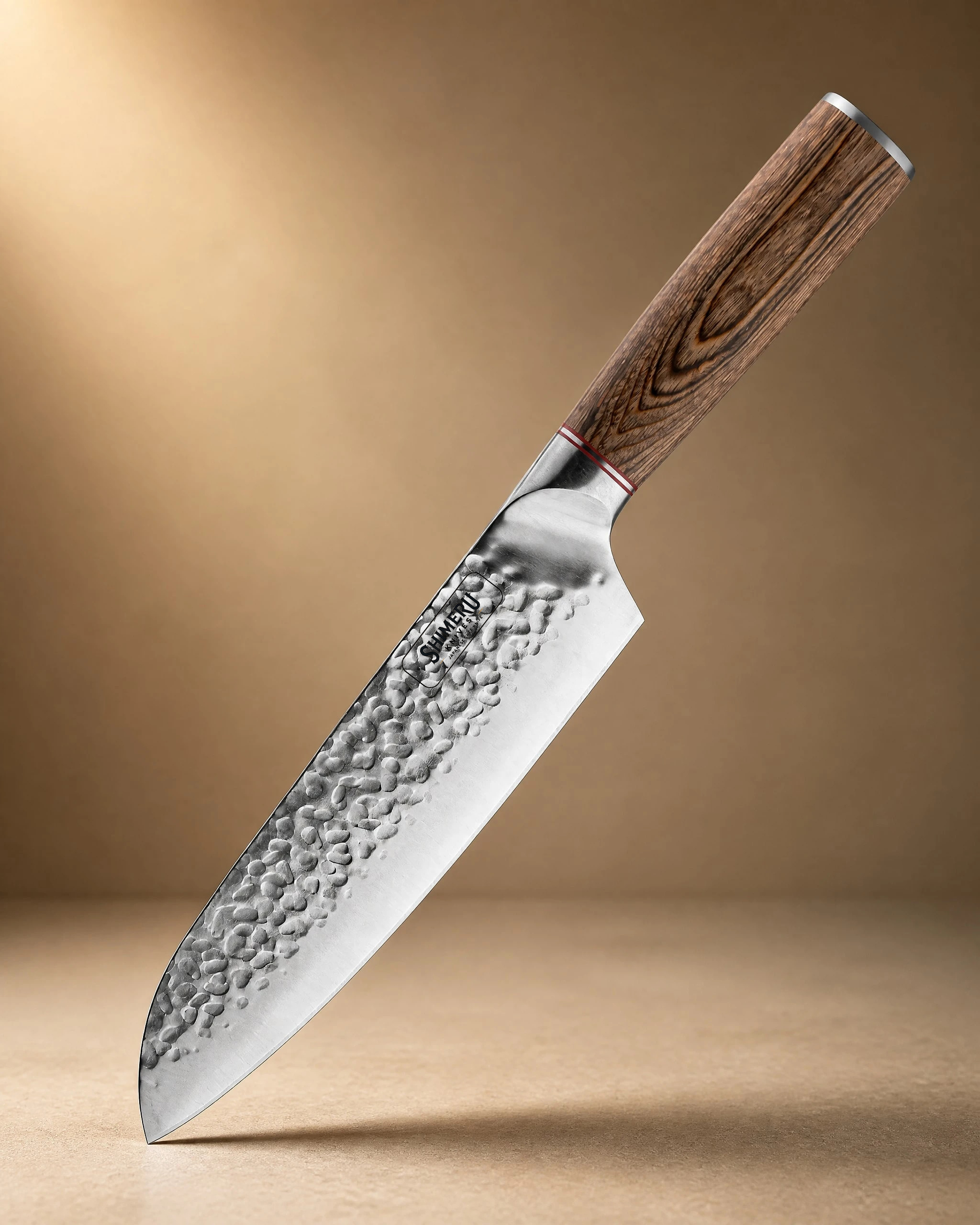 Raikou 6.5" Santoku Knife 三徳包丁£49.99View product → is 6.5 inches with an AUS10 stainless steel blade and a Mkuruti wood handle. It is designed for slicing, dicing, mincing and chopping. That makes it a strong choice for raw meat prep, especially if you like a lighter, more nimble knife.
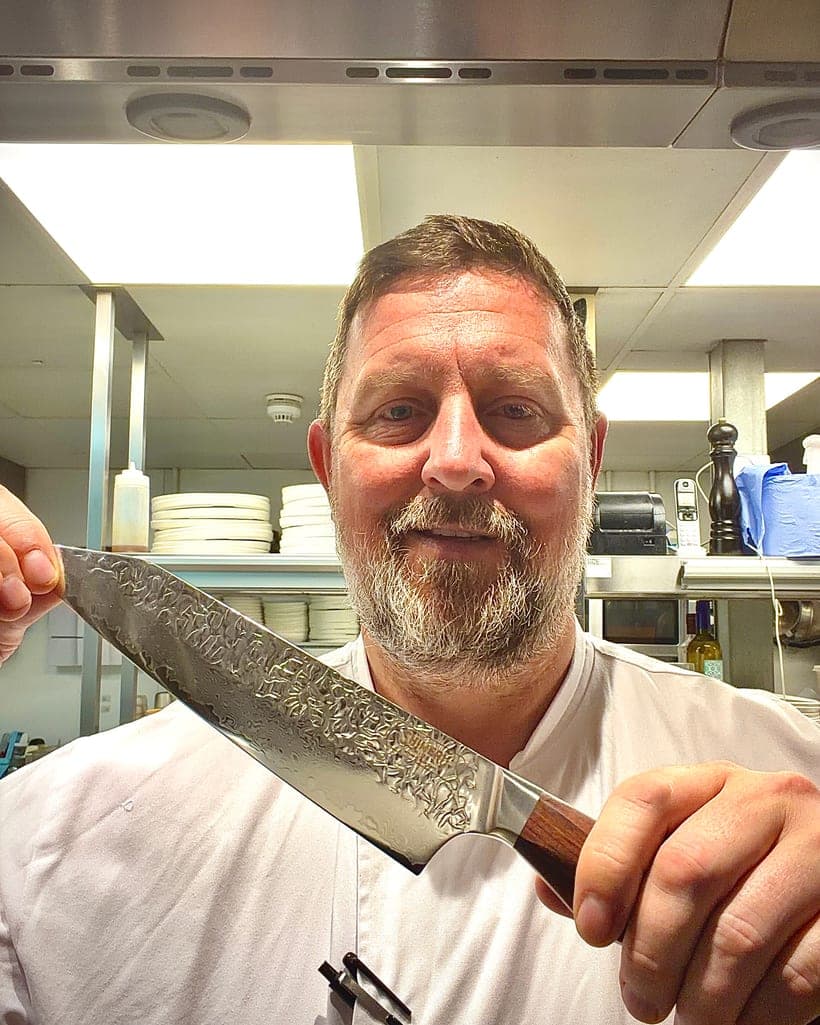
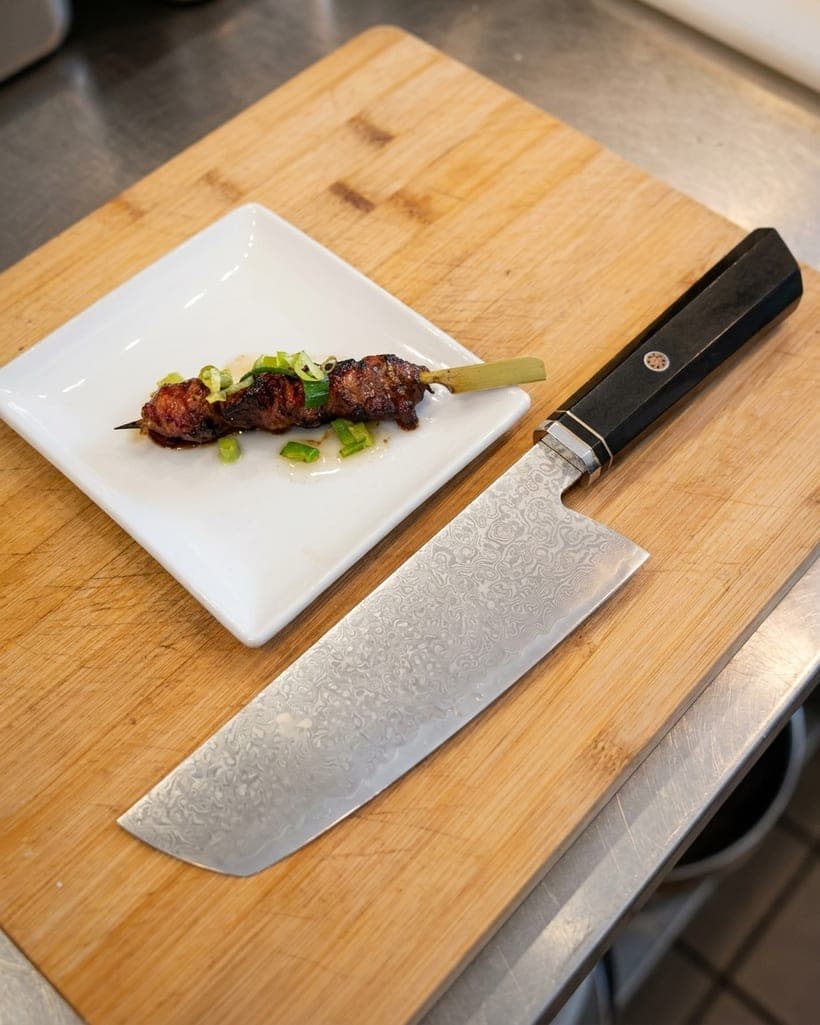
For carving roast meat, you want a knife that is long enough to make clean slices in one stroke. The 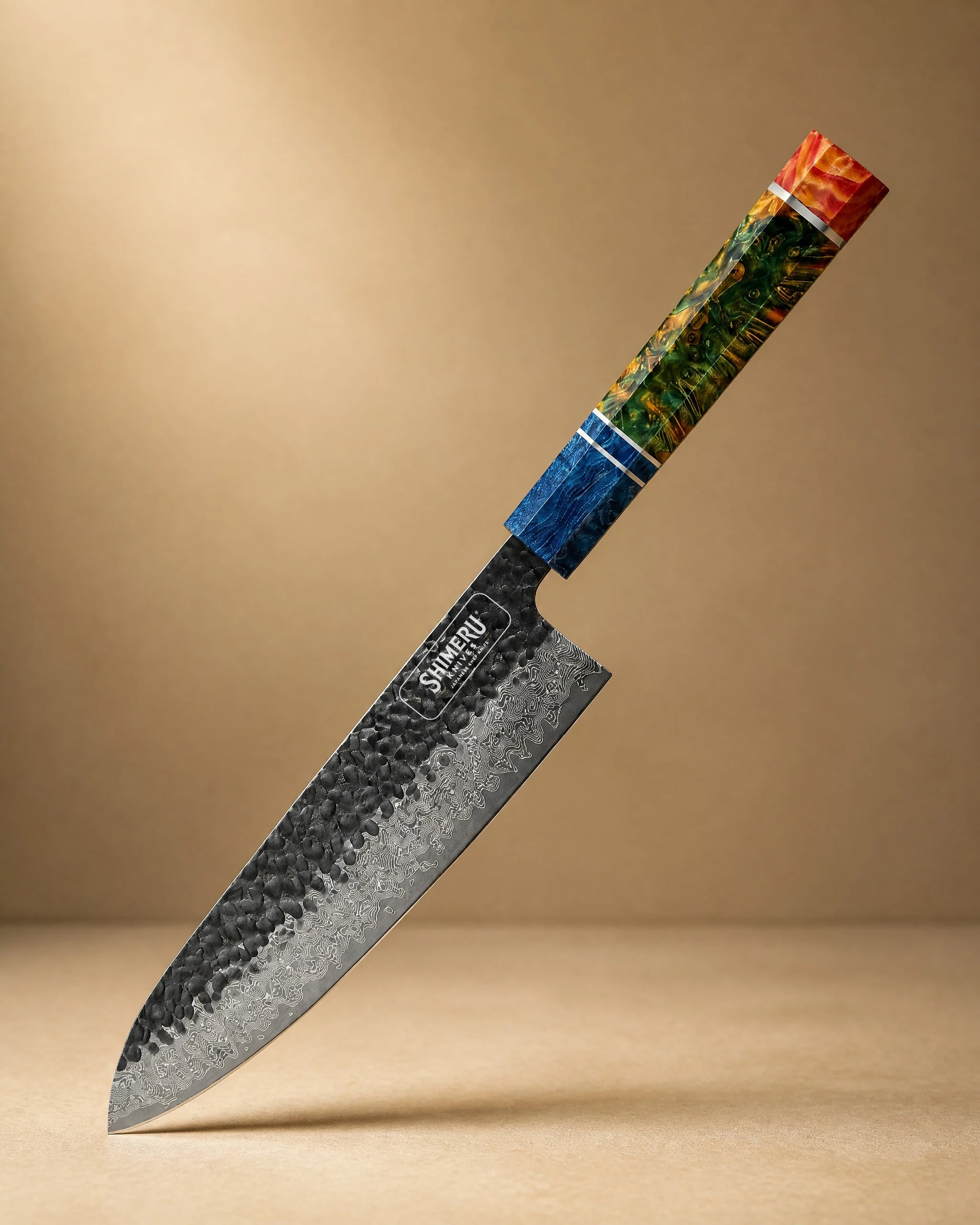 Yoshii 8″ Damascus Steel Gyuto Knife 牛刀£79.99View product → is an 8 inch gyuto with 67-layer Damascus steel and a wood and copper handle. It is listed for slicing, dicing and chopping. The long blade helps you cut neat slices of roast beef or lamb without sawing back and forth.
A sharp knife is safer than a dull one. To keep any of these knives in top condition, use the 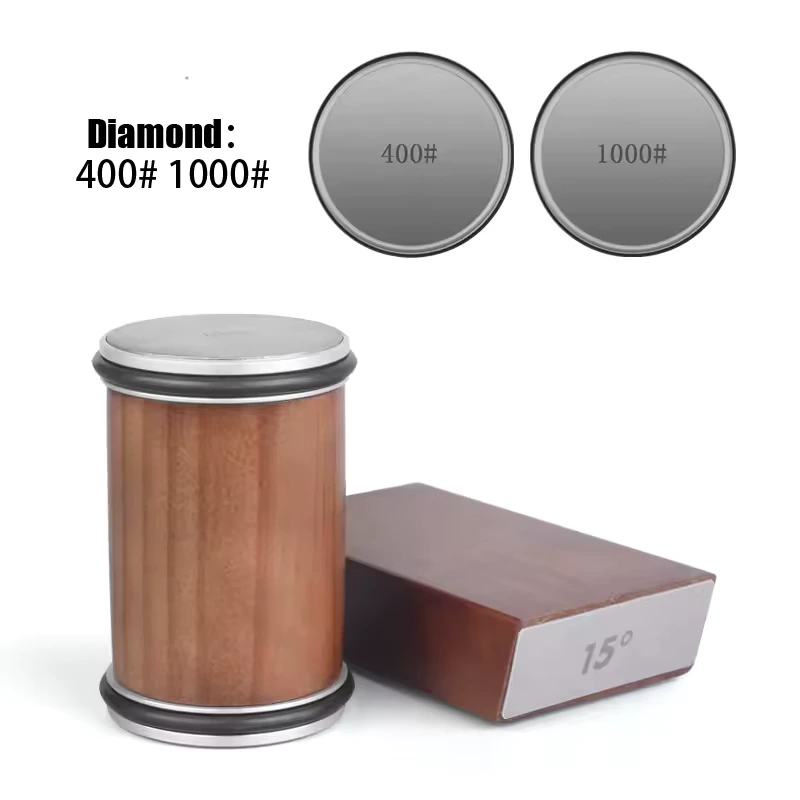 Magnetic Rolling Knife Sharpener£59.99View product →. It is a magnetic rolling sharpener, compact and easy to store.
You can see the full range of knives and boards in our product collection. If you are not sure which knife suits your cooking, our knife guide explains blade shapes, steel types and handle styles.
Cleaning and storing your board
Wood and bamboo boards should be washed by hand with hot soapy water. Rinse and dry immediately with a towel. Do not put them in the dishwasher. The heat and water will warp, crack or split the wood. Once a month, apply a food-safe mineral oil or board cream. This keeps the wood from drying out and closing small scratches.
Plastic and rubber boards can usually go in the dishwasher. Check the manufacturer's advice. If you hand wash, use hot water and a stiff brush to clean any cuts. For plastic boards that have held raw meat, a diluted bleach solution is a good option. Rinse thoroughly afterwards.
Store boards flat or upright with space for air to circulate. Do not stack wet boards. Do not leave a board sitting in a puddle of water.
Replace any board that has deep cracks, splinters or a persistent smell. A damaged board cannot be properly cleaned. It is not worth the risk.
Which board should you buy?
Here is a simple starting point based on how you cook.
- For raw meat only: a dedicated plastic or rubber board, dishwasher safe if possible. Keep it separate and sanitise after every use.
- For roast carving: a large wood carving board with a juice groove and non-slip feet. End grain is best if budget allows, edge grain is fine.
- For everyday vegetables and bread: a medium wood or bamboo board. Keep it away from raw meat.
- For a small kitchen: a reversible board with a juice groove on one side and a flat surface on the other. Store it upright.
If you want to browse actual boards, our chopping boards category shows what we stock. You can compare sizes and materials in one place.
A last word on boards and meat
The best chopping board for meat is not the most expensive one. It is the one that suits your routine. If you cook a lot of raw chicken, buy a board you can sanitise easily. If you roast on Sundays, buy a carving board that holds the meat and catches the juices. If you use fine Japanese knives, choose a board that protects the edge.
Buy once, clean it properly, and it will last for years. Your knives will stay sharper. Your food will be safer.
Photography: José Ignacio Pompé via Unsplash.

