

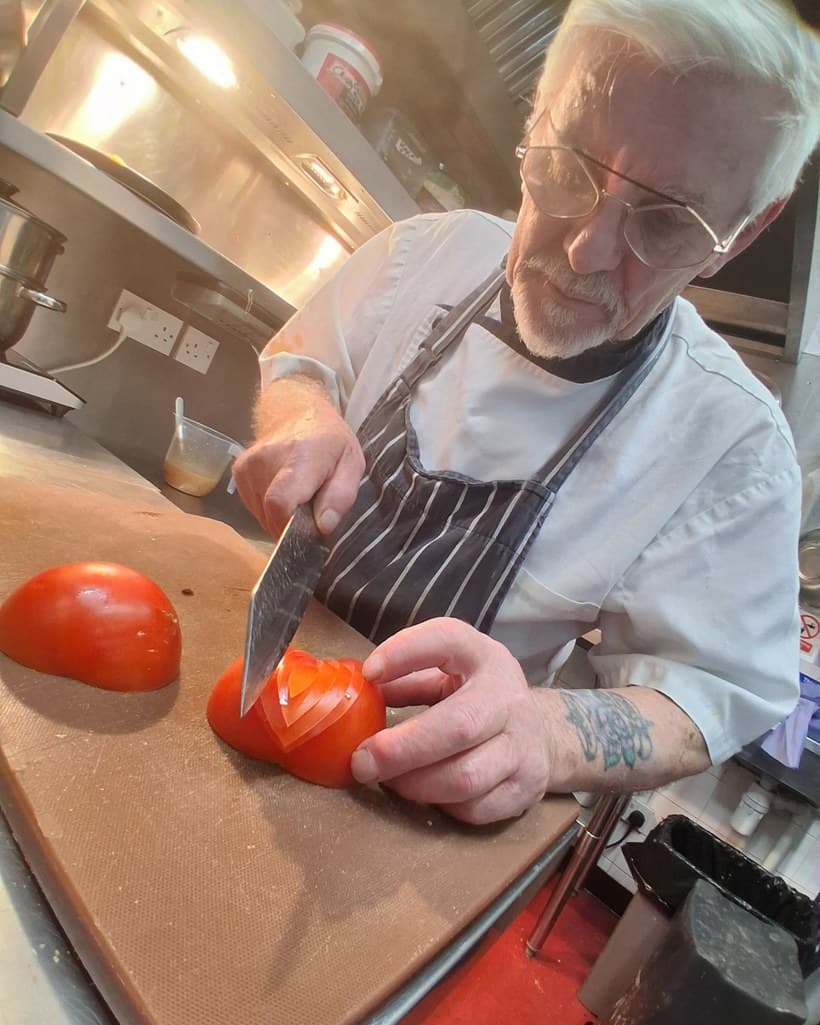
Sujihiki Knife: The Slicing Specialist

What is a sujihiki knife?
A sujihiki is a Japanese slicing knife, one of the most specialised tools in the kitchen. The name translates roughly as "pull cut" or "meat slicer", which tells you exactly what it is built to do. It is long, narrow and relatively flat, with a blade of around 270 to 300 millimetres. The profile is the defining feature: the edge is nearly straight, with only a gentle belly rising at the tip. This lets the whole edge lie flat against the cutting board, so you can make one long, clean pull through a joint of meat or a fillet of fish. It is a knife for precision slicing, not for chopping or rocking.
The sujihiki is related to the yanagiba, the traditional Japanese knife for slicing sashimi. The essential difference is that the yanagiba is single bevel, sharpened on one side only, while the sujihiki is usually double bevel. For most home cooks, a double bevel is more familiar and easier to control, because the knife cuts straight without drifting. That makes the sujihiki a natural choice for anyone who wants a Japanese slicer without having to learn the habits of a single bevel blade.
It helps to understand that a sujihiki is not a general purpose knife. It does one thing, and it does it very well. If you have ever tried to carve a roast with a heavy chef's knife and ended up with ragged slices, you know the problem. The curved edge of a chef's knife is ideal for rocking, but it works against you when you try to make a single smooth cut. The sujihiki solves that with a nearly flat edge and a thin blade that moves through meat with very little resistance.
What is a sujihiki used for?
The main job of a sujihiki is slicing cooked meat. Roast beef, turkey, leg of lamb, gammon and ham all cut beautifully with one long pull. The knife is also excellent for cooked fish, smoked salmon, terrine and anything that needs to be portioned into even slices. In professional kitchens, the sujihiki is the go-to tool for plating because it makes clean, uniform cuts without crushing the food.
It can also be used for raw fish. For sashimi, the traditional knife is the yanagiba, which avoids tearing the delicate flesh. A double bevel sujihiki will do the job too, though the cut is slightly different. If you are a home cook who prepares the occasional plate of sashimi but does not want to maintain a single bevel knife, a sujihiki is a practical compromise.
One important point is that a sujihiki is not for bones or frozen food. The steel is hard and the edge is thin, which is exactly what makes it slice so cleanly, but it also means the blade can chip if you hit bone, cartilage or ice. For breaking down a bird or cutting through a rib cage, you need a heavier knife. The sujihiki is for the finished product, not for butchery.
Sujihiki vs other knives
The most common question is how a sujihiki differs from a Western carving knife. A carving knife usually has a wider blade and a more pronounced curve, with a softer steel and a thicker edge. It can carve a roast well enough, but it produces wider, less consistent slices. A sujihiki is ground thinner and harder, which means less resistance and a cleaner cut. If you are slicing meat for a table or a sandwich, the difference is easy to see.
Compared with a chef's knife, the sujihiki is far more specialised. A chef's knife slices, chops, minces and crushes. A sujihiki slices, and that is about it. If you only want one knife, get a chef's knife. If you already have one and you want a knife that does what a chef's knife cannot, the sujihiki makes sense.
The yanagiba comparison
The closest relative of the sujihiki is the yanagiba. Both are long and slender, but the yanagiba is single bevel, sharpened only on one side, which gives it an asymmetric grind that can steer to one side in untrained hands. A sujihiki is double bevel, so it cuts straight and is easier for a home cook to handle. If you are serious about sashimi and willing to learn, a yanagiba rewards you with the purest cut. If you want a high performance slicer that behaves like every other knife you own, choose the sujihiki.
How to choose a sujihiki
The first decision is blade length. Common sizes are 240mm, 270mm and 300mm. A 240mm knife suits smaller joints and is easier to control, while a 300mm blade handles a large roast or a whole side of salmon in fewer strokes. Most home cooks find 270mm a good balance, but the choice depends on what you tend to carve.
Steel is the next consideration. High carbon steel takes a keener edge, but it is reactive and will stain or rust if you do not dry it straight away. Stainless steel requires less maintenance while still taking a very fine edge. For a home cook who does not want to fuss, stainless is the easy recommendation.
The handle is a matter of personal taste. Traditional Japanese handles are octagonal wooden handles that are light and comfortable. Western handles are heavier and fill the hand more, which some cooks prefer for a long carving session. Our guide to choosing a knife covers the different styles and how they affect balance.
How to use a sujihiki
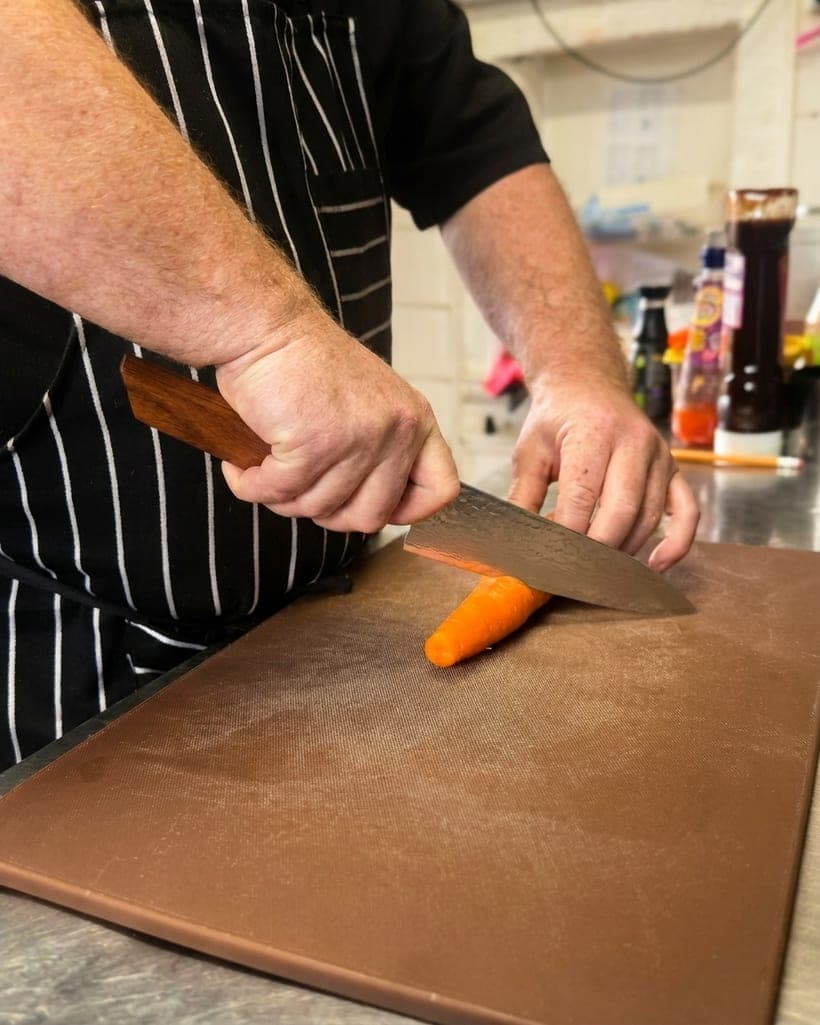
Using a sujihiki is about letting the knife do the work. The technique is a single pull: start at the heel and draw the blade back through the meat with gentle downward pressure. The whole edge should pass through the food in one smooth movement. There is no sawing and no forcing. If the knife is sharp, it will move through the meat almost on its own.
Let a roast rest after cooking so the juices settle; this gives firmer, cleaner slices. Cut across the grain to shorten the muscle fibres and make the meat more tender on the plate. The long blade is the advantage here, it cuts across a wide joint in a single stroke. A shorter knife tends to cut in stages, producing uneven slices.
The sujihiki is also useful for trimming fat and slicing delicate things like smoked salmon or very thin vegetable garnishes. It is not a knife for every job, but within its range it is remarkably versatile, and the thin edge glides through soft ingredients without crushing them.

How to care for your sujihiki
A sujihiki needs the same care as any fine Japanese knife. Wash it by hand in warm water with a little washing up liquid, dry it immediately, and store it in a block, on a magnetic strip or in a blade guard. Never leave it in a sink, never put it in a dishwasher, and never cut on glass, stone or marble. A wooden or synthetic board is essential.
Sharpening is not as difficult as it seems. The edge of a sujihiki is straight, which makes it easier to work with on a whetstone than the curved edge of a chef's knife. If you are not confident with a stone, a guided sharpener such as 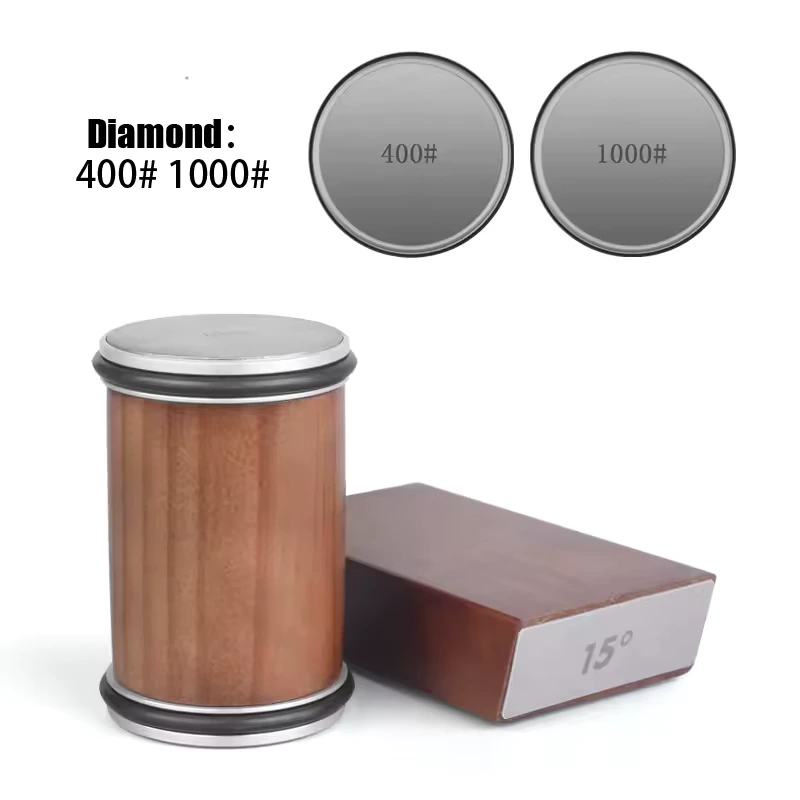 Magnetic Rolling Knife Sharpener£59.99View product → removes the guesswork and keeps the angle consistent. A light touch with a honing rod each week and a full sharpening when the edge starts to dull will keep it performing at its best. Our knife care guide explains the full routine.
Do you need a sujihiki?
The honest answer is that it depends on how you cook. If you roast meat regularly, entertain guests or make sandwiches from a home roasted joint, a sujihiki will noticeably improve your results. You will get thinner, more even slices with less effort. If you slice fish at home, either cooked or raw, the sujihiki is equally useful. For these jobs it is the right tool, and the right tool makes a real difference.
If you mostly cook vegetables, stir fries and quick meals, a sujihiki is an extra piece of equipment that you will not use often. There is no shame in that. A cleaver such as 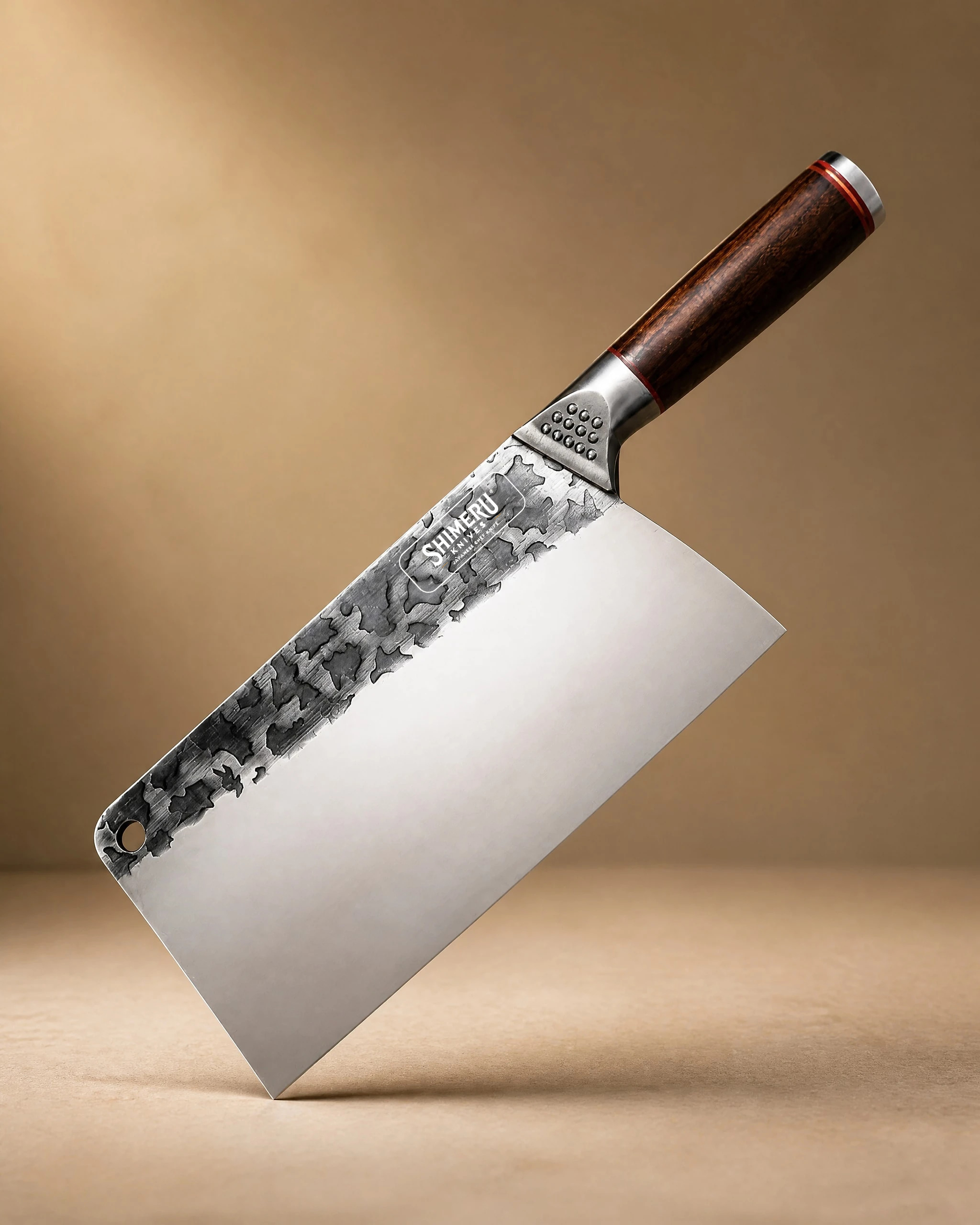 Saba 7" Stainless Steel Cleaver 中華包丁£44.99View product → is a far more versatile daily driver, and it handles meat, vegetables and herbs with skill. If you are building a set of Japanese knives, a set like
 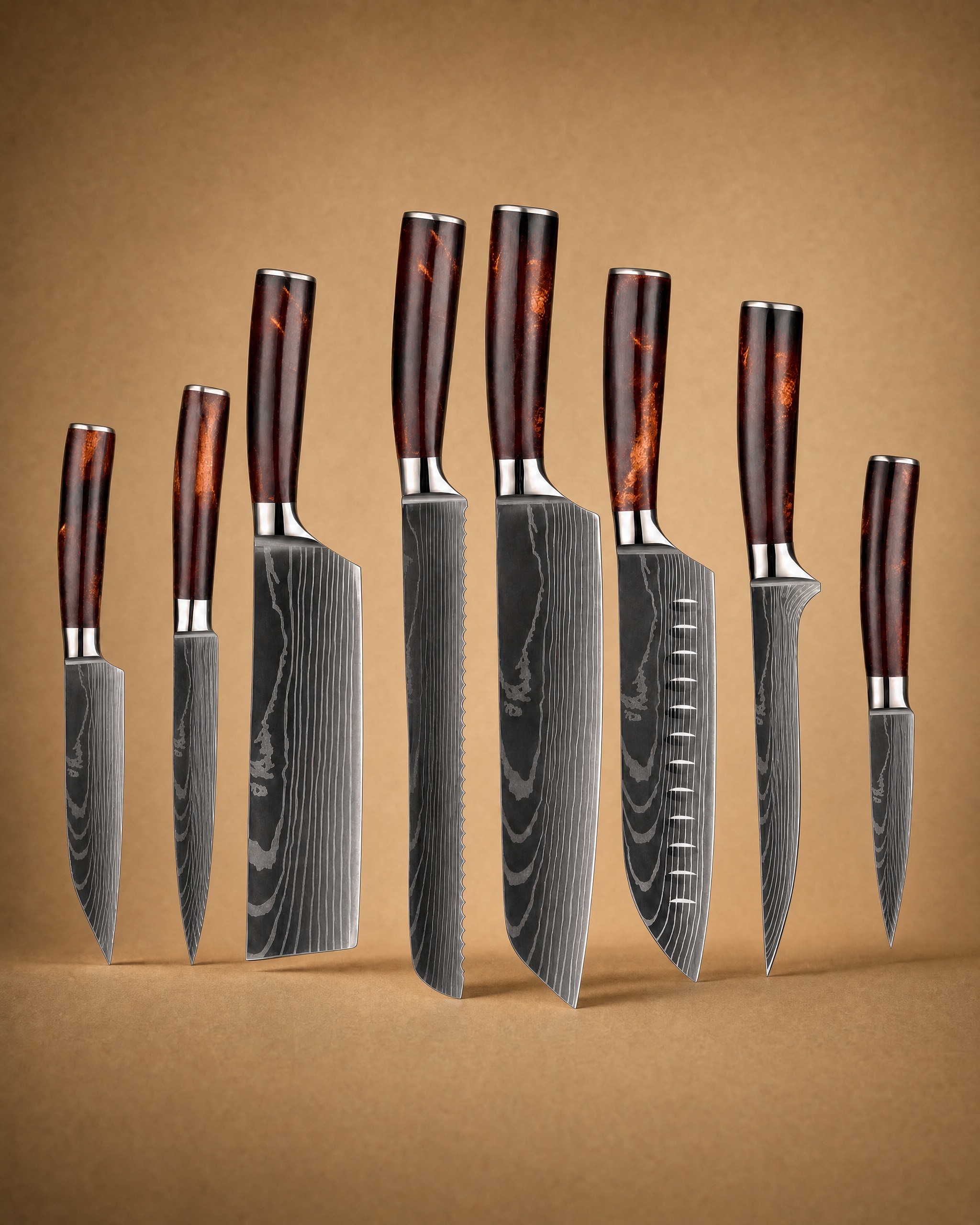 Asahi 朝日川 Damascus Pattern Stainless Steel Kitchen 8 Knife Set£154.99View product → gives you the core tools for everyday cooking, and you can add a sujihiki later if you find yourself carving regularly. For bread, neither a sujihiki nor any other slicer is the right tool; that is what a dedicated bread knife like
 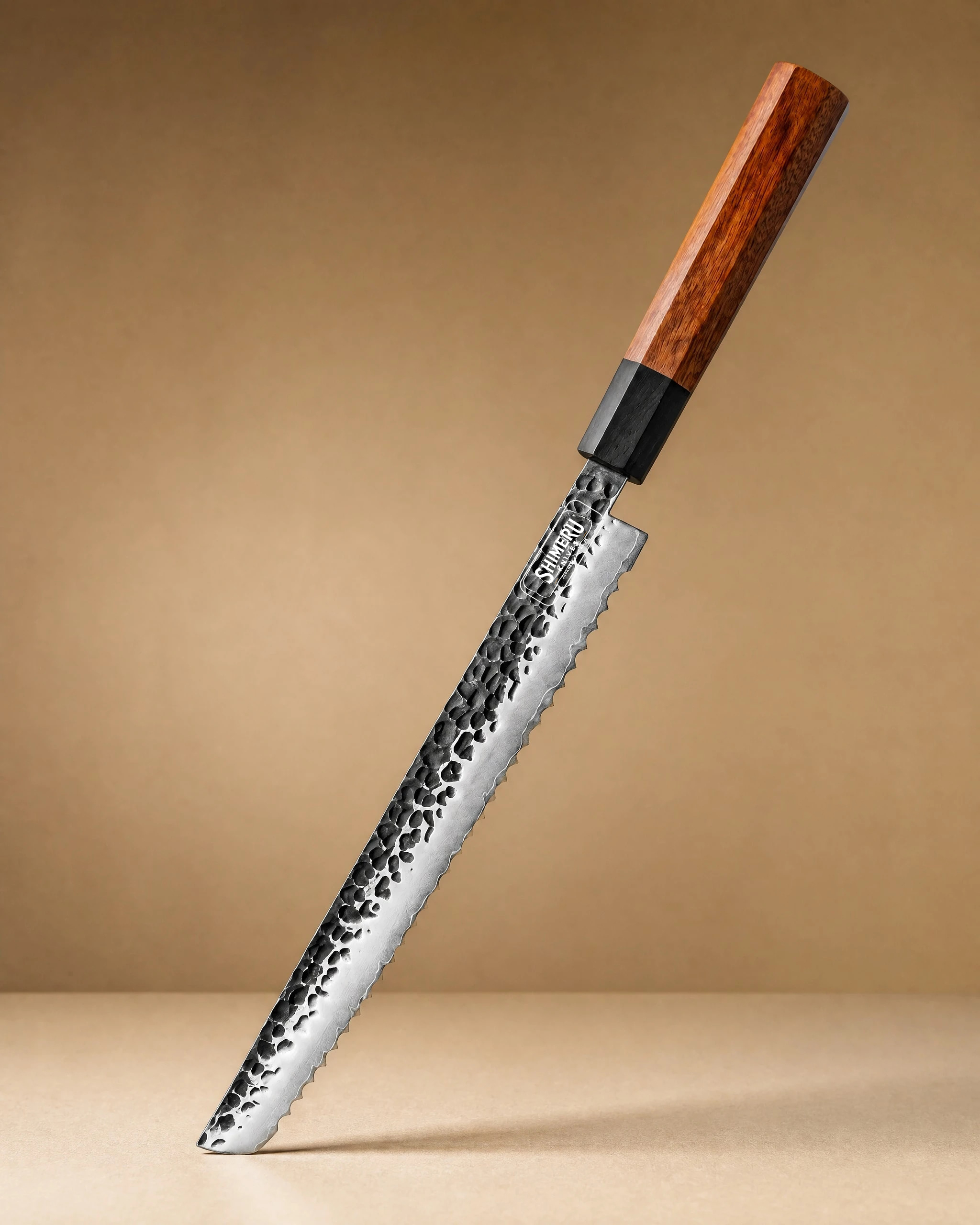 Rumoi 10" Japanese Bread Knife パン切りナイフ£59.99View product → is for.
If you do decide a sujihiki fits your cooking, choose one with sound geometry and a good heat treatment, because the grind matters more than the brand. If you are new to Japanese knives, buy one good blade before you think about a set. You can compare all of the options on our product page.
Photography: Richard Iwaki via Unsplash.


