

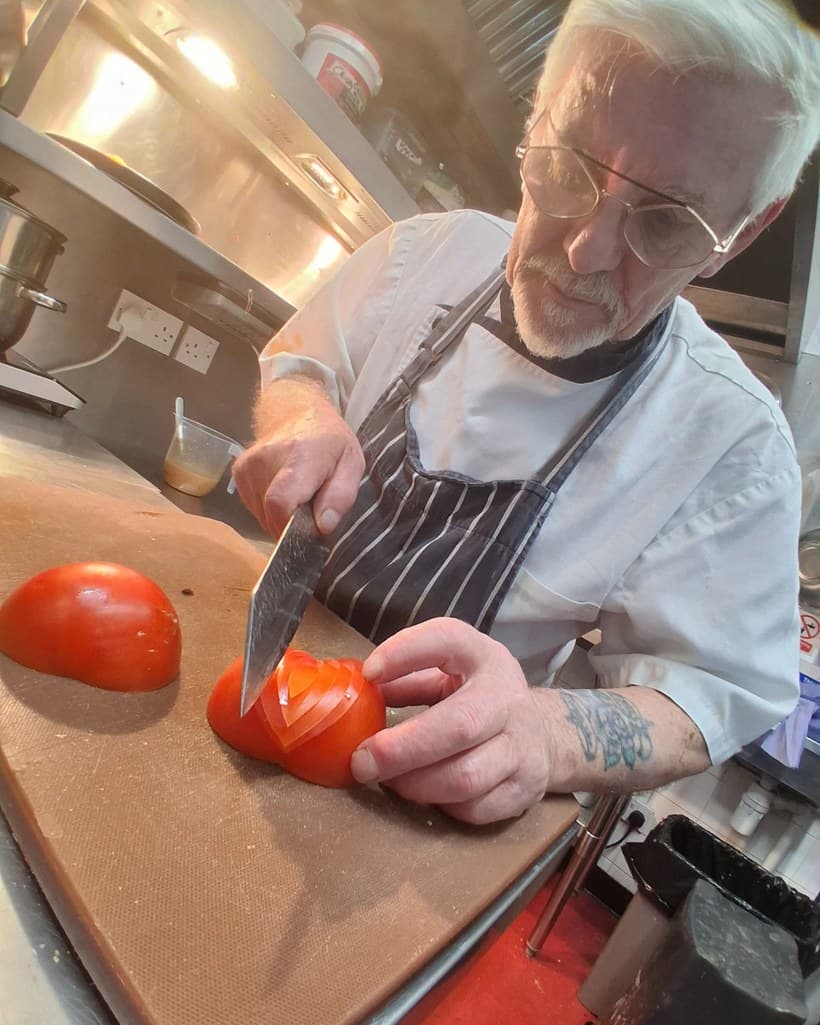
Santoku Chef Knives: What Sets Them Apart

Walk into most Japanese home kitchens and you will find one knife doing the bulk of the work, and it is rarely a long French style chef knife. It is a santoku: shorter, taller, flatter along the edge, and built around the way people cook at home rather than the way a professional kitchen runs a service. If you are weighing up a santoku chef knife against the Western blade you already own, the differences are practical rather than cosmetic, and they matter more than most buying guides admit.
What follows covers what the shape is for, where it genuinely beats a chef knife, where it does not, and how to choose between the santoku in our range without guessing.
What the name actually means
Santoku (三徳) translates roughly as three virtues, and the three virtues are the jobs the blade is meant to handle: slicing, dicing and mincing. A second reading points at three ingredients, meat, fish and vegetables. Both readings lead to the same idea. This is a general purpose knife built to do a bit of everything well in a domestic kitchen, rather than one task perfectly.
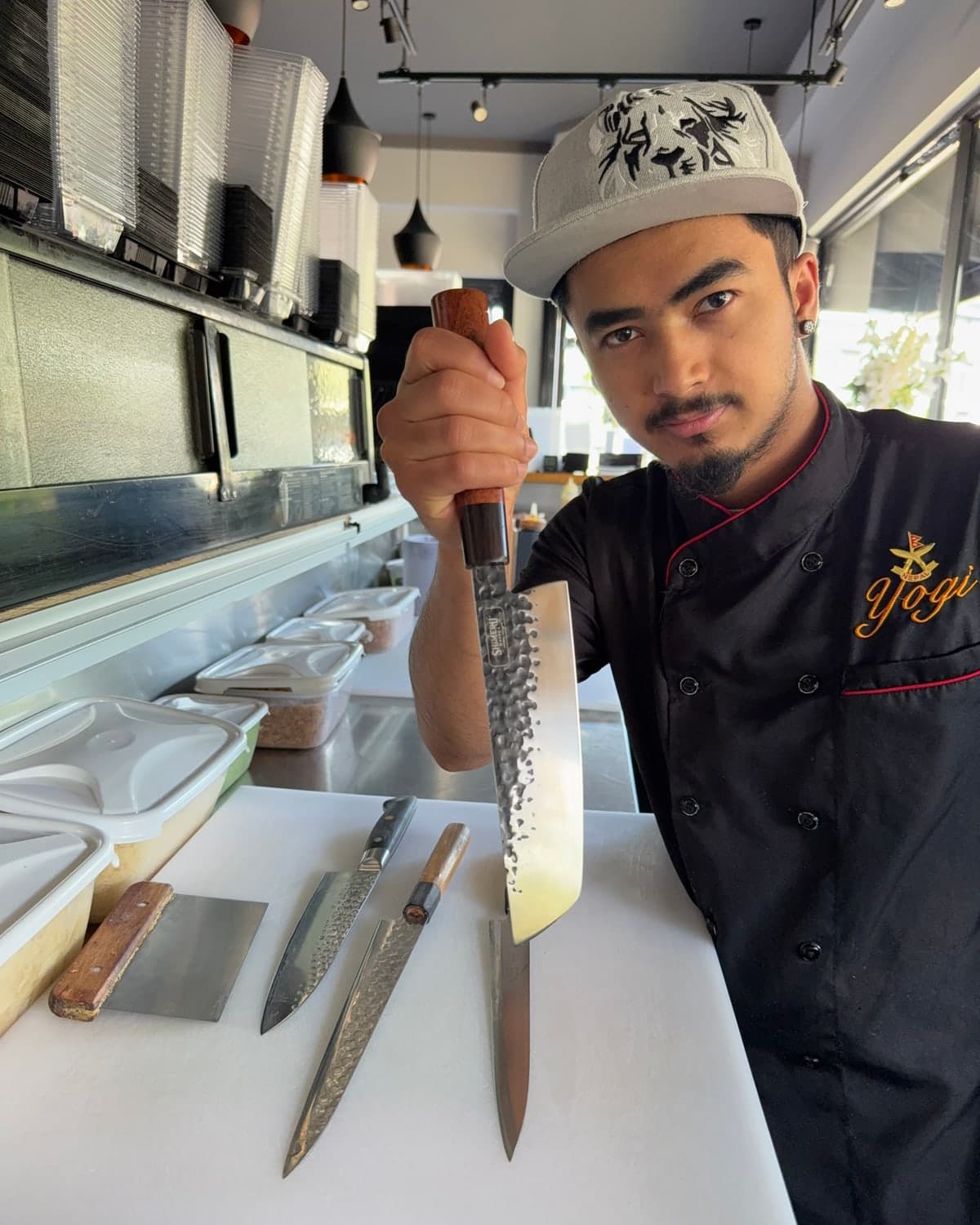
The shape follows from that. The spine drops towards the tip in a gentle curve, the blade is tall from edge to spine, and the edge itself is close to flat with a soft belly near the front. Many santoku carry a row of hollows ground into the side just above the edge. They reduce sticking on wet, starchy things like potato and cucumber, and they help a little. They do not make the knife self cleaning, whatever the marketing suggests.
The three virtues in practice
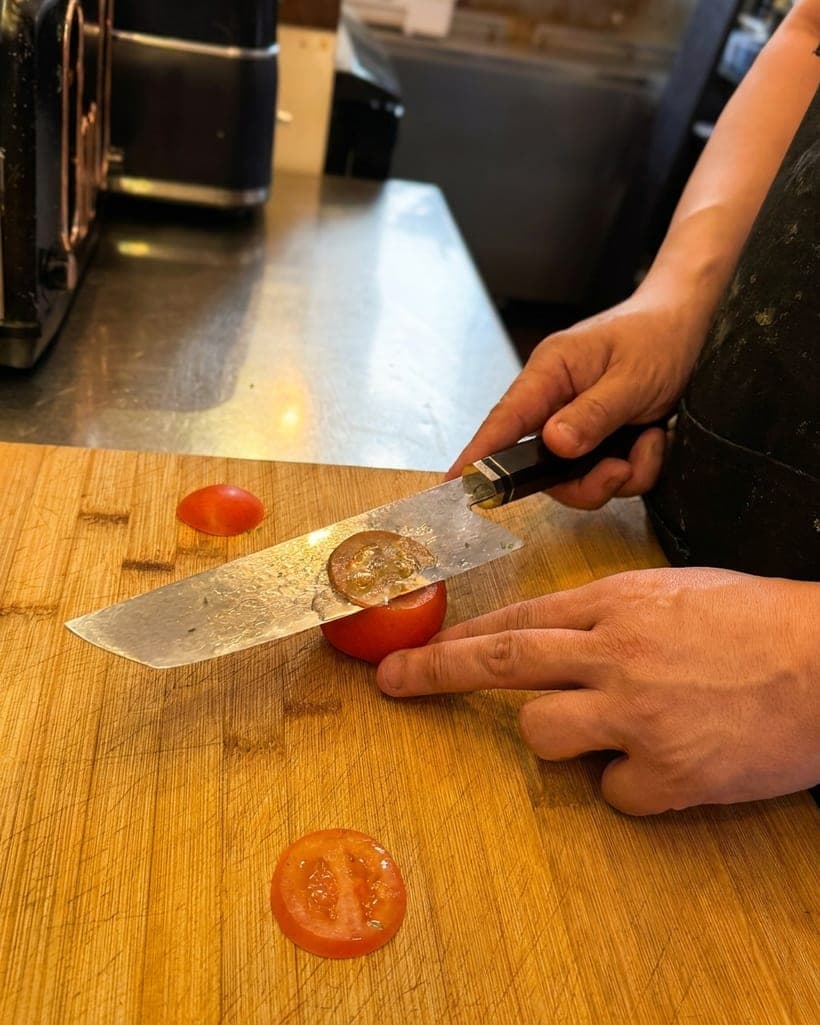
Slicing comes first. The near flat edge lets you draw the blade through a piece of protein or a ripe tomato in one continuous motion, with the full length of the edge in contact with the board rather than a small rocking arc. For thin slices of fish or cured meat, that flat profile gives you real control.
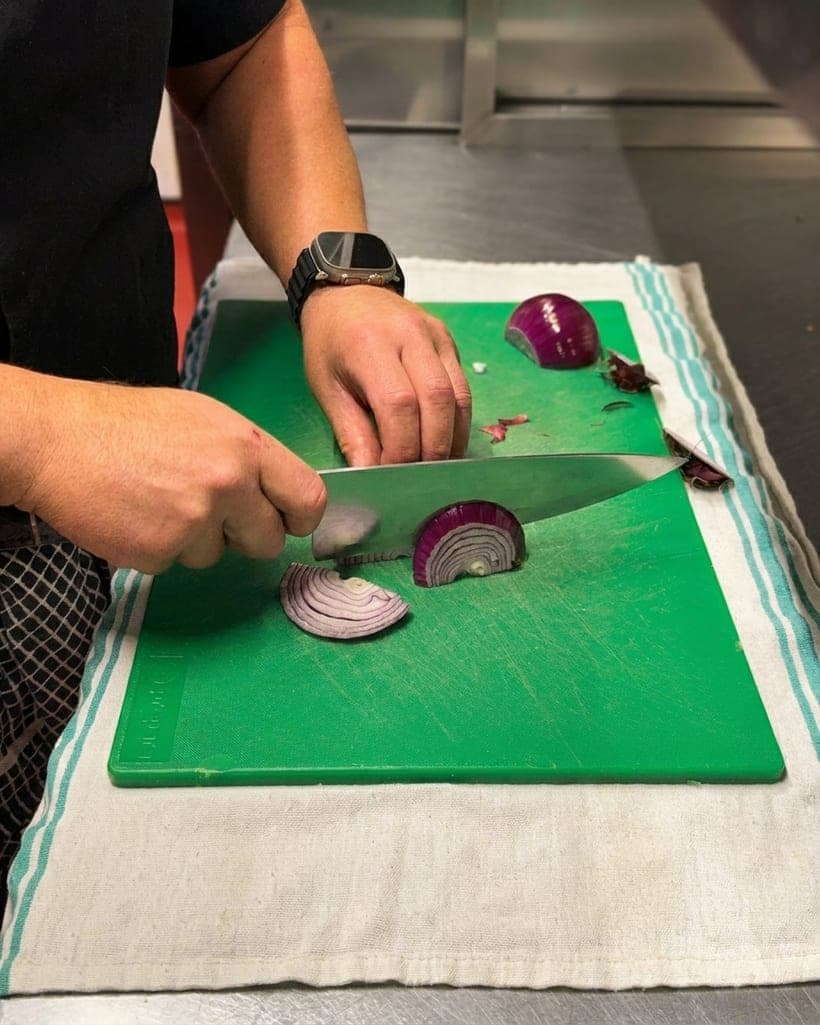
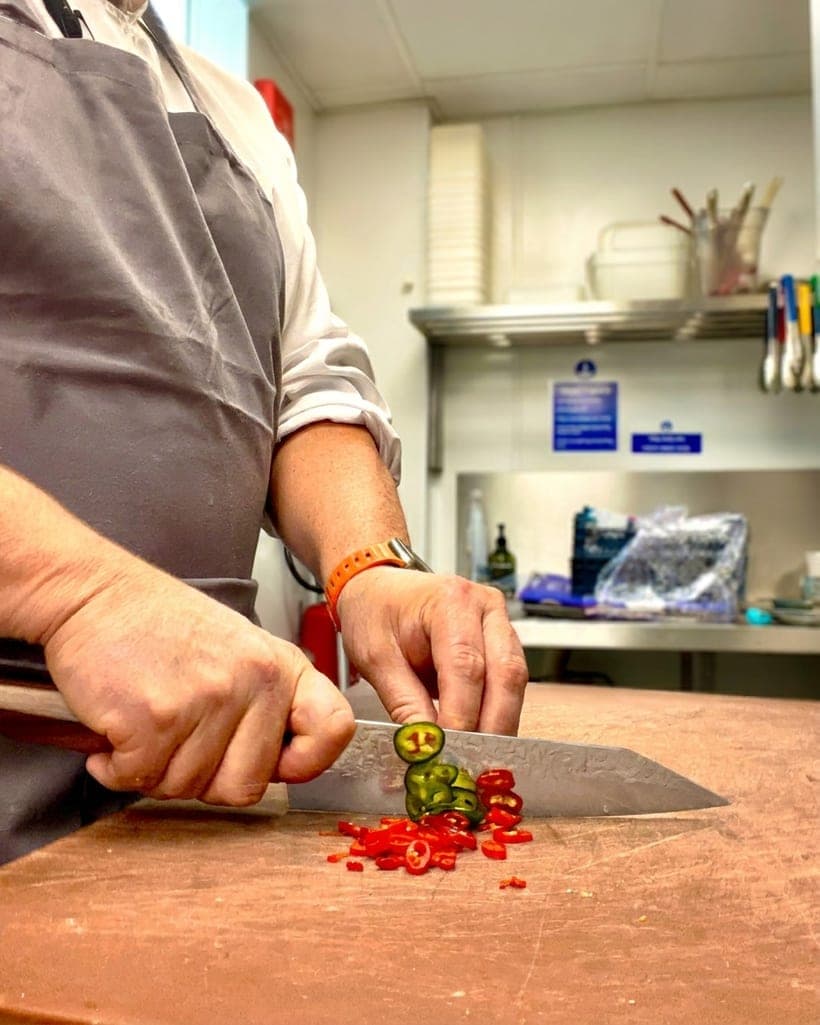
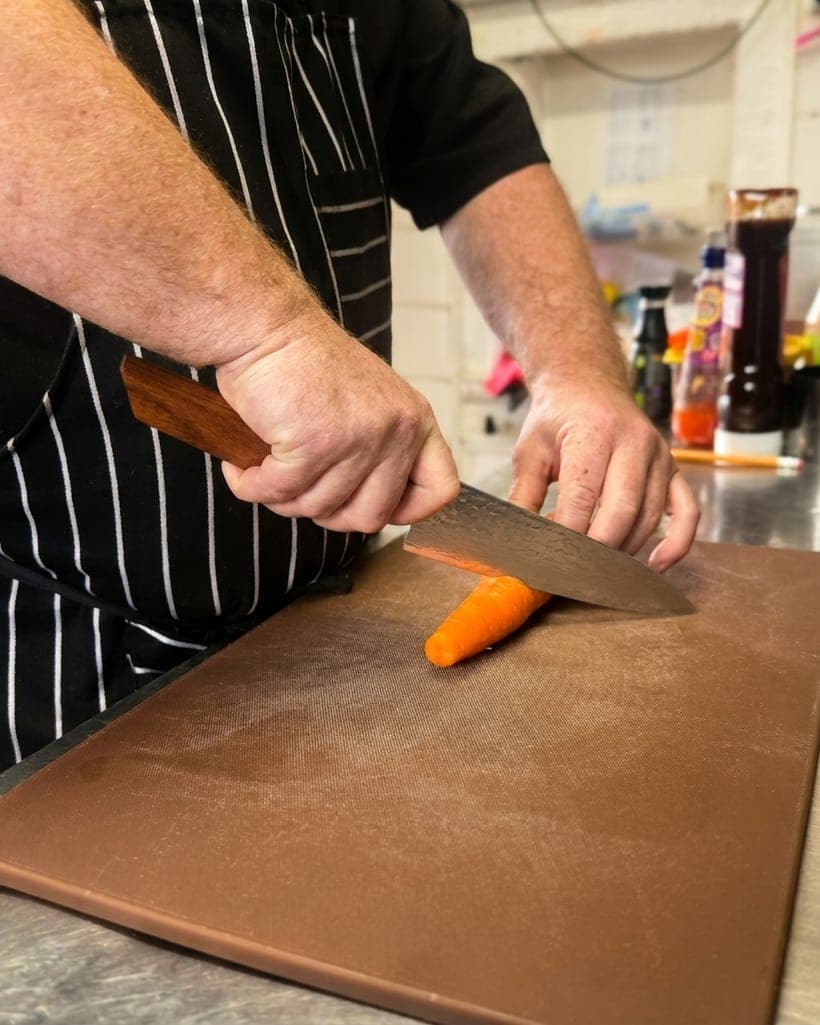
Dicing is where the height of the blade earns its keep. A tall blade gives you a stable wall to guide your knuckles against, and it lets you scoop what you have cut straight off the board. Onions, carrots and peppers feel quicker and more controlled.
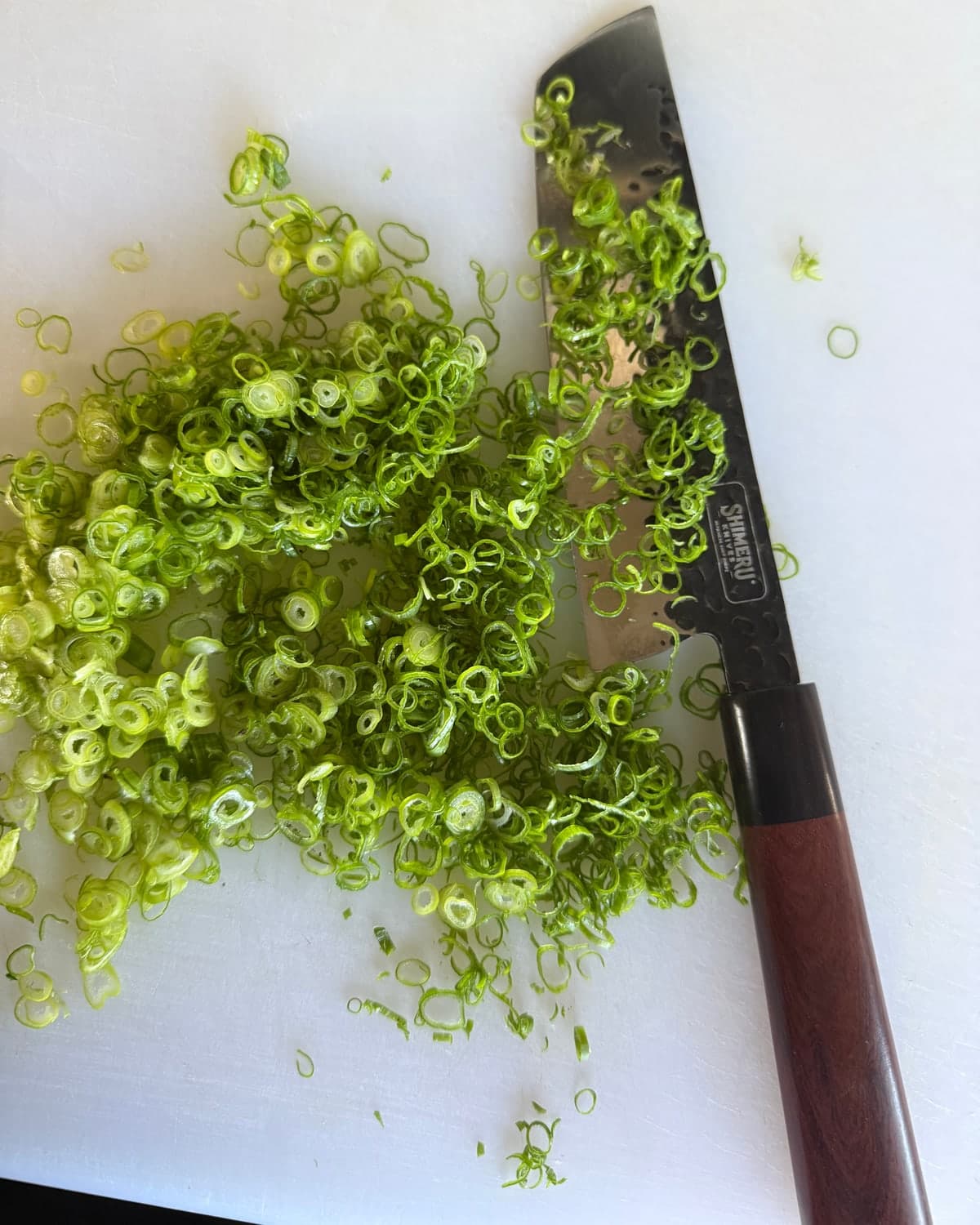
Mincing works because the flat section near the heel is broad and stiff. You can rock the knife through garlic, herbs or ginger without the tip wandering, and the depth of the blade keeps everything steady.

Santoku vs chef knife: the real differences
The two knives overlap a great deal, so the decision is usually about your technique rather than about quality.
Edge profile and the rocking question
A Western chef knife, the classic French or German shape, has a pronounced curve from heel to tip. That curve exists for rocking: the tip stays on the board, the heel lifts, and you walk the blade through a pile of herbs in a fast rhythm. A santoku has far less belly. It rewards a push cut or a forward draw, where the blade travels down and away from you. If you rock heavily out of habit, a santoku will feel slightly wrong for a week, and then you will adapt, usually by discovering that push cutting was faster anyway.
Length and control
Western chef knives commonly run longer than a santoku, and on a domestic board in a domestic kitchen that extra length is often wasted. A shorter blade loses less leverage at the tip, feels more precise, and takes up less room on a crowded worktop. The height of a santoku compensates for the lost length: you still get plenty of edge to work with, just arranged differently.
Height and knuckle clearance
A tall blade means your fingers have room under the spine when you choke up on the handle. For anyone with larger hands this is the most noticeable difference in daily use. A long chef knife can leave you scraping your knuckles on the board during a heavy prep session; a santoku generally will not.
What the chef knife still does better
Long single stroke cuts through large items: a whole cabbage, a big celeriac, a side of salmon. The extra length and the curved edge let you commit to one continuous slice, and carving a large roast is easier with a longer blade. If that describes most of your cooking, keep the chef knife. Many keen cooks end up with both, using the santoku for prep and the long knife for the bigger jobs. Our knife guide sets these shapes alongside nakiri, petty and bread knives and explains what each one is for.
Steel, cladding and what Damascus actually is
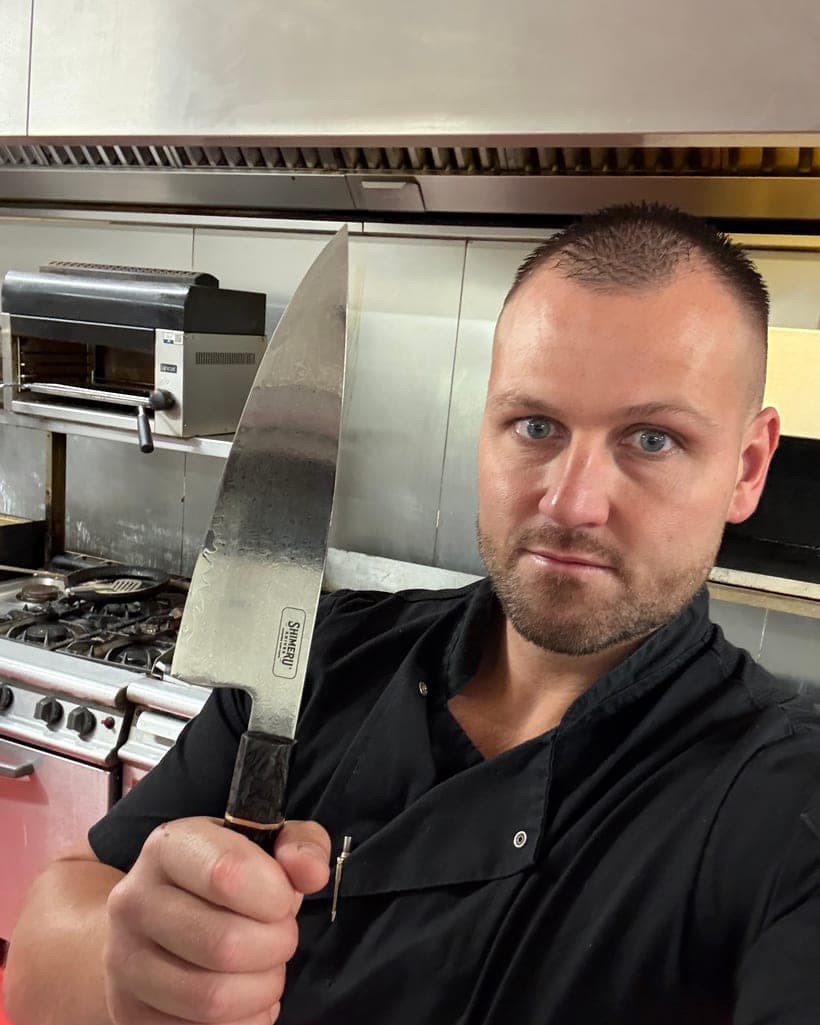
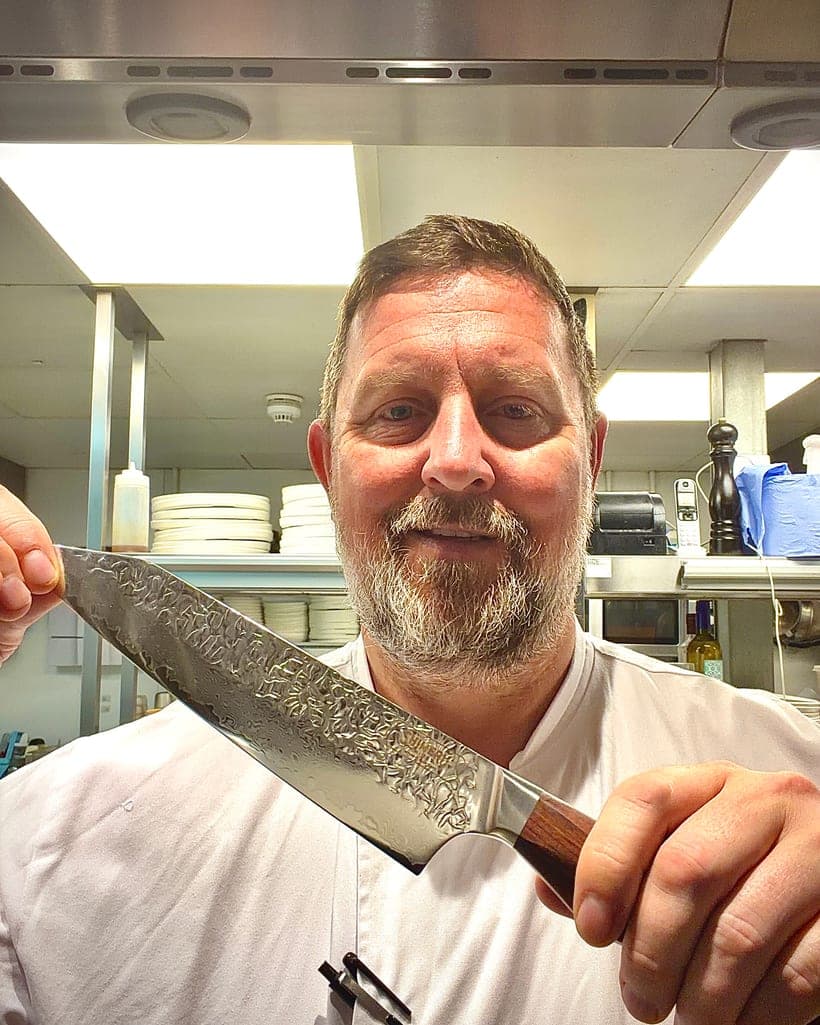
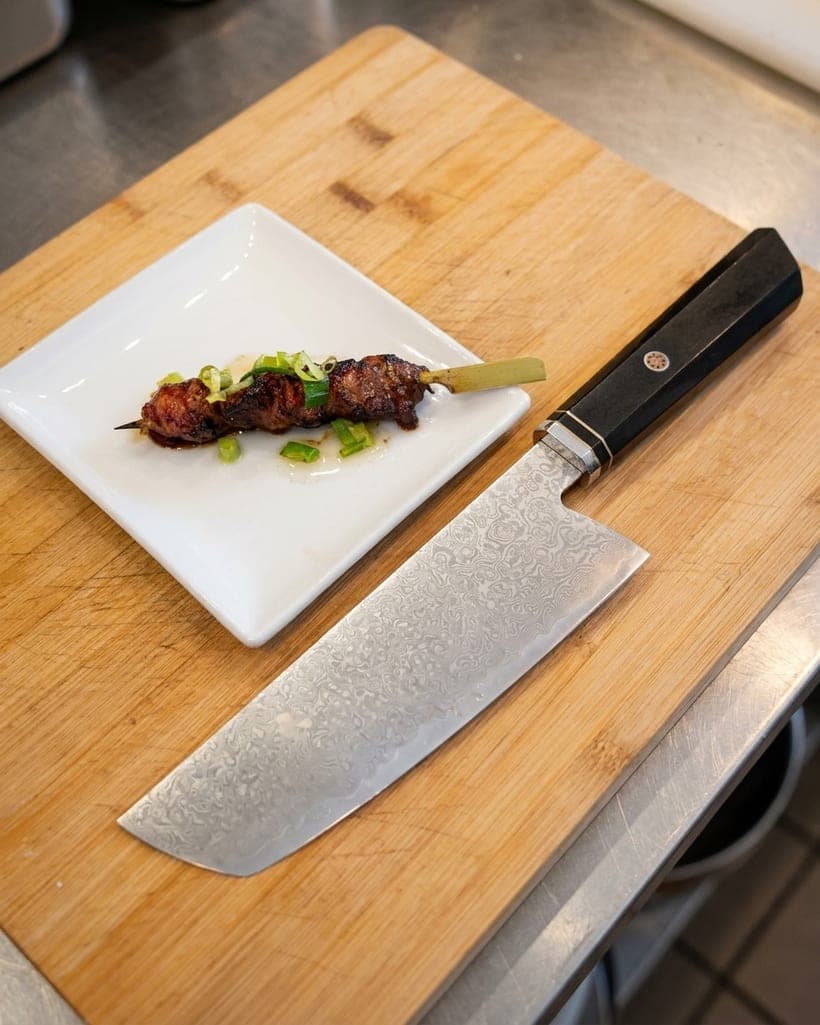
Our santoku chef knives are Damascus clad, which means a hard Japanese steel core is sandwiched between layers of softer steel and folded to produce the visible pattern on the face of the blade. The core does the cutting. The cladding supports it and adds toughness. The pattern is a byproduct of the construction rather than a decoration applied afterwards, although it is undeniably handsome.
Do not choose on layer count alone. What matters is the core steel, the heat treatment and the geometry behind the edge. A well ground blade in a straightforward steel will outcut a poorly ground blade in an exotic one, and a Damascus finish does not make a knife sharper by itself. It does make the blade easier to keep clean, because a polished face resists staining and releases food better.
The santoku in our range
All four sit in the same size class and share the same style of clad construction, so the choice comes down to handle material, blade profile and the small differences in how each one feels in the hand.
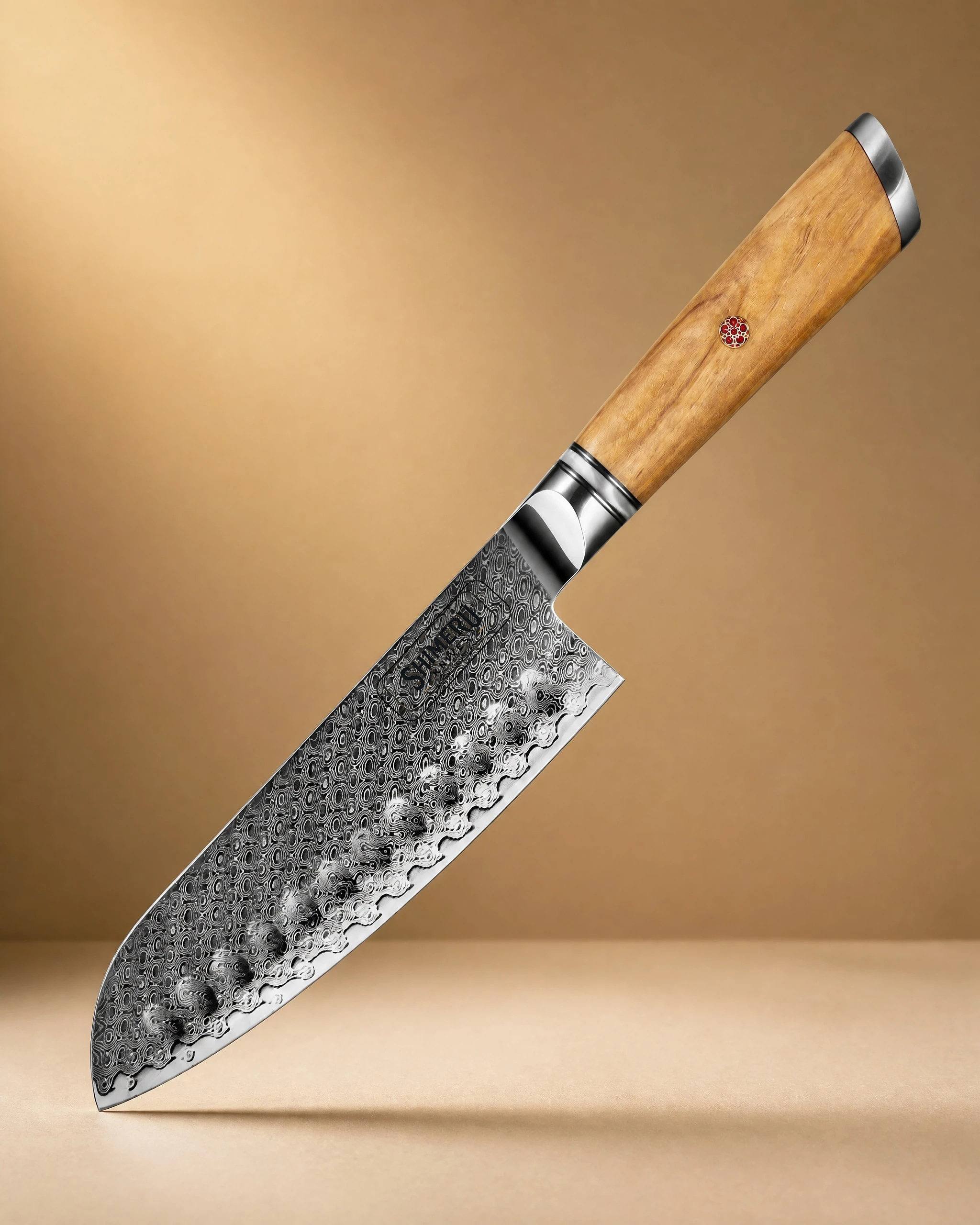 Chikuma 7" Damascus Steel Santoku Knife 三徳包丁£84.99View product → has the most conventional profile of the group, with a warm toned hardwood handle and a gentle curve towards the tip. It is the easiest to recommend if you want one knife for slicing, dicing and mincing and have no particular preference beyond that.
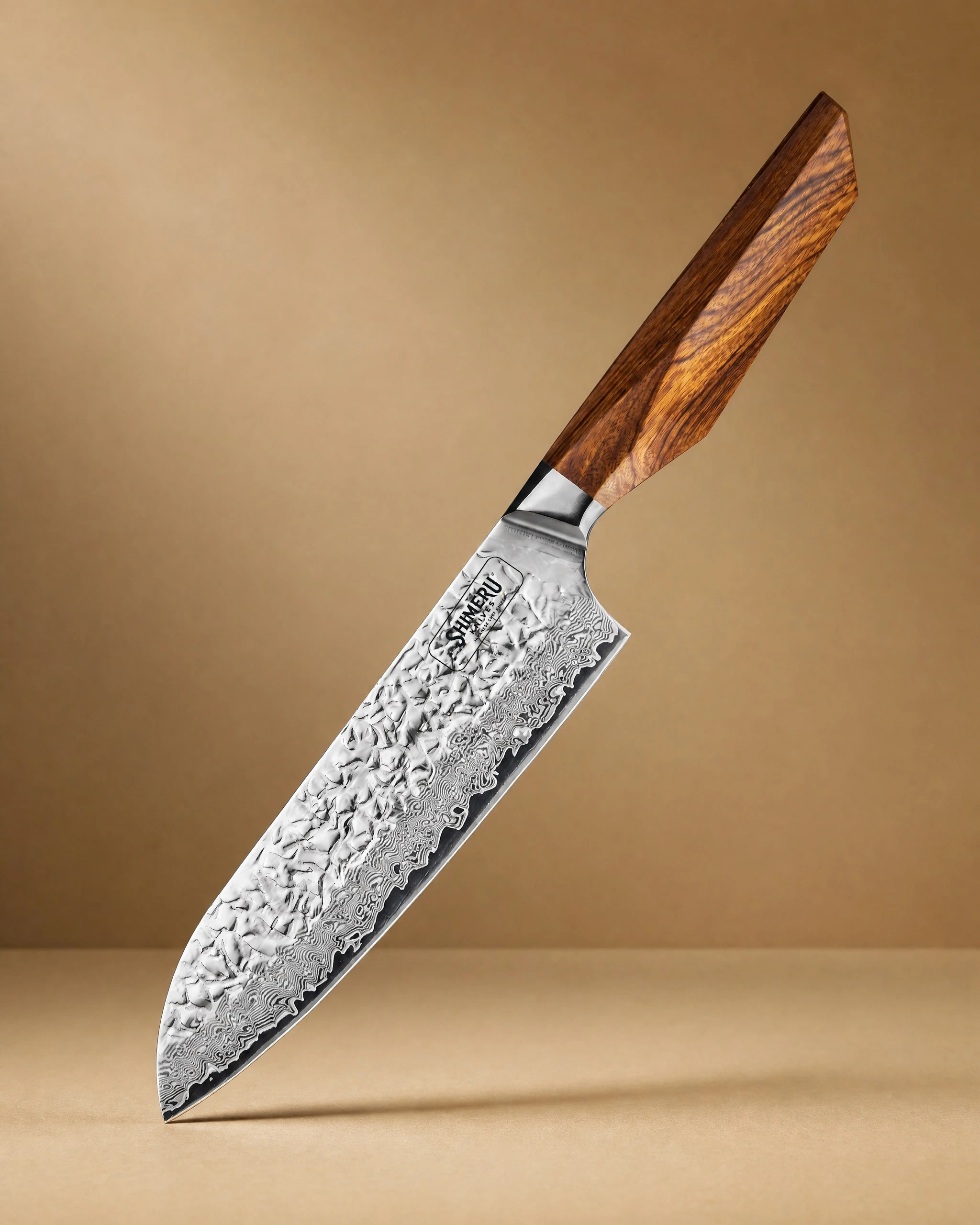 Shikoku 7" Damascus Steel Kengata Santoku 三徳包丁£84.99View product → is a kengata santoku. The spine drops towards the tip in a straighter, more angular line rather than a soft curve, which gives a slightly finer point for trimming and for fish. The rosewood handle feels dense and warm. If you break down fish or do a lot of vegetable prep, start here.
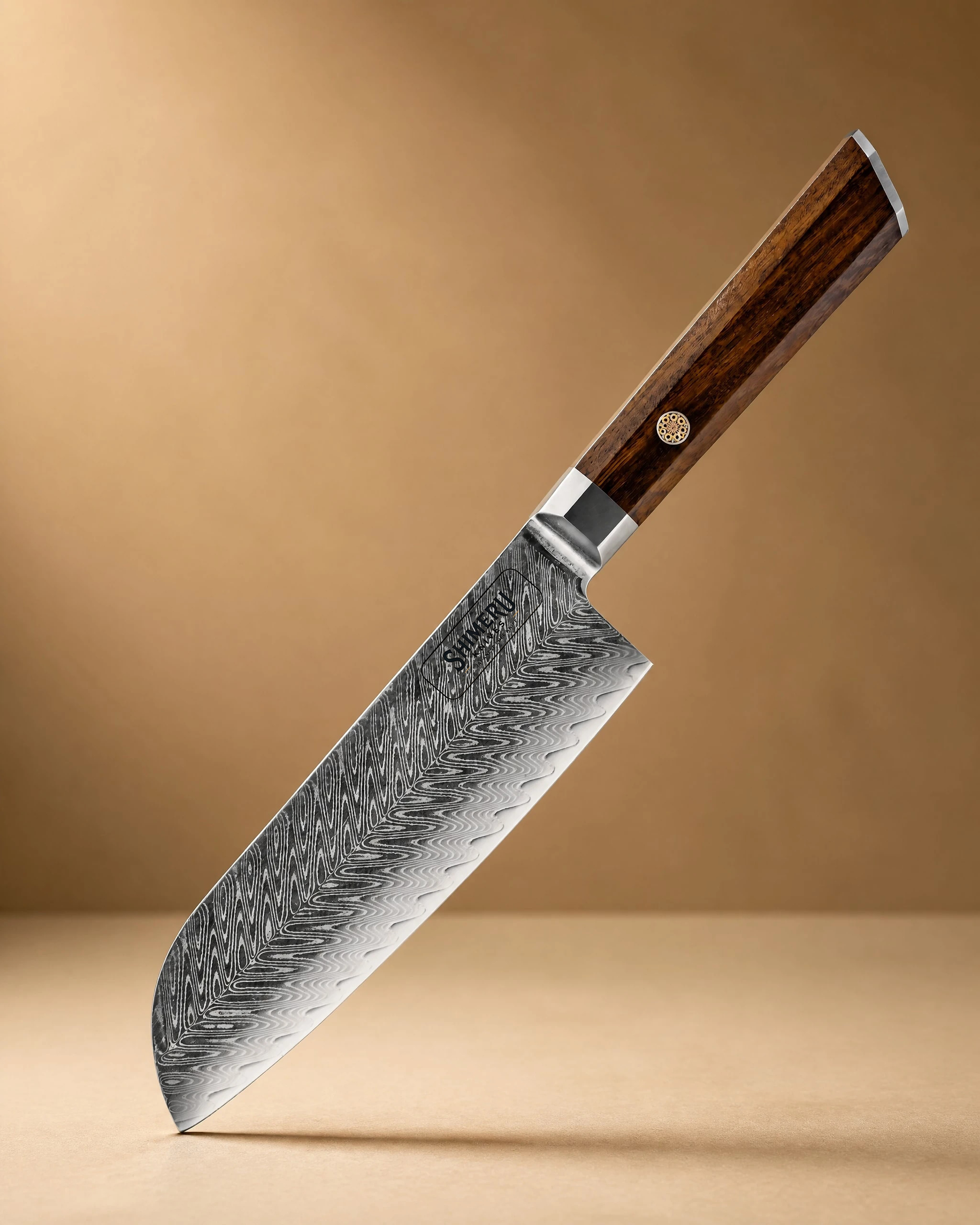 Komachi 小町 7″ Damascus Steel Santoku Knife 三徳包丁£79.99View product → is the most traditionally proportioned of the four, with a rosewood handle and a classic santoku silhouette. It suits a cook who wants an understated knife that will do everything asked of it without drawing attention.
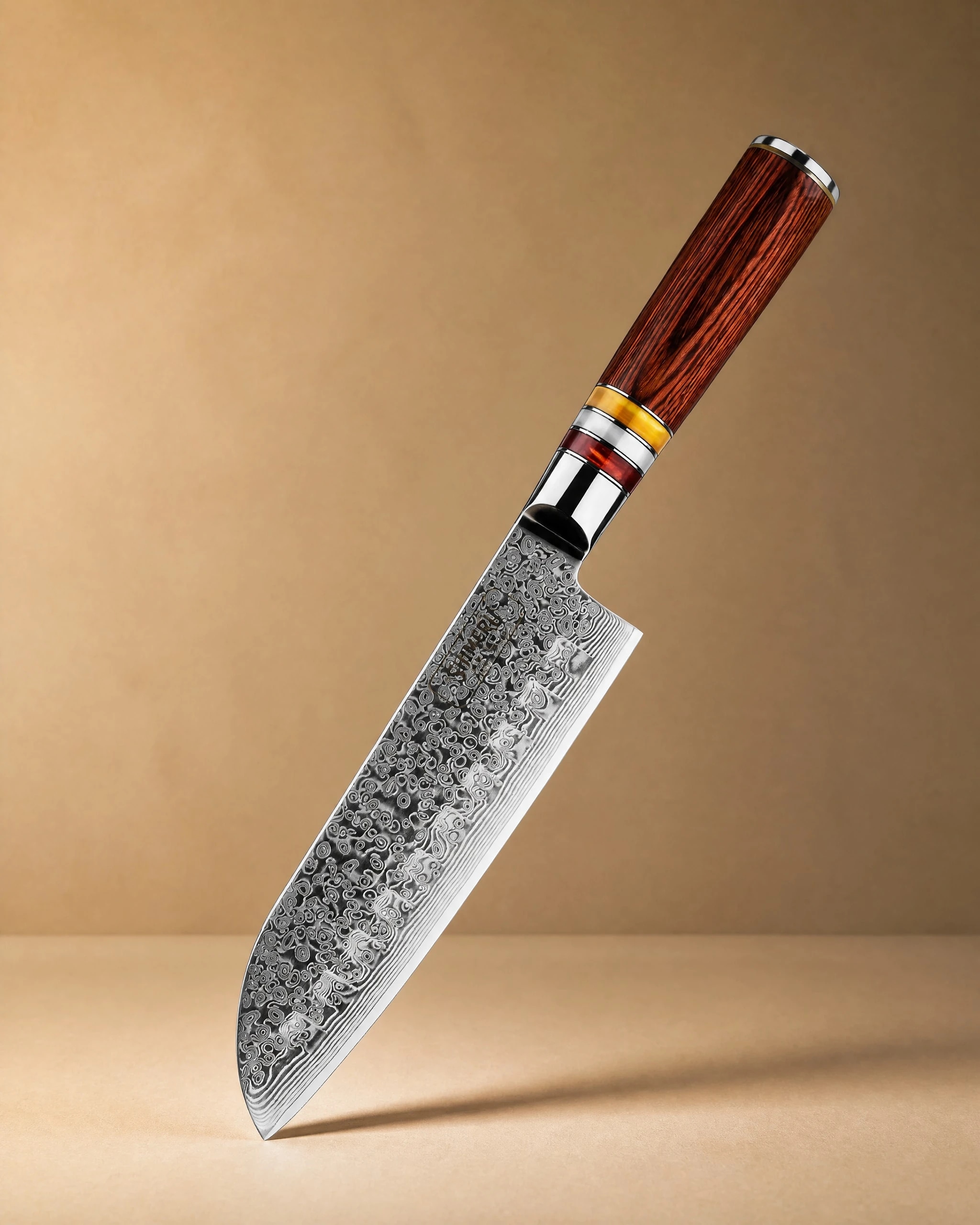 Hikari 光 7" Damacus Steel Professional Santoku Knife 三徳包丁£79.99View product → uses a pakka wood handle, which is a laminated material rather than a solid timber, so it stays stable and is forgiving of the occasional missed wipe down. A sensible choice for a busy kitchen where the knife will be used hard and washed often.
You can compare them side by side in our santoku collection, or browse everything we sell at the shop.
Honest limitations
A santoku is not a cleaver. Do not take it through bones, frozen food or a tough squash with a heavy downward chop. The blade is thin behind the edge and hard, which is exactly what makes it cut so well, and hard steel chips rather than bends when abused.
The tip is also not built for delicate work in the way a paring knife is. If you spend a lot of time on shallots and garlic cloves, a small knife alongside it will earn its place. And a blade with hollows ground into the face should not be treated to a honing steel in the way a flat one can be; wash it, wipe it, dry it, and leave it out of the sink.
Handles, balance and the hand you actually have
The handle is where most of the daily difference lives. Timber will darken and take on character over the years. Pakka wood will stay closer to how it looked on day one. Neither is better; they suit different temperaments, and both will last decades if you keep them dry and oil them occasionally.
Balance matters more than most people expect. A santoku should feel as though the weight sits just in front of your first finger, so the blade does the work rather than your wrist. If you can hold the knife before you commit, do. If you cannot, buy from a seller who accepts returns and judge it on a real onion, not on how it looks in a photograph.
Keeping it sharp
A hard, thin Japanese blade wants a whetstone rather than a pull through sharpener, and it wants a light touch. Two or three passes on a fine stone every few weeks, plus regular stropping on leather, will keep a santoku working beautifully for years. Our knife care guide covers angles, stone grits and the habits that do the most damage, including the two that ruin more Japanese knives than anything else: the dishwasher and the cutlery drawer.
Store it on a magnetic strip or in a saya, keep anything harder than the blade off the board, and it will hold an edge far longer than the average supermarket knife ever does.
So which should you buy
There is no single right answer, but the decision is usually straightforward once you are honest about how you cook.
- Replacing a tired chef knife and cooking mostly vegetables, fish and smaller cuts: a santoku will do the job with less effort and more control.
- Cooking centred on large roasts and big batches of soup: keep the long knife and add a santoku for prep.
- Starting from nothing: the santoku is the more forgiving first purchase, because the shorter blade and taller profile teach you to guide with your knuckles rather than force with your wrist.
Whichever you choose, buy one good knife and learn to sharpen it properly. That single decision will change your cooking more than any set of six.
Photography: Sergey Kotenev via Unsplash.


