











Best Chopping Board Sets for Organised Kitchens

Why a set beats a single board
Most kitchens start with one board. It gets used for onions, then chicken, then bread, then a quick wipe and back into the cupboard. It works, until it does not. A single board means cross contamination risk, lingering flavours, and a surface that never quite dries. A set solves these problems by giving each job its own surface, and it makes cooking faster because you are not stopping to wash up halfway through a recipe.
A good set is not about owning five boards. It is about owning the right two or three, in sizes and materials that suit your knives and your worktop. This guide covers what to look for, how to match boards to blades, and where the best chopping board set for most UK kitchens sits in terms of material and upkeep.
What a chopping board set actually needs
Three boards is the sweet spot. Fewer and you will still be washing mid-recipe. More and you run out of storage. The three roles are straightforward:
- A large primary board for vegetables, herbs and general prep. Roughly 40cm by 30cm, thick enough not to slide or bow.
- A medium board for fruit, small prep and quick jobs, so you are not dragging out the big one for a lemon.
- A separate raw meat or fish board, ideally in a different colour so nobody has to guess which is which.
That is the core set. Anything beyond it, such as a small cheese or serving board, is a nice extra rather than a necessity.
Materials: what each one does well
End grain and edge grain wood
Wood is the kindest surface for a sharp knife. The fibres give slightly under the edge, which means less rolling and fewer micro chips than you get on glass or hard composite. End grain boards, where the fibres face upwards, are the gentlest of all and tend to hide cut marks well. They are also the heaviest and the most expensive, and they need oiling.
Edge grain boards are cheaper, lighter and still very good. Maple, beech, oak and acacia are all common. Acacia is dense and inexpensive, though it is a little harder on edges than maple.
Bamboo
Bamboo is a grass, not a wood, and it is pressed with resin into a hard sheet. It is sustainable, cheap and easy to clean. The trade off is hardness: bamboo can dull an edge faster than a good hardwood board, and thin bamboo boards warp if they get soaked. Thick, well made bamboo is fine for vegetables and general prep.
Plastic and composite
Plastic boards are light, cheap, dishwasher safe and hygienic when new. They scratch over time, and those scratches hold on to bacteria and stains, so they have a shorter working life. Look for thicker boards with a slight texture, and replace them once the surface is heavily scored. Composite boards, usually wood fibre bonded with resin, sit between wood and plastic: reasonably kind to edges, dishwasher friendly and more stable than thin plastic.
What to avoid
Glass and very hard stone boards look smart and are terrible for knives. They will roll or chip an edge within a few uses. If you own one, keep it for serving only.

Matching boards to your knives
Board choice and knife choice are linked. A hard, unforgiving surface and a thin, hard edge are a poor pairing, because the board wins every argument.
If you have invested in a Damascus gyuto such as the 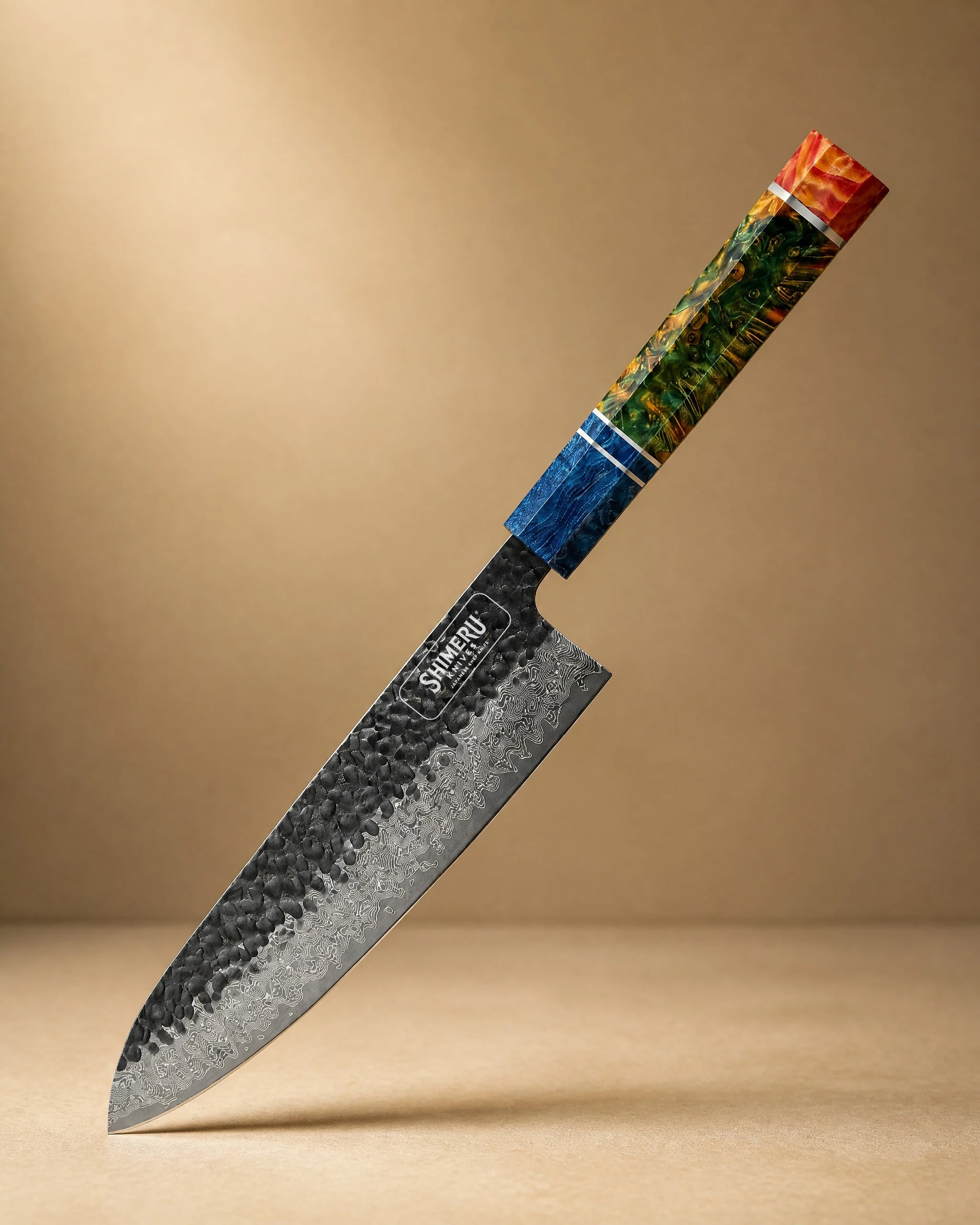 Yoshii 8″ Damascus Steel Gyuto Knife 牛刀£79.99View product →, a wooden board is the sensible partner and will keep that finish looking its best. Something more forgiving in stainless steel, like the
 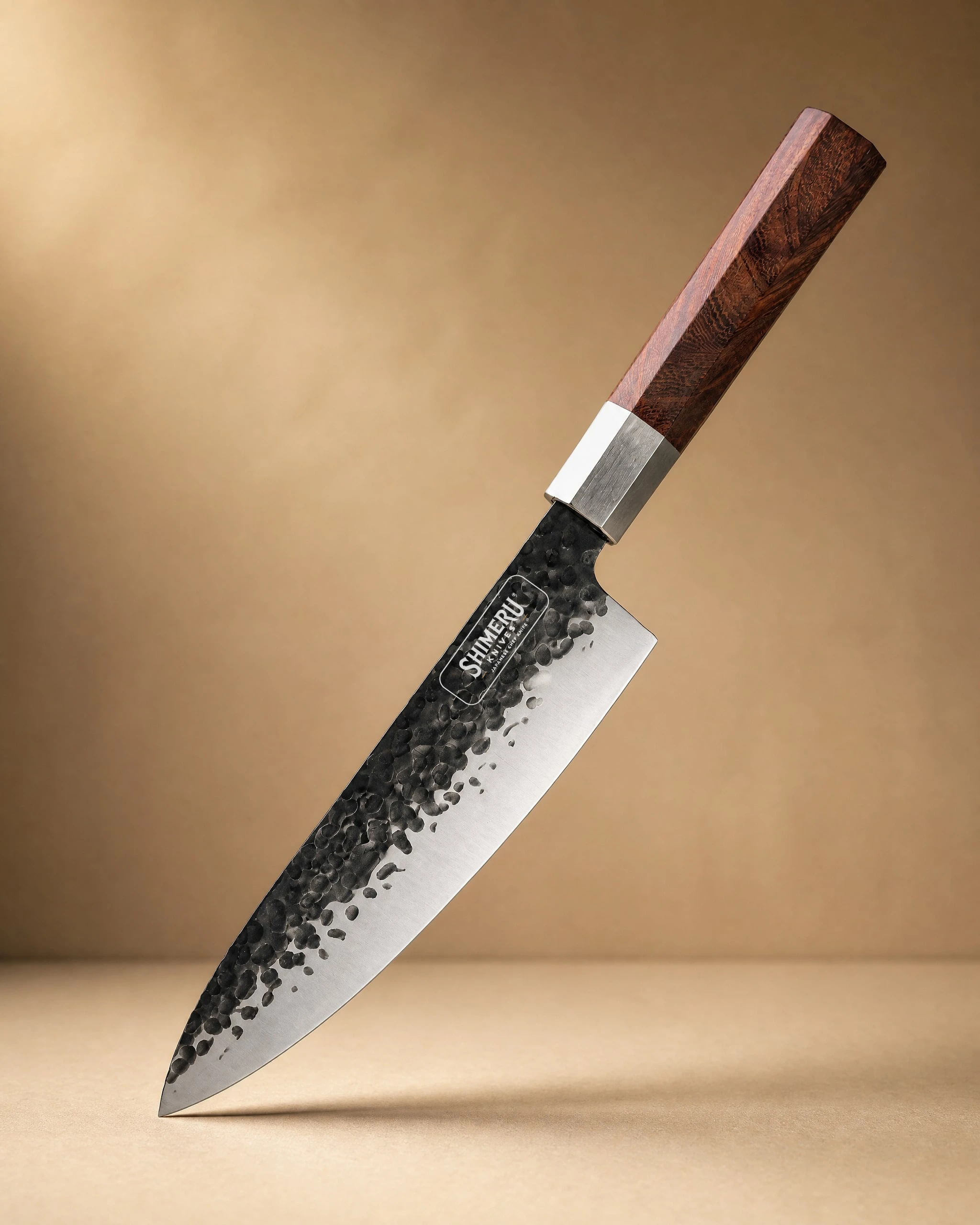 Sendai 8" Steel Gyuto Knife 牛刀£49.99View product →, is happy on wood, bamboo or a good composite and will take everyday use in its stride. If meat prep is a big part of your week, the
 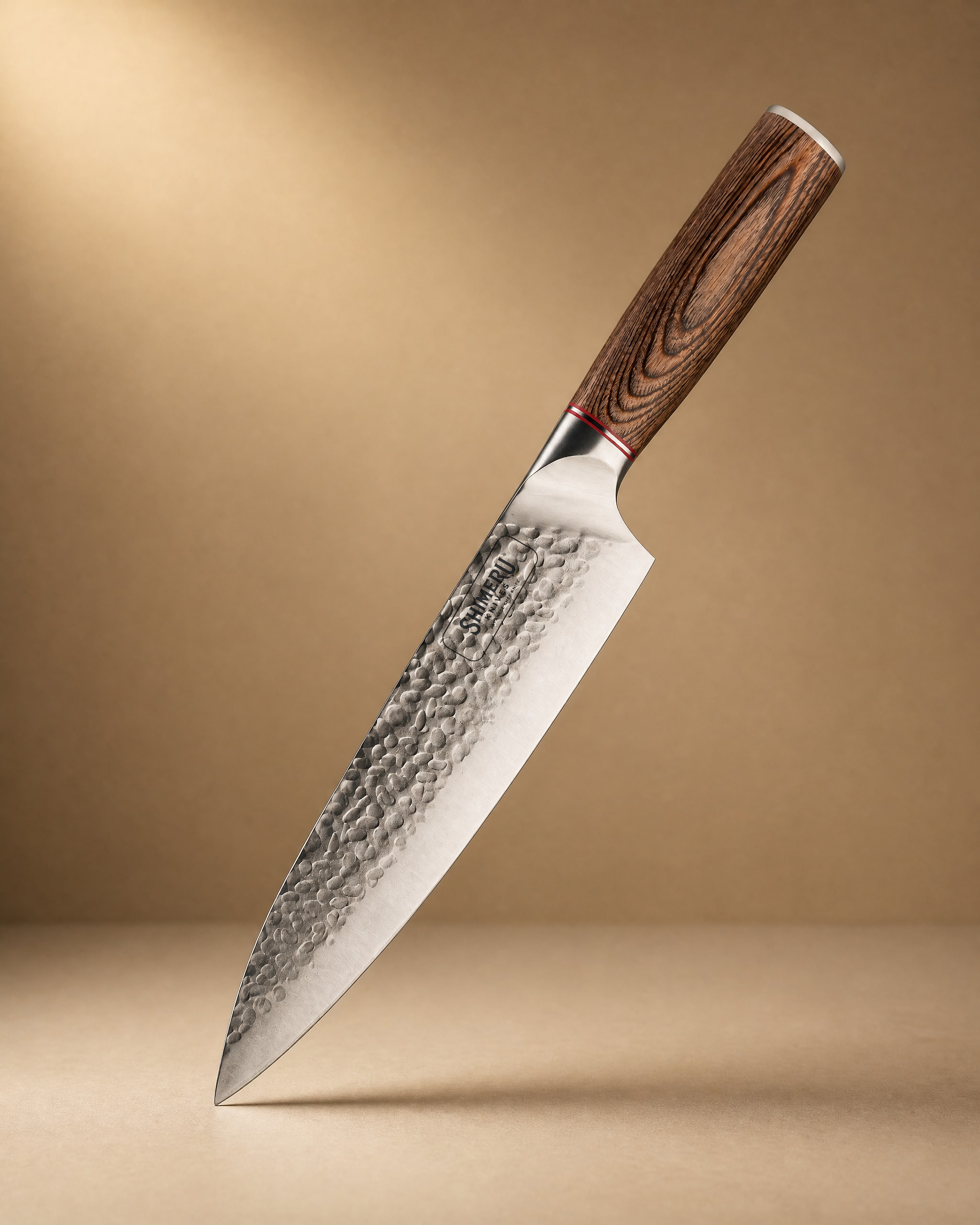 Akan 8'' Gyuto Knife 牛刀£49.99View product → pairs naturally with a dedicated protein board in a distinct colour, which keeps raw juices away from the surfaces you use for salad and fruit. And if you break down larger cuts or batch cook, the
 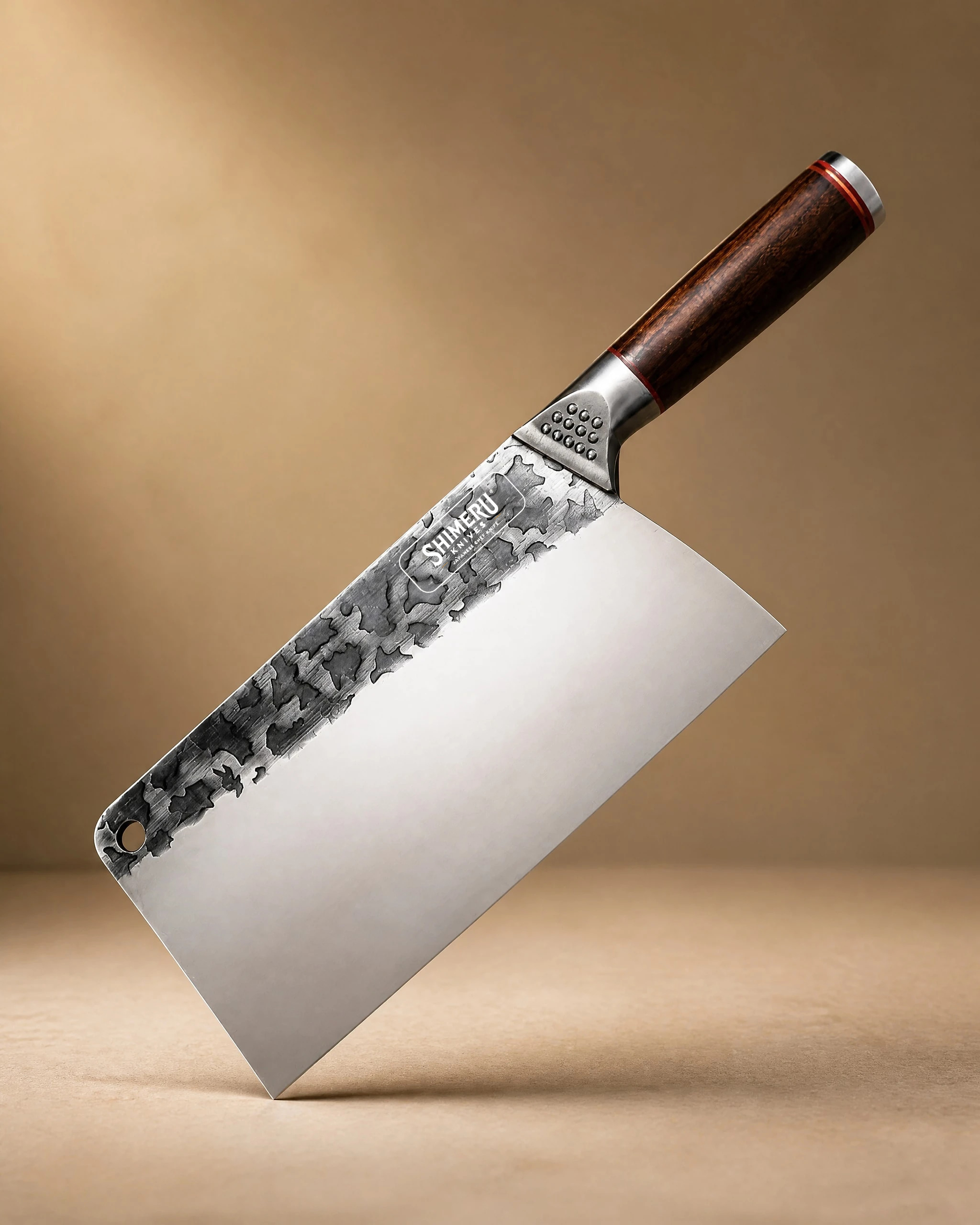 Saba 7" Stainless Steel Cleaver 中華包丁£44.99View product → cleaver wants a thick, heavy board that will not shift under a firm chop. Rubber feet, or simply a damp tea towel underneath, make a real difference here.
If you are still deciding on the blade itself, our knife guide walks through shapes and lengths before you commit.
Size, thickness and grip
Bigger is not automatically better. A board has to fit your sink and your worktop. Measure your worktop first. A board that overhangs the edge is unstable, and a board that will not sit flat in the sink is a board you will avoid washing.
Thickness matters more than most people expect. A 3cm to 4cm board feels solid, stays put and gives you clearance for chopping. Boards under about 1.5cm flex, slide and can warp. If you like a juice groove, remember that the groove reduces usable surface, so buy slightly larger than you otherwise would.
Grip is the quiet hero of a good set. Look for rubber feet, silicone corners, or simply a board heavy enough to stay put. Any board that walks across the worktop while you are chopping is a safety problem, not just an annoyance.
Colour coding and food safety
Colour coded sets exist for a reason. The usual convention is red for raw meat, blue for raw fish, green for vegetables and fruit, yellow for cooked meats, white for dairy and bread. You do not need to follow it rigidly, but having one board that is only ever used for raw meat is a genuinely useful rule.
Hygiene is about more than colour. Wood has natural antibacterial properties, and contrary to older advice, a well maintained wooden board is perfectly safe at home as long as you clean and dry it properly. Plastic is easy to sanitise but holds bacteria in deep scratches. Either way the routine is the same: hot soapy water, dry thoroughly, and never leave a board sitting wet.
Care: keeping a set in good condition
Wooden boards need oiling. Once a month is plenty for most homes, more often if the board looks dry or pale. Use a food safe mineral oil or a dedicated board butter, apply a thin coat, leave it overnight, then wipe off the excess. Do not soak wooden boards, do not put them in the dishwasher, and do not leave them drying upright against a radiator.
Plastic and composite boards can usually go in the dishwasher, although heat and harsh detergents will shorten their life. Check the maker's instructions rather than assuming.
Knife care and board care overlap more than people realise. A board that is scrubbed with an abrasive pad, left wet, or used as a chopping block for frozen food will damage both the board and the edge. Our knife care guide covers the sharpening, honing and storage side of the same routine.
How many boards do you actually need?
For one person, or a couple who cook most days, two boards will do: a large wooden board for vegetables and general prep, plus a smaller plastic or composite board for raw meat and fish. For a family kitchen with more than one cook, three or four boards reduce washing up and reduce arguments. A set with a stand or a rack keeps them tidy and lets them dry properly, which matters more than it sounds.
If you are buying a set as a gift, a three piece set in mixed materials is the safest choice. It covers the jobs, it looks considered, and it does not commit the recipient to a single material they may not get on with.
Choosing well: a short checklist
Before you buy, run through the practical questions. Does it fit your worktop and your sink? Is the largest board big enough for a pile of chopped onions and a whole chicken? Is the smallest board light enough to grab for a quick job? Are the materials kind to your knives?
Then think about the long term. A board is a consumable, and even a good one will eventually need replacing. Buying slightly better than you think you need usually works out cheaper over five years than replacing a warped, scored board every eighteen months.
You can browse our chopping boards by material and size, or see the full range of kitchen knives and accessories if you are putting a kit together from scratch.
Final thoughts
The best chopping board set is the one that matches how you actually cook, not the one with the most pieces. Two or three well chosen boards, in materials that suit your knives, will do more for your cooking than a stack of cheap ones in six colours. Pair them with a sharp knife, keep both clean and dry, and the whole rhythm of preparing a meal gets quicker and calmer.
Photography: Sergey Kotenev via Unsplash.


