




Naniwa Whetstones: A UK Buyer's Guide

Why Naniwa Whetstones Have a Following in the UK
Naniwa has been making sharpening stones in Japan for a long time, and in the UK it has become one of the few names that comes up whenever somebody asks about moving past a basic oil stone or a cheap combination waterstone. The reason is not hype. It is consistency. A Naniwa stone of a given grit behaves the same way from one purchase to the next, cuts at a predictable rate, and holds its shape well enough that you are not stopping every five minutes to flatten it.
That predictability is what you are paying for. A knife sharpened on a stone that dishes unevenly will get an uneven edge, and chasing that edge across a badly worn stone is one of the fastest ways to lose interest in sharpening altogether. If you are new to this, read our knife care guide first and then come back. The stone matters, but technique matters more.
What Naniwa Actually Makes
The Naniwa range looks larger than it is, because several names refer to stones that have been renamed over the years. The Professional series, which older stock and much of the second hand market still labels Chosera, is the line most people mean when they say naniwa whetstone. It is a hard, dense ceramic stone with a smooth feel and a quick cut, and it is the benchmark most other Japanese waterstones get measured against.
The Naniwa Sharpening Stone series, sold for years as the Super Stone, is softer and more forgiving. It feels creamier under the blade, behaves well on stainless steel, and is a gentler introduction for anyone who has never sharpened on a waterstone before. It wears faster than a Professional, and that is the trade off.
Below those sit the Traditional stones and the various combination stones. They need longer soaking, they dish more quickly, and they reward good technique rather than quietly covering for bad technique. There is nothing wrong with them. They simply suit somebody who already knows what a burr feels like.
Naniwa and Bester: Two Japanese Names, One Confusion
Bester whetstones turn up in the same conversations as Naniwa and are often assumed to be the same thing. They are not. Bester is a separate Japanese line, generally sold as straightforward, workmanlike waterstones rather than premium ceramics. In the UK, Bester is most commonly seen as a combination stone, usually a coarser side paired with a finer side, which makes it a sensible single purchase for somebody who wants one stone doing two jobs.
The practical difference is feel and speed rather than whether the job gets done at all. A Bester stone will sharpen a kitchen knife perfectly well, and plenty of people sharpen on nothing else. What it will not give you is the same feedback through the blade, the same crisp sense of a burr forming, or the same long term flatness that a Naniwa Professional holds. If you sharpen once a month, that gap barely matters. If you sharpen weekly, or you work through a drawer of knives for other people, it matters a great deal.
Bester whetstone UK stock is less predictable than Naniwa stock, so it pays to check what is genuinely available rather than planning around a specific model. Both brands are worth owning. They just sit at different points on the same scale.
Grit Progression: What You Actually Need
Most people overbuy grits. A kitchen knife does not need a seven stone progression, and buying one before you can hold a consistent angle simply gives you seven stones to flatten. Three grits cover almost everything a home cook will ever do.
- Coarse, roughly 220 to 400. For repairing chips, resetting a badly dulled bevel, or thinning behind the edge. Used rarely, but when you need it you really need it.
- Medium, roughly 800 to 1,000. The workhorse. If you own one waterstone, this is the grit it should be.
- Fine, 3,000 and above. Refinement rather than sharpening. It polishes the edge and improves how cleanly the knife moves through protein and soft vegetables.
A 1,000 grit stone and a 3,000 grit stone will keep a Japanese or Western kitchen knife in good order indefinitely. Add a coarse stone later, if and when you need one.
Choosing Your First Naniwa Stone
If you are buying a single stone, buy a medium one. A 1,000 grit Naniwa Professional is fast enough to bring back a dull edge in a couple of minutes and fine enough to leave a working edge that slices well. It is the stone most people should start with, and the stone most people keep coming back to.
If you sharpen stainless steel, particularly the softer stainless found on everyday blades, the softer Naniwa Sharpening Stone series is easier to live with. Something like the 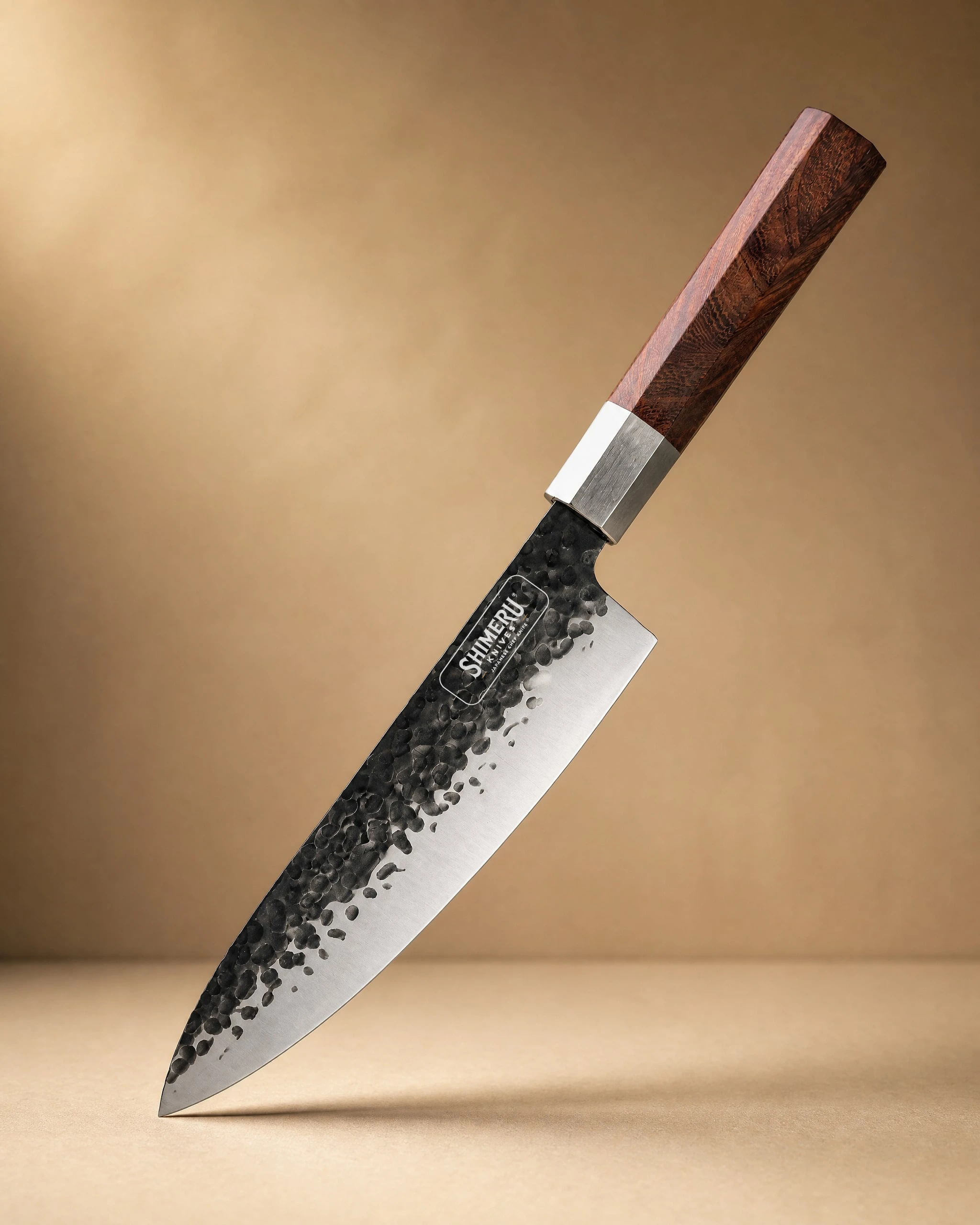 Sendai 8" Steel Gyuto Knife 牛刀£49.99View product → is exactly the kind of knife that suits it: an 8 inch stainless gyuto with a Mkuruti wood handle, used for vegetables, herbs, meat and fish, and sharpened often rather than occasionally. A softer stone cuts that steel quickly and does not glaze over.
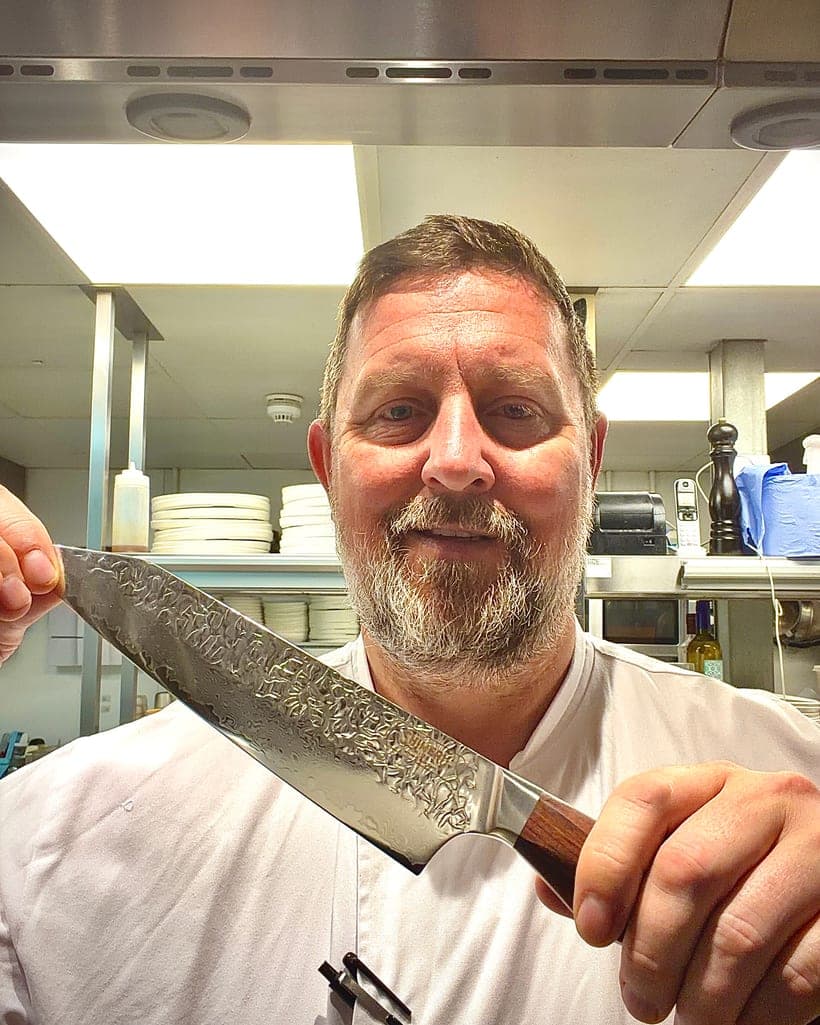
If you sharpen harder or thinner blades, or you want a polished finish, choose the harder Professional series in the same grit and add a finishing stone above it. A knife like the 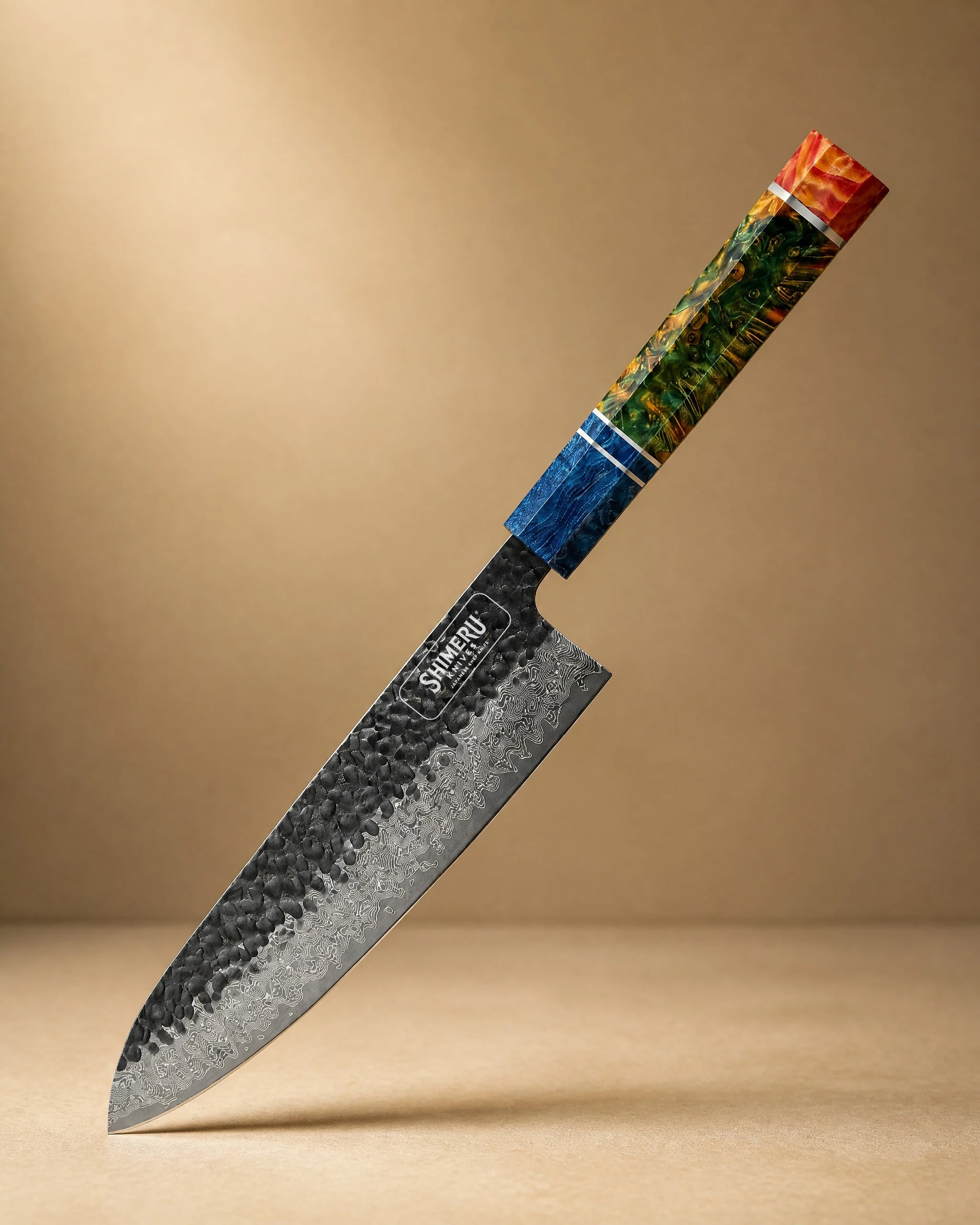 Yoshii 8″ Damascus Steel Gyuto Knife 牛刀£79.99View product → takes a refined edge beautifully, and the 67 layer Damascus steel on that blade is a reminder that a good knife deserves a stone that will not leave a coarse, ragged edge behind.
Where Cleavers and Heavier Blades Change the Plan
Chinese style cleavers and heavy knives put different demands on a stone. They are used with more force and more contact with board and bone, so they chip more often than a gyuto does. That makes a coarse stone a genuine necessity rather than a luxury.
A 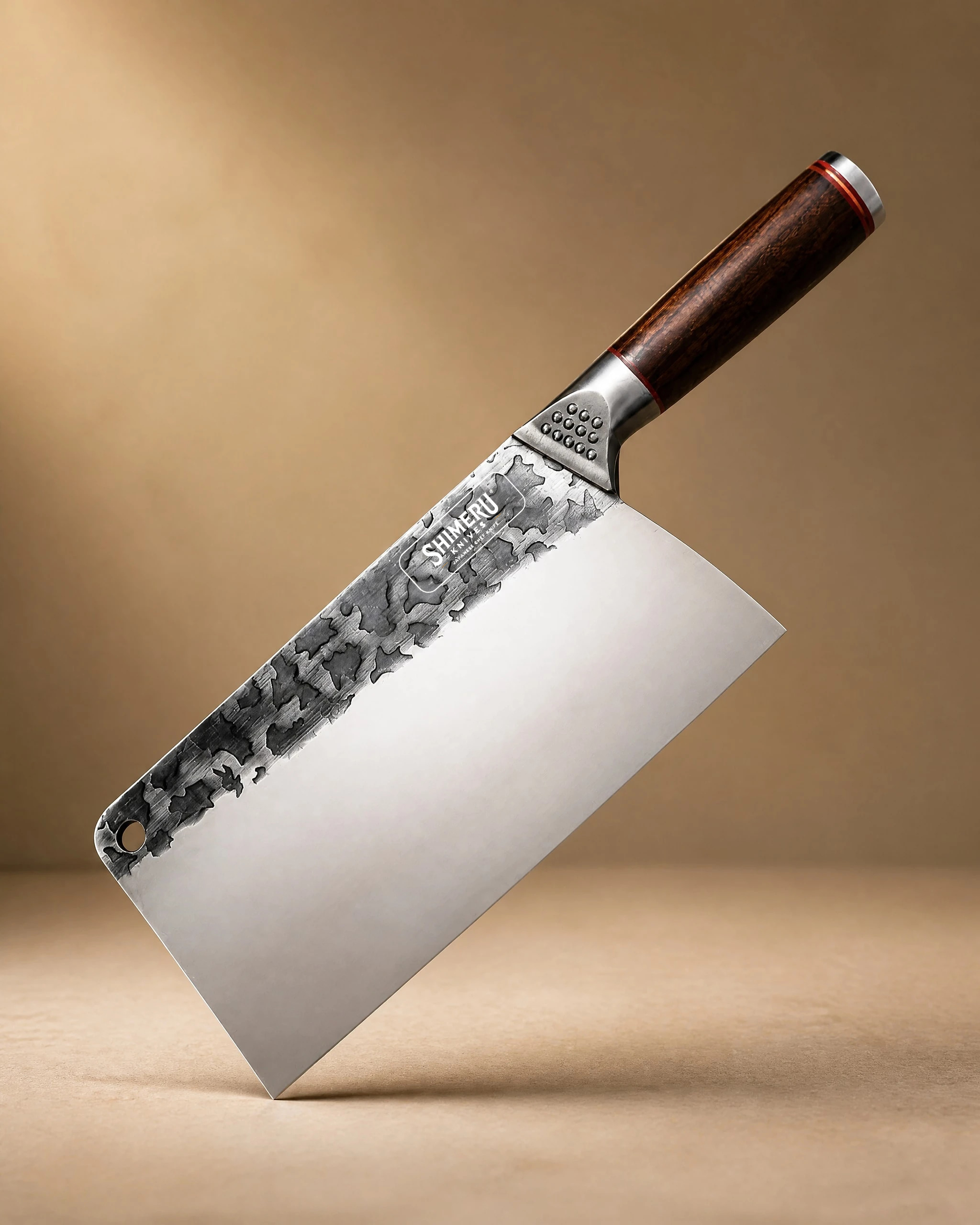 Saba 7" Stainless Steel Cleaver 中華包丁£44.99View product → or a
 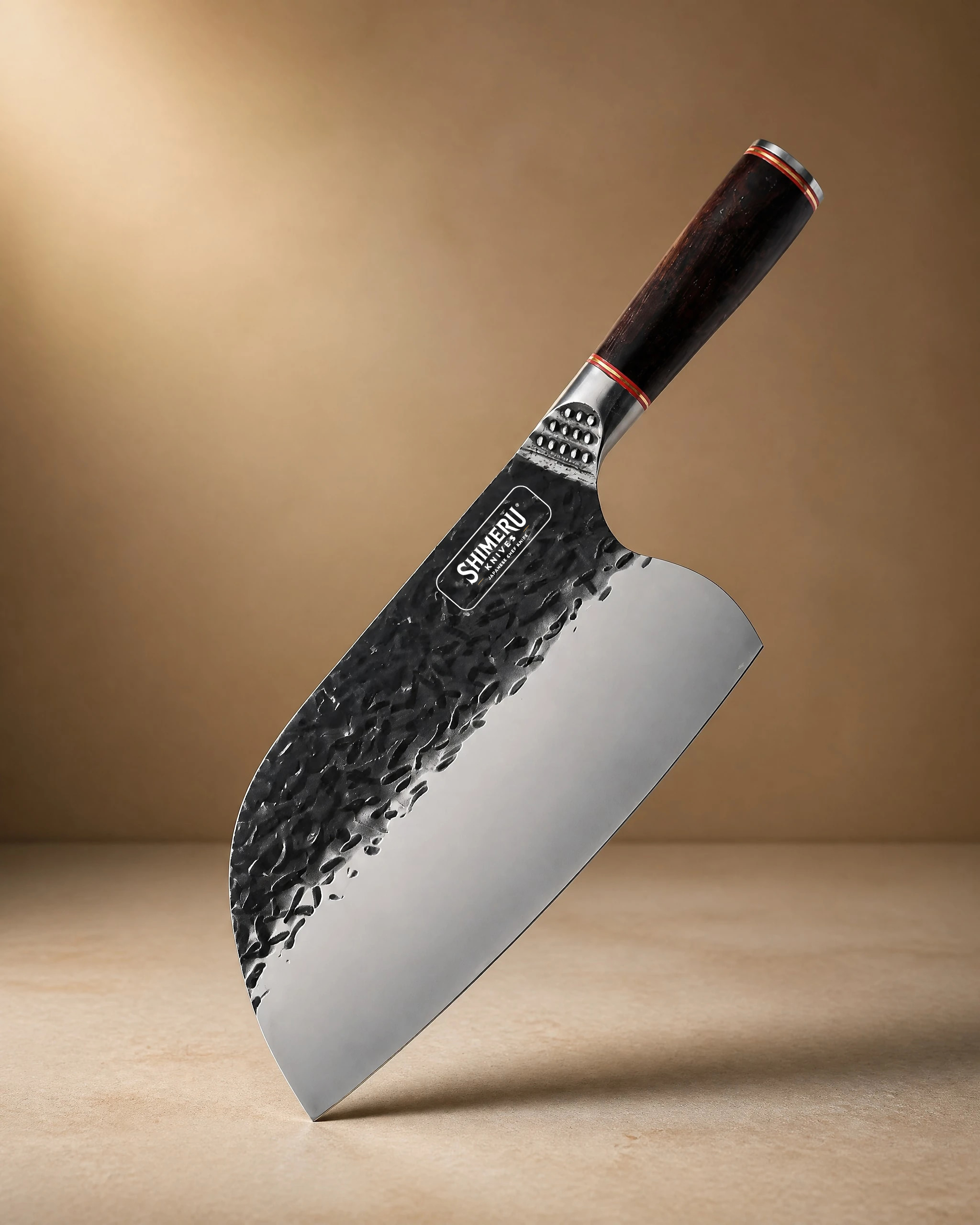 Toyo 7" Stainless Steel Cleaver 中華包丁£49.99View product → is a case in point. Both are Japanese stainless steel cleavers with hardwood handles, and both do a lot of chopping, slicing and dicing. When a cleaver like that picks up a chip, you need something in the 220 to 400 range to grind the bevel back flat before you touch a medium stone. Trying to fix a chip on a 1,000 grit stone takes an hour and wears a hollow in the middle of your stone. Doing it on a coarse stone takes ten minutes.
Keep the medium and fine stones for finishing work and a cleaver will stay in service for years.
Soaking, Splash and Go, and Storage
Naniwa lines differ in how they want to be used. Some are intended as splash and go, where a quick wetting of the surface is enough. Others are soakers and want ten to fifteen minutes in water before the surface stops drinking it in. Follow whatever the specific stone says, because using a splash and go stone as a permanent soaker can shorten its life, and using a soaker dry will glaze the surface and stop it cutting.
Storage matters more than most people expect, and it is where British conditions cause trouble. Stones that stay damp and then freeze will crack, so a cold garage or unheated shed is a poor home for them in January. Dry them slowly at room temperature, away from radiators, and store them somewhere that stays above freezing.
Hard water areas deserve a mention too. Mineral deposits can build on the surface of a stone over time and reduce how well it cuts. Rinsing and drying after each session, rather than leaving the stone sitting in a puddle, keeps that under control.
Flattening, and Why It Is Not Optional
Every waterstone dishes. The middle wears faster than the edges because that is where the blade spends most of its time, and a dished stone cannot produce a flat bevel. A diamond flattening plate is the simplest fix, and a flat offcut of granite or glass with wet and dry paper works if you are on a budget.
Check flatness with a steel rule every few sessions. Lay it across the stone and look for daylight underneath. If you can see light in the middle, flatten it before you sharpen again. Doing this little and often takes two minutes. Leaving it for six months takes far longer and wastes a lot of stone.
Where to Start
Buy a medium stone first, learn to raise a burr along the whole edge, and only then add grits. If you are still working out which knife the stone is for, our guide to choosing a knife is a good place to begin, and you can browse the full range of knives and tools we keep in stock. Stones and sharpeners specifically are listed under sharpeners.
A good stone is a tool you will use for a decade or more. Choose one grit range above what you think you need, learn it properly, and it will outlast several knives.
Photography: Emma Ou via Unsplash.


