

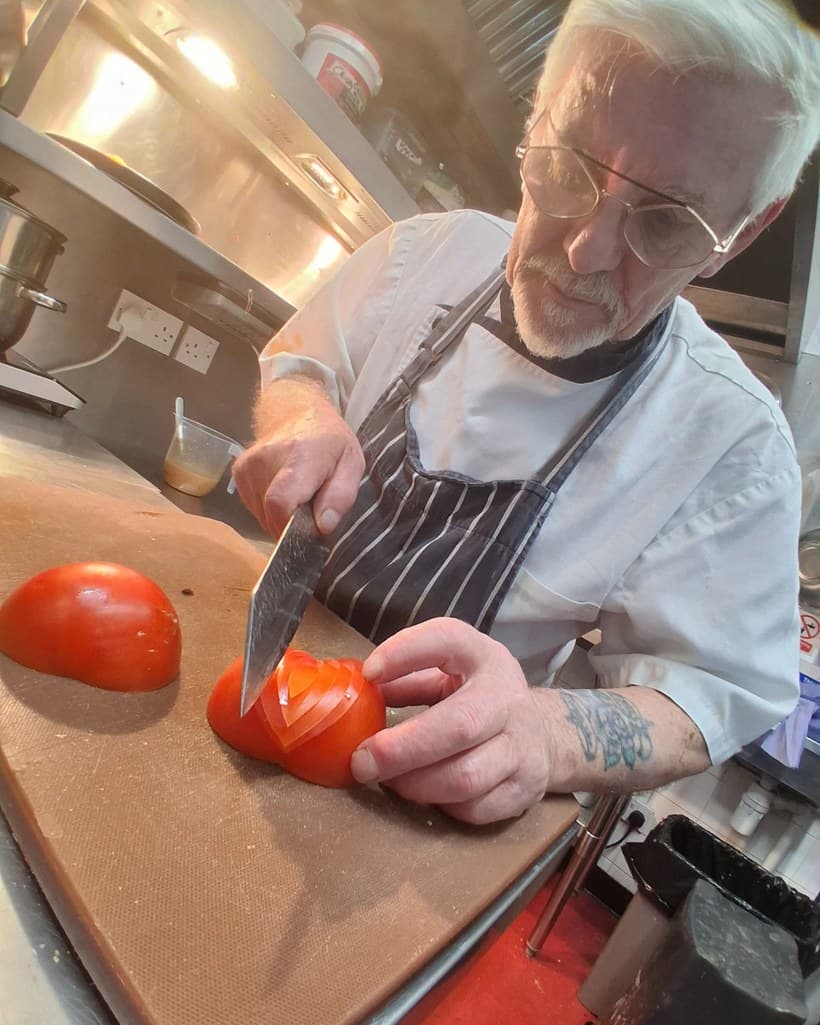
Damascus Santoku Knives: Beauty and Performance

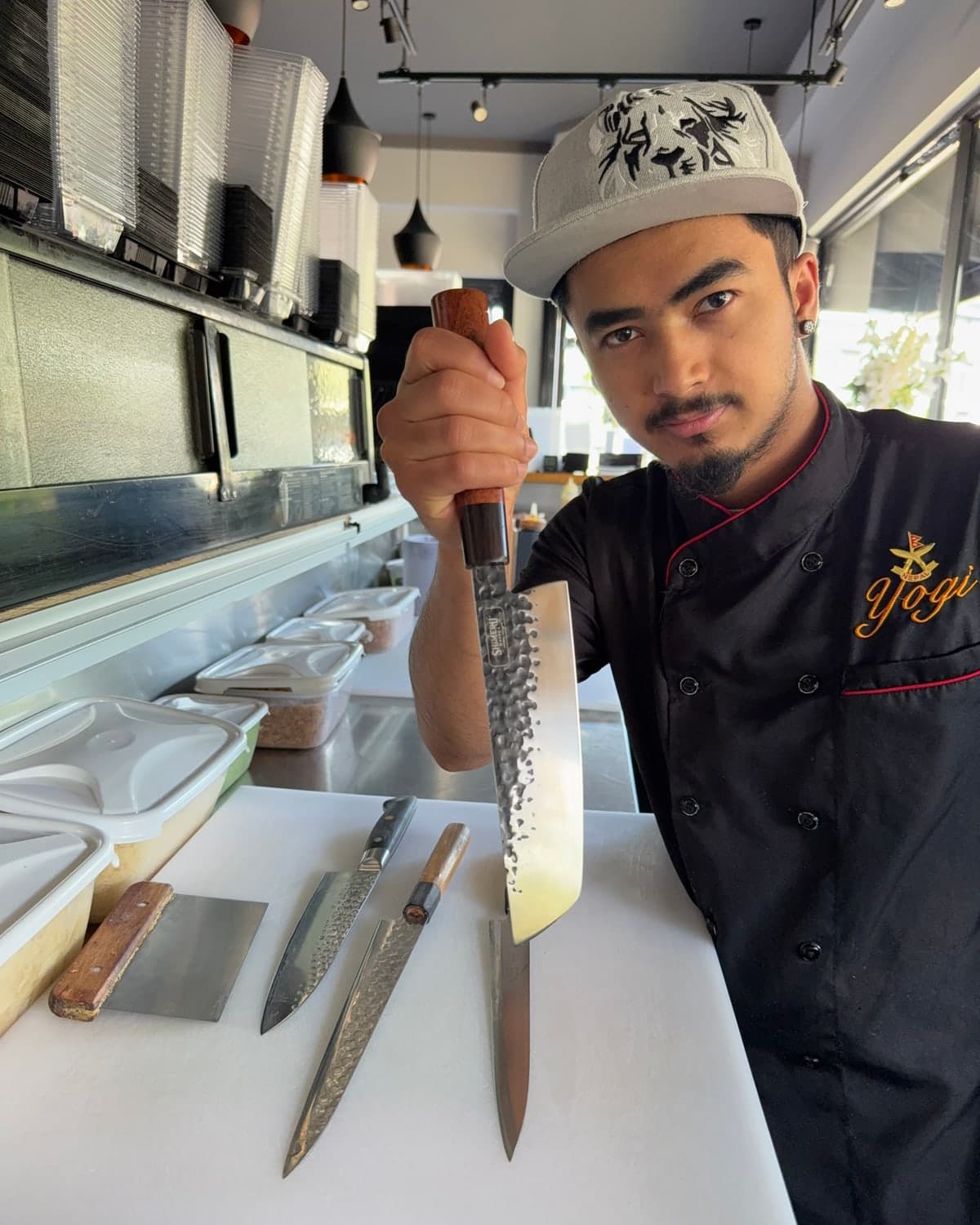
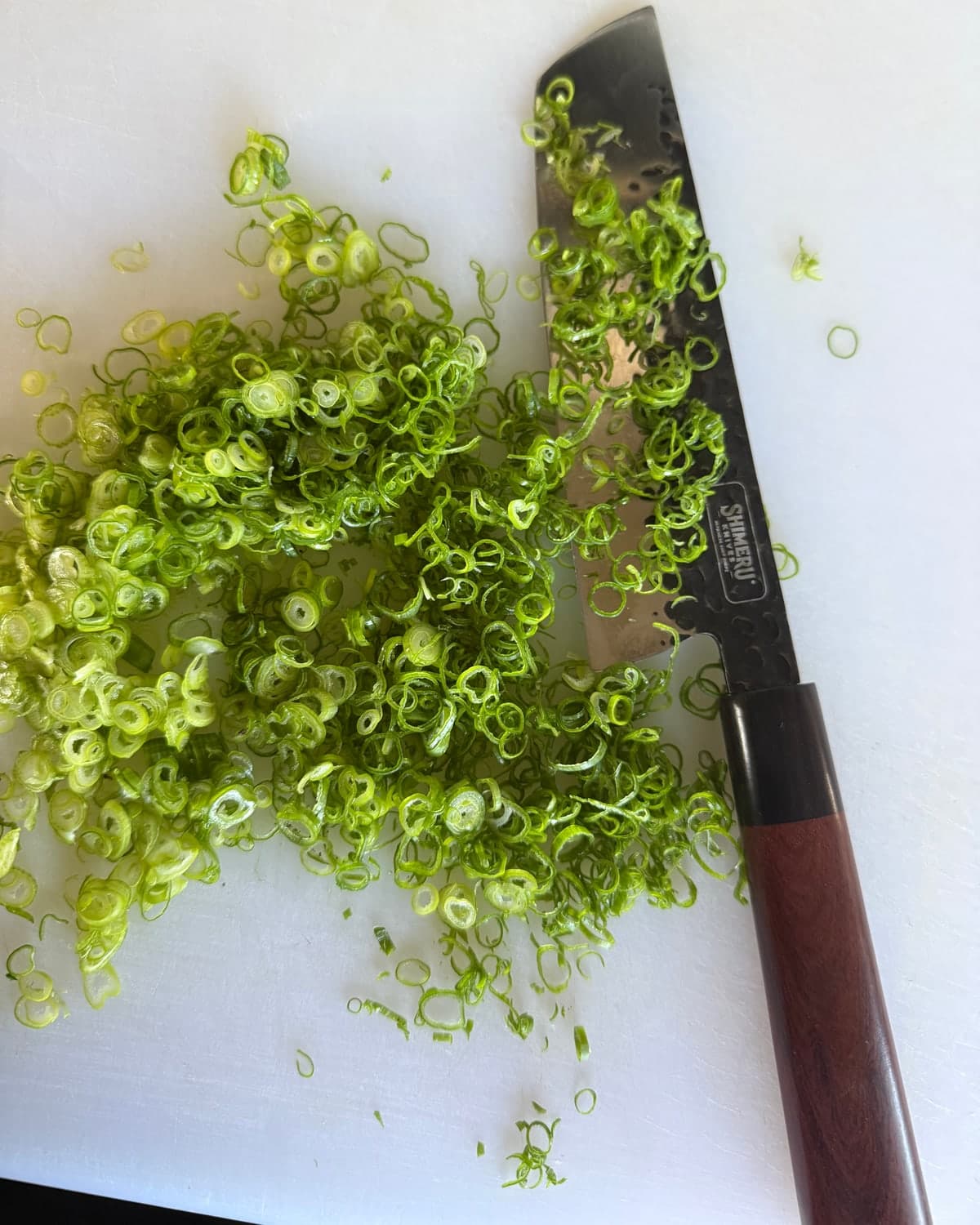
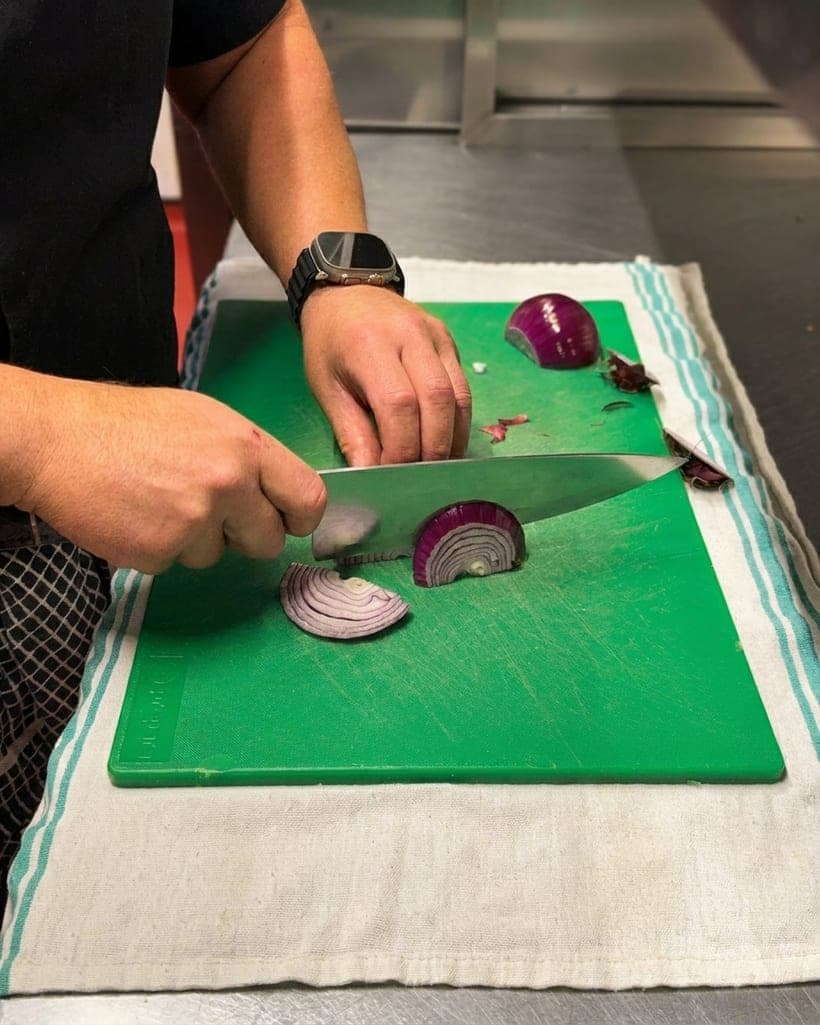
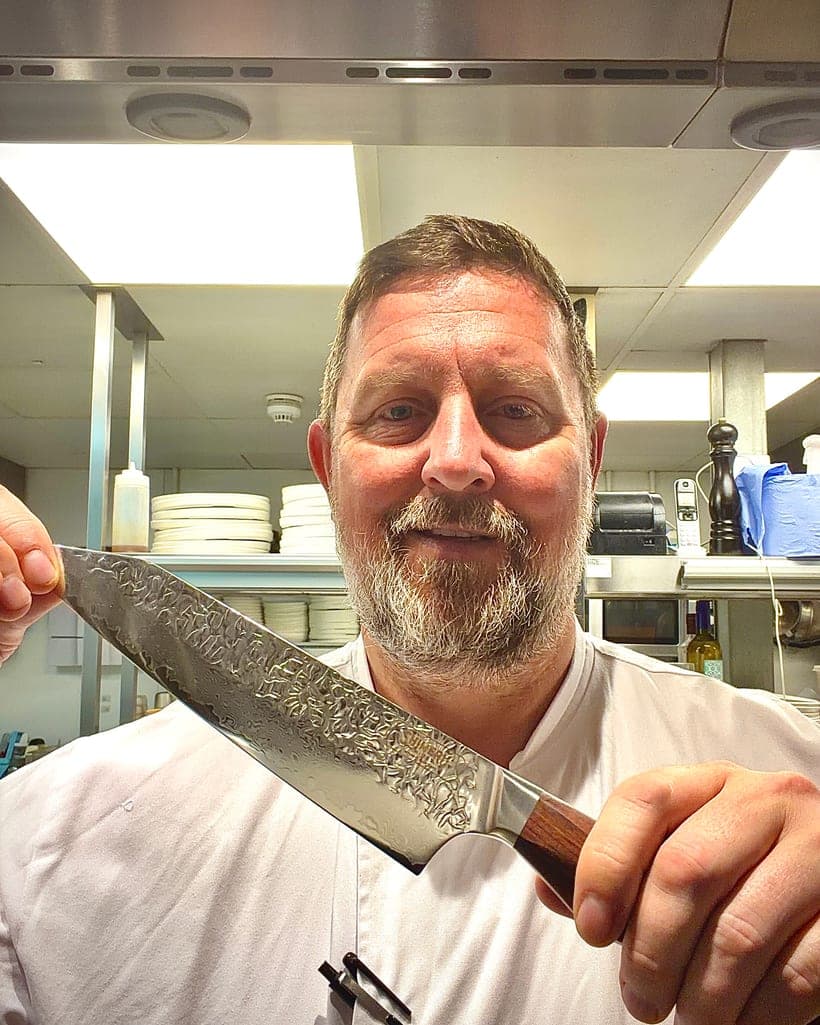
A Damascus santoku is one of those knives that people notice before they use it. The layered pattern catches the light, the broad blade sits flat on the board, and then you cut an onion and realise the looks were never the main point. If you are shopping for a damascus santoku knife, the useful question is not whether it looks good. It is whether the steel, the grind and the handle suit the way you actually cook.
This piece explains what the Damascus cladding on these knives is, why the santoku profile works so well in a British kitchen, and how the four Damascus santoku knives we stock differ from one another. No hype and no invented claims, just the details that matter when you are deciding where to spend your money.
What Damascus steel actually means on a kitchen knife
The word Damascus carries a lot of romance and a fair amount of confusion. On a modern Japanese kitchen knife, Damascus almost always refers to the cladding, not the cutting edge. A hard core steel, VG10 or AUS10 in the knives below, is forged between layers of softer steel that are folded and pressed to create the visible pattern. The core does the cutting. The outer layers protect it, add stiffness and give the blade its character.
This matters because some buyers assume the pattern runs all the way through the edge. It does not, and it does not need to. What you want from a Damascus santoku is a core that holds a fine edge, cladding that protects that core, and a grind that moves cleanly through food. The pattern is a genuinely lovely side effect of a sound construction method.
Why the santoku shape earns its place
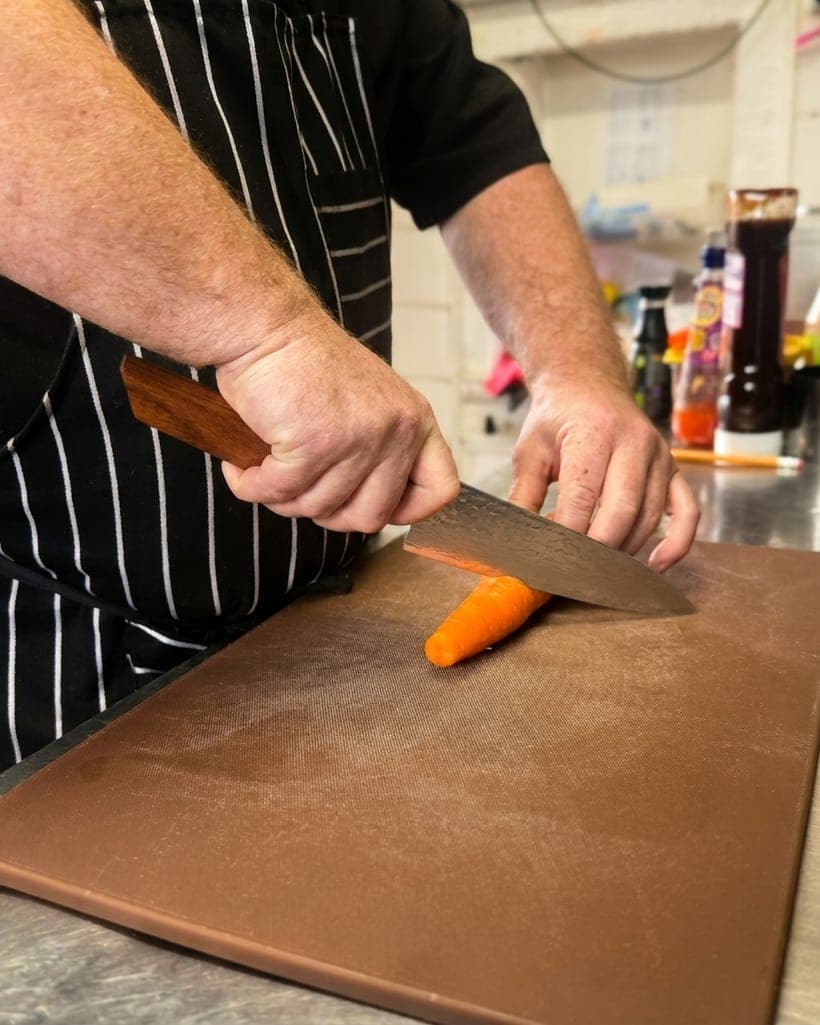
Santoku translates roughly as three virtues, and the name refers to its competence with meat, fish and vegetables. The blade is shorter than a Western chef's knife at around seven inches, the spine drops towards the tip, and the edge has a gentle curve rather than a pronounced belly. The result is a knife that feels quick in the hand and forgiving on a modest worktop.
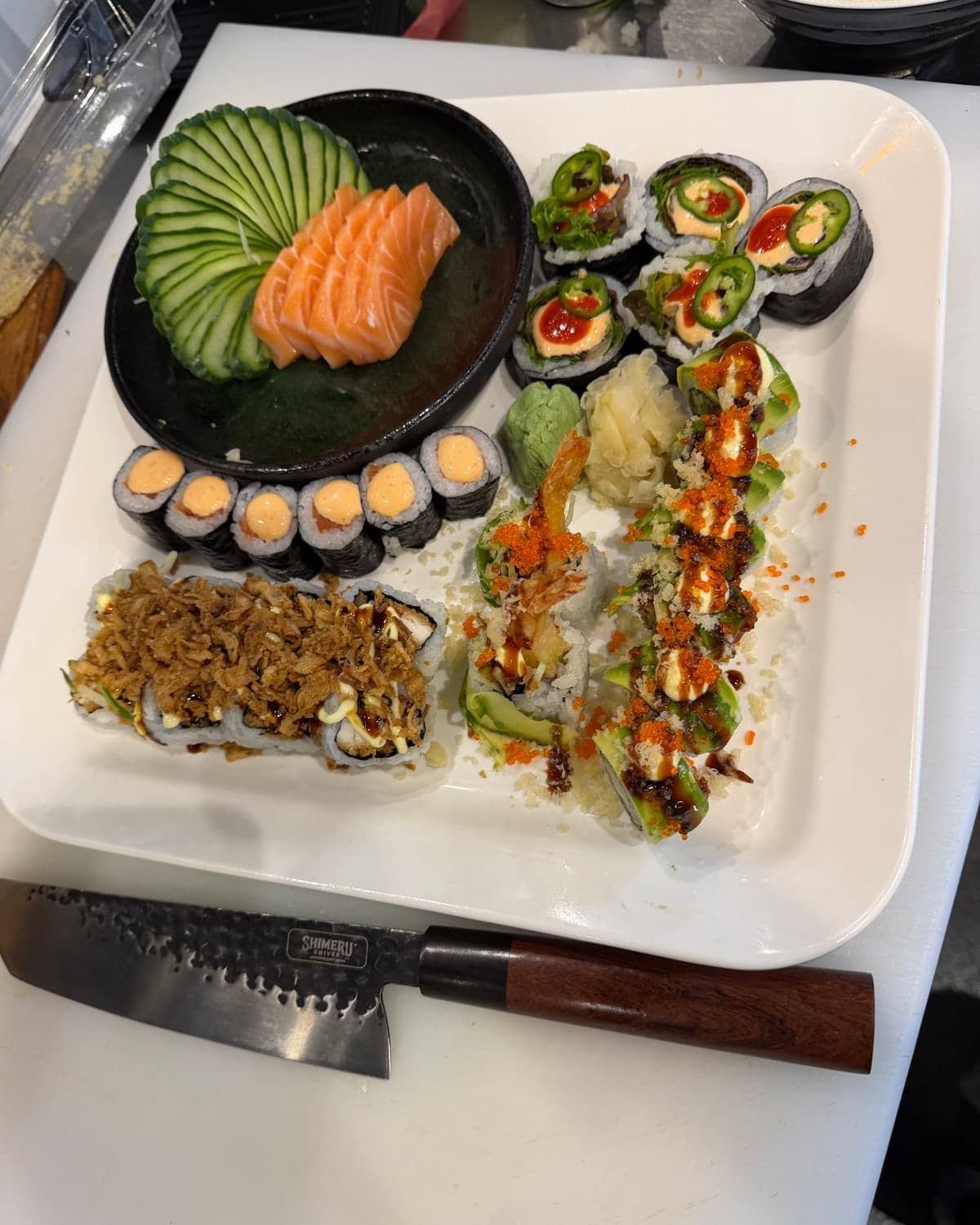
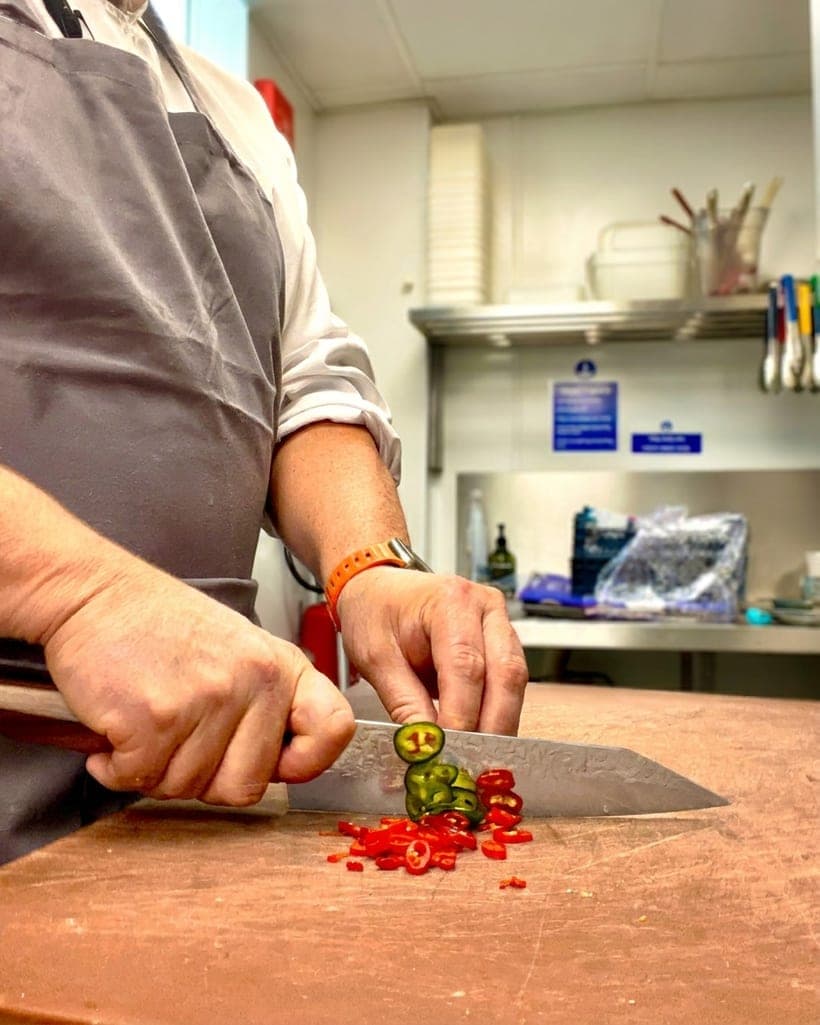
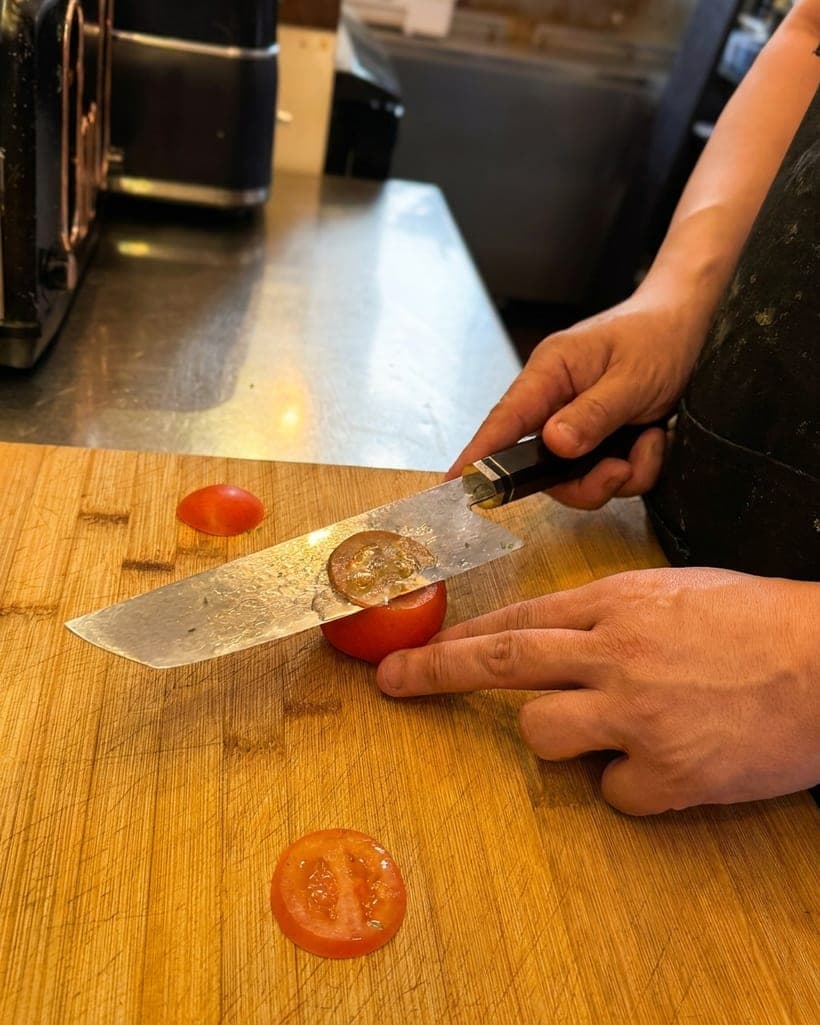
For most home cooks it replaces two or three other knives. You can slice a tomato, open a chicken breast, shred greens and dice an onion without changing tools. The flatter profile also suits the way many people already cut: a push cut or a gentle rocking motion, rather than the aggressive rock and chop of a large European knife.
If you are still working out which shape belongs in your kitchen, our guide on how to choose a knife walks through the main profiles and what each one is for.
What 67 layers gives you, and what it does not
All four knives here use 67-layer Damascus construction. Layer count is a pattern decision more than a performance figure. More layers means a finer, denser visual pattern, and it usually means thinner cladding on each side of the core. The performance comes from the core steel, the heat treatment and the geometry behind the edge, which is why two knives with the same layer count can feel quite different on the board.
Treat the layer count as a clue about the finish and the maker's intent, not as a score. A 67-layer blade is a beautifully finished object. Whether it suits you depends on the steel, the length and the handle.
Four Damascus santoku knives, and who each one suits
We keep a small, deliberate range. Each of the four below is a seven inch santoku with 67-layer Damascus steel, and the differences lie in the core steel, the handle material and the edge profile. Here is how they separate.
The 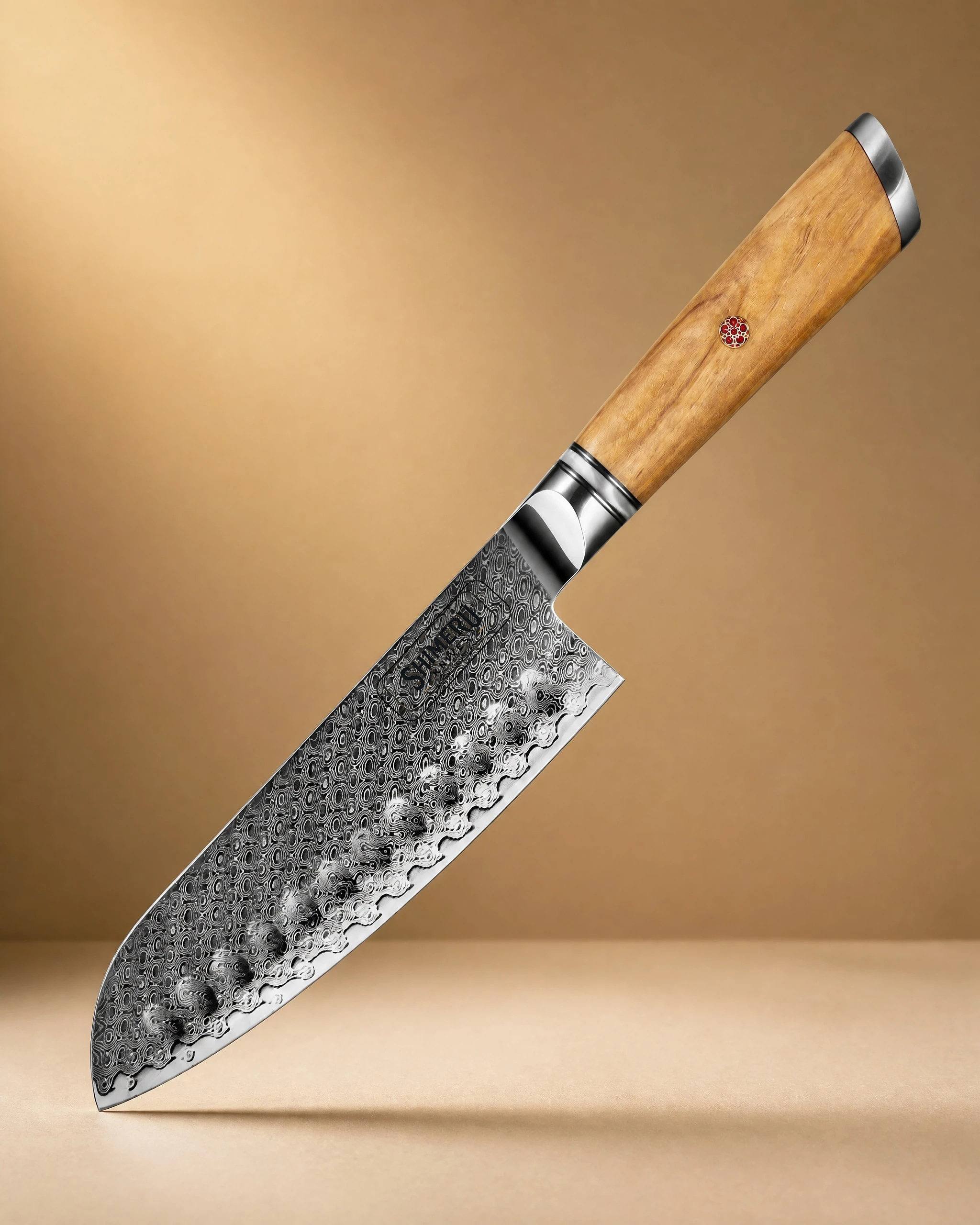 Chikuma 7" Damascus Steel Santoku Knife 三徳包丁£84.99View product → is the one to look at first if you want a single knife that handles slicing, dicing and mincing without fuss. The olive hardwood handle carries a sandalwood and red resin complement, which makes it the most distinctive of the four both in the hand and on the rack. It is a sensible starting point for anyone moving from a supermarket knife to something they intend to keep.
The 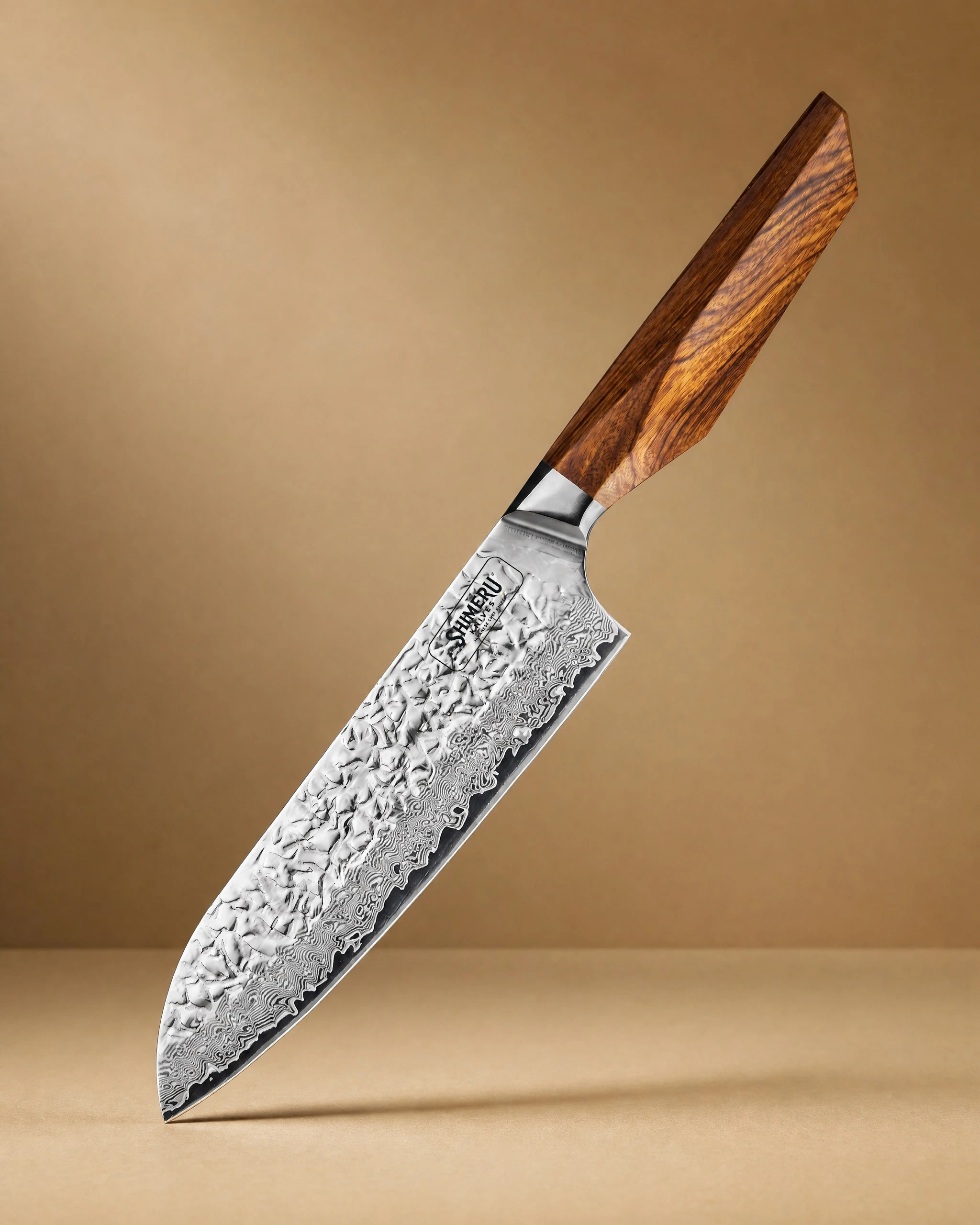 Shikoku 7" Damascus Steel Kengata Santoku 三徳包丁£84.99View product → is the kengata santoku, a shape with a sharper, more angled tip. That point is useful for detail work and for piercing, and the profile gives you a little more precision at the front of the blade. The rosewood handle is warm and traditional, and the AUS10 core is a steel many cooks find easy to live with day to day. If you cook a lot of fish and vegetables, this is the one to pick up first.
The 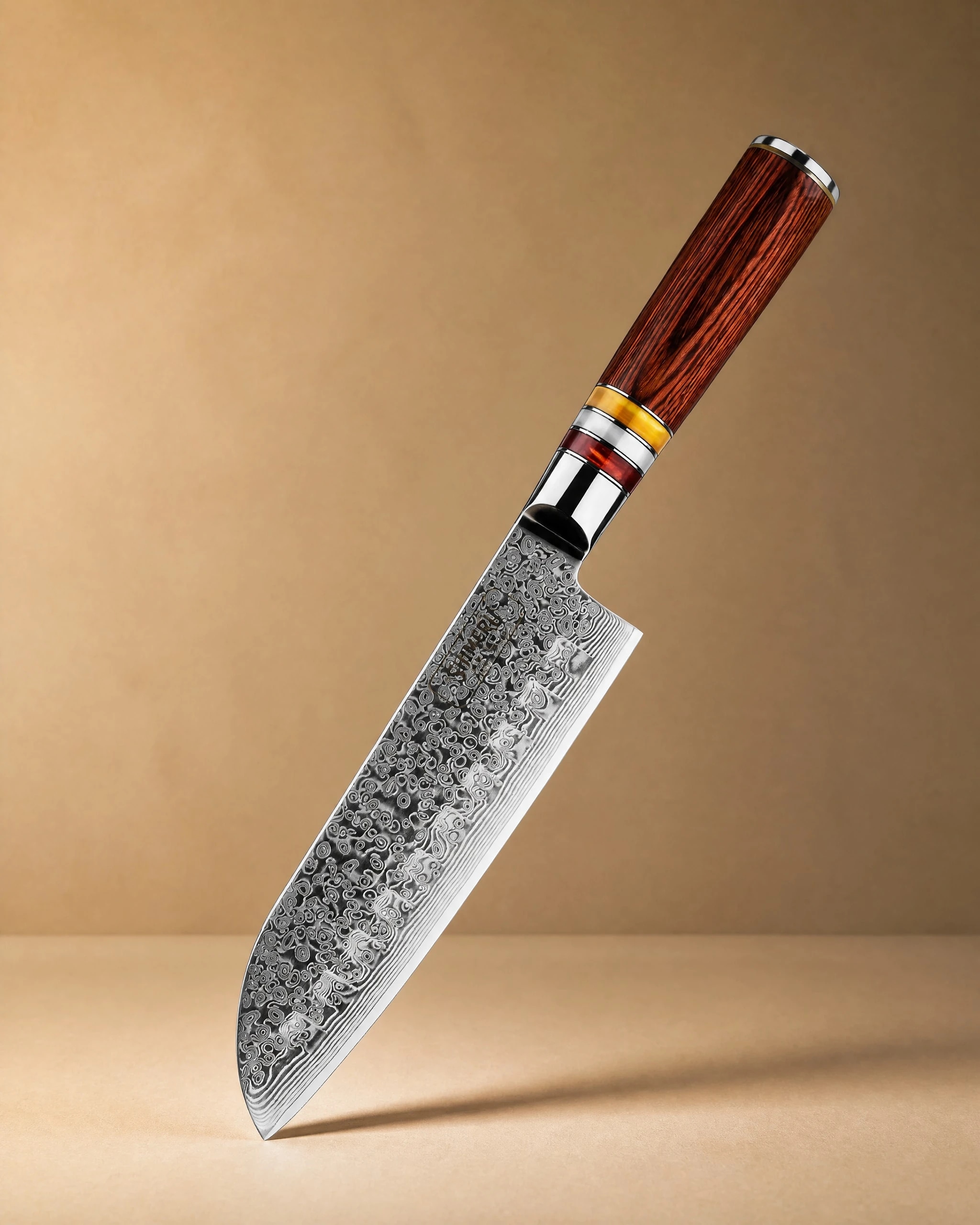 Hikari 光 7" Damacus Steel Professional Santoku Knife 三徳包丁£79.99View product → uses a VG10 core, a steel with a long reputation in Japanese kitchens for taking a very fine edge. The pakka wood handle is dense and stable, which suits anyone who prefers a handle that behaves predictably in a busy kitchen. It is built for meats and vegetables, and the balance of the blade makes it a natural choice for someone who does a lot of protein prep.
The 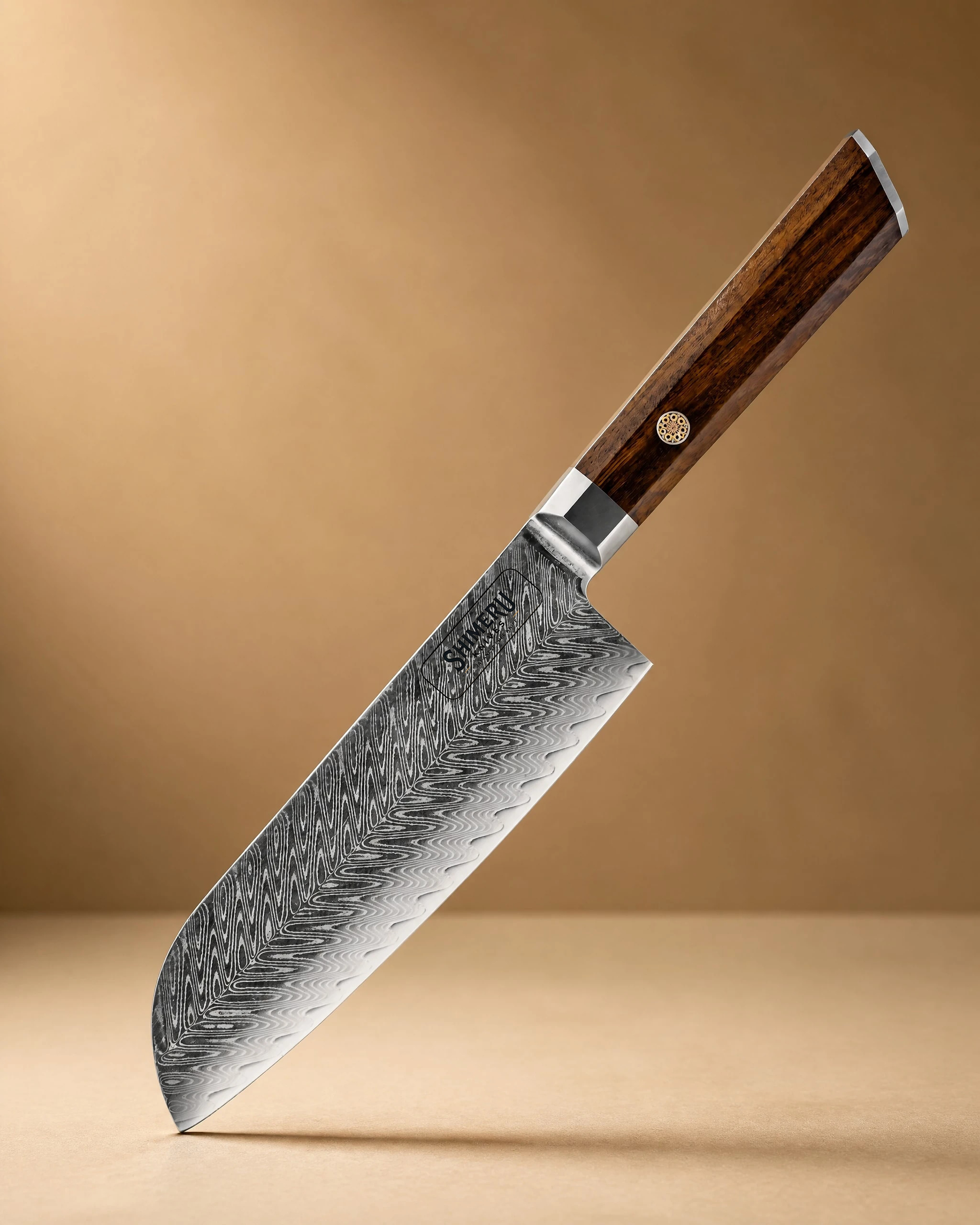 Komachi 小町 7″ Damascus Steel Santoku Knife 三徳包丁£79.99View product → pairs the same 67-layer Damascus with a VG10 core and a rosewood handle, and it is the closest of the four to a classic Japanese santoku in the hand. Slicing, dicing and mincing are its strengths. If you like a traditional look and want a knife that feels composed rather than flashy, start here.
Handle, balance and the feel in the hand

A seven inch blade is short enough to be nimble and long enough to take a cabbage in one pass. What changes between these knives is how the handle shifts the balance point. A heavier handle moves the centre of gravity back towards your hand, which some cooks prefer for long sessions. A lighter handle pushes the balance forward towards the blade, which feels more precise on delicate work. Neither is better. Both are worth noticing.
Handle material matters for grip as much as for looks. Olive hardwood and rosewood are natural materials with a little warmth and variable grain, so each handle is slightly its own thing. Pakka wood is a stabilised composite that behaves the same way every time. Wash by hand and dry immediately, and any of the three will last for decades.
Looking after a Damascus blade
A Damascus blade needs no special ritual, but it does reward a few habits. Wash it by hand, dry it straight away, and put the knife away rather than leaving it in a sink or on a draining rack. The pattern lives in the outer layers, and long contact with water and acidic food is the quickest way to dull its contrast.
Sharpening is where people hesitate. A hard core steel like VG10 or AUS10 takes a keen edge and holds it well, but it should not be treated like a soft European blade. Use a whetstone or a good guided system, keep the angle consistent, and avoid pull through carbide sharpeners. A light pass on a fine stone or a ceramic rod between sharpening sessions is plenty. Our knife care guide covers angles, stones and storage in more detail.
How to choose between them
Start with the two questions that actually narrow the field. First, what do you cut most? If it is vegetables and fish, lean towards the kengata profile of the Shikoku 7" Damascus Steel Kengata Santoku 三徳包丁£84.99View product →. If it is meat and general prep, the Hikari 光 7" Damacus Steel Professional Santoku Knife 三徳包丁£79.99View product → with its VG10 core is a natural fit. If you want one knife for everything and a handle with some character, the Chikuma 7" Damascus Steel Santoku Knife 三徳包丁£84.99View product → covers it.
Second, how does it feel in your hand? Blade length is fixed at seven inches across all four, so the handle is what separates them. If you can, hold a knife before you buy. If you cannot, think about whether you prefer natural wood or a stabilised composite, and whether you like a traditional Japanese look or something more contemporary. The Komachi 小町 7″ Damascus Steel Santoku Knife 三徳包丁£79.99View product → sits at the traditional end of that line, the Chikuma 7" Damascus Steel Santoku Knife 三徳包丁£84.99View product → at the contemporary end.
You can see every seven inch blade in our santoku collection, or browse the full knife shop if you would rather compare shapes side by side.
A closing note on buying well
Damascus santoku knives are often sold on appearance, which is a shame, because the pattern is the least interesting thing about a well made one. The interesting things are the core steel, the grind, the balance and the way the blade sits against your knuckles when you dice an onion.
All four knives here share the same layer count and the same seven inch length, so the decision comes down to steel, handle and edge profile. Pick the one that matches your cooking and your hand. Look after it with a hand wash and a dry cloth, sharpen it properly once or twice a year, and it will outlast most of the other things in your kitchen.
Photography: Kevin Doran via Unsplash.


