

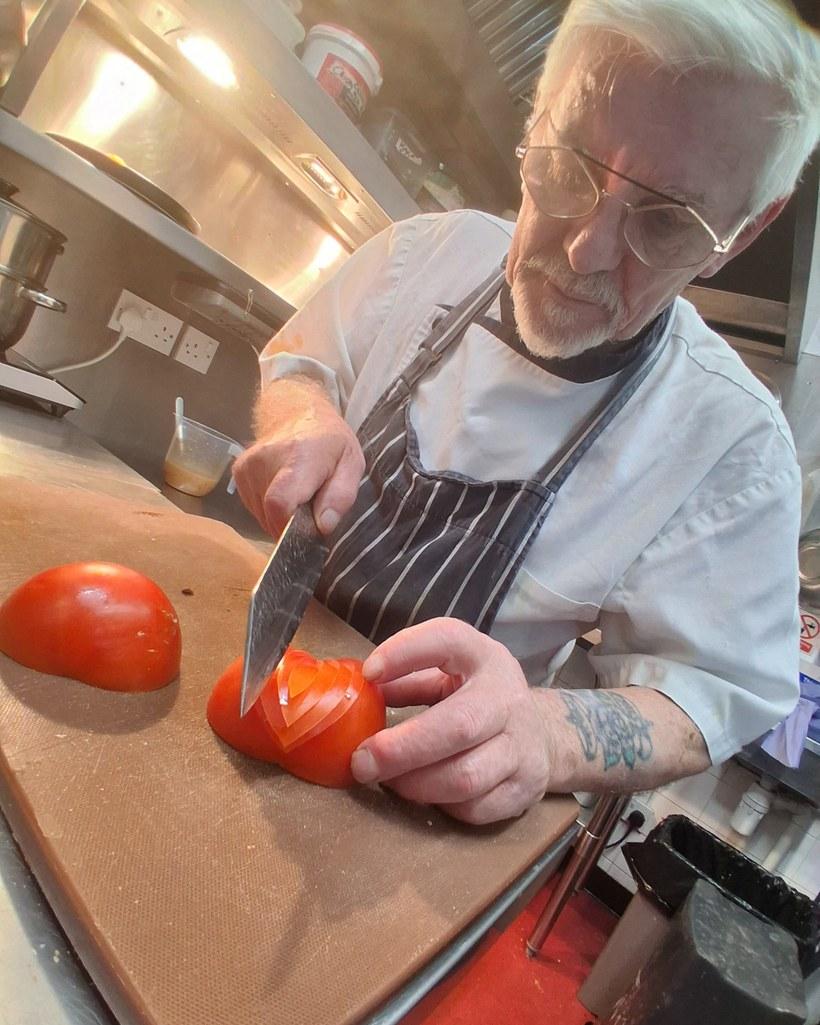
Norton Whetstones: A UK Sharpening Guide

Norton is one of those names that turns up in workshops, garages and professional kitchens more often than it turns up in glossy knife shops. That is not an accident. Norton makes abrasives first and kitchen accessories second, and a Norton whetstone is bought because it lasts, not because it looks good on a shelf. If you have inherited one, or you are weighing up whether to buy your first proper stone, this guide covers what the stones are, how the different types behave, and how to get a usable edge off one without ruining your knives.
What You Are Actually Buying
A Norton whetstone is a bonded abrasive block. Grit is mixed with a binder and cured into a rectangle, and the character of that block depends on the abrasive and the binder rather than on any marketing. Norton has been making abrasives for a very long time, and the range splits into three practical families that a UK buyer will meet: oil stones, waterstones, and combination stones that put a coarse face and a fine face on the same block.
The oil stones are the traditional ones. The India line is an aluminium oxide stone, Crystalon is silicon carbide, and both are hard, slow wearing and designed to be used with a thin film of oil. They do not need soaking, they hold their shape well, and they will still be flat and usable in twenty years if you look after them. The trade off is speed: an oil stone cuts more slowly than a waterstone of comparable grit, and the oil makes a mess that you have to think about before you start.
Waterstones cut faster and feel softer under the blade. They wear as you use them, which is both the strength and the weakness: the surface exposes fresh abrasive and cuts consistently, but it also dishes out of flat and needs attention. Norton's waterstones are often sold as combination stones, and that format makes a lot of sense for a home sharpener.
Oil or Water: How to Decide
Choose oil if you sharpen occasionally, you keep your stones in a cold shed, and you want something you can pick up, wipe, use and put away without a bucket of water. Oil stones suit Western stainless knives and carbon steel alike, and they tolerate being left alone.
Choose water if you sharpen regularly and you want speed. A waterstone removes metal noticeably quicker, which matters when you are repairing a chip or thinning behind the edge. The cost is maintenance: soaking, drying, and flattening more often.
You can sharpen Japanese knives on either. If you own a hard, thin blade, a waterstone gives you more feedback and lets you control pressure more precisely, which is why most people sharpening Japanese knives end up on water. If your knives are softer Western stainless, an oil stone will do everything you need.
Grits: What You Need and What You Do Not
The temptation is to buy a rack of stones. Resist it. Three grits cover almost everything a home sharpener will ever do, and two will get you a long way.
A coarse stone is for repair: chips, a badly rolled edge, changing the angle on a knife that has been sharpened at 25 degrees for a decade. You will use it rarely. A medium stone around the 1000 grit mark is your workhorse, the stone that sets the edge. A fine stone polishes and refines, and while it is satisfying, it is not what makes a knife sharp. A knife finished on a fine stone but never properly apexed on a medium stone will still be blunt.
If you want one stone only, buy a combination stone with a medium and a fine face. If you want a sensible pair, buy a combination medium and fine stone plus a coarse stone for repairs. That is the whole kit.

Soaking, Oil and Keeping the Stone Flat
Waterstones need water, and most traditional Norton waterstones need a proper soak, typically until the bubbles stop rising. Some modern stones are splash and go, so check what you have rather than assuming. Never store a waterstone wet in a sealed box, and never let one sit in water for days.
Oil stones need only a film of oil on the surface. Use a light mineral oil, not cooking oil, which goes tacky and rancid. Wipe the stone clean afterwards and keep it dry.
Flattening is the part people skip and it is the part that matters most. A dished stone cannot produce a consistent angle no matter how good your technique is. Flatten on a diamond plate, or on wet abrasive paper laid on a flat tile or a sheet of glass. Do it little and often rather than waiting until the stone is visibly hollow.
Technique: Angle, Pressure and the Burr
Hold the knife at a consistent angle, roughly 15 to 20 degrees per side for a Japanese knife and closer to 20 for a Western one. Consistency matters far more than the exact number. Lock your wrists, move from the shoulder, and cover the whole edge from heel to tip in overlapping passes.
Use modest pressure on the coarse and medium work, then lighten considerably for the final strokes. The test is the burr: a continuous, faint ridge of metal you can feel on the opposite side of the edge along its full length. Until you have a burr along the whole edge, you have not apexed the knife, and no amount of polishing will fix that.
Once you have the burr, remove it with a few light alternating strokes, then finish on the finer face if you are using one.
Which Knives to Put on the Stone
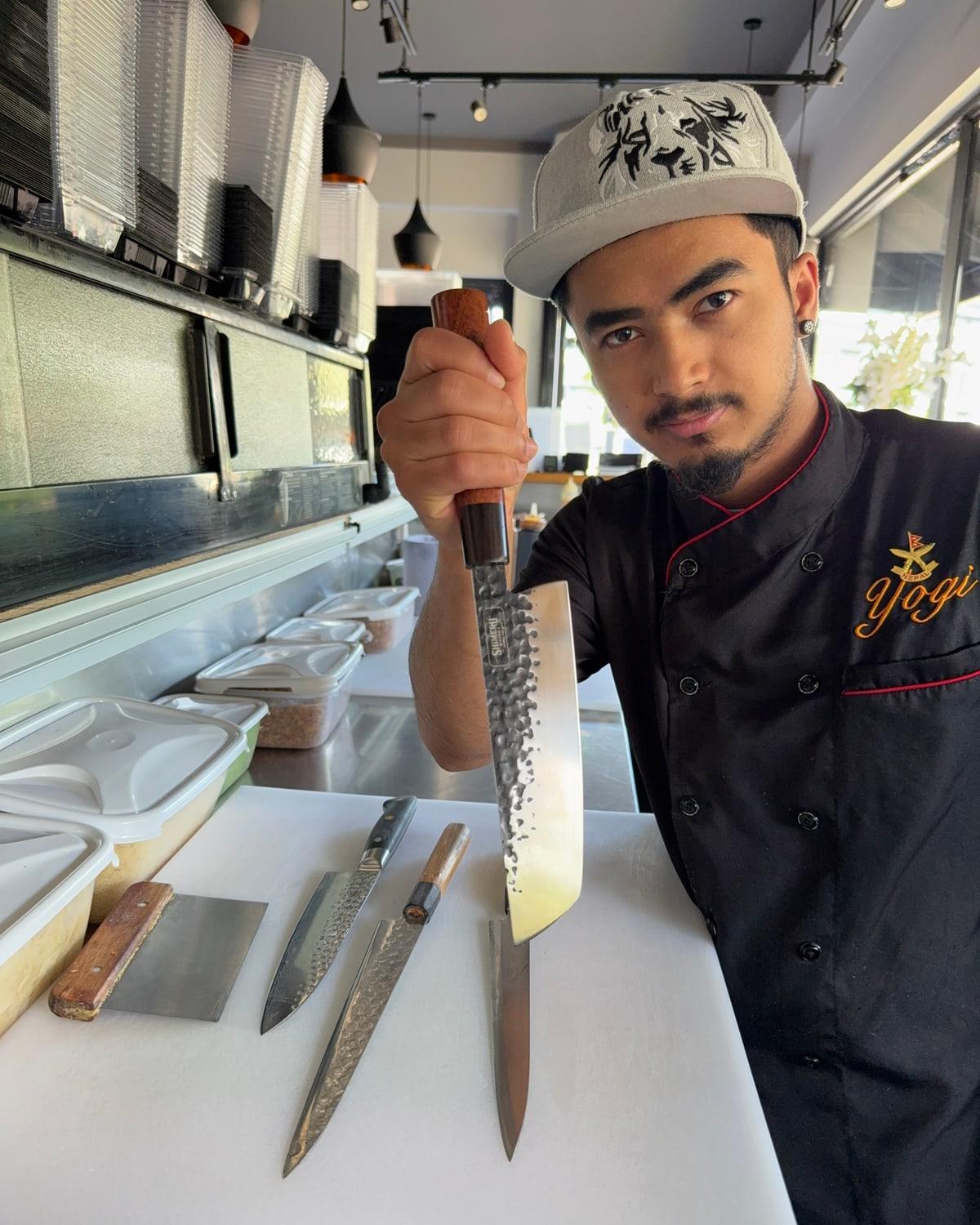
Most kitchen knives benefit from a medium waterstone and a light touch. The 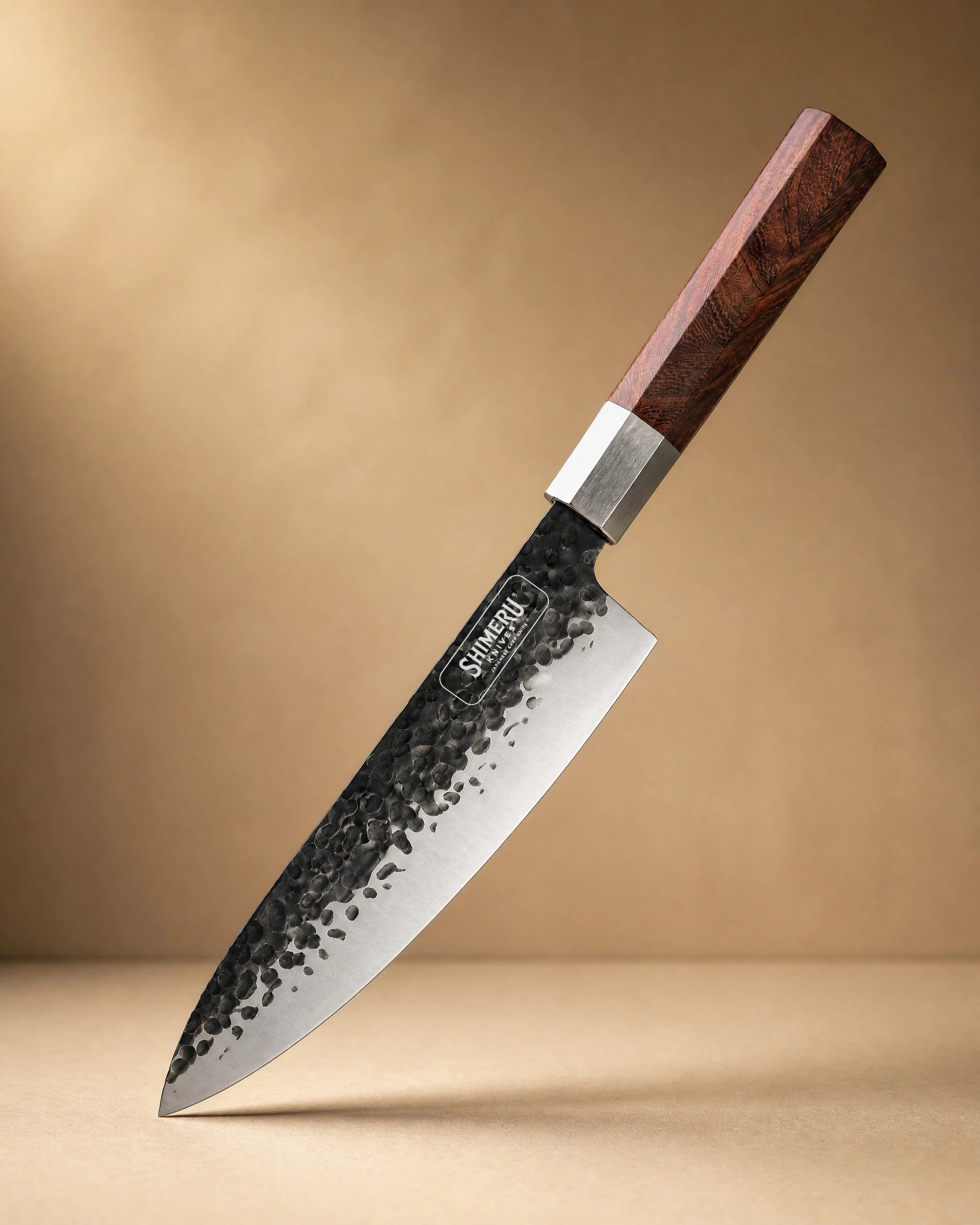 Sendai 8" Steel Gyuto Knife 牛刀£49.99View product → is an 8 inch stainless gyuto with a Mkuruti wood handle, and its stainless blade takes a clean edge off a medium stone without needing anything aggressive. The
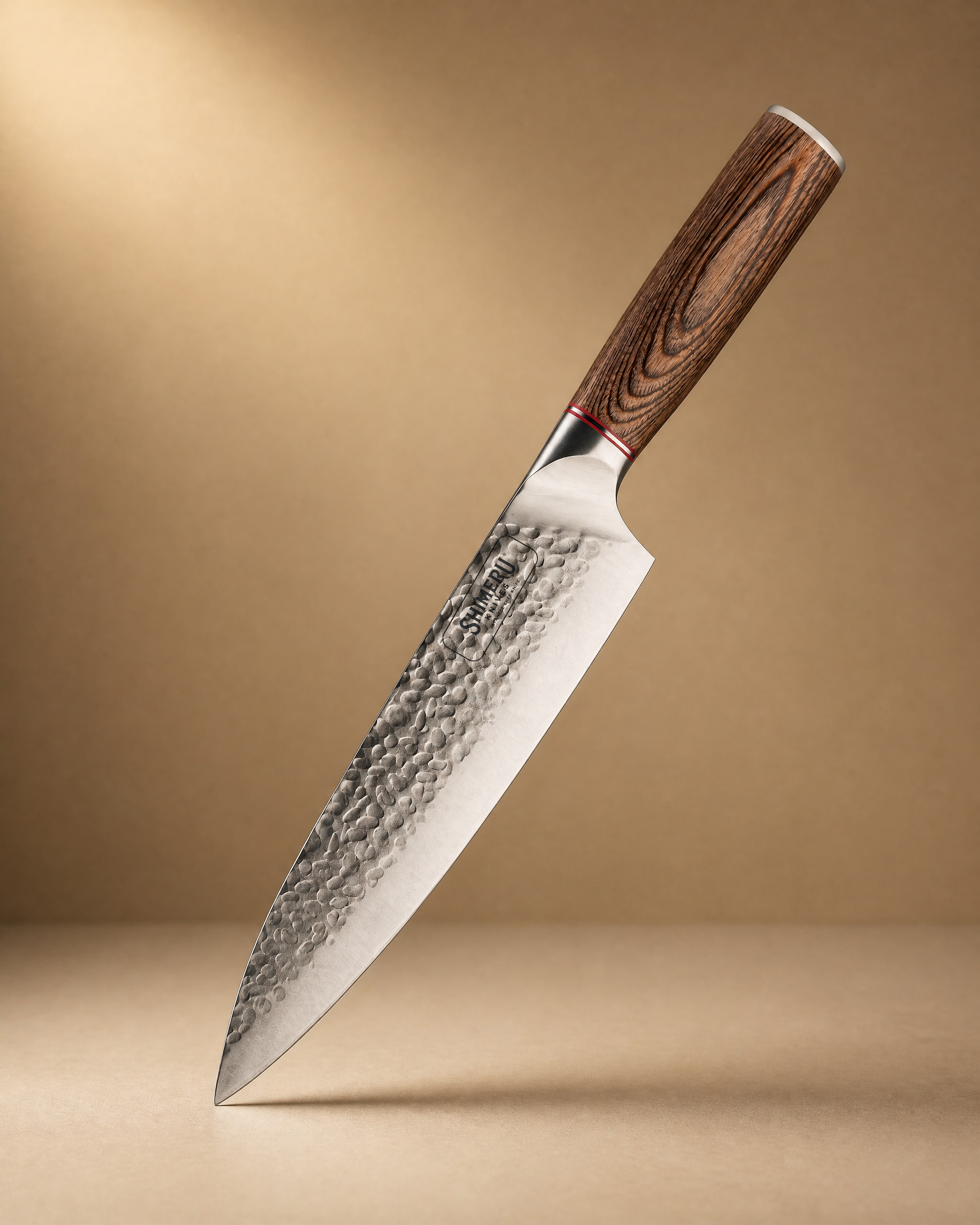 Akan 8'' Gyuto Knife 牛刀£49.99View product → is a similar proposition: an 8 inch stainless gyuto with a Pakkawood handle, suited to meat, fish and vegetables, and straightforward to maintain on a combination stone.
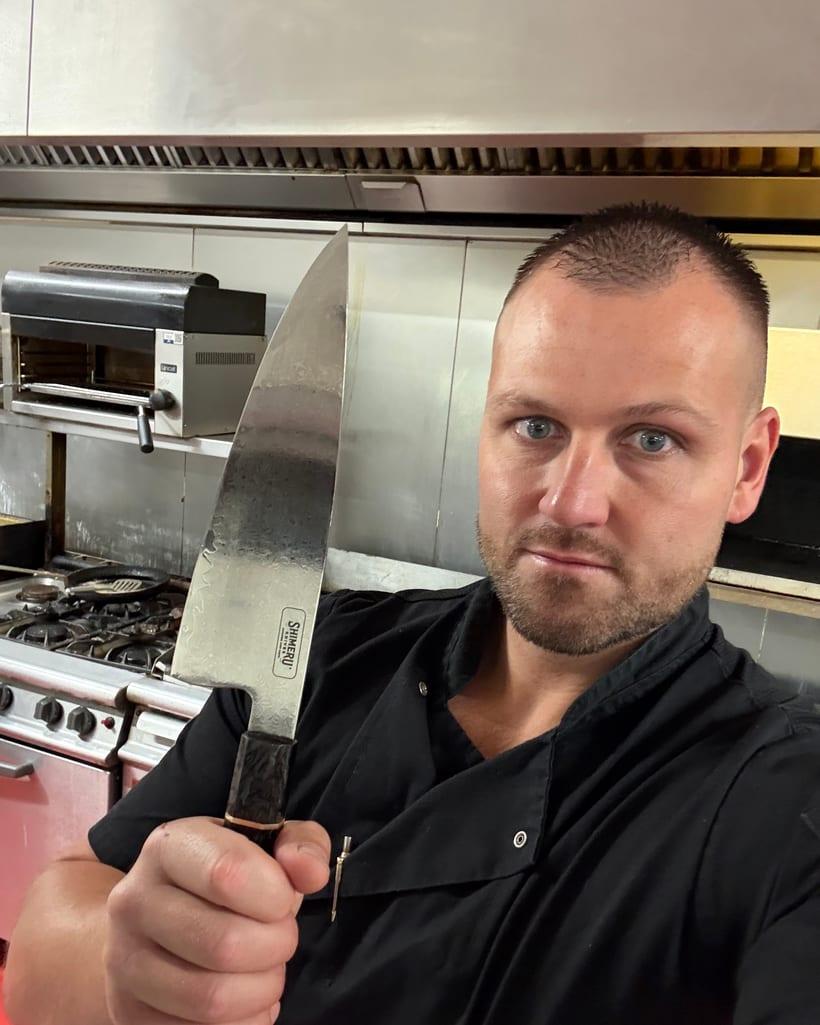
If you keep a block of knives and want everything sharp at once, the 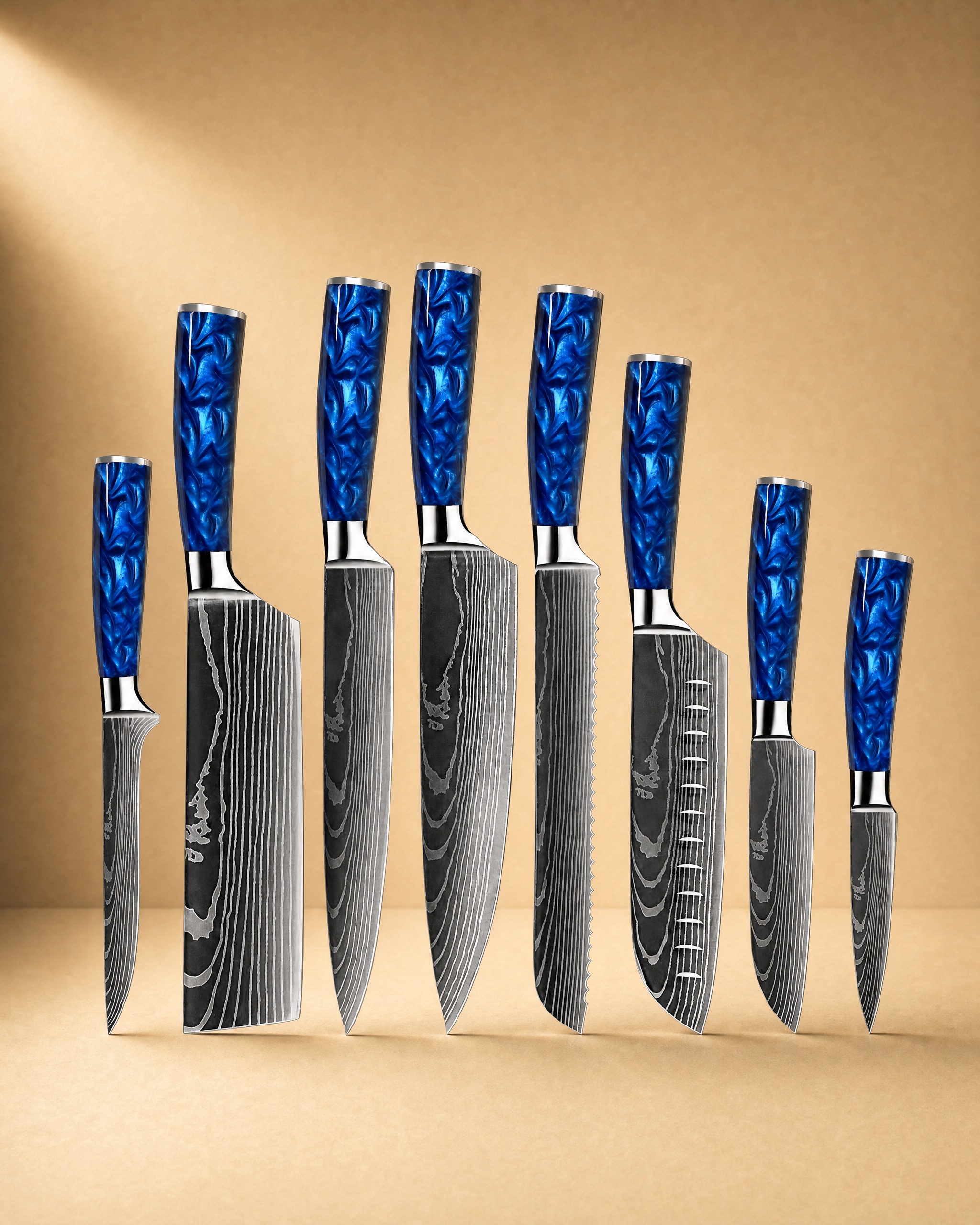 Shinano 信濃川 Damascus Pattern Stainless Steel Kitchen 8 Knife Set£149.99View product → covers a full set, and high-carbon steel rewards a proper sharpening routine. High-carbon blades react to water and to residue, so dry them thoroughly after use and keep the stone work consistent rather than occasional.
When a Stone Is Not the Right Answer
Freehand sharpening takes practice, and some people never enjoy it. The 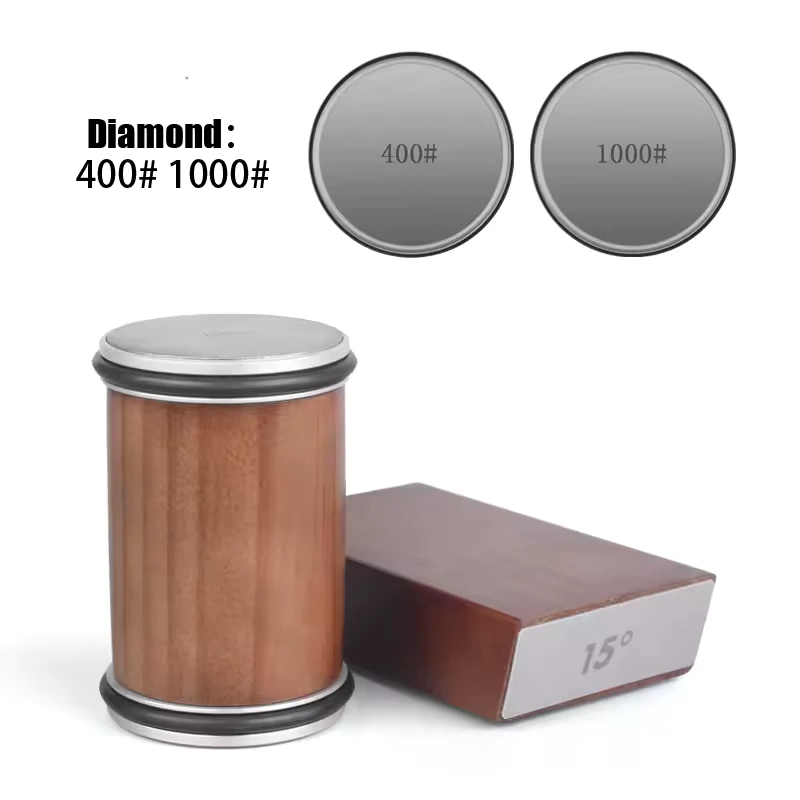 Magnetic Rolling Knife Sharpener£59.99View product → is a rolling sharpener with a magnetic holder, and it exists for the person who wants a usable edge in two minutes without learning to hold an angle. It will not teach you to feel a burr and it gives you less control than a stone, but a knife sharpened on a rolling sharpener is better than a knife left blunt because the stone felt intimidating.
The honest position is that these two approaches solve different problems. A stone gives you control, longevity and the ability to thin a blade. A guided sharpener gives you speed and consistency for very little effort. Many households end up with both.
Mistakes Worth Avoiding
A handful of habits account for most dull knives and most ruined stones. These are the ones we see and hear about most often.
- Pressing hard on a fine stone instead of apexing properly on a medium one.
- Sharpening only the middle of the blade and leaving the heel and tip dull.
- Never flattening the stone, then wondering why the edge keeps changing angle.
- Storing a soaked waterstone in a cold UK garage, where frost can crack it.
- Testing sharpness by running a thumb along the edge rather than across it.
Keeping the Edge Between Sessions
Sharpening is repair, not routine. Between sessions, realign the edge with a steel or a ceramic rod, or use a fine stone with almost no pressure. Wash and dry knives immediately after use, especially high-carbon ones, and store them where the edge is not knocking against anything hard. Our knife care guide covers the daily habits that keep a good edge going for months.
If you are still deciding what to sharpen, our guide to choosing a knife is the place to start, and the full knife shop lists everything we stock.
Putting It Together
Buy one stone, learn to raise a burr on it, and flatten it regularly. That single habit will do more for your knives than any collection of grits. A Norton whetstone is a good choice for that one stone because it is a tool built to be used for years rather than a novelty, and it does not ask for much beyond water, oil or a little patience. Oil stones reward the occasional sharpener who wants zero fuss. Waterstones reward the cook who sharpens often and wants speed. Either way, once you can get a knife properly sharp on a medium stone, everything else is refinement rather than rescue.
Photography: Zhao Wenjie via Unsplash.

