



Japanese Steak Knives: A Complete Buying Guide

If you have ever cut into a perfectly cooked steak with a dull Western blade, you know the frustration. The struggle, the torn fibres, the juice squeezed out. A Japanese steak knife cuts with precision and ease. This guide walks you through everything you need to know: materials, shapes, steels, handles and care. No fluff, just the facts.
Why Japanese Steak Knives Stand Apart
Japanese knives have a reputation for exceptional sharpness, and steak knives are no exception. The difference begins with the steel. Traditional Japanese blades use harder steel than most Western equivalents, often reaching 60 to 64 HRC. This hardness allows a thinner edge geometry, meaning less resistance as you slice through meat. The result is clean cuts that preserve the texture and juices of the steak. A soft Western blade, by contrast, often compresses the meat before cutting, squeezing out moisture.
Another distinction is the edge angle. Japanese knives are typically ground to a more acute angle, around 15 to 17 degrees per side, compared to the 20 degree angle common on Western knives. This sharper angle gives a keener edge, but it also requires more care during use and sharpening. That is a trade off worth making for anyone who values a truly effortless cutting experience. When slicing steak, the thinner edge allows you to glide through fibres rather than tearing them.
What Makes a Good Japanese Steak Knife
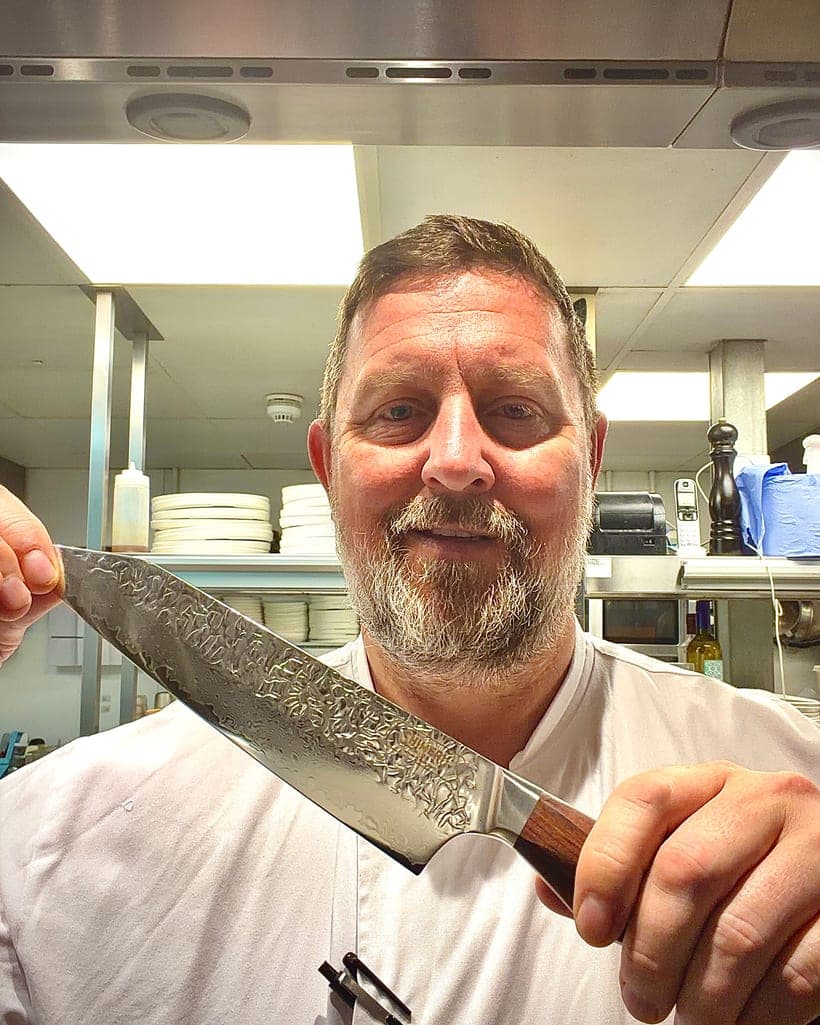
A dedicated steak knife is shorter than a chefs knife, usually 4 to 5 inches long. This length is ideal for slicing cooked meat at the table or in the kitchen. The blade shape matters: a slight curve or a straight edge with a pointed tip works well. The Suma 4.5 inch Damascus Steel Steak Knife Set is a fine example. Its 67 layer Damascus construction wraps a VG10 core, combining high hardness with corrosion resistance. The G10 fibre handle is durable and easy to grip, even with wet hands. For anyone looking for a dedicated steak knife set, 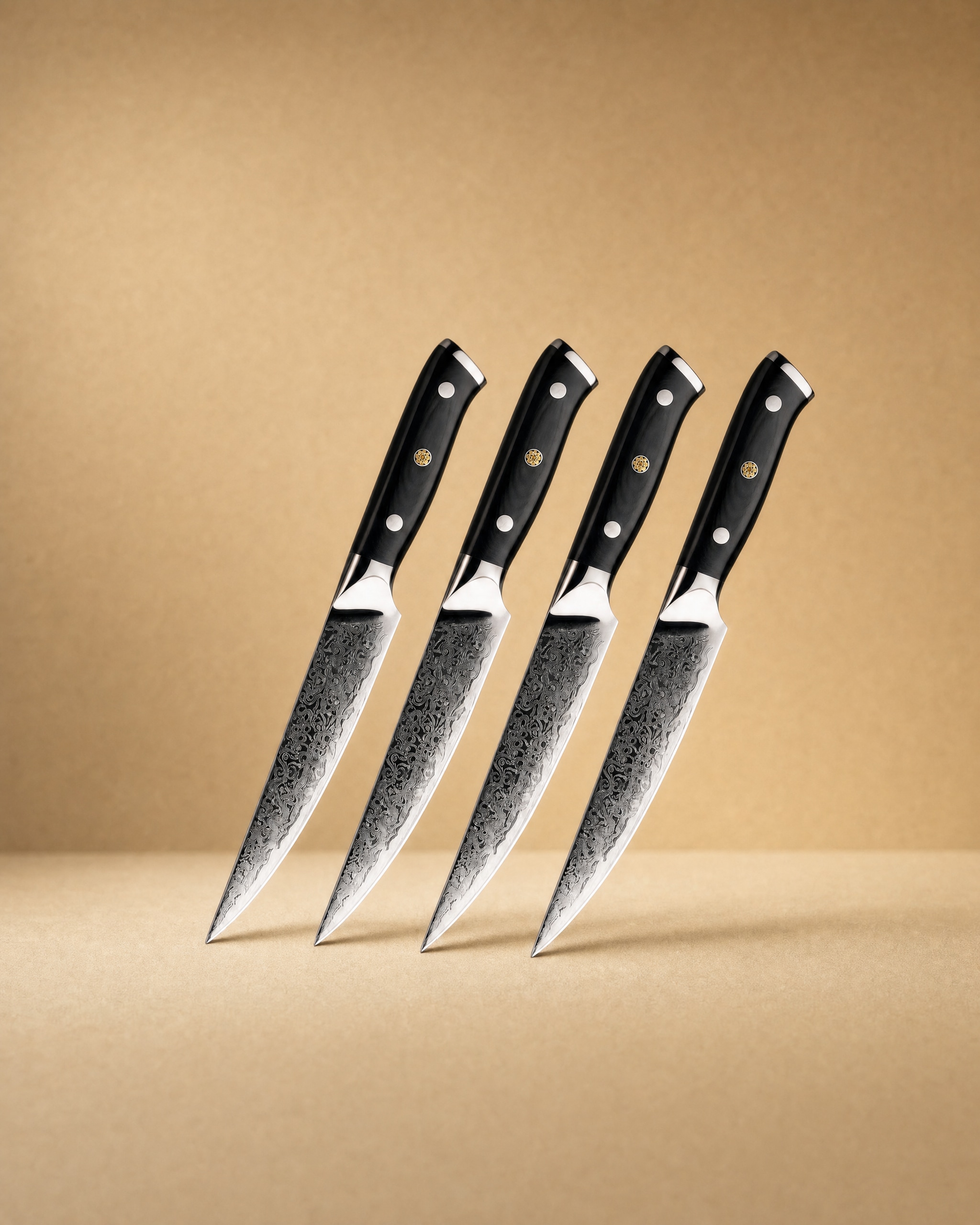 Suma 4.5" Damascus Steel Steak Knife Set 4 pieces ステーキナイフ£114.99View product → offers four knives that hold an edge admirably. The set suits home cooks who serve steak regularly and want a matched set for dinner parties or family meals.
However, a steak knife is not the only knife you need for preparing steak. Many cooks use a chef knife or gyuto to trim and portion raw meat before cooking. The Sendai 8 inch Steel Gyuto Knife is a versatile option for that task. Its stainless steel blade resists staining, and the Mkuruti wood handle provides a comfortable, warm grip. 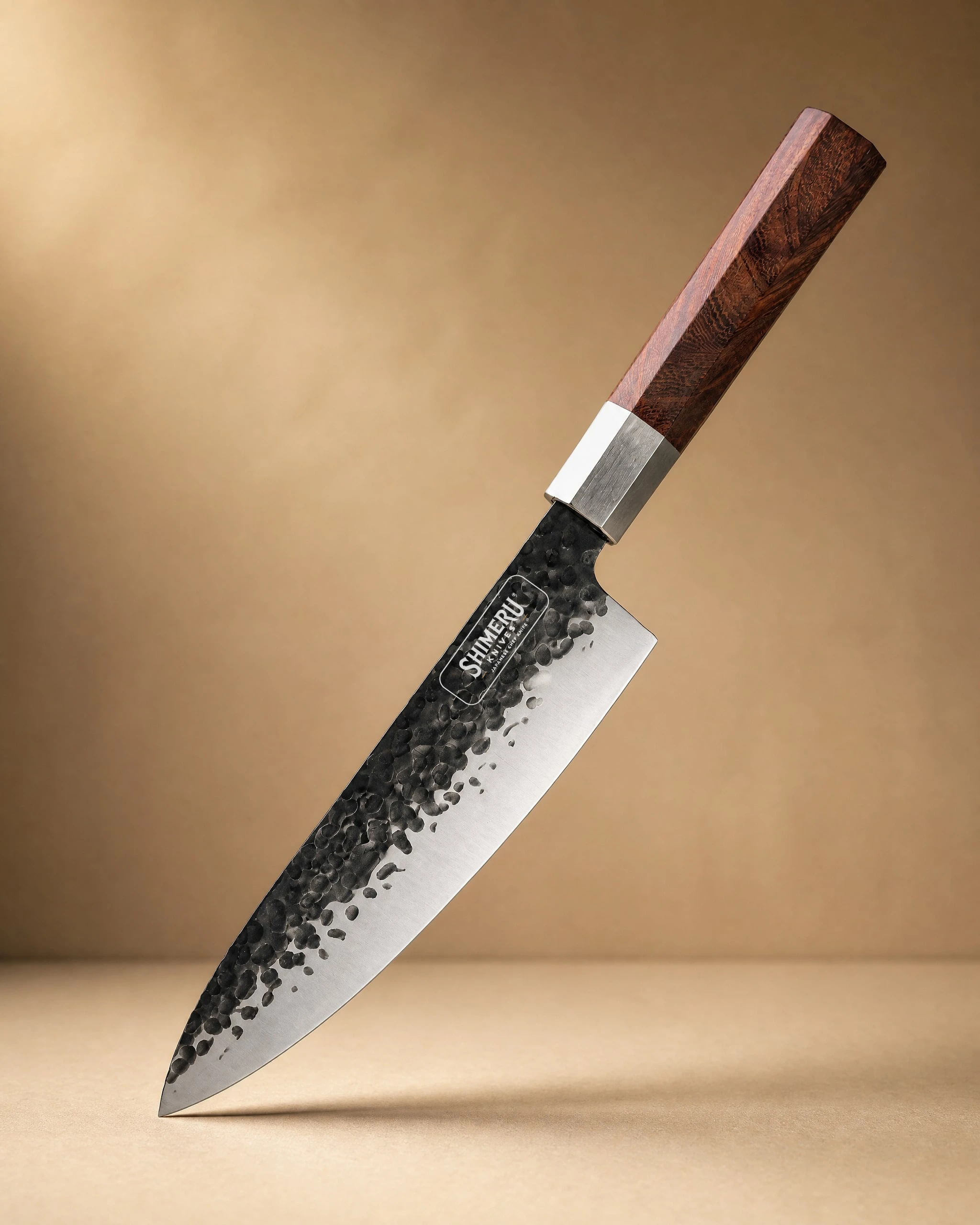 Sendai 8" Steel Gyuto Knife 牛刀£49.99View product → is an excellent choice for vegetable prep and fine slicing alongside your steak knife. This gyuto works well if you prefer one knife for most kitchen tasks, from mincing herbs to slicing steak against the grain.
Steel Types and Construction
The steel in a Japanese steak knife influences everything from sharpness to edge retention to ease of maintenance. Common steels include VG10, a stainless steel known for holding a sharp edge well, and various carbon steels that can take a finer edge but require more care to avoid rust. VG10 contains around 1% carbon and added elements like cobalt and vanadium, which improve wear resistance. It is a popular choice because it balances performance and practicality. Damascus steel, as seen in the Suma set, is a layered construction that combines different steels. The layers create a beautiful pattern and can offer a balance of hardness and toughness. The core steel determines performance; the outer layers add aesthetics and some corrosion protection.
Comparing steels side by side: VG10 holds its edge longer than many entry level stainless steels but can be more challenging to sharpen. Carbon steel, such as White or Blue paper steel, sharpens easily to a razor edge but will rust if left wet. For a home cook who does not want to baby their knives, stainless steel is the practical choice. Carbon steel fans argue that it sharpens more easily and can achieve a slightly keener edge, but it demands immediate drying after use. Most people will be well served by a good stainless or stainless clad blade. If you often cook for guests and want to show off the knife at the table, Damascus steel adds visual appeal without sacrificing performance.
Handle Materials and Ergonomics
Handles on Japanese steak knives fall into two broad categories: Western style and Japanese traditional. Western handles are usually made from synthetic materials like G10 fibre, as on the Suma set, or wood composites. They are often thicker and offer a full tang, providing a robust feel. Japanese style handles, such as octagonal or D shaped wood handles, are lighter and often more balanced for a pinch grip. The choice comes down to personal comfort. If you have larger hands, a Western handle may be more secure. If you prefer a lightweight knife that allows fine control, a traditional handle might suit you better. The grip also matters: a pinch grip on the blade and handle gives the most control, while a full grip on a Western handle suits those who prefer a heavier tool.
Wood handles, like the Mkuruti wood on the Sendai gyuto, are beautiful but need occasional oiling to prevent drying. Synthetic handles are nearly maintenance free. Consider how much care you are willing to invest. For a steak knife that gets occasional use at the table, a wood handle is fine if you wipe it clean. For a workhorse knife used daily, synthetic may be more practical.
How to Choose the Right Japanese Steak Knife
Follow these steps to narrow your options:
- Decide on blade length: 4 to 5 inches is standard for steak knives. If you also want a knife for general kitchen work, consider a gyuto like the Sendai in 8 inches.
- Choose steel type: stainless steel for low maintenance, carbon or Damascus for edge performance and appearance.
- Pick a handle that feels comfortable in your hand. Visit a shop if possible, or read honest reviews.
- Set a budget. Japanese steak knife sets range from affordable to premium. The Suma set offers excellent value with its Damascus construction.
- Consider a sharpener. Even the best knife dulls over time. A tool like
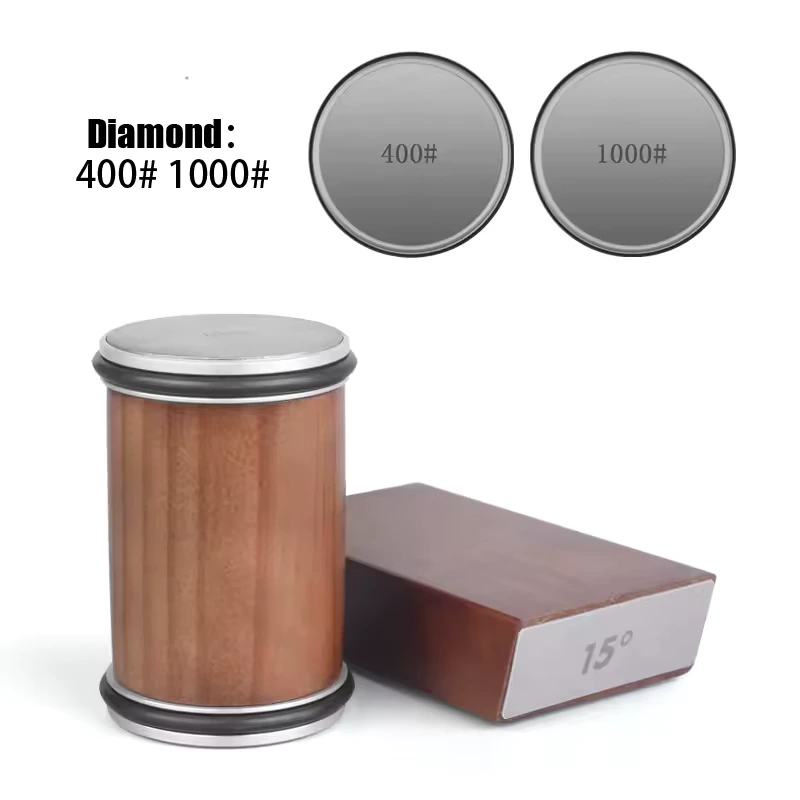 Magnetic Rolling Knife Sharpener£59.99View product → can keep your blades in top condition, especially if you are not confident with a whetstone.
For a broader selection of steak knives, visit our steak knife category page. If you want to see all our kitchen knives, head to the full shop.
Who should buy the Suma set? Home cooks who entertain often and want a dedicated steak knife that impresses visually. The set covers four place settings, ideal for a family dinner. Who should choose the Sendai gyuto instead? Someone who wants one knife for prepping steak, vegetables and fish, and who may not need a separate steak knife set. Both are valid choices depending on your cooking habits.

Caring for Japanese Steak Knives
Japanese steel is hard but can be chipped if abused. Never cut on glass, stone or ceramic plates. Always use a wooden or plastic cutting board. Wash by hand with mild soap and dry immediately. Dishwashers are a fast track to rust, pitting and handle damage. Store your knives in a block, on a magnetic strip or in a sheath to protect the edges.
Sharpening is essential. Use a whetstone or a quality pull through sharpener designed for Japanese edges. The right angle is critical: keep the blade at 15 to 17 degrees. If you are unsure, a sharpener like Magnetic Rolling Knife Sharpener£59.99View product → takes the guesswork out. For a whetstone, start with a coarse grit like 1000 to repair any dullness, then finish with 3000 to 6000 grit for a polished edge. You do not need to sharpen every week. Depending on use, once every few months is enough if you hone regularly with a rod. For detailed care instructions, see our knife care guide.
The Role of the Cleaver in Steak Preparation
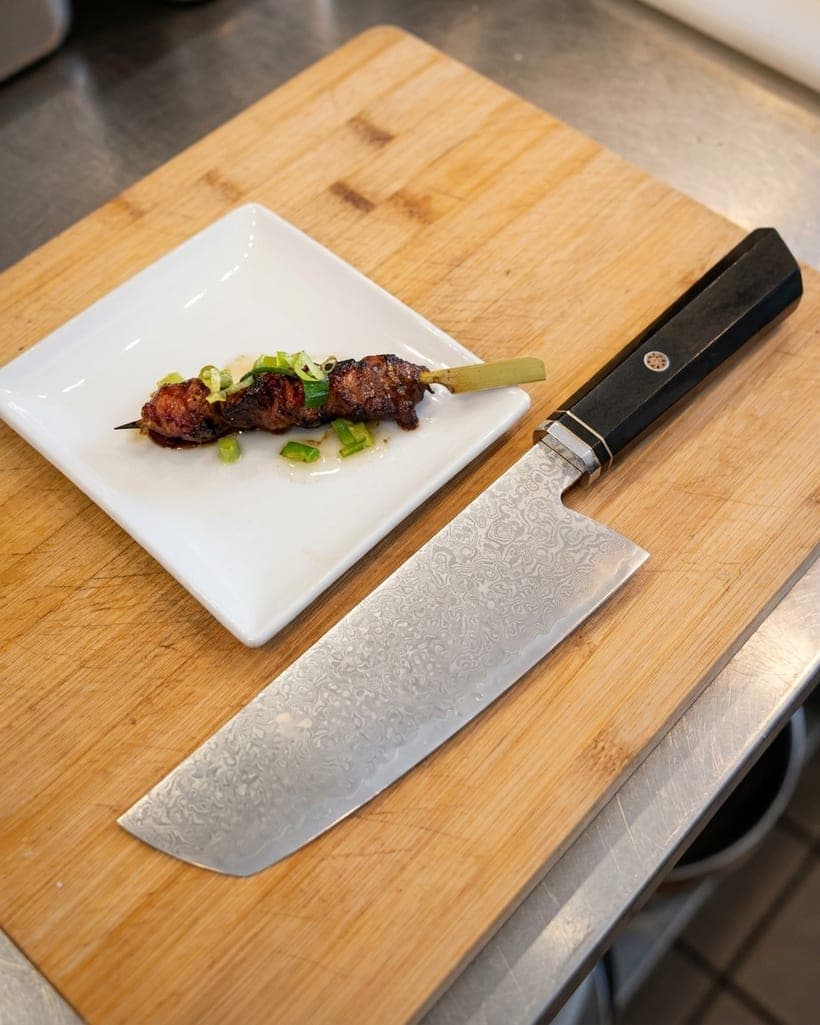
While not a steak knife in the traditional sense, a cleaver can be useful for breaking down larger cuts of beef or for crushing garlic to season your steak. The Saba 7 inch Stainless Steel Cleaver is an 8 inch blade made from Japanese stainless steel with an African Wedge hardwood handle. It handles meat, vegetables and herbs with authority. 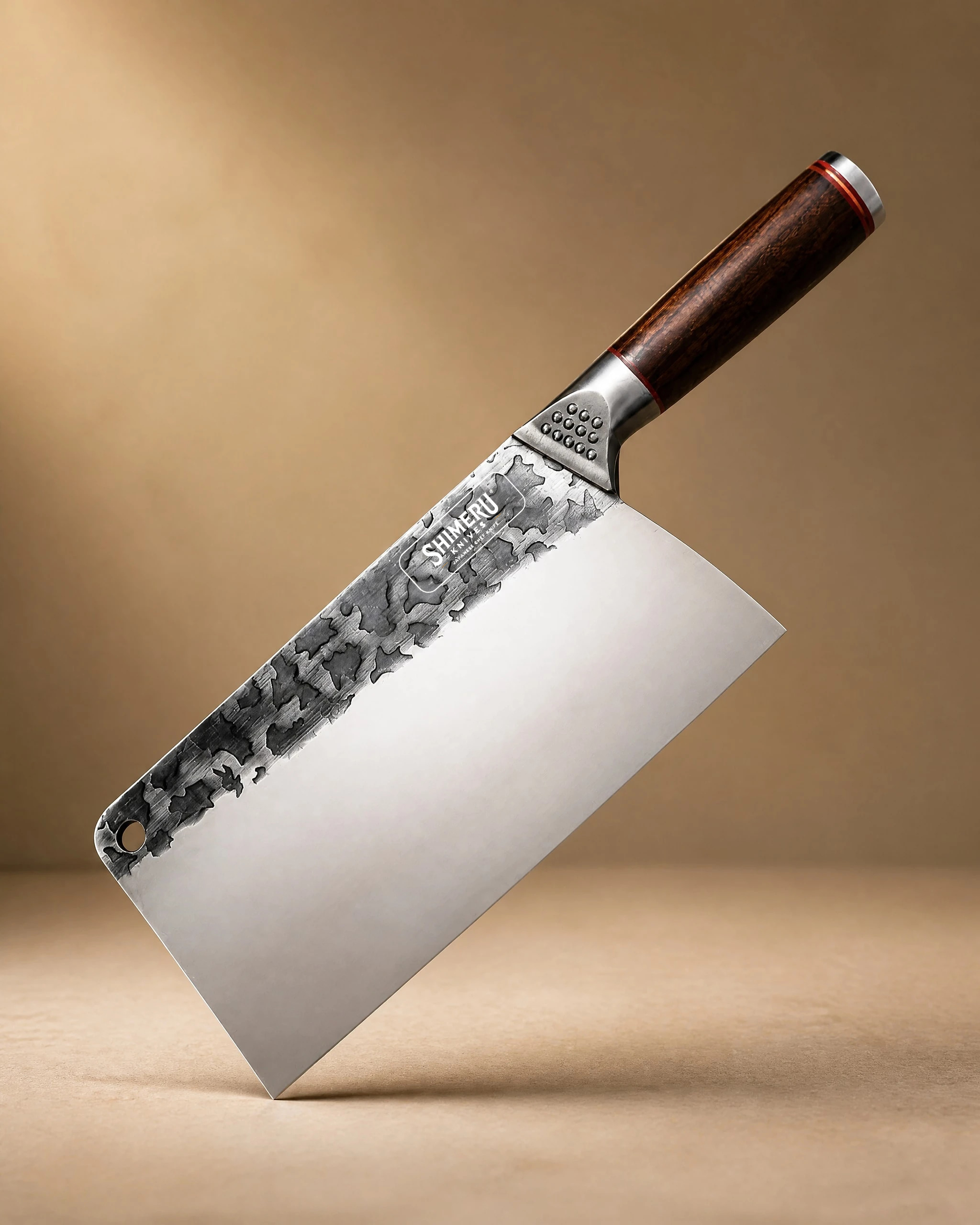 Saba 7" Stainless Steel Cleaver 中華包丁£44.99View product → is a robust tool for heavy kitchen tasks, and its thin edge still allows precise slicing. If you cook steak often for a crowd, a cleaver can help with portioning ribeye or sirloin, and its flat side can smash garlic cloves for a quick marinade. It is not essential for steak, but it adds versatility to your knife collection.
Slicing Technique for Perfect Steak
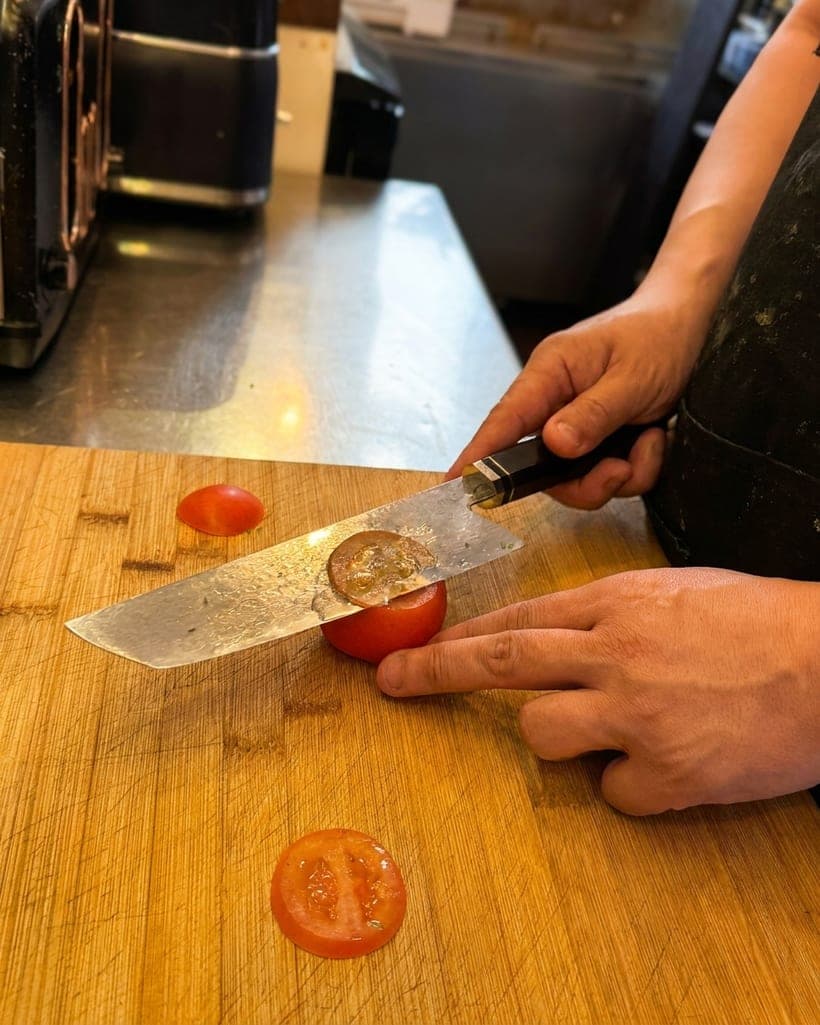
The knife is only part of the equation. To get the most from your Japanese steak knife, slice cooked steak against the grain. Look for the direction of the muscle fibres and cut perpendicular to them. This shortens the fibres and makes each bite tender. Angle your knife slightly to increase the surface area. A clean, steady pull with a sharp blade avoids tearing. With a Japanese steak knife, you should feel almost no resistance. Let the knife do the work; do not press down hard.
Final Thoughts on Buying a Japanese Steak Knife
A Japanese steak knife is an investment in your dining experience. It transforms the simple act of cutting steak into a smooth, controlled motion. The choice between a dedicated steak knife set and a versatile gyuto depends on your cooking habits. If you serve steak regularly and want the best table experience, a set like the Suma is hard to beat. If you prefer one multi purpose knife, the Sendai gyuto will handle steak as well as vegetables and fish. Pair either with a good sharpener and proper care, and your knives will serve you for many years.
Take your time, feel the knives if you can, and choose the one that fits your hand and your kitchen. That is the honest approach to buying a Japanese steak knife.
Photography: Sergey Kotenev via Unsplash.

