


Japanese Knife Rolls for Chefs: What to Look For and What to Carry

A knife roll is one of those pieces of kit that most chefs buy early, replace rarely and think about almost never. It sits in a bag, gets folded and unfolded twice a day, and quietly determines how much of your working life you spend worrying about your edges. For anyone carrying Japanese knives, though, the roll deserves more thought than it usually gets. Japanese blades are often thinner behind the edge, harder in the steel and finished with handles in materials that do not enjoy sitting in damp cotton for ten hours. The right roll protects all of that. The wrong one undoes it slowly.
This guide is about choosing and using a roll sensibly, and about which knives genuinely earn a place inside one.
What a knife roll actually needs to do
Ignore the styling for a moment and think about the four jobs a roll performs. It has to keep blades from touching each other, keep them from sliding out, keep moisture away from steel and handle, and be easy enough to carry that you actually bring it home rather than leaving it in a hot kitchen drawer. Everything else, the waxed canvas, the leather straps, the brass hardware, is decoration layered on top of those four requirements.
The most common failure is not cheap fabric. It is contact. Two gyuto edges resting against each other inside a full roll will chip each other, and a hard, thin Japanese edge loses that argument faster than a soft European one. Look for individual slots, or at minimum a design where the blades sit flat against separate panels rather than being gathered into one open pocket.
Fabric, lining and the moisture problem
Waxed canvas is the sensible default for a working roll. It shrugs off flour, takes a wipe, and does not soak up stock the way untreated cotton does. Heavy cotton twill is fine if the price matters and you are prepared to wash it. Leather looks superb and ages well but it is heavier, and a leather roll left in a hot car will dry out and crack along the folds within a couple of years.
The lining matters more than the outside, and it is the part most buyers never inspect. An untreated cotton lining holds dampness against the blade and the handle, which is how you get speckling on a carbon steel knife and swollen ferrules on a wooden handle. A wipeable nylon or coated lining lets you deal with a wet blade in a busy service without soaking the whole roll. If the roll closes with a strap rather than a zip, check the edges are bound properly, because an unbound edge frays and then sheds fibres into your slots.
Which knives earn a place in the roll
Most chefs overpack. A roll with eight slots tends to get filled with eight knives, four of which never leave the bag. Think about what you actually reach for across a normal week and build around that. For nearly everyone, the centre of the roll is a gyuto, and the rest of the roll is supporting cast.
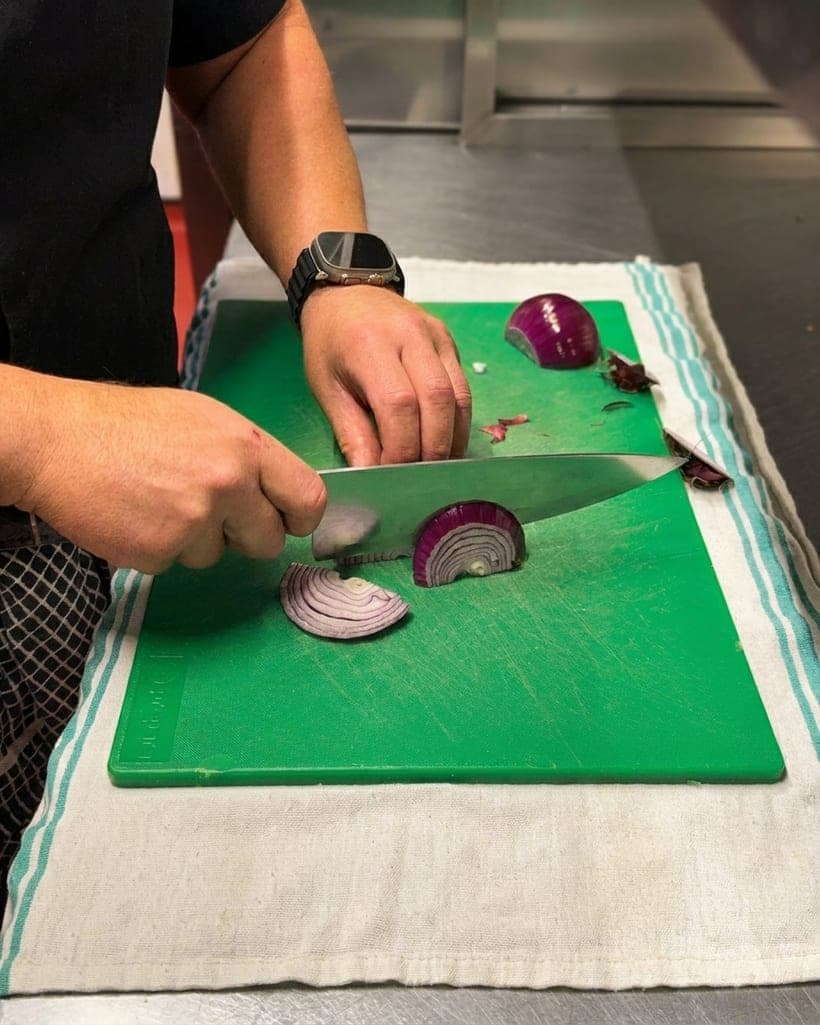
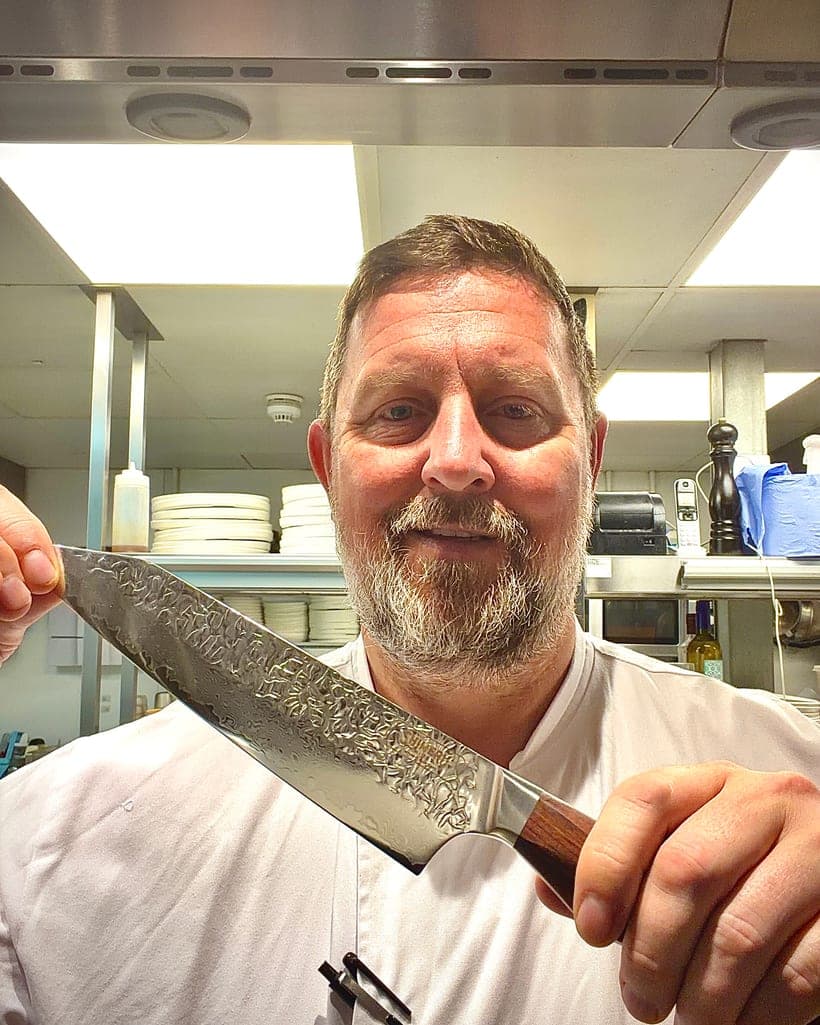
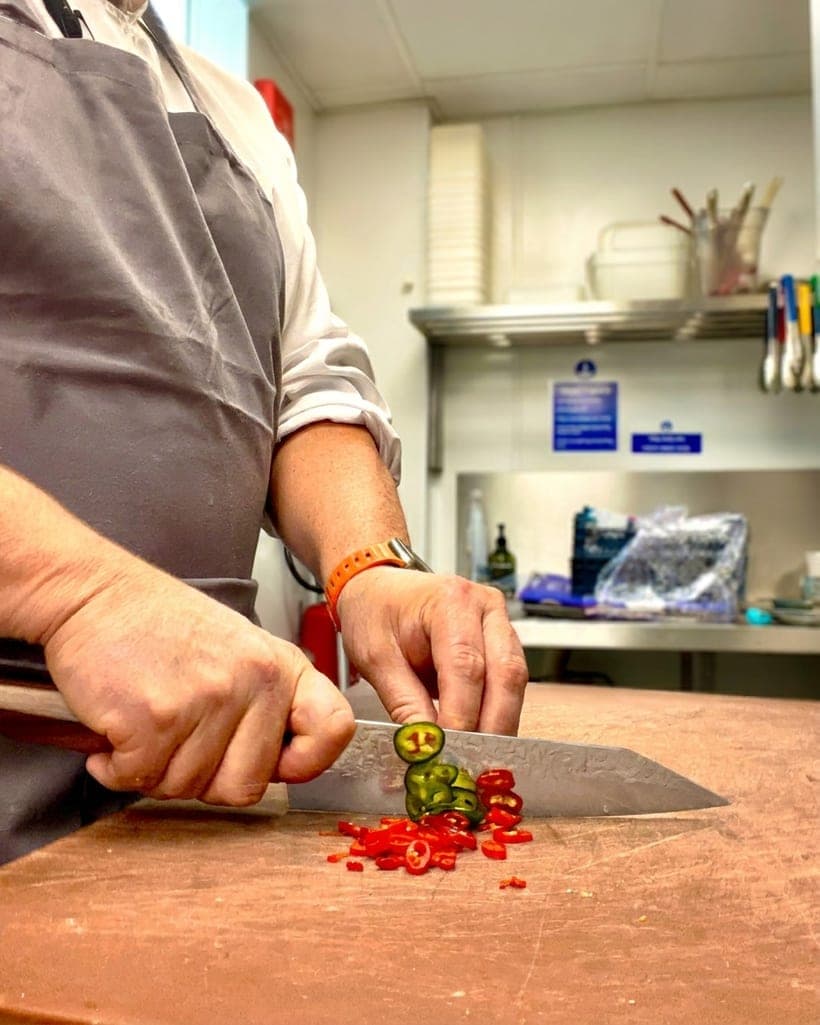
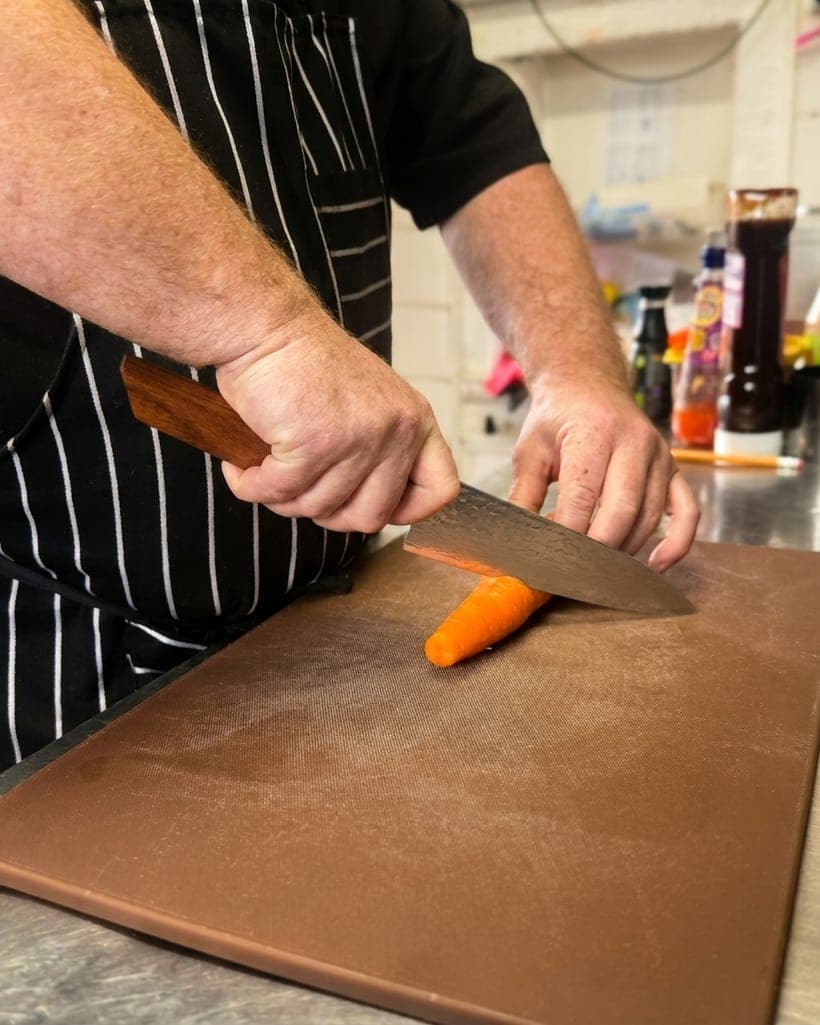
If you want a gyuto that looks as good as it performs, 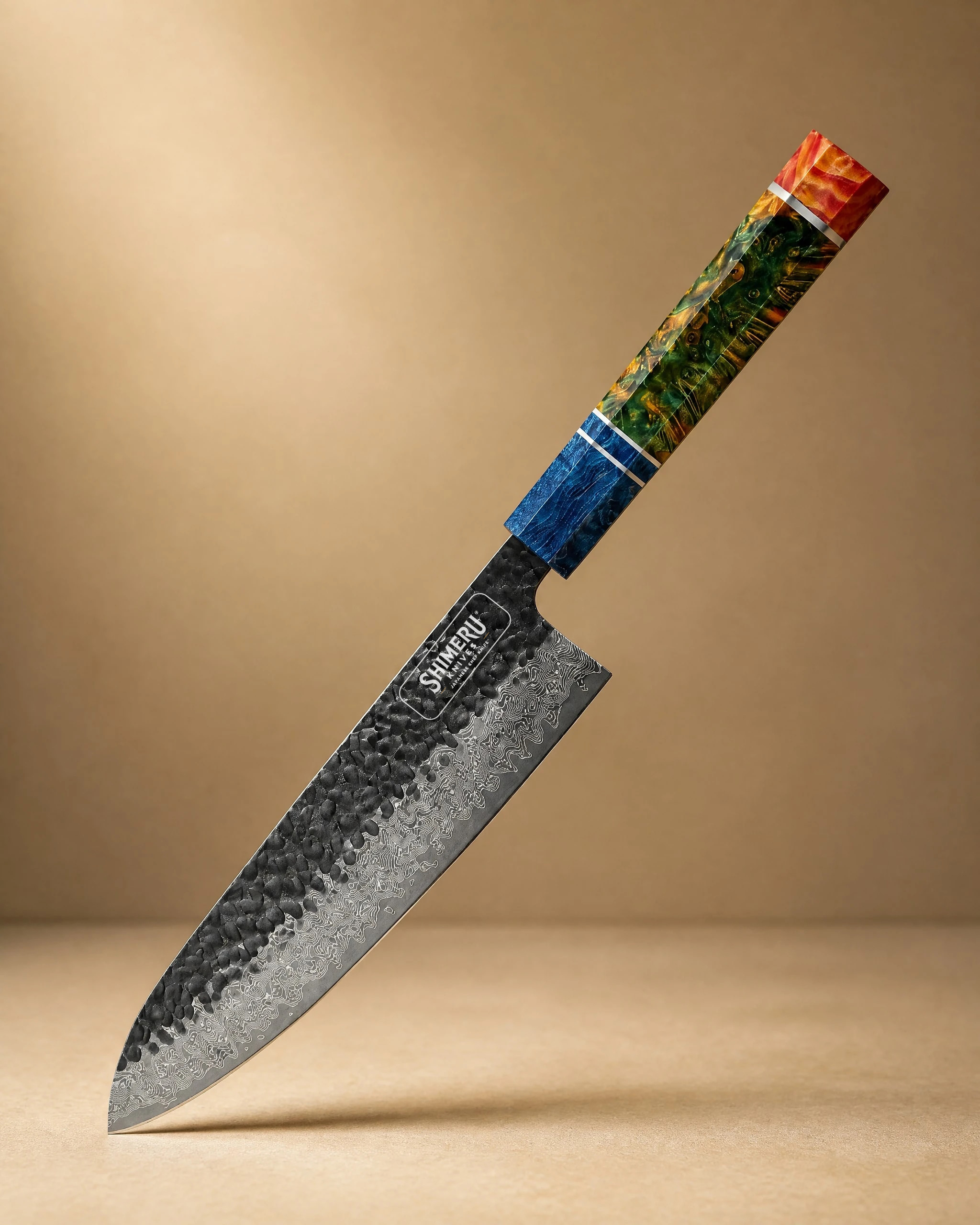 Yoshii 8″ Damascus Steel Gyuto Knife 牛刀£84.99View product → is a sensible starting point. It is a Damascus-clad blade with a wood and copper handle, and it handles the three jobs that dominate a working day: slicing, dicing and chopping. The copper in the handle is a warm touch, but check it against your hand before you commit, since metal ferrules feel different to wood when you are working through a case of onions.
For a stainless blade that takes a bit less babysitting on a wet section, 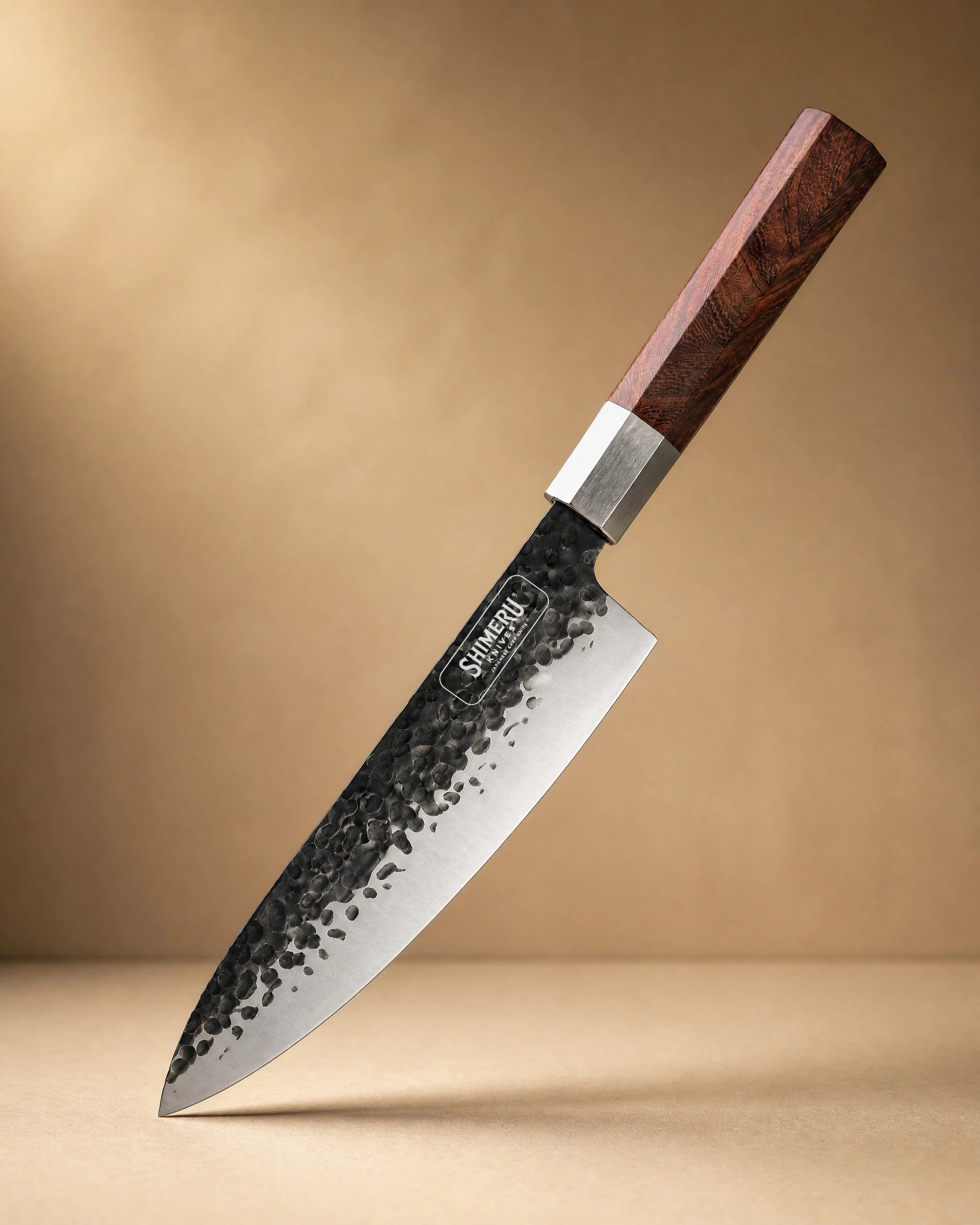 Sendai 8" Steel Gyuto Knife 牛刀£54.99View product → covers vegetables, herbs, meat and fish without asking much of you. The wooden handle gives it a familiar feel in the hand, and stainless construction means you are not drying it in a panic between courses.
If you want one knife that will do almost everything, 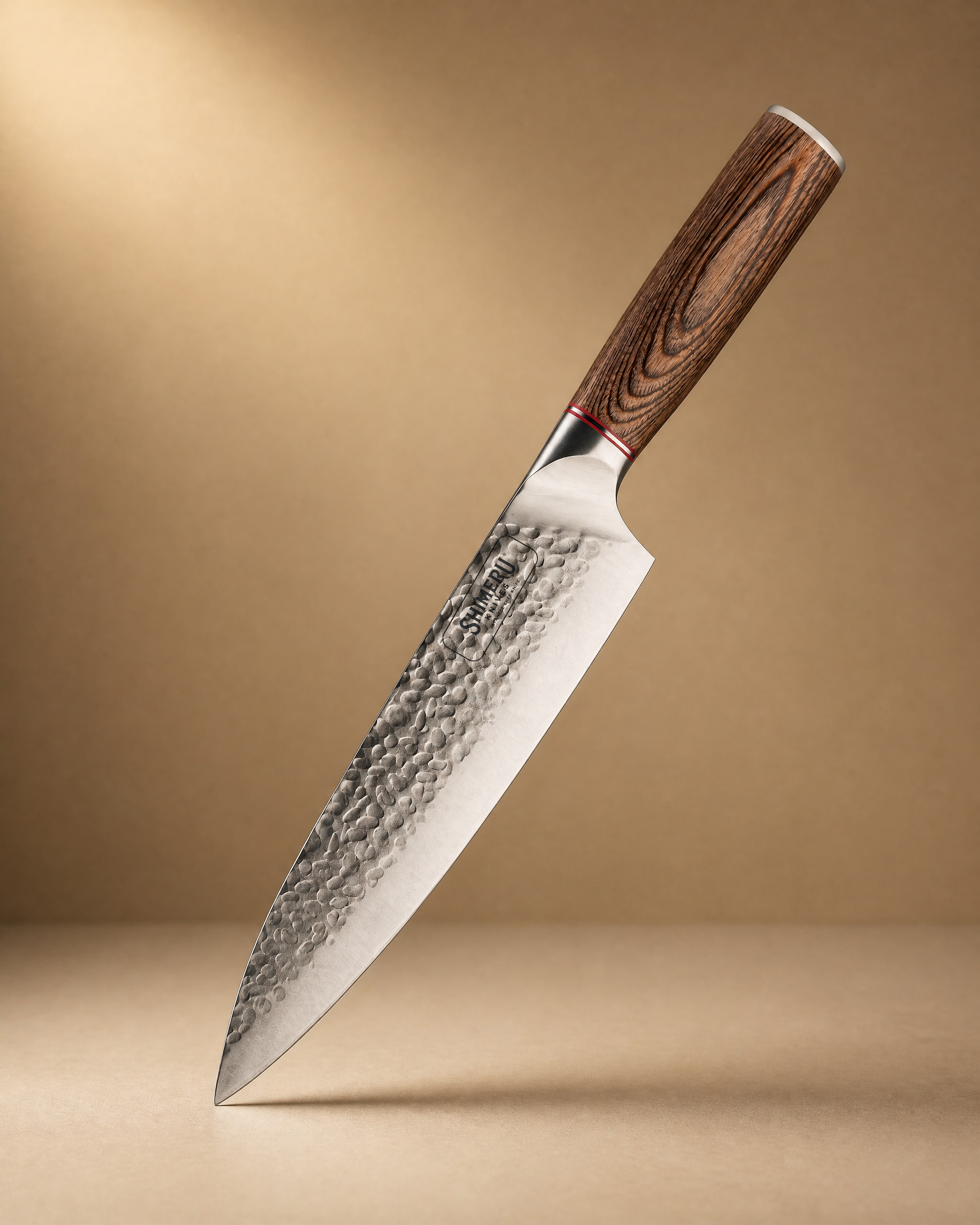 Akan 8'' Gyuto Knife 牛刀£54.99View product → is the pragmatic choice. Stainless steel, a Pakkawood handle that copes with constant washing, and a profile that suits meats, fish, vegetables and fruit. It is the sort of knife that ends up in the roll every single day because there is never a reason to leave it behind.
A set is a different proposition. 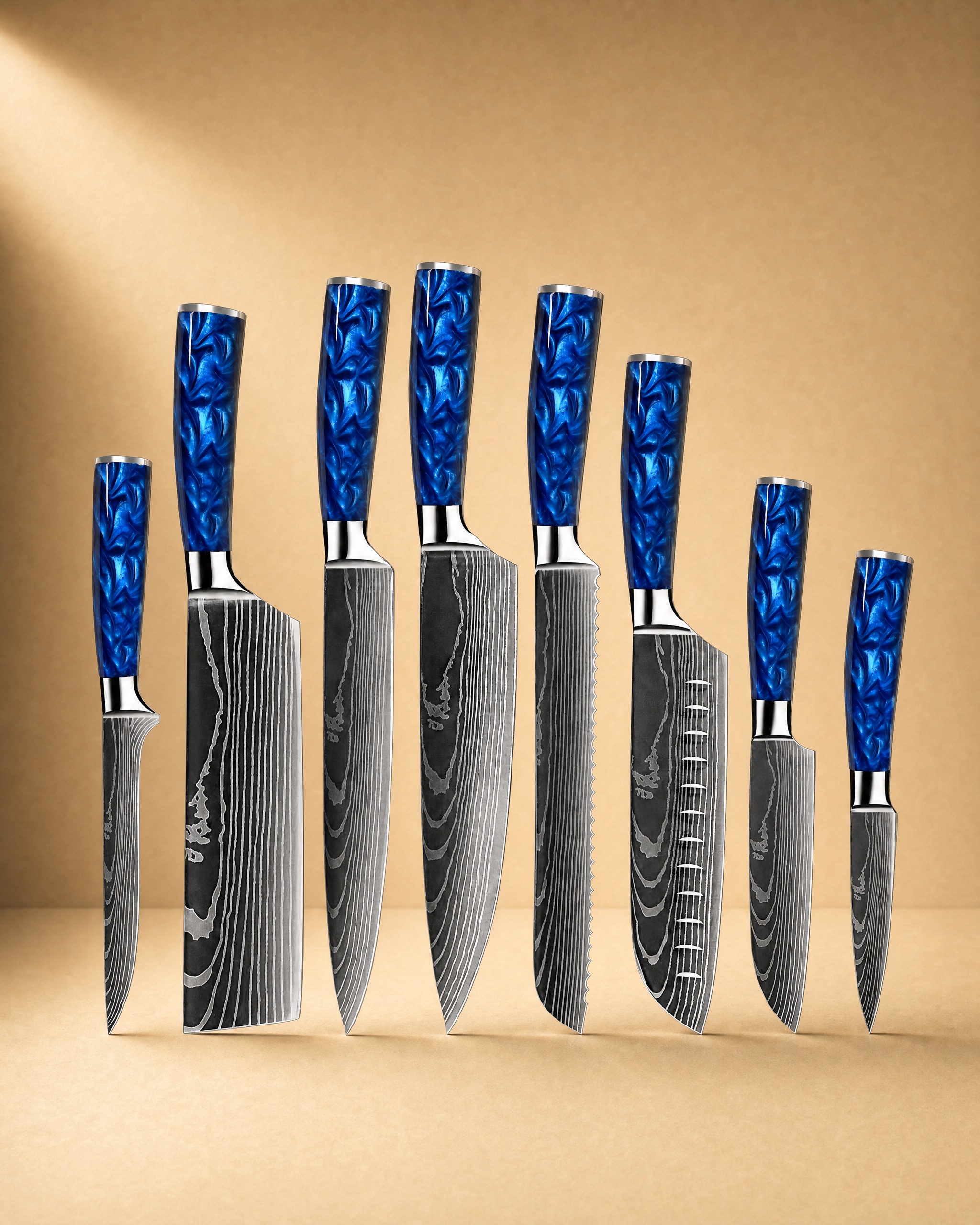 Shinano 信濃川 Damascus Pattern Stainless Steel Kitchen 8 Knife Set£154.99View product → gives you a coordinated block of knives with a Damascus pattern and matching handles, which suits a new kitchen, a chef rebuilding their kit after years of mismatched hand-me-downs, or anyone who prefers their roll to look like one coherent thing. Be honest with yourself about whether you will use every knife in it. A set you use three-quarters of is better value than five individual knives you chose badly, but a set you use half of is just weight.
Beyond the gyuto, a small petty for trimming and garnish work, and a serrated knife if you break down bread or tomatoes, will cover the vast majority of professional days. Everything else can live at home.
Capacity, layout and the three knife rule
Slot count is a poor way to judge a roll. A twelve-slot roll that folds down to the size of a briefcase is harder to carry than an eight-slot roll that rolls tightly, and the extra slots just encourage you to carry knives you do not need. Measure the longest blade you own, add a couple of centimetres, and buy a roll that comfortably fits it. A gyuto crammed into a short slot will sit at an angle and press its edge against the stitching.
Layout matters as much as capacity. Slots that run horizontally with a flap between each blade are the safest arrangement for thin Japanese edges. Rolls where the blades all face the same way with one central flap are quicker to pack but offer less separation. If you carry a saya or blade guards, check the slots are wide enough to take a knife with the guard on, because a roll that forces you to remove guards every time is a roll you will stop using properly.
How to pack a roll properly
Packing is a small skill, but it is the difference between a roll that lasts a decade and one that quietly damages your kit. The routine that works:
- Dry the blade before it goes in, every time, even when you are tired and the pass is calling.
- Put the heaviest, longest knife in first, at the spine end of the roll, so the fabric wraps around it rather than folding over it.
- Alternate the direction of the knives where the layout allows, so weight is spread rather than concentrated at one end.
- Use the flap between every pair of blades, and never let two edges share a slot.
- Roll from the handle end towards the tip end, firmly but without forcing the fabric to crease along the same line every day.
One more habit worth building: take your everyday knife home. A roll that stays in the kitchen gets knocked about, borrowed and left open on a wet bench. The blade you rely on most should travel with you.
Looking after the roll itself
Waxed canvas should be brushed clean and re-waxed occasionally where it creases. Fabric rolls can be washed, but only after you have emptied them completely and checked no pins or small tools are hiding in the seams. Never put a roll in a tumble dryer, because heat will shrink the lining and distort the slots.
Leave the roll open when you get home rather than folding it straight back up. Air circulation is what stops the interior staying damp, and a roll that is permanently closed in a hot kitchen will start to smell of old onions within a season. If you keep a small stone or a honing rod in the roll, put it in a separate pocket rather than alongside a blade. More knives are damaged by loose kit rattling around than by anything that happens on the board. Our knife care guide covers storage and daily maintenance in more depth if you want the longer version.
Matching the roll to the way you work
A chef who works one kitchen and drives to it should buy differently from someone who stages across three sites a month. If your roll travels daily on public transport, weight and a secure closure matter more than slot count. If it lives in a locker and comes home at weekends, a simpler fabric roll with a good strap will serve you for years and cost less.
Consider, too, what you do at home. Many chefs keep a small second roll for the knives they cook with on their days off, which stops the working set from being dragged out for a Sunday lunch and keeps edges fresh for service. That is a cheaper strategy than buying one expensive roll and overloading it.
If you are still working out which blades to build the roll around, our guide to choosing a knife is the place to start, and you can browse the full range in our knife shop. Buy the roll after you know what is going in it, not before. A good roll is quiet, practical kit that protects your edges and asks nothing of you in return. Choose one that fits your longest blade, dries properly and closes securely, and it will outlast most of the knives inside it.
Photography: wu yi via Unsplash.


