



Japanese Knife Sets vs Single Knives: Which is Better?

When you start looking for high-quality blades, the first question that often comes up is whether to buy a Japanese kitchen knife set or purchase single knives one by one. It is a decision that affects not just your wallet but also how you use and care for your tools in the kitchen. Both routes have their strengths, and the right choice depends on your cooking habits, budget, and long-term intentions. This guide will walk you through the key differences, helping you decide which approach suits you best.
The Case for a Japanese Knife Set
A set japanese knives provides a complete collection of blades that are designed to work together. From a versatile chef's knife to a nimble paring knife, you get the essential shapes for most kitchen tasks right out of the box. This convenience is the main draw. You do not need to research each knife type individually or worry about matching handles and steel types. Everything arrives coordinated, often in a single package that includes a block or storage roll.
For someone new to Japanese steel, a japanese knife set with block can be an excellent starting point. It removes the guesswork and gives you a range of knives that cover chopping, slicing, peeling, and boning. The blocks also keep the blades organised and protect their edges when not in use. Many cooks find this simplicity reassuring, especially if they are moving from a standard Western knife set to something more refined.
Another advantage is cost efficiency in the short term. Buying a set often works out cheaper per knife than purchasing the same blades individually. Manufacturers and retailers bundle them to offer a slight saving, which can be appealing if you want to stock your kitchen without a large upfront spend on each separate piece.
When Single Knives Make More Sense
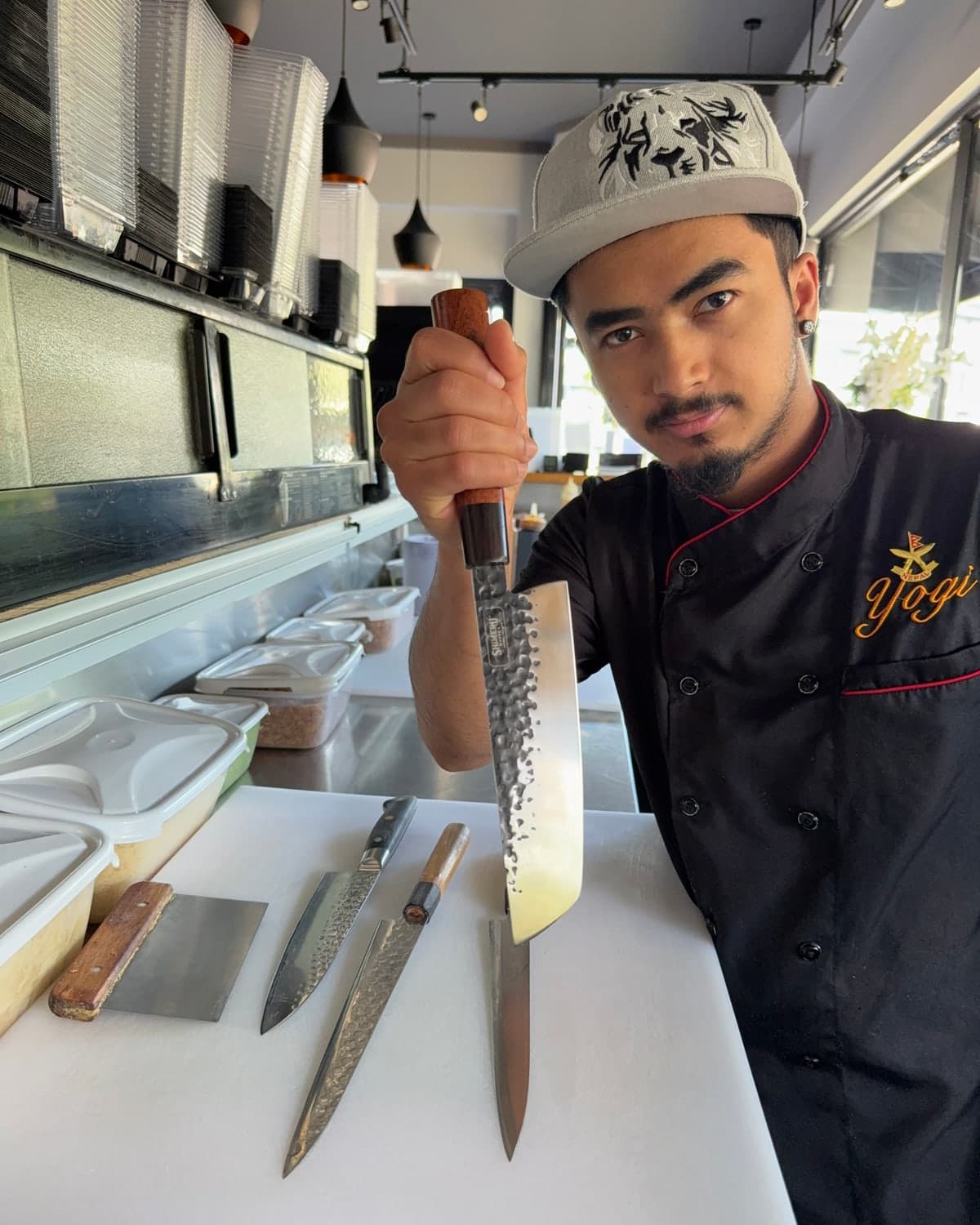
On the other side, experienced cooks and professionals often prefer to buy single knives. This approach allows you to invest in the exact blades you use most, rather than paying for knives that may sit unused in a block. For example, if you frequently prepare vegetables but rarely butcher meat, you might prioritise a high-quality nakiri or santoku over a boning knife.
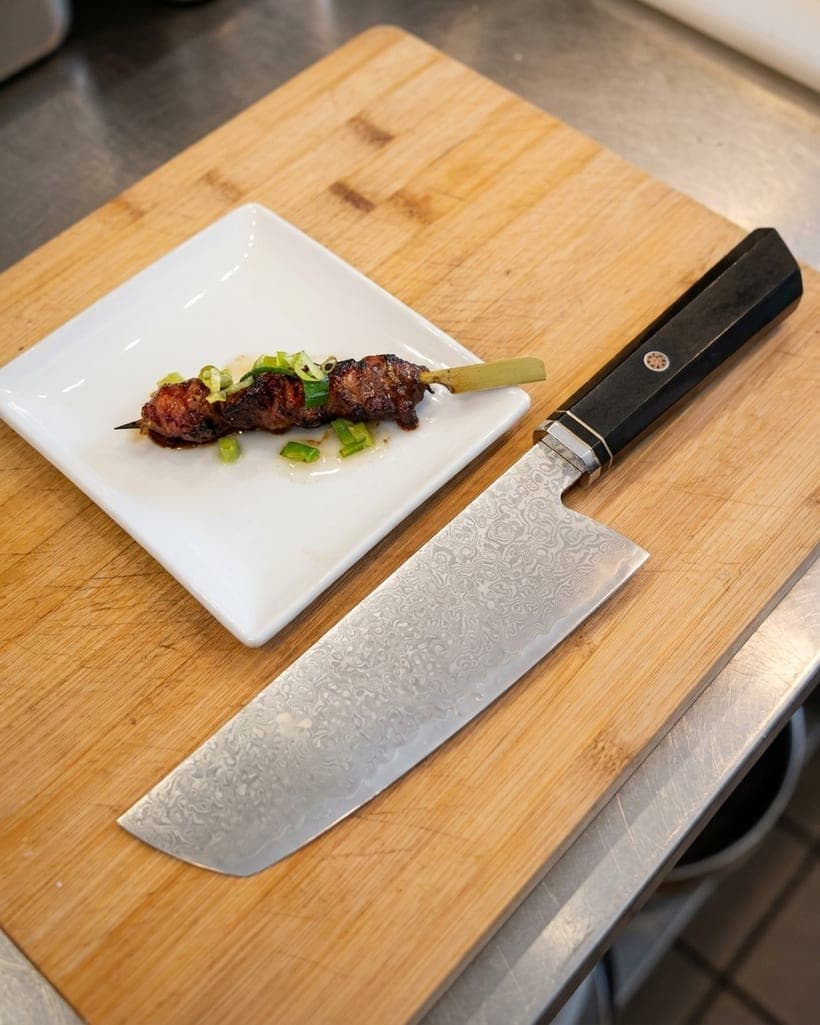
Single knife buying also lets you customise your collection to your preferred steel, handle material, and brand. You can mix a Damascus blade for your chef's knife with a stainless steel petty knife, choosing each based on performance and aesthetics rather than being tied to a set's uniform style. Over time, this can lead to a more personal and effective kit.
There is also the matter of quality distribution. In many budget sets, the larger knives are decent but the smaller ones may feel cheaply made. When you buy singles, you control the quality of every piece. You can put more money into the knives you use daily and opt for simpler, less expensive options for occasional tasks.

Comparing the Best Japanese Kitchen Knife Set Options
If you decide a set is right for you, the choice of which to buy can still feel overwhelming. The market offers many collections, but a few stand out for their balance of quality, appearance, and value. We have selected three sets that cover different tastes and needs, all made with high-carbon steel and distinctive handles.
The 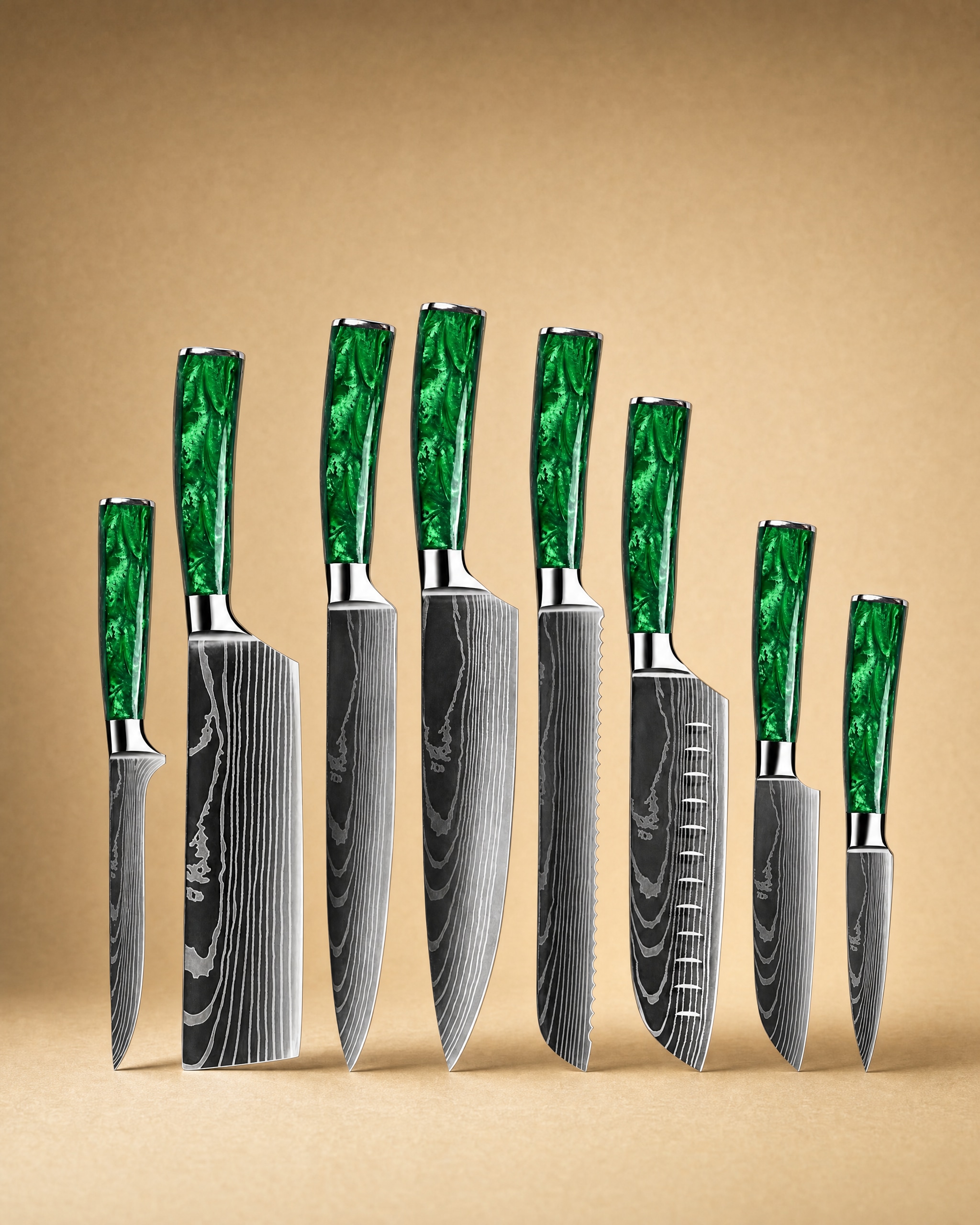 Kitakami 北上川 Damascus Pattern Stainless Steel Kitchen 8 Knife Set£154.99View product → is a striking option with a green marble effect resin handle that looks modern and organic. The Damascus pattern on the blades is not just decorative: it helps release food more easily during slicing. This set includes all the essential knives, making it a solid choice for someone who wants a complete, ready-to-use collection with a unique visual identity.
For those who prefer warmer tones, the 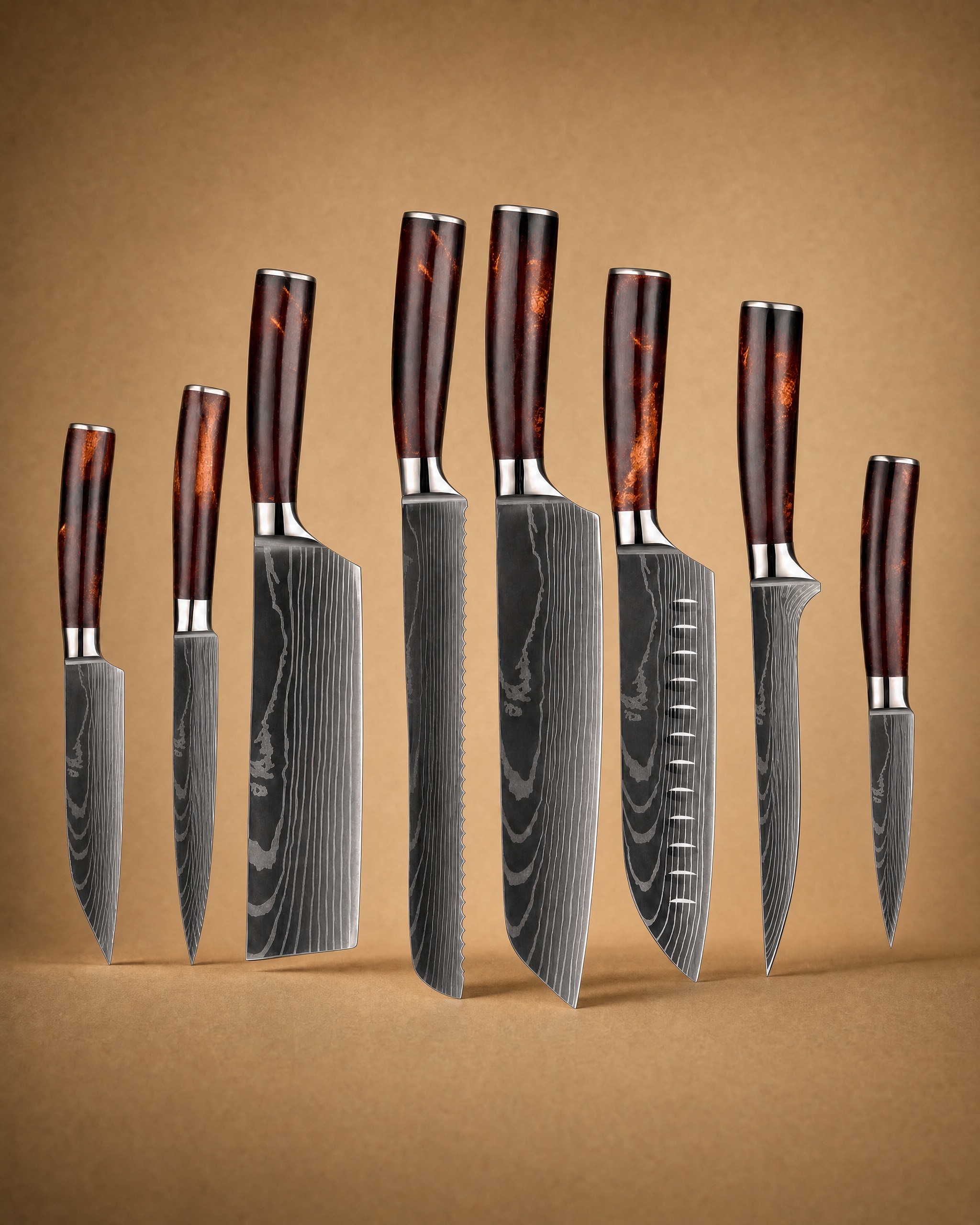 Asahi 朝日川 Damascus Pattern Stainless Steel Kitchen 8 Knife Set£154.99View product → features a rich red resin handle that stands out on any countertop. The same Damascus stainless steel construction ensures durability and sharpness over time. Both sets offer the convenience of a full knife range, so you can start cooking immediately without hunting for missing tools.
If your primary need is for steak knives, the 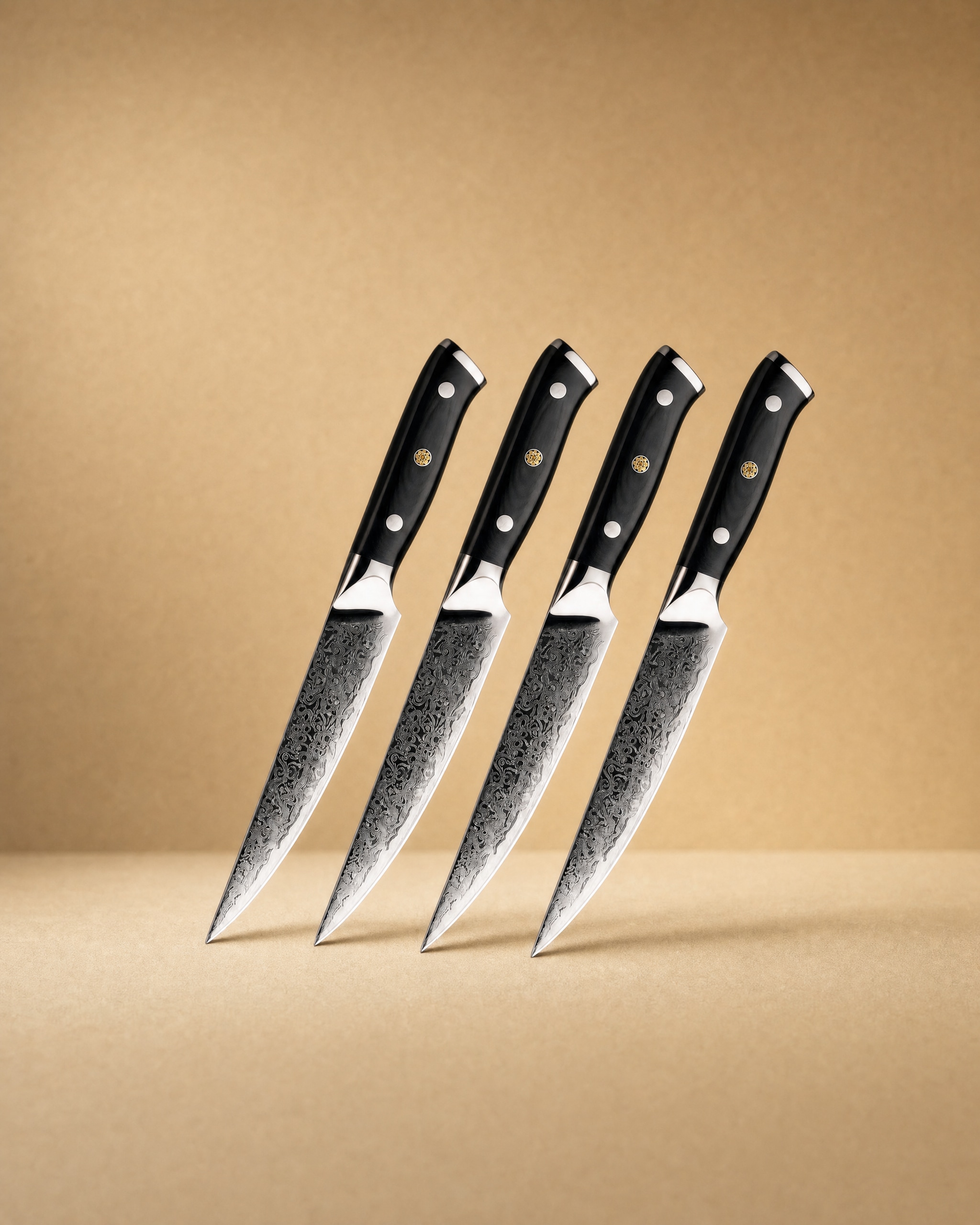 Suma 4.5" Damascus Steel Steak Knife Set 4 pieces ステーキナイフ£114.99View product → is a compact set of four 4.5 inch blades. Made with a VG10 core wrapped in 67 layers of Damascus steel, these are serious steak knives that will last for years. The G10 fibre handle is resistant to moisture and hard-wearing. This set is a perfect complement to a larger general-purpose knife set, or a standalone choice for those who entertain often.
Another complete eight-piece option is the 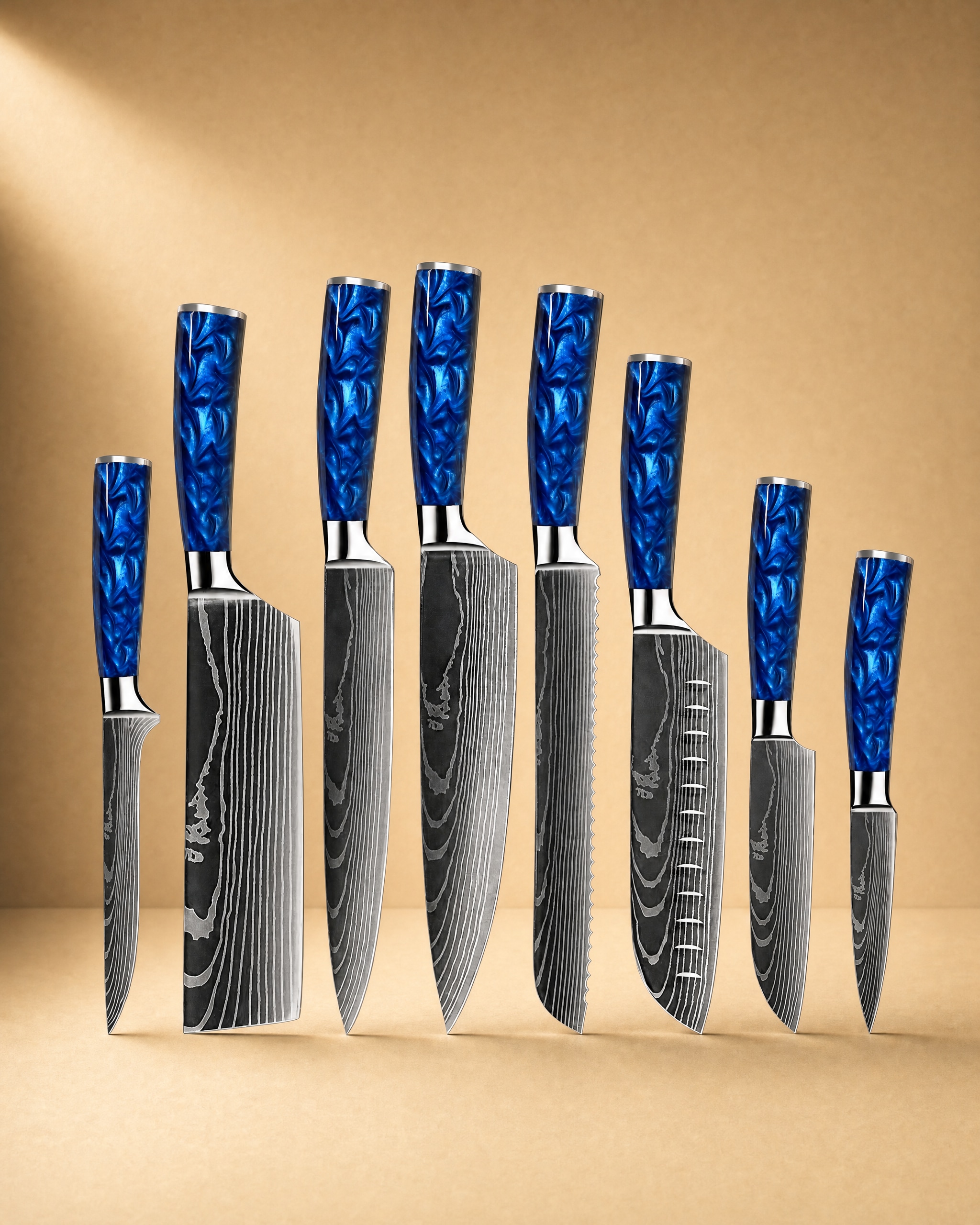 Shinano 信濃川 Damascus Pattern Stainless Steel Kitchen 8 Knife Set£149.99 · currently out of stockView product → with its blue resin handle. It shares the same high-carbon Damascus steel as the others, offering a different colour for personal taste. All these sets illustrate that you do not have to compromise on quality when buying a japanese kitchen knife set. Each delivers consistent performance across the board.
Space and Storage Considerations
A japanese knife set with block obviously takes up more counter space than a single knife. If your kitchen is small or you prefer a minimalist look, a block may feel bulky. On the other hand, a block protects the edges and keeps them accessible. Some sets come with a magnetic storage board or a roll, which saves space while still keeping the knives together.
Single knives, especially if you buy a few at a time, can be stored in a simple knife drawer insert, a wall magnet, or a single-slot block. This gives you more flexibility to arrange your tools as you see fit. You can also choose to buy a high-quality magnetic strip and display your favourites as functional art.
Skill Level and Learning Curve
For someone learning to use Japanese knives, a set provides a gentle introduction. You get knives of different sizes and shapes that teach you the various cutting techniques without having to research each one. The handling of each blade in the set will be consistent, making it easier to develop muscle memory.
Experienced cooks often argue that buying singles forces you to learn the nuances of each blade, which can make you a better cook in the long run. You become more deliberate about which knife to use for each task. But this is not an argument against sets: even a set can be used thoughtfully.
We recommend checking our how to choose a knife guide for more detail on blade shapes and their best uses. That resource can help you decide whether a set already covers your needs or whether you would be better off picking individual knives.
Price and Long-Term Value
On a simple price comparison, a japanese steel knife set usually offers more blades for your money upfront. However, the long-term value depends on how many of those knives you actually use. If you find yourself only reaching for the chef's knife and a paring knife, the other four blades become sunk cost. In that scenario, buying the two singles you need would have saved money and counter space.
Conversely, if you use a variety of knives regularly and appreciate having the right tool for each job, a set delivers excellent value. The consistency of the steel and handles also makes sharpening easier, as all knives respond similarly to the same honing technique.
We have a full range of sets and singles in our knife sets category for you to compare. Take your time to think about your cooking patterns before committing.
Our Verdict: Which Should You Choose?
There is no universal right answer. If you are new to Japanese knives and want a complete, attractive solution that works from day one, a japanese kitchen knife set is a wise investment. The Kitakami 北上川 Damascus Pattern Stainless Steel Kitchen 8 Knife Set£154.99View product → and Asahi 朝日川 Damascus Pattern Stainless Steel Kitchen 8 Knife Set£154.99View product → are excellent examples that combine style with solid performance. They give you a full toolkit without the hassle of piecing it together.
If you already know your preferences and have a clear idea of which knives you use most, buying singles allows you to build a collection that is truly yours. You can start with a high-quality chef's knife and add others as your skills and budget grow. That approach can ultimately lead to a more personal, refined set of tools.
Whichever route you take, proper care is essential for Japanese steel. Visit our knife care guide for advice on cleaning, sharpening, and storage. A well-maintained knife, whether part of a set or a singleton, will serve you faithfully for many years.
Photography: Viktor Talashuk via Unsplash.


