




Japanese Bread Knife Buying Guide

If you have ever struggled to slice a crusty sourdough loaf without crushing its airy interior, you know the value of a proper bread knife. A good bread knife does not just cut: it glides through crisp crusts and soft crumb alike, leaving clean slices without tearing. Japanese bread knives, known locally as pankiri naifu, have earned a reputation for exceptional sharpness and precision. This guide will walk you through everything you need to consider when buying a Japanese bread knife, from blade length and serration style to handle materials and maintenance. By the end, you will be equipped to choose the knife that best suits your baking habits.
Why Choose a Japanese Bread Knife?
Traditional Western bread knives often have thick, heavy blades and large, aggressive serrations. They can work well for very hard crusts, but they can also tear delicate pastries or brioche. Japanese bread knives, by contrast, tend to feature thinner blades made from harder steel. Their serrations are typically finer and more uniformly ground, which allows for a smoother cut. The result is a knife that feels nimble in the hand and produces cleaner slices across a wide range of baked goods. Whether you bake artisan loaves at home or simply enjoy fresh bread from the bakery, a Japanese bread knife can transform your slicing experience.
Key Considerations When Buying a Japanese Bread Knife
Blade Length
Most Japanese bread knives range from 8 inches to 10 inches. An 8 inch blade is compact and easier to manoeuvre, making it a good choice for smaller loaves or for those with limited counter space. A 10 inch blade can handle larger boules and longer baguettes with fewer strokes, giving you more control on a long, even slice. Consider the size of the bread you most often cut. For a home baker who regularly bakes round loaves, a 10 inch blade offers extra reach. If you mainly slice sandwich bread or small rolls, an 8 inch knife may be sufficient.
Serration Pattern
Not all serrations are equal. Japanese bread knives usually have a scalloped edge with sharp points that bite into the crust without crushing the soft interior. Some serrations are ground on one side only (single bevel), which can produce a very precise cut but requires a little practice for straight slicing. Others are double bevel, offering a more familiar feel for those used to Western knives. The spacing and depth of the serrations also matter: finer serrations work well for soft bread and pastries, while coarser serrations are better for very hard crusts. Ideally, choose a knife with a serration pattern that matches your typical bread styles.
Steel Type
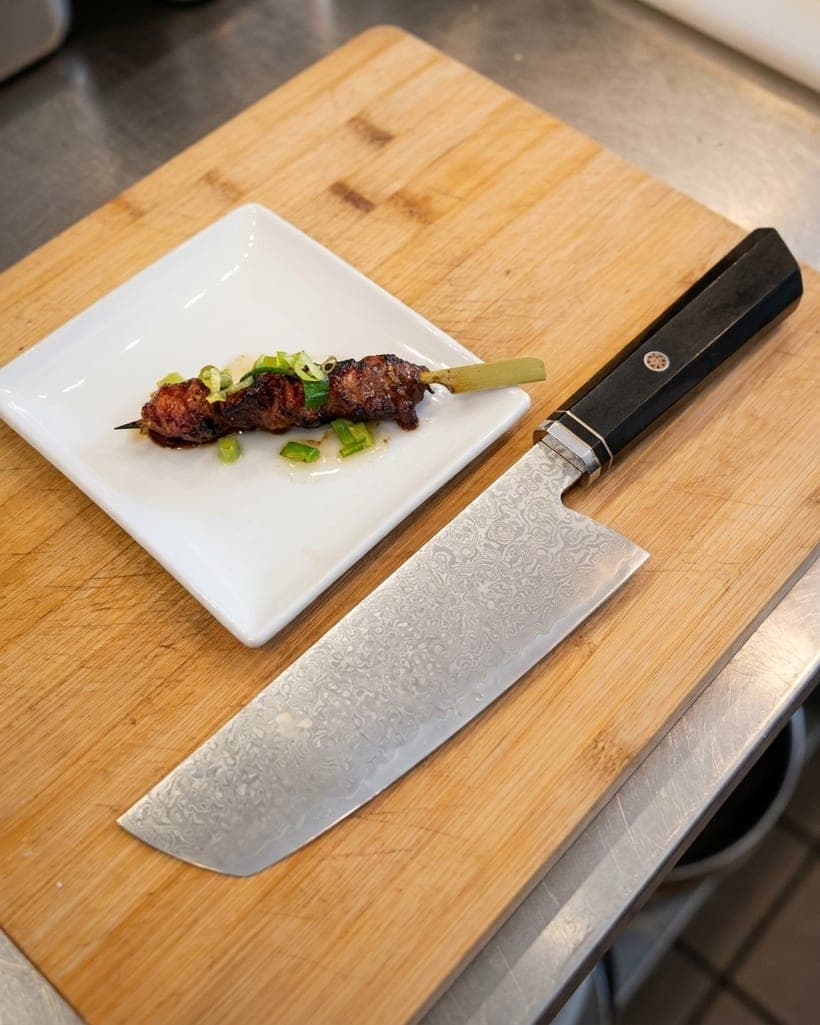
Japanese knives are often made from high carbon stainless steels that hold a sharp edge for a long time. For bread knives, edge retention is especially important because the serrated tips can dull over time, and resharpening serrations is more difficult than sharpening a straight edge. Look for a steel with good hardness (around HRC 58-62) and corrosion resistance. Stainless steel is practical for bread knives because it can handle the moisture from bread without rusting. Some knives also use a Damascus pattern, which layers different steels for both performance and beauty. While the pattern does not affect cutting ability, it can add strength and a striking appearance.
Handle and Balance
A bread knife should feel comfortable and well balanced, especially since you may use it for many slices in a single sitting. Traditional Japanese handles are often octagonal or D shaped, made from woods like magnolia, walnut, or resin infused hardwood. The shape allows a secure pinch grip, and the material absorbs sweat and provides a warm feel. Western style handles are also available on some Japanese bread knives. Consider whether you prefer a lighter handle that shifts the balance forward or a heavier handle that keeps the weight in your palm. The best handle is one that feels natural in your hand for long slicing sessions.
Maintenance and Sharpening
Bread knives with serrated edges cannot be sharpened on a standard whetstone. They typically require a professional sharpening service or a specialised tool that matches the serration profile. Some Japanese bread knives are designed with a scalloped edge that can be honed on a ceramic rod or with a particular sharpening system. Before buying, check whether the knife can be sharpened by you or if you need to send it to a professional. Knife care is important: always wash by hand and dry immediately. Avoid the dishwasher, as high heat and detergents can damage the handle and dull the blade. For more tips on keeping your knives in top condition, visit our knife care guide.
Our Top Recommendations
At Shimeru Knives, we stock a carefully selected range of Japanese bread knives. Below are two outstanding models that cover different preferences in blade length, steel, and handle style.
Rumoi 10 inch Japanese Bread Knife
If you often cut large, crusty artisan loaves or need a longer blade for clean slices, the Rumoi 10 inch bread knife is an excellent choice. Its 10 inch blade, made from AUS stainless steel, offers a good balance of hardness and corrosion resistance. The Mkuruti wood handle is comfortable and adds a touch of natural warmth. This knife is particularly well suited for breads with a hard crust, as the longer blade allows you to saw through with fewer back and forth motions. It also handles soft brioche without crushing the delicate crumb. For a versatile, high performing bread knife that will last for years, consider 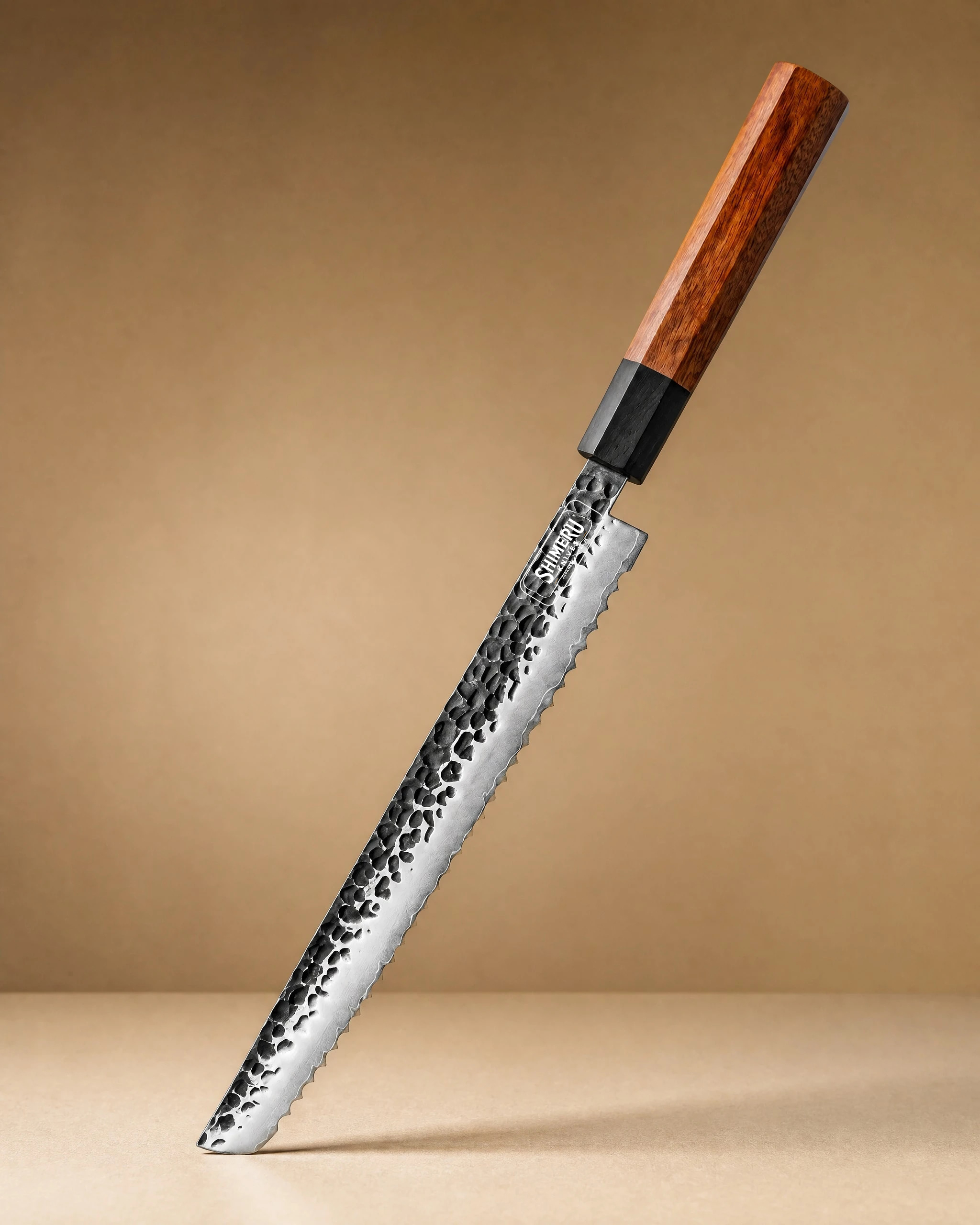 Rumoi 10" Japanese Bread Knife パン切りナイフ£59.99View product →.
Shimanto 8 inch Damascus Steel Bread Knife
For those who prefer a slightly shorter blade or want the striking appearance of Damascus steel, the Shimanto 8 inch bread knife is a superb option. The blade features 67 layers of Damascus with a VG10 core, giving it excellent edge retention and a beautiful wave pattern. The resin and hardwood handle is durable, stable, and comfortable in the hand. This knife excels with crusty loaves and delicate pastries alike, and its 8 inch length makes it easy to control for smaller loaves or for slicing in tight spaces. If you appreciate fine craftsmanship and a knife that stands out visually, take a closer look at 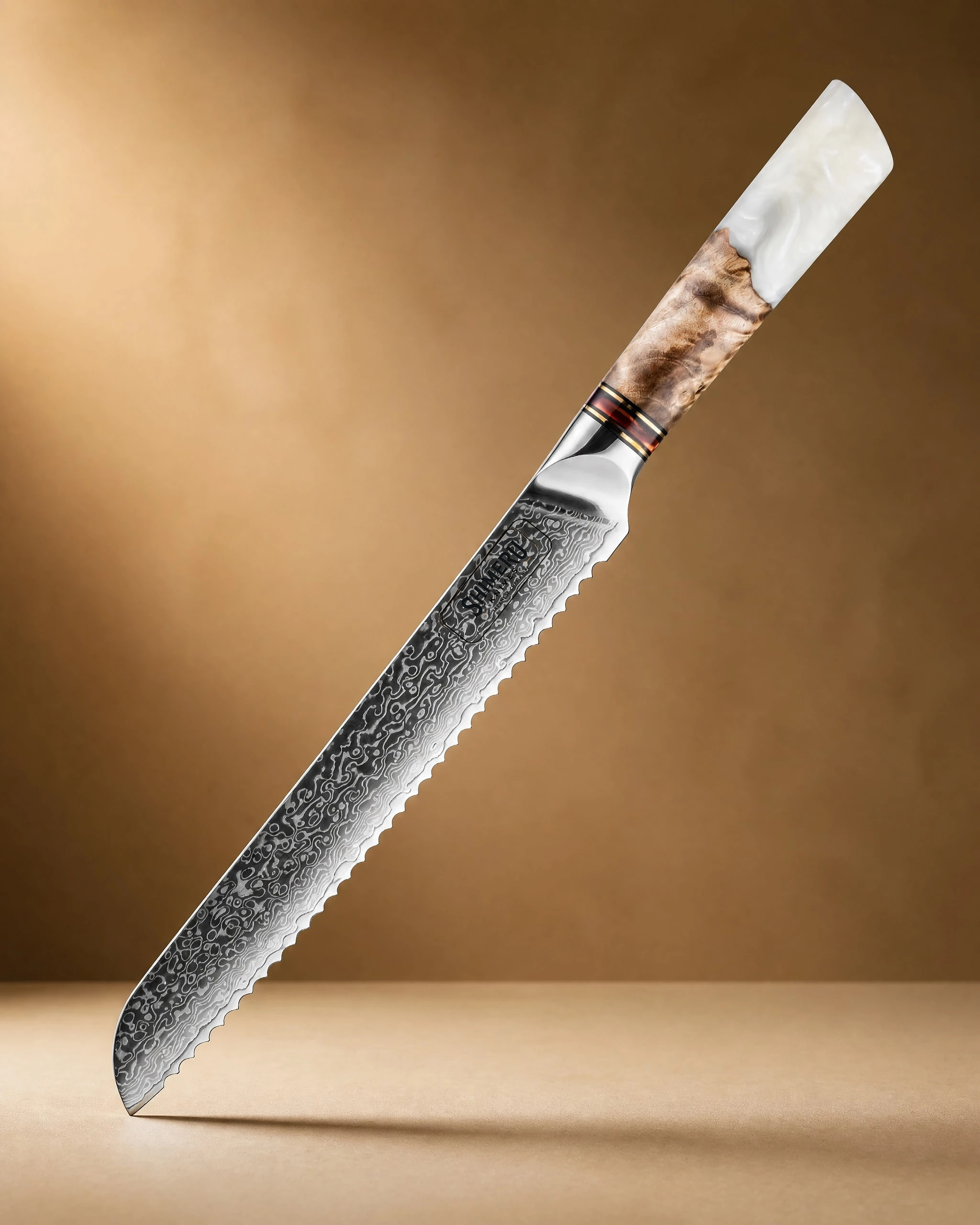 Shimanto 8" Damascus Steel Bread Knife パン切りナイフ£69.99View product →.
How to Use and Care for Your Japanese Bread Knife
Using a bread knife correctly prolongs its life and ensures the best results. Always let the knife do the work: use a gentle sawing motion rather than pressing down hard. The serrations will grip the crust and cut through without force. For very soft breads, you can use a lighter touch to avoid compressing the crumb. After each use, wash the knife by hand with mild soap and warm water, then dry it thoroughly with a soft cloth. Store the knife in a knife block, on a magnetic strip, or with a blade guard to protect the serrations. Never place it loose in a drawer, as the serrations can get damaged or become dull more quickly. If you are new to Japanese knives, our knife guide offers more detailed advice on choosing and caring for your first blade.

Common Questions About Japanese Bread Knives
Can I use a Japanese bread knife for other foods?
While a bread knife is specialised for baked goods, it can also be used to slice tomatoes, melons, or cakes with delicate layers. However, avoid using it on frozen foods or bones, as the serrations can chip or bend. For general kitchen tasks, a chef's knife or a utility knife is more appropriate.
How do I know which size to choose?
Consider the size of your typical loaf. If you often bake large boules or buy long baguettes, go for a 10 inch blade. If you mainly slice sandwich bread or round loaves under 20 cm in diameter, an 8 inch knife will serve you well. Think also about your hand size and comfort: a longer blade may feel unwieldy for some users.
Are Japanese bread knives dishwasher safe?
No. Dishwashers can damage the handle material and dull the blade due to high heat and harsh detergents. Always hand wash and dry your knife immediately.
Final Thoughts
A Japanese bread knife is an investment in everyday baking pleasure. The right knife will make your slicing smoother, safer, and more enjoyable. Whether you opt for the longer Rumoi 10 inch model or the compact, Damascus clad Shimanto 8 inch knife, you will notice the difference compared to an ordinary serrated blade. Take the time to choose a knife that fits your baking habits, and care for it well. Your bread will thank you. For a full selection of Japanese bread knives and other kitchen blades, explore our bread knife category.
Photography: Ben Garratt via Unsplash.

