




End Grain Chopping Boards: Why They Matter

A knife edge is a strip of steel thinner than a human hair at the very tip. Every time it meets a board, something has to give. Either the wood yields or the edge does. An end grain cutting board is built so that the wood gives first, and that single idea explains most of why these boards weigh more, cost more and deserve a proper look if you cook seriously.
What end grain actually means
Wood has three faces. Face grain is the flat side of the plank. Edge grain is the narrow side. End grain is the cross section, the face where you see the growth rings and the pores as small openings. An end grain board is made from short lengths of timber cut across the grain, stood upright and glued together, so the surface you cut on is a mosaic of exposed ends. Picture a bundle of drinking straws standing on end. A knife presses into the openings rather than sliding across the sides.
Most boards sold in the UK are edge grain or face grain: strips of timber laid side by side with the long grain facing up. They are perfectly good, and a well made one will outlast most kitchens. An end grain board is a different construction doing a different job, and it usually costs several times as much for the same footprint.
Why end grain is gentler on an edge
When a blade lands on end grain, the fibres part and then spring back. The edge slips between them instead of biting across them. The practical result is less rolling of the edge, fewer tiny chips and longer gaps between sharpening sessions. On a long grain board the blade meets the fibres side on and has to push or sever them, which is harder work for the steel and leaves visible scoring sooner.
End grain also closes up after cutting to a greater degree. The wood takes on moisture, swells and the fine scratches partly disappear. A well made board will still look presentable after years of daily use, which is more than can be said for a soft plastic one that ends up furred and grey.
What end grain will not do
The marketing around these boards can be overheated, so it is worth being clear about the limits.
- Weight. A board with the same footprint as an edge grain one will be noticeably thicker and considerably harder to move, wash and store.
- Cost. More timber, more machining and far more glue and clamping time go into the build, and the price reflects it.
- Care. It still needs regular oiling, it still must not go in a dishwasher, and it still needs to be dried standing upright.
- No magic. It is genuinely tough, but it is not indestructible. Drop it on a tiled floor or leave it soaking and it can split along a glue line like any laminated board.
The best wood for an end grain cutting board
Species matters more than any other single factor, and the answer is fairly consistent among people who make and use these boards for a living. Timber needs to be dense, closed grained, stable and willing to take glue.
Hard maple
Hard maple, sometimes sold as rock maple or sugar maple, is the benchmark. The grain is closed and fine, the timber is dense and hard, and it resists staining without needing a heavy finish. It takes oil well, it does not impart flavour, and it holds a glue joint reliably. If you want a single answer to the question of the best type of wood for a cutting board, maple is it. It is also a good wood for end grain cutting board construction precisely because it is stable in small blocks and does not move much once laminated.
Beech
Beech is the European equivalent in practical terms. It is dense, widely available and usually cheaper than maple. The grain is slightly more open, so it marks a little more readily, but a good beech end grain board will serve for decades in a domestic kitchen, and many people would call it the best type of wood for chopping board work at its price point.
Walnut, cherry and the woods to avoid
Walnut and cherry are mostly used for contrast stripes. Both are softer than maple, with walnut darker and cherry warmer. They are perfectly serviceable as part of a mixed board, but an all walnut board will dent more than an all maple one. Buy the stripes for looks, not for durability.
Oak is the usual mistake. It is hard, but the grain is open and the timber is high in tannins, which can react with carbon steel and mark both the board and the blade. Ash is open grained and brittle in thin sections. Teak is oily and pleasant outdoors, but those oils make reliable glue ups harder, so it is a poor choice for a laminated end grain board. Bamboo is not a wood at all but a grass, and most bamboo boards are strand or edge grain; they are hard, and their silica content is not kind to a fine edge.

Choosing the best end grain chopping board
Construction quality separates a board that lasts twenty years from one that opens a seam in eighteen months. Look at the glue lines first. They should be tight, even and consistent, with no dark gaps and no blocks sitting proud of their neighbours. Run a fingernail across the surface; a well finished board feels flat and slightly waxy, not rough.
Thickness matters for comfort as well as durability. A substantial board lifts your knuckles clear of the surface and can be sanded flat several times over its life. A recessed base or rubber feet keep the underside off a wet counter and let air circulate, which is where most board failures actually begin. A juice groove is useful if you carve roast meat, but it removes usable flat area, so decide which you value more.
Size is the other common regret. Buy the largest board your counter and storage can reasonably take, because a cramped board makes chopping slower and less safe. Finish should be food safe oil and wax, not varnish or lacquer. If the maker does not say, ask.
End grain and Japanese knives
Japanese kitchen knives generally run thinner and harder behind the edge than European knives. That is what makes them cut so cleanly, and it is also why they reward a forgiving surface. A thin, hard edge is more susceptible to micro chipping and to rolling under lateral pressure, so the board underneath becomes part of how the knife performs over time.
A gyuto is the sensible starting point for most people, and an all round stainless one is the least fussy. The 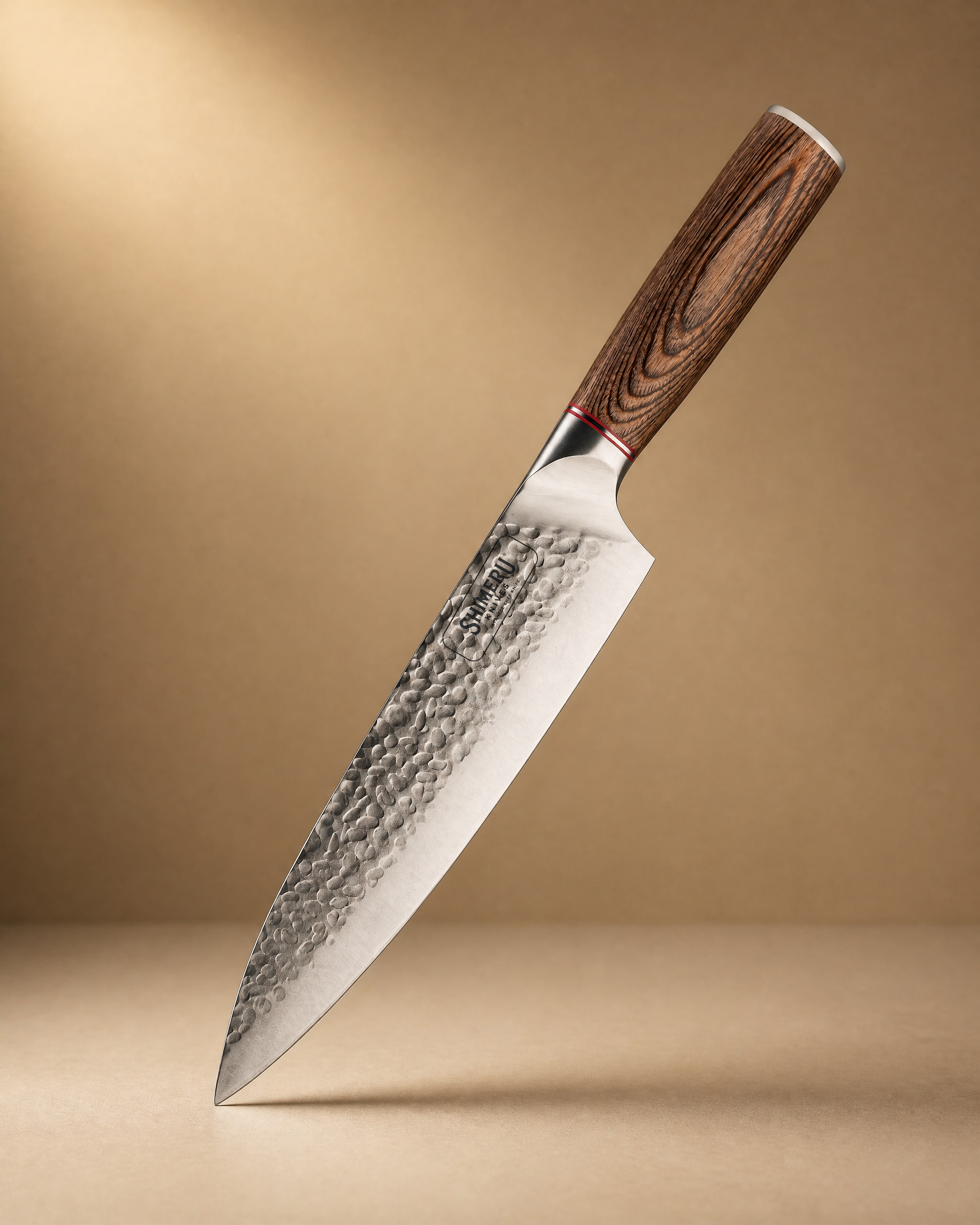 Akan 8'' Gyuto Knife 牛刀£49.99View product → is an 8 inch stainless gyuto with a pakkawood handle, suited to meat, fish, vegetables and fruit, and it will sit happily on an end grain board through years of daily cooking. If you want a little more character in the handle, the
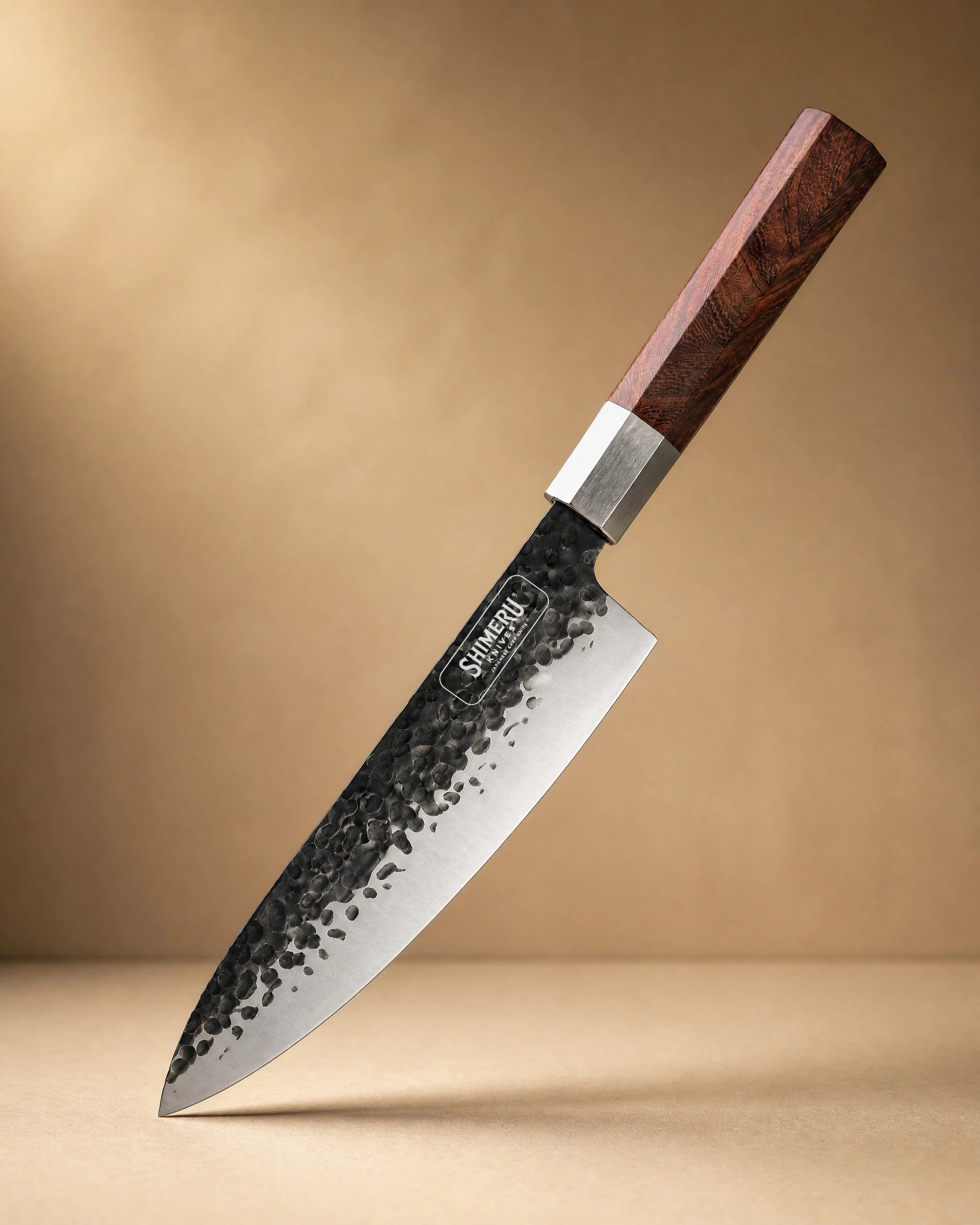 Sendai 8" Steel Gyuto Knife 牛刀£49.99View product → pairs the same 8 inch stainless blade format with Mkuruti wood and covers vegetables, herbs, meat and fish. Either will show the benefit of end grain within a few weeks, mostly in how long the edge holds.
If you are outfitting a kitchen from scratch, the 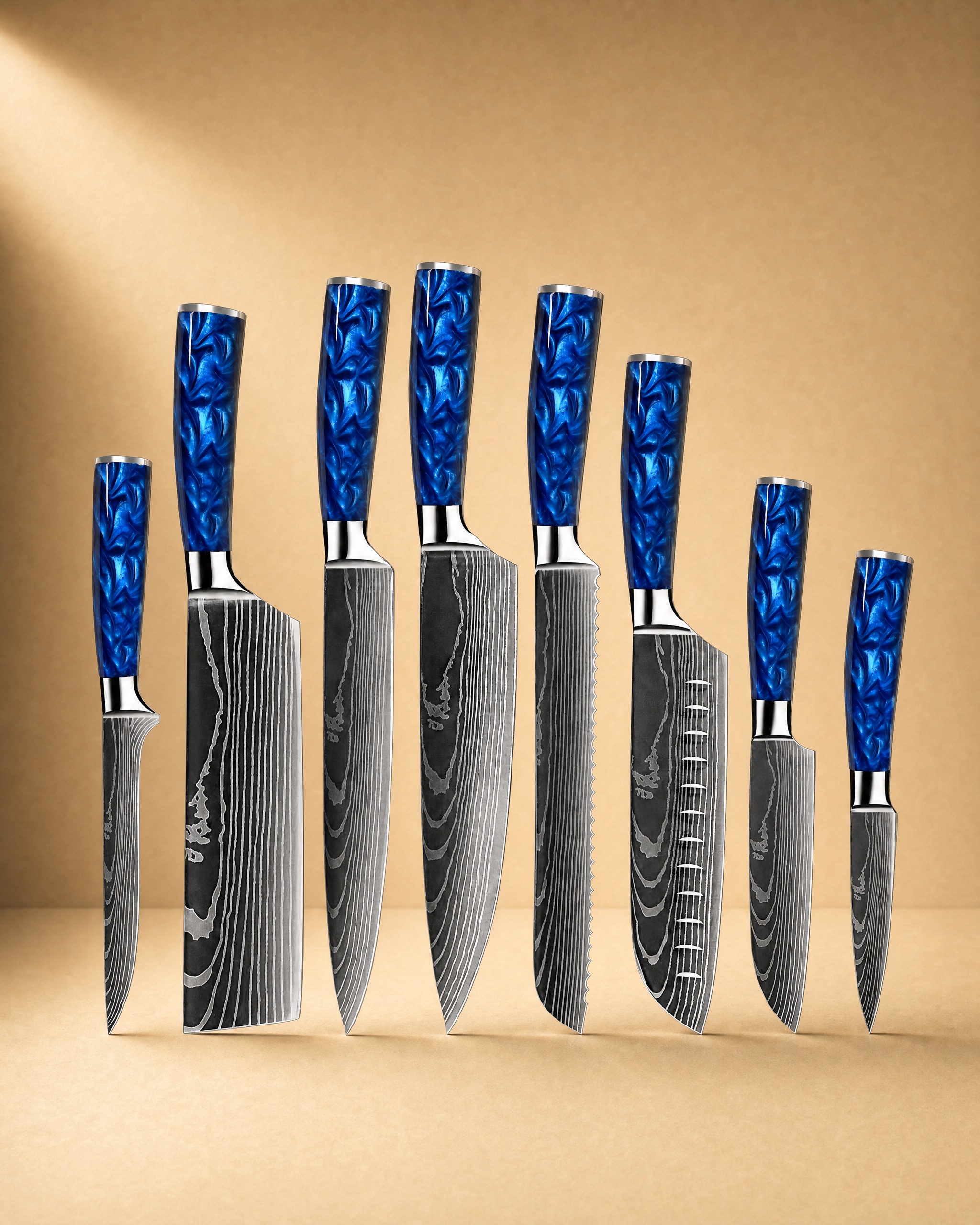 Shinano 信濃川 Damascus Pattern Stainless Steel Kitchen 8 Knife Set£149.99View product → brings a Damascus pattern stainless set with blue resin handles together in one purchase. For guidance on matching blades to the way you actually cook, see our knife guide, and you can browse the full range in the shop.
Care that actually matters
Oil the board when it looks dry, which for most kitchens means once a month in the first year and every few months afterwards. Use a food safe mineral oil or a board butter, apply it to both faces and the edges, leave it overnight and buff off whatever has not soaked in. Wash by hand with hot soapy water, rinse, dry with a cloth and stand it on edge to finish drying. Never soak it, never put it in a dishwasher, and never leave it flat on a wet worktop.
Once a year, lightly sand the surface and re-oil. Keep the board away from radiators and direct sun, and store it somewhere with airflow rather than sealed in a cupboard against a wall.
Good boards still need sharp steel. A board makes an edge last longer; it does not restore one. The 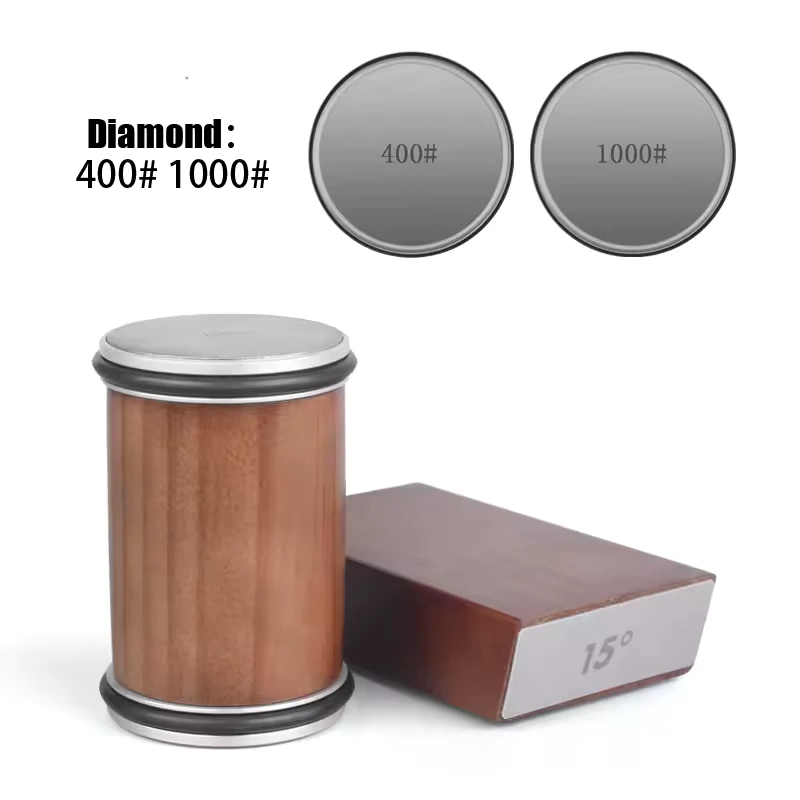 Magnetic Rolling Knife Sharpener£59.99View product → is a compact option for keeping an edge in order between proper sharpenings, and our knife care guide covers the rest of the routine.
When end grain is the wrong choice
If your kitchen is small, if you rely on a dishwasher for everything, or if the budget is tight, a good edge grain board is the better decision than a cheap end grain one. A poorly made end grain board, with gaps in the glue lines and timber that has not been dried properly, will fail sooner than a plain maple board at half the price. Commercial kitchens with strict cleaning regimes often cannot use wood at all, and that is a legitimate constraint rather than a compromise.
Deciding
The best end grain cutting board for most homes is a thick hard maple board from a maker who is specific about species, glue and finish, bought large enough to be useful and small enough to wash. Beech is a sound alternative. Skip oak, and treat decorative stripes as decoration rather than performance. The best end grain wood cutting board is not automatically the most expensive one; it is the one with honest construction and a surface you will actually keep oiled.
Pair it with a thin, well maintained Japanese knife, look after both, and they will outlast most of what else is in your kitchen. You can see our current selection at chopping boards.
Photography: Sergey Kotenev via Unsplash.


