
Diamond Whetstone for Knife Sharpening

What a diamond whetstone actually is
A diamond whetstone is a flat plate, usually steel or aluminium, coated with industrial diamond particles held in a nickel binder. The diamonds do the cutting. The plate only carries them. Almost everything about how a diamond whetstone behaves follows from that one fact: you are abrading steel with the hardest material available, and the abrasive does not break down or reshape itself as you work.
That is different from a water stone, where the abrasive grains are designed to fracture and release, exposing fresh cutting edges and helping the stone stay keen. A diamond plate does not do this. It cuts, and it keeps cutting in the same way until the diamond layer is worn through. That single difference tells you most of what you need to know about when to reach for one.
How diamond behaves on a kitchen knife
Diamond is aggressive. It removes metal quickly, which is why it is the usual answer for a chipped edge or a bevel that has been rounded over by years of pull-through sharpeners. It also cuts steels that shrug off natural stones, including high vanadium tool steels, some powder metallurgy stainless, and the very hard carbon steels used on some Japanese knives.
The trade-off is feel and finish. A diamond plate at a given grit tends to leave a scratch pattern that looks coarser than the number suggests, because the particles sit proud of the binder and cut deeply rather than polishing. Edges come off the plate sharp but slightly toothy. For a kitchen knife that is not always a problem. A toothy edge bites into tomatoes and crusty bread very well. It is less pleasant when you want to push cut a carrot or take a clean slice from a fillet.
Diamond plates also stay flat. They do not dish, they do not need soaking, and they do not need flattening. For anyone who sharpens on a worktop with two minutes to spare, that is the main attraction.
Where a diamond whetstone earns its place
- Repair work: chips, dents, rounded edges, and knives that have never been properly sharpened.
- Hard steels: anything that glazes a natural stone instead of responding to it.
- Flattening water stones: a coarse diamond plate is the standard tool for the job.
- Convenience: no soaking, no slurry, no dishing, and a plate that fits in a drawer.
Where a diamond whetstone is the wrong tool
Diamond is not a finishing stone. If you want a mirror polished bevel with no visible scratch pattern, the final step should be a fine water stone, a fine ceramic, or a loaded strop. Diamond gets you close quickly and then hands over.
Diamond is also poor value if you press hard. A plate carries a single layer of abrasive. Bearing down does not sharpen faster, it strips particles out of the binder and shortens the life of the plate. Once a coated plate has shed its diamonds it will skid across steel without cutting, and no amount of pressure will bring it back.
And a flat plate is the wrong shape for a serrated knife.

Faithfull and Trend diamond whetstones
Search for a diamond whetstone in the UK and you will run into Faithfull and Trend early on. Both are tool brands rather than knife specialists. Faithfull diamond whetstones are sold through tool merchants and builders' merchants, and Trend diamond whetstones come out of a routing and woodworking background, which is why you usually see them described in terms of tool and cutter sharpening rather than kitchen knives.
That heritage shapes what they are for. They are designed as workshop abrasives: flat, durable, and bought from a shelf rather than ordered for a specific knife. If your need is a fast, flat surface for chisels, plane irons, workshop knives and the occasional kitchen knife, this is a sensible route, and being able to buy one locally matters more than most people admit.
If your need is a repeatable angle on a thin Japanese gyuto, a bench stone leaves the angle entirely in your hands. Some cooks enjoy that. Some do not. There is no wrong answer, but it helps to know which one you are before you spend anything.
Diamond plate, or a guided sharpener?
Freehand sharpening gives you total control and no setup. It also asks you to hold a consistent angle, which is a skill most people take months to develop. If you sharpen two knives a year, that is a hard skill to justify learning.
A guided sharpener takes the angle out of the equation. You hold the knife in the guide and the mechanism keeps the edge at a fixed angle while you work. 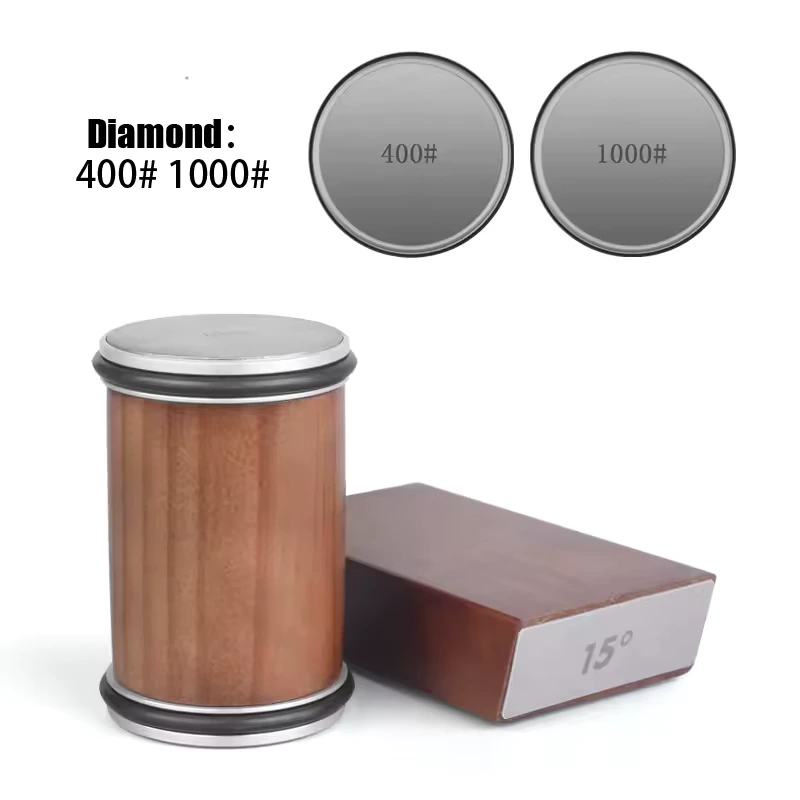 Magnetic Rolling Knife Sharpener£59.99View product → is the option we keep for cooks who want a repeatable result without practising freehand technique. It will not teach you to sharpen freehand, and it will not put a mirror polish on a single bevel knife. What it will do is keep an ordinary kitchen knife cutting well with very little thought.
Matching the stone to the knife you own
Not every knife wants the same treatment, and steel type matters less than people expect. Geometry, hardness and what you actually do with the knife matter more.
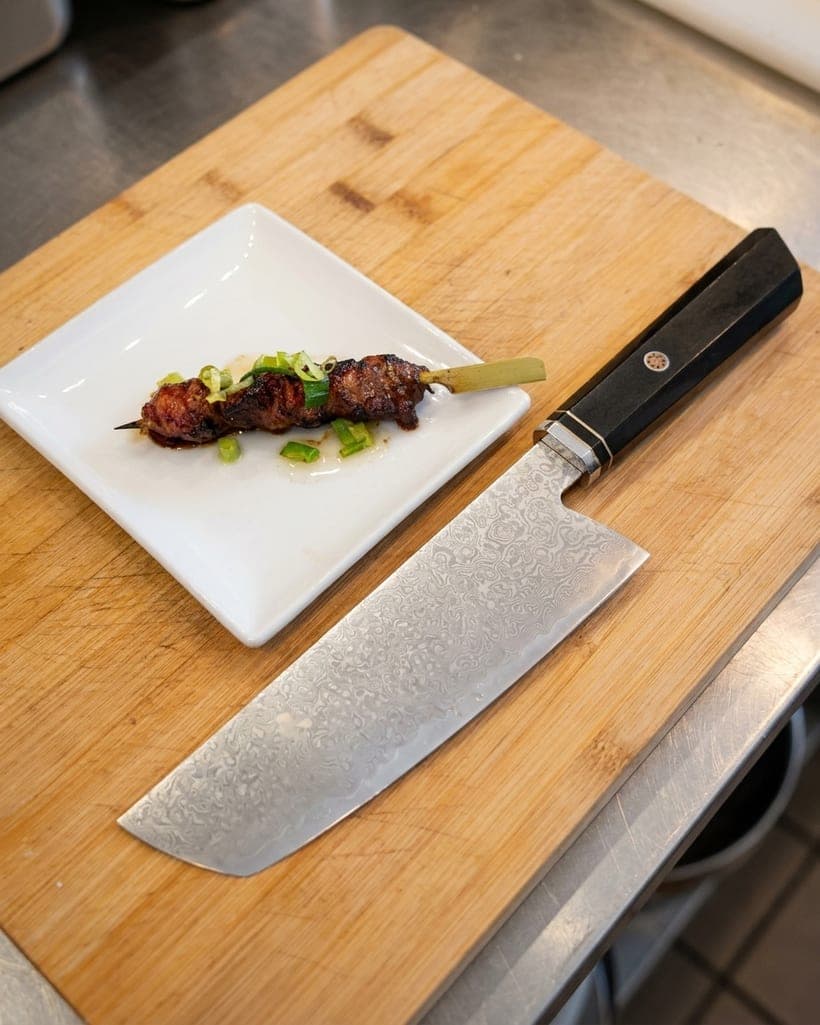
Take 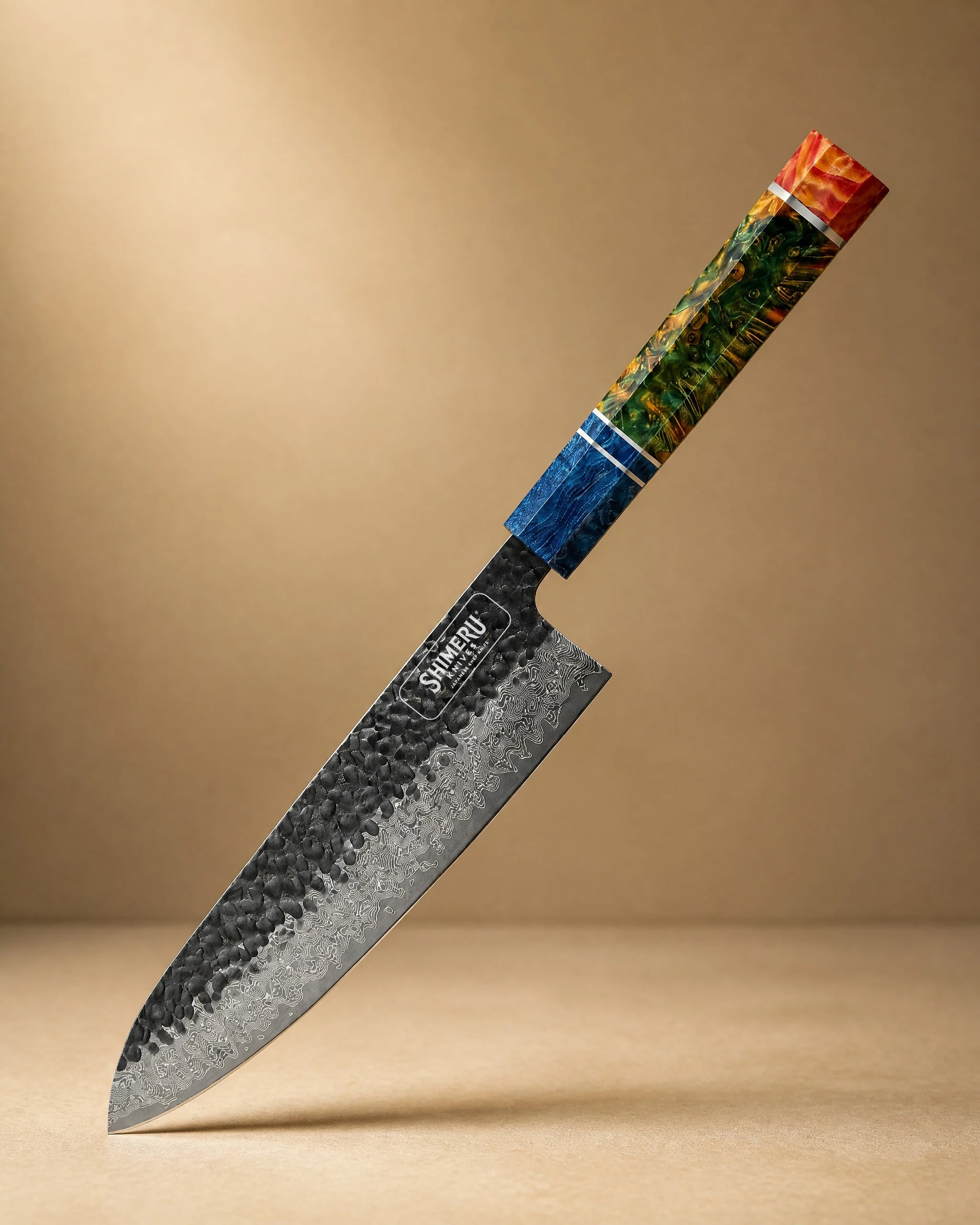 Yoshii 8″ Damascus Steel Gyuto Knife 牛刀£79.99View product →. A Damascus clad gyuto is built for slicing, dicing and chopping, and it rewards a light touch. The patterned cladding is a finish before it is anything else, and the edge beneath it is what you are sharpening. A medium diamond plate used gently will reset that edge quickly. A coarse plate used with force will scratch the blade face and remove far more steel than the job requires. If you own a knife like this, keep the coarse work for knives that genuinely need it.
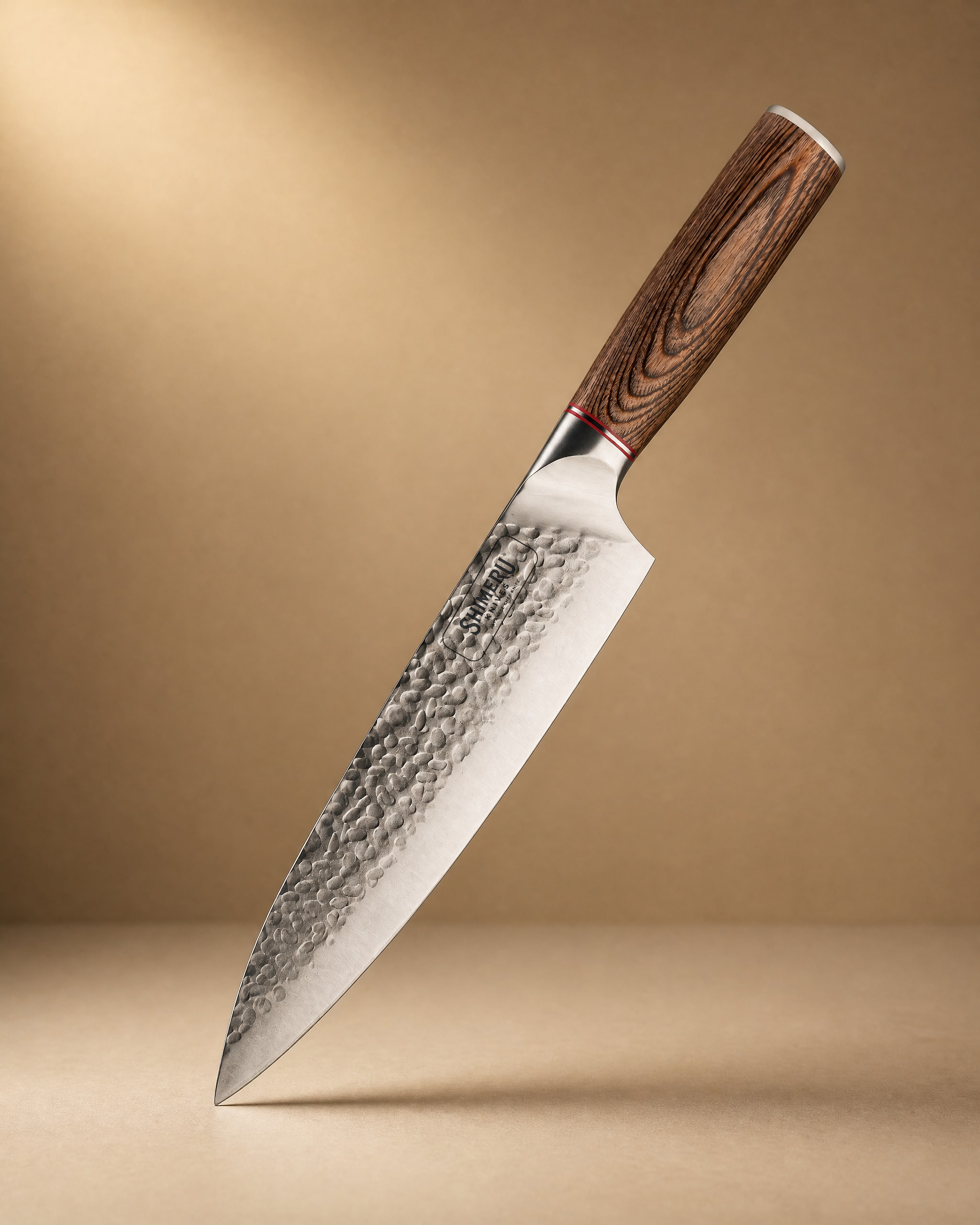 Akan 8'' Gyuto Knife 牛刀£49.99View product → is the opposite case: an everyday gyuto for meat, fish, vegetables and fruit, the kind of knife that gets used four times a day and sharpened whenever it starts to drag. A medium diamond stone followed by a few light passes on something finer is plenty. It is a knife that takes a keen edge without fuss.
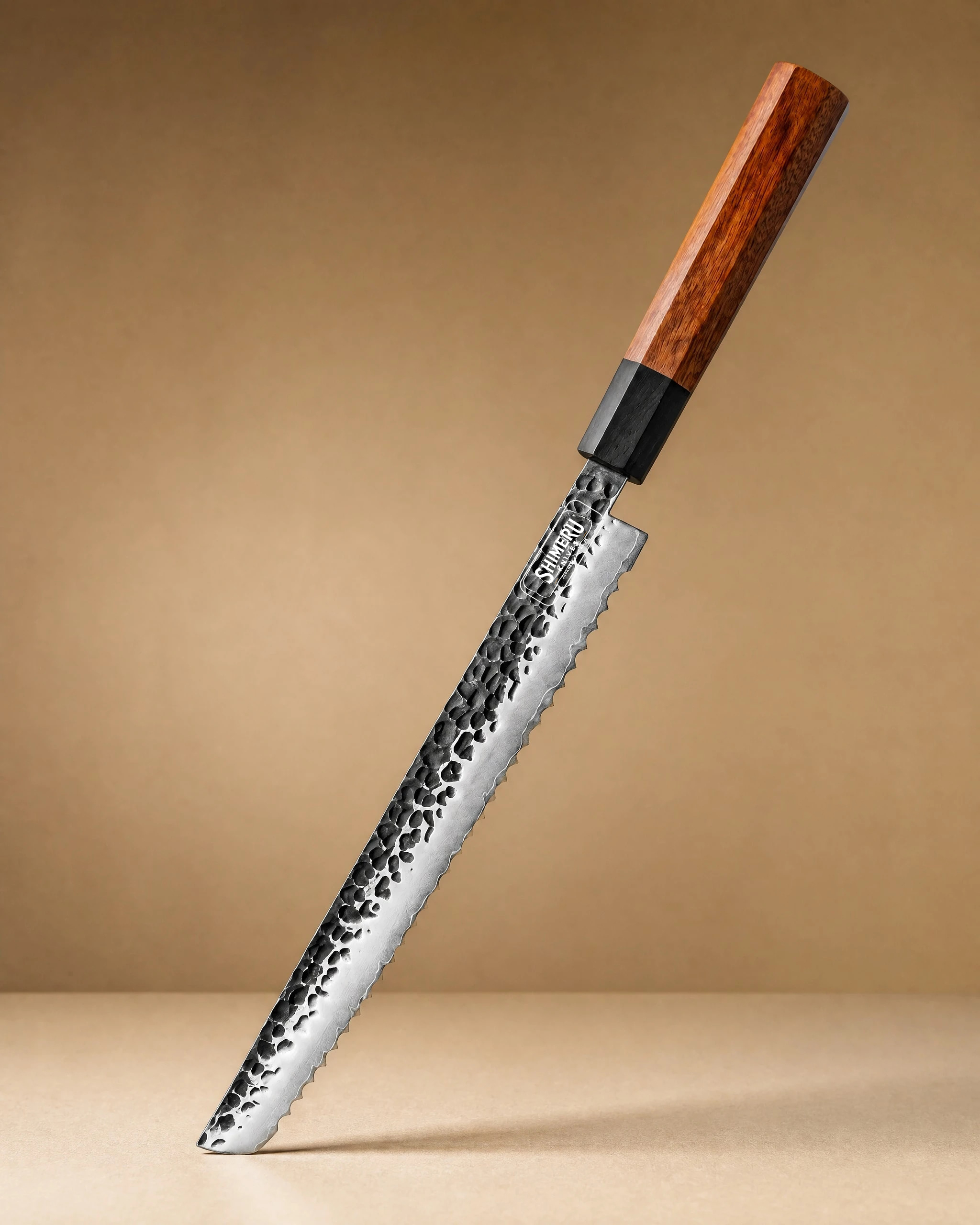 Rumoi 10" Japanese Bread Knife パン切りナイフ£59.99View product → is the exception. A serrated bread knife is not sharpened on a flat plate in the normal way. Serrations are dressed one scallop at a time with a tapered rod or a round file. A flat whetstone will just flatten the tips of the teeth. Leave it in the drawer and let it do what it does best: crusty artisan loaves, soft brioche, and anything else that squashes under a plain edge.
Technique on a diamond plate
Angle first. Most kitchen knives sit somewhere between 15 and 20 degrees per side. The exact number matters less than holding to one angle for the whole session. A consistent 18 degrees beats a wandering 15.
Pressure second. Light is correct. The diamonds will cut without help, so let the plate do the work and keep your grip relaxed.
Lubrication third. Water is enough on most plates. Keep the surface wet so it carries away the swarf and does not load.
Sequence last. Coarse only for repairs, medium for maintenance, something finer to finish if you want a polished edge. Count strokes and alternate sides so the bevel stays even, check for a burr along the whole edge, then remove it with a few light passes.
Caring for a diamond whetstone
Rinse the plate after use and dry it properly. Most plates have a steel backing, and steel rusts. Store it flat, and do not drop it: a bent plate is a useless plate, because flatness is the whole point of owning one.
Do not use it to lap anything except water stones, do not run it across concrete, and do not lean on it. If a plate stops cutting, look at it in raking light. If the diamond layer has gone smooth and grey, it has worn out. That is normal wear on a single layer abrasive, not a fault.
Everything else about looking after kitchen knives, from drying to storage, is covered in our knife care guide.
Choosing grits without overspending
Most people need fewer stones than they think. One medium diamond plate, somewhere in the 600 to 1000 range, will maintain a kitchen knife indefinitely. Add a coarse plate only if you repair damaged edges regularly. Add a fine stone or a strop only if you want a polished bevel, and be honest about whether you do.
Two sided plates are common and they are a reasonable way to cover coarse and fine in one object, as long as you accept that the coarse side will wear out first.
What to buy first
If your knives are in decent condition and you want to keep them that way, buy one medium plate and learn to use it lightly. Practise on the cheapest knife in the drawer. A consistent angle, light pressure, water, and a count of strokes per side will give you a better edge than expensive equipment used carelessly.
If your knives need repair, or if you sharpen workshop tools as well, a coarse plate plus a medium one is a sensible pair. And if you would rather not learn freehand technique at all, Magnetic Rolling Knife Sharpener£59.99View product → exists for exactly that reason.
When you are ready to add a knife rather than a stone, browse everything in the knife shop. If you are still working out what suits the way you cook, the knife buying guide is the better place to start.
Photography: Jonathan Cosens Photography via Unsplash.

