



Choosing the Best Japanese Knives

Why Japanese Knives Are a Cut Above
For anyone serious about cooking, the allure of Japanese cutlery is hard to ignore. A well made knife from Japan feels different in the hand: lighter, sharper, and more precise than most Western counterparts. Whether you are a professional chef or a home cook who values quality, understanding what makes the best Japanese knives special can transform your time in the kitchen. But with so many options, how do you choose the right one? This guide walks you through the key factors to consider, from steel to handle, so you can confidently select the finest Japanese knives for your needs.
The reputation of Japanese knives rests on centuries of blade making tradition, combined with modern metallurgy. They are known for exceptionally hard steel that can take a razor sharp edge and hold it longer than softer Western blades. However, that hardness also means they require careful handling and regular maintenance. That is a trade off that many cooks find well worth making. If you are new to Japanese knives, the journey begins with understanding the basic types and what suits your cooking style.
Steel Types: The Heart of the Blade
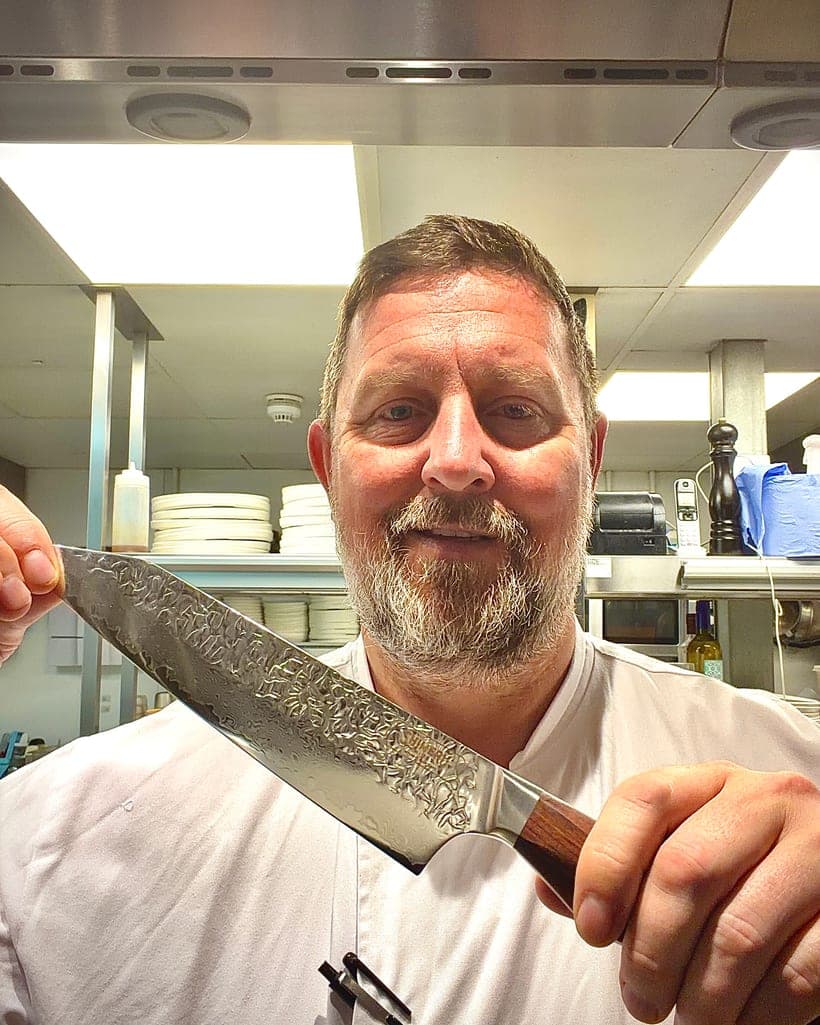
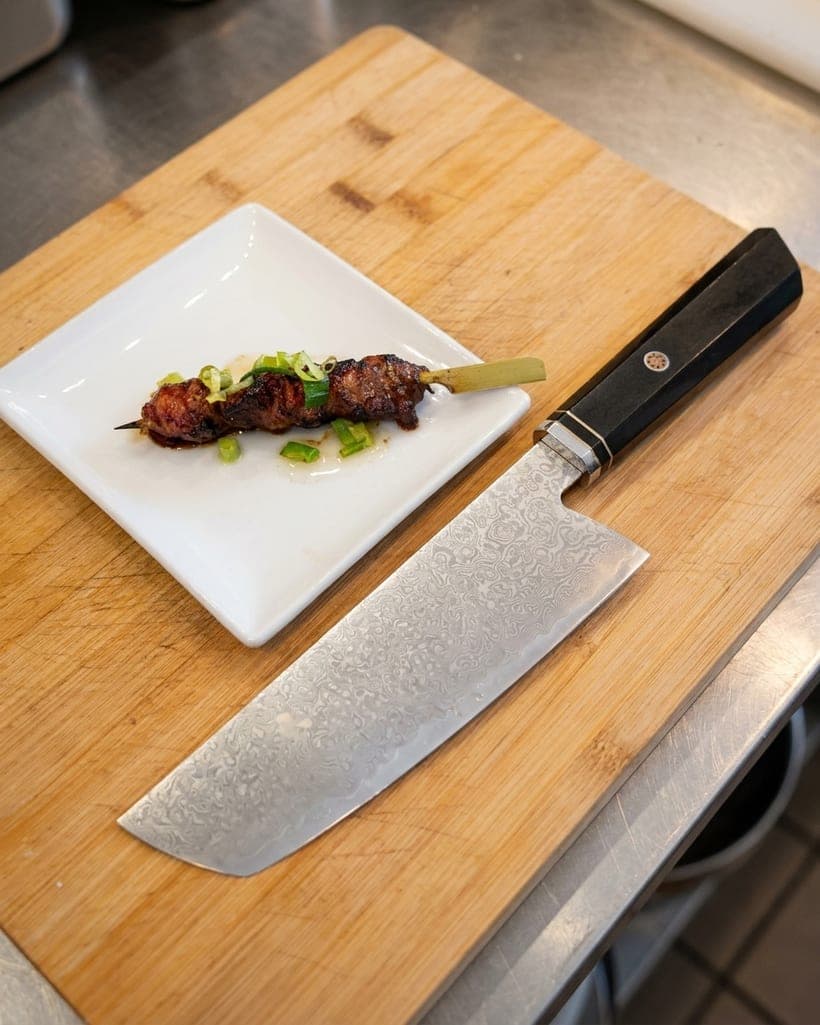
The steel used in a Japanese knife largely determines its performance, edge retention, and ease of sharpening. There are two main categories: stainless steel and high carbon steel. Stainless steel is more resistant to rust and easier to care for, which is why many home cooks prefer it. High carbon steel, on the other hand, can achieve an even sharper edge but requires more attention to prevent corrosion. Some knives combine layers of different steels, such as Damascus patterns that sandwich a hard core between softer outer layers for strength and beauty.
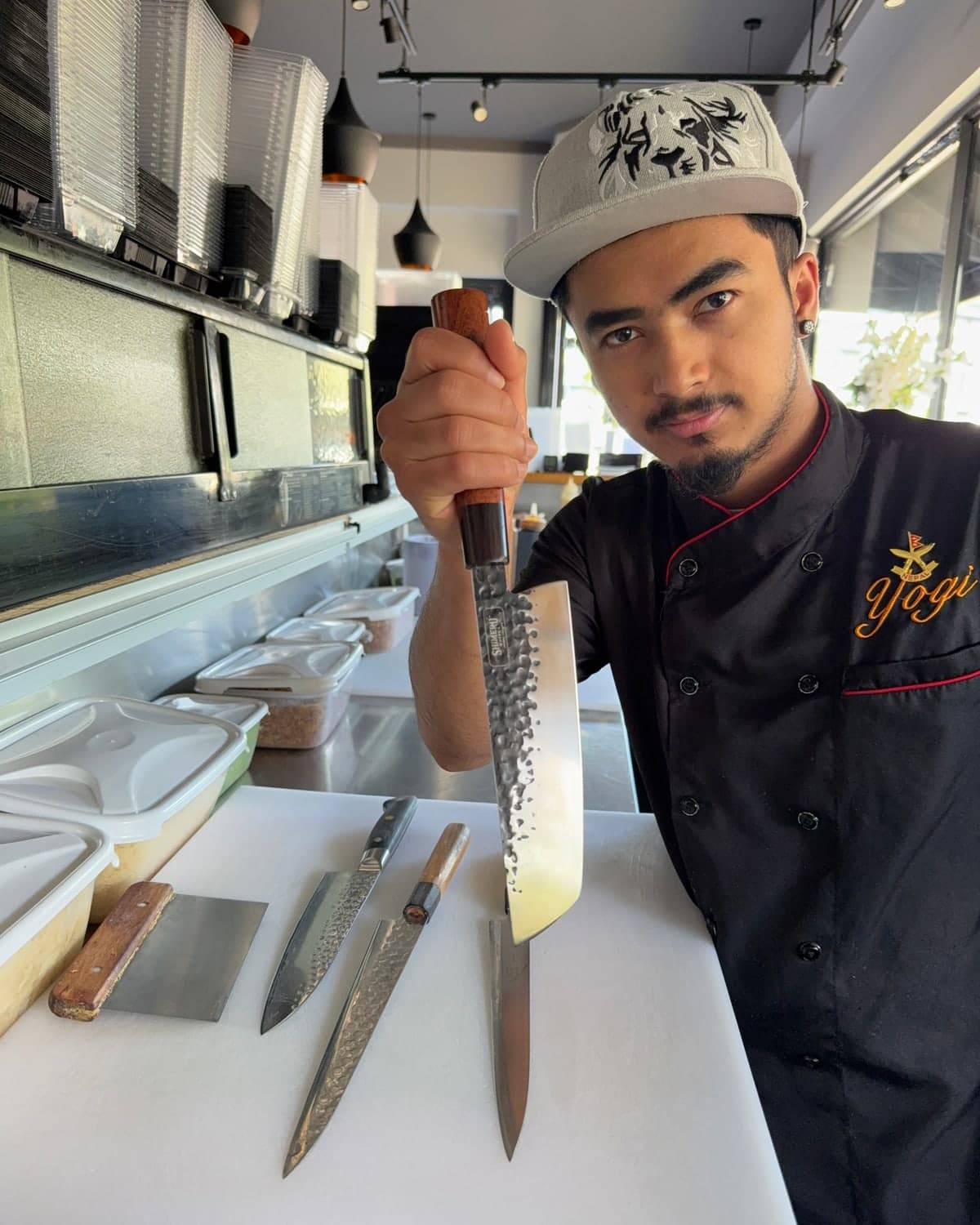
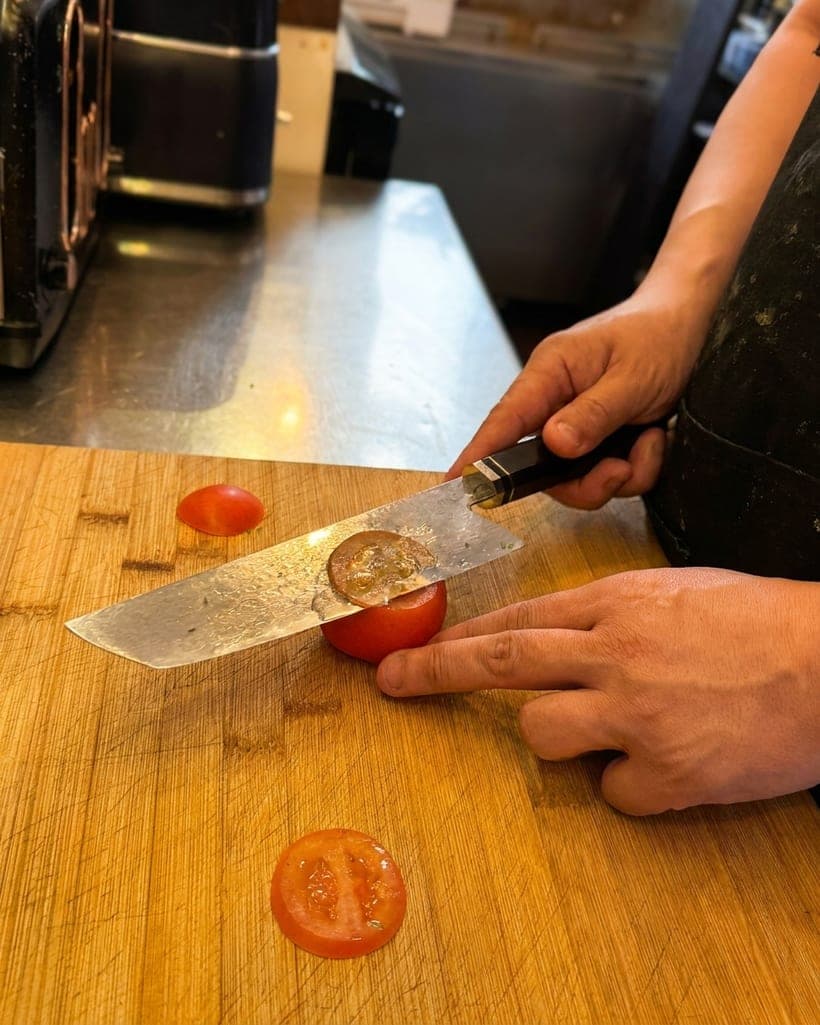
One example of a reliable stainless steel knife is the 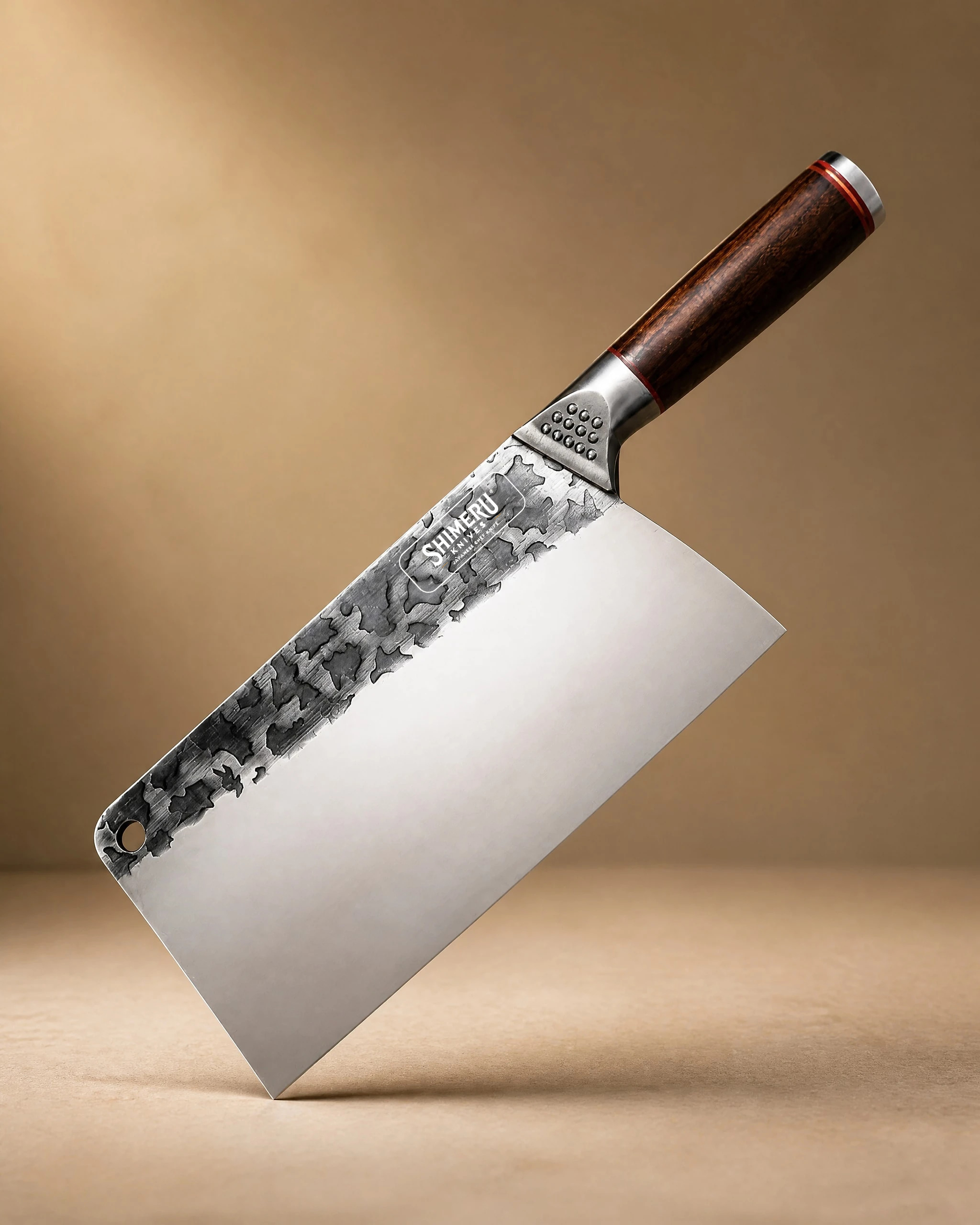 Saba 7" Stainless Steel Cleaver 中華包丁£44.99View product →. This 7 inch cleaver, made from Japanese stainless steel, handles meat, vegetables and herbs with ease. Its steel formulation offers a good balance of sharpness and corrosion resistance, making it a practical choice for everyday use. For those who want a traditional Japanese feel with modern convenience, stainless steel is often the sweet spot.
Handle Materials and Shapes
The handle of a Japanese knife is not just about looks; it affects comfort and control. Traditional Japanese handles, known as wa handles, are often made from wood (like magnolia or ho wood) and have an octagonal or D shaped cross section. Western style handles, often made from synthetic materials or hardwood, are more common on chef knives intended for a global audience. The handle shape should fit your grip securely, especially when cutting for long periods.
The 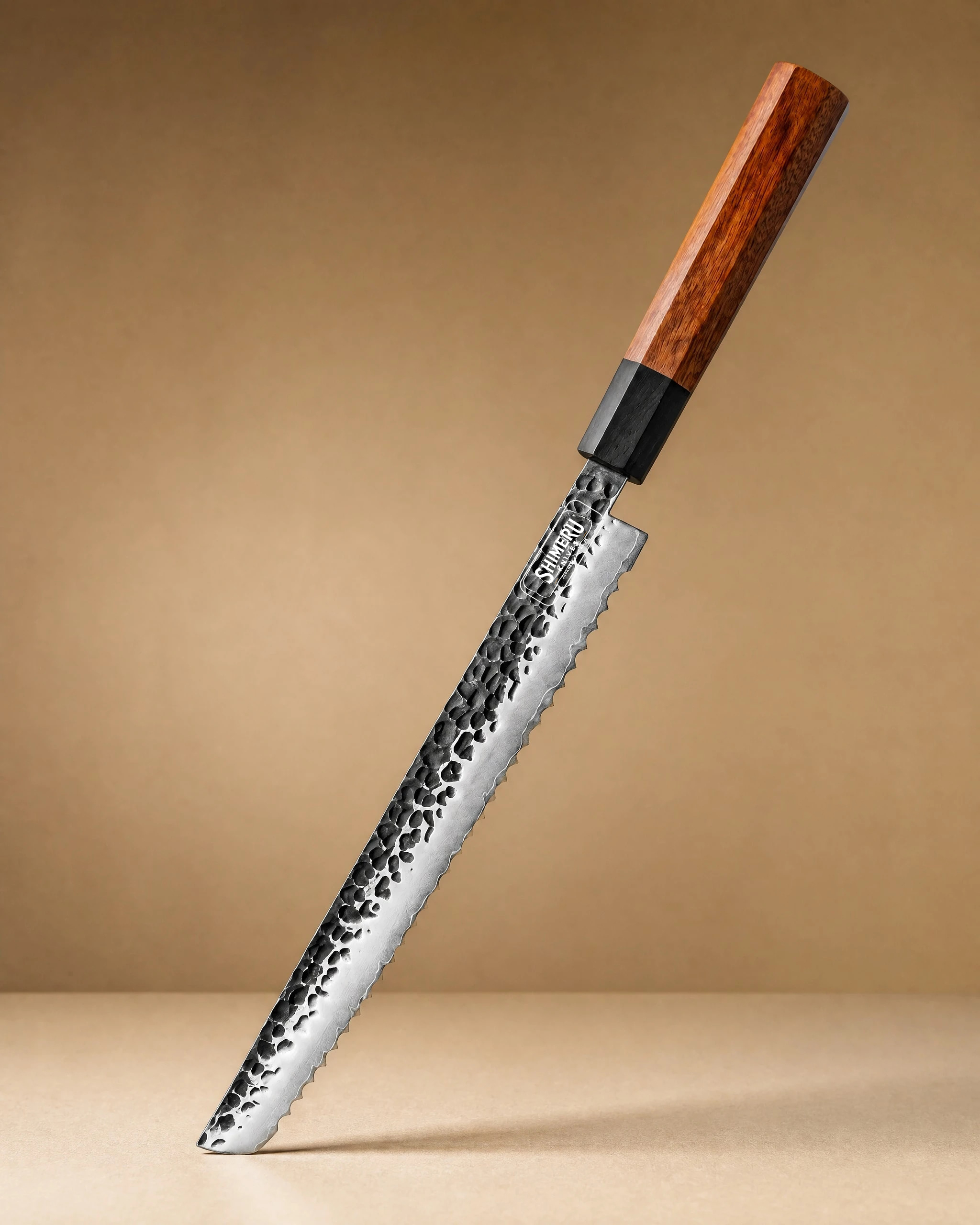 Rumoi 10" Japanese Bread Knife パン切りナイフ£59.99 · currently out of stockView product → features a Mkuruti wood handle, a dense African hardwood that provides a warm, natural feel and excellent durability. Bread knives, like this 10 inch slicer, benefit from a comfortable grip because sawing through a crusty loaf requires steady pressure. Whether you choose wood, resin, or composite, make sure the handle is well sealed and comfortable in your hand.
Knife Types: Matching the Blade to the Task
Japanese cuisine uses a variety of knife shapes, each designed for a specific purpose. The gyuto is the Japanese take on a Western chef knife, a versatile blade for meat, fish and vegetables. A santoku is a shorter, more all purpose knife with a sheepfoot tip. Nakiri knives are designed for vegetables with a flat edge. Cleavers (chuka bocho) are thin and light compared to Chinese cleavers, great for chopping and scooping. Bread knives have serrated edges for crusty loaves.
For a versatile workhorse, the 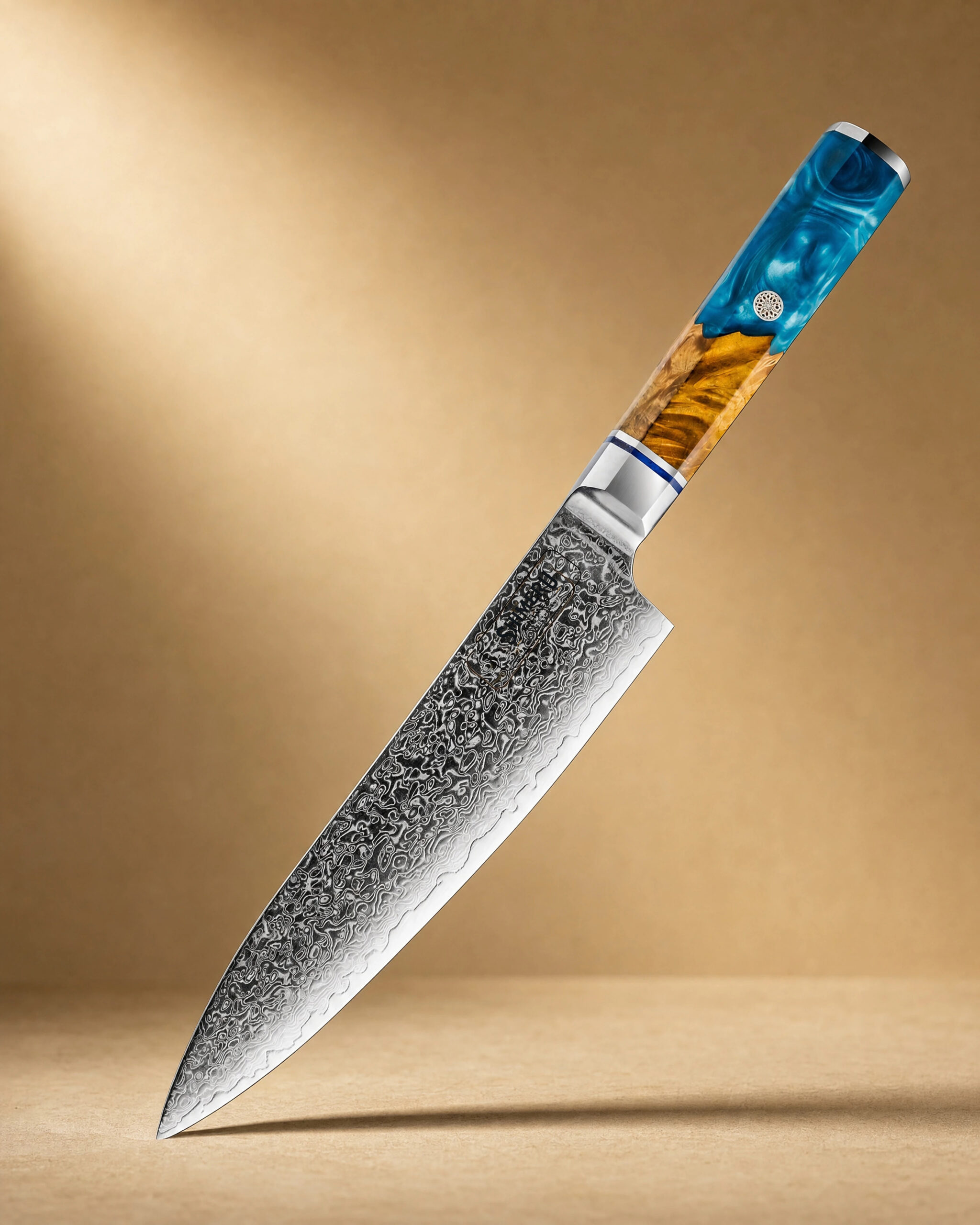 Mogami 最上川 8" Damascus Steel Gyuto Knife 牛刀£79.99 · currently out of stockView product → is an 8 inch Damascus steel gyuto. Its 67 layer construction gives it a beautiful pattern and a hard core that holds an edge superbly. This knife excels at slicing vegetables, meats and fish, making it a top choice for a wide range of kitchen tasks. If you need a dedicated bread knife, the Rumoi 10" Japanese Bread Knife パン切りナイフ£59.99 · currently out of stockView product → is purpose built for artisan loaves and soft brioche, with a sharp serrated edge that cuts cleanly without crushing the crumb.
If you are looking to cover multiple bases at once, a knife set can be a sensible investment. The 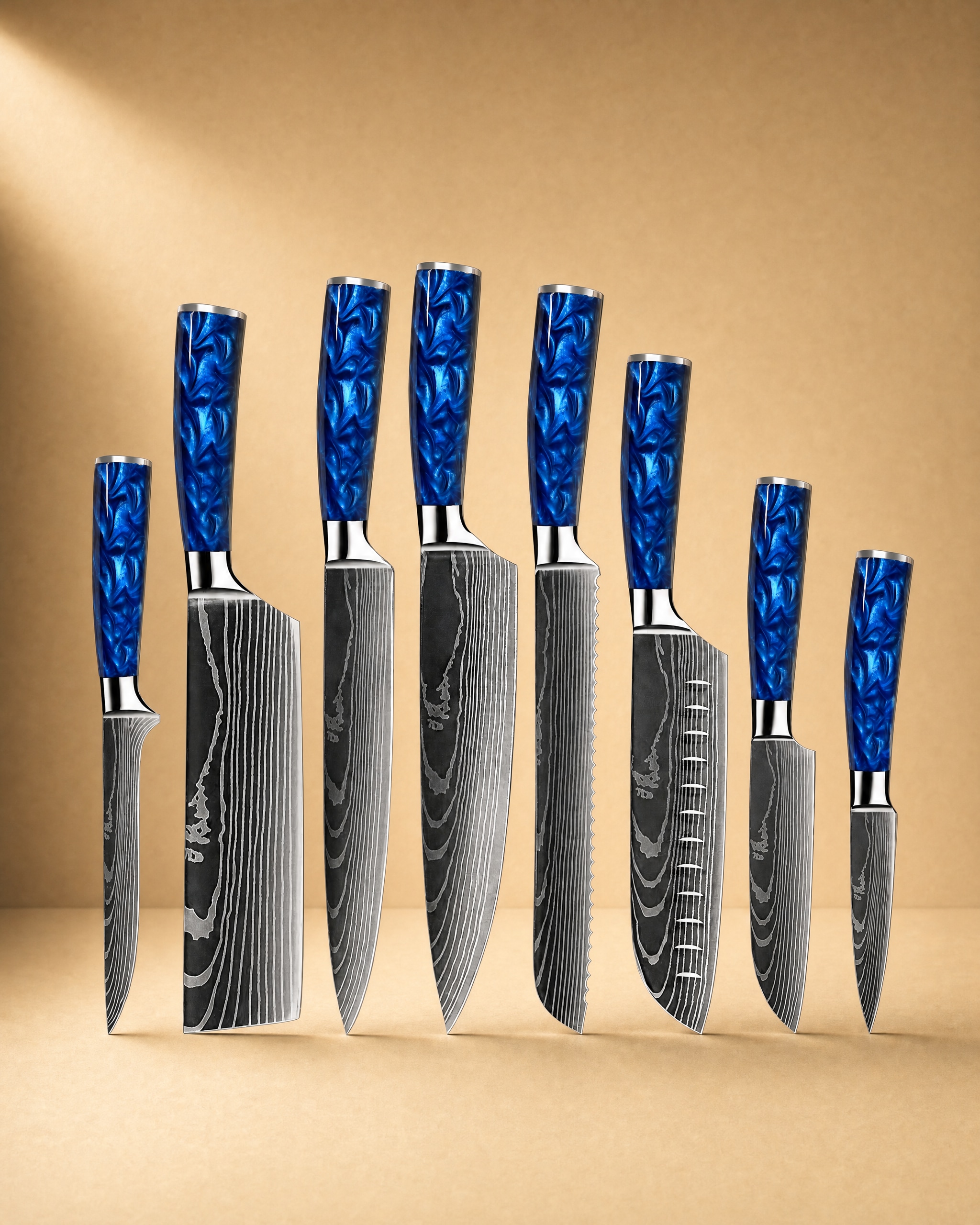 Shinano 信濃川 Damascus Pattern Stainless Steel Kitchen 8 Knife Set£149.99View product → includes eight pieces with Damascus pattern blades and high carbon steel cores. The blue resin handles are modern and durable. This set provides a range of blades for different tasks, making it a convenient option for those who want a complete kitchen arsenal. However, remember that a set may include knives you rarely use; sometimes buying individual knives is better value. For guidance on choosing the right knife, see our knife guide.

Edge Geometry and Sharpening
A major difference between Japanese and Western knives is the edge geometry. Most Japanese knives are ground with a more acute angle (typically 15 degrees per side) compared to 20 degrees on Western blades. This makes them extremely sharp but also more prone to chipping if used carelessly or on hard surfaces like glass cutting boards. You should always use a wooden or plastic board. Sharpening Japanese knives requires a whetstone, as pull through sharpeners can damage the thin edge. Learning to use a stone is a skill that pays off in prolonged cutting performance.
Maintenance and Care
Proper care extends the life of your knives. Hand wash only with mild detergent and dry immediately. Never put them in the dishwasher. Store them in a knife block, on a magnetic strip, or with blade guards to protect the edge. Regular honing with a ceramic rod realigns the edge between sharpenings. For comprehensive advice, refer to our knife care guide. A little routine maintenance keeps your knives performing like new.
Budget: Finding Great Value
The price of Japanese knives varies widely, from very affordable options to high end artisan pieces. You do not need to spend a fortune to get a good knife. Affordable Japanese knives often use AUS steels or simpler stainless alloys that still perform well. The key is to look for a well ground blade, a comfortable handle, and a reputable manufacturer. Sometimes spending a bit more on a knife that fits your hand perfectly is better than buying a cheap set that disappoints. The Shimeru Knives shop offers a curated selection of the finest Japanese knives, from budget friendly to premium, so you can compare and choose.
Inexpensive Japanese knives can be excellent starters, especially if you are unsure about committing to a high end blade. Look for knives with good reviews and honest descriptions. Remember that a sharp, well maintained cheaper knife will outperform a dull premium one. If you are on a tight budget, consider buying one really good gyuto rather than a whole set. Many experienced cooks swear by a single quality chef knife for 90 percent of tasks.
Top Rated Japanese Knives: What to Look For
When searching for the best knives from Japan, pay attention to the steel composition, the quality of the heat treatment, and the fit and finish. Top rated Japanese knives consistently get praise for their sharpness out of the box, edge retention, and balance. But the best knife for you is the one that feels like an extension of your hand. If possible, hold a knife before buying. The weight, handle shape, and blade height all contribute to comfort. A good knife shop will provide detailed specifications and photos so you can make an informed choice online.
Great Japanese knives come from regions like Seki and Sakai, each with its own tradition. But the place of manufacture is less important than the skill of the maker and the quality control. Modern production methods mean you can find traditional Japanese knives made with modern materials at various price points. The Saba 7" Stainless Steel Cleaver 中華包丁£44.99View product → and Mogami 最上川 8" Damascus Steel Gyuto Knife 牛刀£79.99 · currently out of stockView product → are examples of knives that combine traditional design with contemporary manufacturing, offering reliable performance at different price levels.
Final Thoughts
Choosing the best Japanese knives is a personal journey. Think about what you cook most often, your comfort with maintenance, and your budget. A versatile gyuto like the Mogami 最上川 8" Damascus Steel Gyuto Knife 牛刀£79.99 · currently out of stockView product → is an excellent starting point. If you work with a lot of vegetables and herbs, a cleaver such as the Saba 7" Stainless Steel Cleaver 中華包丁£44.99View product → can be superbly efficient. For bakers and bread lovers, a dedicated bread knife like the Rumoi 10" Japanese Bread Knife パン切りナイフ£59.99 · currently out of stockView product → is indispensable. And if you want a complete set from the start, the Shinano 信濃川 Damascus Pattern Stainless Steel Kitchen 8 Knife Set£149.99View product → offers variety and value. Browse our selection of the finest Japanese knives, and take your time to choose the tools that will serve you well for years. A good knife is a joy to use, and it will make your cooking more enjoyable and precise.
Photography: Beth Macdonald via Unsplash.


