




Choosing the Best Chopping Board Material

Your chopping board is the surface your knife meets more often than any other. It shapes how long an edge lasts, how enjoyable prep feels, and how much sharpening you end up doing. Get the material right and a good knife stays sharp for weeks. Get it wrong and even an excellent blade will feel tired within days. This guide explains what each material does to a knife edge, which ones are worth owning, and how to match a board to the knives you actually use.
What a board does to a knife edge
A knife edge is a thin wedge of hardened steel, often only a fraction of a millimetre wide at the very apex. Under a microscope it is closer to a fine saw than a razor. Every cut presses that wedge into a surface, and the surface pushes back. A material that yields slightly lets the edge sink in and release without damage. A material harder than the steel forces the apex to roll, fold or chip.
This is why glass is the worst offender and why end grain wood is so kind. It is also why sharpness is relative: a knife that feels dull after a week on glass may still be perfectly sharp after two months on maple.
Hygiene matters as well, but the story is less simple than the claim that plastic is always safer. What counts is how deeply a surface scores, how easily it dries, and whether you clean it properly. Deep cuts that trap moisture and food are the real risk, whatever the material.
There is also a practical point about force. A dull knife pushed hard on a hard board is a classic way to chip a blade. A sharp knife on a soft board needs almost no pressure. The board and the edge work together, which is why the two decisions should be made as a pair.
Wood: the traditional choice, and still the best for most kitchens
Wood is the material most professional kitchens come back to. It is soft enough to protect an edge, firm enough to cut on, and naturally antibacterial to a useful degree, though not magically so. Hardwoods such as maple, beech, oak, walnut, cherry and teak are the sensible picks. They are dense, close grained and resistant to scarring.
There are two constructions worth knowing. Edge grain boards are made from strips glued face to face, so the cutting surface is the side of the wood fibres. They are stable, relatively light and affordable. End grain boards are made from blocks glued so the end of the fibres faces up. The fibres part and close like a brush, which is gentler on edges and hides cut marks well. End grain boards are heavier, more expensive, and need more oil.
Avoid softwoods like pine for daily prep. They dent, splinter and hold bacteria in the torn grain. A pine board is fine for bread, not for a gyuto.
Plastic and composite boards
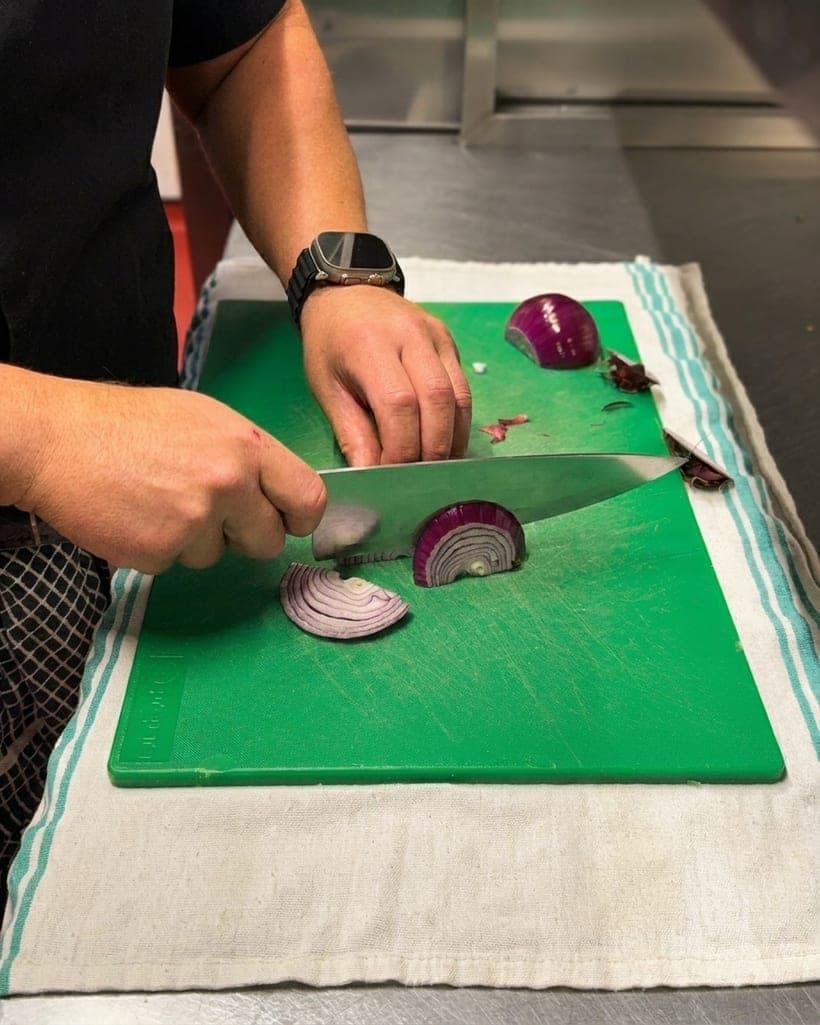
High density polyethylene is the standard commercial plastic. It is inexpensive, easy to clean, and often dishwasher safe. It is also reasonably kind to knives, though softer plastics scar quickly. Once a plastic board is covered in deep grooves it is hard to clean properly, and it should be replaced rather than scrubbed forever.
Plastic still has a place, especially for raw meat, fish and anything you want to sanitise in hot water. A thin flexible plastic mat is handy for sliding chopped ingredients into a pan. As a main board for a good knife, though, it is a compromise rather than an upgrade.
Composite boards, usually wood fibre bonded with resin, sit between wood and plastic. Quality varies a lot. A good one is dense, gentle on edges and dishwasher safe. A cheap one can be slick and unforgiving. Check for a surface that feels slightly waxy rather than glassy.
Bamboo
Bamboo is not wood. It is a grass, and it contains natural silica, which is abrasive. The result is a board that is harder than most hardwoods and noticeably rougher on knife edges. It is sustainable, affordable and looks tidy, so it sells well, but for a thin Japanese edge it is a compromise. Use bamboo for bread, cheese, fruit and serving. Keep your best knives away from it. A bamboo board will not ruin a knife overnight, but it will shorten the time between sharpenings.
Glass, stone, marble and ceramic
These are the boards that destroy edges. Glass is hard, unforgiving and rolls a fine edge almost immediately. Marble and stone are worse, and they dull knives while also blunting the pleasure of using them. Ceramic boards are brittle and can chip a blade.
They do have uses. Marble stays cold, which is helpful for pastry and chocolate. Glass is easy to sanitise and looks presentable for cheese. Treat them as serving or pastry surfaces, not as prep boards for sharp knives. If you already own one, keep it for serving and buy a wood or rubber board for prep.
Rubber and synthetic alternatives
Rubber boards, often sold as commercial butcher boards, are extremely kind to edges. They grip well, tolerate hot water and do not scar as deeply as plastic. They are heavier and more expensive than plastic, and pale versions can stain with turmeric or beetroot, but they are a genuinely good option for a busy kitchen. Composite rubber and wood blends are worth a look if you want the softness of rubber with the stability of a board that stays flat.

Matching the board to your knives
Japanese knives generally have thinner, harder edges than European ones. That hardness holds an edge beautifully but makes the steel more prone to chipping. A thin edge plus a hard board is the worst combination. A thin edge plus a soft, slightly yielding board is ideal.
If you cook with a gyuto as your main knife, choose an end grain or edge grain hardwood board, or a quality rubber board. A gyuto such as 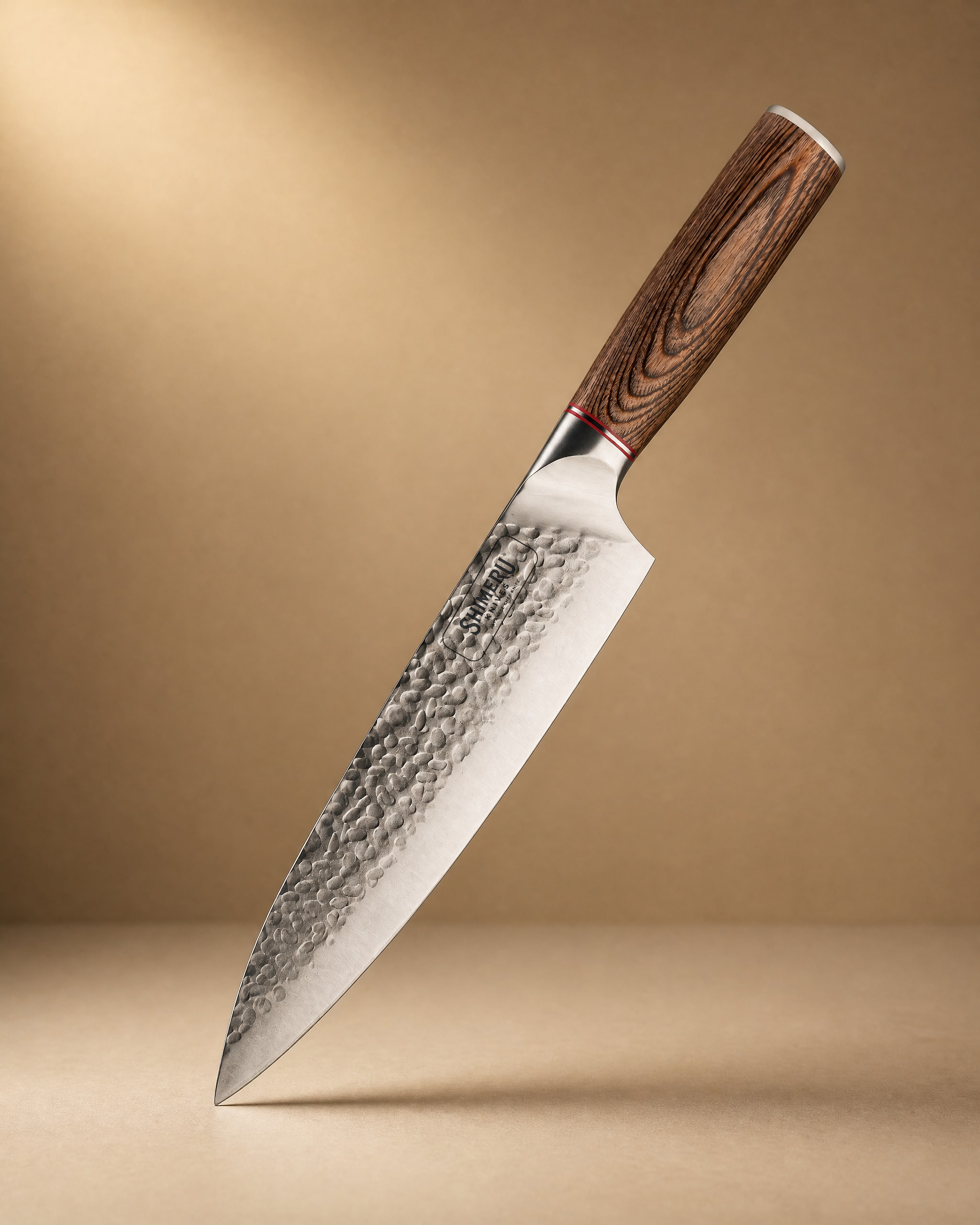 Akan 8'' Gyuto Knife 牛刀£49.99View product → will feel smooth and controlled on wood and will need far less maintenance. Something like the
 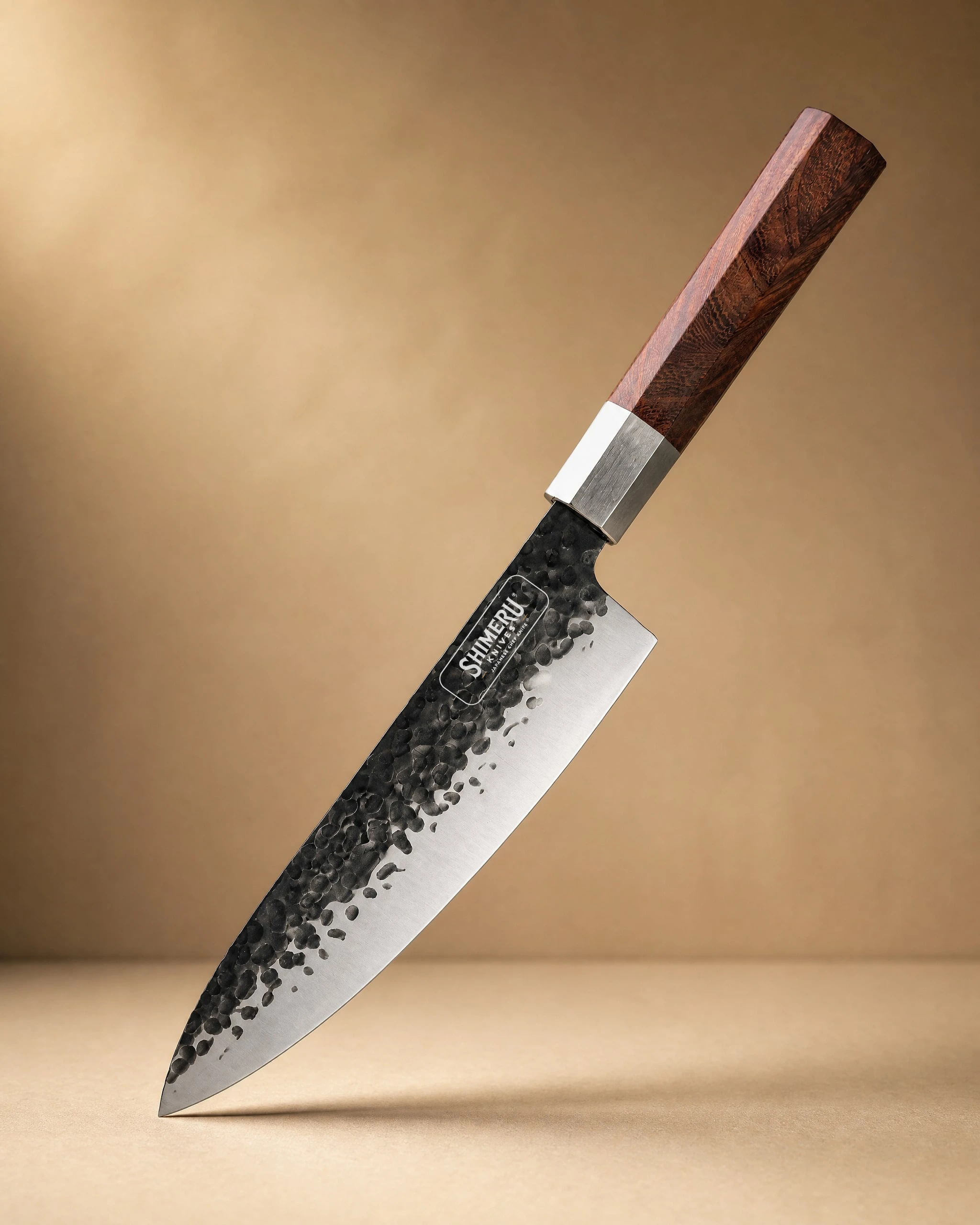 Sendai 8" Steel Gyuto Knife 牛刀£49.99View product → is a natural fit for vegetables, herbs and everyday prep, and it will thank you for a surface that does not fight back. For finer work such as slicing and dicing, a knife like the
 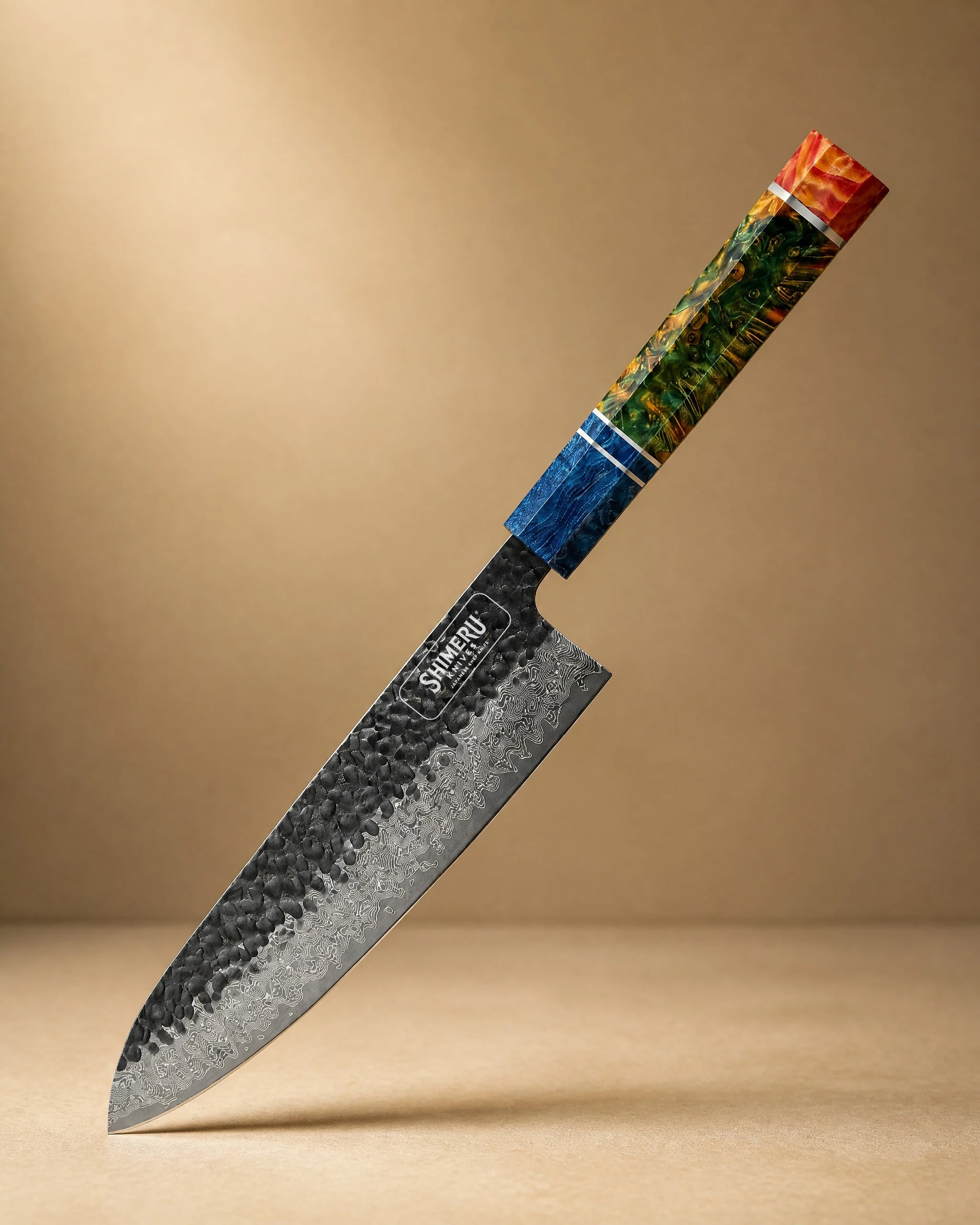 Yoshii 8″ Damascus Steel Gyuto Knife 牛刀£79.99View product → benefits even more from a soft board, because its edge is the last thing you want to chip on glass or bamboo.
If you are still deciding which knife suits your cooking, our knife guide walks through blade shapes and lengths. Once the knife is chosen, the board is the next decision.
Board care in practice
Wood boards should be washed by hand in warm water with a little washing up liquid, then dried upright so air can reach both faces. Never soak them and never put them in a dishwasher. Oil wooden boards monthly with a food safe mineral oil or board butter. A well oiled board resists water, stains less and stays flat.
Plastic and rubber boards can usually go in the dishwasher, though heat can warp thin ones. Replace any board, whatever the material, once it has deep, dark cuts that will not come clean.
Sharpening is the other half of the story. A soft board slows edge wear, but it does not eliminate it. A magnetic sharpener such as 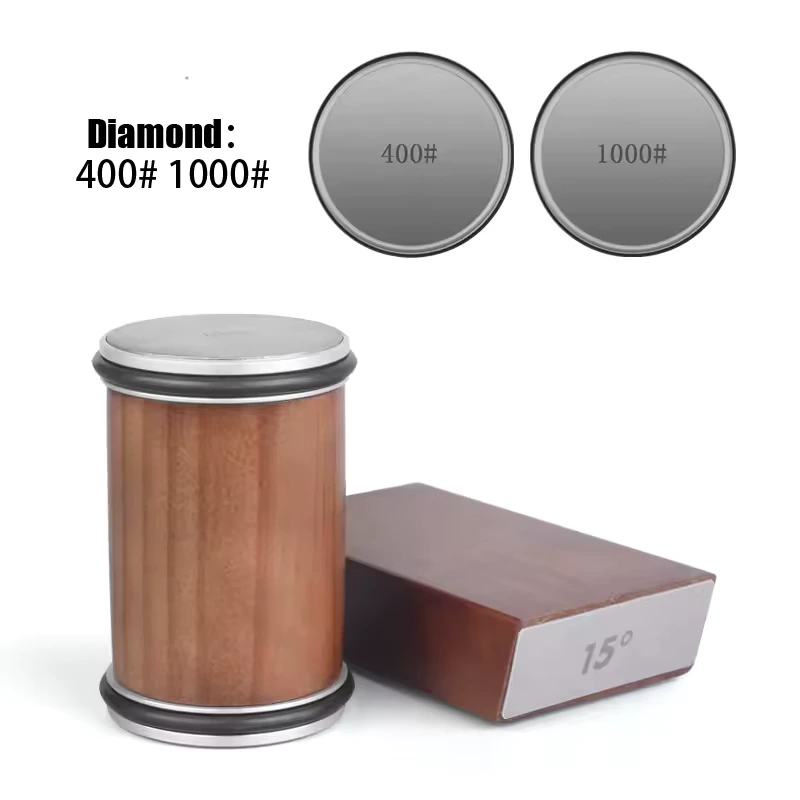 Magnetic Rolling Knife Sharpener£59.99View product → makes the monthly touch up quick and consistent. Our knife care guide covers honing, sharpening angles and storage in more detail.
Size, thickness and shape
A board should be larger than the knife you use on it, with room to work without the blade hanging off the edge. For a typical 20 to 24 cm gyuto, a board around 45 by 30 cm is a sensible minimum, and larger is better if your worktop allows. Thickness matters for stability: a wooden board of 3 to 5 cm is less likely to warp, slide or rock than a thin one.
Feet or a damp tea towel under the board stop it moving, which matters for safety and for clean cuts. A juice groove helps with roast meat and juicy fruit. Handles look handsome but get in the way when you flip the board or wash it. Weight is a trade off: heavy boards stay put, light boards are easier to move and store.
How many boards do you need
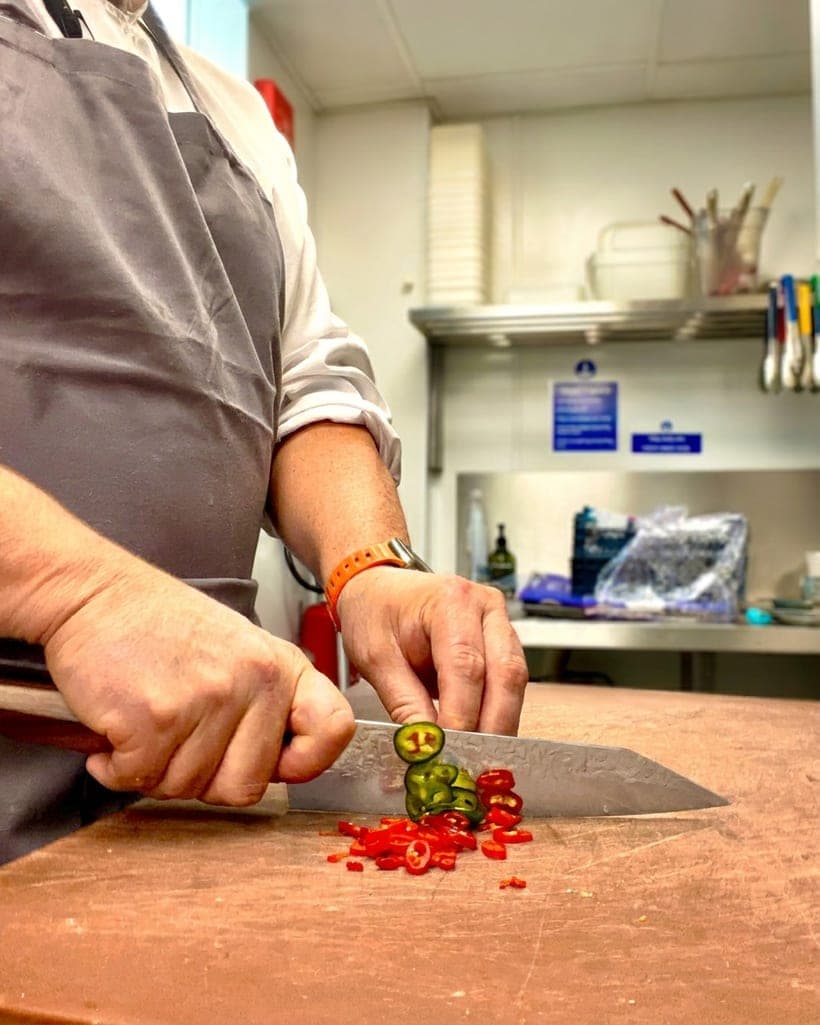
Two is a good number for most homes. Keep one for raw meat and fish, and one for vegetables, fruit and bread. If you cook a lot, a third small board for garlic, chilli and strong flavours saves a lot of washing. Colour coding helps if you share a kitchen. Cross contamination is a board discipline problem, not a material problem.
A simple recommendation
If you want one board that treats good knives well, buy an end grain hardwood board, or an edge grain hardwood board if the price or weight puts you off. Add a dishwasher safe plastic or rubber board for raw meat. Keep bamboo for bread and serving, and keep glass and stone for cheese and pastry. That combination covers almost every kitchen.
- Best for knife edges: end grain hardwood, then edge grain hardwood, then rubber.
- Best for convenience: plastic or quality composite, dishwasher safe.
- Best for sustainability on a budget: bamboo, with the caveat that it is hard on edges.
- Best avoided for knives: glass, marble, stone and ceramic.
You can browse our full range at all products, or go straight to chopping boards to see what is currently in stock. Whatever you choose, buy the largest board your kitchen can take. Worktop space is the only real limit, and a cramped board causes more accidents than a slightly blunt knife.
Photography: Sergey Kotenev via Unsplash.


