






Best Wood for a Cutting Board: A UK Buyer's Guide

A cutting board is the one piece of kitchen kit your knives meet more often than anything else. It is also the piece most people buy on a whim, usually because it looked good on a shelf or cost the right amount at the time. The wood you choose has a real effect on how your edges hold up, how often you need to sharpen, and how much you enjoy the five minutes before dinner.
This guide covers the woods that genuinely work, the ones that only look good, and the practical questions of grain, thickness and upkeep. Everything here is written for a UK kitchen, which means small worktops, damp winters and knives that often cost more than the board they sit on.
Why wood is still the right answer
Plastic is cheap, dishwasher safe and unromantic. It also dulls an edge faster than most people expect, because a hard polymer surface gives a knife nowhere to go. Glass and stone boards are worse, and will roll a fine edge in a single session. Bamboo sits somewhere in the middle, and while it is often sold as the eco option, many bamboo boards are laminated with a lot of adhesive and end up harder than the knives you are cutting with.
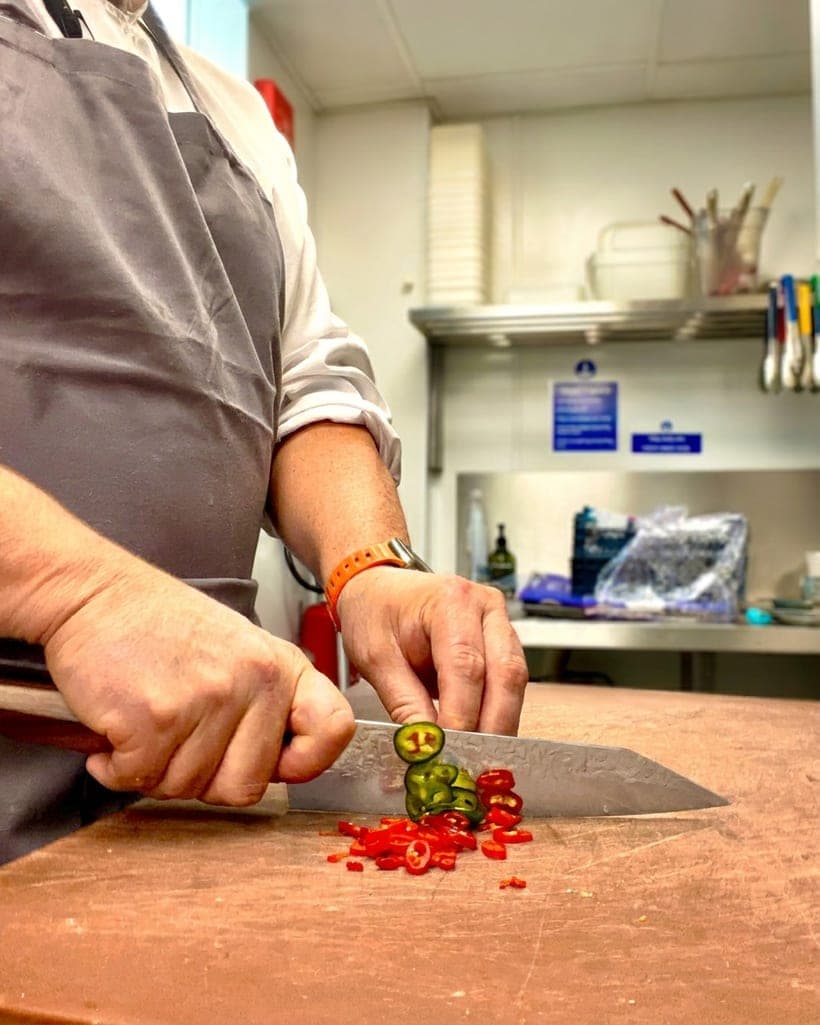
Wood has a little give. Under the edge of a knife the fibres part and then close again, which means less rolling, less chipping and less time spent honing. A well made wooden board is also kinder to a thin Japanese edge, which matters if you use something like 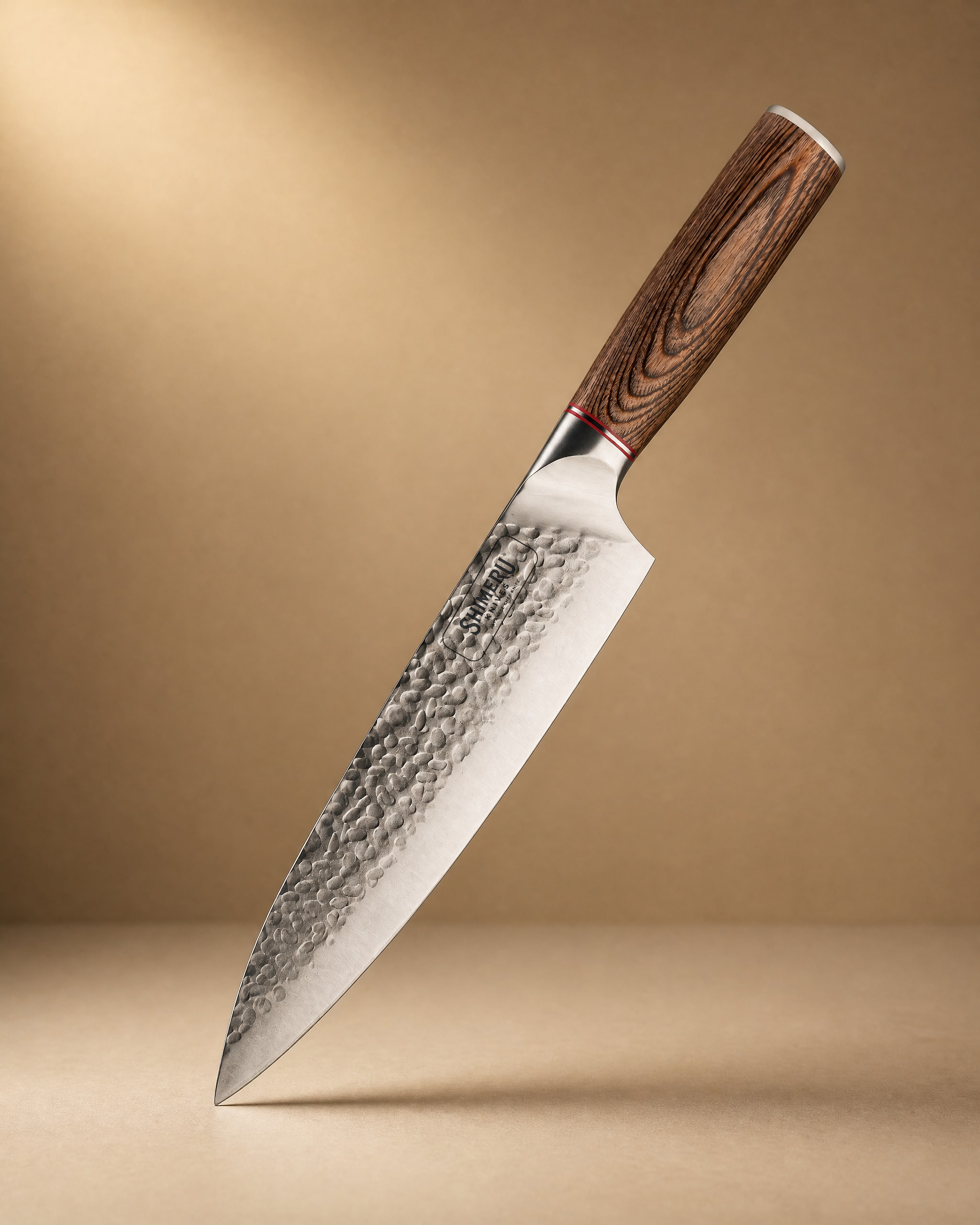 Akan 8'' Gyuto Knife 牛刀£49.99View product → for vegetables and protein most days.
Hardwood, softwood and the word on the label
Almost every board sold as quality is described as a hardwood. That term is about the tree, not the hardness of the timber: oak and balsa are both hardwoods. What matters for a cutting board is density, closed grain and how the wood behaves when it gets wet.
You want timber that is dense enough to resist knife marks, tight grained enough that it does not drink water, and stable enough that it will not twist on a draining board. It should also be food safe, with no varnish or stain. Look for boards finished with food grade mineral oil or a beeswax blend.
The woods worth your money
These are the timbers you will see most often in good boards, and what each of them actually does well.
Maple and beech
Maple is the default for a reason. It is hard, fine grained, pale and neutral, and it offers a surface that hides very little. American hard maple is the classic butcher block timber. It is heavy, it needs oiling, and it will show every cut, but it will not surprise you. If you want one board that does everything, maple is the honest answer.
Beech is the European workhorse. It is hard, affordable, widely available and has been used in butchers' blocks for generations. It moves a little more than maple with changes in humidity, so buy a thick one and oil it properly. Cheaper beech boards are usually glued from narrow strips, which is fine when the joinery is good.
Walnut and cherry
Walnut is softer than maple, which sounds like a fault and is not always one. A slightly softer board is gentler on very hard, very thin edges. It is also darker and more forgiving of stains. It dents more easily, so keep it away from heavy cleaver work.
Cherry sits between the two. It is close grained, warm in colour and darkens with age and light. It marks more than maple, but the marks tend to be shallow and it feels lovely under a knife. A good choice for a smaller board used for vegetables, herbs and lighter prep.
Acacia, teak and other imports
Acacia is common in mid-priced boards and looks striking. It is dense but inconsistent, and some pieces are more porous than you would like. Teak is naturally oily and resists water well, though good teak is expensive and much of what is sold as teak is something else. Both can work. Neither is automatically better than a good beech or maple board at the same price.
What to avoid
Bamboo, for the reasons above, unless you accept a compromise. Any board that is stained, lacquered or varnished rather than oiled. Boards thinner than about two centimetres, which cup and warp. And boards made from unknown softwood, often sold cheaply and usually too light and too thirsty to last.
One more point: be wary of deep juice grooves if you mostly cut vegetables. A groove is useful for a roast and useless for onions, and it takes away usable surface every day.
End grain or edge grain
Edge grain boards are built from strips laid side by side, so the knife meets the long side of the wood fibres. They are cheaper, lighter and easier to make well. End grain boards are built from squares stood on end, so the knife meets the ends of the fibres. The fibres part like a brush and close afterwards, which is genuinely kinder to an edge and hides marks better. End grain costs more, weighs more and needs more oil.
If you sharpen properly and cook often, end grain is worth the money. If you want a good board at a fair price, a thick edge grain board in maple or beech is a serious tool. More on keeping an edge in our knife care guide.

Thickness, size and weight
Thickness does two jobs: it stops the board moving, and it gives the wood something to absorb. Two centimetres is a minimum for anything serious. Three to four centimetres is comfortable and will stay flat if you look after it. Bigger is almost always better if you have the worktop, because a board that is too small means knives working around the edge and food going on the floor.
Think about where it will live. A heavy board that stays out gets used more than a light one that goes back in a cupboard. In a small kitchen, one good medium board beats three cheap ones.
Wood and your knife edges
A wooden board will not keep a knife sharp on its own. It slows the rate at which an edge degrades, which means fewer passes over a stone across a year. If you cook with a thin, hard Japanese knife, that matters more than the price of the board.
Whatever board you use, a sharpening habit beats everything else. A simple option for a home kitchen is 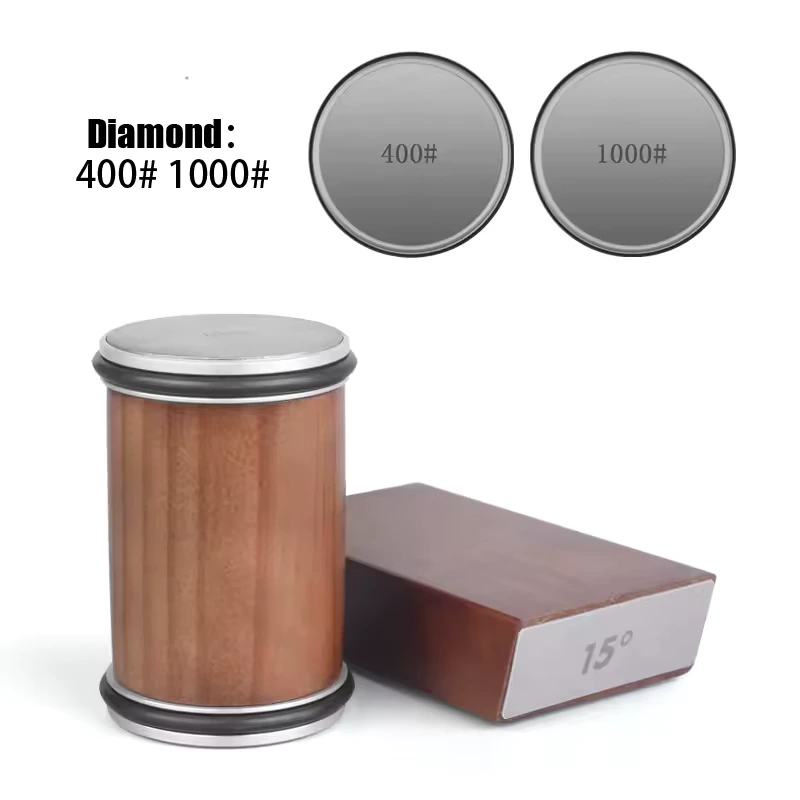 Magnetic Rolling Knife Sharpener£59.99View product →, easy to keep to hand for a regular touch up. If you would rather understand the whole system first, our knife guide covers steel, geometry and sharpening angles.
Matching the board to the knife you actually use
Most people do not own one knife, so it makes sense to think about the pairing. A general purpose gyuto such as 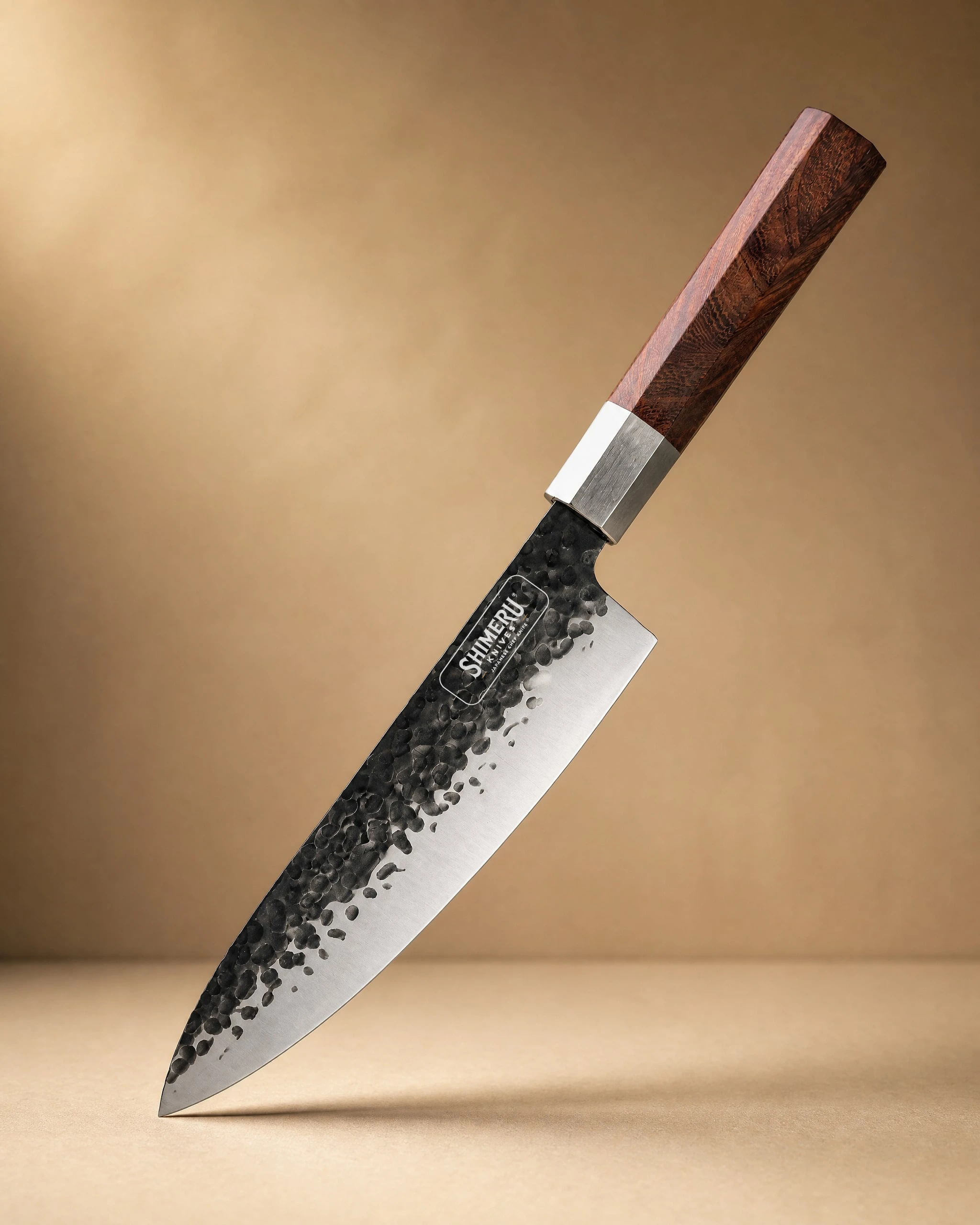 Sendai 8" Steel Gyuto Knife 牛刀£49.99View product → copes with vegetables, herbs, meat and fish, and it will feel at home on a medium maple or beech board that is oiled regularly.
If you slice and dice more than you chop, with a longer, keener edge, something like 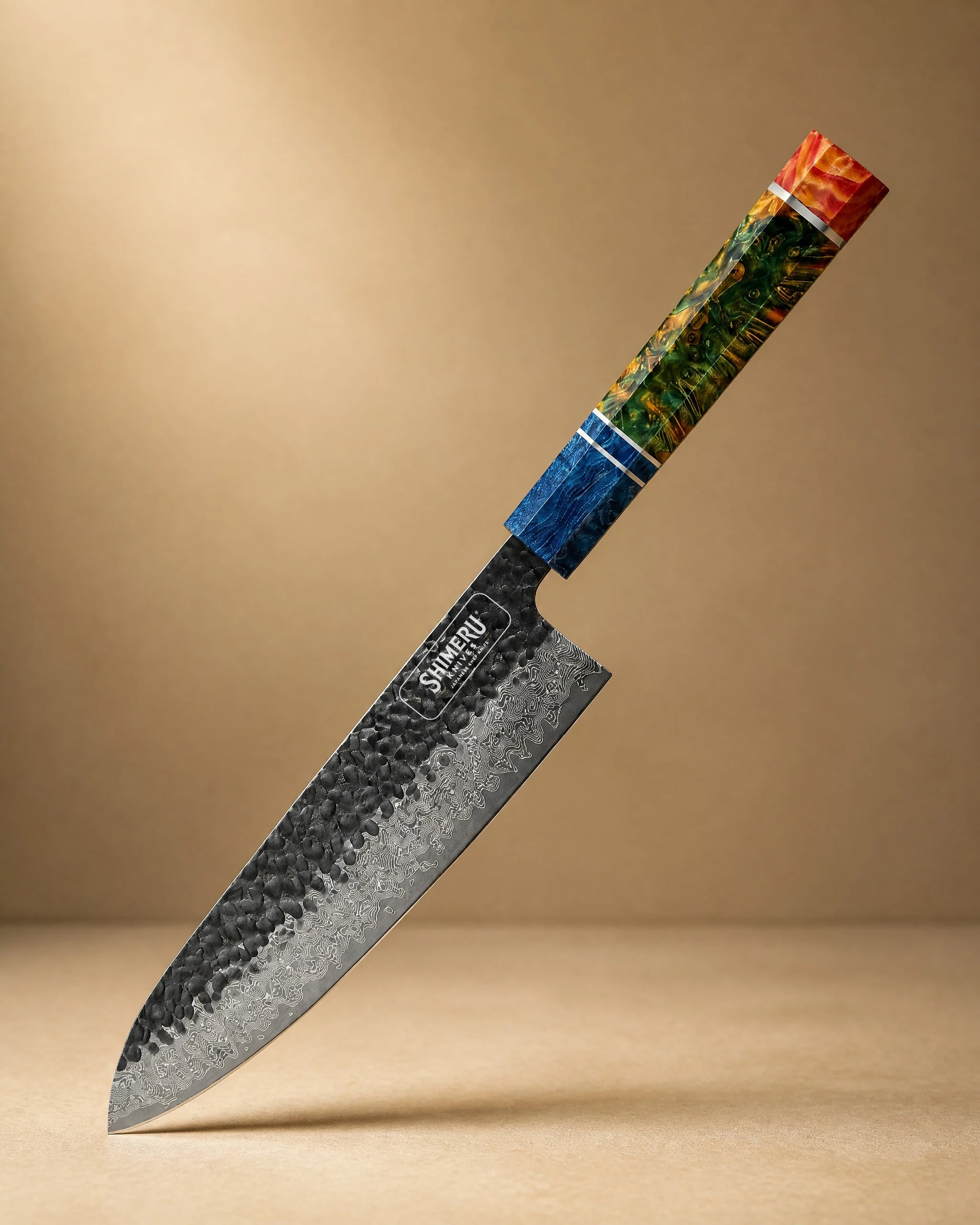 Yoshii 8″ Damascus Steel Gyuto Knife 牛刀£79.99View product → rewards a board with a little give. End grain maple or a good walnut edge grain board suits that kind of work. The knife does the fine cutting. The board should not be fighting it.
For heavier prep and a knife that spends a lot of time on the board, Akan 8'' Gyuto Knife 牛刀£49.99View product → pairs well with a sturdy maple board built for daily use.
Looking after a wooden board
Wash by hand in warm water, never in the dishwasher, and never leave it soaking. Dry it standing on edge so both faces dry at the same rate. Oil it with food grade mineral oil when the surface looks dry, which for a busy home board means roughly once a month at first and less often later. A beeswax blend on top of the oil gives a slightly tacky, water resistant finish.
Do not use olive oil or vegetable oil for this. They go rancid and leave a sticky film. Do not sand aggressively either. A light sanding when the surface is badly scarred is enough.
If you live somewhere damp, or your kitchen gets cold overnight, expect the board to take on and lose moisture with the seasons. That is normal. A board that is oiled regularly copes with it far better than one that is left bare, and a board stored flat on a wet worktop will warp no matter how good the timber is.
A short buying checklist
- Hardwood, oiled, not varnished or stained.
- At least two centimetres thick, ideally three or more.
- End grain if the budget allows, edge grain if not.
- Large enough to work on without food falling off the edge.
- Heavy enough to stay put, light enough that you will actually use it.
Where to go next
You can browse the full range at our knife shop, and if you already know you want a board to go with them, the chopping boards section is the place to start.
Buy the best board you can afford, keep it oiled, and it will serve you for years. A good wooden board is not a luxury. It is the quiet piece of kit that decides how long your edges last.
Photography: Sergey Kotenev via Unsplash.


