






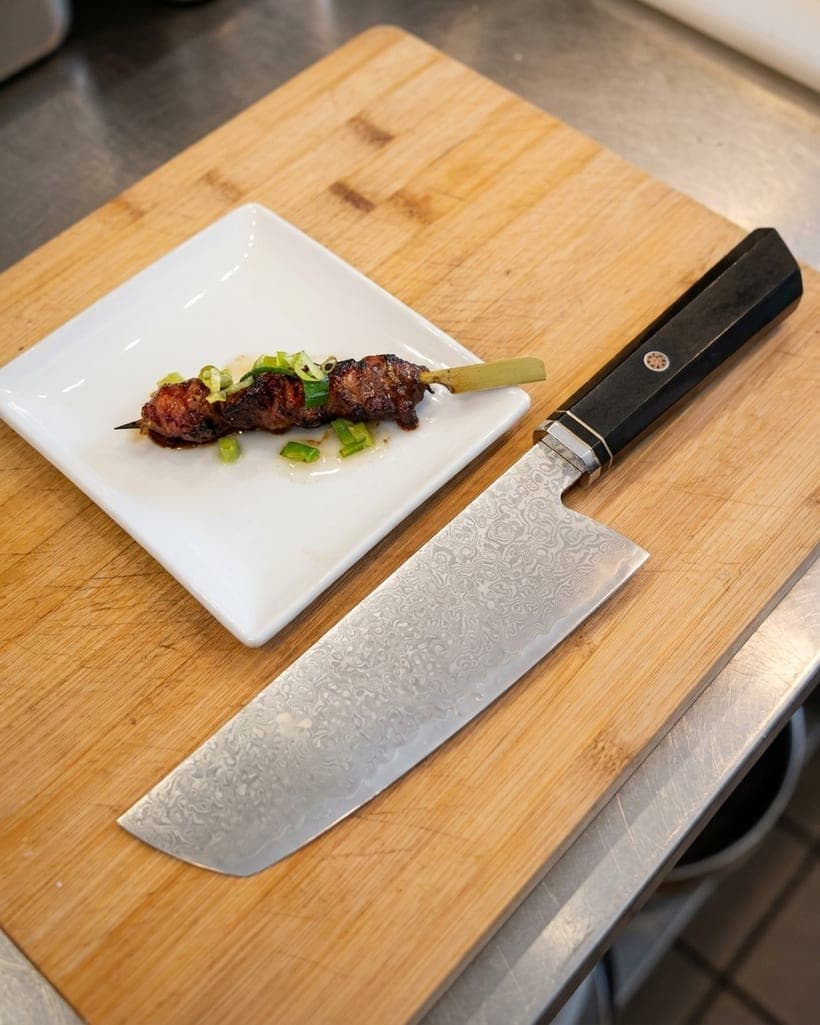
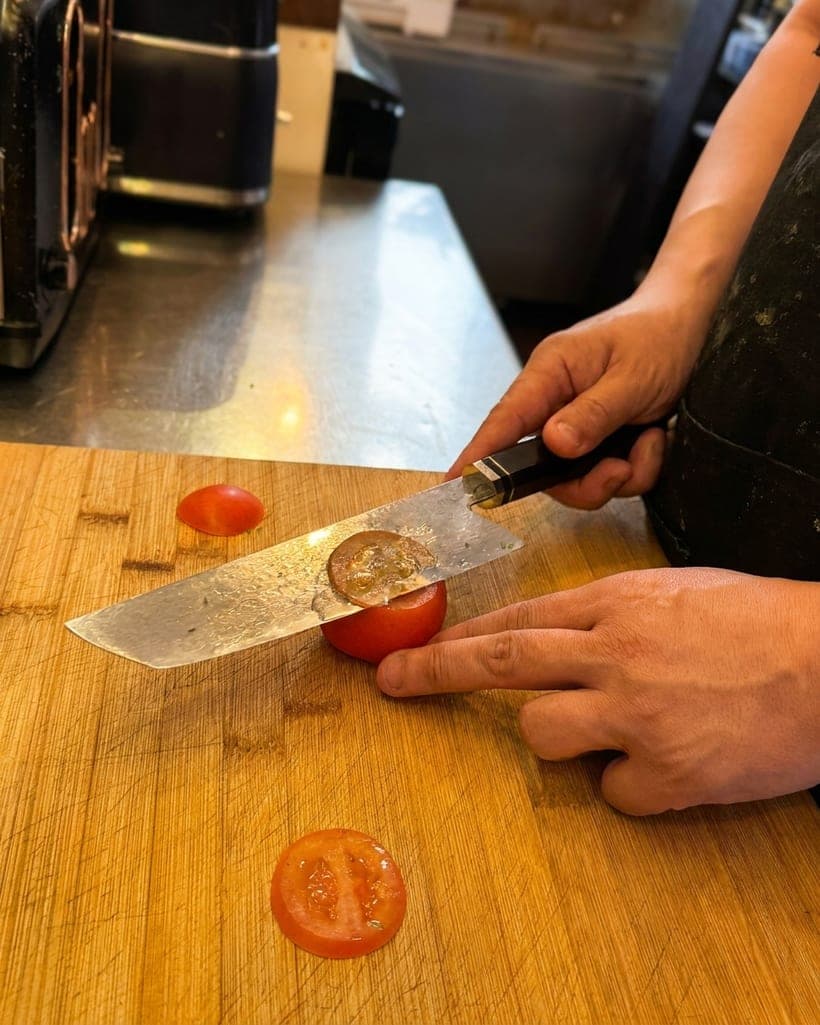

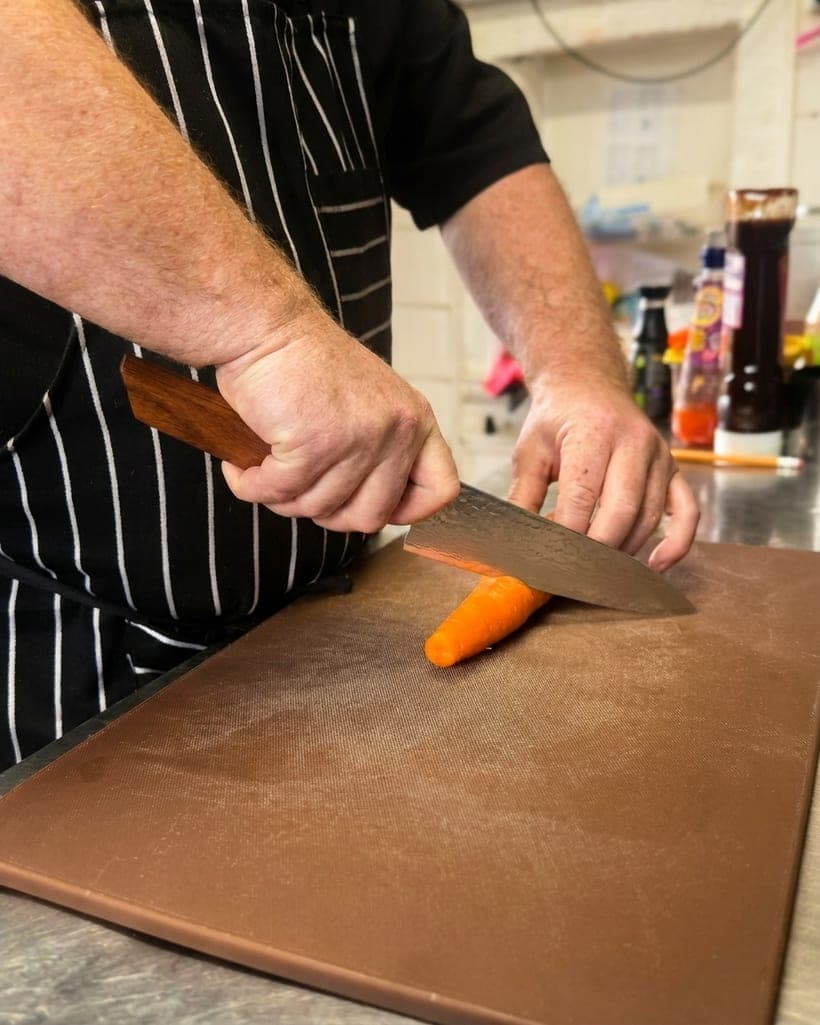


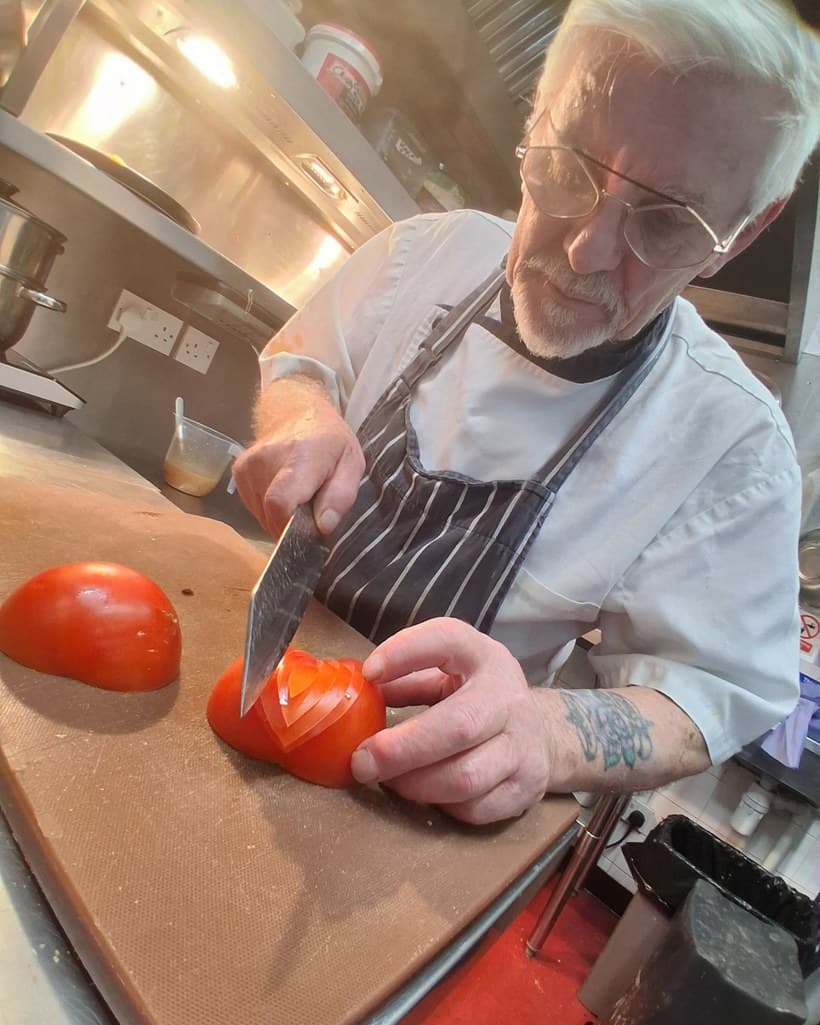
Best Solid Wood Chopping Boards for Your Kitchen

Your knife is only as good as the surface it meets. You may own a magnificent Japanese knife like 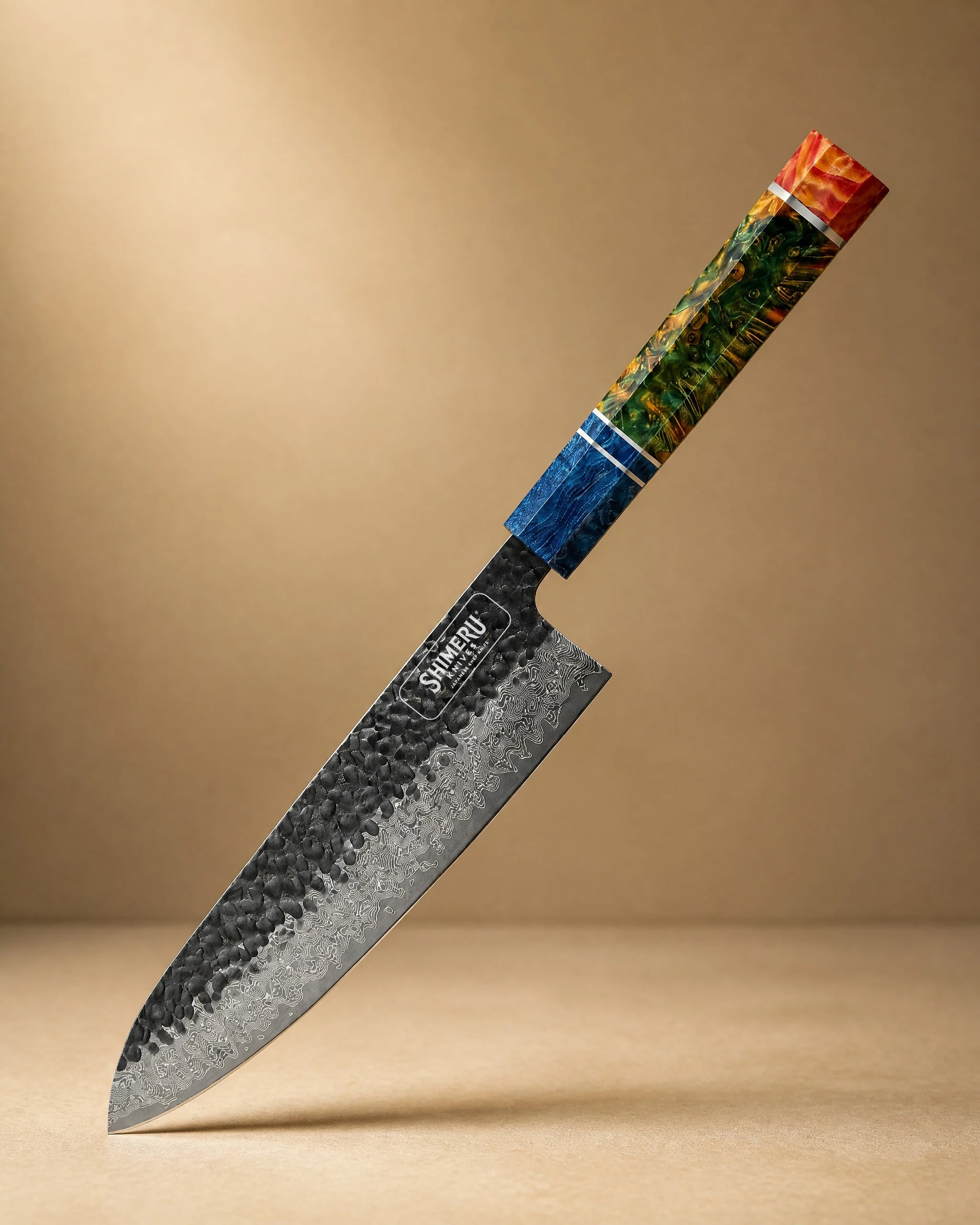 Yoshii 8″ Damascus Steel Gyuto Knife 牛刀£79.99View product → with its 67 layer Damascus steel and wood and copper handle, but if you chop on glass, granite or a cheap bamboo board, you will dull that edge within weeks. The truth is simple: the best cutting board material for both your knives and your cooking is solid wood. In this guide we look at what makes a good chopping board, the difference between grain types, the best hardwoods, and how to choose the best wood cutting board for your specific needs.
Why Solid Wood Matters for Your Knives
The primary purpose of a chopping board is to provide a resilient surface that absorbs the impact of the blade without damaging the edge. Hard surfaces like glass, marble or ceramic literally chip and roll the microscopic teeth of a sharp knife. Plastic boards are kinder than stone, but they wear into grooves that harbour bacteria and cannot be sanded smooth. Wood, especially end grain wood, has a natural give that allows the knife edge to sink slightly and then spring back. This is the same principle behind the traditional wooden butcher blocks used for centuries. A good wooden chopping board is arguably the best knife investment you can make, after the knife itself.
When you pair a premium knife such as 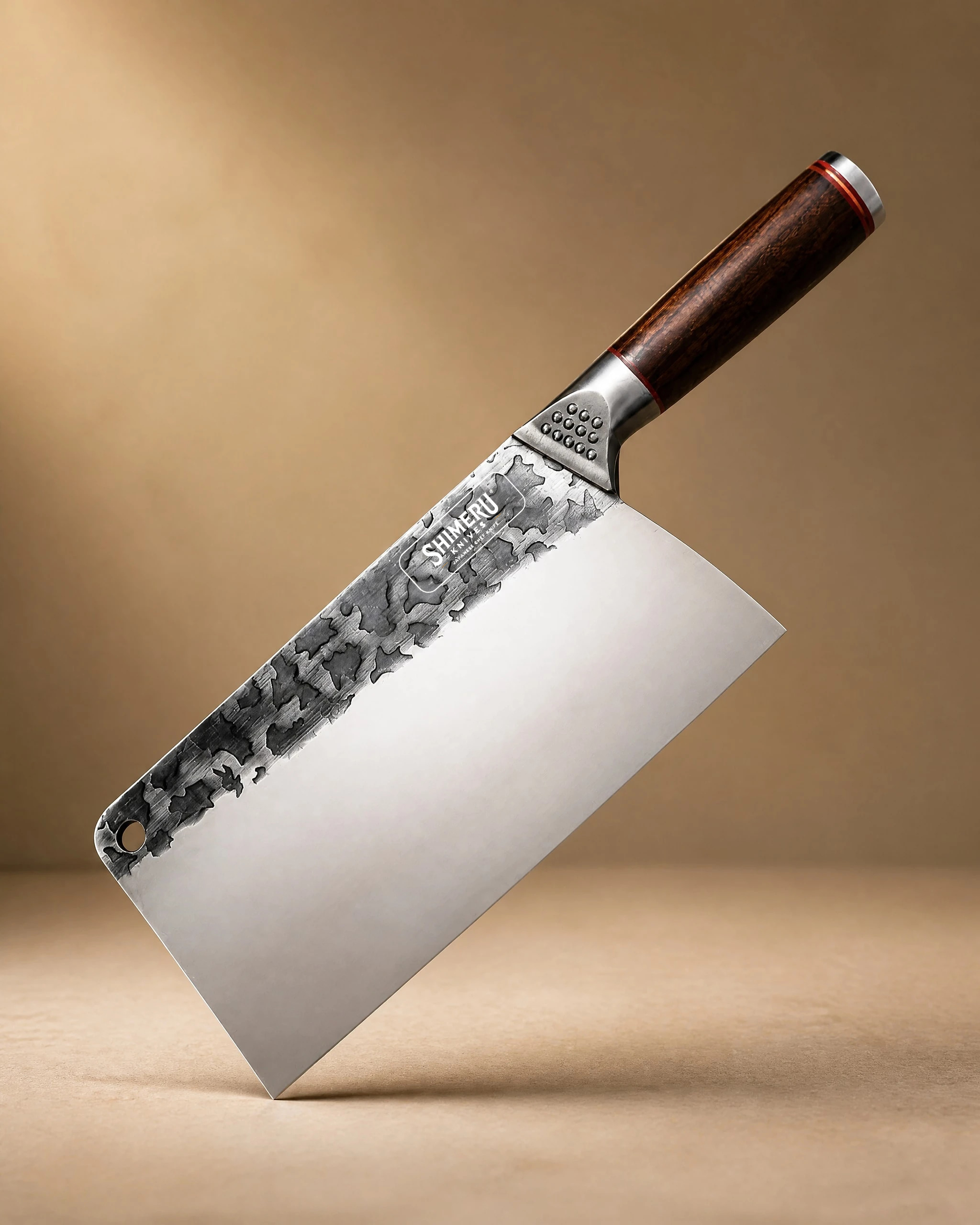 Saba 7" Stainless Steel Cleaver 中華包丁£44.99View product →, a Japanese stainless steel cleaver with an African Wedge hardwood handle, with a solid wood board, you get a combination that is both efficient and gentle on the blade. The hardness of the African Wedge handle is matched by the forgiving nature of a hardwood board underneath the cleaver. For heavy chopping, meat and vegetables, the synergy is unmistakable.
End Grain vs Edge Grain: What Is Best?
Not all wood boards are made the same. The grain orientation is the single most important factor in knife friendliness and longevity.
End Grain Boards
An end grain board is made by gluing together blocks of wood with the growth rings facing upward. This creates a surface of thousands of tiny wood fibres standing on end. When a knife blade strikes, those fibres separate and then close again, much like a brush. This minimises friction and does not actually cut the wood fibres, so the board stays smooth for years. End grain boards are the best chopping board material for any knife, especially for high carbon steel knives like those in 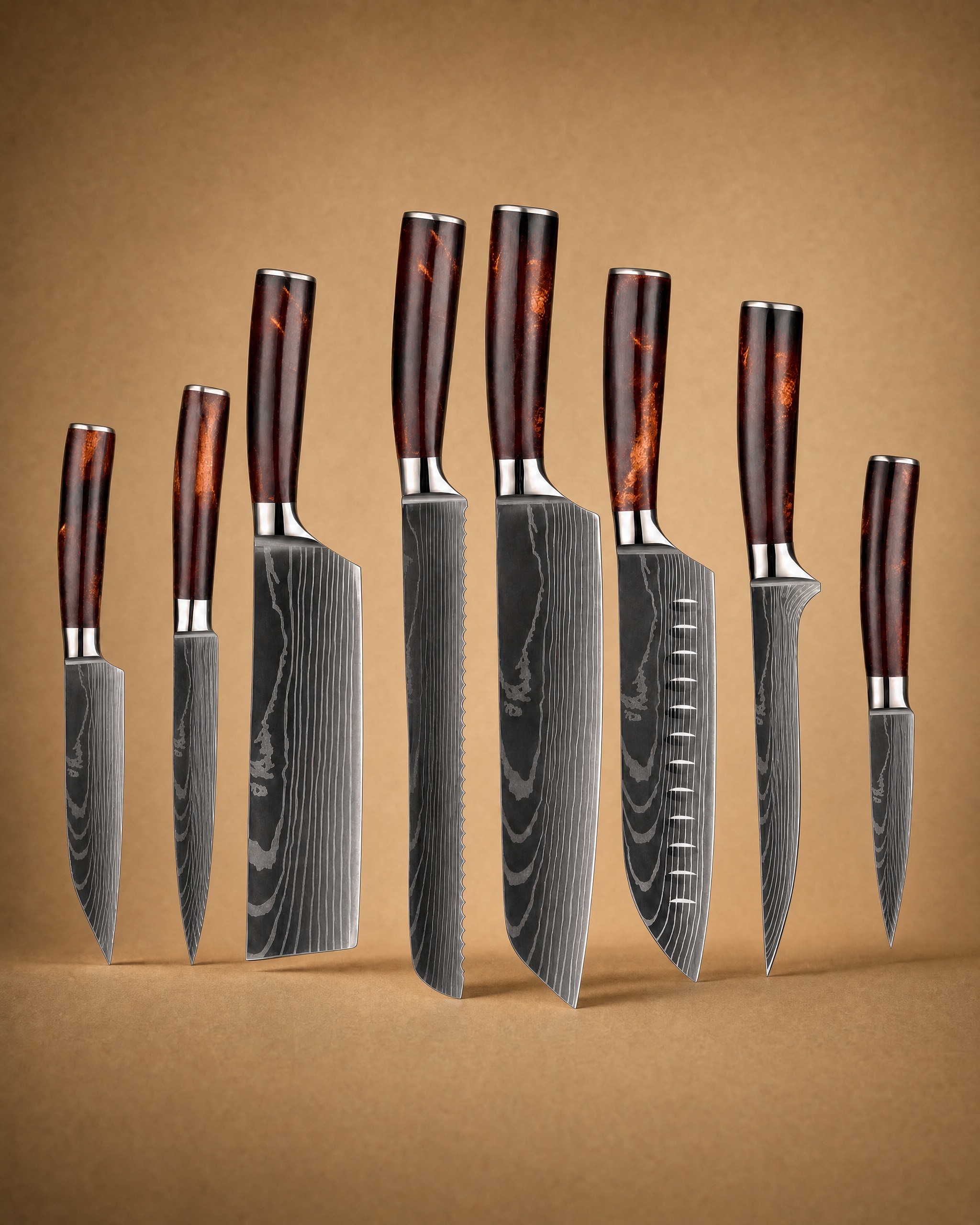 Asahi 朝日川 Damascus Pattern Stainless Steel Kitchen 8 Knife Set£154.99View product → and
 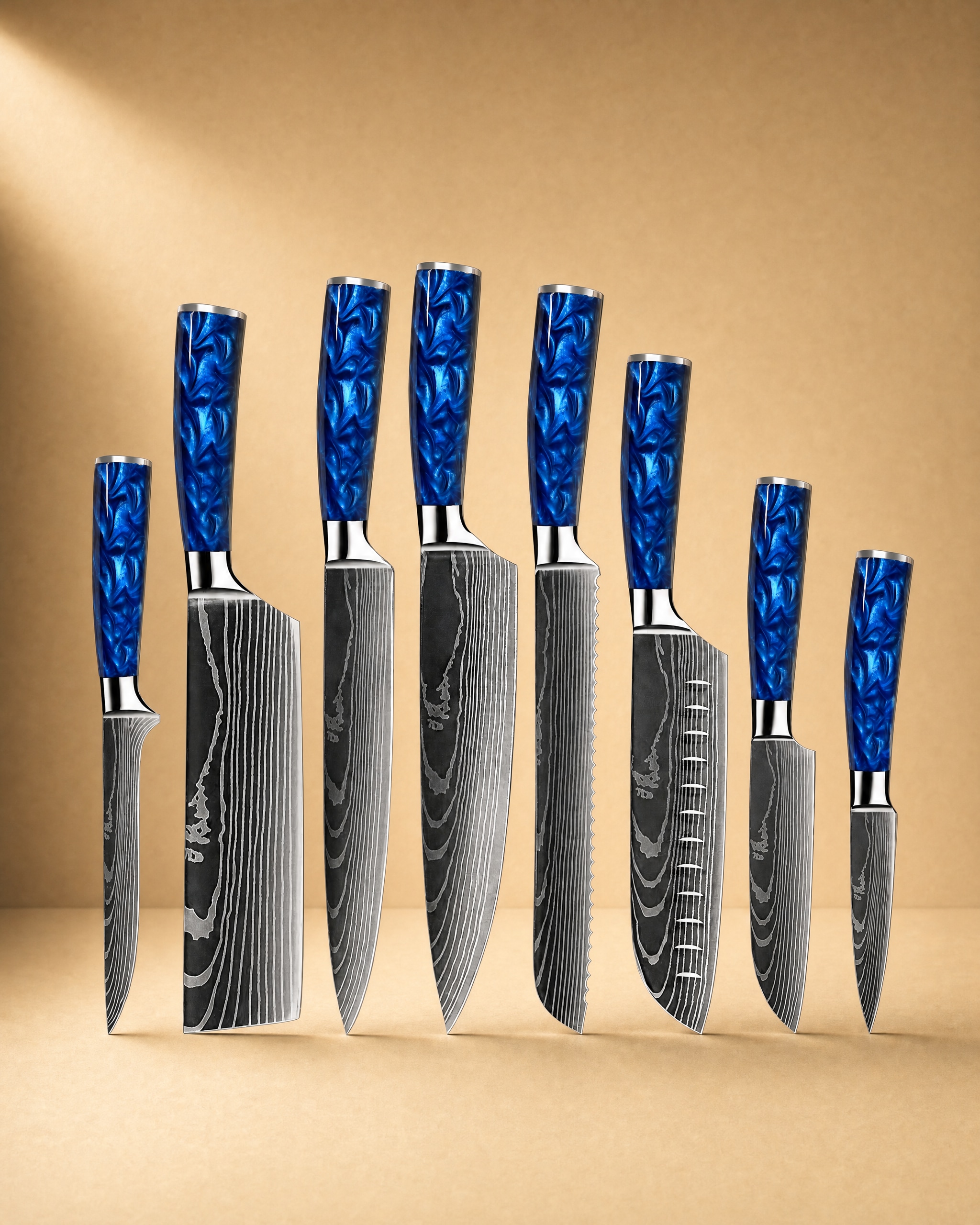 Shinano 信濃川 Damascus Pattern Stainless Steel Kitchen 8 Knife Set£149.99 · currently out of stockView product →. They are also the best cutting board for meat because the fibres absorb the force of the blade, reducing stress on the edge and making slicing through bone and gristle easier. The downside? End grain boards are more expensive and require more gluing and sanding to produce.
Edge Grain Boards
Edge grain boards are cut so that the long side of the wood grain faces up. They are cheaper and easier to make, but they will show knife marks more quickly because the blade cuts across the grain fibres. These marks can be sanded out, but over time the board may develop a slight concave shape. Edge grain is still a good chopping board, especially for lighter tasks, but if you want the best hardwood cutting board for daily heavy use, choose end grain.
The Best Woods for a Chopping Board
Hardness is measured on the Janka scale, but for a kitchen board you want a wood that is dense enough to resist warping and knife marks, yet soft enough not to dull your knife quickly. Here are the most reliable choices.
- Maple is the classic. It is hard, tight-grained, and naturally non toxic. It does not impart flavours to food. A maple end grain board is the best overall choice for most kitchens.
- Walnut is slightly softer than maple, which makes it very gentle on knives. It is also rich in colour and resists splitting. Many chefs consider walnut the best cutting board material for those who value both aesthetics and edge preservation.
- Cherry is similar to walnut in hardness, with a warm reddish tone. It shows fewer knife marks than maple. Cherry boards are excellent for general use.
- Teak has high oil content and is very moisture resistant, but it can be too hard for fine knives. Teak is better suited for outdoor or utility boards, not as your primary best wood cutting board.
- Acacia is hard and often used for budget boards. It is acceptable but not as knife friendly as the top three.
Avoid bamboo: it is actually a grass, not a wood, and the silica content is hard on knife edges. Also avoid exotic tropical woods that may be unstable or contain allergenic oils.
Thickness and Size: Practical Considerations
The best wooden chopping board for your kitchen should be at least 3cm thick. Thinner boards tend to warp, slip and eventually crack. A thick slab of end grain maple or walnut provides the mass needed to stay in place on the counter. For size, choose a board that is large enough to prepare a full meal without overcrowding, but small enough to store easily. A typical good size is 45cm by 30cm. For meat preparation, a larger board, perhaps 50cm by 38cm, gives you room to break down a whole chicken or roast. If you routinely use a cleaver like Saba 7" Stainless Steel Cleaver 中華包丁£44.99View product →, the extra area prevents pieces from sliding off.
Consider a board with juice grooves if you frequently carve meats. These grooves catch juices and keep them off the counter. However, juice grooves slightly reduce the usable flat area and can make cleaning a little trickier. For most home cooks, a flat board is simpler and more versatile.
How to Care for a Solid Wood Chopping Board
A solid wood board will last decades if you treat it well. The main enemies are moisture, heat and detergent. Never put a wood board in the dishwasher: the heat and moisture will cause it to split. Wash by hand with hot water and a neutral soap, then dry immediately. Do not soak it. Once a month, or whenever the wood looks dry, apply a food safe mineral oil or a blend of oil and beeswax. This seals the wood and prevents stains and odours. If the board develops deep cuts or becomes rough, sand it with fine sandpaper (120 to 220 grit) and re oil it. This is not possible with plastic or bamboo boards, which is another reason why wood is the best chopping board material.
For knives like those in Asahi 朝日川 Damascus Pattern Stainless Steel Kitchen 8 Knife Set£154.99View product → and Shinano 信濃川 Damascus Pattern Stainless Steel Kitchen 8 Knife Set£149.99 · currently out of stockView product →, regular oiling of the board is especially important because carbon steel can react with acidic foods if the board is not sealed. A well maintained board is also the best cutting board for meat because it resists bacterial growth better than plastic when properly oiled and dried.
Matching Your Board to Your Knife Style
The ideal pairing depends on how you cook. If you mainly slice, dice and chop vegetables and boneless meats, a medium hardness board like maple or walnut in edge grain will serve you well. But if you are a heavy user who breaks down whole poultry, chops through cartilage or uses a heavy cleaver, you will benefit from the shock absorbing properties of an end grain board. Your knife’s edge geometry also matters: a thin, hard Japanese gyuto like Yoshii 8″ Damascus Steel Gyuto Knife 牛刀£79.99View product → is more susceptible to chipping on hard surfaces, so a soft end grain board is non negotiable. Conversely, a robust German style chef’s knife or a Chinese cleaver is more forgiving, but the same rule applies: a wood board extends edge life.
If you own multiple knives, one good wooden board of end grain maple or walnut will work beautifully for all of them. You do not need a separate board for meat and vegetables, as long as you wash and sanitise properly. Some cooks prefer a separate small board for raw poultry to avoid cross contamination, but that can be a thin plastic board. For all other tasks, the best chopping board is a solid wood one.
Where to Find the Best Solid Wood Boards
A reliable source for quality wood chopping boards is specialist kitchen shops or craftspeople who make end grain butcher blocks. Look for boards made from sustainably sourced North American hardwoods. The joinery should be tight, with no gaps or visible glue lines. The board should feel heavy and balanced. If the seller offers a care guide, read it. Avoid boards that feel sticky from excess oil or that have a lacquer finish: lacquer can chip and is not food safe. A natural, unvarnished wood board that you treat with your own oil is always best.
Finally, remember that your knife and your board form a partnership. Invest in the best hardwood cutting board you can afford, and your knives will reward you with years of effortless cutting. For more guidance on choosing the right knife, have a look at our knife guide. If you want to keep your blades in top condition, our knife care article explains everything from sharpening to storage. And to see a wide selection of high quality kitchen knives, visit our product page.
Solid wood chopping boards are not a luxury: they are a practical investment in your cooking and your tools. Choose wisely, care for your board, and you will never look back.
Photography: Sergey Kotenev via Unsplash.


