



The Best Santoku Knife for Everyday Home Cooking

If you spend any time in the kitchen, you know that a good knife makes all the difference. The santoku knife is a favourite among home cooks for its versatility and balance. It handles everything from chopping vegetables to slicing meat with ease. But with so many options, how do you pick the best santoku knife for everyday home cooking? This guide will help you understand what to look for and introduce you to some excellent choices available at Shimeru Knives.
What is a Santoku Knife?
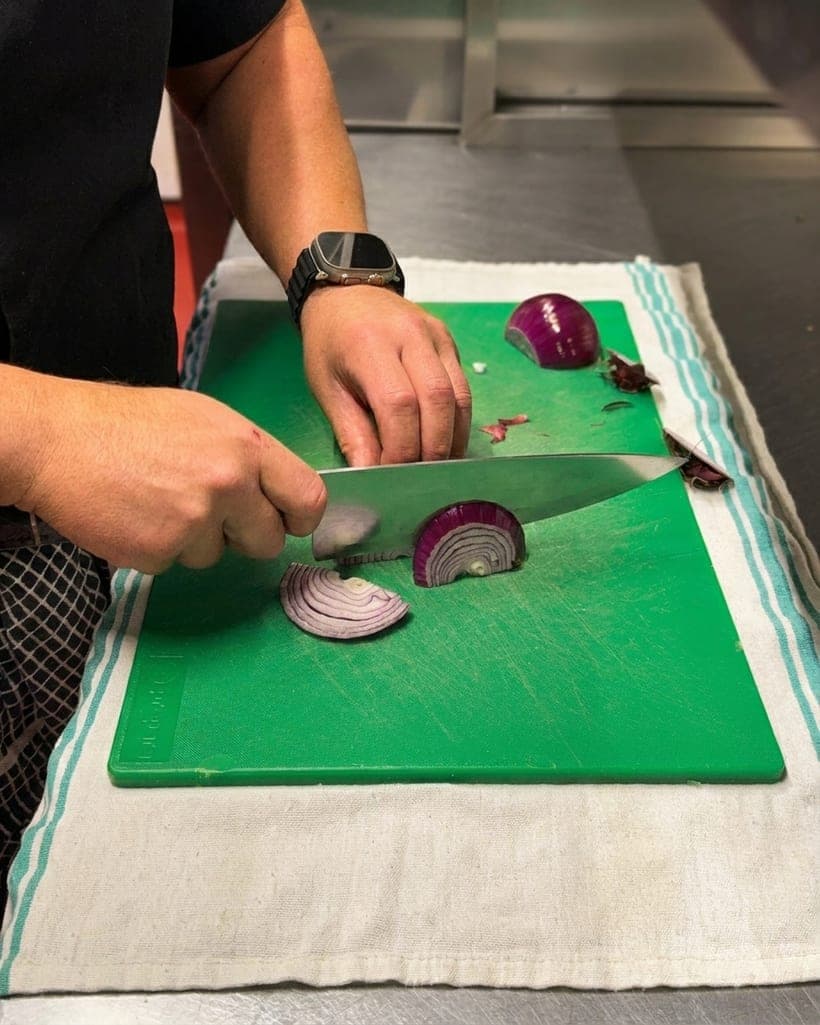
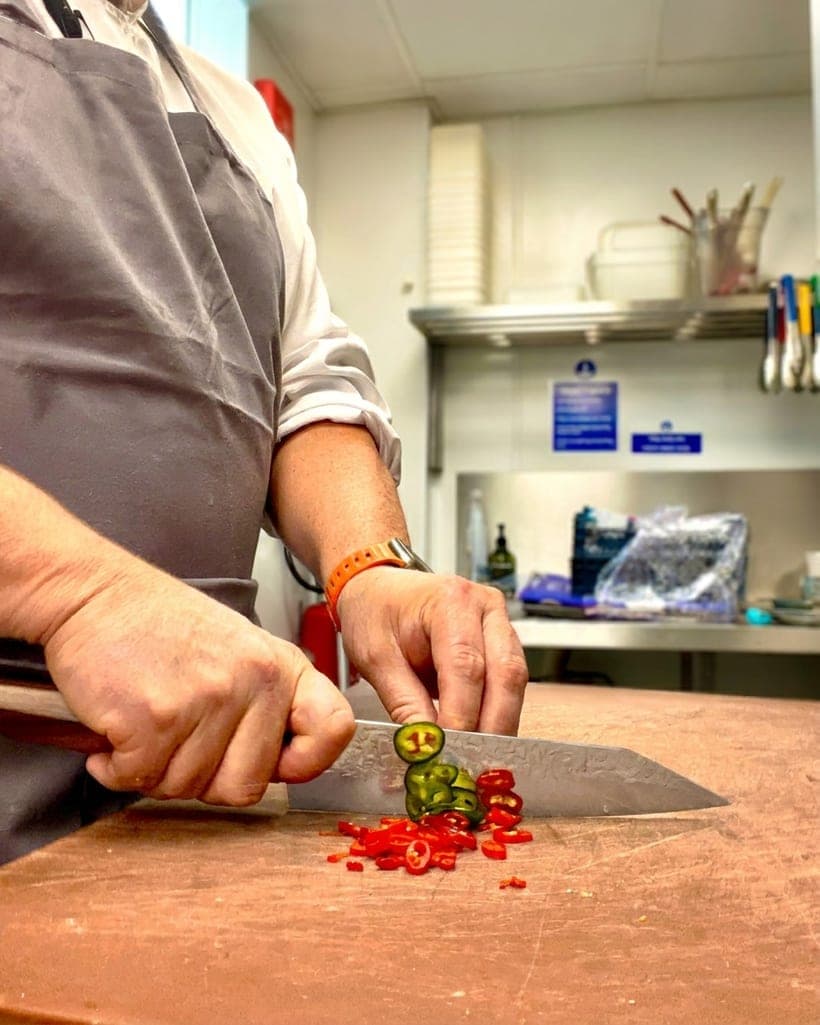
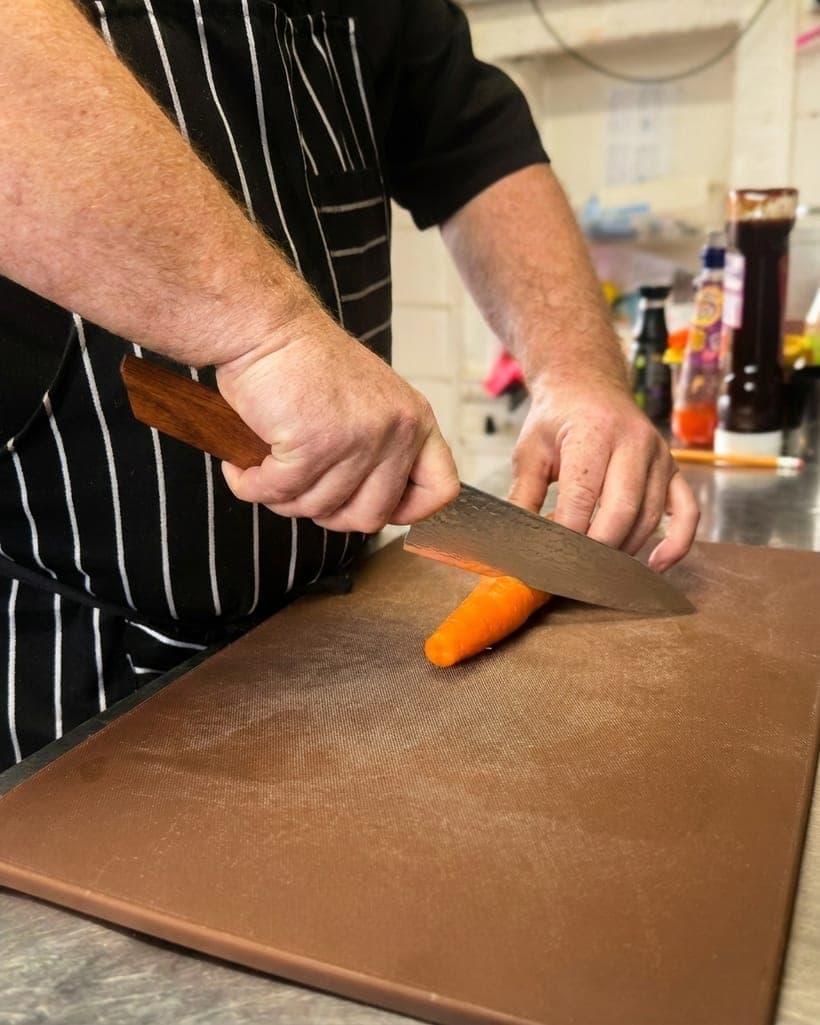
The word 'santoku' translates to 'three virtues' or 'three uses', referring to its ability to handle meat, fish, and vegetables. It is a Japanese blade that typically has a shorter, wider shape and a flat edge with a slight curve. This design makes it perfect for rock chopping, push cutting, and slicing. Unlike a Western chef's knife, a santoku often has a thinner blade and a sharper edge, which allows for precise cuts. For home cooks, it can become the one knife you reach for most times. The santoku blade is especially good for the push cut technique, where you slide the blade forward through ingredients rather than rocking back and forth. This method is efficient for chopping herbs, dicing onions, or slicing carrots thinly. It also reduces strain on your wrist. If you prefer a rocking motion, the slight belly on many santoku knives still allows it, though a chef's knife might be better for heavy rocking.
Key Features of a Good Santoku
When choosing a santoku, consider the blade length, steel type, and handle comfort. Most santokus range from 5 to 7 inches. A 5-inch blade offers more control for smaller tasks, while a 7-inch blade gives you more reach for larger ingredients. The steel determines edge retention and ease of sharpening. Stainless steel is low maintenance, while high-carbon or Damascus steel holds a sharper edge for longer. The handle should feel secure in your hand, whether it's traditional wood or modern resin. A well-balanced knife will feel like an extension of your arm. Weight also matters: lighter knives offer agility, heavier ones add power through cuts. We stock a curated selection of santoku knives that suit different budgets and preferences. Let's look at four standout models.
Top Santoku Knives for Home Cooking
Here are our recommendations, each tested for performance and value in a real home kitchen.
1. Ishikari 5" Santoku Knife 三徳包丁
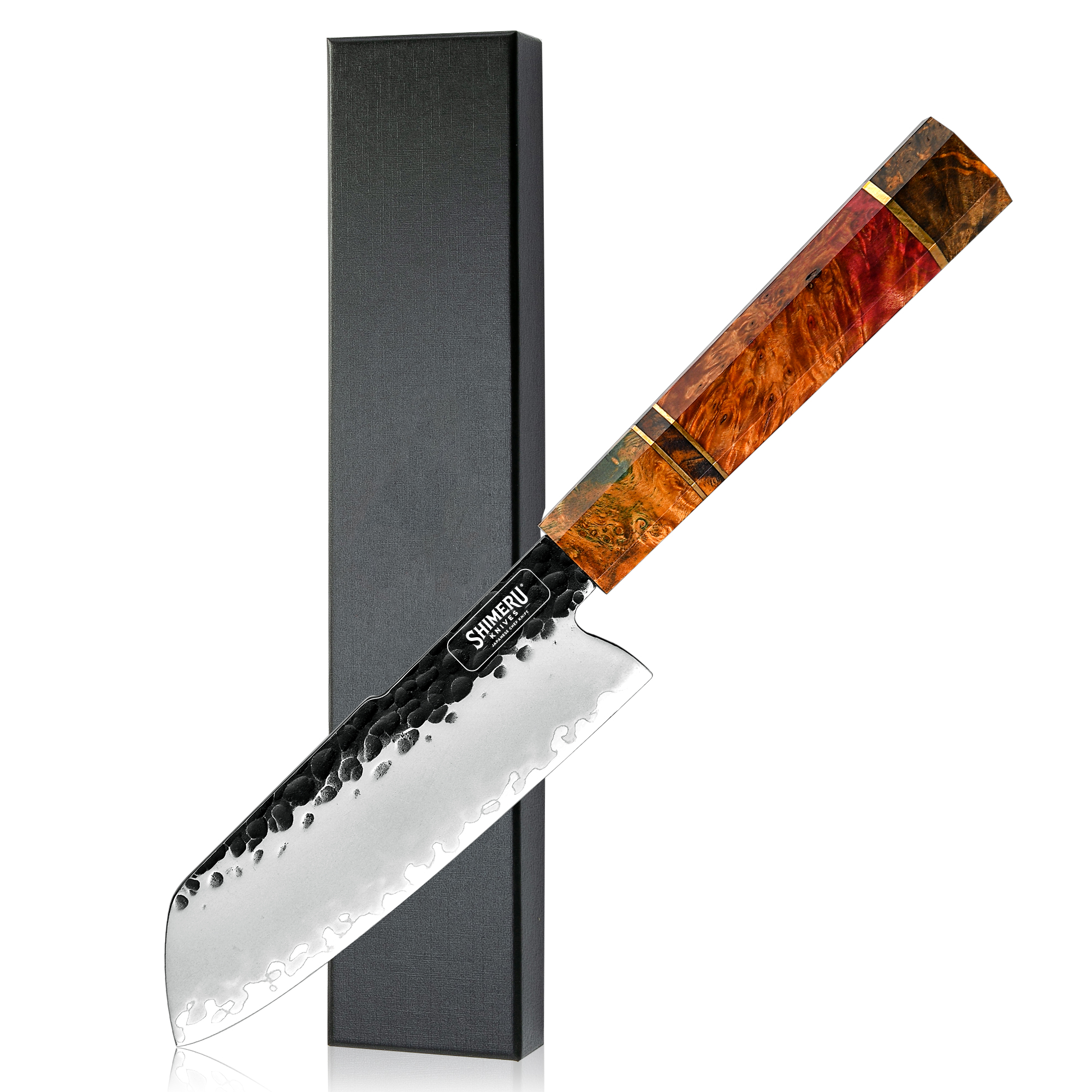
For those who want a compact, nimble blade, the Ishikari 5" Santoku Knife is an excellent choice. Its 5-inch AUS stainless steel blade is tough and resistant to rust, making it ideal for daily use. The hardwood handle is comfortable and provides a good grip. This knife excels at cutting, dicing, slicing, and chopping smaller ingredients like garlic, herbs, and onions. If you have a small kitchen or prefer a lighter knife, this is a wonderful option. The 5-inch length gives you precise control for detail work, such as trimming vegetables or slicing fruit. It is also a great starter knife for someone new to Japanese blades, as the stainless steel is forgiving.
 Ishikari 5" Santoku Knife 三徳包丁
£54.99
View product →
Ishikari 5" Santoku Knife 三徳包丁
£54.99
View product →
2. Asuka 飛鳥 7" Damascus Steel Santoku Knife 三徳包丁
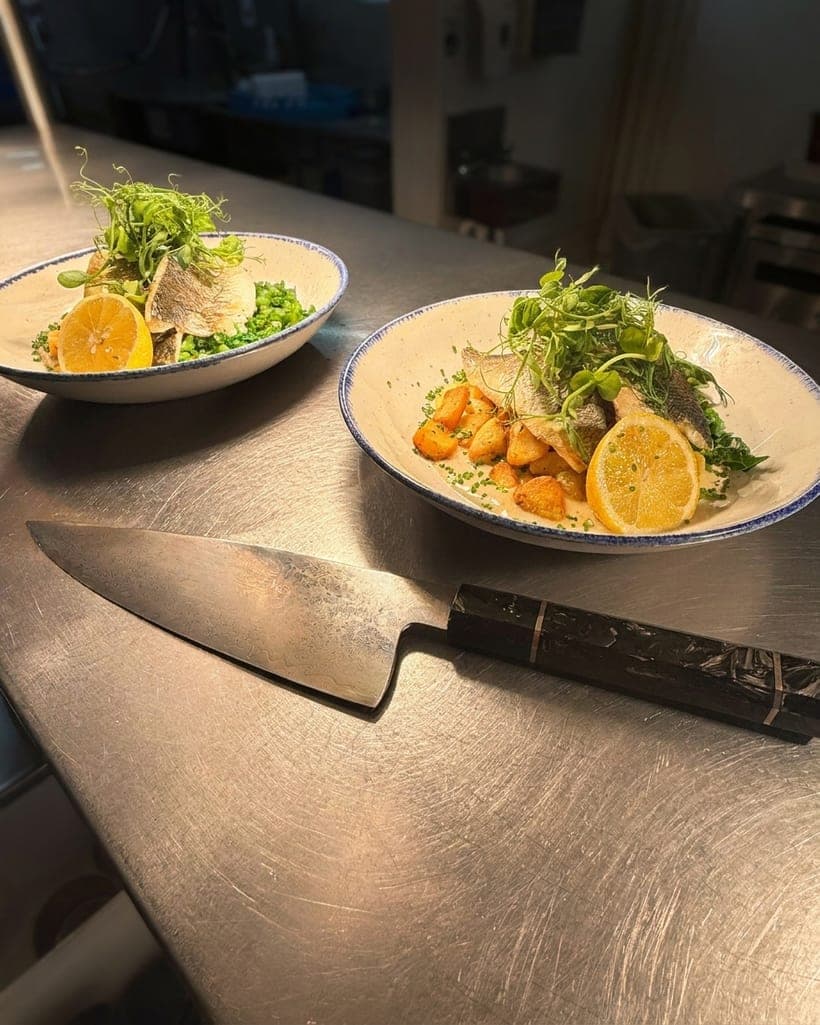
If you are ready for a step up in performance and beauty, the Asuka 飛鳥 7" Damascus Steel Santoku Knife is a showstopper. It features a 67-layer Damascus steel blade with a VG10 core, known for exceptional sharpness and edge retention. The black resin handle with gold flake adds a touch of elegance. At 7 inches, it is great for slicing, dicing, and mincing larger vegetables and proteins. This is a knife that will stay sharp for weeks with proper care. The VG10 core steel is a high-carbon stainless alloy that takes a very fine edge and holds it well. The Damascus cladding not only looks beautiful but also helps reduce friction, so food slides off the blade easily. This knife suits the home cook who wants a premium tool and is willing to care for it properly.
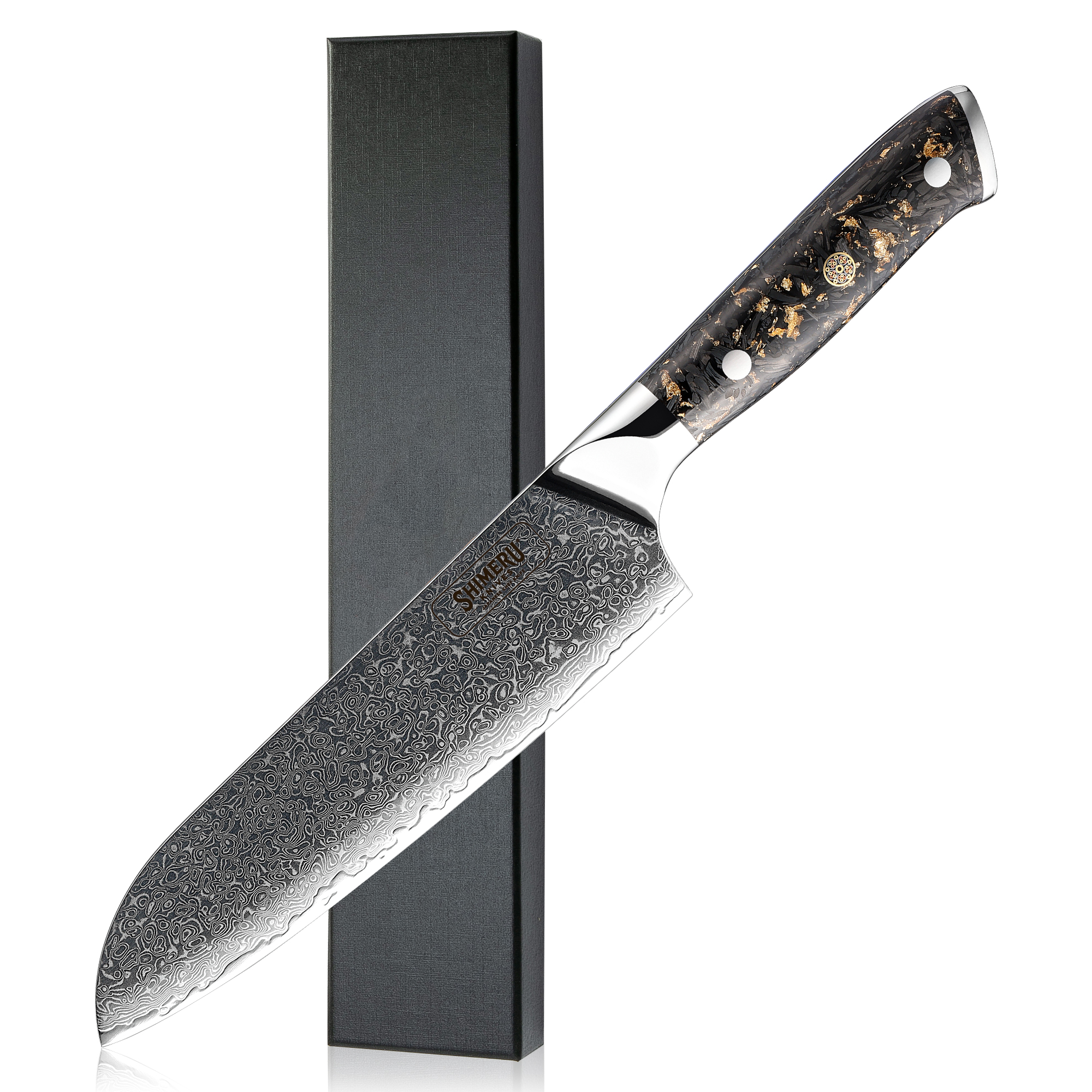 Asuka 飛鳥 7″ Damascus Steel Santoku Knife 三徳包丁
£69.99
View product →
Asuka 飛鳥 7″ Damascus Steel Santoku Knife 三徳包丁
£69.99
View product →
3. Hikari 光 7" Damascus Steel Professional Santoku Knife 三徳包丁
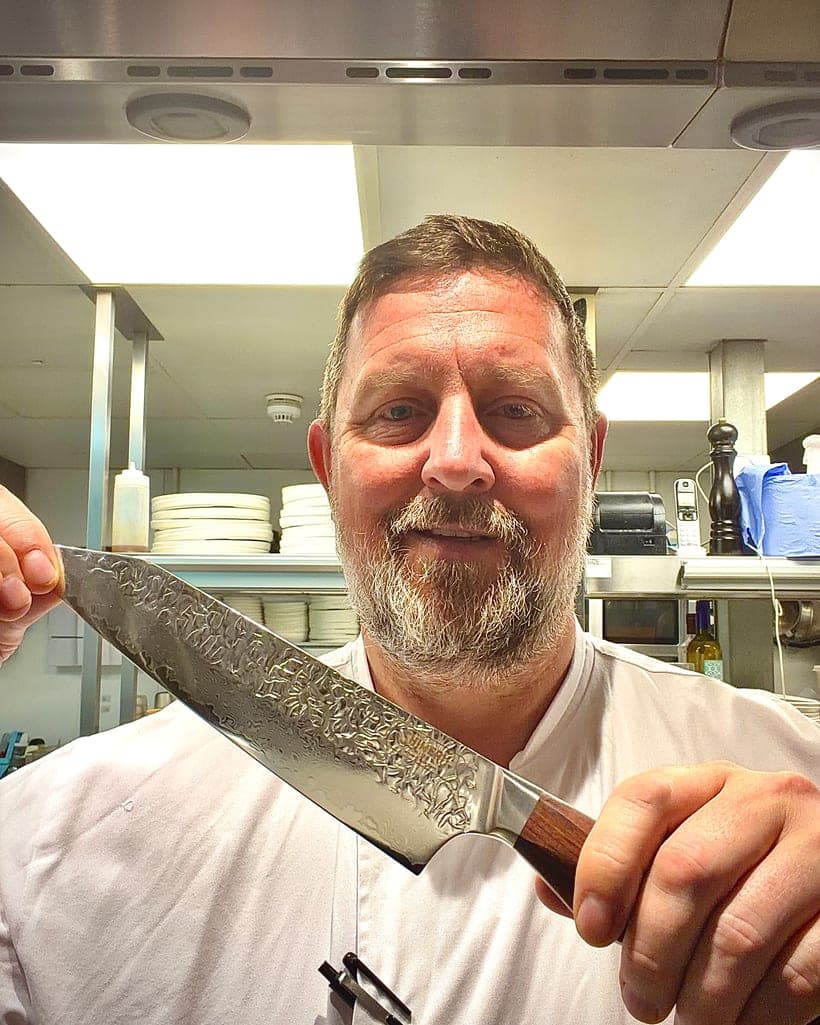
Another premium choice is the Hikari 光 7" Damascus Steel Professional Santoku Knife. It also uses 67-layer Japanese Damascus steel with a VG10 core, but it comes with a classic pakka wood handle that feels warm and traditional. This knife is best for meats and vegetables, offering a balanced weight that makes it easy to control. It is a professional-grade tool that any home cook would appreciate. The pakka wood handle is impregnated with resin, making it durable and water-resistant. The Hikari is slightly heavier than the Asuka, which some cooks prefer for chopping through dense vegetables like squash or carrots. It is a great choice if you value a traditional aesthetic and a sturdy feel.
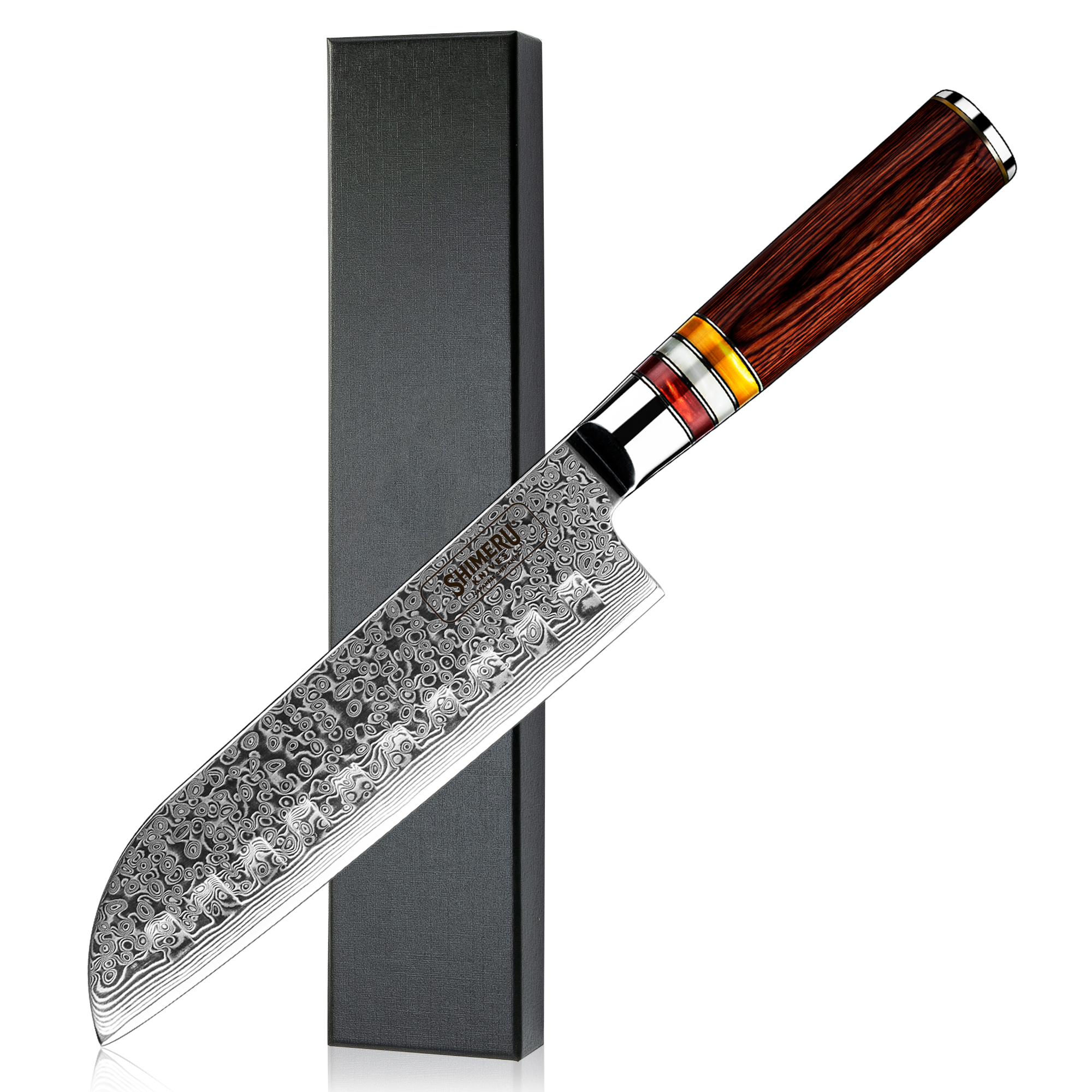 Hikari 光 7" Damacus Steel Professional Santoku Knife 三徳包丁
£64.99
View product →
Hikari 光 7" Damacus Steel Professional Santoku Knife 三徳包丁
£64.99
View product →
4. Sendai 7" Damascus Steel Santoku Knife 三徳包丁
The Sendai 7" Damascus Steel Santoku Knife combines technical performance with a striking handle. Its 67-layer Damascus blade is paired with an olive hardwood handle complemented by sandalwood and red resin. This knife is built for slicing, dicing, and mincing, and the handle is comfortable for long prep sessions. It is a beautiful piece that performs as well as it looks. The olive wood offers a unique grain and a natural grip that improves with use. The red resin accent adds visual flair. This knife suits someone who appreciates artisan craftsmanship and wants a handle that stands out. Like the other 7-inch models, it performs excellently on both vegetables and meat.
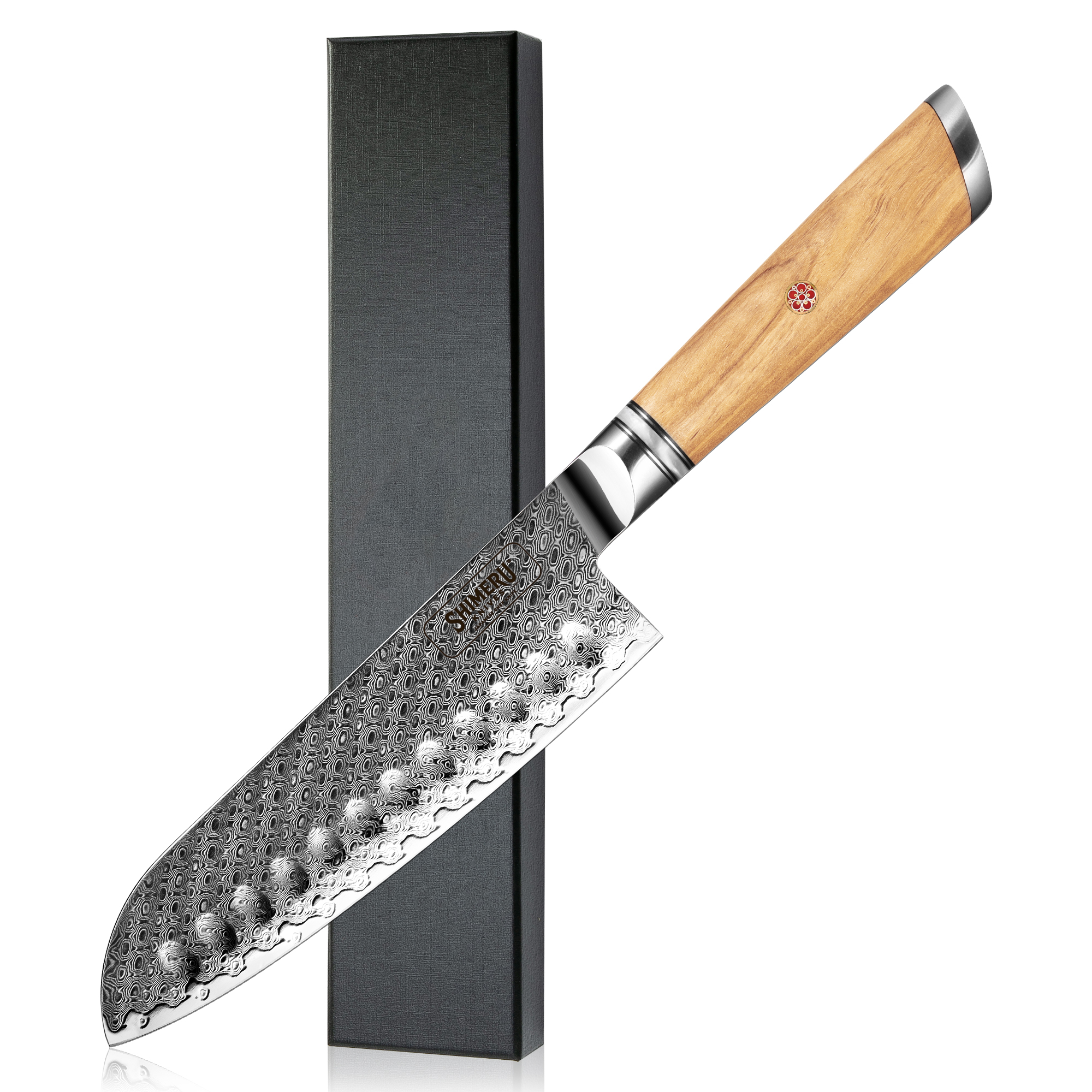 Sendai 7" Damascus Steel Santoku Knife 三徳包丁
£69.99
View product →
Sendai 7" Damascus Steel Santoku Knife 三徳包丁
£69.99
View product →
How to Choose the Best Santoku Knife for You
Your choice depends on your cooking habits and personal preference. If you mostly prepare vegetables and want a lightweight knife, the Ishikari 5" is a fantastic start. If you often handle larger cuts of meat or want a knife that stays sharp longer, the 7-inch Damascus models from Asuka, Hikari, or Sendai are worth investing in. The Asuka offers a more modern handle, while the Hikari gives a classic feel. The Sendai sits somewhere in between with a unique olive wood grip. Consider your budget too. A quality santoku knife can last a lifetime with proper care. Read our knife guide to learn more about what to look for.
Caring for Your Santoku Knife
A Japanese santoku knife requires a bit of extra attention to keep it performing well. Always hand wash it with mild soap and dry it immediately. Never leave it in the sink or put it in the dishwasher. Use a wooden or plastic cutting board to protect the edge. Store it in a knife block, magnetic strip, or with a blade guard. Regular honing with a ceramic rod helps maintain the edge, and occasional sharpening on whetstones will restore it. For detailed advice, see our knife care guide. For Damascus steel models like the Asuka, Hikari, and Sendai, the VG10 core is rust-resistant but not stainless: you should always dry the blade after use and avoid acidic foods sitting on the blade. The Ishikari's AUS stainless steel is more forgiving for beginners. A good routine: hone before each session, sharpen every few months, and oil the handle if it is wood.
Why Choose a Japanese Santoku Knife?
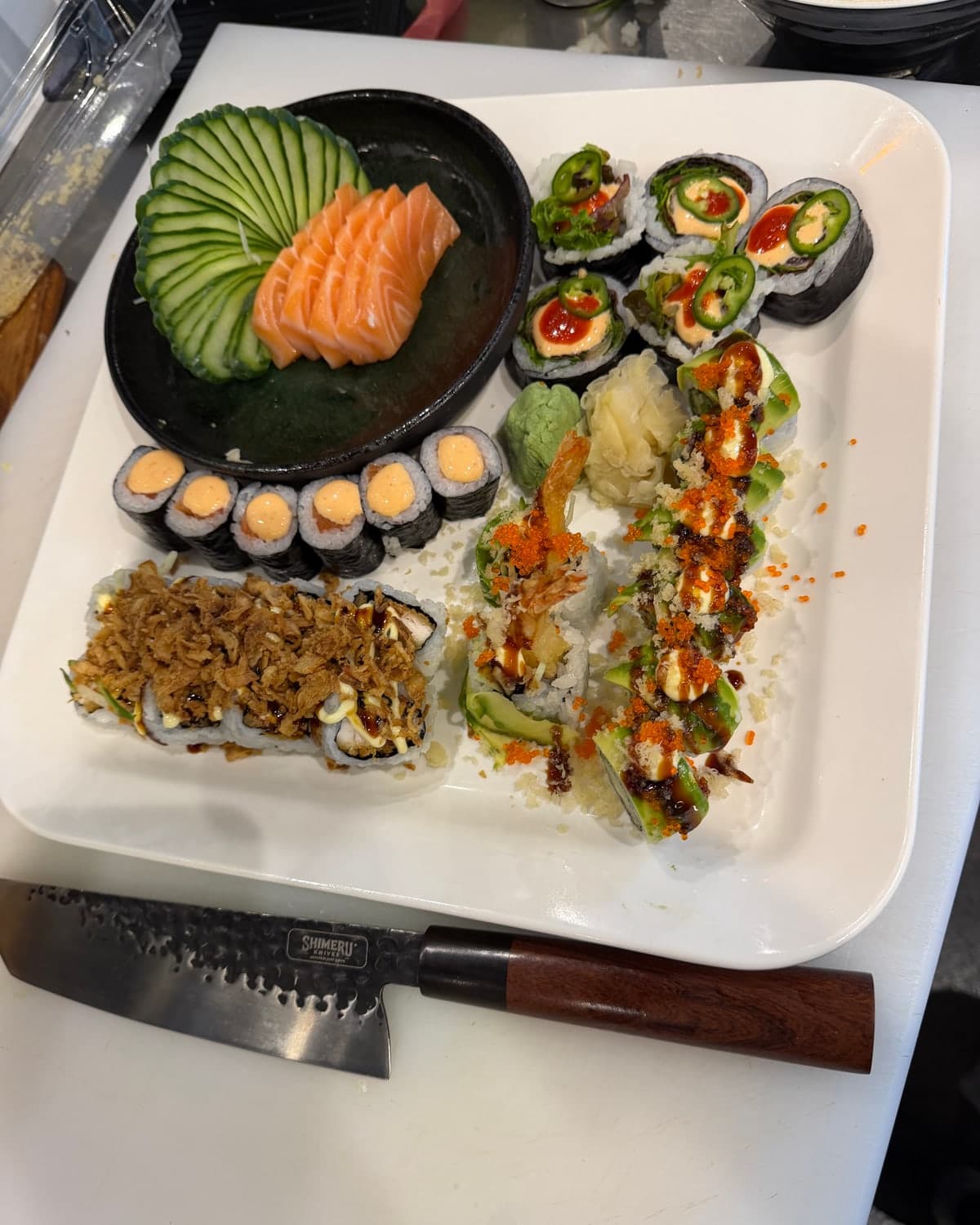
Japanese knives are known for their hardness and precision. A good santoku from Shimeru Knives will hold its edge far longer than most Western knives. The thin blade allows for cleaner cuts, which means less damage to ingredients and better flavour retention. For home cooking, that translates to everything from finely diced onions for a mirepoix to thin slices of salmon for sushi. The santoku blade is also well-suited for the push cut technique common in Japanese cuisine, but it works just as well for Western rocking motions. The wide blade also makes it easy to scoop up chopped ingredients, reducing extra steps in your prep.
We believe in honest recommendations. None of our santoku knives are perfect for everyone, but each one here excels in its category. Whether you choose the compact Ishikari or the luxurious Asuka, you are getting a knife made with quality materials and traditional craftsmanship.

Size and Steel Comparison
Let's break down the differences between the 5-inch and 7-inch sizes, and between AUS stainless and VG10 Damascus steel. The 5-inch blade is ideal for detailed work and smaller hands. It is lighter, more manoeuvrable, and easier to store. The 7-inch blade gives you more cutting surface, which helps when slicing large vegetables or a roast. It also provides more weight to power through dense items. In terms of steel, AUS stainless (as in the Ishikari) is excellent for everyday use: it resists rust, is easy to sharpen, and is more affordable. VG10, found in the Damascus models, is harder, takes a sharper edge, and holds it longer, but it is more brittle and can chip if misused. For most home cooks, both steels perform well; the choice comes down to how much you value edge retention versus ease of care. The Damascus cladding also offers a non-stick benefit and stunning appearance.
Who Each Knife Suits
The Ishikari 5" suits the budget-conscious cook, the small kitchen, or someone new to Japanese knives. The Asuka suits the cook who wants modern aesthetics and top-tier performance. The Hikari suits traditionalists who prefer a wood handle and a bit more heft. The Sendai suits those who love unique materials and artisan design. If you cook for one or two people, the 5-inch may be enough. If you cook for a family or batch prep, the 7-inch will serve you better. All four are excellent, but the best santoku knife for you is the one that feels right in your hand and fits your cooking style.
Final Thoughts
Finding the best santoku knife for everyday home cooking is about matching the knife to your skills and needs. A good santoku will become your go-to tool, making meal prep faster and more enjoyable. At Shimeru Knives, we source only knives that we would use ourselves. Browse our full range of santoku knives by visiting the santoku category to see all available options.
Remember, a knife is a lifetime investment. Take your time, consider the points above, and choose one that feels right in your hand. Happy cooking.


