






Best Cutting Board for Meat and Poultry

Whether you are breaking down a whole chicken, portioning steaks, or mincing raw poultry, the surface you work on matters more than you might think. The best cutting board for meat and poultry protects your knives, reduces cross-contamination, and makes the job easier. In this guide, we look at the key features to consider, the pros and cons of different materials, and how to keep your board in top condition. Along the way, we show how a quality cutting board pairs with knives from our range, such as the 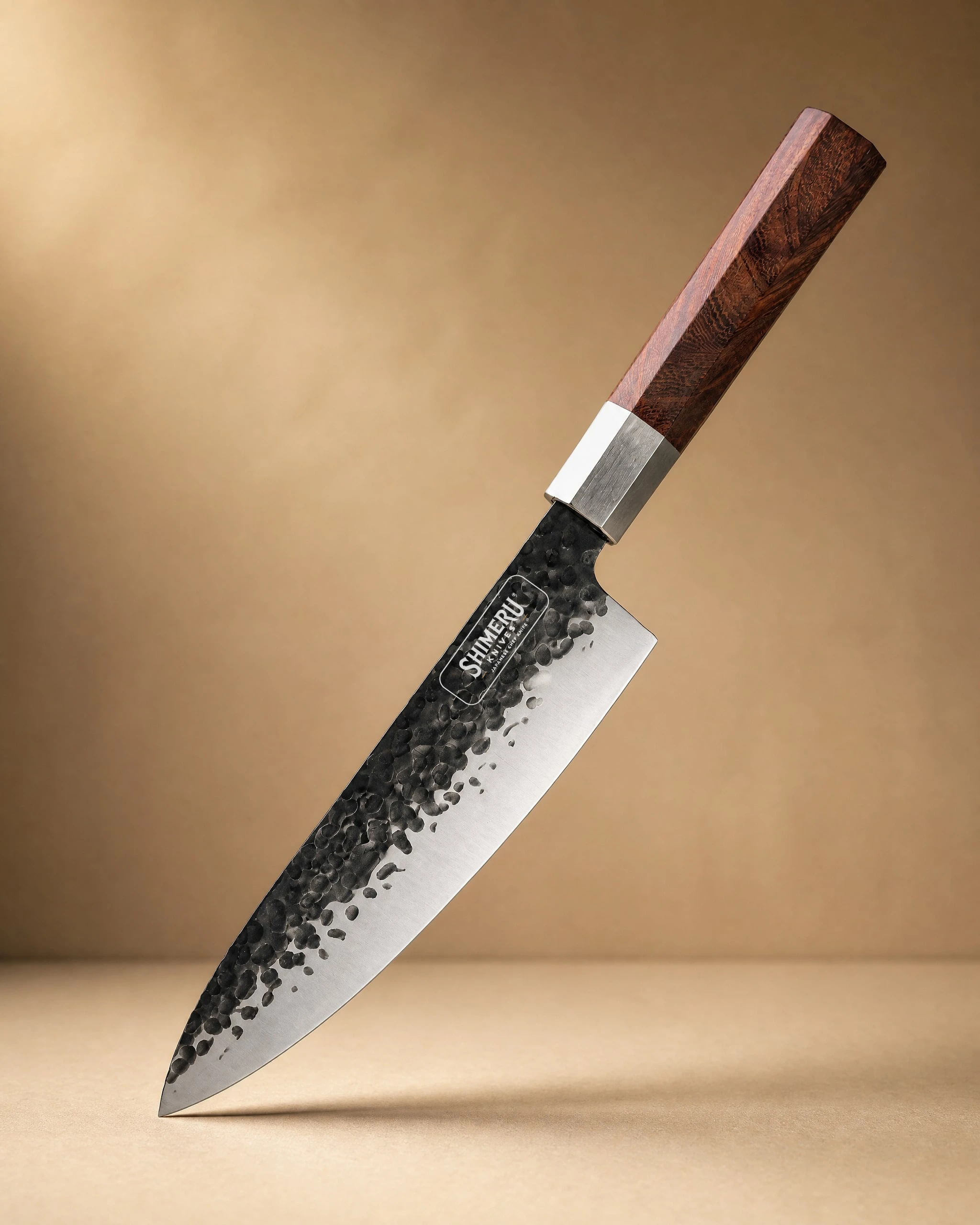 Sendai 8" Steel Gyuto Knife 牛刀£54.99View product → and the
 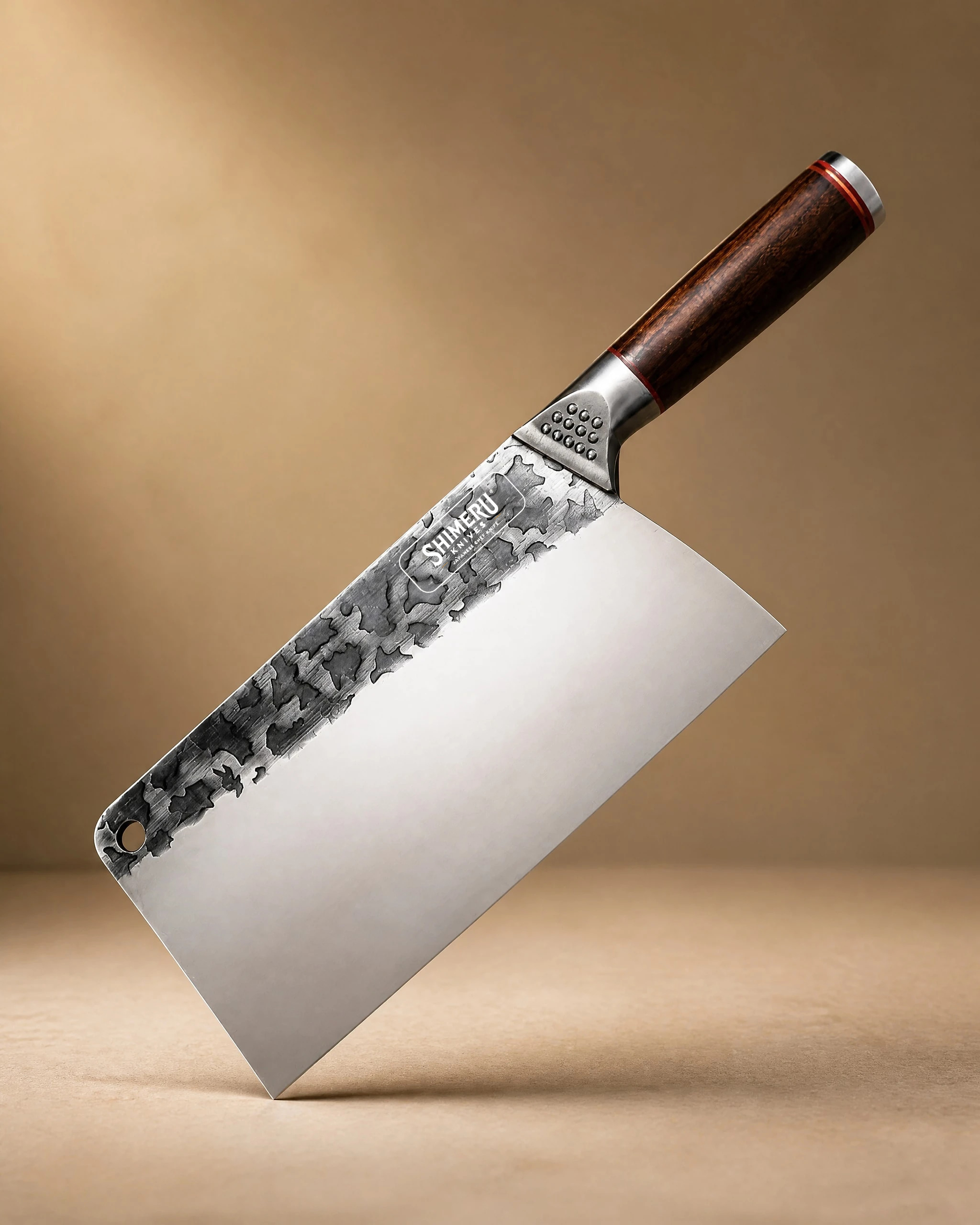 Saba 7" Stainless Steel Cleaver 中華包丁£49.99View product →.
The choice of board also affects the longevity of your knife edge. A stainless steel blade like that on the Sendai gyuto holds its edge well, but a board that is too hard can still cause micro-chips over time. Conversely, a cleaver with a thicker spine, such as the Toyo cleaver, is more robust but still benefits from a surface that gives slightly. The best cutting board for raw meat must balance these factors, which is why we examine each material in detail below.
Why the Right Cutting Board Matters for Meat
Cutting raw meat and poultry involves heavy chopping, sawing, and pressure. A board that is too soft can scar deeply, trapping bacteria. One that is too hard can dull your knife edge in just a few strokes. The ideal board absorbs the impact without being abrasive, provides a stable surface, and is easy to sanitise. For anyone serious about cooking, investing in the best cutting board for meat is as important as choosing the right knife. Technique matters too: when breaking down a chicken, you need a board that stays put so you can apply consistent pressure without the board slipping. A non-slip mat or damp cloth under the board can help, but a heavy board with rubber feet is better.
Key Features of the Best Cutting Board for Meat
When searching for the best cutting board for raw meat and poultry, look for these attributes:
- Material: Wood (especially hardwoods like maple or walnut) and high-density polyethylene are the most common choices. End-grain wood is the most forgiving on edges, while edge-grain is still good but may show cuts more. High-density polyethylene is non-porous and can be colour-coded for different meats. Bamboo is harder and can be harsh on edges, so it requires more frequent sharpening.
- Size: A board at least 45 cm by 30 cm gives you room to work without crowding. A board measuring 60 cm by 40 cm is even better for large roasts. If you use a 7-inch cleaver like the Saba, the board should be at least 30 cm wide to allow full strokes without the handle hitting the edge.
- Thickness: 2.5 cm to 4 cm prevents warping and stays put on the counter. Thicker boards also absorb more shock from heavy chopping, protecting both the board and your knife. For a heavy cleaver such as the
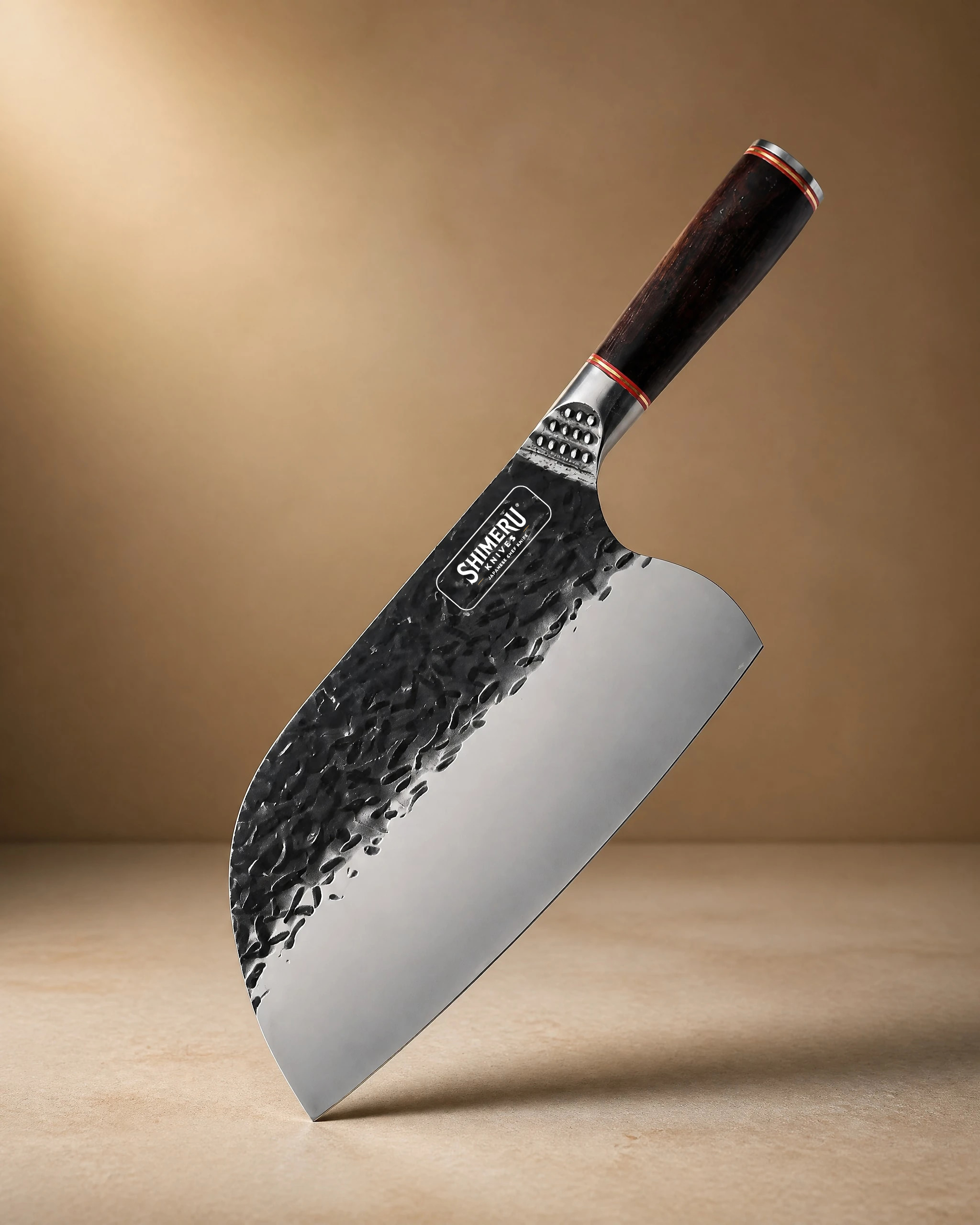 Toyo 7" Stainless Steel Cleaver 中華包丁£54.99View product →, a 4 cm thick board provides the stability needed for forceful chops.
 - Juice groove: A shallow channel catches fluids and stops them spilling onto the work surface. A deep juice groove is essential for carving cooked meat where juices run freely.
- Non-slip feet or grip: Safety is essential when applying pressure with a cleaver like the Toyo 7" Stainless Steel Cleaver 中華包丁£54.99View product →. Silicone feet or a rubberised base keeps the board from sliding.
Wood vs Plastic vs Bamboo: Which is Best for Raw Meat?
Wooden Cutting Boards
Wood is the classic choice for butchers and home cooks alike. Hardwoods such as maple, walnut, and cherry are dense enough to resist deep cuts yet gentle on knife edges. Maple is a traditional choice for butchers because of its tight grain and moderate hardness. Walnut is slightly softer and even gentler on edges, while cherry offers a beautiful colour but may show stains more. Research indicates that wood has natural antimicrobial properties, and properly maintained boards can be as hygienic as plastic. A large wooden board is ideal for the best chopping board for raw meat tasks, especially when paired with a high-carbon steel gyuto like the Sendai 8" Steel Gyuto Knife 牛刀£54.99View product →. Regular oiling with food-safe mineral oil keeps the wood hydrated and hygienic.
Plastic (Polyethylene) Cutting Boards
Plastic boards are lightweight, dishwasher safe, and non-porous. They are often recommended for raw poultry to minimise cross-contamination. Commercial kitchens often use colour-coded plastic boards: red for raw meat, blue for raw fish, green for vegetables. This system prevents cross-contamination. However, plastic can develop deep grooves that harbour bacteria, so frequent replacement is necessary. For the best cutting board for raw meat and poultry in a busy kitchen, a set of colour-coded plastic boards is practical. Replace plastic boards once they become deeply scored, as bacteria can hide in the grooves.
Bamboo Cutting Boards
Bamboo is harder than most hardwoods, which can accelerate edge wear. It is also less forgiving on your knife, so it is not ideal as the best carving board for a fine-edged blade. Bamboo is actually a grass, not a wood, and its high silica content makes it very hard. If you do use bamboo, sharpen your knife more frequently with a tool like the 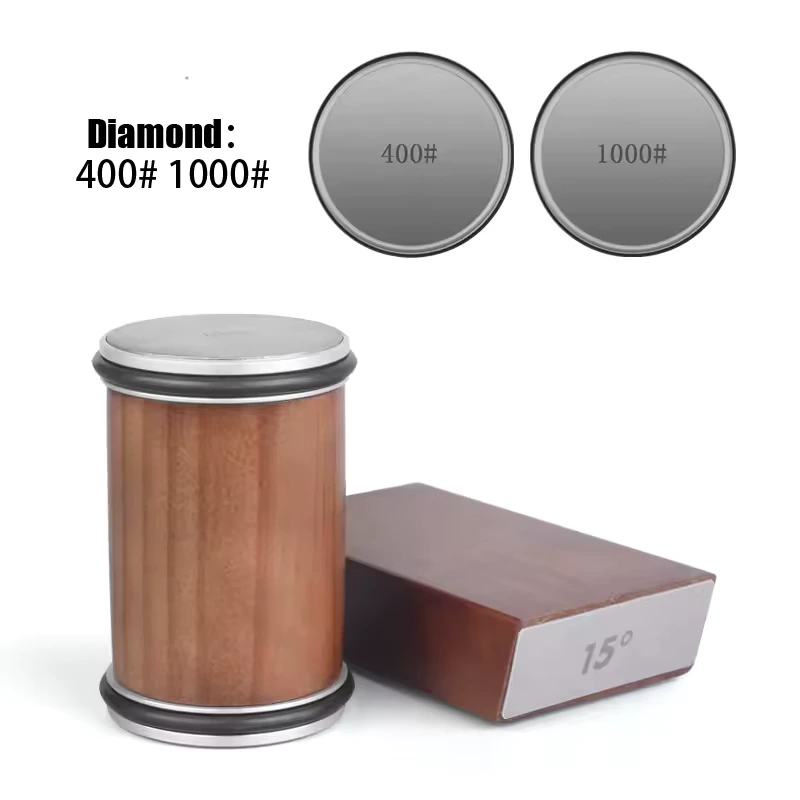 Magnetic Rolling Knife Sharpener£59.99 · currently out of stockView product → to maintain the edge. However, bamboo boards are affordable and sustainable, making them a decent budget option if you are careful with your knives and willing to sharpen often.
Size and Thickness: Getting It Right
For meat and poultry, bigger is almost always better. A small board forces you to crowd the meat, increasing the risk of slips. Look for a board that covers at least half your work surface. Consider the length of your knife: an 8-inch gyuto needs a board at least 45 cm long to allow full blade contact without the tip hitting the counter. For a 7-inch cleaver such as the Saba 7" Stainless Steel Cleaver 中華包丁£49.99View product →, 40 cm is sufficient. Thickness matters too: a 3 cm thick board will not warp or slide around. If you plan to use a heavy cleaver such as the Saba 7" Stainless Steel Cleaver 中華包丁£49.99View product →, a thick wooden board provides the stability needed for forceful chops. A board that is 4 cm thick will not flex under heavy pressure, making it ideal for breaking down large cuts.
Maintaining Your Cutting Board for Long Life and Food Safety
Once you have chosen the best cutting board for cutting meat, proper care extends its life and keeps it hygienic. For wooden boards, wash with hot, soapy water after each use, then dry immediately. Monthly treatment with mineral oil or board cream prevents drying and cracking. Some people use a mixture of mineral oil and beeswax for a protective coating. Never submerge wood in water. Plastic boards can go in the dishwasher, but replace them when they become heavily scored. For plastic boards, sanitise with a diluted bleach solution or run through the dishwasher. Always dry thoroughly to prevent warping. A sharp knife reduces damage to any board, so keep your edge true with a quality sharpener like the Magnetic Rolling Knife Sharpener£59.99 · currently out of stockView product →. The Magnetic Rolling Sharpener can quickly touch up an edge between uses, ensuring your knife glides through meat without extra pressure that scores the board.
For more tips on protecting your blades, see our knife care guide. And if you are still choosing a knife, visit our how to choose a knife page to find the right tool for your meat prep.

Our Recommendations for the Best Cutting Board for Meat
We do not sell cutting boards, but we know what works with our knives. For raw meat and poultry, we recommend a large end-grain wooden board from a reputable maker. End-grain (where the wood fibres run vertically) is easier on knife edges and self-heals from cuts. If you must use plastic, choose a thick commercial-grade board with a juice groove. Avoid glass, stone, or ceramic boards entirely: they will destroy a knife edge in seconds. If you primarily carve roasts or slice cooked poultry, a carving board with a deep well and a moat is the best carving board for the job. For heavy-duty chopping of bones or large cuts, a thick end-grain board paired with a robust cleaver like the Toyo 7" Stainless Steel Cleaver 中華包丁£54.99View product → offers the control you need. For everyday raw meat prep, any quality hardwood board will serve you well.
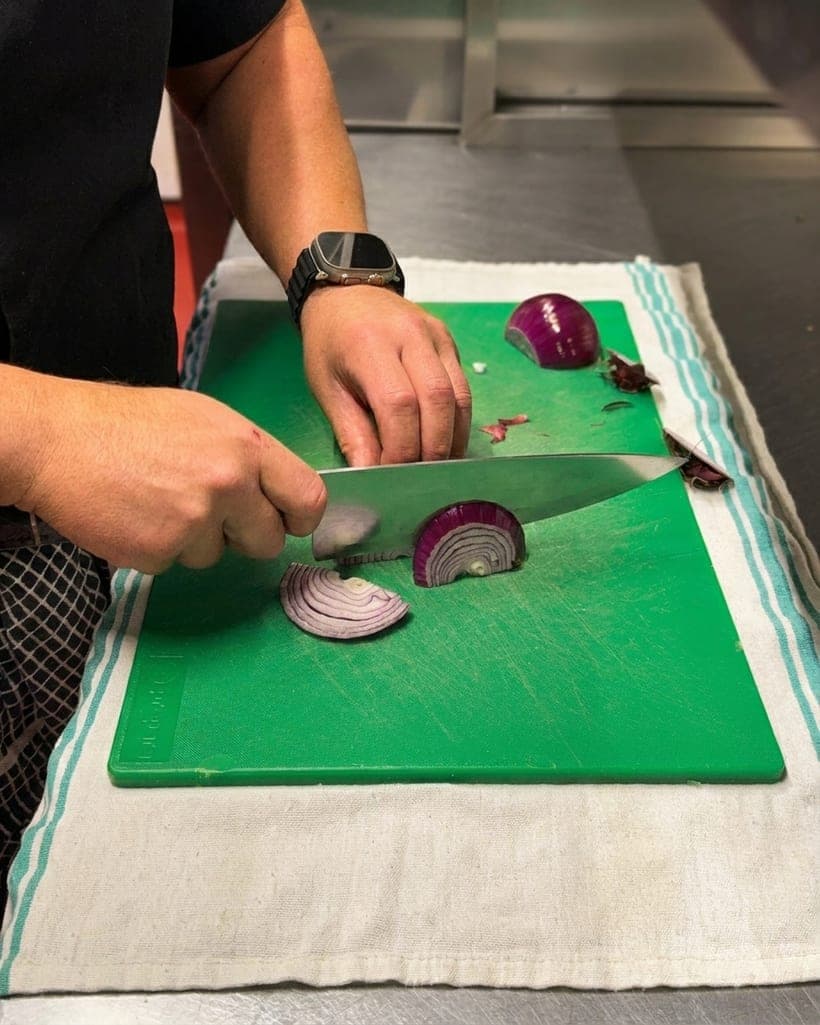
Using proper technique also helps: stabilise the meat with your non-cutting hand in a claw grip, and let the knife do the work. A good board provides a solid base for these motions. For those who regularly handle whole chickens, a board with a juice groove and silicone feet is a wise investment.
Final Thoughts
The best cutting board for meat is one that suits your knife, your space, and your cleaning routine. Wood offers longevity and knife-friendliness; plastic offers convenience and sanitisation; bamboo is a middle ground. Whichever you choose, take care of it and it will serve you for years. Take care of both knife and board, and they will take care of you. Explore our full range of knives at our shop to find the perfect partner for your new board. And if you need help choosing between a gyuto and a cleaver, our knife guide can point you in the right direction.
Photography: José Ignacio Pompé via Unsplash.


