




The Best Japanese Bread Knife for Perfect Slices

A good bread knife is the unsung hero of the kitchen. It turns a crusty sourdough into neat slices without tearing the crumb, and it handles soft brioche without squashing it. Japanese bread knives, or pan kiri naifu, take this task to another level. They are designed with thin, sharp blades and precise grinds that glide through bread rather than crushing it. In this guide we look at two outstanding examples: the Rumoi 10" Japanese Bread Knife and the Shimanto 8" Damascus Steel Bread Knife. Both are superb, but they suit different needs. We will help you decide which one belongs in your kitchen.
Why Choose a Japanese Bread Knife?
A standard serrated knife relies on aggressiveness: big teeth that rip and tear. A Japanese bread knife uses a finer, more delicate serration combined with a thin blade. This means it cuts with less pressure, preserving the shape of the loaf and reducing crumbs. The edge is often sharper out of the box and can be maintained with honing or professional sharpening. The result is a cleaner cut, especially for crusty artisan loaves and pastries.
Japanese bread knives also tend to be lighter and better balanced than their Western counterparts. Many feature traditional handles made from woods like mkuruti or resin composites that offer a comfortable grip. The blade steel is usually a high-carbon stainless alloy that resists rust while taking a keen edge. Whether you bake your own bread or buy from a bakery, a quality Japanese bread knife makes a noticeable difference.
Key Features to Look For
Before we compare the two knives, it helps to understand the features that matter most in a bread knife.
Blade Length
Longer blades, typically 9 to 10 inches, are better for larger loaves such as boules and batards. Shorter blades, around 8 inches, offer more control for smaller loaves and pastries. The right length depends on the size of bread you cut most often.
Serration Pattern
Japanese bread knives often have a scalloped or wave-like serration. This design reduces drag and prevents the blade from slipping. A finer serration works well on soft bread, while a coarser one handles hard crusts. Some knives combine both patterns along the blade.
Blade Material
Stainless steel is common for low maintenance. High-carbon stainless alloys like AUS or VG10 retain sharpness longer. Damascus steel adds visual appeal and often indicates a higher-quality core steel, though it does not affect performance directly.
Handle Comfort
A bread knife is used with a sawing motion, so the handle must be comfortable and non-slip over long sessions. Wood handles such as mkuruti offer a warm, traditional feel. Resin-impregnated hardwood handles are more durable and resistant to moisture.
The Rumoi 10" Japanese Bread Knife
The Rumoi 10" Japanese Bread Knife is a classic choice for those who bake or buy large artisan loaves. Its 10-inch blade is long enough to cut through a wide boule in one stroke. The blade is made from AUS stainless steel, a reliable alloy that balances edge retention with ease of sharpening. It resists staining well, which is useful if you cut acidic foods occasionally.
The handle is crafted from mkuruti wood, a dense and durable African hardwood. It has a warm brown colour and a smooth finish that feels secure in the hand. The bolster is simple and allows the full length of the blade to be used. This knife is particularly good for crusty sourdough and rye breads, where a long, clean stroke is essential. It also works well for soft brioche and regular sliced loaves.
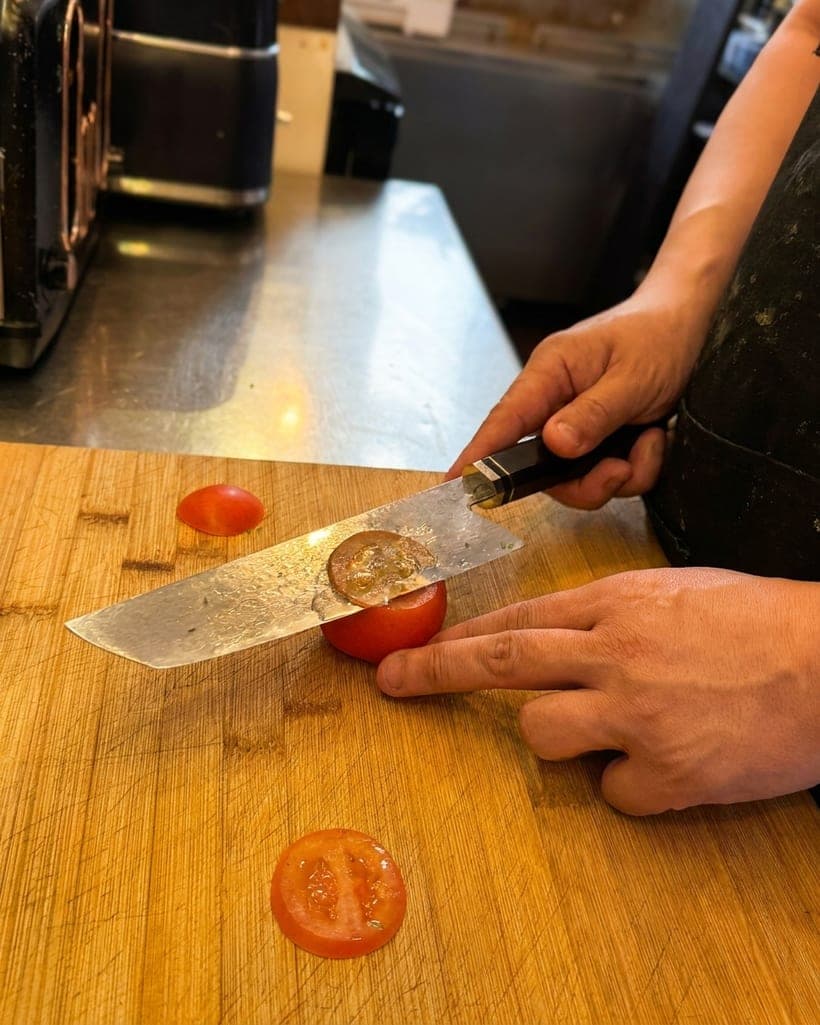
One of the benefits of the Rumoi is its versatility. Beyond bread, it can slice through large tomatoes and melons without crushing them. The fine serration leaves a clean cut. We recommend the Rumoi for anyone who bakes large loaves regularly or wants a robust all-round bread knife.
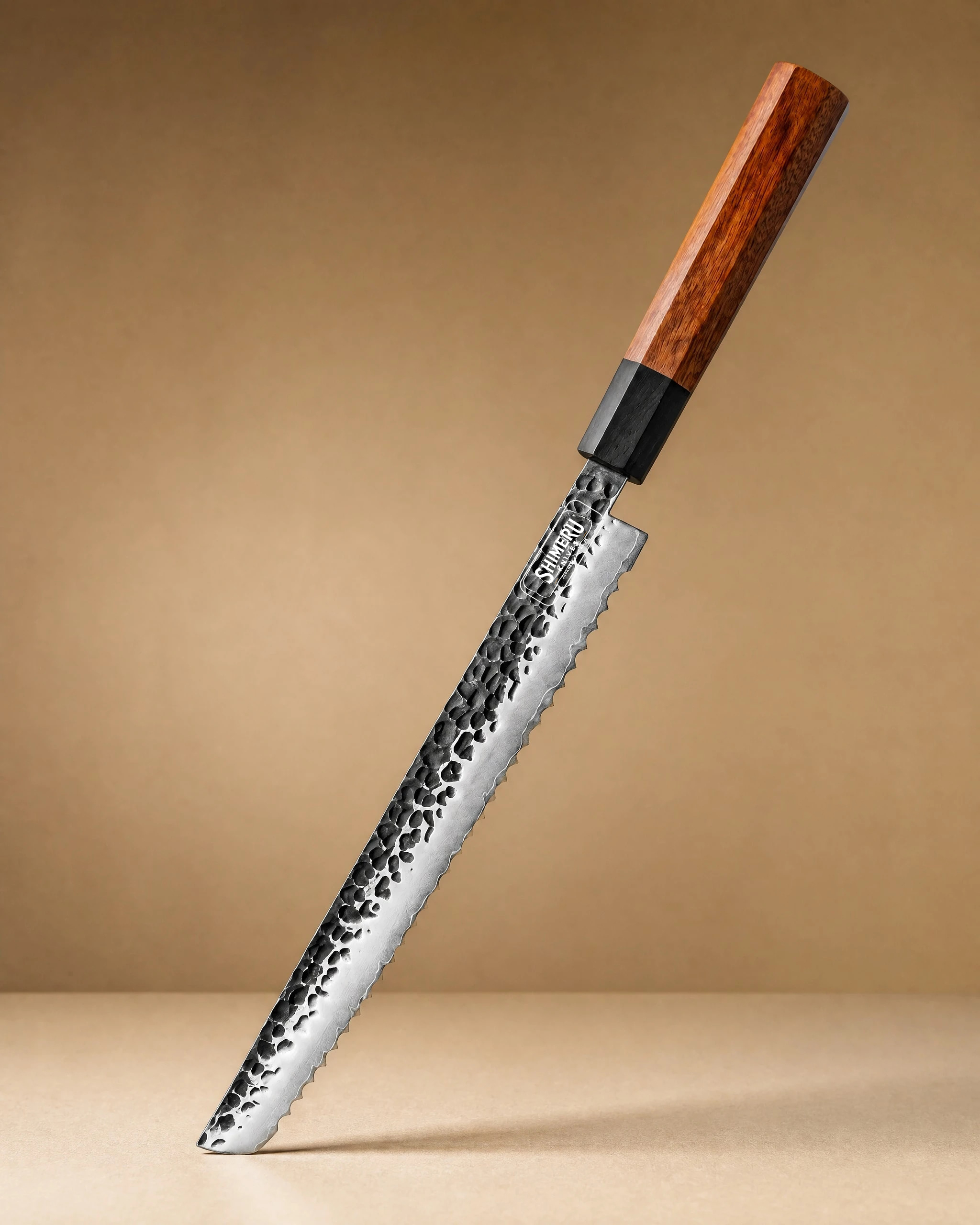 Rumoi 10" Japanese Bread Knife パン切りナイフ£64.99 · currently out of stockView product → is available now in our shop. It offers excellent value for a premium Japanese bread knife.
The Shimanto 8" Damascus Steel Bread Knife
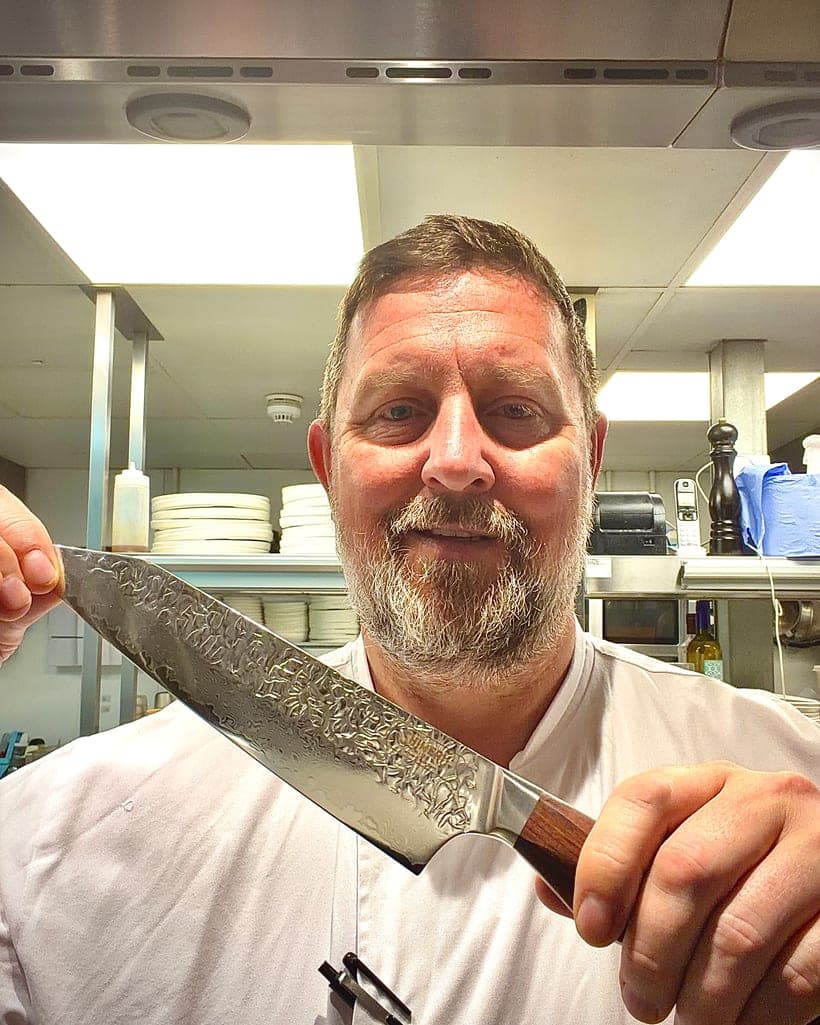
If you prefer a more compact knife with stunning looks, consider the Shimanto 8" Damascus Steel Bread Knife. It has an 8-inch blade, which makes it ideal for smaller loaves, baguettes, and delicate pastries. The blade is built from 67-layer Damascus steel with a VG10 core. VG10 is a premium stainless steel known for its hardness and ability to hold a razor edge. The Damascus pattern is not just decorative: the layering process creates a micro-serration that further improves cutting performance.
The handle is a combination of resin and hardwood, which gives it excellent durability and a comfortable grip. The resin is sealed, so it withstands moisture better than natural wood alone. The knife feels well balanced, with the weight centred near the handle for controlled slicing. It excels at cutting through crisp crusts without tearing the inside. It is also superb for slicing cakes, quiches, and soft fruits.
The Shimanto's shorter length makes it easier to store and manoeuvre. It is a wonderful choice for smaller kitchens or for those who cut bread less frequently but still want top-tier performance. The Damascus finish means it looks as good as it cuts.
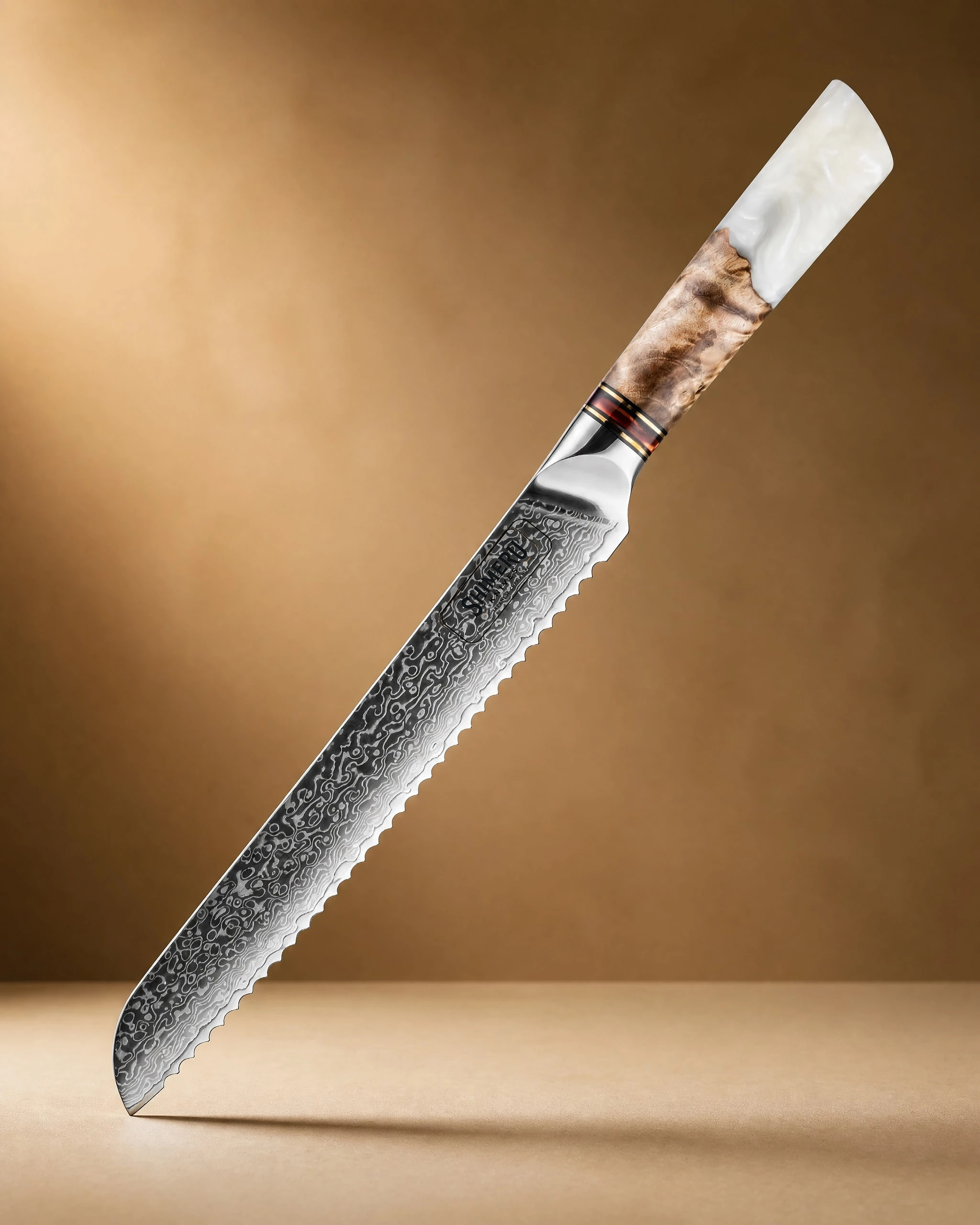 Shimanto 8" Damascus Steel Bread Knife パン切りナイフ£74.99View product → is our recommended option if you value a compact size and a visually striking blade. It pairs well with a paring knife or a petty knife for a complete Japanese knife set.

How to Choose Between the Two
Both knives are excellent, but they suit different needs. Here are the main factors to consider.
- Bread size: If you often cut large, round loaves, choose the Rumoi 10" for its extra length. For smaller loaves and pastries, the Shimanto 8" gives more control.
- Blade material: The Rumoi uses AUS stainless steel, which is easier to sharpen at home. The Shimanto's VG10 core stays sharp longer but requires professional sharpening when dull. Choose based on your maintenance preference.
- Handle type: Mkuruti wood (Rumoi) is traditional and warm; resin-hardwood (Shimanto) is more moisture-resistant. Both are comfortable, but think about your kitchen environment.
- Appearance: The Shimanto's Damascus pattern is a showpiece. The Rumoi has a classic, understated look.
If you are still unsure, consider how often you bake. A heavy baker of large loaves will appreciate the Rumoi's length. A lighter user who values aesthetics and a compact tool may prefer the Shimanto.
Caring for Your Japanese Bread Knife
A bread knife does not need daily sharpening, but it does require proper care. Always wash it by hand with warm water and mild detergent. Dry it immediately to prevent water spots. Do not put it in the dishwasher: the heat and detergents can damage the handle and dull the edge.
For long-term maintenance, we recommend having the knife professionally sharpened when it becomes dull. Some users use a ceramic honing rod to maintain the edge between sharpenings, but be gentle as the serrations can be delicate. Store the knife in a blade guard or a knife block to protect the edge.
For more details on keeping your knives in top condition, read our knife care guide. It covers cleaning, storage, and sharpening for all Japanese knife types.
Final Thoughts on Choosing a Japanese Bread Knife
A Japanese bread knife is an investment in perfect slices every time. Whether you choose the Rumoi 10" for its generous length and classic materials, or the Shimanto 8" for its Damascus beauty and compact size, you will notice a clear difference in how it cuts. Both knives are built to last and designed for the demanding home baker or professional.
If you are new to Japanese knives, you might like to browse our full range at the shop or explore the Japanese bread knife category for more options. Remember, the best bread knife is the one that feels right in your hand and matches the bread you love to eat. Happy slicing.
Photography: Tommaso Urli via Unsplash.


