











Best Plastic Chopping Boards for a Clean Kitchen

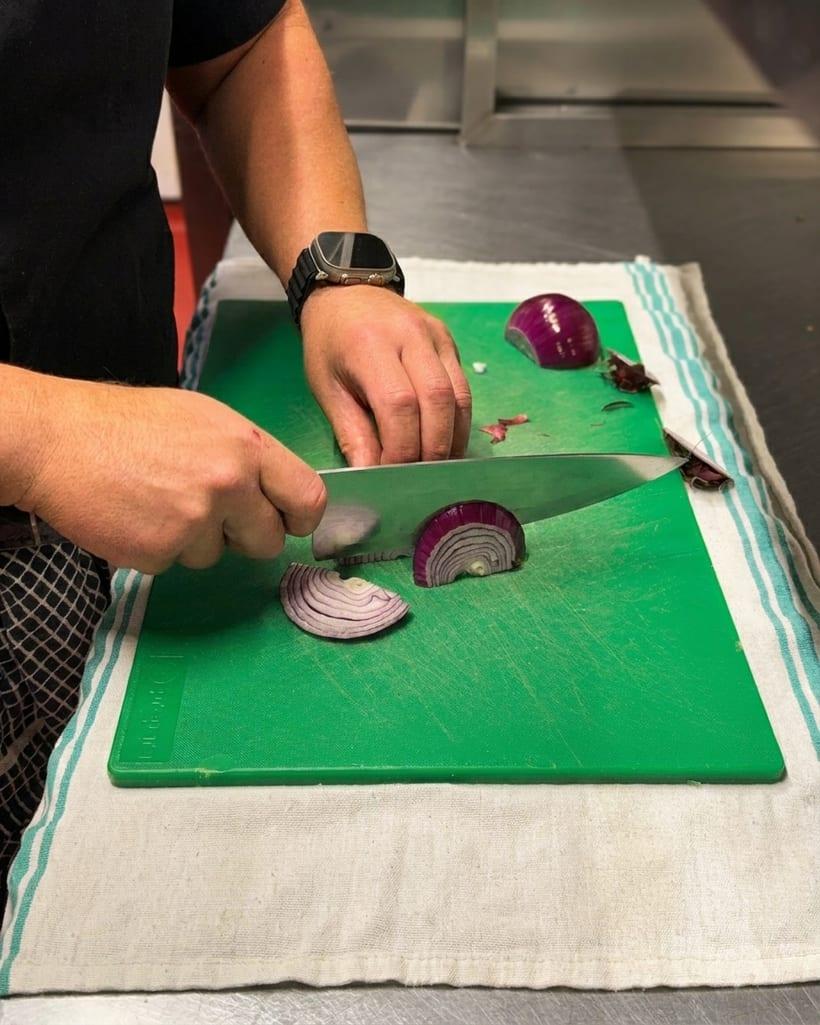
A plastic chopping board is a quiet workhorse in a clean kitchen. It takes the knocks, rinses clean and gives you a clear surface for meat, fish, vegetables and fruit. The best plastic chopping board is not simply the thickest or most colourful one on the shelf. It is the board that suits how you cook, fits your sink and can be cleaned properly after every job. This guide explains what to look for, how to keep plastic boards hygienic and when to replace them.
What makes a plastic chopping board worth buying
Most domestic plastic cutting boards are made from polyethylene. High-density polyethylene, or HDPE, is common because it is tough, rigid and resistant to water. Low-density polyethylene is softer and more flexible, which suits thin mats and folding boards. Neither material is magic. Both scratch with daily use, and both need proper cleaning. The difference is how they feel under the knife and how well they stay flat.
Look for a board that sits still. A hard, shiny surface with no grip will slide when you slice something wet. Rubber feet, a textured underside or a recessed edge can help. Size matters too. A board that is too small forces you to work near the edge, and one that is too large may not fit your sink. For most UK kitchens, one large board for general prep and one smaller board for quick jobs is a practical arrangement. If you joint meat or prep whole fish, choose a board with a juice groove and enough room to keep food away from the rim.
Thickness is a balance. Thin boards are light and easy to store, but they can warp and lift at the corners. Thicker boards feel more stable, but they take up room and can be heavy to wash by hand. A handle or finger hole makes lifting easier when wet. Check the manufacturer's care instructions before buying, especially if you want to use a dishwasher. Not every plastic board is dishwasher safe, and heat can warp thinner boards.
Hygiene first: how plastic boards earn their place
Plastic has a clear advantage in a busy kitchen: it does not absorb water in the way untreated wood can, and it can be cleaned quickly. That does not make it self-cleaning. Raw meat, poultry and fish need a dedicated board or one that is cleaned and sanitised immediately after use. The same applies to surfaces used for ready-to-eat food. Cross contamination is a handling problem, not a material problem.
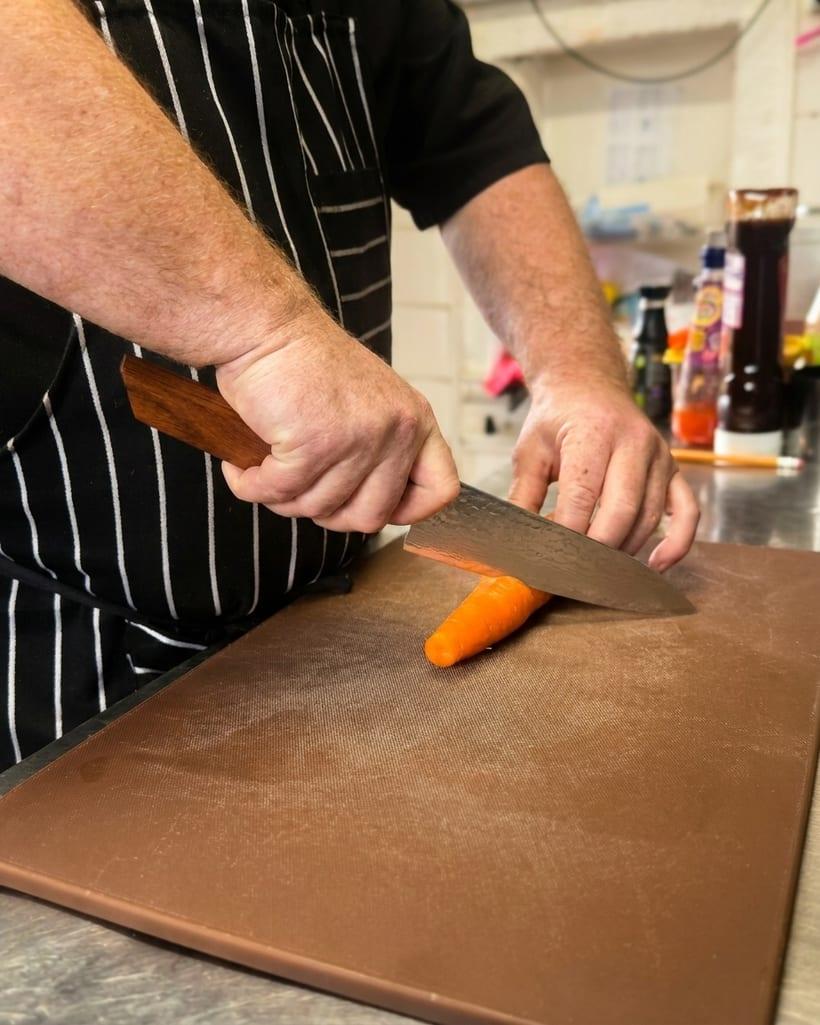
Scratches are the weak point. Every knife mark is a tiny groove where food residue and moisture can sit. A lightly scratched board can still be hygienic if it is washed in hot soapy water, rinsed and dried upright. A deeply scored board is harder to clean and should be replaced. Do not rely on a quick wipe. Wash both sides, clean around the handle and let the board air dry completely before stacking. If you use a food-safe sanitiser, follow the label. Do not mix cleaning chemicals, and do not soak a board for hours.

Thickness, size and grip in practice
The best plastic cutting board for a home cook is usually a compromise between workspace and storage. A board around the size of a standard baking tray gives room for a pile of vegetables without crowding the counter. A smaller board is useful for fruit, sandwiches and quick trimming. If worktop space is limited, a thin flexible mat can be stored flat, but it will not replace a stable board for heavier work.
Grip is not a luxury. A wet board that slides under a knife is dangerous. Look for feet, a textured base or a design that lets you place a damp cloth underneath. Avoid deep decorative grooves that trap food. Juice grooves are useful, but they should be smooth and easy to reach. A board that is easy to clean will be cleaned more often.
Colour coding without clutter
Colour coded boards are a simple way to separate tasks. The colours are a convention, not a legal standard, so choose a system you will follow. A common approach is:
- Red for raw meat
- Blue for raw fish
- Green for vegetables and fruit
- Yellow for cooked meat
- White for dairy and bakery
You do not need a full rainbow. Two boards, one for raw proteins and one for everything else, are better than five boards that are never used correctly. Keep the system visible and store the boards apart. A board that is always used for the wrong job is not a hygiene system.
Plastic versus wood, briefly and honestly
Plastic boards rinse, stack and store easily, and many are dishwasher safe. Wooden boards can be kinder to a knife edge and look better on an open shelf, but they need careful drying and occasional oiling. Neither material is automatically safer. A clean plastic board used for raw meat is safer than a wooden board left damp. Separate raw and ready-to-eat foods, clean thoroughly and replace damaged boards. For blade care, read our knife care guide.
How to care for a plastic cutting board
Wash plastic boards after every use with hot soapy water and a brush that can reach into the scratches. Rinse well, because detergent residue can affect the taste of food. Stand the board on edge to dry so water does not pool on the surface. If the board is dishwasher safe, place it where it will not warp or touch heating elements. Check the manufacturer's instructions for temperature limits.
For stains and odours, a paste of bicarbonate of soda and water can help, but rinse it away completely. Do not use a wire brush or a very abrasive pad, which will create more scratches. Avoid leaving a board soaking overnight. If the board has rubber feet, clean around them with a small brush. Store boards with a small gap so air can circulate. A dry board is a cleaner board.
When to replace a plastic board
Replace a plastic board when the surface is deeply cut, when it has warped so that it rocks on the counter, or when stains and odours persist after cleaning. Cracked boards and boards with loose feet should also go. A board that no longer sits flat is a safety risk. Do not try to rescue a badly scored board with a knife or a sander. The surface will not be even. Inspect your boards every few months under good light. Small scratches are normal. Deep, dark grooves are not.
Choosing the best plastic chopping board for your kitchen
Buy for the tasks you actually do. If you cook meat and fish often, choose a board large enough to hold the food and add a juice groove. If you mostly chop vegetables, a lighter board with a comfortable handle may be more useful. If you prep several types of food in one session, colour coded boards will save time and reduce cross contamination. Check that the board fits your sink and storage.
Look at the edges and corners. Rounded corners are safer and easier to clean. A hanging hole is useful if you store boards on hooks. A reversible board gives two surfaces, but both sides need cleaning. Avoid very thin boards for heavy chopping. They can flex under pressure and may crack. A slightly thicker board with a non-slip base is usually the better long term buy.
Boards, knives and the edge you keep
A good board deserves a good knife. A sharp, controlled blade needs less pressure, and less pressure means fewer deep cuts in the plastic. For an all-round knife that suits meat, fish, vegetables and fruit, the 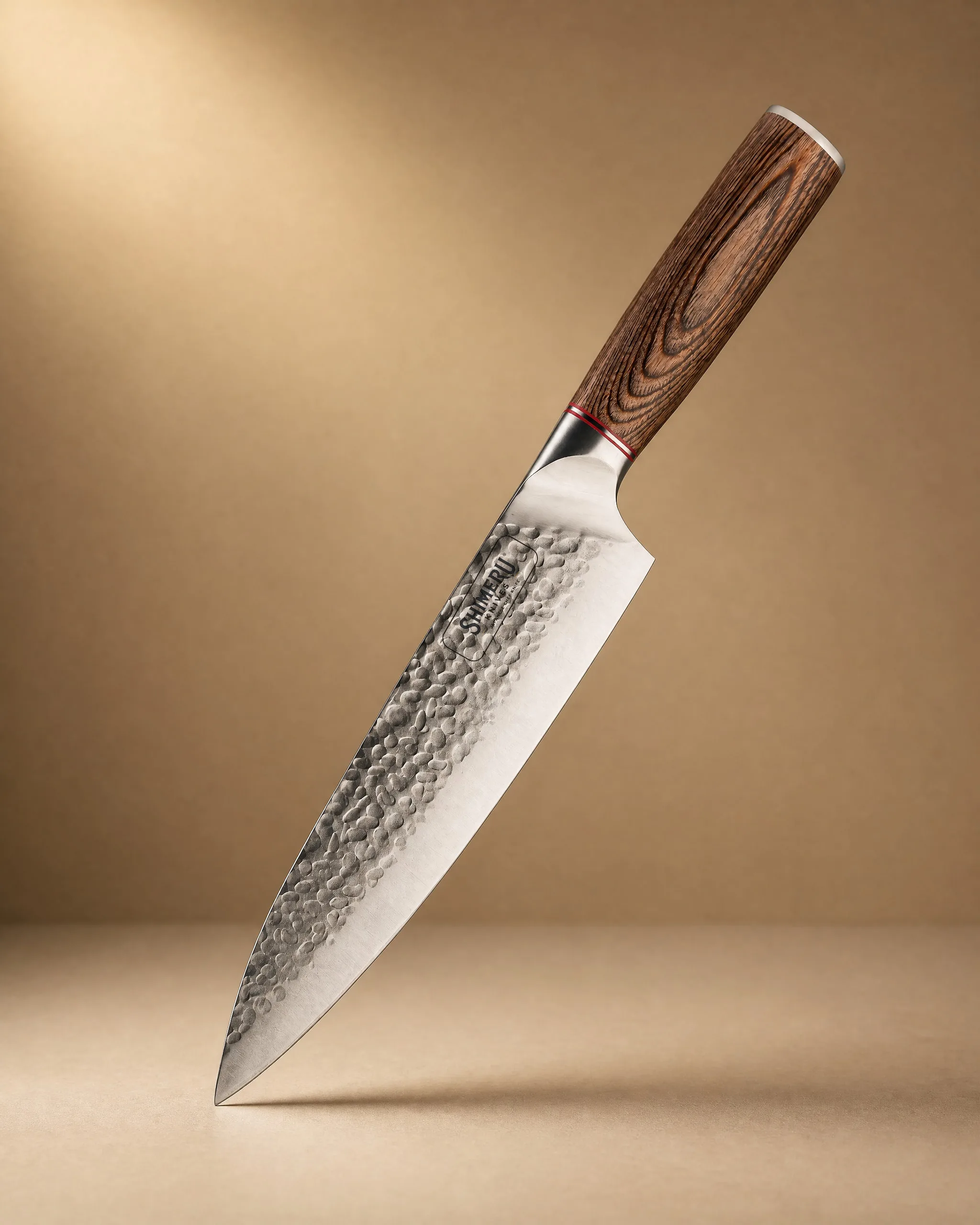 Akan 8'' Gyuto Knife 牛刀£49.99 · currently out of stockView product → is an 8 inch gyuto with a stainless steel blade and a pakkawood handle. If your prep leans towards vegetables and herbs, the
 Sendai 8" Steel Gyuto Knife 牛刀£49.99View product → is another 8 inch gyuto, this time with an Mkuruti wood handle. Both are gyuto shapes, so they work well with the slicing and light rocking you are likely to do on a large plastic board. You can see the full range on our knife shop page.
Keep the edge in order with the 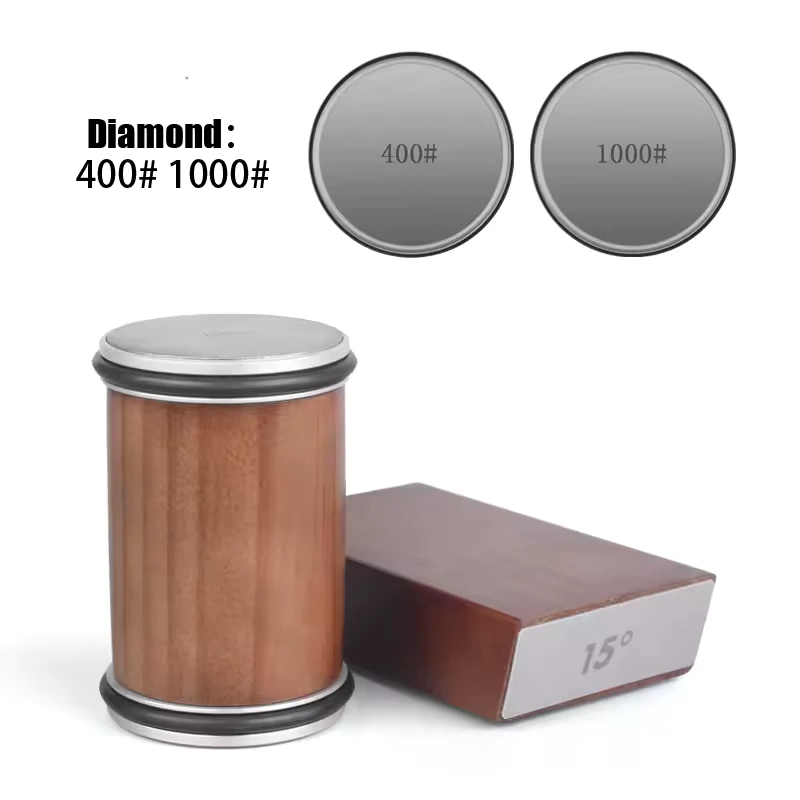 Magnetic Rolling Knife Sharpener£59.99View product →. A blunt knife is more likely to skid and more likely to be forced, which is bad for the blade and the board. Using a sharpener before cooking is a better habit than heavy pressure during cooking. If you are setting up a kitchen or replacing a mismatched block, the
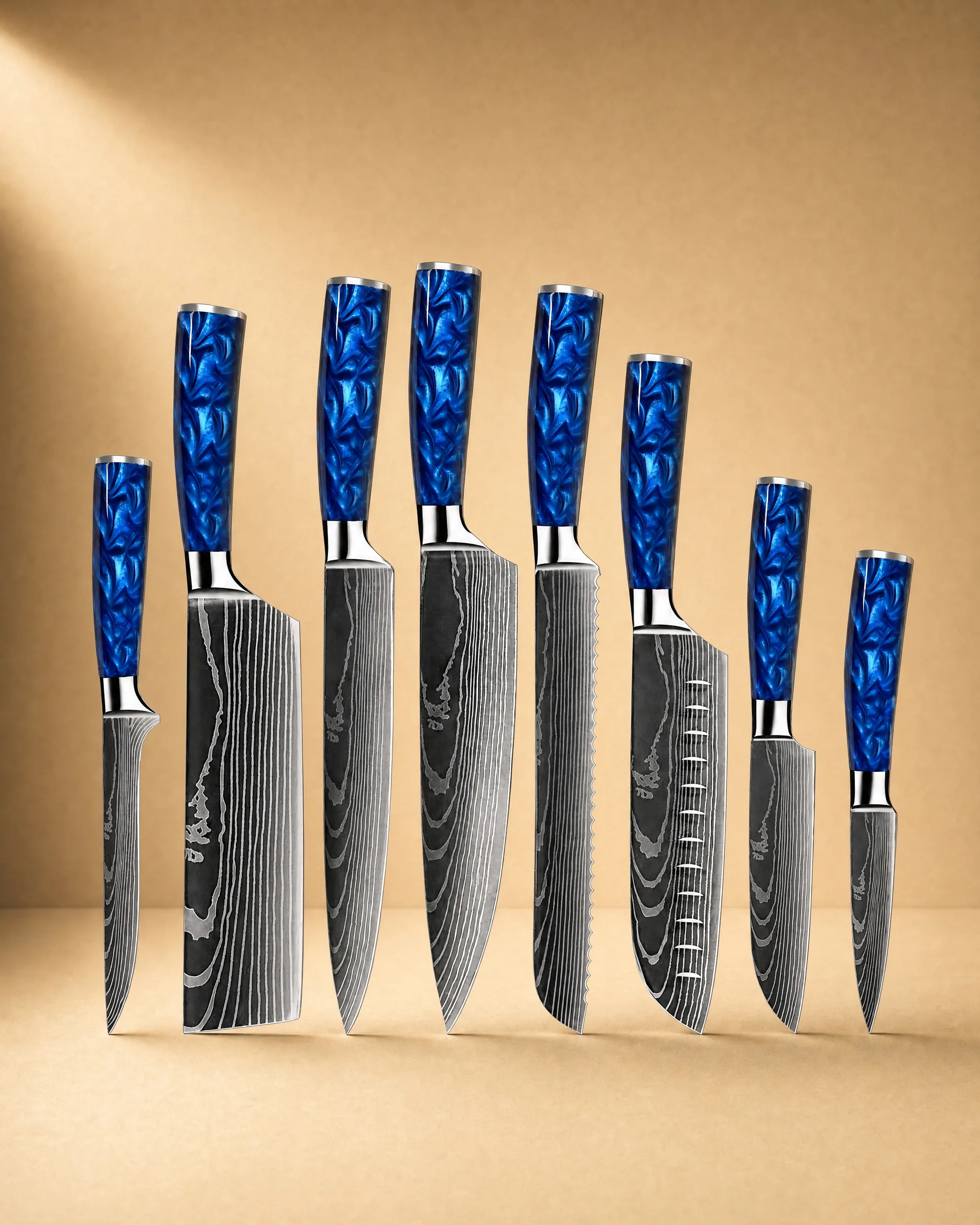 Shinano 信濃川 Damascus Pattern Stainless Steel Kitchen 8 Knife Set£149.99View product → brings a Damascus pattern stainless steel set with high-carbon steel and blue resin handles together. It is not a chopping board, but it is the kind of set that benefits from a simple board routine: one board for raw proteins, one for vegetables and one for fruit. Our knife guide explains how to match a knife to your cooking.
Final checks before you buy
Ask four questions. Does it fit my sink and storage? Does it stay still on the counter? Can I clean it properly after raw meat? Is the surface still in good condition? A plastic board is a practical tool, not a lifetime purchase. The best plastic chopping board is the one you can clean, store and use without thinking, so your attention stays on the knife and the food. With a sensible colour system, a stable surface and a sharp knife, a plastic board can be a clean and reliable part of daily cooking.
Photography: Juan Pablo Valdez via Unsplash.


