








Best Kitchen Cutting Boards for Everyday Cooking

A cutting board is the one surface in your kitchen that touches almost every ingredient and almost every knife edge. It decides how long your edges last, how clean your prep stays and how pleasant the daily job of chopping an onion actually feels. This guide covers what separates a good board from a decorative one, how wood and plastic genuinely compare, and how to pair a board with the knives you use most. If you want to browse the full range first, the chopping boards category is the place to start.
Why the board matters more than most cooks think
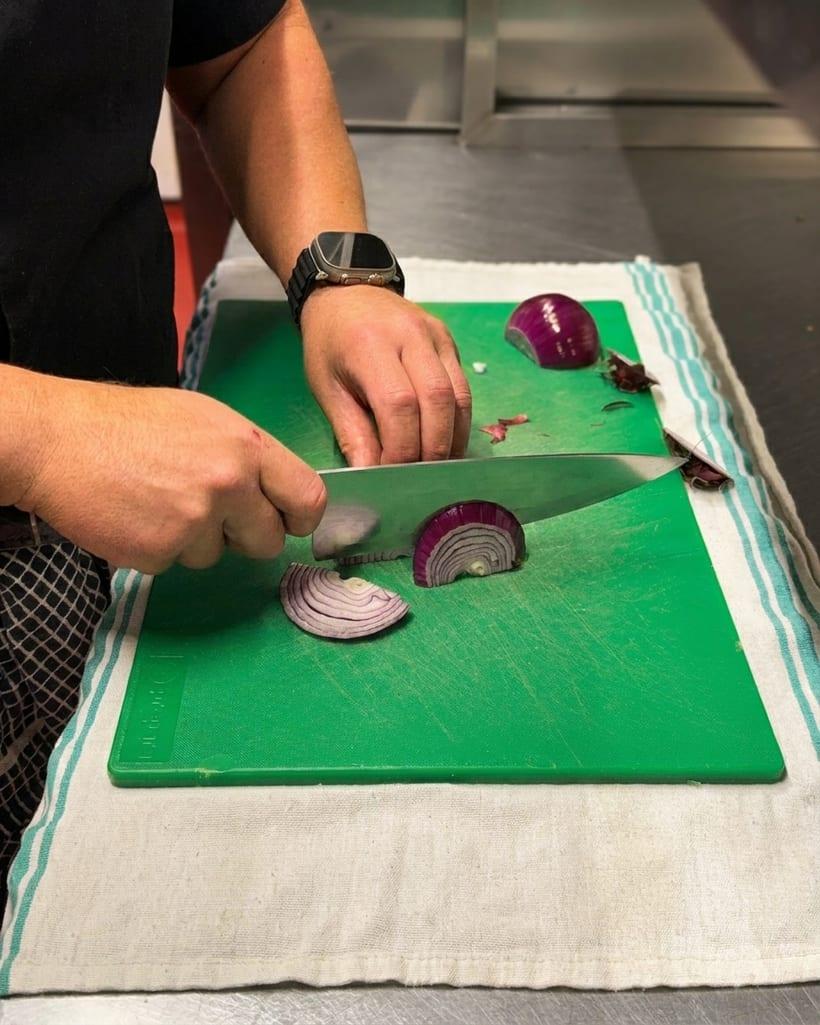
Most people spend far more time thinking about the knife than the surface underneath it. That order is backwards. A hard surface such as glass, stone or ceramic will roll and chip a fine edge within a few meals, no matter how carefully the knife was made or how much you paid for it. A board with a little give lets the edge sink in slightly and pass through food cleanly, which means fewer strokes and less fatigue in the wrist.
The board also sets your hygiene routine. If you prepare raw chicken and then salad on the same surface without a proper wash in between, the knife is the least of your problems. A board is a tool, not a decoration, and it deserves to be chosen like one.
Wood or plastic: the honest answer
Both work. Neither is universally better, and anyone who tells you otherwise is selling something.
Wood, particularly maple, beech, oak or acacia, is kind to edges. It has enough give to protect the apex of the blade, it grips food reasonably well when dry, and it ages gracefully if you oil it. Wood also has natural antibacterial properties, though these are no substitute for washing. Its weaknesses are real: it dislikes long soaking, it can warp if left wet, it needs occasional oiling and it is heavier. Very hard tropical woods can be unforgiving on a thin Japanese edge, so a medium hardwood is usually the safer everyday choice.
Plastic is cheap, light, dishwasher safe and easy to replace. It is the sensible choice for raw meat and fish, where you want a board you can sanitise aggressively. The trade off is that soft plastic scars quickly, and those grooves hold onto moisture and food particles even after washing. Hard plastic is easier to clean but harder on edges. A thin, flexible plastic board is also unstable on a worktop unless it has a grip backing.
The practical answer for most kitchens is one good wooden board for vegetables, herbs, bread and cooked food, plus a cheaper plastic board reserved for raw meat and fish. That split keeps hygiene simple and keeps your knives off the hardest surfaces.

End grain, edge grain and why thickness counts
Look at the end of a wooden board and you will see one of two things. Edge grain boards are made from strips laid side by side, so the long fibres run along the surface. End grain boards are built from blocks stood on end, so the surface shows the ends of the fibres, a little like a butcher block. End grain is gentler on edges because the fibres part under the blade rather than being sliced across, and it tends to close up small cuts. It is also more expensive, heavier and more demanding to maintain.
For everyday home cooking, a well made edge grain board of around 4 to 5 cm thickness is plenty. Thickness matters more than people expect: a thin board slides, flexes and drums under a heavy chop, while a thick one stays planted and deadens the sound. If you chop most days and want one board to last a decade, a thick edge grain board is a sound investment.
Size and shape for a real kitchen
Buy the largest board your worktop and sink can genuinely accommodate. A board of roughly 45 by 30 cm gives you room to work without food spilling over the edge, and it leaves space for a pile of prepared ingredients. Smaller boards look neat but force you to work in cramped batches, which slows everything down.
Think about the sink as well, because a board you cannot wash comfortably will end up neglected. Boards with a juice groove are useful for roast meats and less so for vegetables. Handles and finger notches help you lift a heavy board safely. If your kitchen is short on space, a board that sits over the sink or hangs on a hook is a reasonable compromise.
Hygiene: the habits that actually matter
Wash wooden boards promptly in hot soapy water, then dry them standing on edge so air reaches both faces. Do not soak them, and do not put them in the dishwasher. Plastic boards can usually be sanitised with a dilute bleach solution following the manufacturer's instructions, or in the dishwasher if they are rated for it. Keep a separate board for raw meat and fish, and replace plastic boards once the surface is deeply scored, because those cuts are where bacteria hide.
For wooden boards, a scrub with coarse salt and half a lemon every few weeks lifts smells and light staining. Oil the board monthly with a food safe mineral oil or a dedicated board butter, and never with olive oil or cooking oil, which can turn rancid.
Matching the board to the knife you actually use
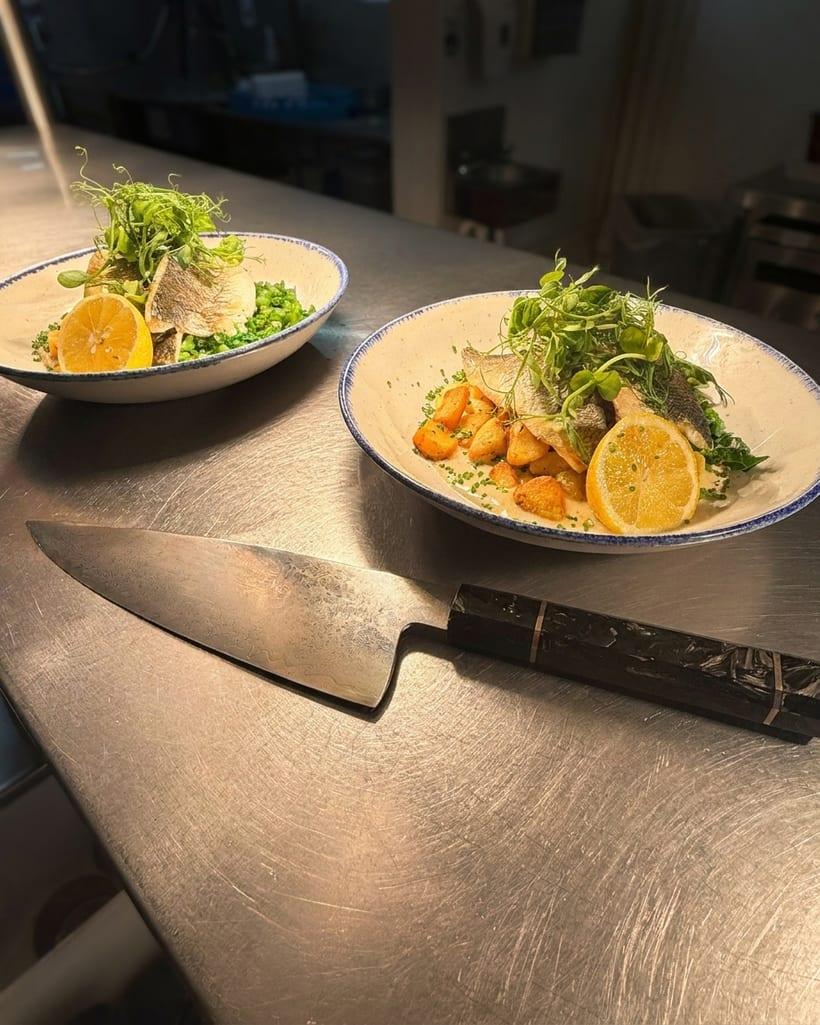
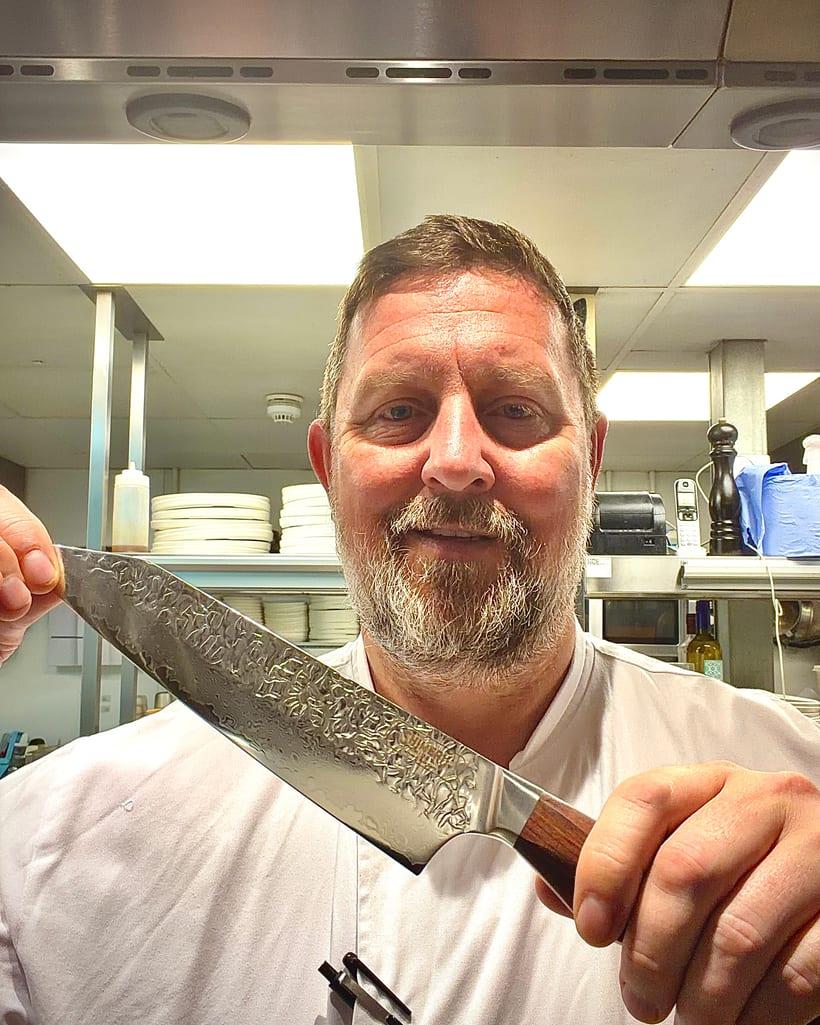
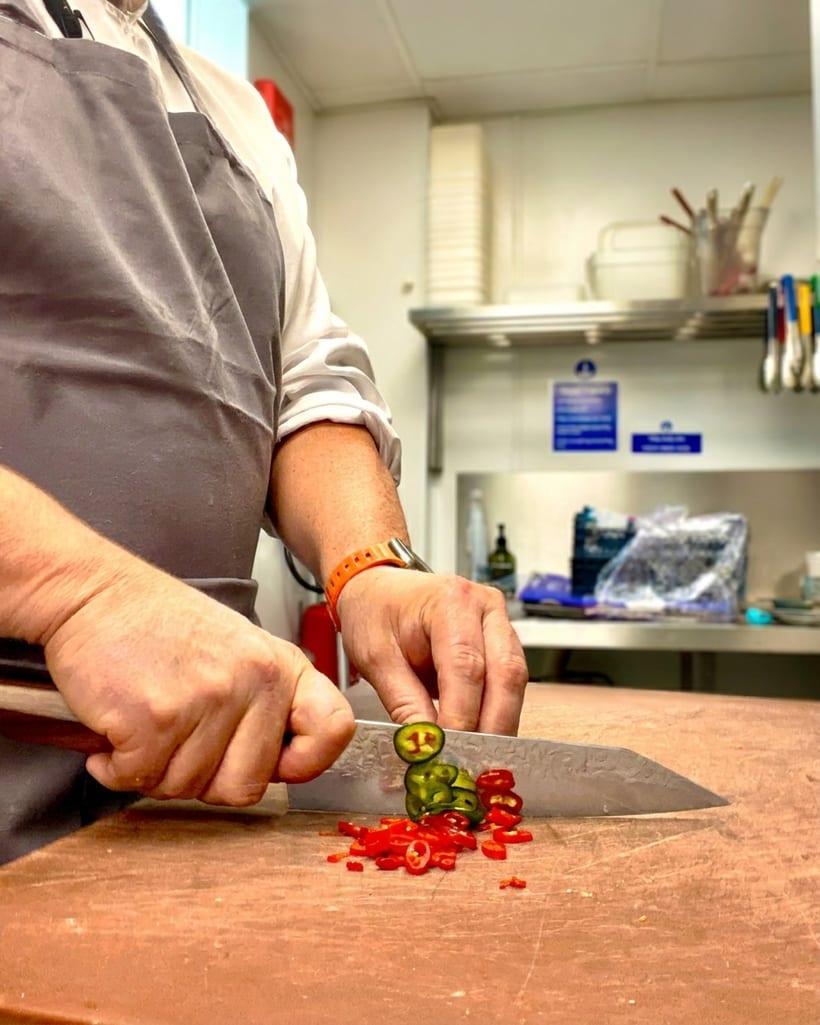
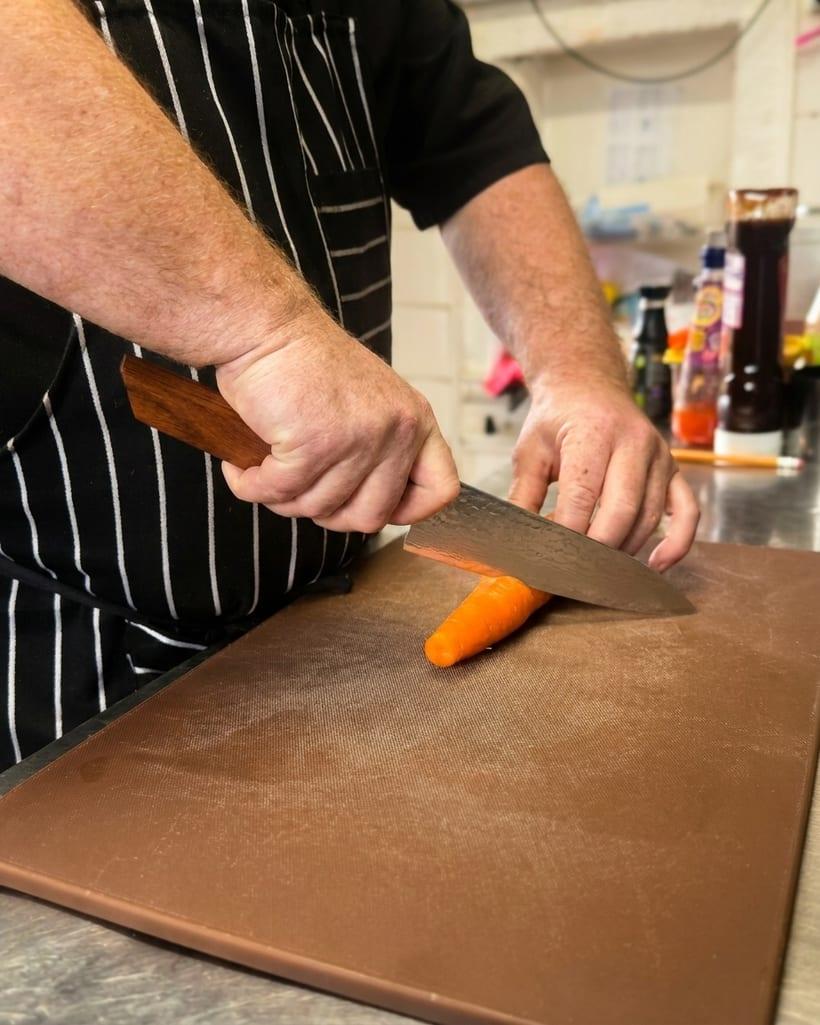
Japanese knives with thin, hard edges benefit most from a board with some forgiveness. A gyuto is the all rounder most people reach for first, and it suits a medium hardwood board. The 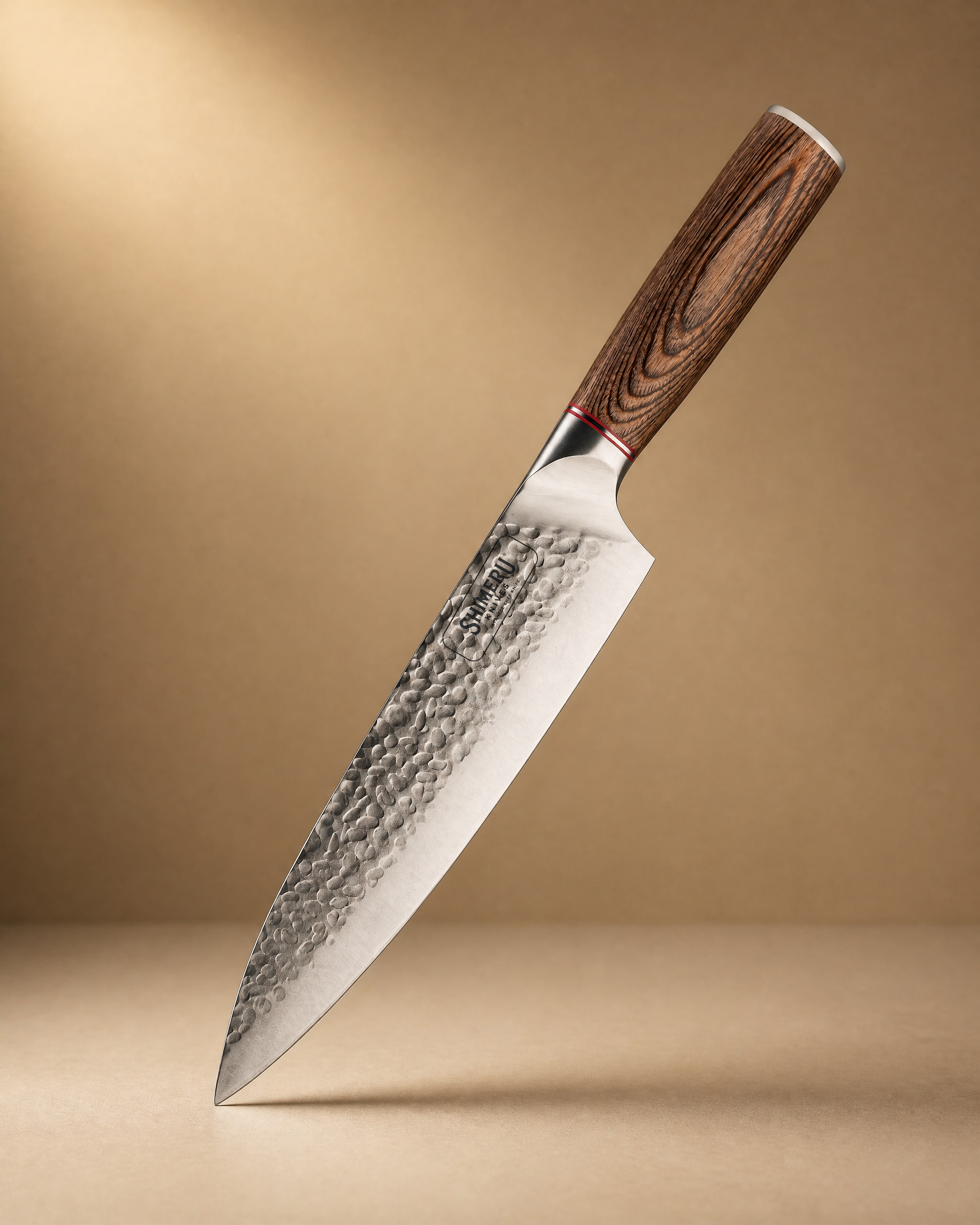 Akan 8'' Gyuto Knife 牛刀£49.99View product → is an 8 inch stainless steel gyuto with a pakkawood handle, built for meat, fish, vegetables and fruit, and it will hold its edge far better on wood than on glass or bamboo. If you prefer a slightly different feel in the hand and a Mkuruti wood handle, the
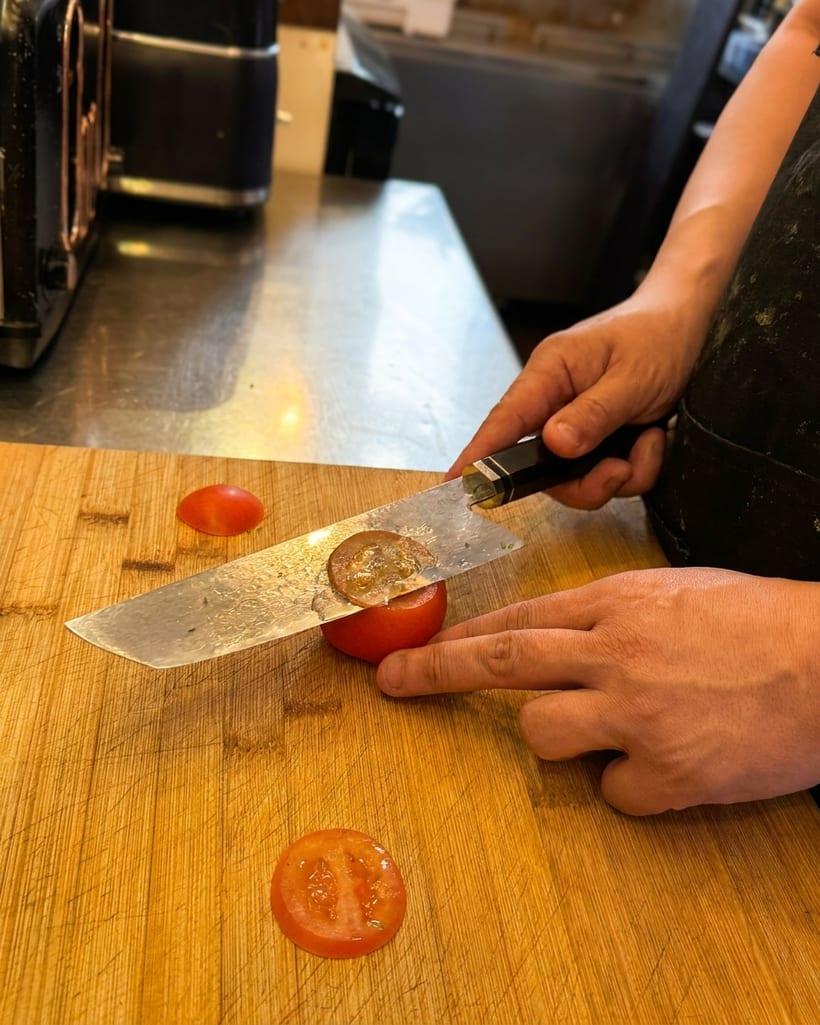
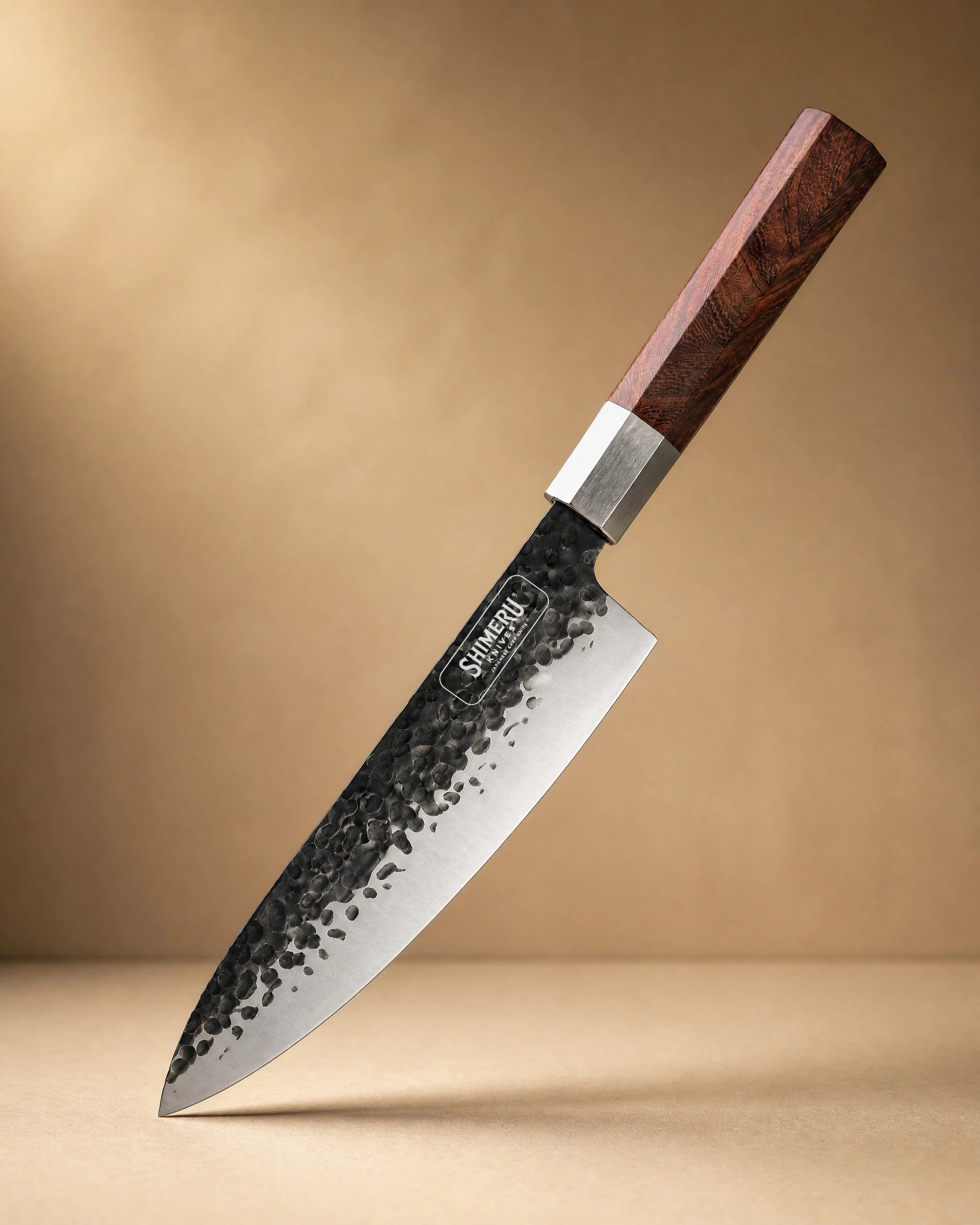 Sendai 8" Steel Gyuto Knife 牛刀£49.99View product → covers vegetables, herbs, meat and fish in much the same way.
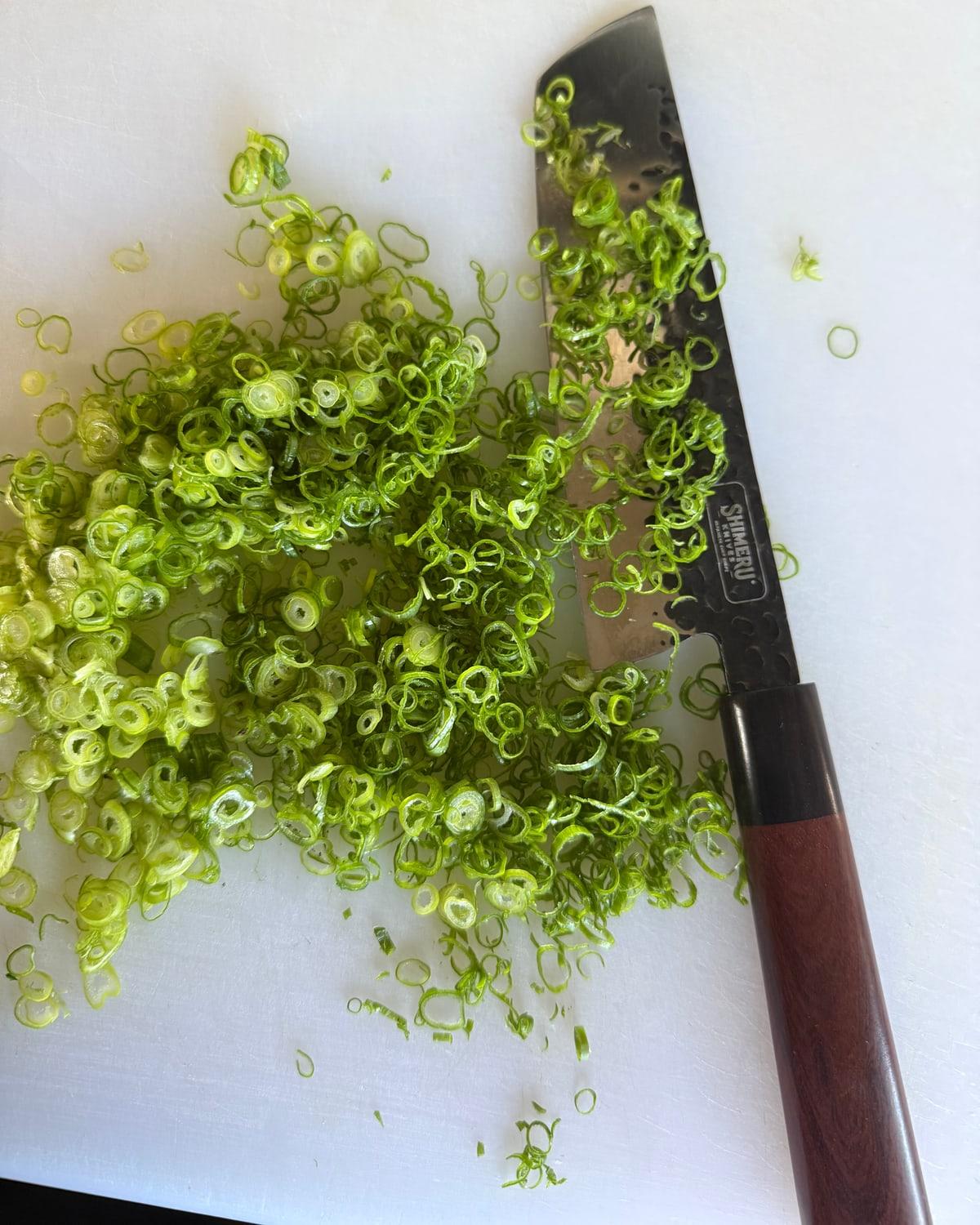
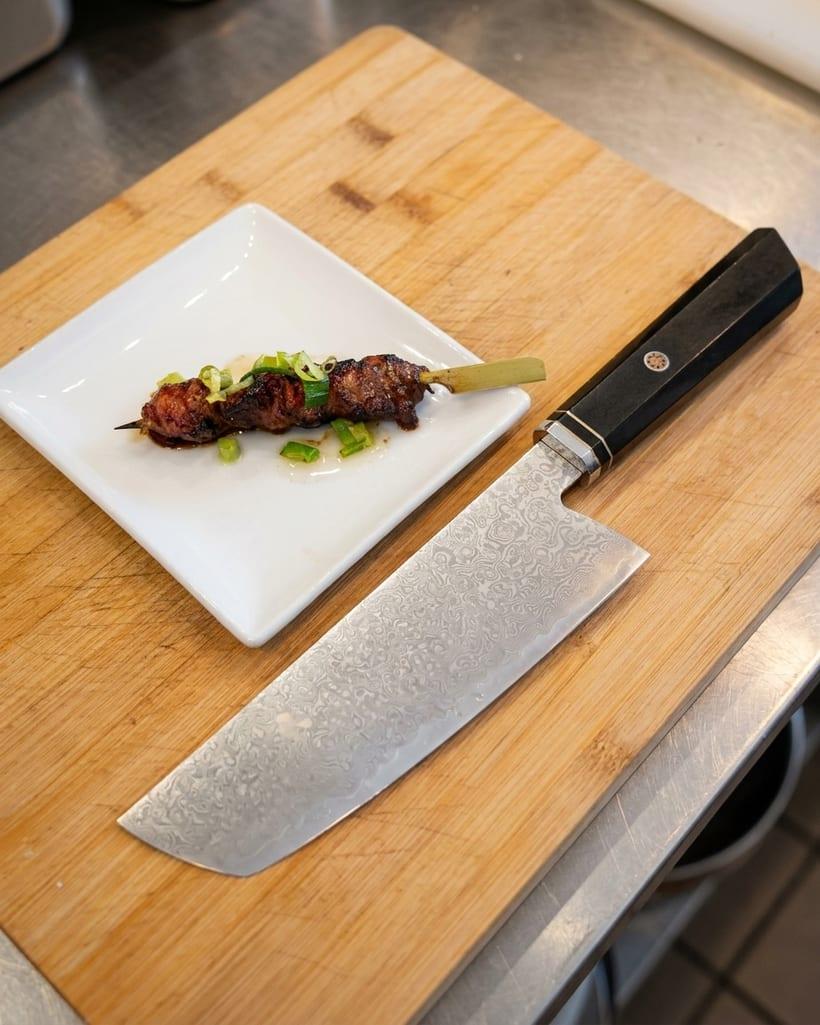
The 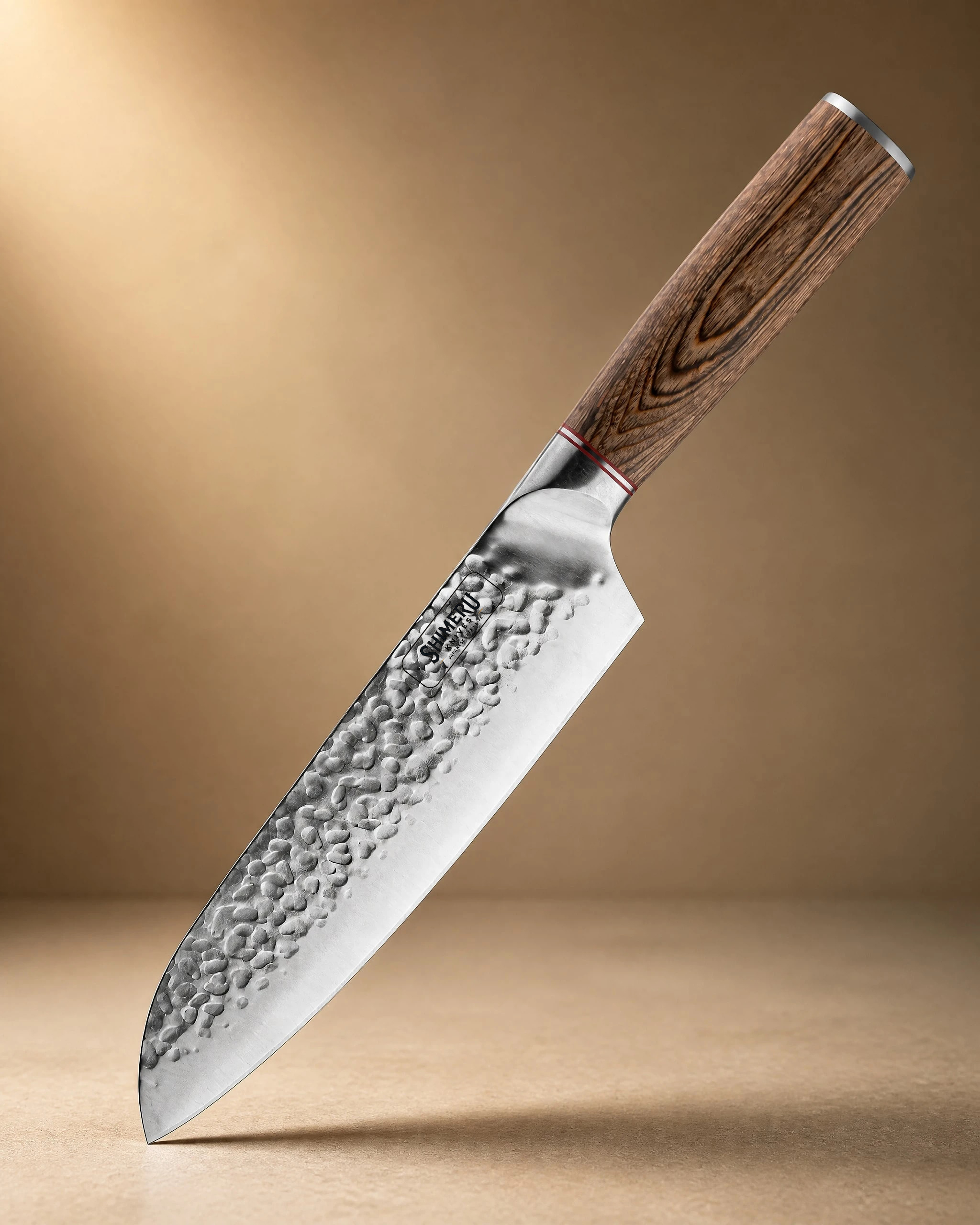 Raikou 6.5" Santoku Knife 三徳包丁£49.99View product → is a 6.5 inch santoku in AUS10 stainless steel. Its shorter, taller blade suits a board where you want control, and santoku work is mostly downward chopping, so a surface with a little give is exactly what you want underneath it. If you are still deciding which shape suits your cooking, our guide to choosing a knife sets out the differences plainly.
Keep the edge honest with a sharpener
Board choice protects an edge, but it will not maintain one. A honing steel realigns a slightly bent edge, it does not remove metal. A proper sharpener restores the apex. The 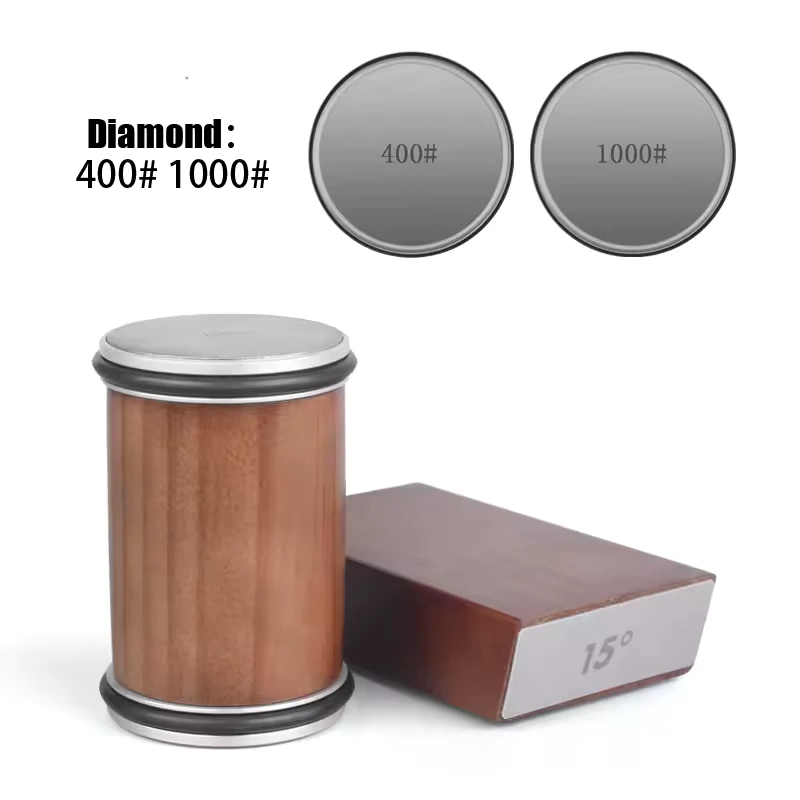 Magnetic Rolling Knife Sharpener£59.99View product → is a rolling sharpener, a design that is easy to use consistently at home because the angle is set by the device rather than by your wrist. Use it lightly: a few passes every few weeks is usually enough for home cooking. More on daily habits is in our knife care guide.
A short buying checklist
- Choose a medium hardwood such as maple, beech or oak for general prep.
- Add a cheap plastic board for raw meat and fish only.
- Aim for 4 to 5 cm thickness so the board stays planted.
- Buy the largest size your worktop and sink can take, roughly 45 by 30 cm.
- Check that it fits your sink comfortably, or you will not wash it.
- Skip glass, stone and ceramic boards entirely if you value your edges.
Caring for a wooden board
Wood rewards a small amount of routine. Rinse and wash after each use, dry it standing on edge and let it air fully before storing it flat. Oil it once a month, more often in a new board's first year, and leave the oil to soak in overnight before wiping off the excess. Keep the board away from direct heat and never leave it soaking in the sink. A board treated this way will darken slightly, develop a patina and outlast several plastic ones.
If a board develops a warp, dampen the concave side lightly and leave it flat with weight on top. Deep gouges can be sanded out with a fine grit paper, then reoiled. Small maintenance like this is far cheaper than replacing a good board, and it keeps the surface gentle on your knives.
Final thoughts
The best kitchen cutting board for everyday cooking is rarely the most expensive one. It is the one that is thick enough to stay still, large enough to work on, soft enough to protect a fine edge, and easy enough to wash that you actually do it. Get that right and your knives need less sharpening, your prep gets faster and the daily routine of cooking feels a little calmer. If you want to see the boards and knives side by side, the full knife shop is the simplest place to look.
Photography: Sergey Kotenev via Unsplash.


