




Best Non Slip Chopping Board Mat

A knife is only as steady as the board beneath it. Most cooks blame their technique when slices come out ragged or the blade wanders, yet the real culprit is often a chopping board quietly skating across the worktop. A non slip chopping board mat is one of the cheapest things you can add to a kitchen, and one of the few that measurably reduces the chance of cutting yourself.
Modern worktops make the problem worse. Polished granite, quartz, glass and stainless steel are smooth and often slightly damp, which is close to the worst possible surface for a wooden board to sit on. The board looks stable until you put pressure on it at an angle, and then it slides.
Why a Non Slip Chopping Board Mat Matters
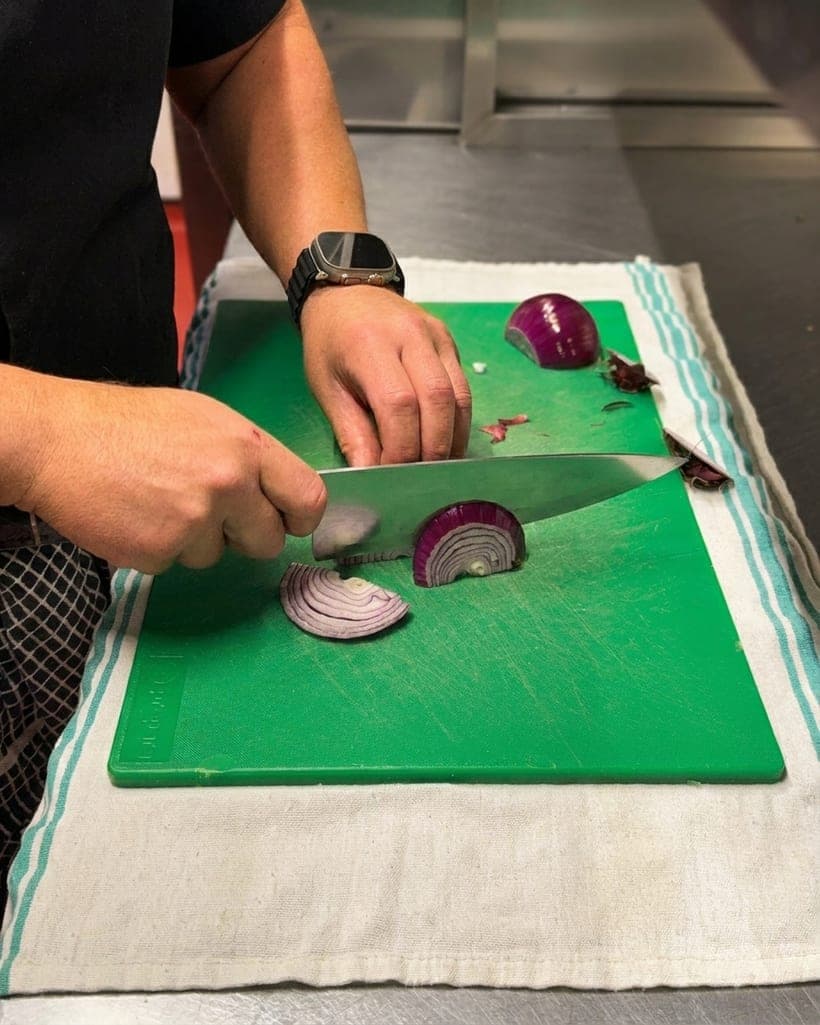
The obvious reason is safety. A board that moves mid cut turns a controlled downward stroke into a diagonal one, and a diagonal stroke is how fingers get nicked. You do not have to be careless for this to happen: a shift of two centimetres is enough.
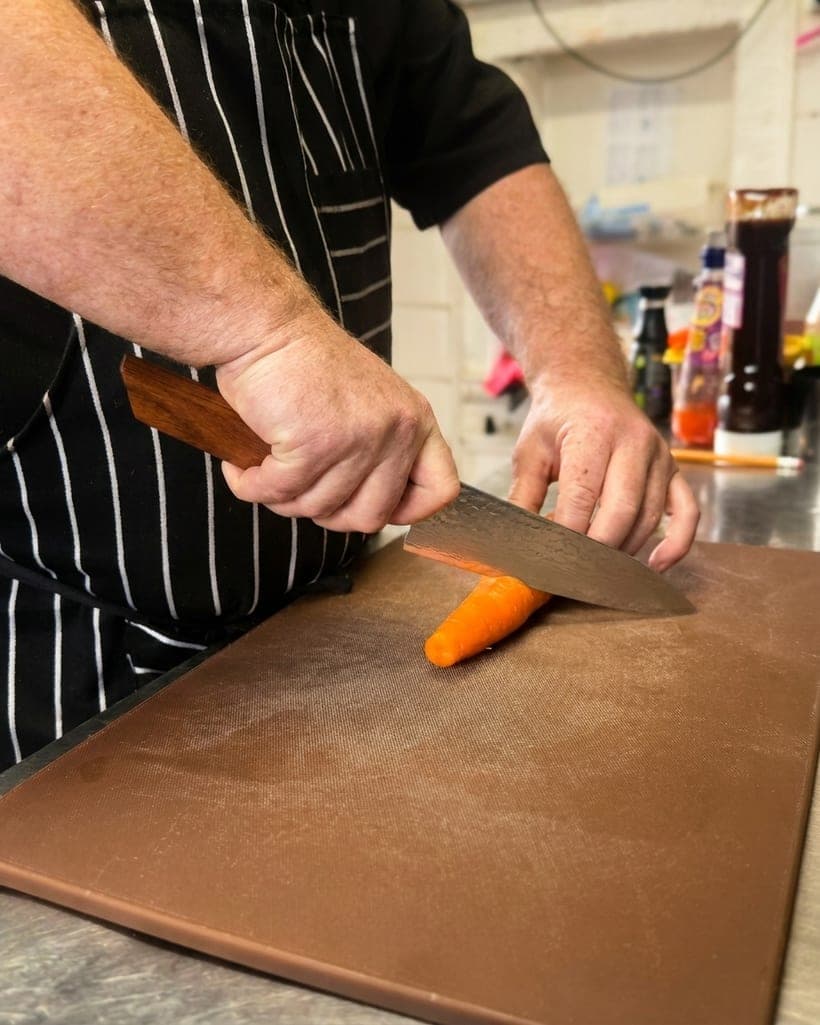
The second reason is quieter but just as real. A moving board makes you a worse cook. When the board shifts, you instinctively shorten your strokes, lift the blade higher and slow down. Rock chopping becomes hesitant, and fine dice turns out uneven because your guide hand keeps readjusting. Put a grippy mat under the same board and the whole motion settles within seconds.
A mat also absorbs vibration, so hard boards on stone worktops become noticeably less deafening. It lifts the board slightly off the surface too, which keeps the underside drier and reduces the pale rings that damp wood leaves behind.
What Makes a Mat Actually Grip
Grip comes from friction plus a small amount of give. The best mats combine a high friction surface with enough compressibility to conform to both the worktop and the board.
Silicone sheets are the most common option and the easiest to live with. They grip on both sides, tolerate heat and most are dishwasher safe. They also work on a wet surface, which rubber mesh sometimes struggles with, and they do not trap food in a weave. The catch is that silicone holds a film of oil and detergent, and slick silicone is no better than a bare worktop, so it needs a proper wash rather than a quick rinse.
Rubber mesh rolls are the traditional catering answer. The open weave drains water away from the contact points, which is why they hold well on a wet stainless steel bench. Their weakness is hygiene: crumbs and juices lodge in the weave, they need hand washing, and they should be hung to dry or they will start to smell.
Foam and PVC pads sit at the bottom of the range. They grip well when new, then compress, take on water and lose their shape. They are a stopgap, not a long term answer.
Some boards solve the problem themselves. Boards with rubber feet, silicone corner grips or a textured underside often need no mat at all, so check what you already own before buying anything.
Thickness, Size and the Springiness Trap
Thicker is not better. A mat of one to two millimetres keeps the board low and sends your downward force straight into the worktop. A thick, spongy pad does the opposite: it creates a springy layer, so the board flexes under the blade and the edge can dip into the surface below. For precision work, a firm thin mat beats a soft thick one.
Size matters in a smaller way. A mat slightly smaller than the board's footprint is easiest to manage, because the board protects it and nothing hangs out to collect crumbs. A mat far smaller than the board is worse than useless, since the board can pivot on it. For a large board, buy a large mat, or use two smaller ones near the corners where you actually press down.
Wet Counters and the Damp Cloth Myth
Every cook has been told to put a damp tea towel under the board. It works, briefly. Water creates suction, but the cloth also goes cold, goes sour and loses its grip as it dries. It is a decent emergency fix and a poor permanent one. A silicone mat does the same job without the laundry, and it works on a worktop that is already wet.

How a Stable Board Improves Your Cutting
Grip is the foundation, but the board still has to suit the knife. Japanese knives reward a surface that is soft enough not to chip an edge and flat enough not to rock. Our knife guide covers the trade offs between end grain wood, hinoki, rubber and plastic.
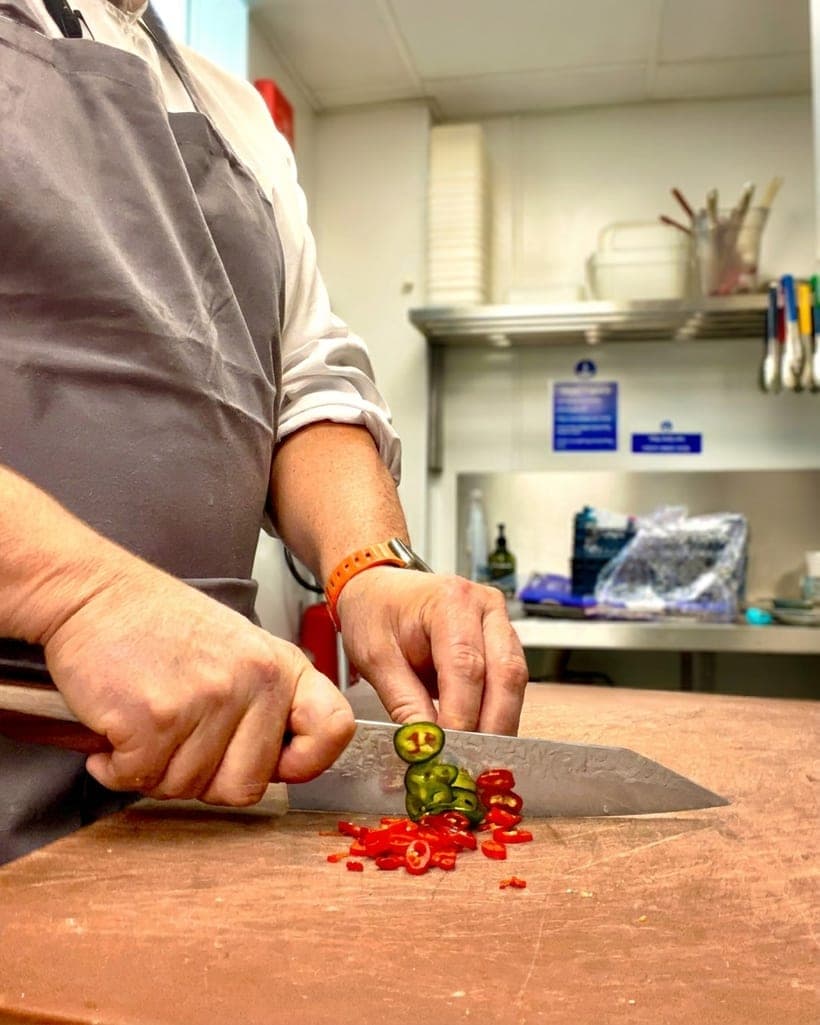
A knife like the 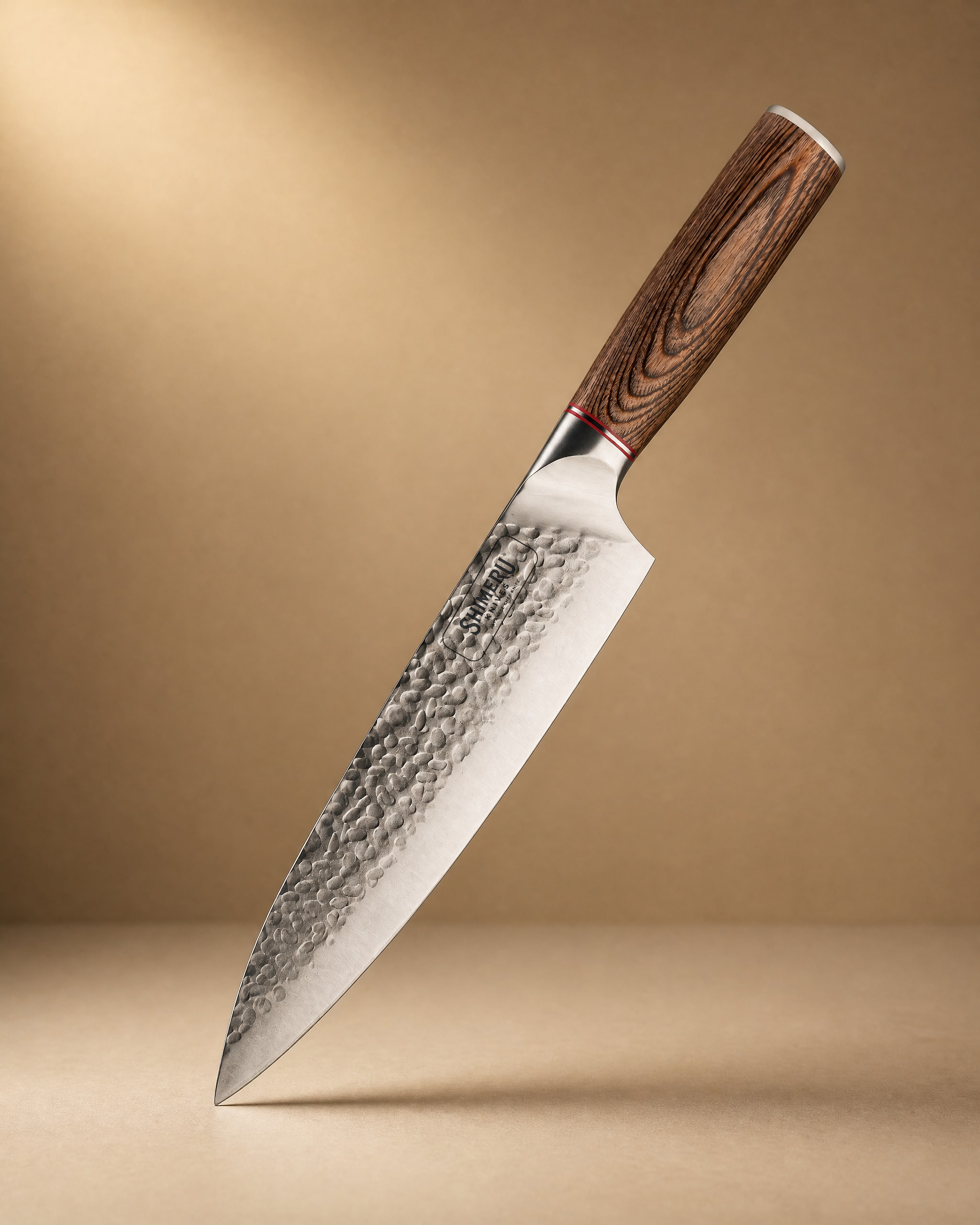 Akan 8'' Gyuto Knife 牛刀£49.99View product → does most of its work with a gentle rocking motion, and that motion depends on the board staying put. The same holds for push cutting herbs or breaking down a chicken. When the board is locked in place, the knife does the work and your wrist does not.
Cleaning and Looking After Your Mat
Grip fades with grease. Whatever mat you choose, wash it after any session involving raw meat, fish or poultry, and wash it more often than you think if you cook with oil. Silicone can go on the top rack of a dishwasher. Mesh rolls need a brush, hot water and a proper dry, hanging rather than flat on a draining board.
Do not leave a mat under a board that lives permanently on the worktop unless both are dry. Trapped moisture between silicone and stone is a reliable way to grow mould on the underside of wood. Our knife care guide covers the wider routine, and the same principle of dry storage applies here.
Board Material Matters as Much as Grip
A mat fixes a sliding board, but nothing fixes a board that is unkind to your edge. Glass and ceramic are hard on knives, bamboo contains silica that dulls an edge faster than most people expect, and thin plastic boards flex and chatter. End grain wood, hinoki and good quality rubber are the sensible choices for thin Japanese edges.
Even on a good board, edges need maintenance. A 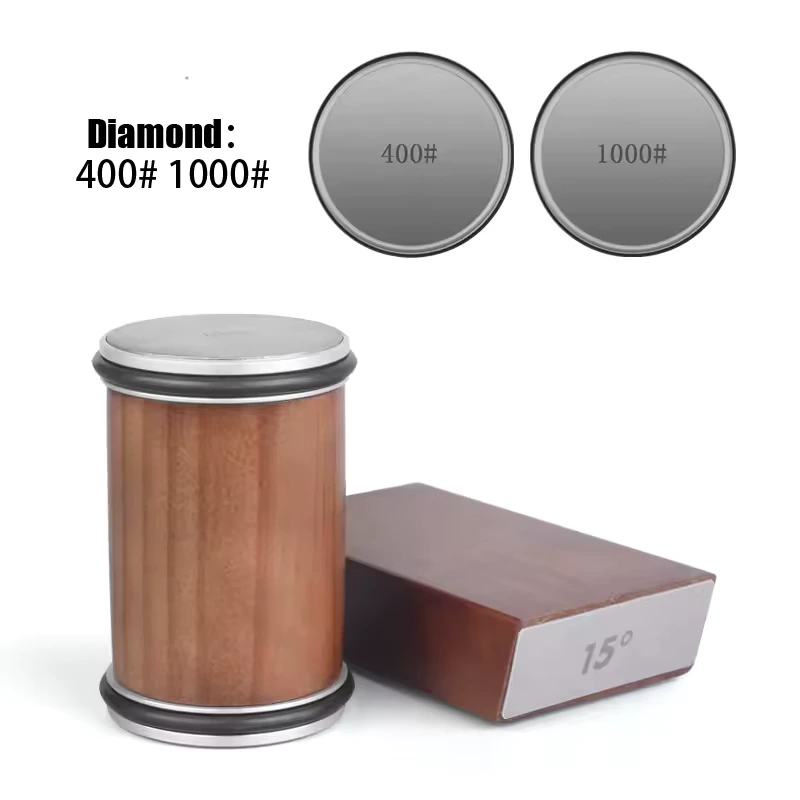 Magnetic Rolling Knife Sharpener£59.99View product → is a practical way to keep a working edge between proper sharpenings, and it takes up less space than a stone setup.
Matching the Board to the Knife You Use Most
If you slice and dice constantly, a large stable board with a large mat under it earns its counter space. Knives built for that work, such as the 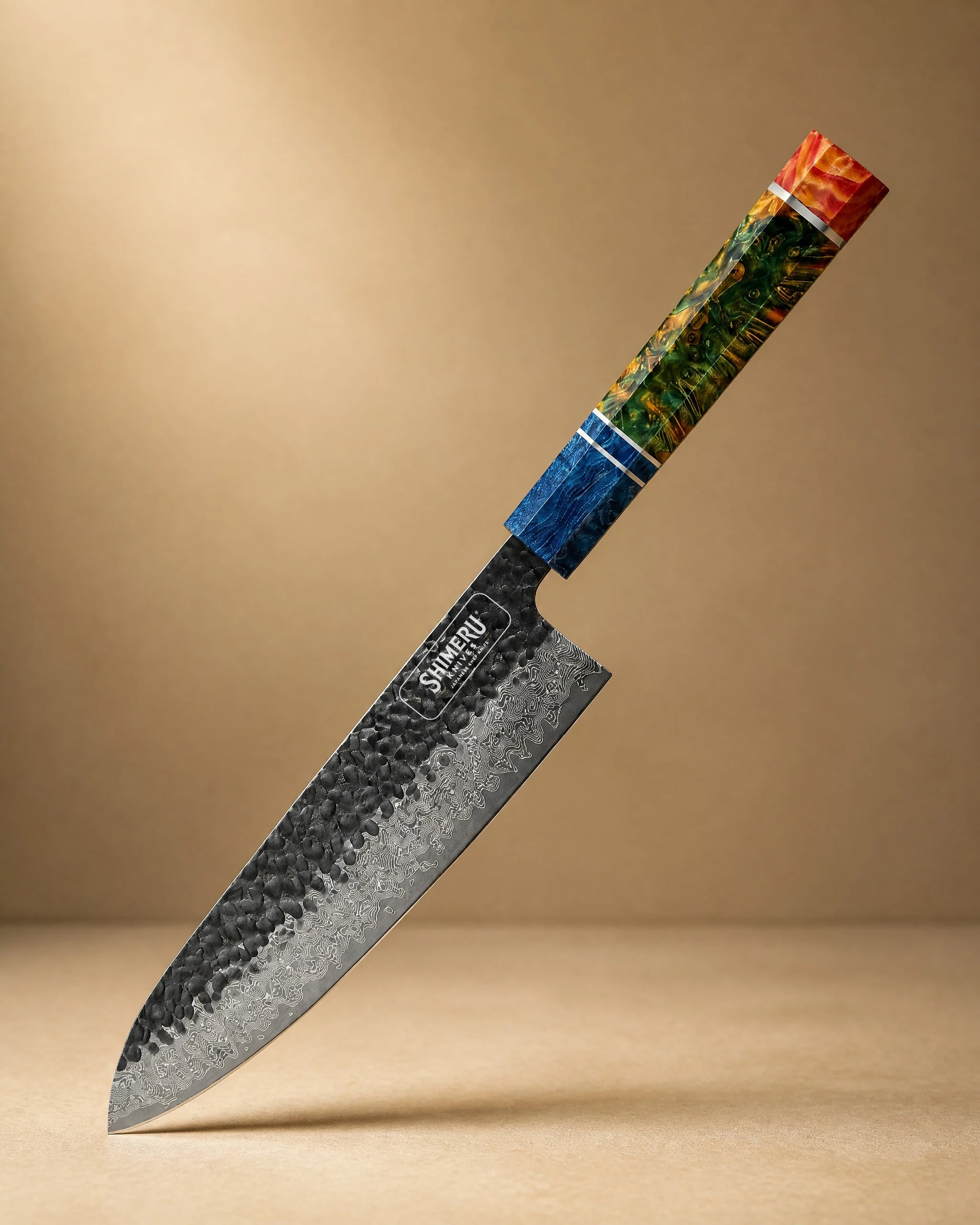 Yoshii 8″ Damascus Steel Gyuto Knife 牛刀£79.99View product →, sit well on a firm surface, because a 67 layer Damascus blade with a wood and copper handle is balanced for long controlled strokes.
If you are setting up a kitchen from scratch, it makes sense to plan the whole kit at once. The 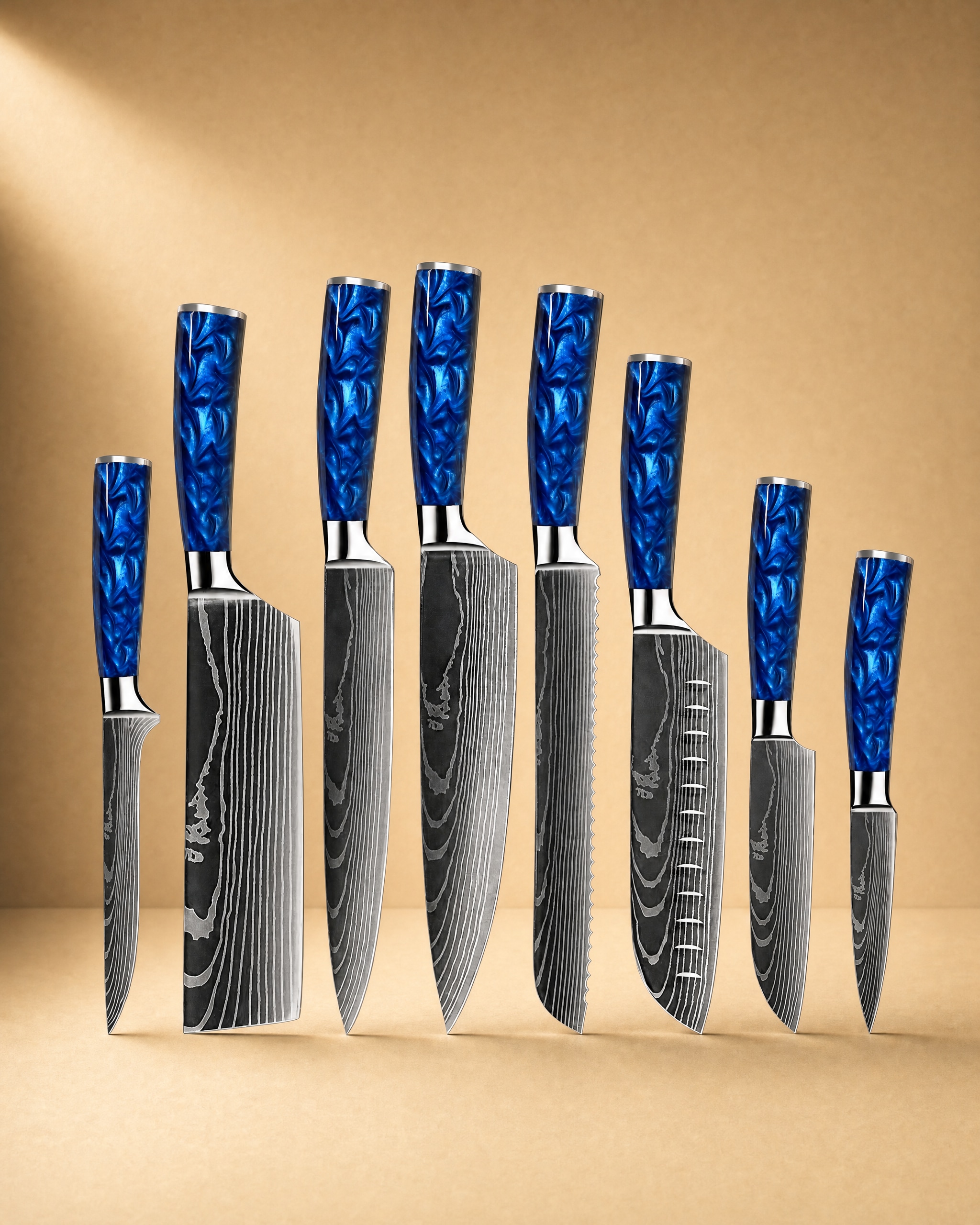 Shinano 信濃川 Damascus Pattern Stainless Steel Kitchen 8 Knife Set£149.99View product → covers most everyday tasks, and one good mat under one good board will do more for your knife skills than another gadget. The full range is on our knife shop page.
A Quick Buying Checklist
- Measure your board's footprint before you buy, and go slightly smaller rather than larger.
- Choose thin and firm over thick and spongy, ideally one to two millimetres.
- Pick silicone for low maintenance, rubber mesh for wet stainless steel benches.
- Check whether your board already has feet or a textured underside.
- Plan for washing: if it cannot be cleaned easily, it will not stay grippy.
Honest Limits: When You Do Not Need a Mat
Not every kitchen needs one. A heavy hardwood board on a textured or matt worktop often stays put on its own, and a board with rubber feet does not need help. What a mat cannot do is compensate for a board that is too small for the job or a knife that is dull.
Final Thoughts
A non slip chopping board mat is a small, boring purchase that makes a visible difference to safety and to the consistency of your cuts. Buy one that is thin, easy to wash and matched to the size of your board, then put your attention on the things that matter more: a sharp edge, a board that suits it, and a surface that stays where you put it.
Photography: Sergey Kotenev via Unsplash.


