
Best Knife Sharpening Stone for Japanese Knives

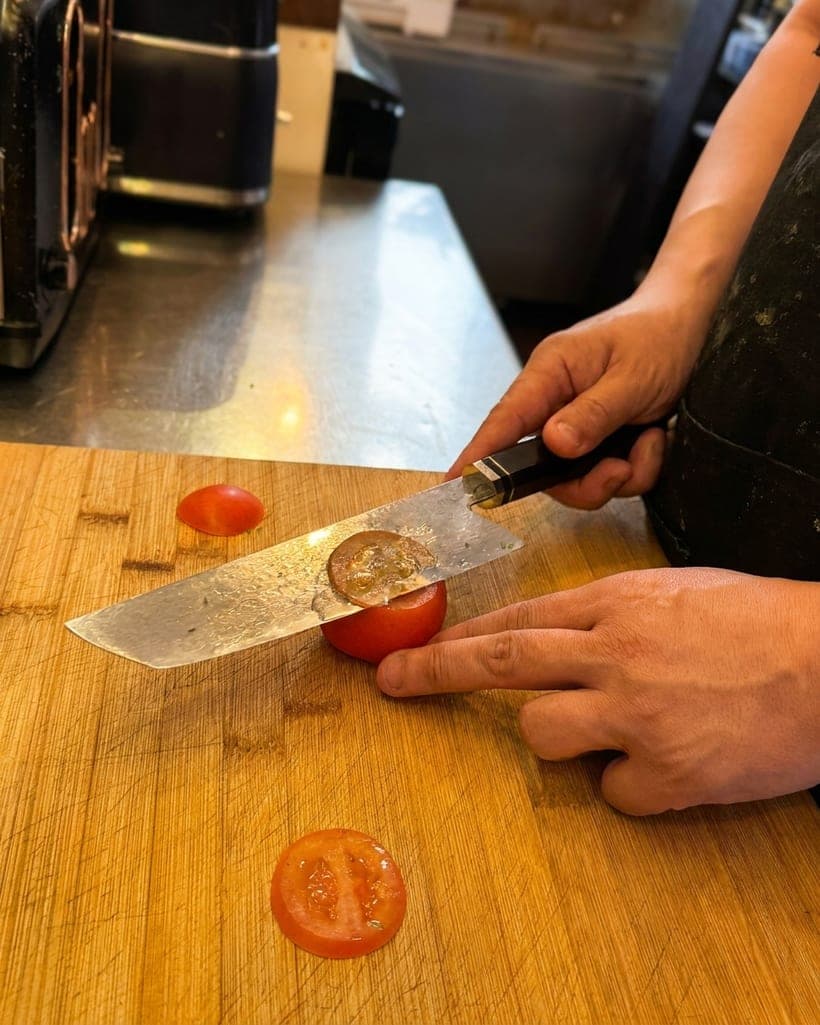
A dull knife is quietly expensive. It bruises herbs instead of slicing them, skids across tomato skins, and makes you push harder than you should, which is how a lot of kitchen accidents begin. For most homes the answer is a sharpening stone, and for Japanese knives the answer is a good knife sharpening stone chosen deliberately rather than grabbed off a shelf.
Japanese blades are generally harder and thinner behind the edge than their European equivalents. That is what gives them their clean, almost frictionless cut. It is also what makes them particular about how you sharpen them. Get the stone right and a gyuto will reward you for years. Get it wrong and you will spend an evening grinding away with very little to show for it.
What makes a stone suit Japanese steel
Three things decide whether a stone works for you: the abrasive, the binder that holds it together, and the grit. Japanese water stones are usually aluminium oxide or silicon carbide abrasive in a relatively soft binder. That softness is the point. As you sharpen, the surface breaks down and exposes fresh abrasive, so the stone keeps cutting instead of glazing over and skating across the steel.
Oil stones still have their place, particularly for garden tools and inexpensive stainless. They cut more slowly, they dish less, and they do not need soaking. They are simply a poor match for a thin, hard Japanese blade, where you want a crisp bevel and a controlled polish rather than slow abrasion.
Grit, and why one number is never enough
Grit describes the size of the abrasive particles, and the numbering runs the opposite way to what beginners expect. A 400 grit stone is coarse and removes metal quickly. An 8000 grit stone is fine and polishes. Neither is better than the other. They do different jobs, and a sensible progression matters more than any single number.
The three stages that actually matter
A coarse stone, roughly 220 to 600 grit, repairs chips, resets a badly worn bevel, or thins a knife behind the edge. Most home cooks need one rarely.
A medium stone, roughly 800 to 2000 grit, does the real sharpening. If you only ever own one kitchen knife sharpening stone, this is the one to buy.
A fine stone, 3000 grit and above, refines and polishes the edge. It is optional, and on some stainless steels it is barely worth the effort.
For a typical Japanese gyuto, a 1000 grit stone followed by a 3000 or 6000 grit stone covers everything short of damage repair. A combination stone in that range is the standard first purchase, and for good reason. It is affordable, it is forgiving, and it teaches you what a burr feels like on your fingertips.
Soaking stones versus splash and go
Traditional water stones are porous and need soaking, usually five to fifteen minutes, until the bubbles stop rising. They feel creamy, they cut quickly, they wear faster, and they need flattening more often.
Splash and go stones are denser. They need only a splash of water on the surface, they stay flat for longer, and they feel harder and less forgiving, which some people love and others dislike. Neither type is superior. If you sharpen once a month, the convenience of splash and go means it will actually get used. If you sharpen weekly and enjoy the ritual, a soaking stone is a pleasure to own.
Matching the stone to the knife you own
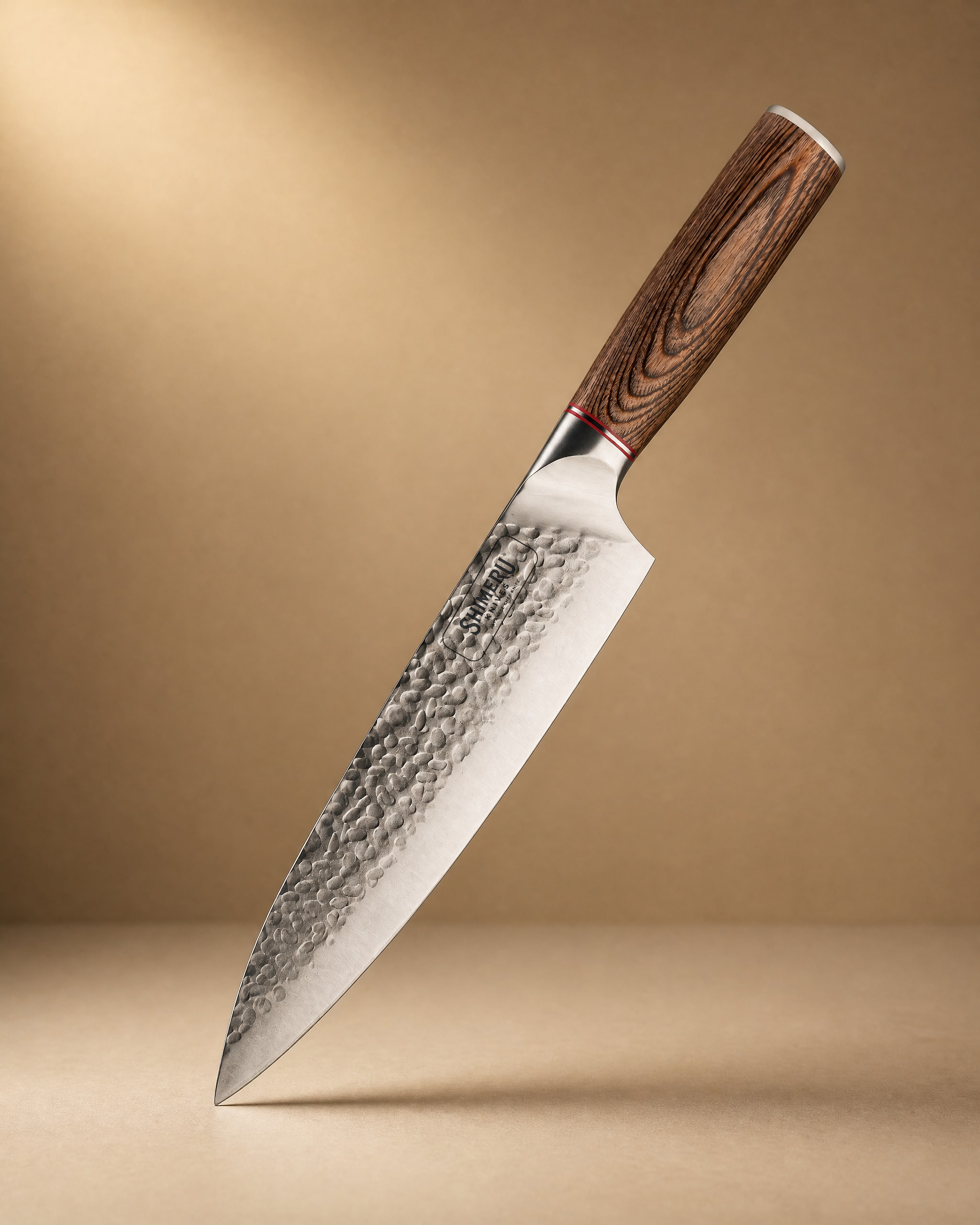 Akan 8'' Gyuto Knife 牛刀£49.99View product → is a workhorse stainless gyuto, and it suits exactly the kind of routine described above: a 1000 grit stone to set the edge, a finer stone to finish, and a light hand throughout. Stainless steel of this sort is tolerant and takes a keen edge without demanding a delicate touch.
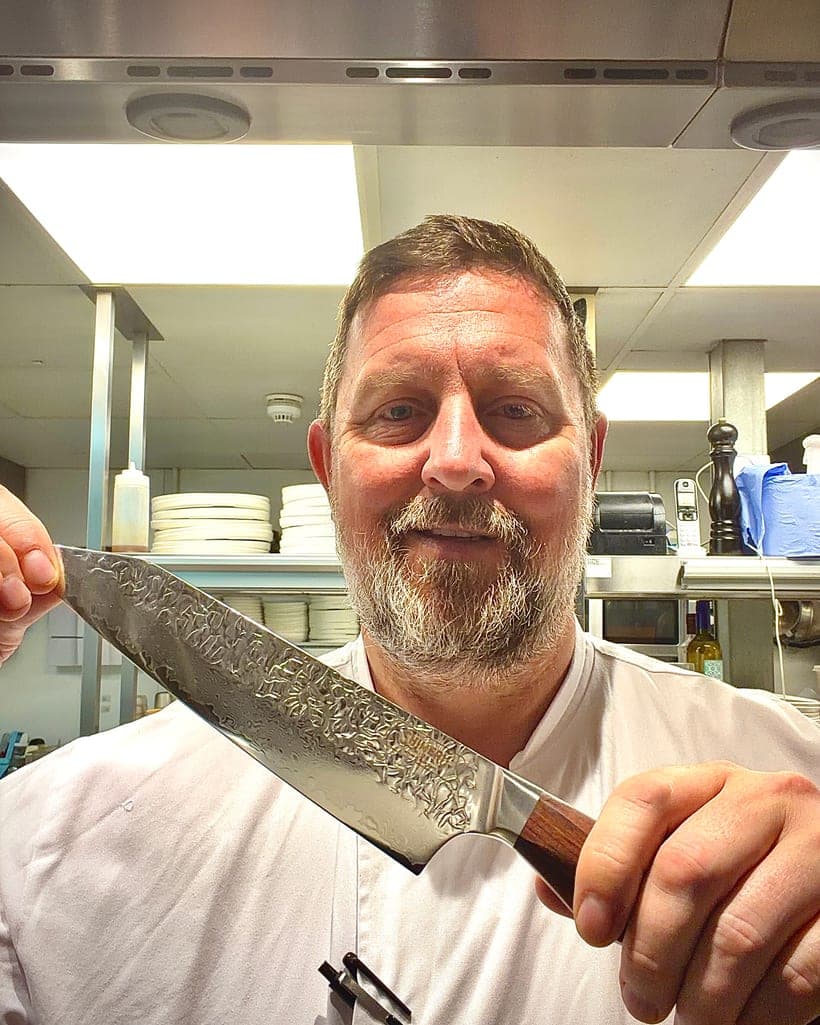
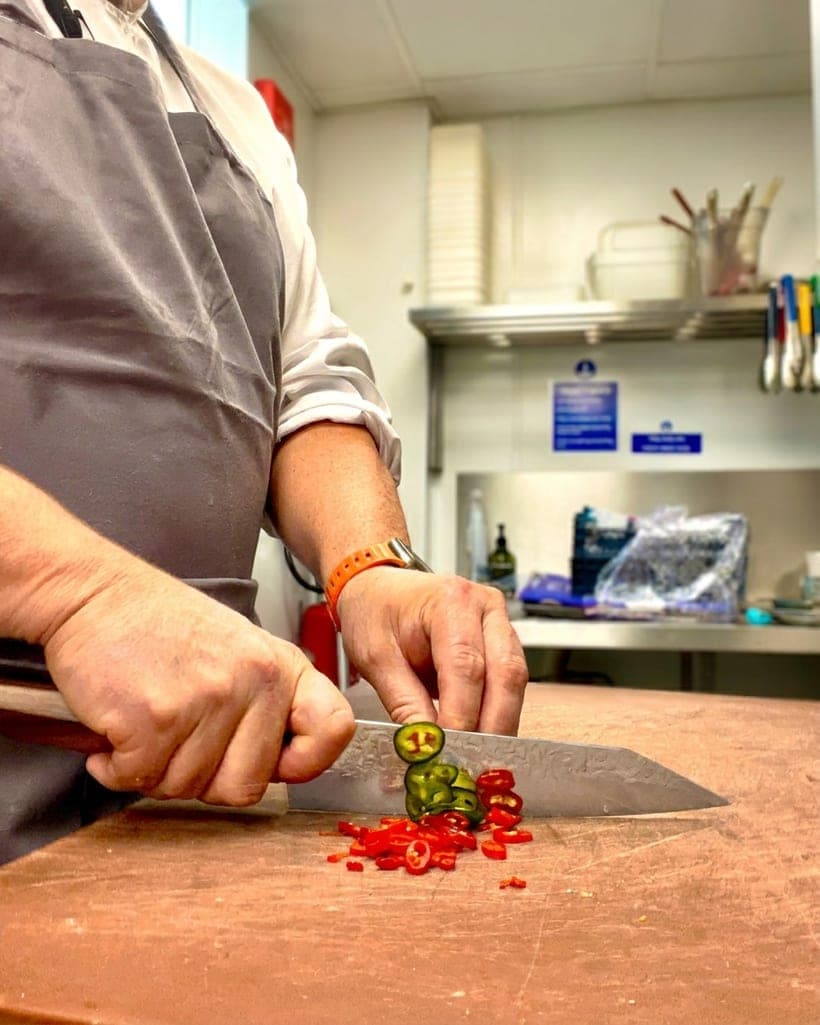
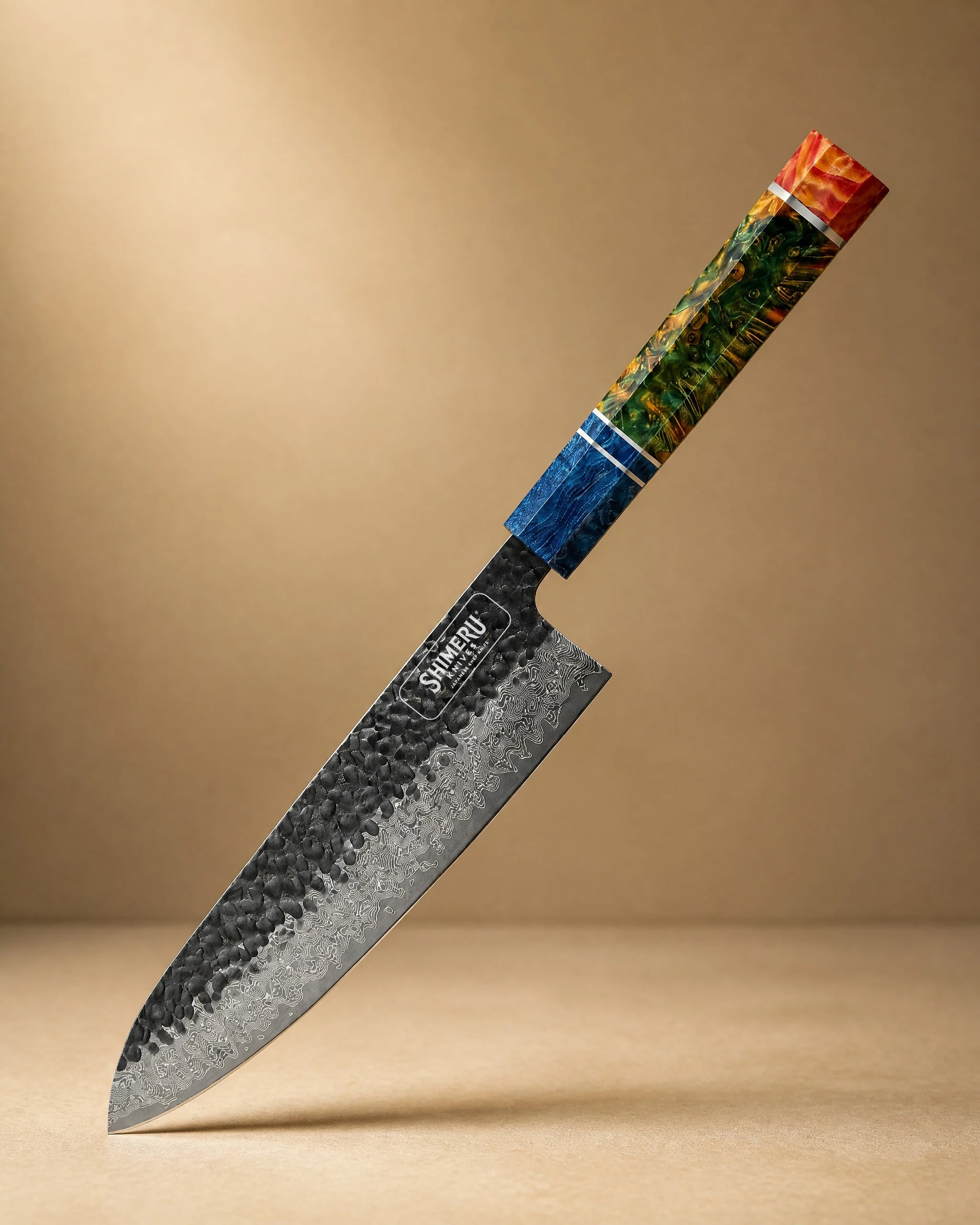 Yoshii 8″ Damascus Steel Gyuto Knife 牛刀£79.99View product → asks for a little more care. A blade with that many layers is thin behind the edge, and the finish along the bevel is visible, so a clean progression through the grits shows on the knife. Jumping straight from a coarse stone to a fine one will leave scratches you can see and an edge that is sharp but inconsistent.
If you sharpen for a household rather than for yourself, 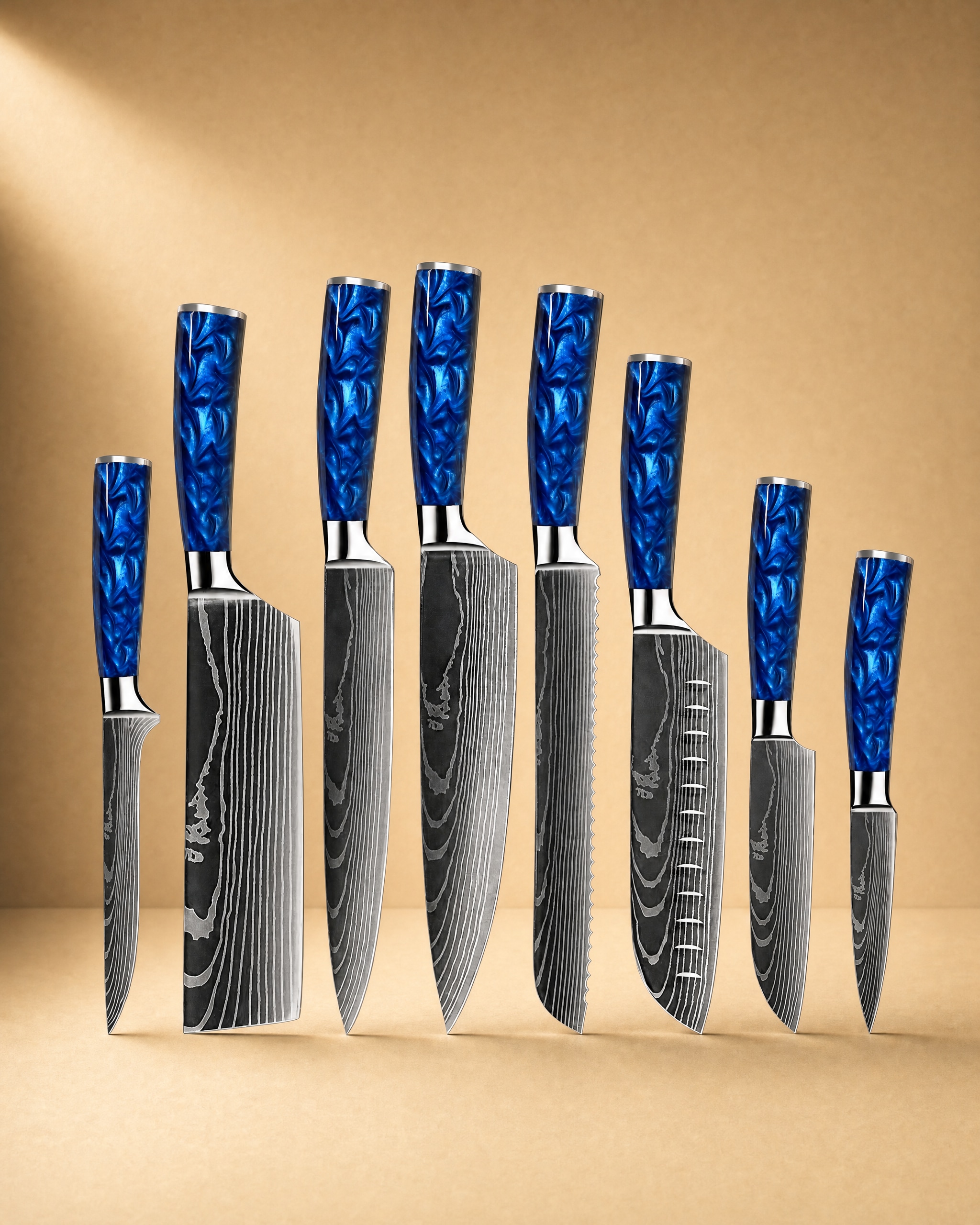 Shinano 信濃川 Damascus Pattern Stainless Steel Kitchen 8 Knife Set£149.99View product → covers the range of blade shapes you are likely to meet. The same two stones will handle all of them. What changes is the angle you hold, not the equipment.
Angle, pressure and the burr
Holding a consistent angle matters more than holding a precise one. Fifteen degrees per side suits most Japanese kitchen knives. A little more is fine if you are still learning, because a slightly wider bevel is easier to maintain and less likely to chip. What ruins an edge is inconsistency, not a degree or two of difference.
Use light pressure and let the stone do the work. Work in sections along the blade, from heel to tip, and raise a burr along the whole length of one side before you turn the knife over. That burr is your proof that the two bevels have met. Feel for it with a fingertip, moving across the edge rather than along it. Once it runs the full length, flip the knife and repeat, then remove the burr with a few very light passes on the fine stone.
Why flattening matters more than you think
A whetstone sharpening stone does not stay flat. The middle hollows out, because that is where most of your passes land, and a dished stone cannot produce a straight bevel no matter how good your technique is. Flatten the stone every few sessions on a diamond plate, or on a piece of coarse wet and dry paper laid on glass. It takes a minute and it is the single most overlooked habit in home sharpening.
Three mistakes that ruin a good edge
Pressing hard. Pressure does not sharpen faster, it just wears the stone unevenly and rounds the edge. Let the abrasive cut.
Skipping the burr. If you turn the knife over before a burr has formed along the full edge, you have not finished the first side. The bevels have not met yet, and no amount of time on the fine stone will fix it.
Sharpening a dirty knife. Dried food and mineral deposits clog the stone and stop it cutting. Wash and dry the blade first, and rinse the stone when the surface turns grey and stops biting.
When a whetstone is not the right answer
Some people will never enjoy freehand sharpening, and pretending otherwise does nobody any favours. If that describes you, 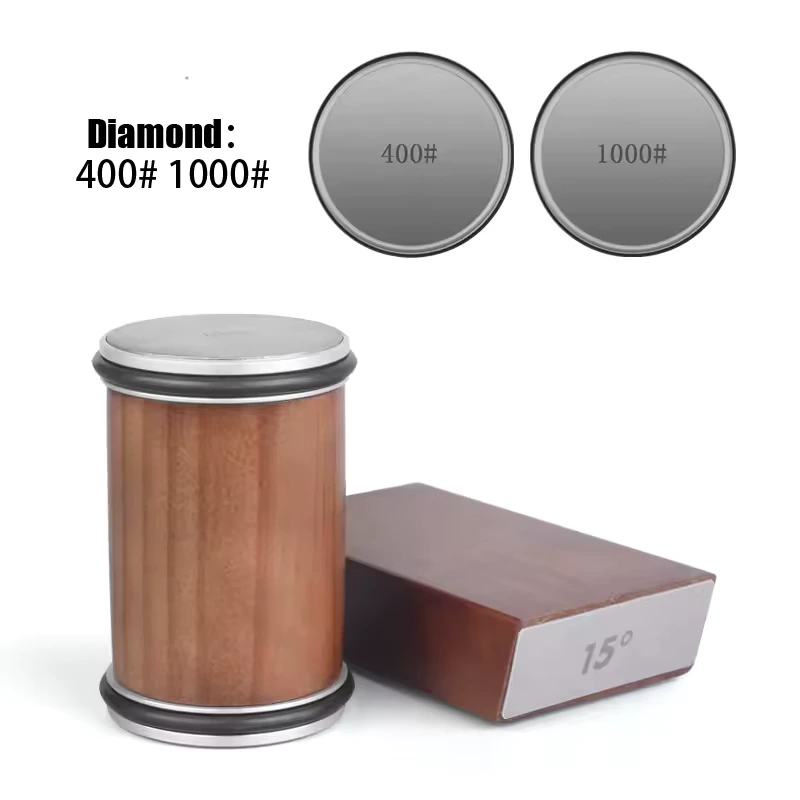 Magnetic Rolling Knife Sharpener£59.99View product → is an honest alternative. A guided sharpener will not produce the refined, polished bevel that a practised hand gets from a whetstone, and it will not thin a knife that has grown thick behind the edge. What it will do is keep a working edge on a kitchen knife with almost no skill required, which is far better than the neglect most knives receive.
Looking after the rest of the knife
A stone only addresses the edge. Everything behind it still needs attention, and a knife that is never dried, never stored with care and never honed will lose its edge faster than you can restore it. Our knife care guide covers the daily habits that make sharpening less frequent and less effort.
A small kit that covers almost everything
You do not need a wall of stones. A practical setup looks like this:
- A 1000 grit stone for routine sharpening.
- A 3000 to 6000 grit stone for finishing, optional but pleasant.
- A flattening plate or coarse diamond plate to keep both stones flat.
- A stable base or stone holder, plus a towel you do not mind staining.
- A honing rod for realigning an edge between sharpening sessions.
Add a coarse stone only when you actually need one. Buying a 220 grit stone on day one usually means owning a stone you never use and a knife you have thinned more than you intended.
Choosing well the first time
If you are still deciding what you are sharpening, our knife guide explains the main Japanese profiles and what each is for. If you would rather see the blades themselves, the full range sits in our product range.
The best knife sharpening stone is not the most expensive one, and it is certainly not the largest collection. It is the stone you will actually take out of the drawer, soak or splash, and use for ten unhurried minutes once a month. A modest 1000 grit stone used regularly will keep a Japanese knife cutting better than an exotic 8000 grit stone that stays in its box. Buy for the steel you own, learn the burr, and keep your stones flat. Everything else is refinement.
Photography: Emma Ou via Unsplash.


