




Best Japanese Knife Block Sets

Japanese kitchen knives are lighter, harder and sharper than most Western knives. That means the way you store them matters more than you might think. A good knife block for Japanese knives protects the edge, keeps the blade away from moisture and makes reaching for the right knife a simple pleasure. In this guide we cover what to look for, whether to choose magnetic or slotted storage, and which knives are worth keeping close at hand.
Why Japanese Knives Need Their Own Storage
A standard Western knife block often has narrow slots that force the blade in at an angle, or wide slots that let the knife rattle around. Japanese knives have harder steel and thinner edges, so any impact against wood can cause tiny chips. A block designed for Japanese knives should hold the blade gently, with no metal to metal contact and no pressure on the edge.
When you search for a knife block for Japanese knives, you will see two main designs: magnetic strips and slotted wooden blocks. Both have merits. The best choice depends on the knives you own, how often you cook and how much you care about neat countertops.
Magnetic Knife Blocks vs Slotted Wooden Blocks
Magnetic blocks hold the blade by its side rather than the edge. That means there is no slot for food crumbs to collect and the edge never drags against a wooden surface. Good quality magnets are perfectly safe for hard Japanese steel, but you should always place the knife with the edge facing away from you. A strong magnetic strip is especially useful if you plan to keep a heavy knife close at hand.
Slotted wooden blocks offer a more traditional look and protect the edge from accidental knocks. The downside is that the slots can trap moisture and crumbs, and a clumsily inserted knife may hit the bottom of the slot. If you choose a slotted block, look for one with smooth, lightly lined slots and a design that makes cleaning simple. If you are unsure which knives suit a particular block, our how to choose a knife guide covers blade shapes and sizes and will help you match a knife to the right storage.
A versatile gyuto is often the first Japanese knife people buy, and it works well in either style of block. The 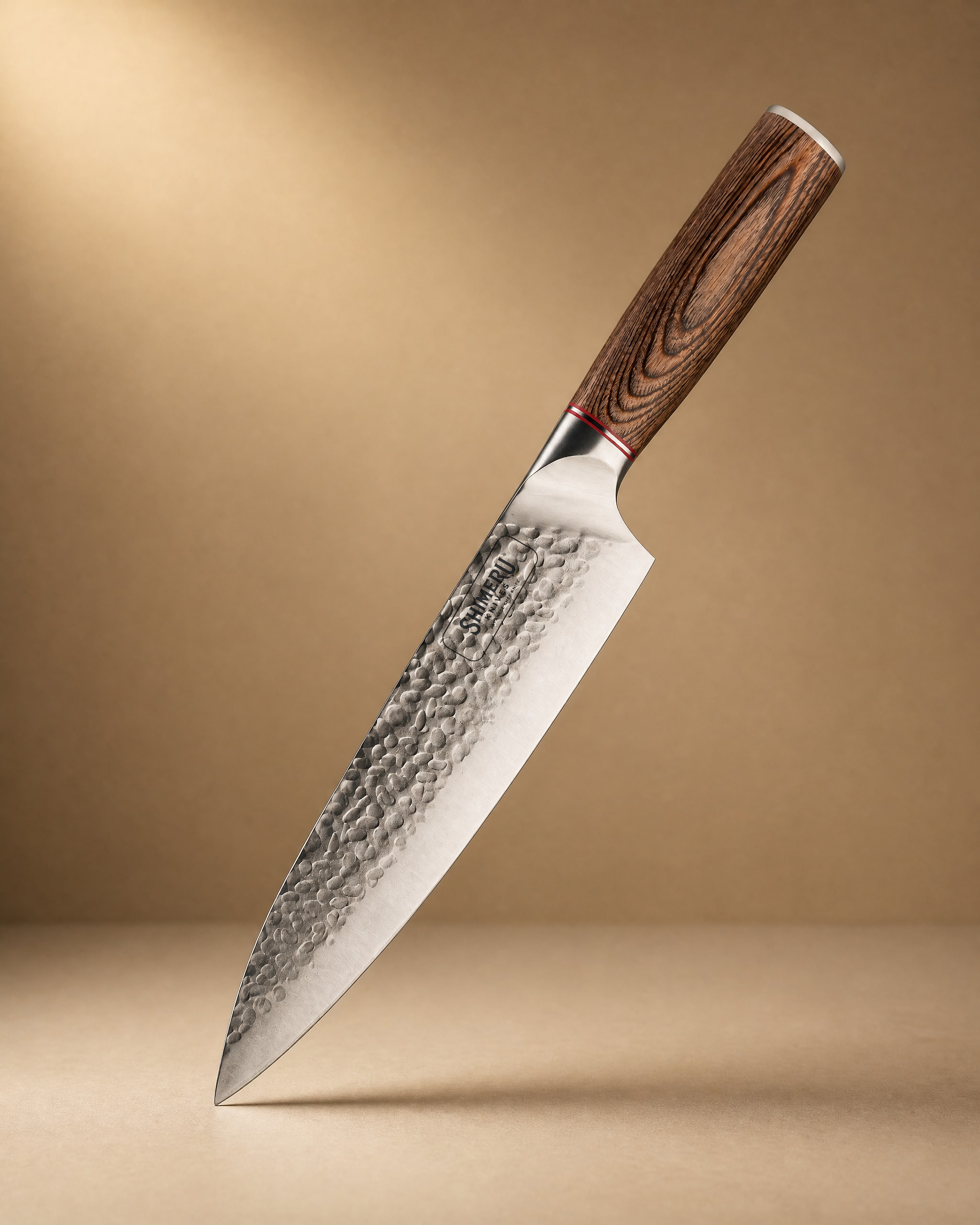 Akan 8'' Gyuto Knife 牛刀£49.99View product → is a good example: it handles most daily prep and sits happily on a magnetic strip or in a slot. If your set includes a wider blade, such as the
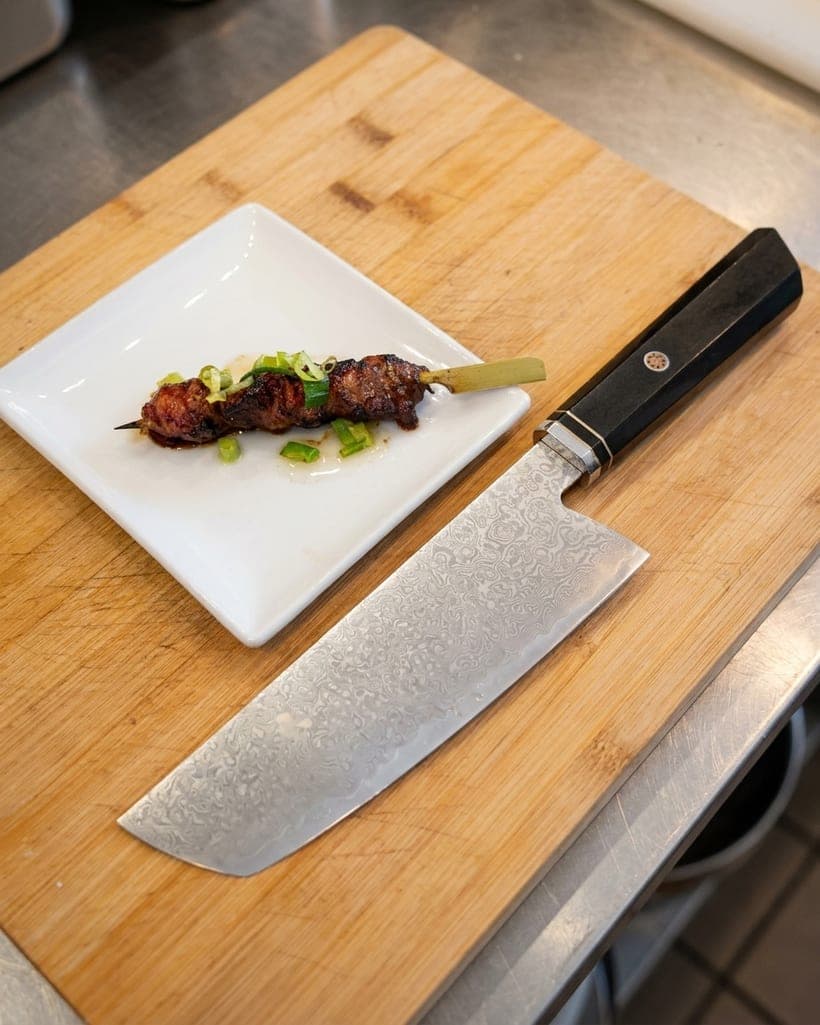
 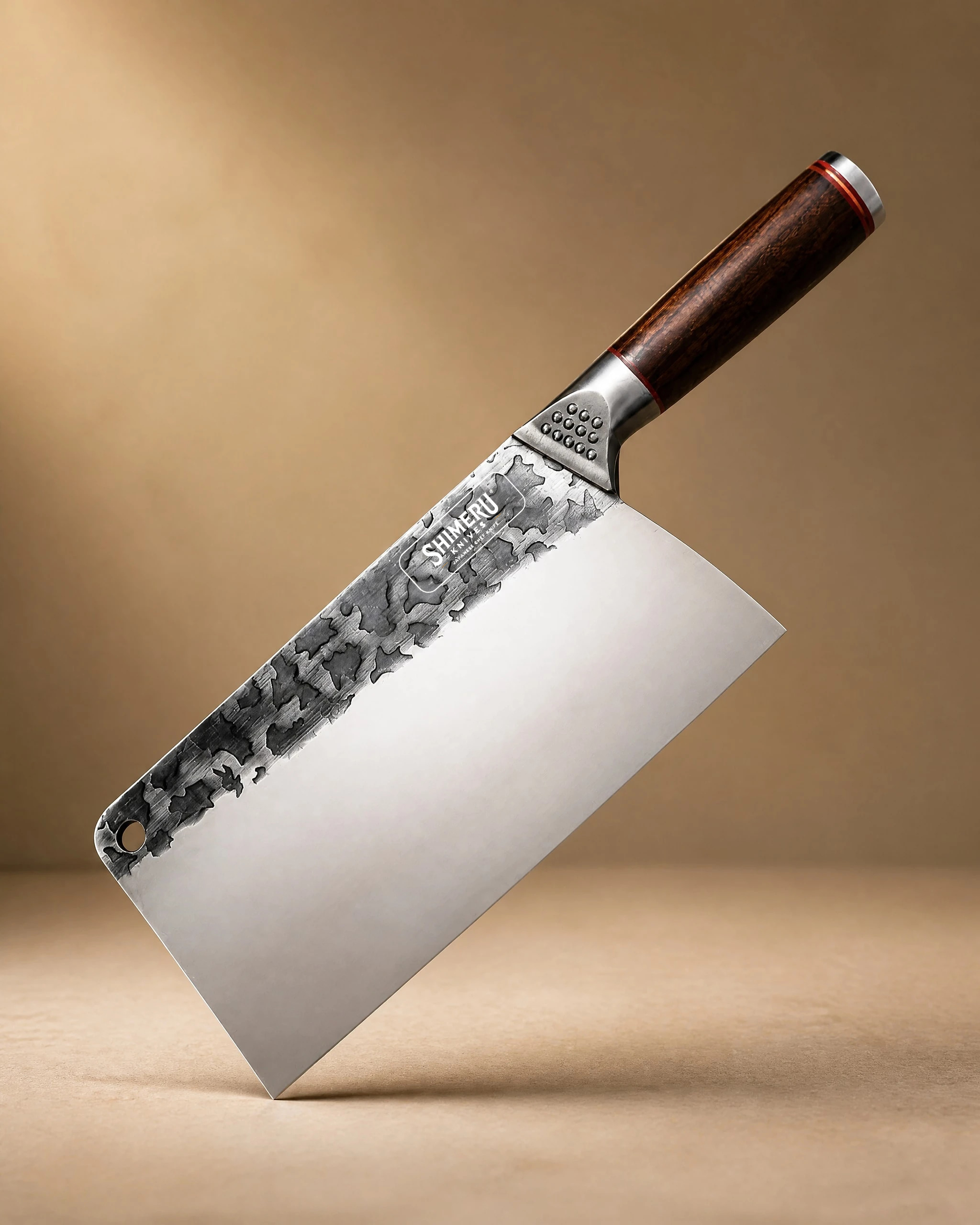 Saba 7" Stainless Steel Cleaver 中華包丁£44.99View product →, a magnetic strip can be easier to use because the cleaver simply rests against the magnet rather than sliding into a shallow slot.
There are also hybrid blocks that combine a magnetic panel with a slotted base. They can be useful if you have a mix of Japanese and Western knives, or if you want the flexibility to swap blades without changing the block. Hybrid designs are less common, so check the strength of the magnet and the depth of the slots before buying.
What to Look For in a Japanese Knife Block
The best block depends on how you cook and where you keep your knives. There are a few practical points to consider before buying.
- Blade slots that are smooth and wide enough for the spine, but not so wide that the edge knocks against the side.
- A stable base that does not tip over when you remove the largest knife from the block.
- Easy cleaning. Open magnetic blocks are easier to wipe down than deep slotted holes.
- A footprint that fits your counter and leaves enough space around the block for safe work.
If you prefer magnetic storage, check that the strip is strong enough to hold a heavy knife. A cleaver such as the Saba 7" Stainless Steel Cleaver 中華包丁£44.99View product → has a solid blade, so a weak magnet is a real risk. Equally, if you choose a slotted block, make sure the slot is deep enough to cover the full length of the blade. There is little point in a block that leaves the tip sticking out or the edge resting on the bottom.
Some blocks use angled slots to make knives easier to remove, but be careful with longer blades: an angled slot can cause the tip to scratch the side as you pull the knife out. A vertical slot is simpler and gives you more control.

How Many Knives Do You Actually Need?
A full matching set of Japanese knives looks attractive, but most home cooks need only three: a gyuto for everyday chopping and slicing, a vegetable knife for fine work, and a bread knife for crusty loaves. A cleaver is a useful fourth if you cook with large cuts of meat or regularly break down poultry.
The Akan 8'' Gyuto Knife 牛刀£49.99View product → will look after most of your daily prep, from meat and fish to vegetables and fruit. For bread, the 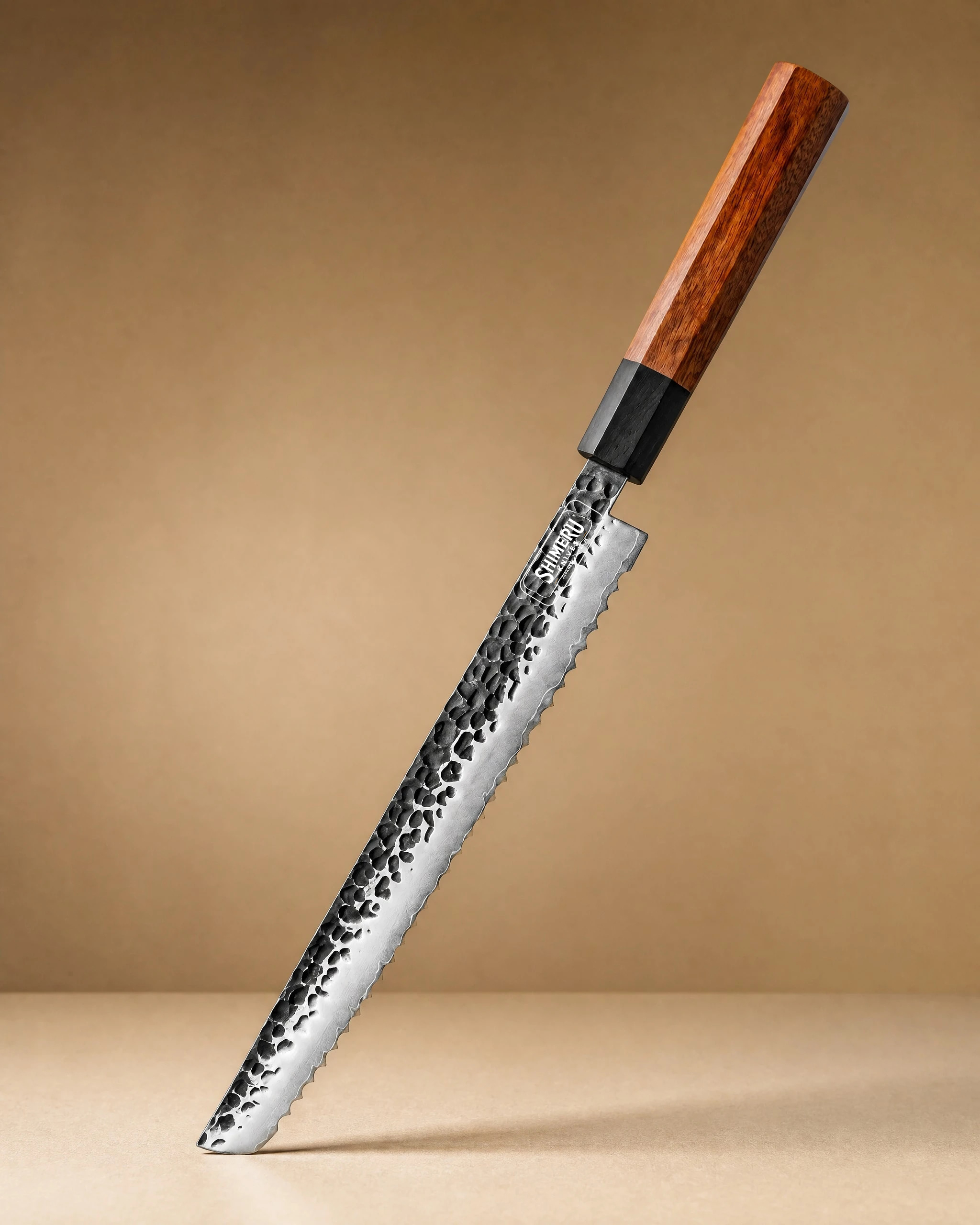 Rumoi 10" Japanese Bread Knife パン切りナイフ£59.99 · currently out of stockView product → has a long serrated edge that cuts cleanly through crusty artisan loaves and soft brioche without crushing them. If you already own a gyuto and a bread knife, you can build a small block around those two and add a vegetable knife later. The result is a knife block for Japanese knives that earns its place on the counter.
You might also want a small slicer for roasts, but that can wait until you have used a basic set for a few months. The point is to avoid paying for knives you will not use. A block with too many slots can tempt you into filling it, but a smaller set with well chosen knives is easier to look after and easier to store.
Knife Block Materials and Build Quality
The material of a knife block for Japanese knives affects both the look and the life of your blades. Wooden blocks are traditional and gentle on edges. Beech, walnut and oak are common choices. Bamboo is harder and more sustainable, but be careful with very hard Japanese steel: any dust or grit on the blade can cause fine scratches over time.
Magnetic blocks are usually made from stainless steel or wood with embedded magnets. They keep the blade visible and you can often fit more knives in a smaller footprint than a traditional block. Some magnetic blocks also allow you to store the knife flat on the side rather than upright, which can be easier for longer blades.
Drawer Storage and Wall Mounted Alternatives
Not every kitchen has room for a countertop block. A knife block for Japanese knives does not always need to sit on the worktop. In drawer blocks are a good compromise: they keep the blades separated and free up your counters. Wall mounted magnetic bars are another option, but make sure the mounting is secure and the bar is out of reach of children.
Whichever style you choose, the blade should never rest against metal or hard wood for long periods. Use a soft cloth liner or a knife guard if you are unsure. The goal is to protect the edge and to keep the blade dry and clean.
Knife Maintenance and Block Hygiene
Knife blocks can become a hiding place for crumbs, moisture and bacteria. Slotted blocks need occasional cleaning, but never submerge wood in water. Use a dry brush or a vacuum nozzle to remove debris. Magnetic blocks are easier to wipe down, but you should still check the magnet surface for grease and sticky residue.
In the same way, keep your knives dry before putting them back in the block. Water trapped in a slot can cause rust on high carbon steel, and even stainless steel benefits from a dry home. For more detail on looking after your blades, see our knife care guide.
A sharp knife is safer than a dull one. Store your knives dry and sharpen them regularly. A good sharpening system makes this easier. The 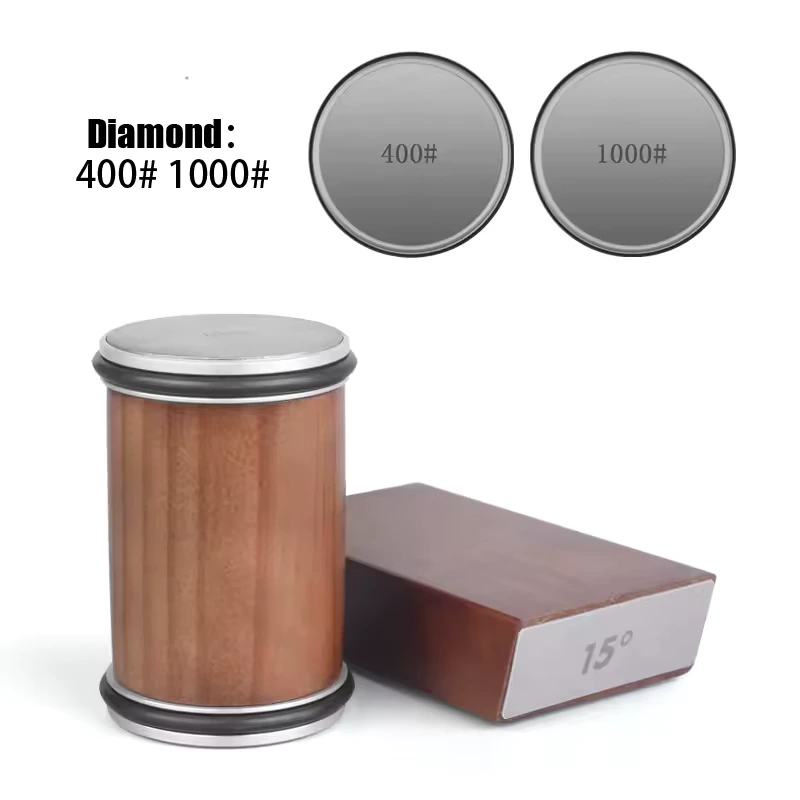 Magnetic Rolling Knife Sharpener£59.99View product → is a magnetic rolling sharpener that suits home cooks who want a quick edge without learning freehand sharpening. It is not a substitute for a whetstone, but it is a practical way to keep a daily knife in good shape. If you need help deciding which knives to keep in your set, you can browse all of the blades in our knife shop.
Keep the block away from direct heat and steam. The oven, hob or dishwasher can cause wood to crack and metal to develop rust. Even if the block is stainless steel, the knives themselves will fare better in a dry, cool place.
Which Japanese Knife Block Should You Choose?
There is no single best knife block for Japanese knives. The right choice balances practicality, counter space and the knives you already own. If you want quick access and easy cleaning, a magnetic strip or magnetic block is the most convenient option, especially for a cleaver or a wide-bladed knife. If you prefer a traditional look and a fixed home for every knife, a slotted wooden block with smooth, deep slots will protect your edges and keep the block tidy.
Think about the knives you reach for every day. For most cooks, a gyuto, a cleaver and a bread knife are enough. Start with the knives you cook with most, choose a block that fits them, and remember to keep the block dry and clean. That is the best way to make sure your Japanese knives stay sharp and ready for years of use.
Photography: Richard Iwaki via Unsplash.


