









Whetstone for Garden Tools
Why a sharp garden tool matters
Gardening is often a battle against the elements and the clock. You spend hours preparing beds, pulling weeds, and pruning back growth. If your secateurs or shears are dull, every cut becomes a struggle, and the plants suffer for it. A whetstone for garden tools is one of the simplest pieces of kit you can own. It does not need batteries, it does not need electricity, and it can bring an old blade back to life with a little patience.
A dull blade does not slice through a stem; it crushes it. That crushed tissue becomes an open wound, a place where fungi and bacteria can get a foothold. A sharp blade leaves a clean cut, which heals faster and keeps the plant healthy. Sharp tools also make the work easier on your hands. You do not have to bear down on the handles or twist the blade. The tool does what it is meant to do.
Using a whetstone is not difficult, but it does require a steady hand and a feel for the angle. Once you learn the basic movement, you can sharpen everything from a pair of loppers to a lawn edger. The same stone will also keep your kitchen knives in good order, which is why we recommend having one in the house as well as the shed.
Choosing a whetstone for garden tools
Whetstones are made in a range of grits, just like sandpaper. The grit number tells you how coarse the abrasive is. The lower the number, the coarser the stone. For garden tools, you need at least two levels of grit, one to repair a damaged edge and one to refine it.
A coarse grit, somewhere between 300 and 600, is useful where a blade has nicks or has been badly neglected. It removes metal quickly and reshapes the edge. A medium grit, from 800 to 2000, is the workhorse. It gives a garden tool a solid, long lasting edge and is the one you will reach for most often. A fine grit, 3000 and above, polishes the edge to a sharp finish. For most garden tools, a fine grit is a luxury rather than a necessity, but it is pleasant to finish with.
Many whetstones are sold as combination stones, with a coarse side and a fine side in one block. That is a good choice for a first stone. You get two grits for the price of one and you do not need to store two separate slabs. Look for a stone around 20 cm long. That gives you enough room to draw the blade across in a smooth motion without overrunning the edge. Some stones need to be soaked in water before use, usually for five to ten minutes. Others are splash and go, so you simply wet the surface. Read the label before you buy and be honest about how patient you are. If you want to get straight to work, a splash and go stone is the easier option.
Do not use oil on a water stone. It will clog the pores and make the stone useless. If you prefer oil stones, they are a separate tool entirely, and they are less common these days. For the home gardener, a water stone is the best mix of value and performance.

How to sharpen your garden tools with a whetstone
Before you start, clean the blade thoroughly. Sap, resin, and dried mud will clog the stone and leave scratches. Wipe the blade with a damp cloth and, if it is very sticky, use a little warm soapy water. Let it dry. This also gives you a chance to look at the edge. If you see nicks or rolled spots, you will need the coarse side. If the edge is simply dull, the medium side will do.
Soak the stone if it needs it, then place it on a damp cloth or a non slip mat so it does not move around. The stone should sit on a stable surface at a comfortable height. You want to be able to see the bevel clearly and move your arms freely.
Find the bevel angle. Most garden tools are sharpened at around 20 degrees. Hold the blade against the stone at that angle. A good way to find it is to place the blade flat on the stone and then lift the spine until you feel the bevel sit flush. It should contact the stone across the whole face of the bevel, not just at the edge or the shoulder.
Now draw the blade across the stone. Start at the base of the blade and sweep to the tip, or use a circular motion, whatever feels natural. The important thing is to keep the angle constant. Use a light, steady pressure. The stone does the cutting; you are just guiding the edge across it. After a few strokes, feel the edge. You should see a small burr on the opposite side, a tiny lip of metal that has been pushed over. That tells you you have worked the edge enough. Turn the blade over and repeat the same number of strokes on the other side. Work until you can feel an even burr once more, then use a few lighter strokes on each side to knock it off. Test the blade on a stem or a piece of paper. If it cuts without tearing, you are done.
Do not try to sharpen a huge lawn mower blade on a small whetstone. A whetstone is ideal for hand tools, but for a rotary mower blade you are better off with a grinder or a file. Use the whetstone for secateurs, loppers, shears, knives, and any tool where you can hold the blade still and move the edge across the stone.
Caring for your whetstone
A whetstone will last for years if you look after it. Rinse it with water after every use. This washes away the metal particles and grit that settle into the surface. Let it dry fully before you put it away. You should also flatten the stone from time to time. The surface will wear into a slight hollow, and a hollow stone will not give you an even, consistent edge. A lapping plate is a flat abrasive plate that you rub over the stone to bring it back to level. You do not need to do this every week, but every few months, depending on how often you use the stone, is wise.
Keep the stone somewhere dry and protected. A wooden stand is not essential, but it does keep the stone off your worktop and gives you a grip while you sharpen. If you want to know more about looking after cutting edges, our knife care guide covers the same principles in the context of kitchen knives.
From garden tools to kitchen knives
The skill you learn with a whetstone in the garden transfers directly to the kitchen. The same grip, the same angle, the same light pressure. If you have already sharpened your secateurs, you are most of the way to sharpening a chef's knife. It is a satisfying skill to have, because it saves you money and keeps your tools in good condition.
You might find that you do not want to use your garden stone in the kitchen. That is reasonable. Even with thorough cleaning, you never quite get the smell of the shed out of the stone. It is better to have a separate stone for the house, or to use a quick and convenient sharpener for day to day kitchen tasks. For that job, a magnetic rolling sharpener like 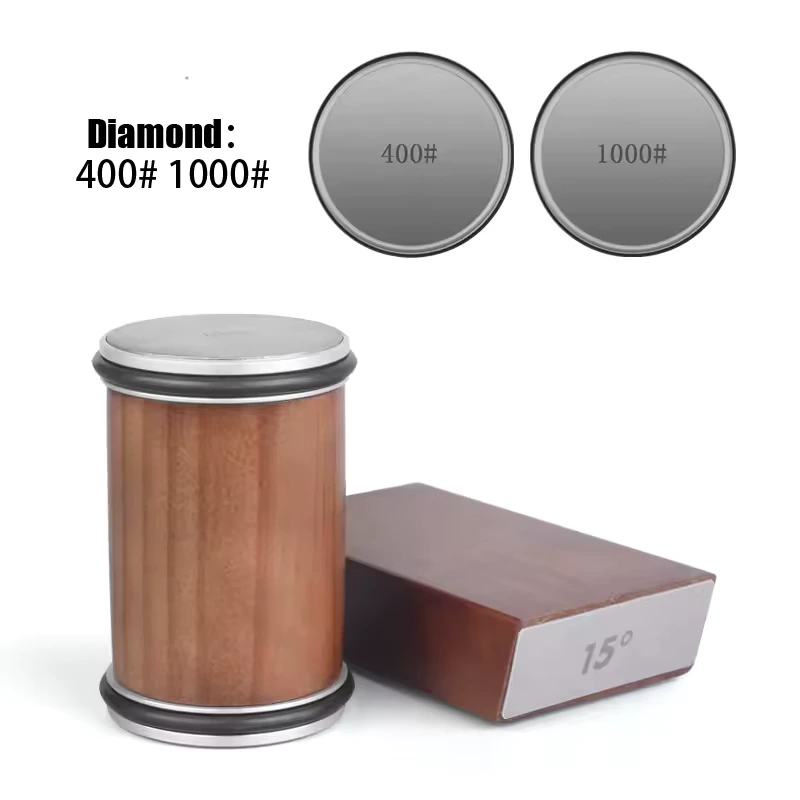 Magnetic Rolling Knife Sharpener£59.99View product → is a simple tool. You run the blade through a few times and it restores a working edge without any fuss. It is not a replacement for a whetstone, but it is a useful complement.
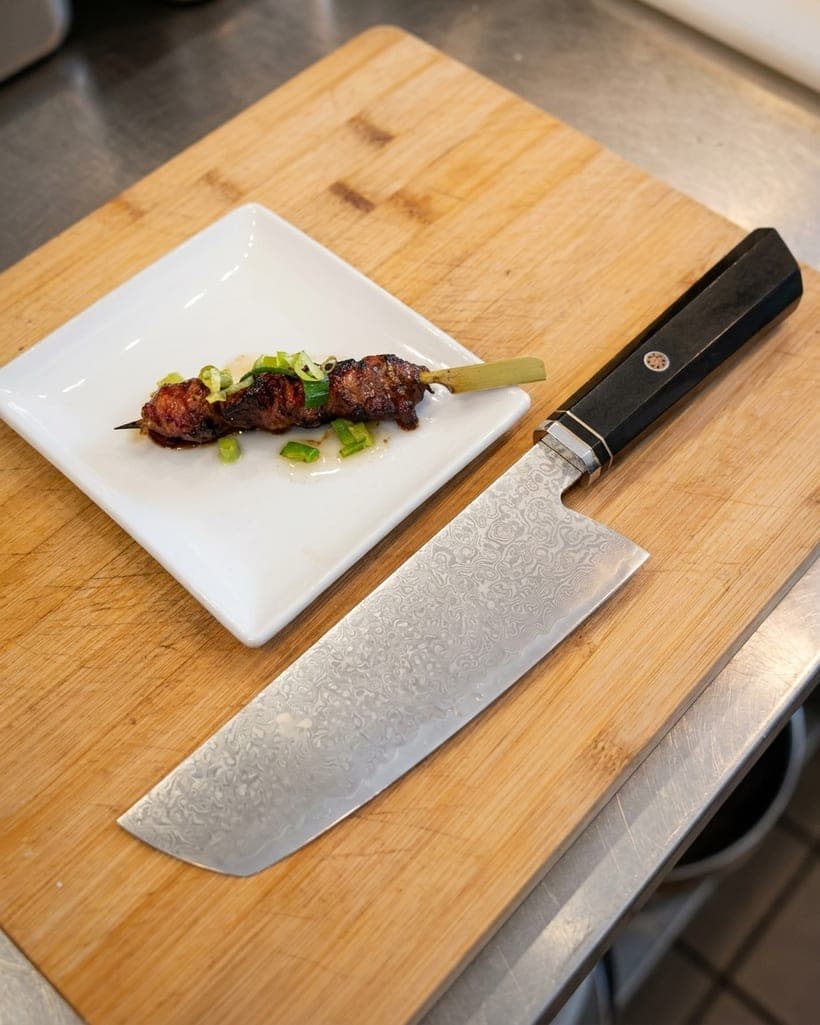
If you are in the market for a new kitchen knife, a whetstone is a good investment to go with it. A knife that is easy to sharpen will serve you well. For a sturdy option that handles meat and vegetables, consider 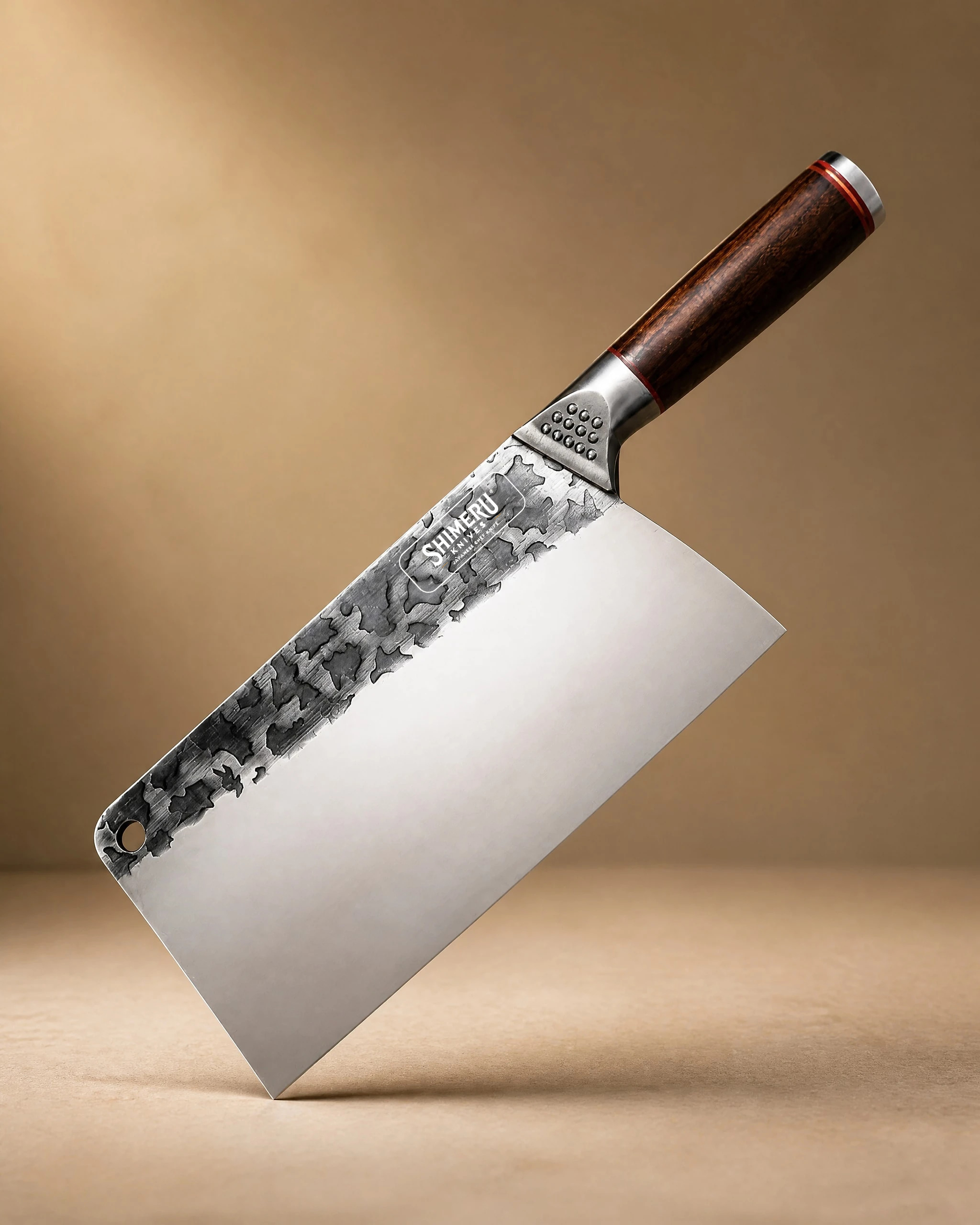 Saba 7" Stainless Steel Cleaver 中華包丁£44.99View product →. Its stainless steel blade holds an edge and is easy to maintain. For something more specialised,
 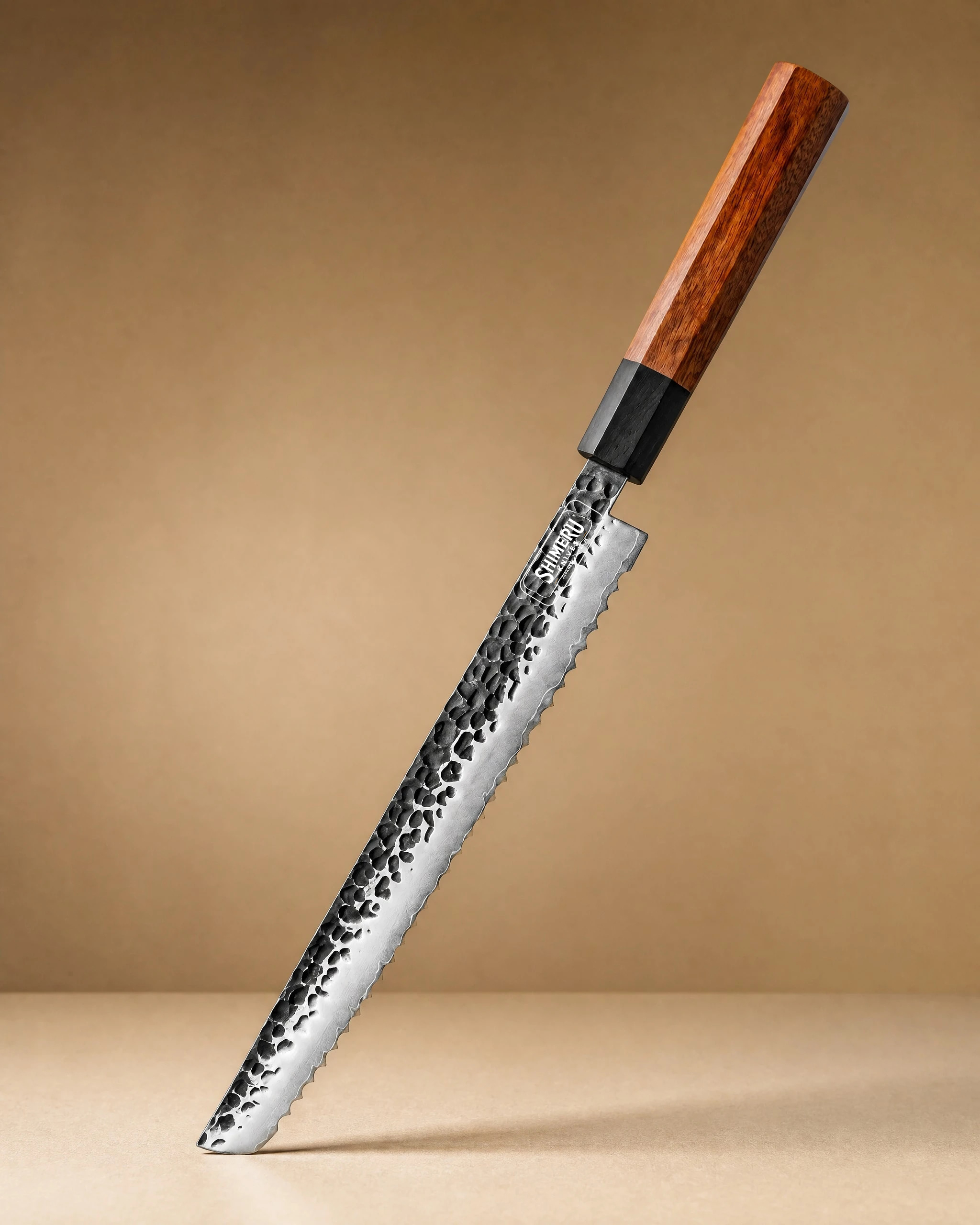 Rumoi 10" Japanese Bread Knife パン切りナイフ£59.99 · currently out of stockView product → is a bread knife that cuts through crusty artisan loaves and soft brioche without tearing them. Whichever knife you choose, a regular sharpening routine will keep it performing.
You can see all of the knives we offer on our product pages. If you are still deciding what to buy, our knife guide will help you match the blade to the task.
A last note on keeping an edge
Sharpening is a practical skill, and like any skill, it improves with practice. The first time you use a whetstone, you may not produce a razor edge, and that is fine. The important thing is to keep the angle steady and use light pressure. Once the technique clicks, you will be able to sharpen a tool in a few minutes.
Get into the habit of touching up your garden tools before each session. A couple of strokes on the stone will bring back an edge that has dulled through use. This keeps the work easy and the plants healthy. The same is true in the kitchen. A quick sharpen before a big cooking session makes prep faster and safer.
A whetstone for garden tools is not an exciting purchase, but it is one of the most useful. With one stone, a little time, and a calm hand, you can keep every blade on the property sharp. That is a satisfying thing to be able to do.

