





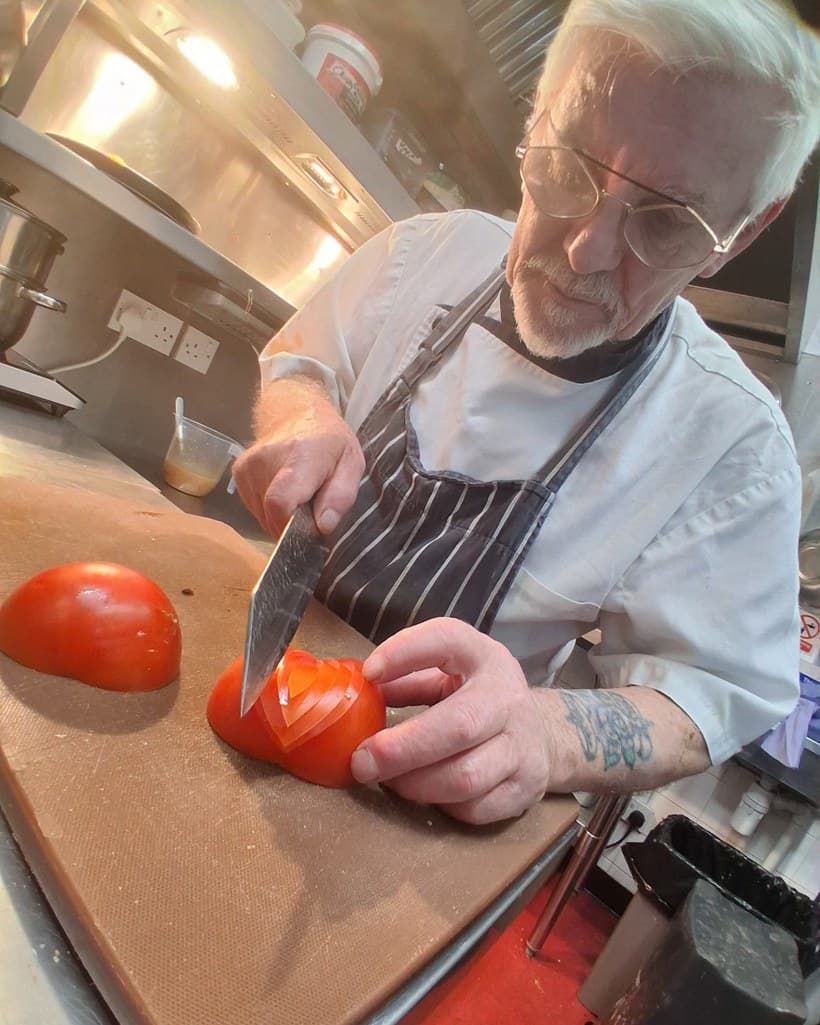
What Is a Gyuto Knife Used For

What Is a Gyuto Knife?
The gyuto knife, often referred to as a Japanese chef's knife, is the most versatile blade in a Japanese kitchen. Its name translates to 'cow sword', reflecting its origins in the Meiji era when Japan opened to Western cuisine and needed a knife capable of handling larger cuts of meat. Today, the gyuto is the go to knife for professional chefs and home cooks alike. With a curved edge and a pointed tip, it excels at a rocking motion for chopping and slicing, much like a Western chef's knife, but it typically has a thinner blade and harder steel for exceptional sharpness.
The gyuto emerged as a response to the introduction of beef and other large Western ingredients into Japanese cooking. Prior to that, traditional Japanese knives like the deba (for fish) and nakiri (for vegetables) were specialised. The gyuto bridged the gap, offering a single blade that could handle everything from meat to vegetables. Its length, usually between 20 cm and 24 cm, gives it the reach needed for slicing large roasts while remaining nimble enough for precise cuts on vegetables. The edge geometry is typically a double bevel (ground on both sides), making it ambidextrous, unlike single bevel Japanese knives. This design makes the gyuto accessible to anyone, regardless of handedness.
Key Uses of a Gyuto Knife
A gyuto knife is designed as an all purpose blade. Its shape and edge geometry make it suitable for a wide range of ingredients. Below are the primary tasks where a gyuto shines.
Meat and Poultry
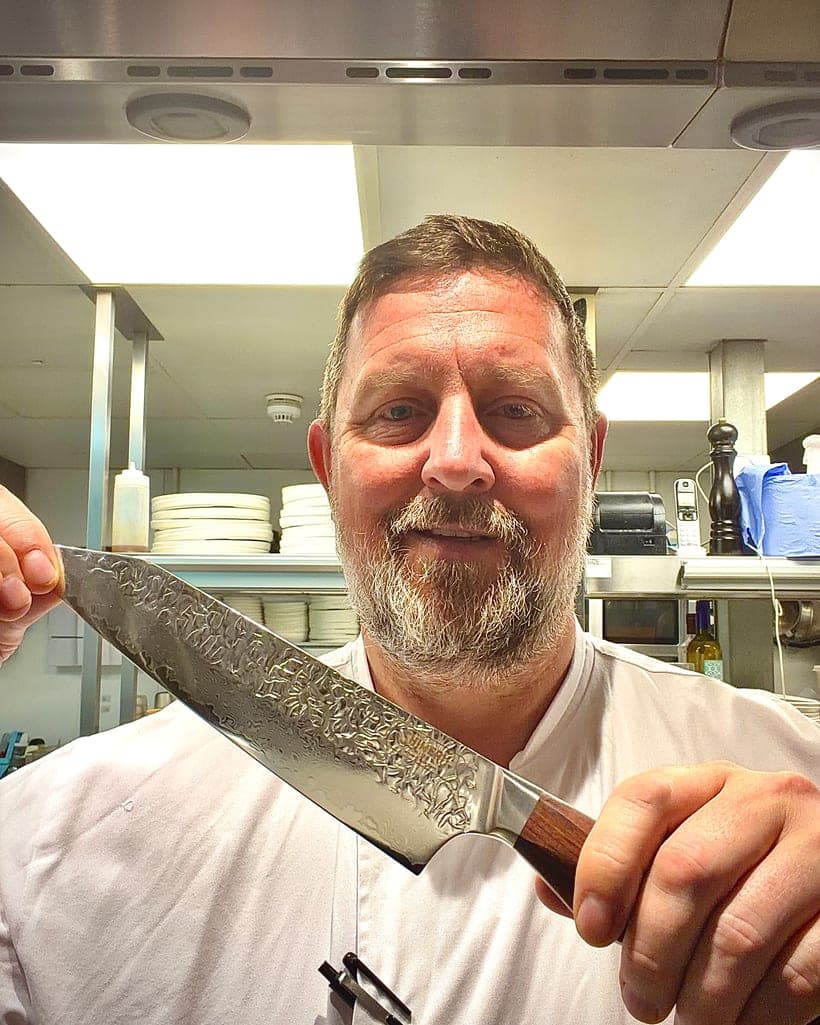
The gyuto's long, sweeping blade can slice through large roasts, steaks, and poultry with ease. Its thin edge reduces resistance, making clean cuts that preserve the texture of the meat. For breaking down a whole chicken or carving a roast, the gyuto offers precise control. A 21 cm (8 inch) gyuto like the 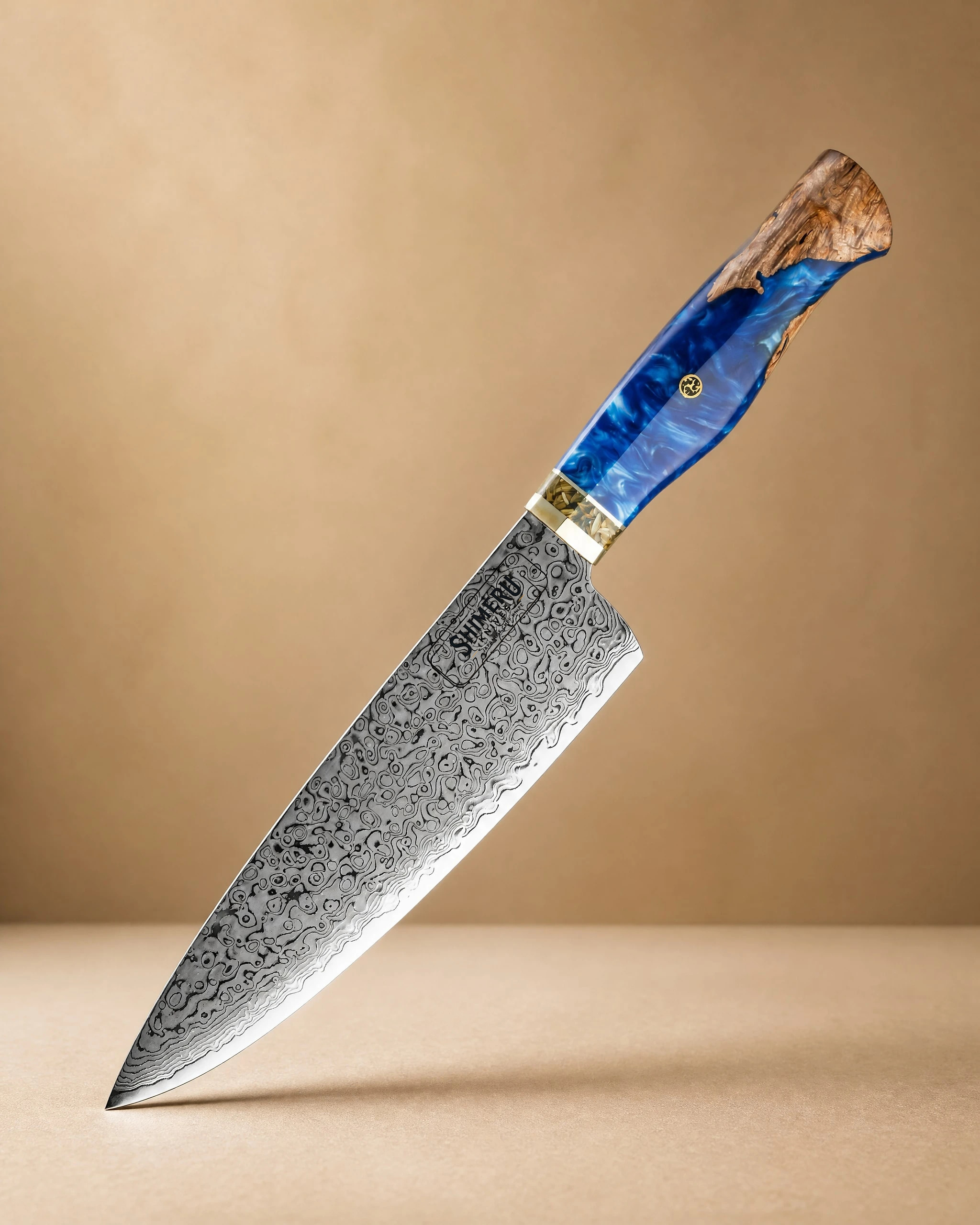 Yamato 8" Damascus Steel Gyuto Knife 牛刀£84.99 · currently out of stockView product → provides the length needed to cut through thick cuts without dragging. The Damascus steel layers in this knife add strength and a non stick quality, reducing friction as you slice. The Blue resin and natural burlwood handle offers a secure grip, even when your hands are greasy from handling meat. For boneless cuts, the gyuto's thin profile allows you to trim fat and silver skin with ease. However, avoid using the gyuto to chop through bones; the hard steel can chip. Use a cleaver or heavy knife for that task.
Vegetables and Fruit
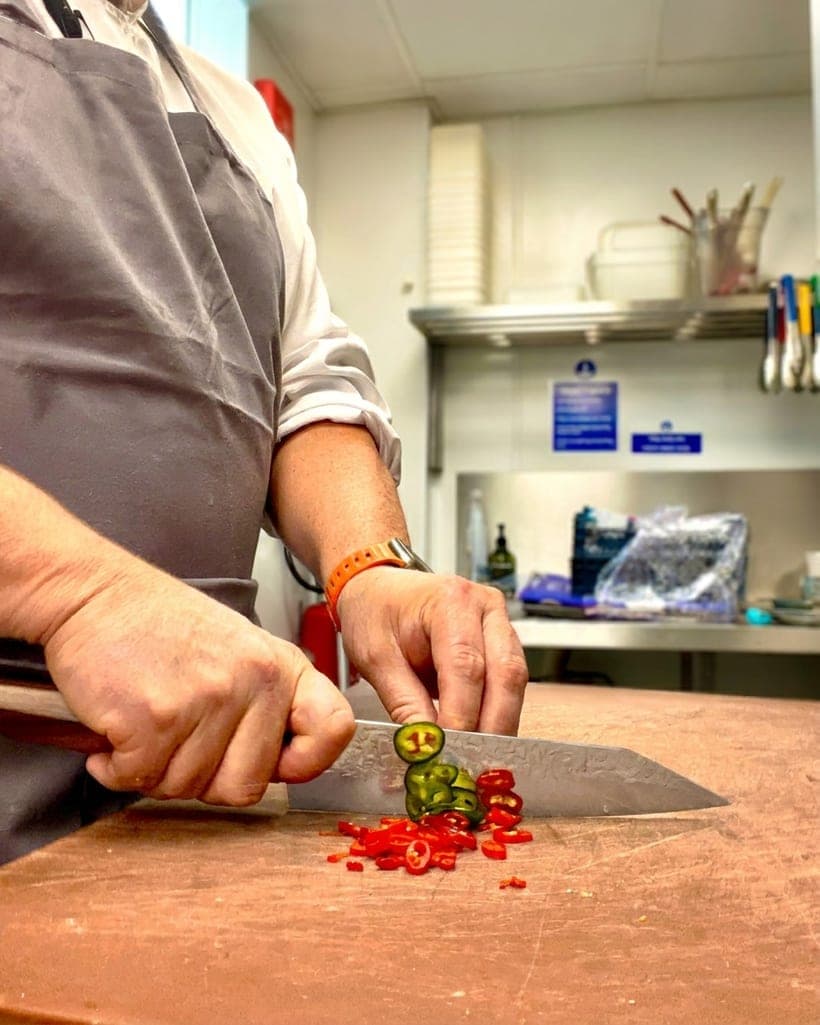
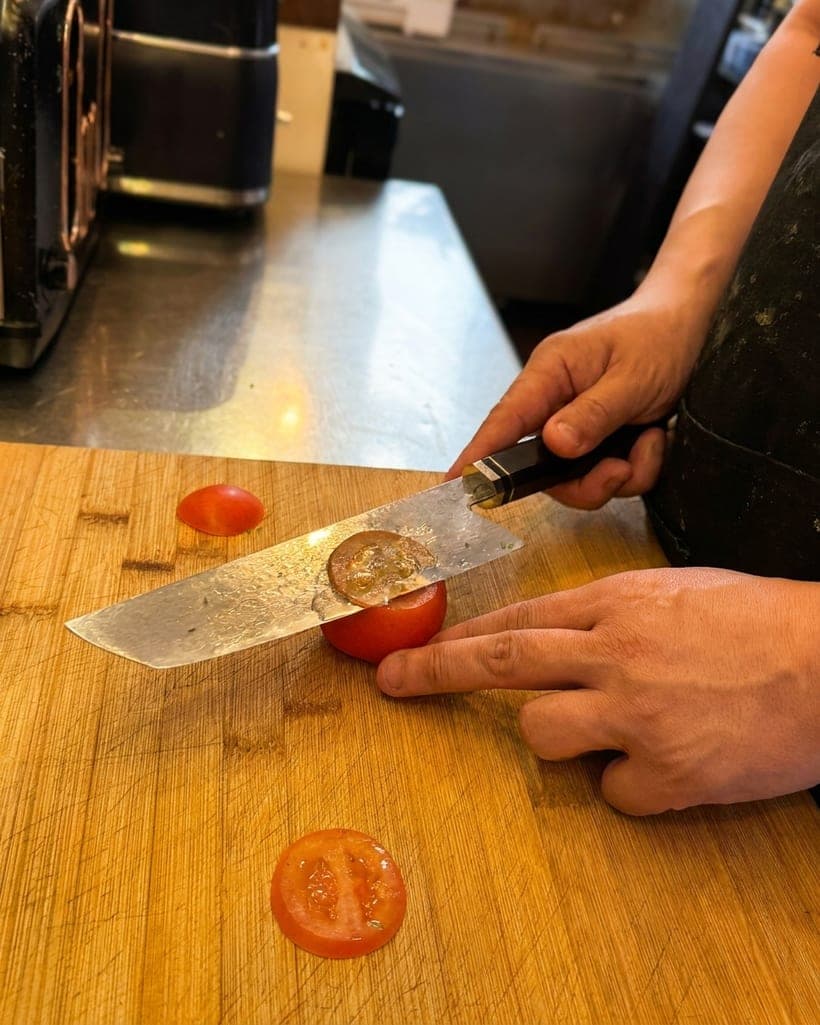
The same knife that handles meat also excels at vegetables. The gyuto's fine edge cleanly slices through tomatoes, peppers, and onions, while the belly allows for a comfortable rocking chop when mincing herbs or garlic. Many cooks find that the gyuto is their first choice for preparing vegetable heavy dishes. For example, the 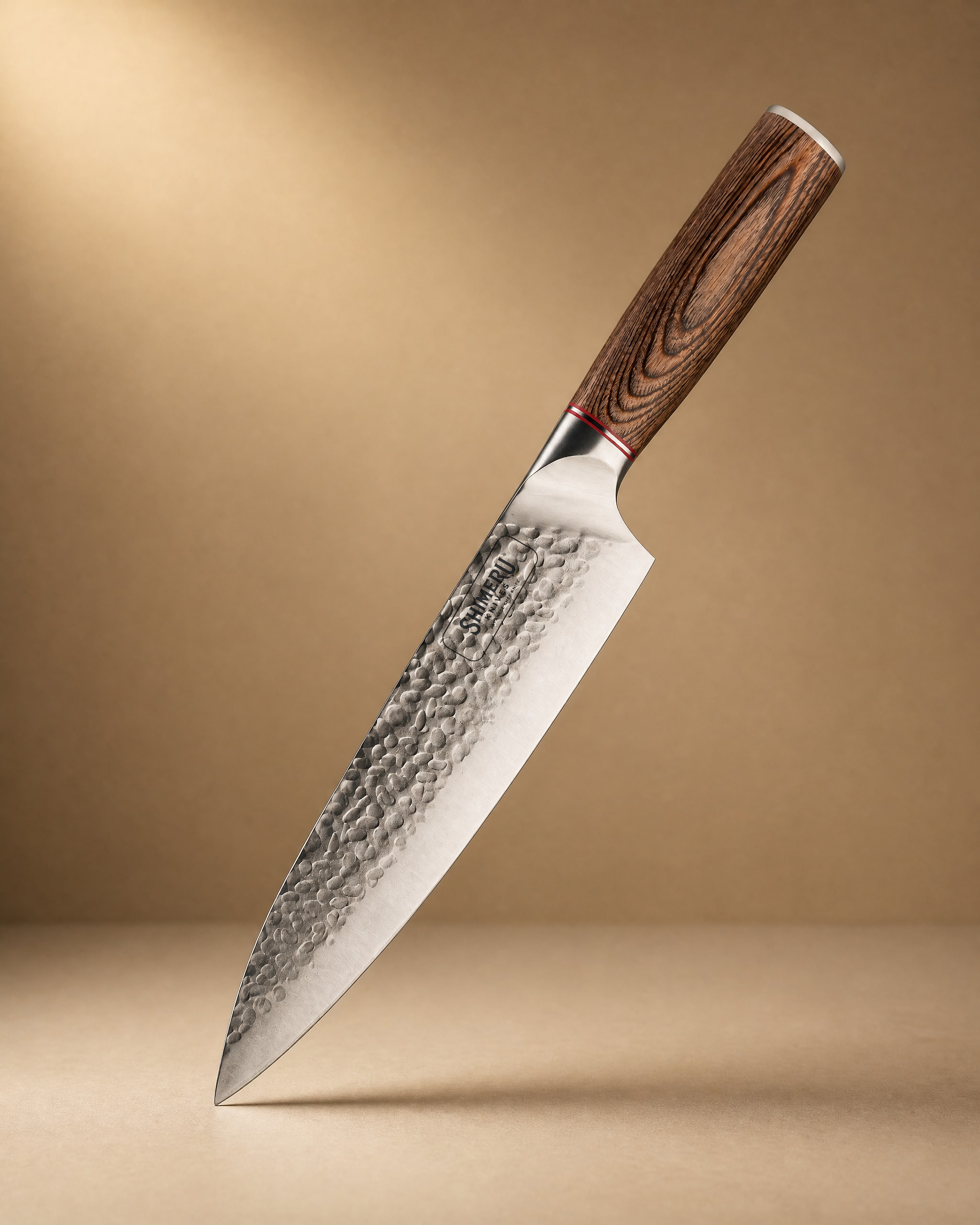 Akan 8'' Gyuto Knife 牛刀£54.99 · currently out of stockView product → is a stainless steel gyuto that works beautifully on everything from carrots to citrus. Its Pakkawood handle is durable and water resistant, making it easy to maintain in a busy kitchen. The stainless steel blade resists corrosion, so you can cut acidic fruits like lemons without worry. The balanced weight of this gyuto (typically around 200 grams) makes it comfortable for extended prep sessions.

Fish and Seafood
While specialised knives exist for fish (such as the yanagiba), a gyuto can certainly handle filleting smaller fish and slicing fillets. The thinner grind of a gyuto reduces friction and prevents delicate fish flesh from tearing. Just be cautious with bones: a gyuto's hard steel can chip if you cut through thick bone, so use a heavier knife for that task. For salmon fillets or trout, a gyuto's long blade can make clean, single stroke slices. The pointed tip also helps when removing pin bones. After use, rinse the blade immediately to avoid fish odours lingering. A stainless steel gyuto like Akan 8'' Gyuto Knife 牛刀£54.99 · currently out of stockView product → is particularly good for fish due to its corrosion resistance, but a carbon steel gyuto can also be used if dried thoroughly.
Herbs and Delicate Ingredients
A gyuto's sharp tip makes it perfect for chiffonade of basil or fine dicing of shallots. The ability to rock the blade back and forth with minimal effort means you can chop herbs quickly without bruising them. Many chefs reach for a gyuto for any task that requires precision. The curved edge allows a continuous rocking motion, keeping the blade in contact with the cutting board for efficient chopping. For garlic, the flat part of the blade near the heel can be used for crushing before mincing. The gyuto's versatility truly shines when you move from one ingredient to the next without switching knives.
How to Use a Gyuto: Techniques and Tips
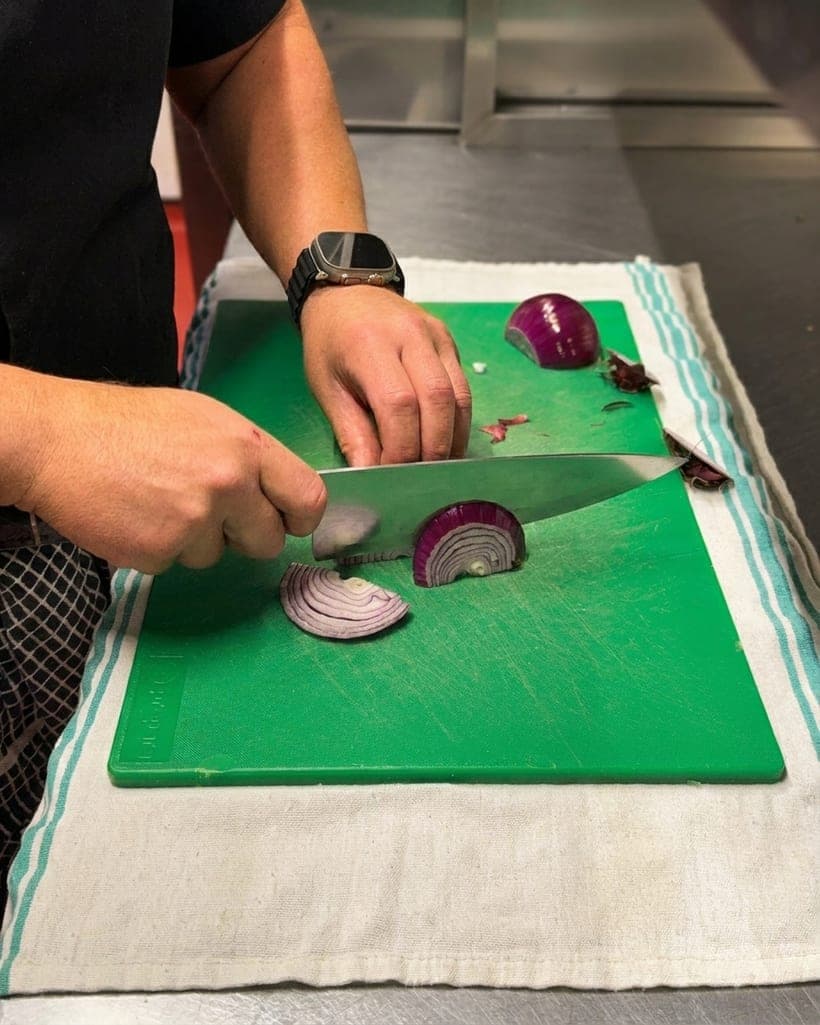
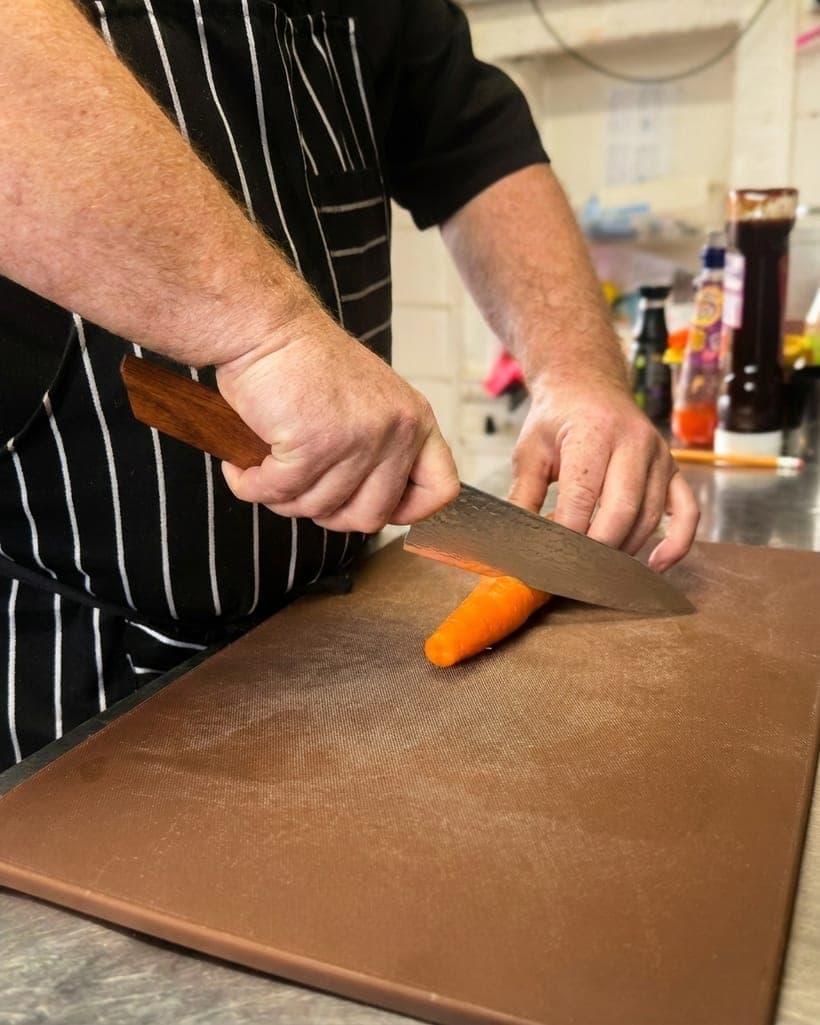
Using a gyuto effectively involves a few key techniques. The most common is the rocking chop: place the tip of the blade on the cutting board and rock the handle up and down while moving the blade forward. This motion is ideal for herbs and small vegetables. For slicing, use a pull cut: draw the blade backwards through the ingredient while applying slight downward pressure. This preserves the edge and produces clean cuts. When dicing onions or large vegetables, use a claw grip on the ingredient and a pinch grip on the blade (index finger and thumb holding the blade just above the handle) for maximum control. The gyuto's thin blade means you can cut with less force, reducing fatigue. Always use a sharp knife; a dull gyuto is more dangerous because it requires extra pressure and can slip.
How Does a Gyuto Compare to Other Knives?
The gyuto is often compared to the Western chef's knife. Both are general purpose blades, but a gyuto is usually lighter, thinner, and harder. This allows for sharper edges that hold better, but the steel is also more brittle, so you should avoid twisting the knife or cutting through bones. Another common comparison is with the santoku. A santoku has a shorter blade (typically 17 18 cm) and a less curved edge, making it less suited for rock chopping. The gyuto's longer blade and pronounced curve give it an edge for larger ingredients and sliding motions. The gyuto also performs well with a push cut (straight down through the ingredient) because of its fine edge. For those who prefer a lighter, more agile knife, a santoku might be better. But for overall versatility, the gyuto wins. If you are new to Japanese knives, the gyuto is an excellent starting point. Its versatility covers almost everything you need in the kitchen, from vegetables to meat. For a deeper understanding of how to choose a knife, read our knife guide.
Choosing the Right Gyuto for You
When selecting a gyuto, consider the steel type, handle material, and blade length. Stainless steel gyutos like the 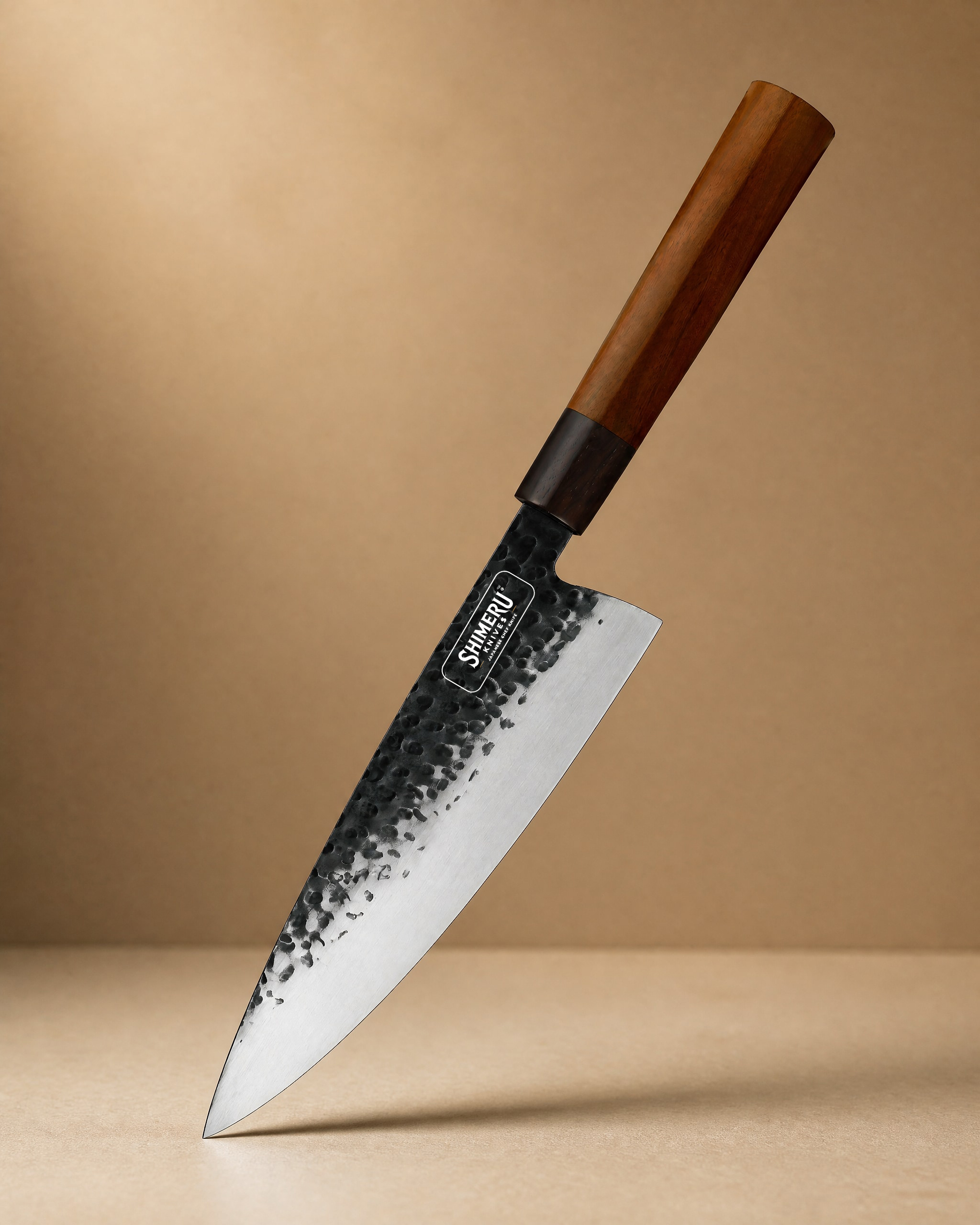 Tokachi 8.5" Gyuto Chef Knife 牛刀£64.99View product → offer easy maintenance and good edge retention, making them ideal for busy kitchens. The Mkuruti wood handle on this model provides a warm, natural feel and excellent grip, even when wet. The stainless steel composition (typically VG 10 or similar) resists rust and staining, so you can focus on cooking rather than constant care. This gyuto is well suited for home cooks who want low maintenance with high performance. Its 8.5 inch blade gives extra length for slicing large roasts or watermelons.
Damascus steel gyutos, such as the 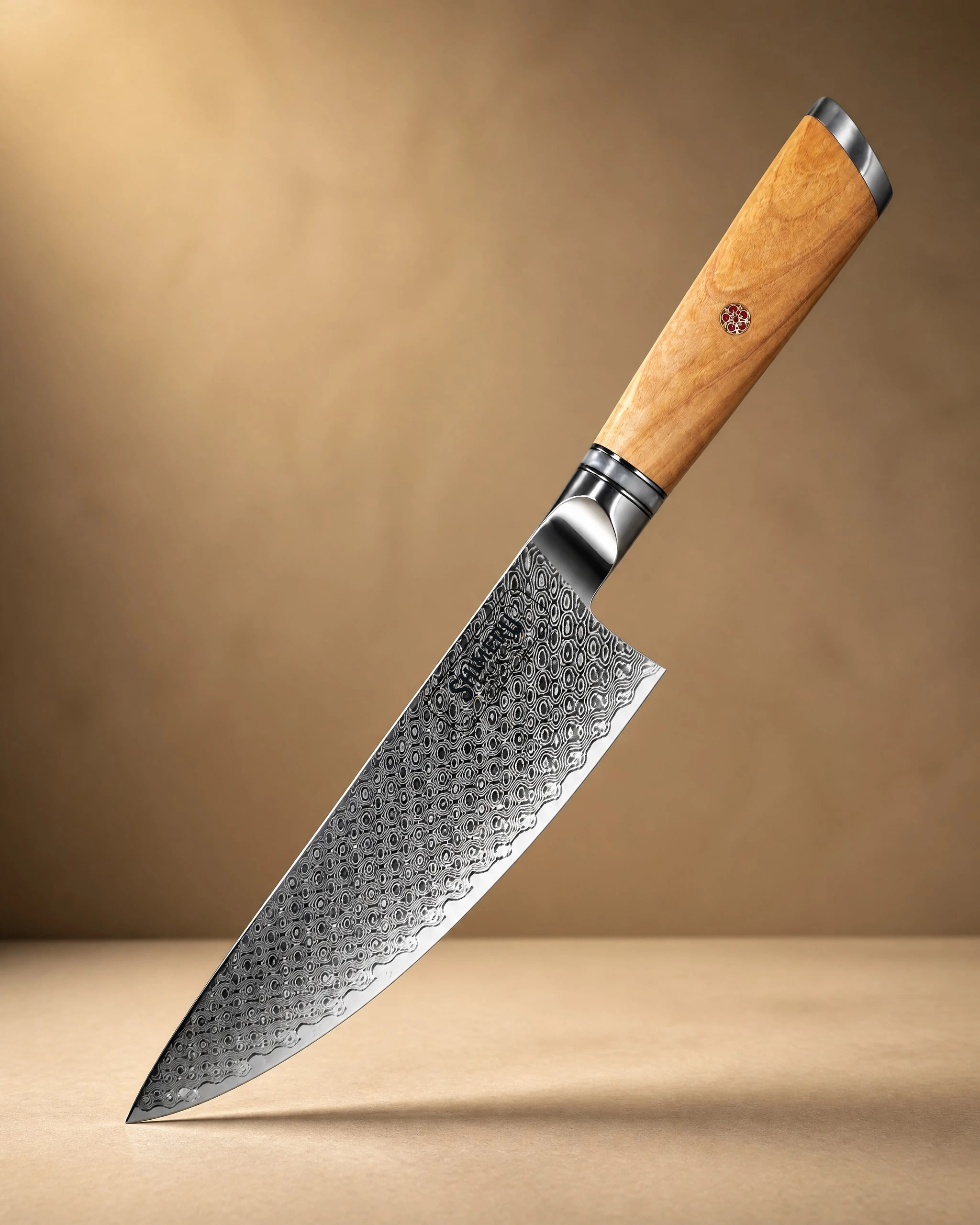 Maruyama 8'' Damascus Steel Gyuto Knife 牛刀£84.99View product →, provide both beauty and performance, with multiple layers that create a stunning pattern and a hard core for exceptional sharpness. The olive wood handle is both attractive and ergonomic, moulding to your hand over time. The 73 layers of Damascus steel not only look beautiful but also improve edge stability by reducing the risk of chipping. This knife is ideal for enthusiasts who appreciate fine craftsmanship and are willing to put in a little extra care, such as hand washing and occasional oiling of the handle. The olive wood adds natural oils that resist moisture, but you should still dry it thoroughly.
Blade length is also key. An 8 inch (20 cm) gyuto is the most common size, suitable for most tasks. An 8.5 inch (21.5 cm) gives a little extra reach, helpful for larger ingredients. For those with small hands or limited counter space, a 7 inch gyuto exists but is less common. Weight also matters: lighter gyutos (under 200g) are nimble for precision work, while heavier ones (220g+) provide more momentum for tough cuts. The Yamato 8" Damascus Steel Gyuto Knife 牛刀£84.99 · currently out of stockView product → with its Damascus steel and burlwood handle offers a balanced weight that feels substantial yet agile. Consider your typical tasks: if you cut a lot of dense vegetables, a heavier knife may suit you. If you do intricate work, a lighter knife is better. Explore our full range of gyuto knives in the gyuto category.
Caring for Your Gyuto Knife
A gyuto's hard steel can chip if misused. Always use a wooden or synthetic cutting board, never glass, stone, or ceramic. Wash by hand with mild soap and dry immediately; do not leave it in the sink or dishwasher. Regular honing with a fine ceramic rod or a whetstone will maintain the edge. For long term care, see our knife care guide. Proper maintenance will keep your gyuto performing for decades. If you have a carbon steel gyuto, wipe it dry after every use and apply a thin coat of mineral oil to prevent rust. Stainless steel models require less vigilance but still benefit from regular care. Store your gyuto in a knife block, on a magnetic strip, or with a blade guard to protect the edge. Never store it loose in a drawer where it can knock against other utensils. With consistent care, your gyuto will remain razor sharp and a joy to use.
Who Should Buy a Gyuto?
The gyuto is the ideal first Japanese knife for anyone who cooks at home. Its versatility means you can replace several Western knives with one quality blade. Professional chefs also rely on gyutos for their precise cuts and edge retention. If you are a home cook who values efficiency and enjoys preparing a variety of ingredients, a gyuto will streamline your kitchen workflow. For those who specialise in vegetable prep, a nakiri might be better; for fish, a yanagiba. But for all round performance, the gyuto remains the top choice. The gyuto is a true workhorse in the kitchen. Whether you are dicing onions, slicing steak, or filleting a fish, this knife handles it all with precision. Its balanced design and exceptional sharpness make it a joy to use. If you are ready to invest in a quality Japanese knife, a gyuto is the most practical choice.
Photography: Joseph Van via Unsplash.

