

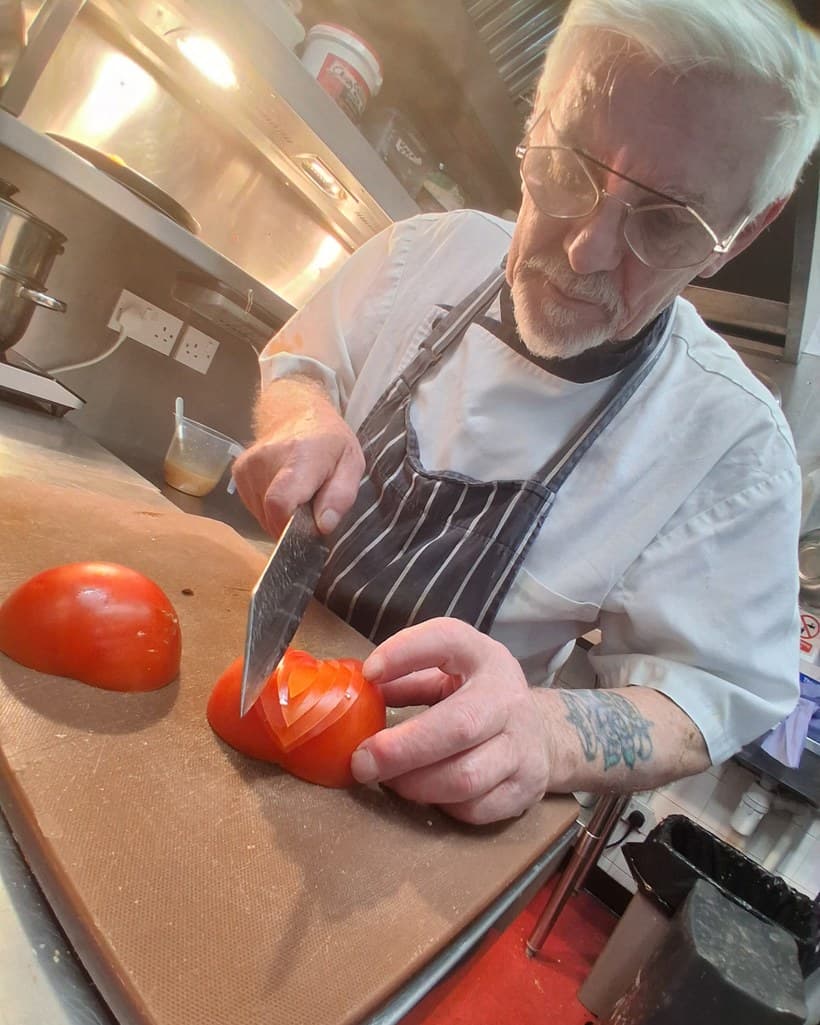
How to Sharpen a Knife on a Whetstone

A sharp knife is a safe knife. It cuts cleanly with minimal force, reducing the risk of slipping and injury. Over time, every blade dulls, but restoring that edge is a skill every cook should master. The most effective tool for the job is a whetstone, also known as a water stone or sharpening stone. This guide will teach you how to use a whetstone knife sharpener to bring your blades back to life, whether you are a home cook or a professional.
Why Use a Whetstone?
Sharpening a blade with a stone is the oldest, most versatile method. Unlike pull-through sharpeners that remove steel aggressively and often unevenly, a whetstone knife sharpening stone gives you control over the angle and amount of metal removed. With practice, a whetstone can produce a razor edge that lasts longer. Using a sharpening stone to sharpen knives also allows you to maintain the original geometry of the blade, which is essential for high-quality knives. Whether you use a natural whetstone sharpening stone or a synthetic one, the principle remains the same: abrasive particles grind away dull metal to expose a fresh edge. The feel of the stone against the steel also provides feedback that helps you adjust your technique in real time.
What You Need
Before you start, gather the following items:
- A whetstone (medium grit around 1000 is ideal for sharpening, with a finer grit 3000 to 6000 for polishing).
- A shallow dish of water for soaking the stone (if it is a water stone).
- A non-slip base or damp towel to hold the stone steady.
- A towel for drying the knife and stone.
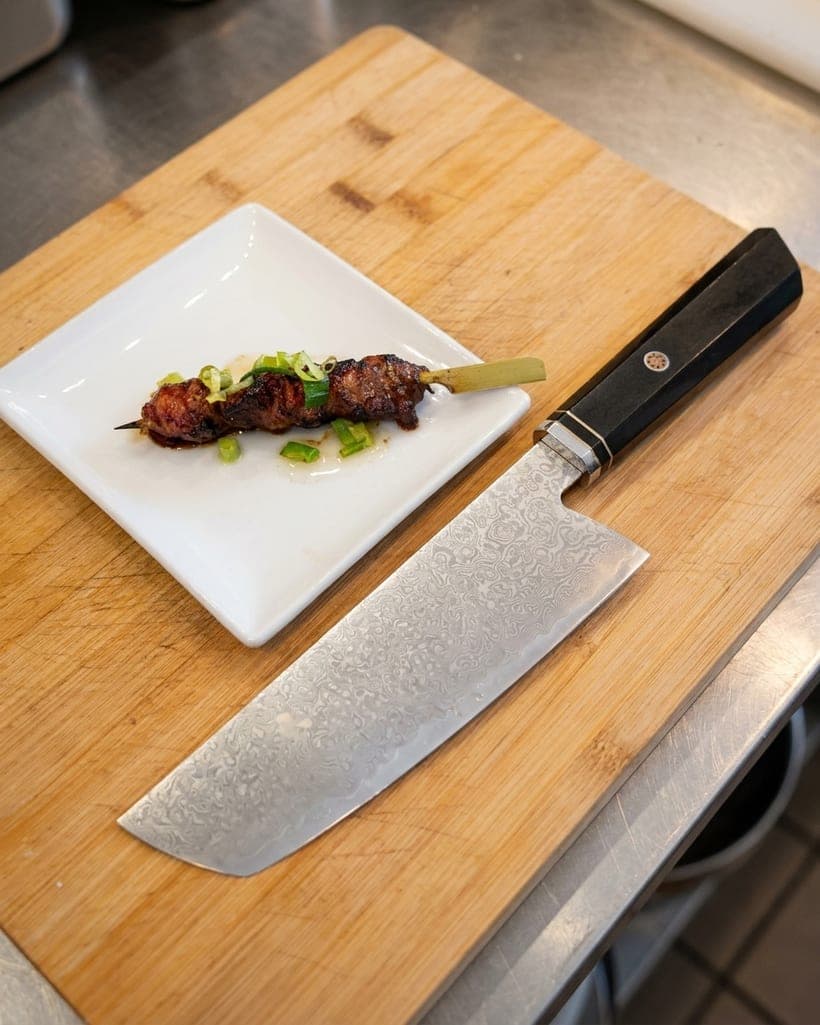
- A knife to sharpen. For this guide, we will use a general-purpose chef's knife. For a thicker blade like the Saba 7" Stainless Steel Cleaver
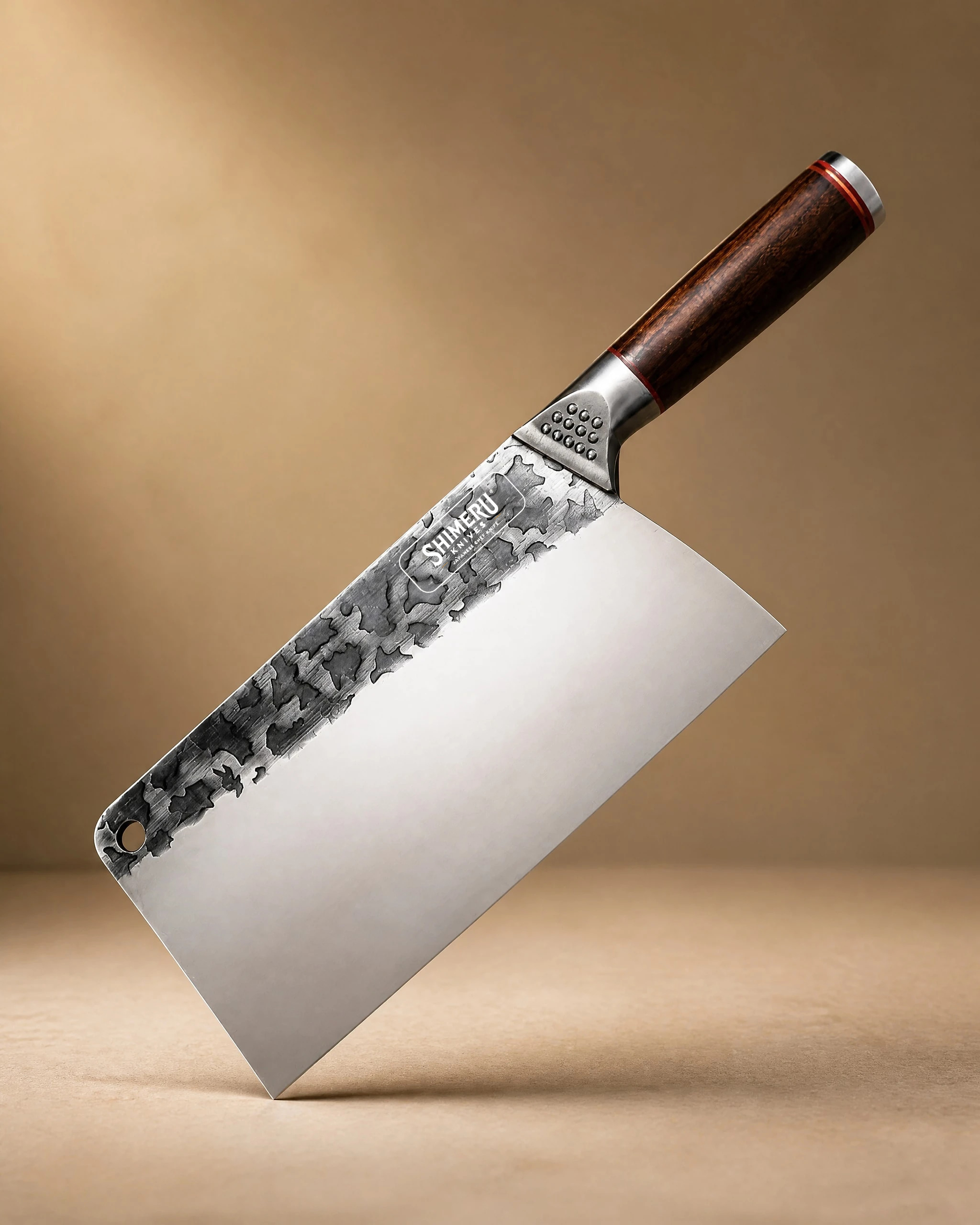 Saba 7" Stainless Steel Cleaver 中華包丁£44.99View product →, you may want a coarser stone to set the edge first. Its heavy stainless steel build benefits from a lower grit like 400 to remove material quickly and establish a fresh edge before refining on a medium stone.
If you are new to sharpening, a diamond knife sharpening stone can be easier because it does not require soaking and stays flat. However, a traditional whetstone remains the most popular choice for its smooth feedback and the ability to polish the edge to a mirror finish.
Step by Step Guide to Sharpening a Knife on a Wet Stone
Follow these steps to sharpen a knife with stone effectively. The technique for knife sharpening on wet stone relies on consistent angle and pressure. Take your time, and do not rush.
1. Prepare the Stone
Soak your whetstone in water for 10 to 15 minutes if it is a water stone. Diamond stones need only a spray of water. Place the stone on a damp towel on a flat surface, with the coarse side up for initial sharpening. Ensure the stone does not slide during use.
2. Set the Angle
Hold the knife with the blade edge facing away from you. The angle between the blade and the stone should be about 15 to 20 degrees for most Western and Japanese knives. A simple trick is to place the knife flat on the stone, then tilt the spine up until you feel the edge just touch. Maintain this angle throughout the stroke. For a thicker blade like a cleaver, a slightly steeper angle of 20 degrees may be more durable. For thinner knives from the Shinano Damascus set 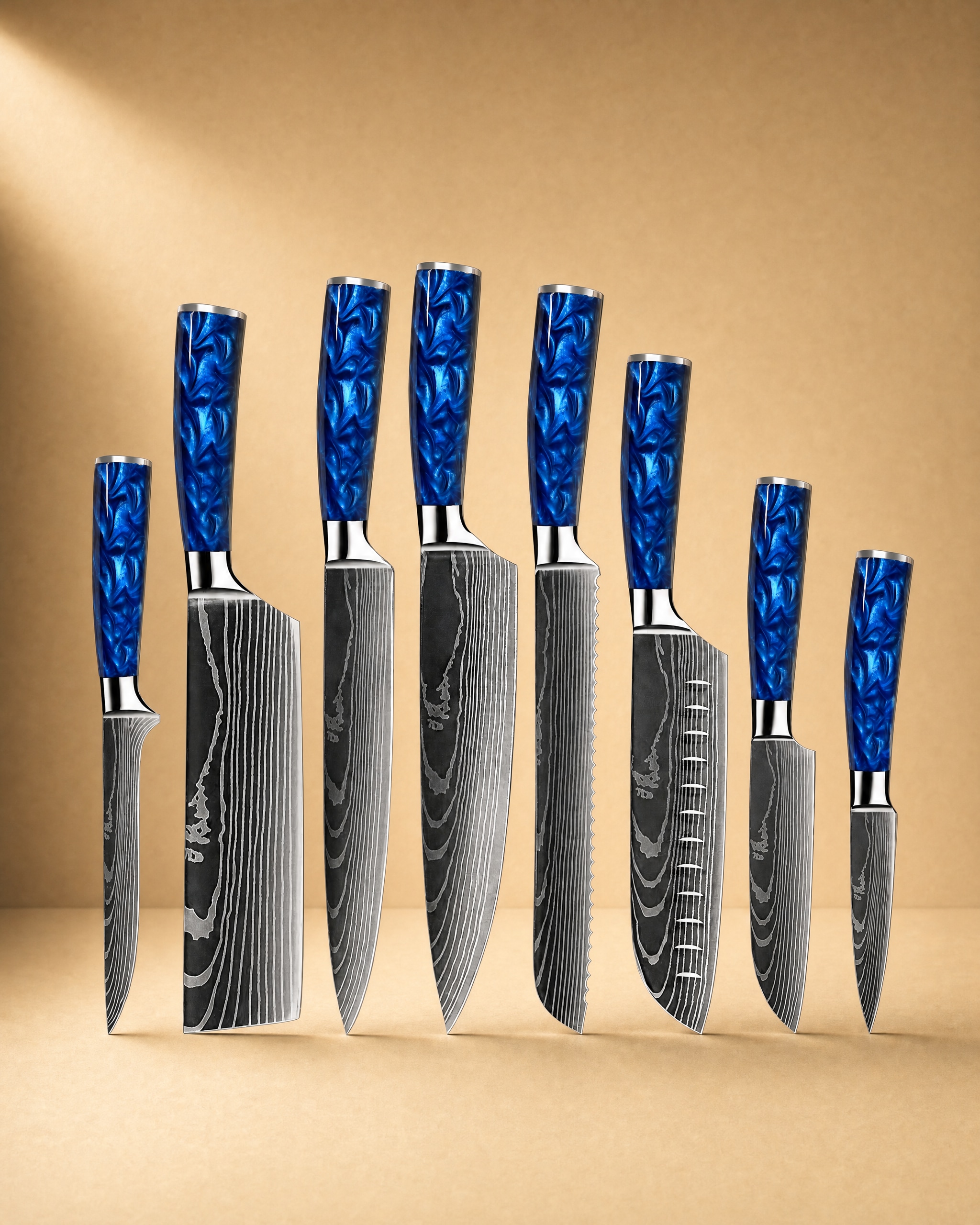 Shinano 信濃川 Damascus Pattern Stainless Steel Kitchen 8 Knife Set£149.99 · currently out of stockView product →, a shallower 15 degree angle gives a sharper, more precise edge.
3. Start Sharpening
Place the heel of the blade on the far side of the stone. With light pressure, push the blade forward and across the stone, following a gentle arc so that the tip of the blade ends at the near side of the stone. This is called a push stroke. Repeat this motion 10 to 15 times. Keep the stroke smooth and controlled; avoid rocking the blade. If you are working on a large chef's knife, you may need to adjust your hand position halfway through the stroke to maintain contact along the entire edge.
4. Check for a Burr
After a few strokes, run your finger lightly across the edge opposite to the side you sharpened. You should feel a small ridge of raised metal, called a burr. This indicates that the stone has reached the edge. If no burr forms, continue sharpening with a few more strokes. The burr should be consistent along the whole blade length. If it appears only at the heel or tip, you are not holding a consistent angle across the full stroke.
5. Repeat on the Other Side
Flip the knife and repeat the same process on the other side. Use the same number of strokes and the same angle. Once a burr forms on this side too, you have sharpened both faces. It is important to alternate sides to keep the edge centred. After forming a burr on both sides, you can do a few alternating light strokes to reduce the burr before moving to the finer grit.
6. Use a Finer Grit
Switch to the finer side of your stone (if available) and repeat the process with lighter pressure. This polishes the edge and removes the burr more cleanly. For a very sharp finish, you can then use a leather strop. Three to five strokes per side on the fine stone is usually enough to refine the edge. Overpolishing can round the edge, so stop once the burr disappears.
Common Mistakes in Knife Sharpening on Stone
Sharpening knives with a wet stone takes practice. Here are typical errors to avoid:
Inconsistent angle. If you change the angle during the stroke, the edge becomes rounded rather than a sharp V. Try marking the edge with a permanent marker to see where the stone is contacting. The marker will wear off at the correct angle, revealing your contact area.
Too much pressure. Let the stone do the work. Pressing hard wears down the stone unevenly and can damage the blade, especially on thinner knives like those in the Shinano Damascus set Shinano 信濃川 Damascus Pattern Stainless Steel Kitchen 8 Knife Set£149.99 · currently out of stockView product →. Use a weight similar to that of the knife itself; gentle pressure is more effective than brute force.
Neglecting the burr. Stopping before a burr forms means you have not sharpened the full edge. Always confirm a burr before moving to the next side. A burr that is too large can be difficult to remove and may leave a fragile edge; aim for a fine, even burr.
Maintaining Your Whetstone Sharpening Stone
A good whetstone knife sharpening stone will last for years if cared for properly. After each use, rinse it with water and let it dry completely before storing. Over time, the surface may become uneven, which prevents even sharpening. To flatten your stone, rub it against a finer grit stone or use a dedicated flattening stone. Store it in a cool, dry place away from direct sunlight. If you use your stone frequently, flatten it after every few sharpening sessions to keep it true.
When to Use a Sharpening Steel
Many people ask how to sharpen a knife with sharpening steel, but a steel is not a sharpener. It is a honing rod that realigns the microscopic edge of a blade between sharpening sessions. Using a steel regularly can extend the time needed between whetstone sessions. For best results, use a steel before each use and reserve the whetstone for when the edge becomes dull or damaged. Steels work particularly well on softer stainless steels; harder powder steels may benefit from a ceramic rod instead.
Choosing the Right Whetstone
Stones come in many varieties. A natural whetstone sharpening stone from Japan is prized for its unique grit composition, but it is expensive and requires more maintenance. Synthetic stones are more consistent and affordable. For most home cooks, a combination stone with 1000 and 6000 grit is ideal. If you work with very hard steel, a diamond knife sharpening stone will cut faster. For the broadest range of stones and accessories, browse our selection at /product?category=sharpener. Consider also the size of the stone: a longer stone (around 20 cm) makes sharpening larger knives easier. A stone that is too narrow forces you to make longer strokes, which can be tricky for beginners.
For more guidance on selecting the right knife for your needs, visit our knife guide at /knife-guide. And to keep your knives in top condition, read our care tips at /knife-care.

With a bit of practice, using a stone to sharpen knives becomes a satisfying ritual. It connects you to centuries of craftsmanship and ensures your tools perform at their best. Whether you own a single chef's knife or a complete set like the Shinano Damascus set Shinano 信濃川 Damascus Pattern Stainless Steel Kitchen 8 Knife Set£149.99 · currently out of stockView product →, a whetstone will keep your edges sharp, safe, and precise. Start today, and you will wonder why you ever struggled with dull blades. If you have a serrated bread knife such as the Rumoi 10" Japanese Bread Knife 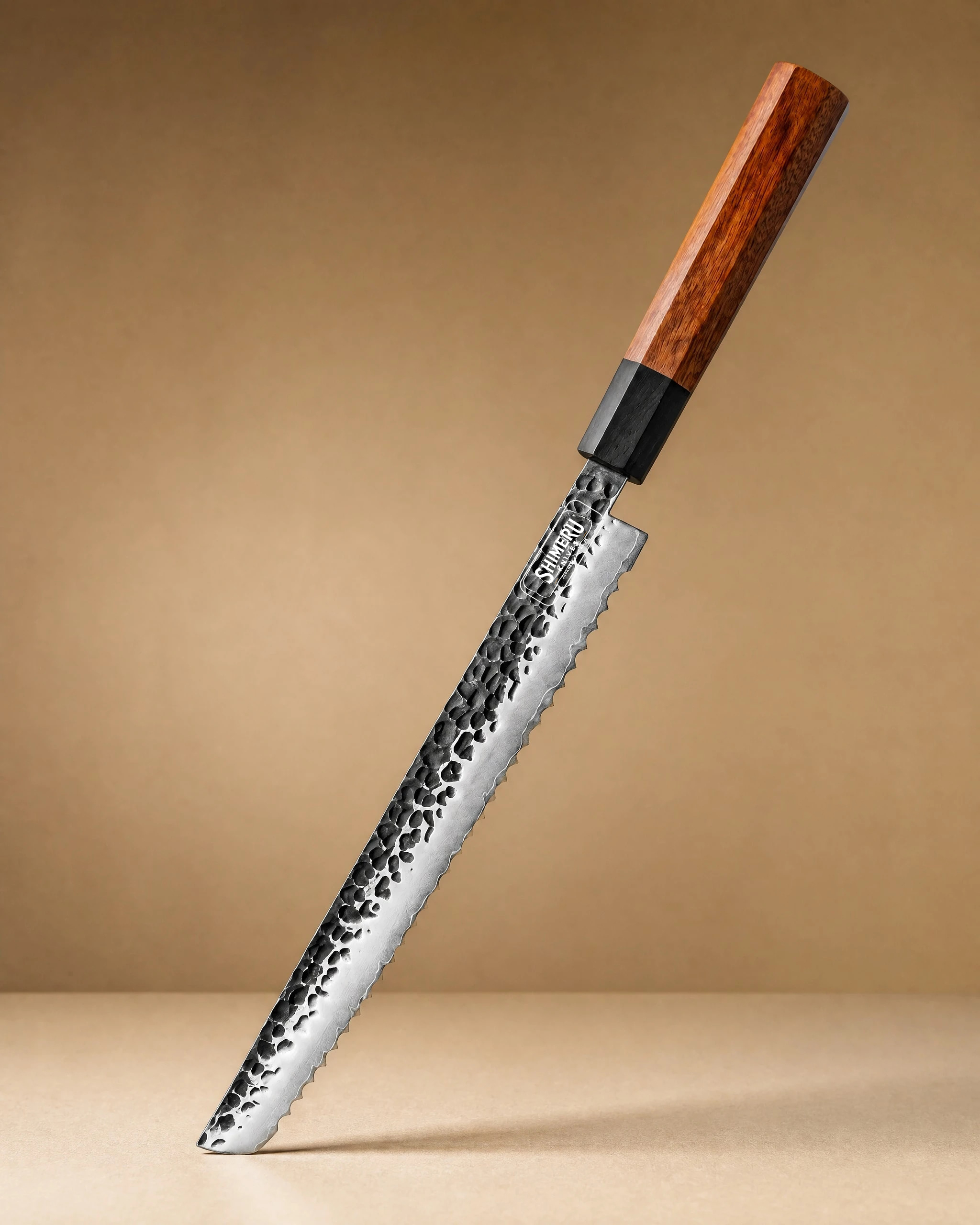 Rumoi 10" Japanese Bread Knife パン切りナイフ£59.99 · currently out of stockView product →, remember that a whetstone cannot sharpen serrations; those require a special rod or professional service. For straight edges, however, the whetstone remains the gold standard. Invest in a quality stone, practise your technique, and your knives will reward you with effortless cutting for years to come.
Photography: Richard Iwaki via Unsplash.


