


Using a Nakiri Knife in the Kitchen

The nakiri knife is one of the most focused tools in a Japanese kitchen. Its straight edge and flat profile are designed for one job: cutting vegetables. If you have ever watched a skilled cook rapidly turn a carrot into neat batons or reduce a heap of herbs to a fine chiffonade, you have seen the nakiri at work. This is not a knife for hacking through bones or carving roasts. It is a specialist, and once you understand how to use it properly, you will wonder how you managed without one.
In this guide we will cover the practical side of using a nakiri knife. We will look at how to grip it, which cutting motions suit its design, what it handles best, and how to keep it in good order. We will also show you two of our favourite nakiri models, both of which are available in the Shimeru shop.
What Is a Nakiri Knife?
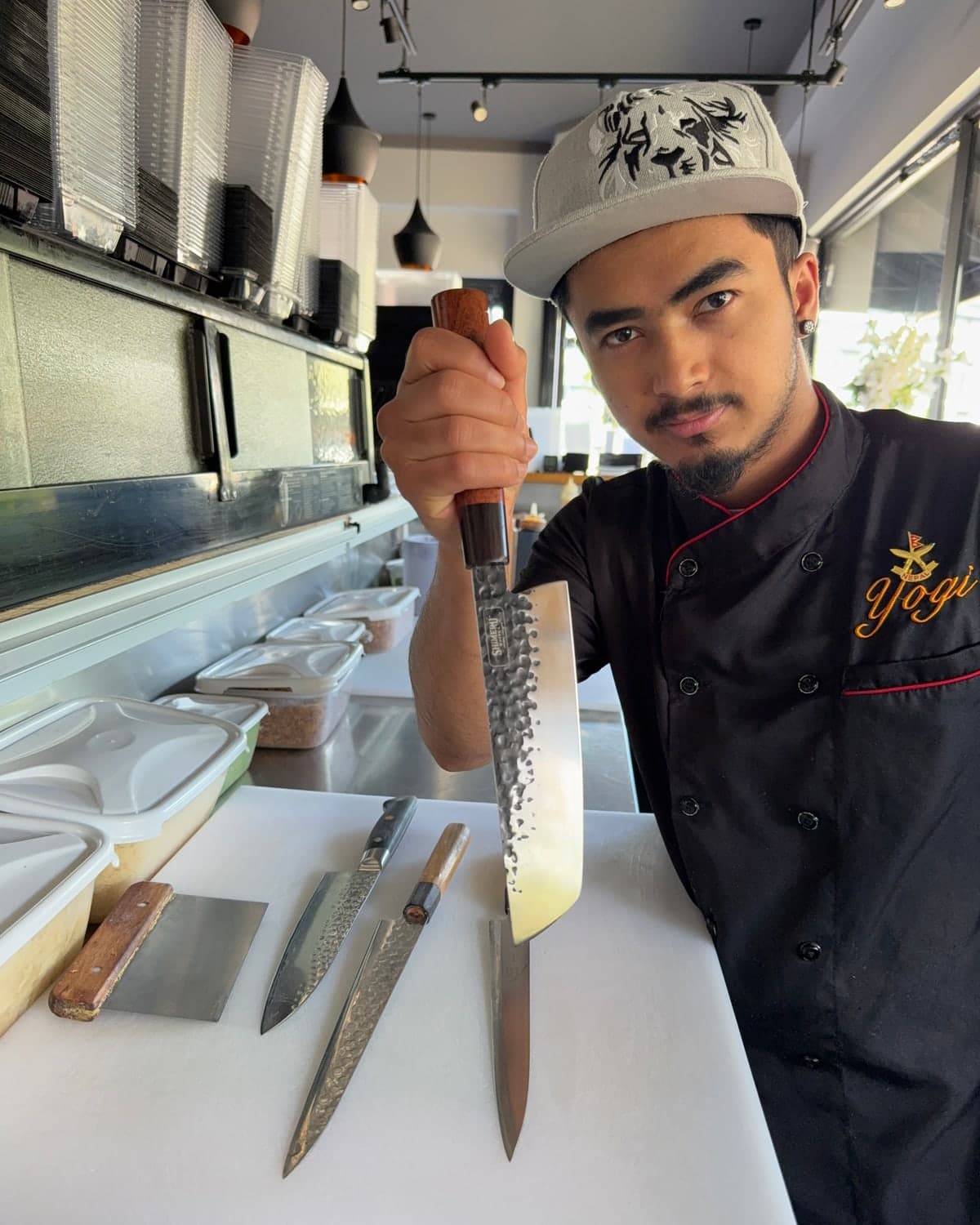
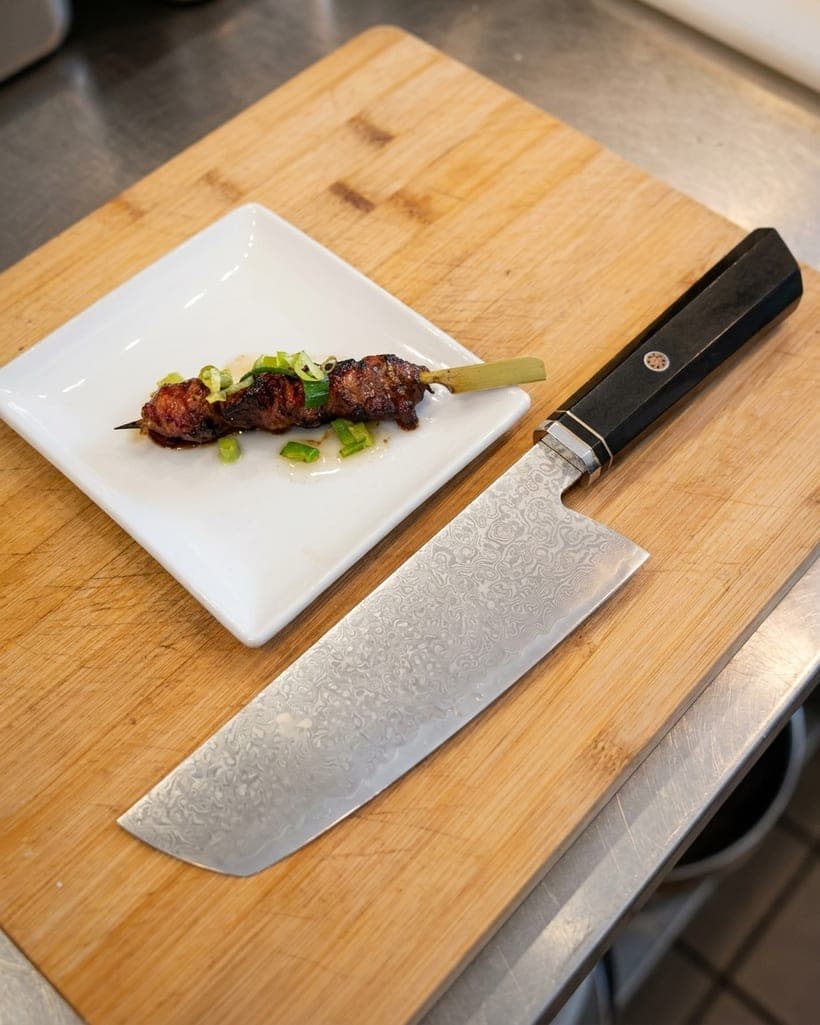
The nakiri, full name nakiri bocho, translates roughly to “leaf cutting knife”. It has a thin, double-bevel blade with a straight edge and a blunt, square tip. Unlike a gyuto or a chef’s knife, there is no curve to the cutting edge. That straightness means the blade makes full contact with the board across its entire length, which gives you a clean, vertical chop through whatever lies underneath.
The blade is typically ground very thin, which allows it to pass through dense vegetables with minimal resistance. Because the edge is straight, the nakiri encourages a push-cut motion from top to bottom rather than a rocking or sawing action. This is a natural, efficient way to work through large volumes of produce without tiring your wrist.
How to Hold a Nakiri Knife
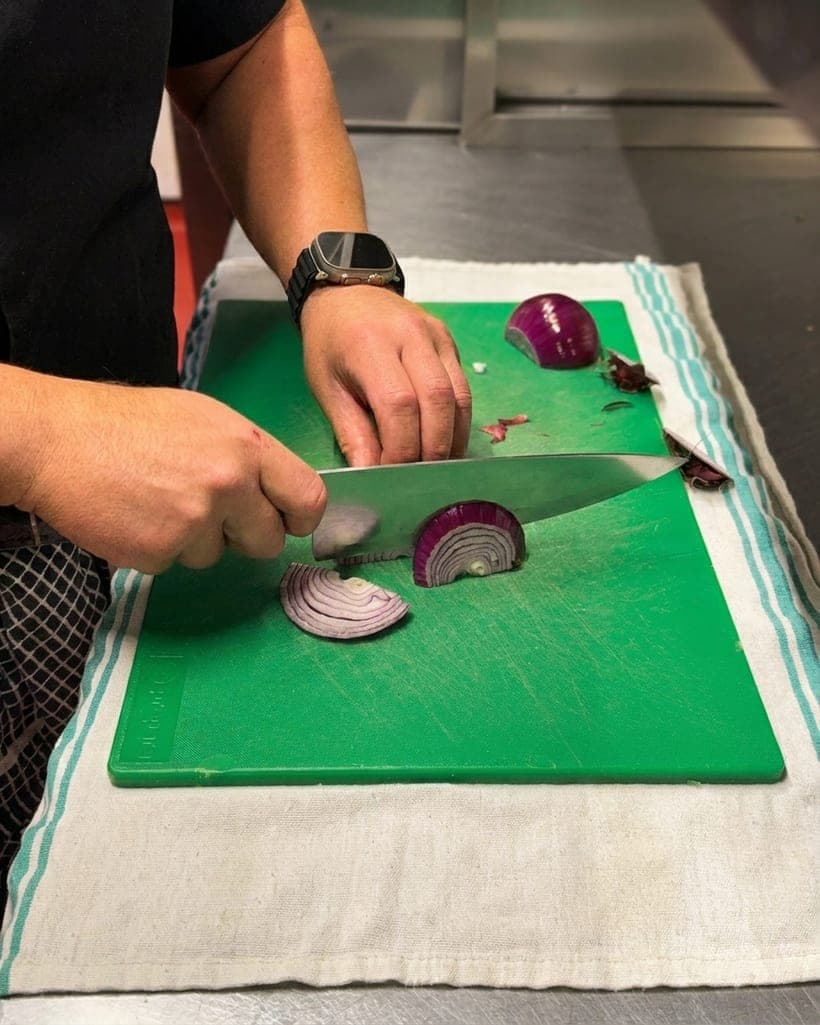
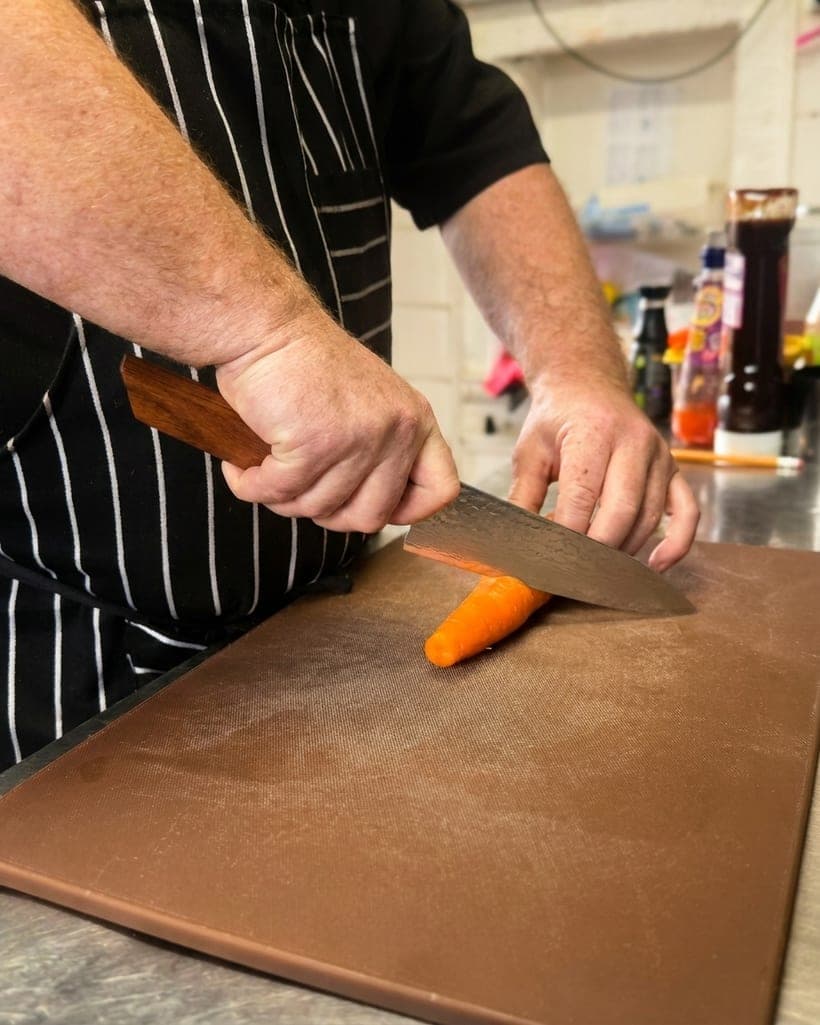
Good technique starts with a reliable grip. Hold the handle with your dominant hand, placing your thumb on one side of the blade road and your index finger on the other, just in front of the handle. This is sometimes called the pinch grip. It gives you maximum control over the blade and keeps your hand stable when you chop. Your other three fingers wrap around the handle, not too tightly, so the knife can move freely.
Your other hand should form a claw, with your fingertips tucked under and your knuckles guiding the knife blade. The side of the blade should rest against your knuckles as you move it up and down. This might feel awkward at first, but it keeps your fingertips safe and allows you to cut with consistent thickness.
Keep your grip relaxed. A tense hand will fatigue quickly and make your cuts uneven. The nakiri’s weight and thin blade do most of the work, so you only need to guide it.
Basic Cutting Techniques for a Nakiri
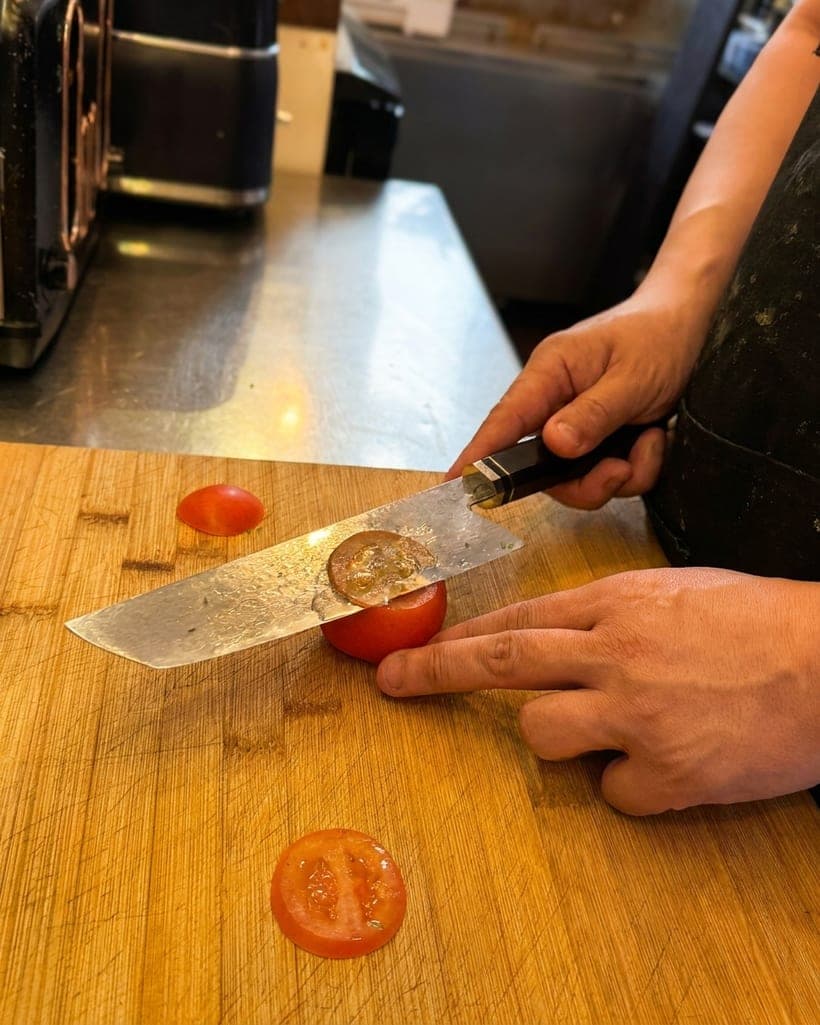
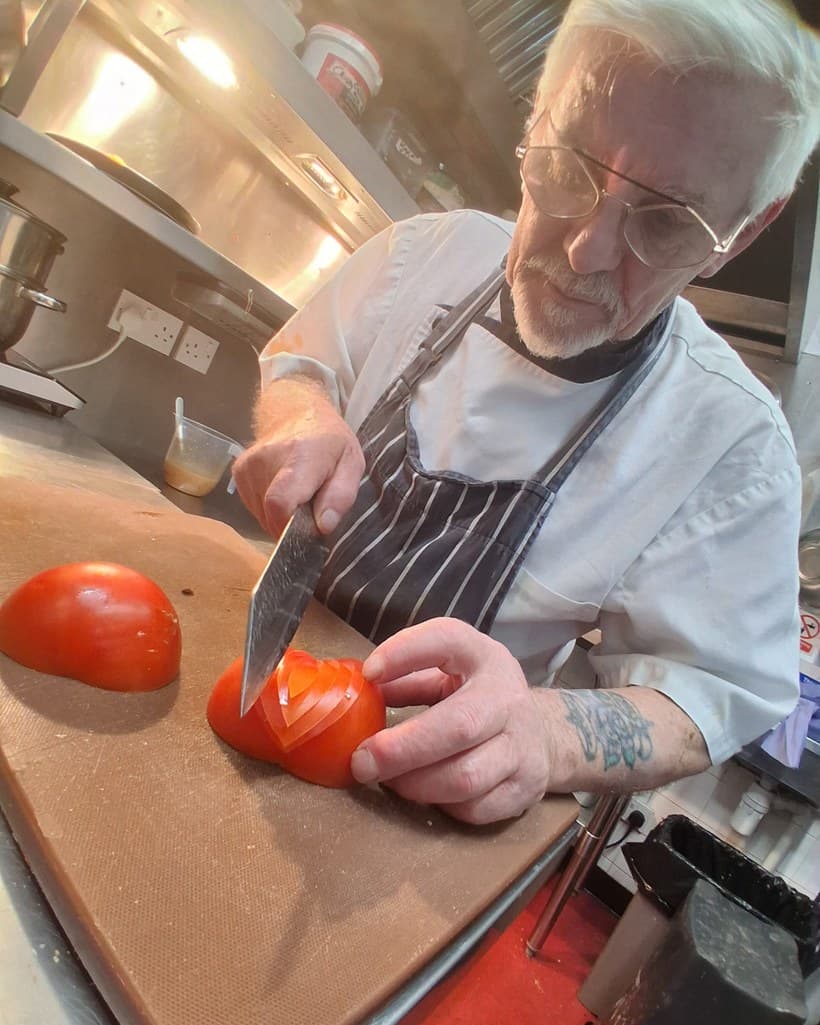
The nakiri is designed for vertical cutting. The most common technique is the straight chop. Raise the knife so the edge is about two or three centimetres above the food, then bring it down in a straight line. The flat edge contacts the board uniformly, which gives you a clean cut without needing to rock the blade. You can adjust the height and speed to suit different vegetables. Softer items like ripe tomatoes need a gentle, slow chop, while firm root vegetables can handle a little more force.
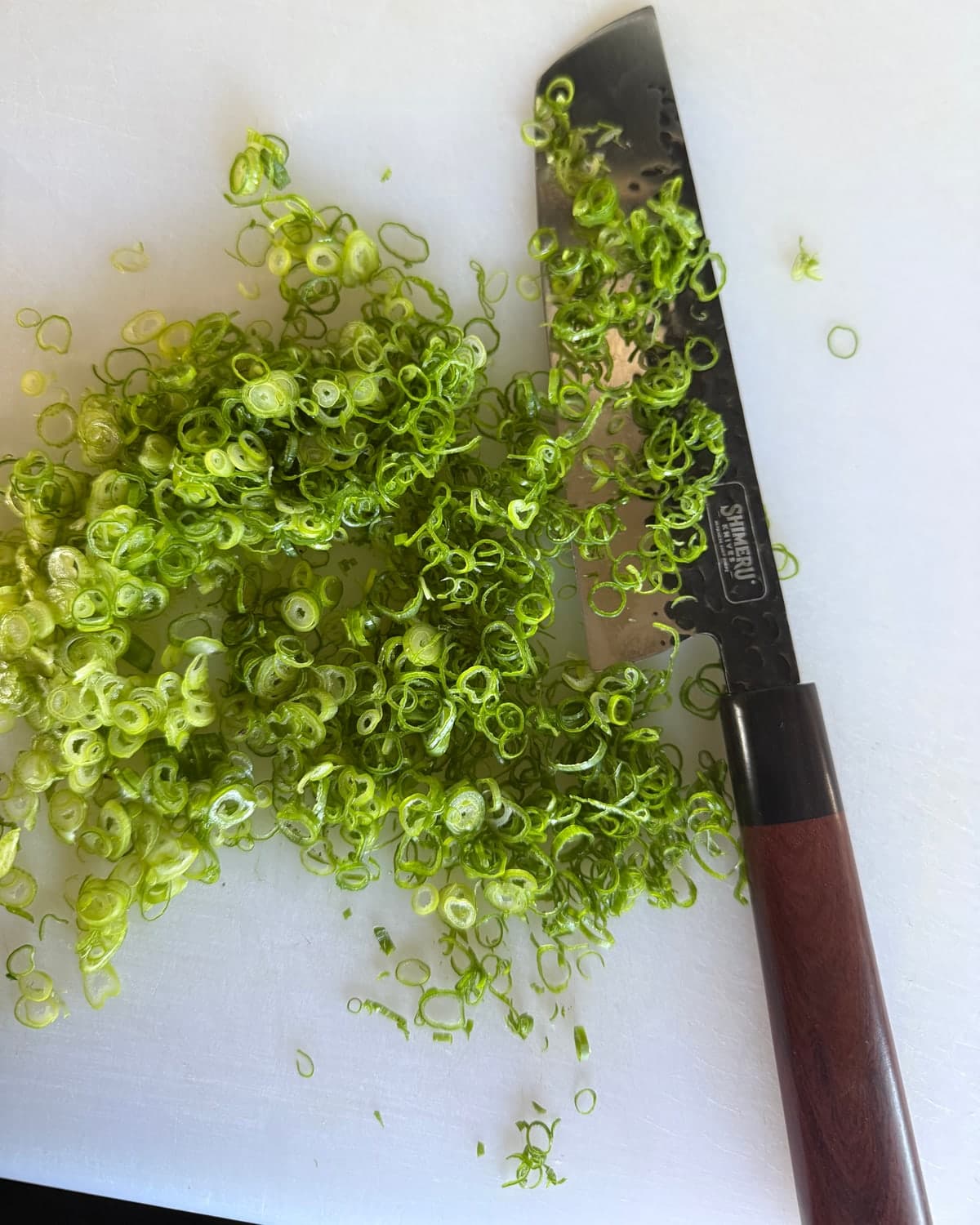
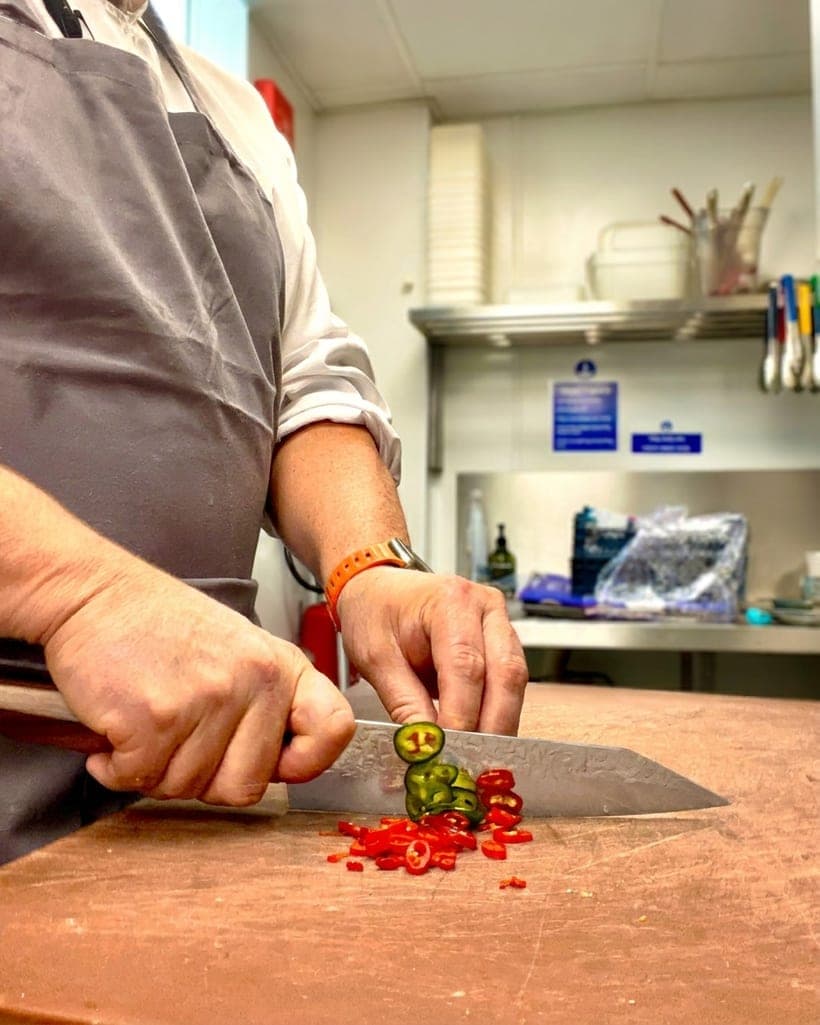
For fine shredding, such as making julienne strips, slice the vegetable into planks first, stack them, and then chop across the stack. A nakiri’s thin blade makes this effortless, and the straight edge means you do not have to angle the blade to avoid dragging. If you need a brunoise, simply chop your julienne strips into small cubes.
The One Hand Knuckle Rule
A simple way to keep your cuts even is to move your guiding hand back after every few cuts by the width you want to cut. The blade stays in the same position, and the food moves to the knife. This is faster and safer than moving the knife across a pile of food.
What to Use a Nakiri For
A nakiri excels at all kinds of vegetable preparation. Here are its best uses:
- Chopping onions, shallots and garlic without them flying around the board
- Shredding cabbage, lettuce or spinach into fine ribbons
- Dicing carrots, celery, courgette and other firm vegetables
- Slicing mushrooms, aubergine and peppers into even pieces
- Cutting soft fruits like melon or pineapple, provided you remove the skin first
Because the blade is so straight, it is also brilliant for slicing things that need a clean, flat cut, such as blocks of tofu or cooked potatoes. You will not want to use it on bread with a hard crust, nor on anything with a bone. The thin edge can chip if twisted or forced sideways, so treat it with care.
If you cook a lot of vegetable-heavy meals, a nakiri will quickly become your go-to board knife. It is also a wonderful choice for anyone with smaller hands, as the blade height gives good clearance for knuckles without the length of a chef’s knife.
Maintaining Your Nakiri Knife
A nakiri should be washed by hand in warm, soapy water and dried immediately. Do not leave it to soak, and do not put it in the dishwasher. The heat and detergents will dull the edge and can damage the handle over time. For a full rundown on keeping your blade in top condition, see our knife care guide.
Regular honing with a fine steel or ceramic rod will keep the edge aligned between sharpenings. When the knife starts to feel less sharp, sharpen it on a whetstone. The nakiri’s straight edge is actually easier to sharpen than a curved blade because you can maintain a consistent angle along the entire edge. If you are not confident with a stone, many professional services will sharpen it for you.
Use a wooden or plastic cutting board, never glass or stone, as those will ruin a thin Japanese edge. A little board oil on a wooden board will keep it in good shape and prevent the wood from drawing moisture out of the knife.
Choosing the Right Nakiri
Nakiri knives come in various lengths and steel types. The most common size is 16.5 centimetres, often called 7 inches. That length suits most home kitchens and gives you enough blade to cut through large vegetables without being unwieldy.
If you want a dependable, high-carbon stainless knife with a comfortable Mkuruti handle, the 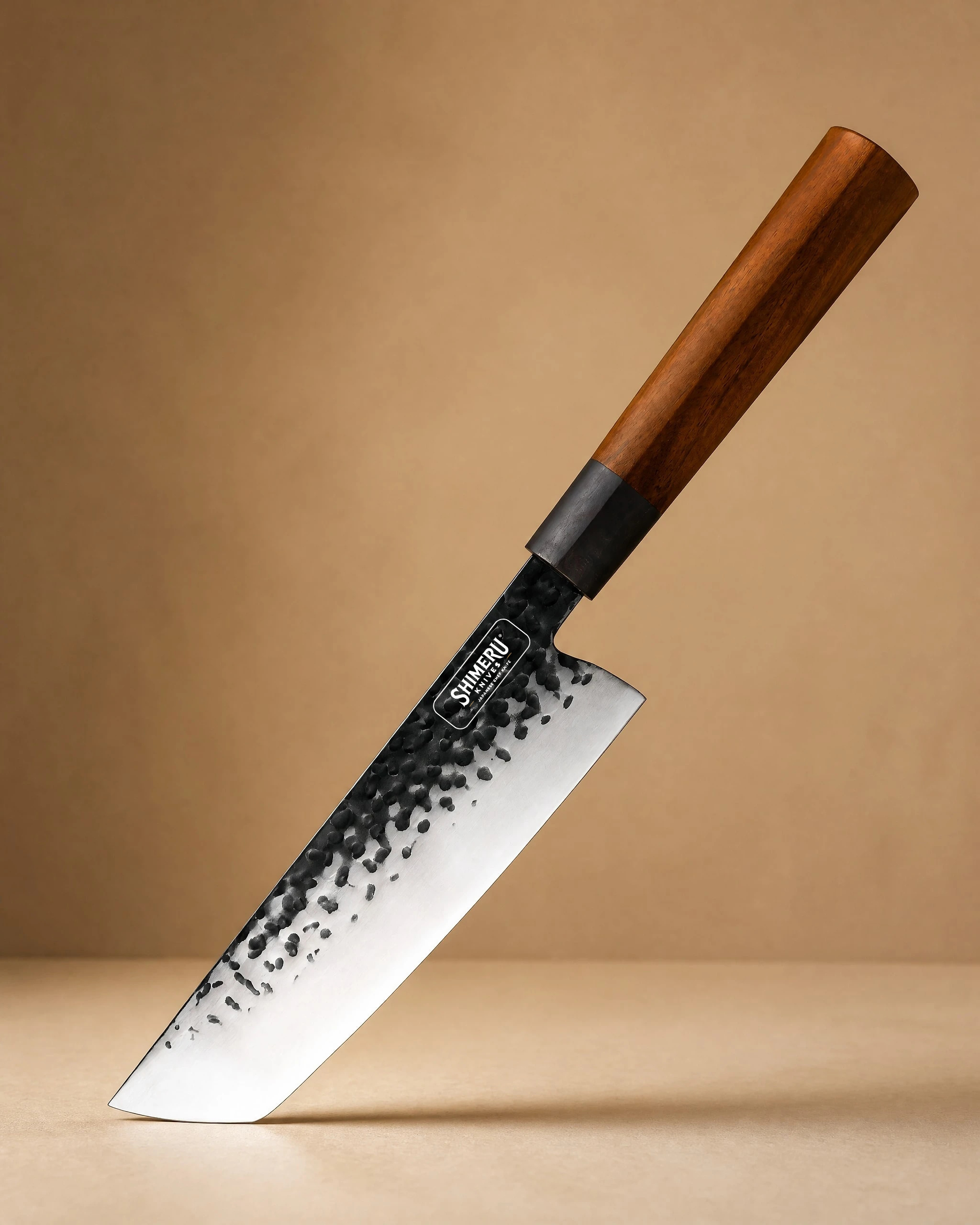 Ginsui 7" Nakiri Knife 菜切り包丁£54.99View product → is a superb option. Its thin blade and straight profile make vegetable prep a pleasure, and the steel holds a keen edge well.
If you prefer a blade forged from AUS10 steel, which offers excellent edge retention and easy sharpening, the 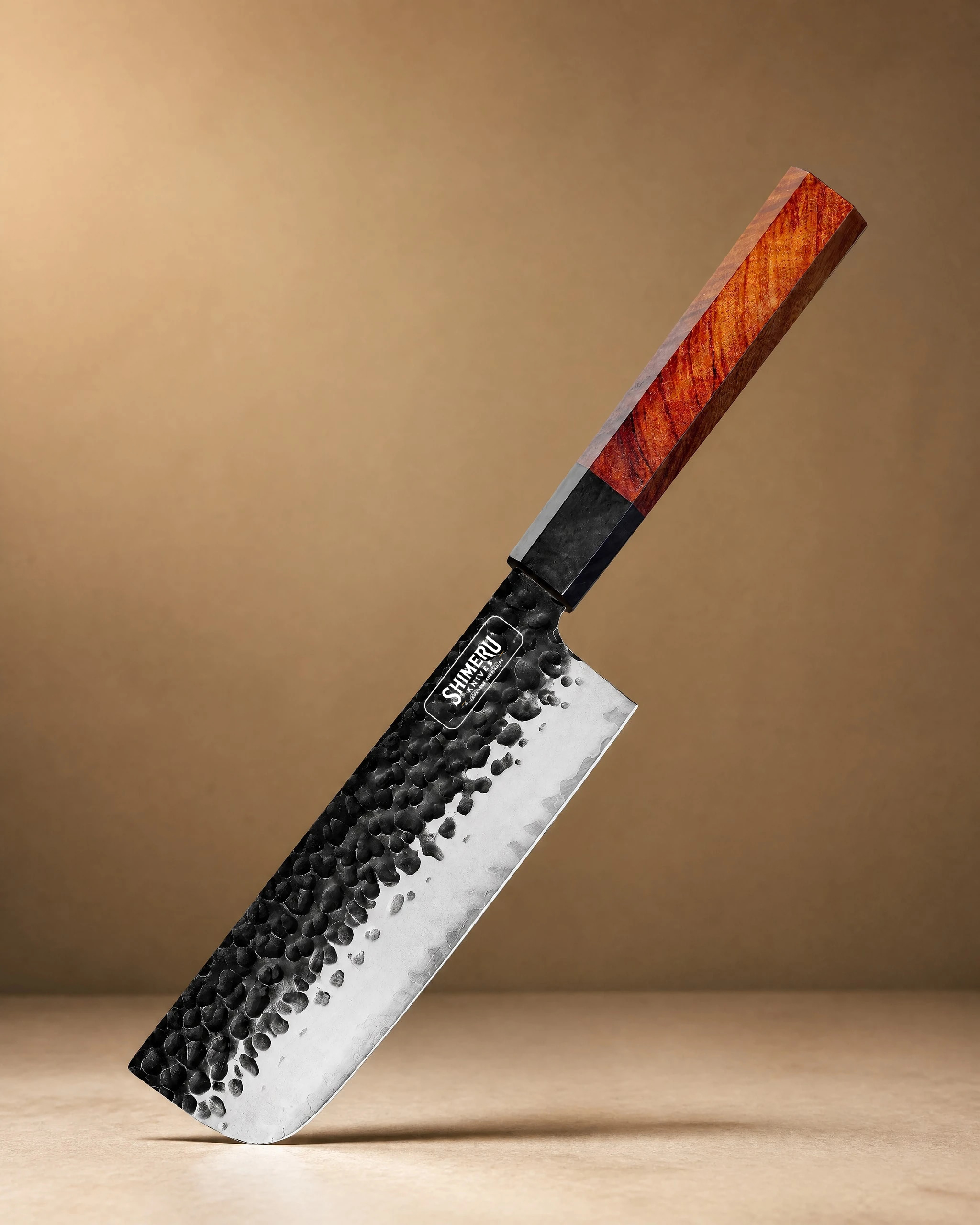 Kiso 7" Nakiri Knife 菜切り包丁£59.99View product → is another fine choice. Both knives are designed specifically for vegetables and herbs, and either will serve you well for years.
When you are ready to look at more options, you can browse our full nakiri collection or see all the knives we stock on the main shop page. If you are still deciding between a nakiri and other Japanese knife shapes, our knife guide explains the differences and helps you choose.
Final Thoughts
Using a nakiri knife is not complicated, but it does reward a little practice. Start with soft vegetables like courgette or peppers, then move on to firm root vegetables once your control improves. Keep your grip relaxed, let the blade drop vertically, and trust the straight edge to do the cutting. Within a few sessions you will notice how much faster and more satisfying vegetable prep becomes.
The nakiri is a reminder that a specialised tool, used well, can make a daily task feel effortless. Whether you choose the Ginsui 7" Nakiri Knife 菜切り包丁£54.99View product → or the Kiso 7" Nakiri Knife 菜切り包丁£59.99View product →, you are getting a knife that was made for this exact purpose. Respect the edge, keep it clean and dry, and it will reward you with years of precise, calm cooking.
Photography: Alyson McPhee via Unsplash.

