




Best Nakiri Knife Reviews

The nakiri knife is a Japanese vegetable cleaver designed for precision chopping, slicing and dicing. Its straight edge and squared-off tip make it a favourite among home cooks and professionals alike. In this review we look at two models that represent excellent value and performance: the Shikoku 7 inch Nakiri and the Ginsui 7 inch Nakiri. Both are genuine Japanese knives, but they differ in steel type, handle material and overall feel. By the end you will know which one suits your cutting style best.
What is a Nakiri Knife?
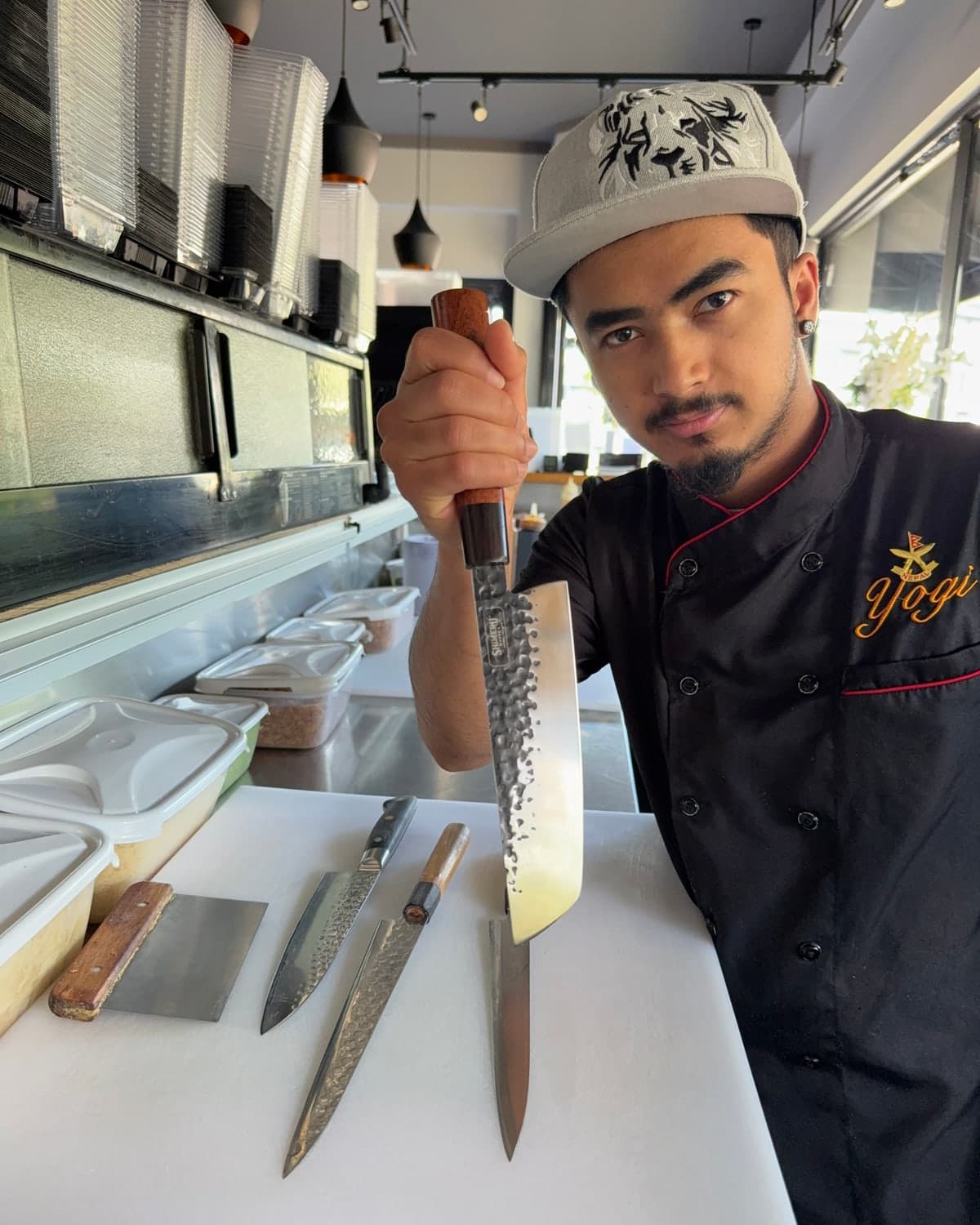
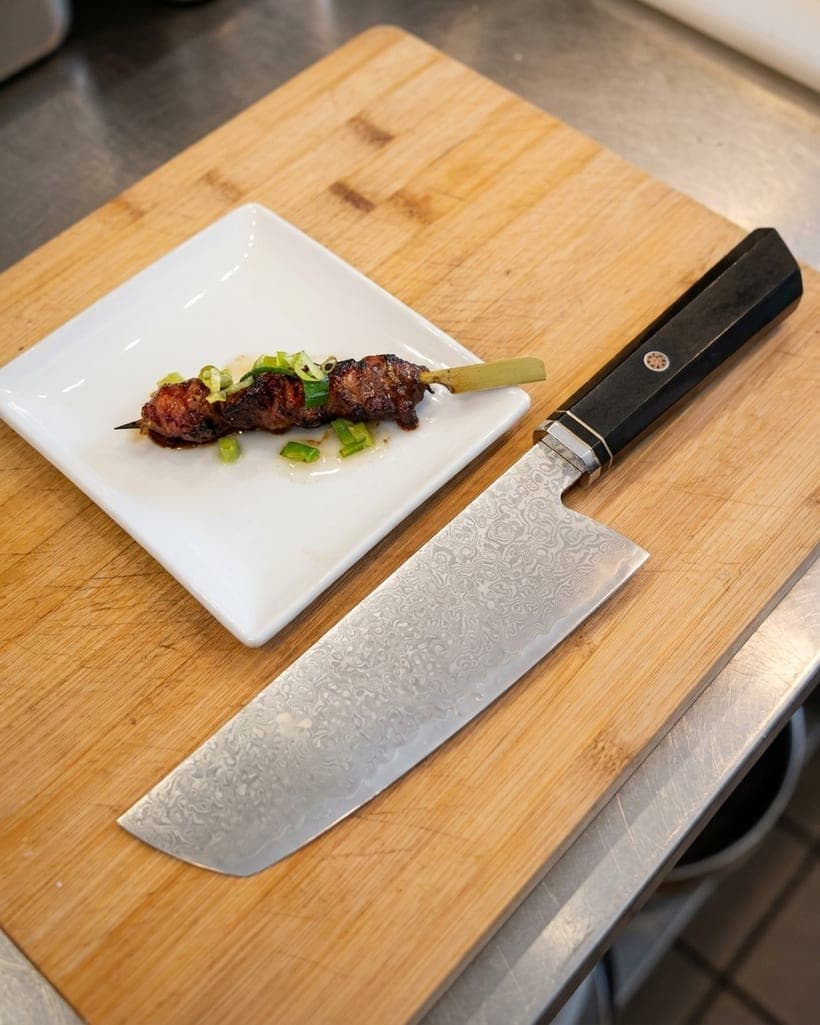
A nakiri (or nakiri bocho) is a traditional Japanese knife with a rectangular blade and a straight edge. Unlike a chef's knife, the nakiri has no curve, which means the entire edge contacts the board at once. This makes it ideal for chopping vegetables cleanly without the need for a rocking motion. The tall blade also allows you to scoop up diced veg easily. Japanese nakiri knives are typically made from harder steel than Western knives, which enables a sharper edge that lasts longer.
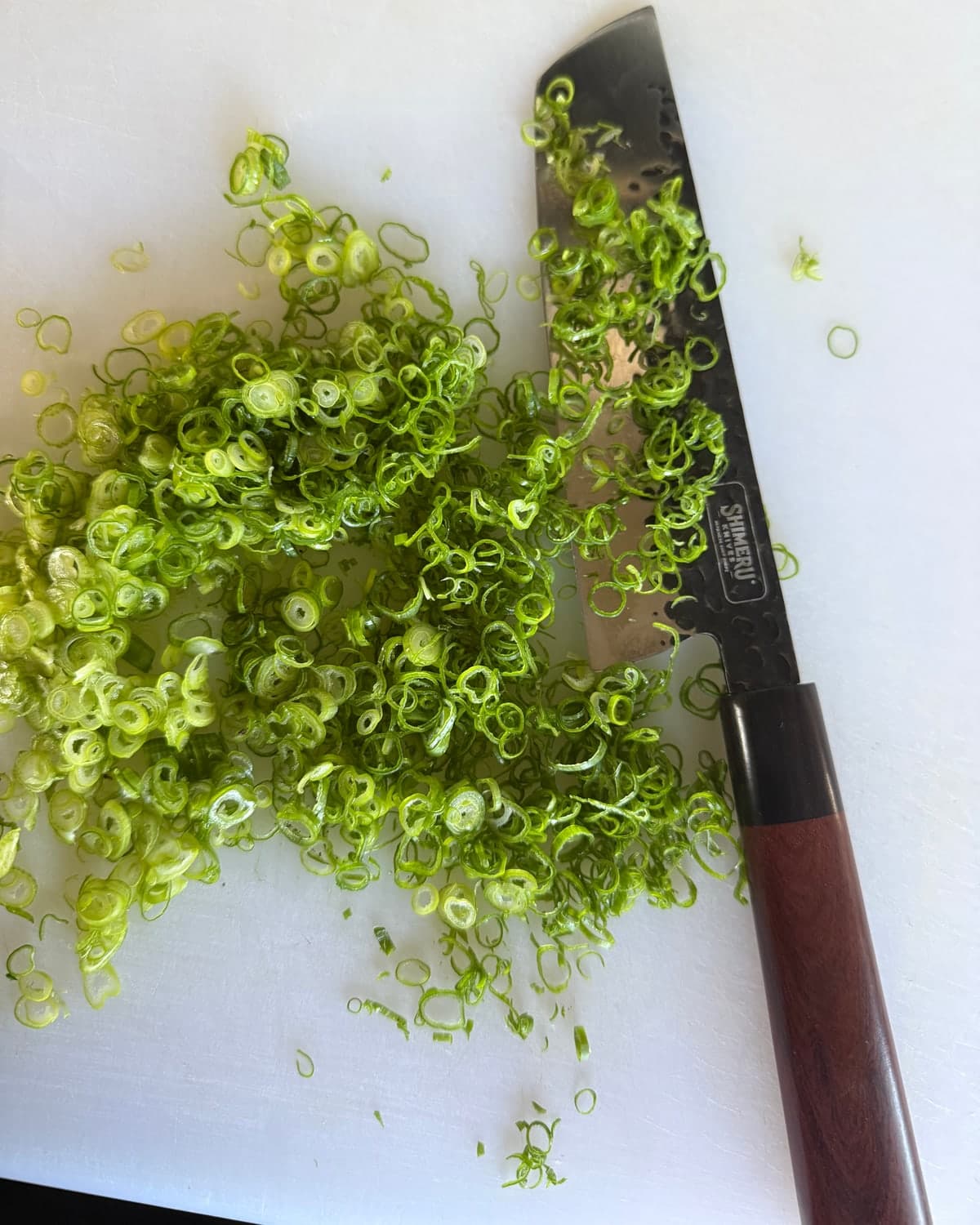
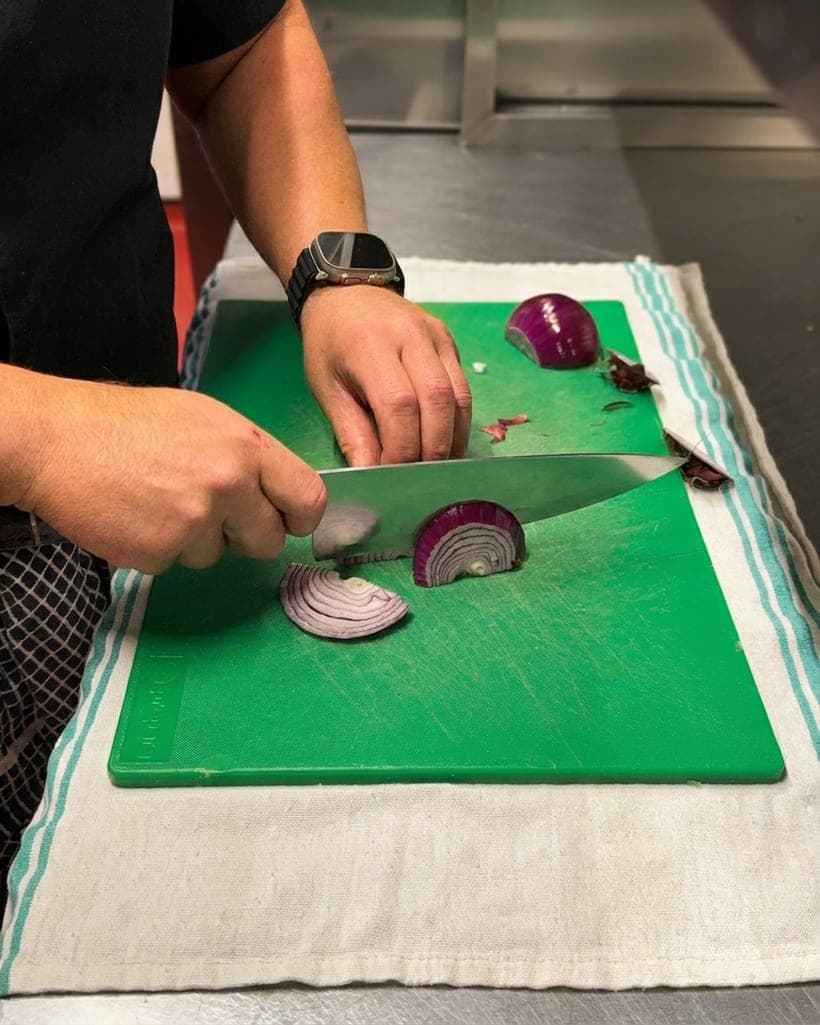
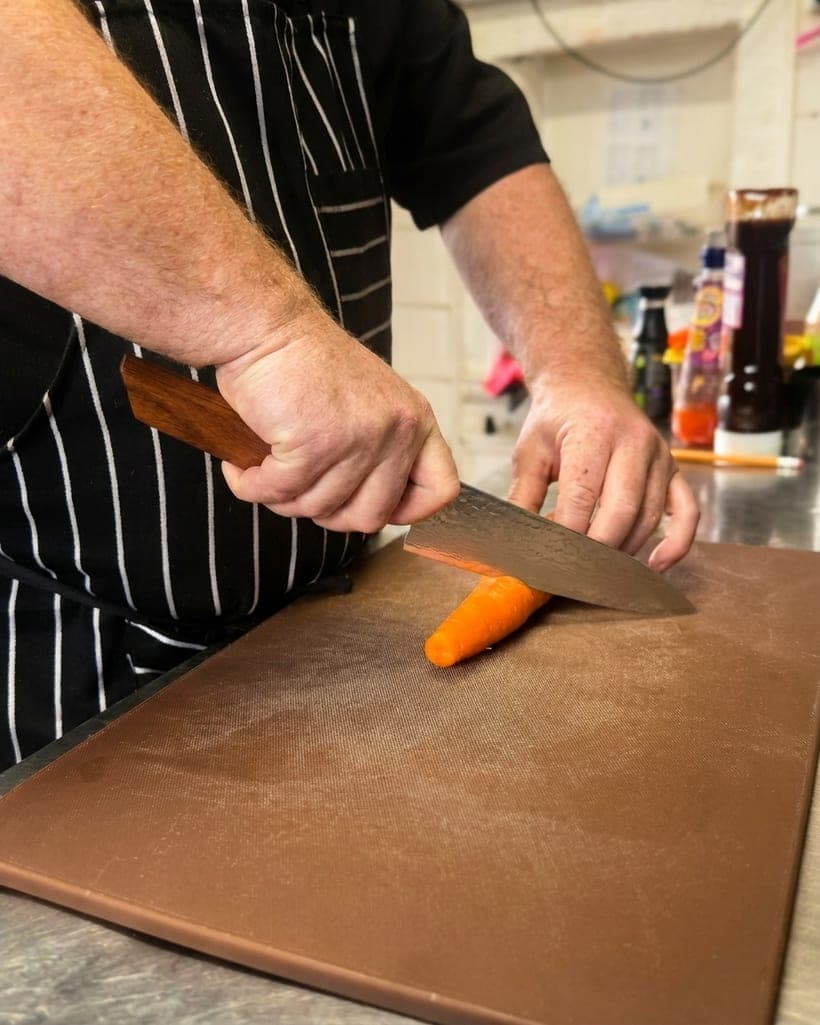
If you cook a lot of vegetables a nakiri japanese knife can transform your prep work. Onions, carrots, peppers, herbs and root vegetables all benefit from the clean cuts a nakiri delivers. Many cooks also find the flat profile easier to sharpen because there is no belly to manage.
Why Choose a Nakiri Japanese Knife?
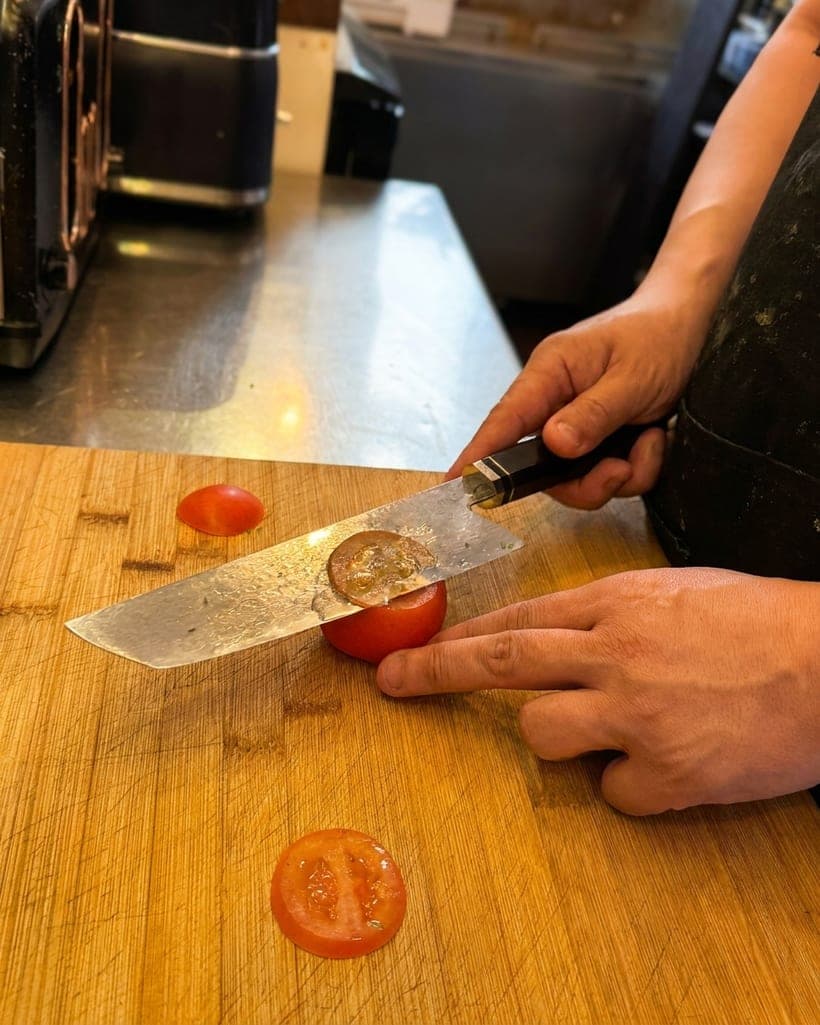
There are several reasons to add a best nakiri knife to your kitchen. First, the straight edge gives you full control over each cut. You can slice paper-thin rounds of cucumber or dice onions into uniform pieces without the blade wandering. Second, the height of the blade acts as a knuckle guard: your fingers rest against the side of the blade rather than above it, which is safer. Third, a nakiri is often lighter than a Western cleaver, so you can work for longer without fatigue.
Some cooks worry that a nakiri cannot handle meat or fish. While it is not ideal for tough joints, the flat edge can slice boneless chicken or fish fillets if you need it to. However, the nakiri knife japanese is really built for vegetables, and using it on hard bones or frozen items can chip the edge. Stick to vegetables and you will be rewarded with effortless prep.
Key Features to Consider When Buying a Nakiri
Before you choose your nakiri, think about three things: blade steel, handle material and overall balance. The steel determines how sharp the knife can get and how often you need to sharpen it. AUS10 steel, for example, is a popular stainless alloy that holds a good edge and resists rust. High-carbon stainless steel sharpens even finer but requires a little care to avoid staining. The handle affects grip and comfort: olive wood is attractive and durable, while Mkuruti wood is harder and denser, offering a different feel under the fingers.
Weight and balance also matter. A blade-heavy knife helps with chopping, while a balanced knife gives more control for slicing. The two knives we review here both have a 7 inch blade and a classic nakiri shape, but the Shikoku uses AUS10 steel with an olive wood handle, whereas the Ginsui uses high-carbon stainless with a Mkuruti handle. Let us compare them directly.
Shikoku 7" Nakiri Knife 菜切り包丁
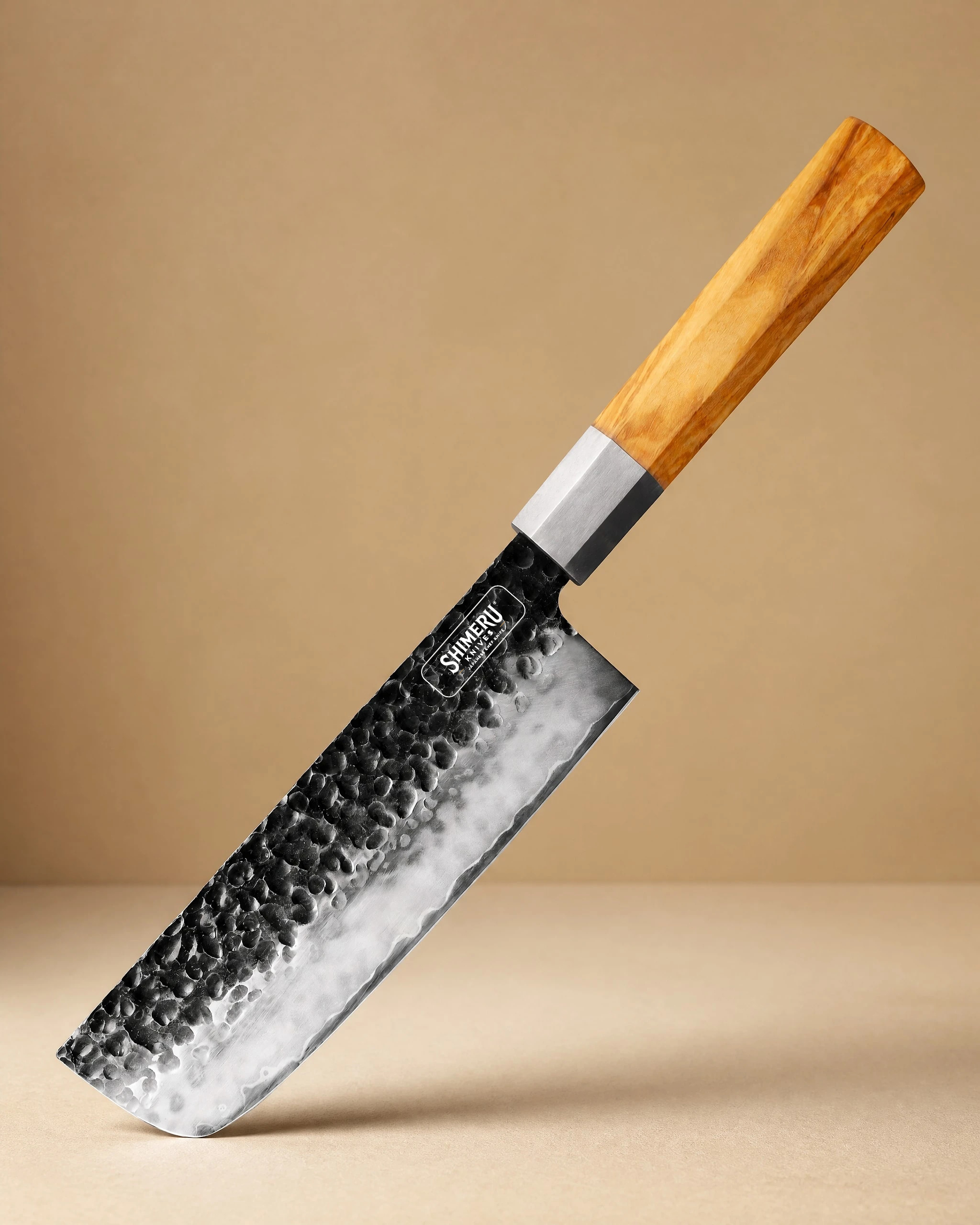 Chitose 7" Nakiri Knife 菜切り包丁£59.99View product →
The Shikoku nakiri is a well-rounded vegetable knife that performs reliably day after day. Its blade is made from AUS10 steel, a Japanese stainless alloy that strikes a good balance between hardness and ease of sharpening. AUS10 can take a sharp edge and hold it for a reasonable time, and it resists corrosion well so you can leave it on the board for a minute without worry. The 7 inch length is standard for a nakiri and gives you enough blade to cut large cabbages or melons without feeling unwieldy.
The handle is olive wood, which is both attractive and comfortable. Olive wood has a natural grain that offers good grip, especially when wet. Over time the wood will develop a patina and feel even smoother in the hand. The Shikoku is best for vegetables, chopping and slicing, and it suits cooks who want a low-maintenance stainless blade that does not require babying. If you tend to leave knives in the sink (though we advise against it) this knife will forgive you.
One thing we like about the Shikoku is its balance. The handle is slightly heavier than some nakiris, which gives a feeling of control when you are chopping at speed. The edge comes sharp out of the box, and with occasional honing it will stay that way for months. This is a solid choice for anyone looking for a reliable every day nakiri.
You can browse all our nakiri options on our nakiri category page.
Ginsui 7" Nakiri Knife 菜切り包丁
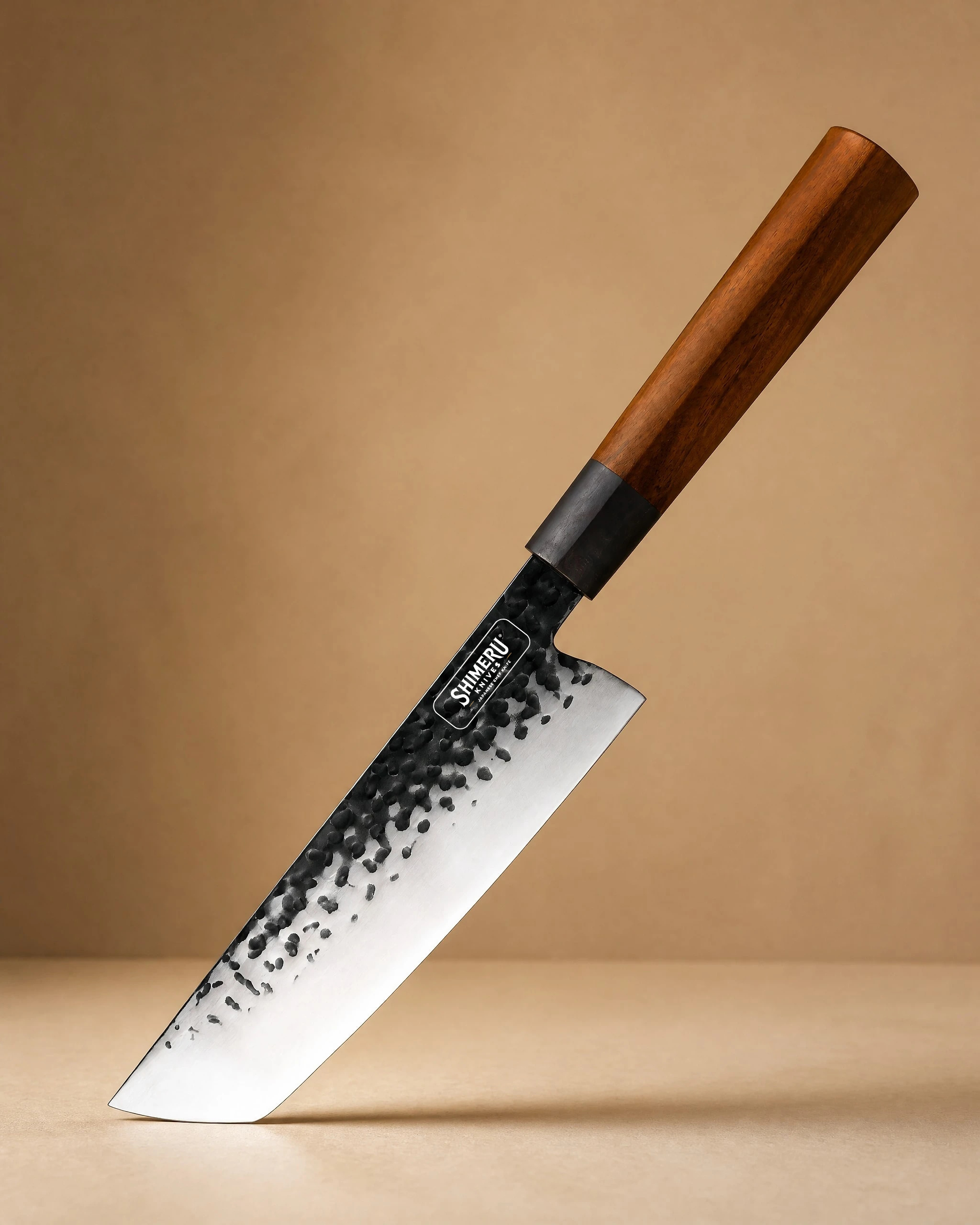 Ginsui 7" Nakiri Knife 菜切り包丁£54.99View product →
The Ginsui nakiri takes a different approach. The blade is made from high-carbon stainless steel, which means it can be sharpened to a very fine edge. High-carbon stainless takes a harder heat treatment than standard stainless, so the edge lasts longer and cuts with less effort. The trade off is that you need to wipe the blade dry after use and store it in a dry place to prevent any minor staining. For most cooks this is a small effort for noticeably better cutting performance.
The handle is Mkuruti wood, a dense African hardwood that has a tight grain and a dark, rich colour. Mkuruti is very resistant to moisture and cracking, so it will stand up well to kitchen use. The handle shape is a traditional octagonal profile, which provides excellent control whether you pinch the blade or grip the handle. The Ginsui is best for vegetables, herbs and root vegetables. It excels at slicing through dense sweet potatoes or celery root with minimal wedging.
The Ginsui is slightly heavier than the Shikoku, but the weight is distributed evenly so it feels balanced in hand. The extra heft helps the blade fall through root crops, and the sharp edge means you do not need to apply much pressure. This knife rewards careful handling: keep it honed and it will be your go to for vegetable prep.
If you are new to Japanese knives, our knife guide explains the differences between steel types and handle styles in more detail.

How to Care for Your Nakiri Knife
Proper care extends the life of any Japanese knife. Because nakiri blades are thin and hard, they need gentle handling. Always cut on a wooden or plastic board: glass, stone or bamboo boards can chip the edge. Wash the knife by hand with mild soap and dry it immediately. Do not put it in the dishwasher. Store it in a knife block, on a magnetic strip or in a saya (blade cover).
Sharpening is essential. A nakiri with a straight edge is easy to sharpen on a whetstone. Use a 1000 grit stone for regular sharpening and a 3000 to 6000 grit for refining the edge. With AUS10 steel you can use a ceramic honing rod occasionally. For high-carbon stainless, a leather strop after sharpening will maintain the edge. For more detailed advice read our knife care guide.
Which Nakiri Should You Choose?
Both the Shikoku and the Ginsui are excellent best nakiri knife choices, but they suit different priorities. If you want a knife that requires minimal maintenance, is easy to sharpen and resists rust, the Shikoku with its AUS10 steel and olive wood handle is ideal. It is a great all rounder for daily vegetable prep.
If you prioritise edge performance and do not mind wiping the blade after use, the Ginsui with high-carbon stainless steel and Mkuruti wood handle delivers a sharper, longer lasting edge. It is especially good for dense root vegetables and heavy chopping sessions.
Whichever you choose, a nakiri knife japanese will improve your vegetable prep. The straight edge gives you cleaner cuts, less waste and more control. We invite you to explore our full range of nakiri knives at our online shop.
Photography: Savernake Knives via Unsplash.


