




How to Pick a Gyuto for Your Kitchen
You notice it the moment you slice that first onion. A good gyuto doesn't just cut more cleanly – it makes prep feel calmer, faster, and far more precise. If you're trying to decide how to choose a gyuto, the right answer isn't the most expensive blade or the one with the flashiest finish. It's the knife that suits how you cook, what you cut, and how you like a knife to feel in your hand.
For most home cooks, a gyuto is the smartest step into Japanese knives. It's versatile like a Western chef's knife, but typically lighter, finer at the edge, and more agile on the board. That means better control for herbs, onions, proteins, and everyday prep, without needing a specialist knife for every task.
How to choose a gyuto without overthinking it
Start with three questions: what size feels comfortable, what steel fits your maintenance habits, and what blade profile matches your cutting style. Those decisions matter more than decorative details, and they'll tell you far more about daily performance than a product photo ever will.
A gyuto should feel like an upgrade, not a project. If a knife looks beautiful but feels awkward, too delicate, or too demanding for the way you cook on a Tuesday night, it's the wrong choice.
What a gyuto is best at
A gyuto is the Japanese answer to the all-purpose chef's knife. It handles slicing, dicing, mincing, and portioning with ease, and it's often the one knife that can replace an average block set for most daily cooking.
Compared with many Western chef's knives, a gyuto usually has a thinner blade and a lighter, more balanced feel. That translates to less wedging in dense produce and less fatigue during longer prep sessions. If you've been using a heavy German-style knife, the difference can feel immediate.
That said, a gyuto is not a cleaver. It's not meant for bones, frozen food, or hard twisting through tough joints. Japanese performance comes from finer geometry, and that precision works best when you use it as intended.
Choose the right gyuto length first
If you only make one decision carefully, make it blade length. This shapes how the knife moves, how much board space it needs, and how confident it feels from the first use.
210mm is the sweet spot for most home cooks
A 210mm gyuto is often the safest recommendation. It gives you enough length for slicing proteins, cabbage, and larger produce, but still feels nimble in an average home kitchen. For many people upgrading from a standard 8-inch chef's knife, this size feels familiar with a little more reach and finesse.
If you cook often and want one primary knife, 210mm is hard to beat. It's versatile, practical, and easy to adapt to.
180mm feels approachable in smaller kitchens
If your cutting board is compact, your prep tends to be simple, or you prefer a lighter, less imposing knife, 180mm can be a better fit. It's especially appealing for newer cooks who want Japanese sharpness and control without committing to a longer blade.
The trade-off is range. A shorter gyuto can feel slightly limited when slicing larger cuts of meat or bigger vegetables in one smooth motion.
240mm suits confident, frequent cooks
A 240mm gyuto offers excellent draw cuts, more blade real estate, and a more professional feel. If you cook a lot, work with larger ingredients, or simply enjoy the rhythm of a longer knife, it can be incredibly satisfying.
But size only helps if you're comfortable with it. In a tight kitchen or for someone used to shorter knives, 240mm can feel like more blade than necessary.
Steel matters, but not in the way people think
Many buyers get stuck on steel names. VG-10, AUS-10, SG2, carbon steel, Damascus. These terms matter, but they only matter once you connect them to real kitchen use.
For most home cooks, stainless or stainless-clad steel is the most practical place to start. You get strong edge retention and easier care, without the stress of wiping the blade constantly or worrying about patina and reactivity.
Stainless steel for easy ownership
If you want a knife that performs beautifully and fits real life, stainless is usually the right call. It resists rust, needs less babysitting, and still delivers the crisp, clean cutting feel people want from a Japanese blade.
This is especially true if the knife is a gift, or if the user is moving up from standard kitchen knives and wants a better experience without a steep learning curve.
Carbon steel for those who enjoy maintenance
Carbon steel can take an exceptional edge and develops character over time, but it asks more from you. It can discolour, react with acidic foods, and needs prompt drying after use.
Some cooks love that ritual. Others buy into the romance and then realise they wanted performance, not extra chores. There's no wrong answer here, just honesty about how you cook.
Weight, balance, and handle shape change everything
Two gyutos can share the same length and steel but feel completely different in hand. That's why weight and balance deserve more attention than they usually get.
A lighter gyuto often feels quicker and less tiring, especially during repetitive prep. That's one reason Japanese knives appeal to home cooks who are ready for a more refined cutting experience. You guide the knife rather than force it.
Balance is just as important. A well-balanced gyuto feels settled where your grip naturally falls, usually around the pinch grip near the blade. If the handle feels too heavy, the knife can seem sluggish. If the blade feels too forward-heavy, it may feel less controlled for fine work.
Handle style also affects comfort. Japanese wa-handles are often lighter and shift the balance slightly forward, which many people find elegant and agile. Western-style handles can feel more familiar if you're coming from classic chef's knives. Neither is better in absolute terms. One will simply feel more natural to you.
How to choose a gyuto by blade profile
Blade profile influences how the knife moves across the board. This is one of the most overlooked parts of how to choose a gyuto, yet it has a major effect on whether a knife feels intuitive.
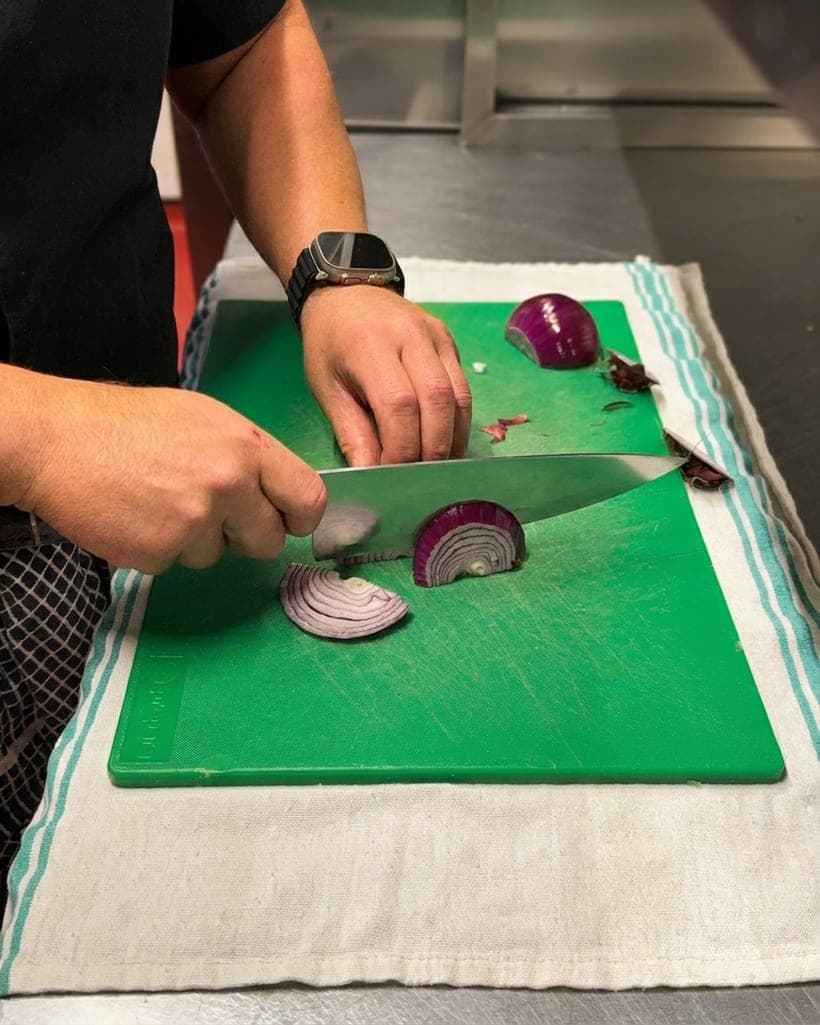
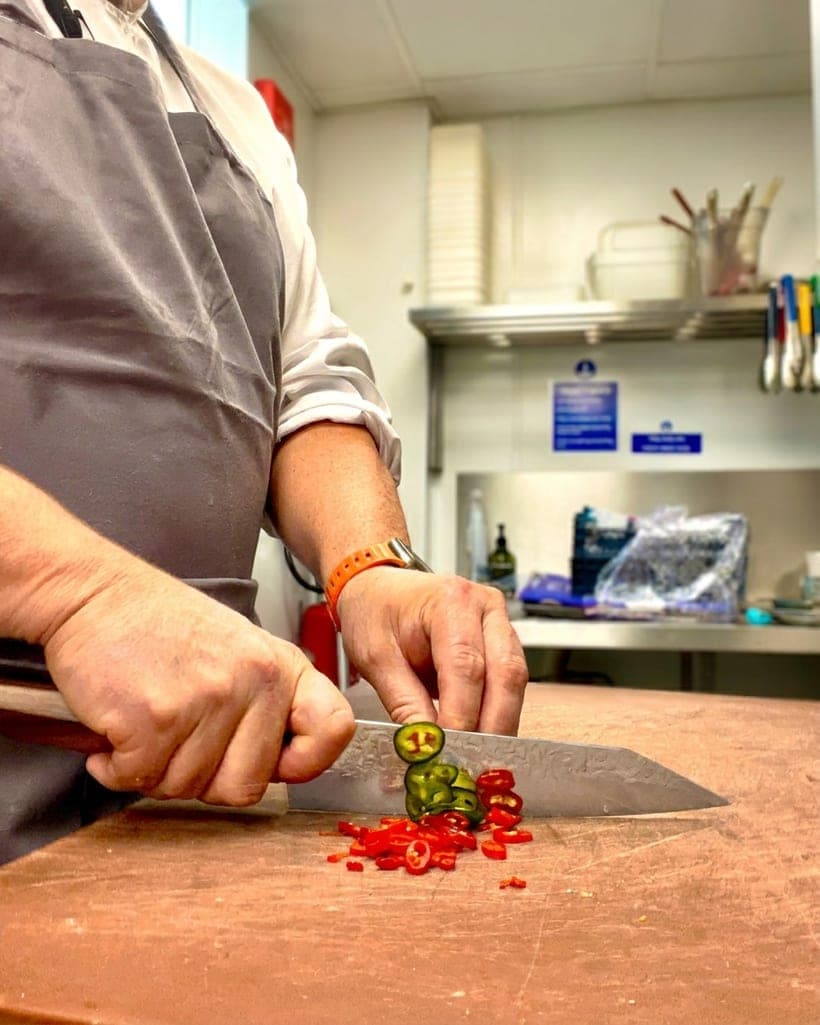
If you use a rocking motion for herbs and garlic, look for a gyuto with a bit more belly. If you prefer a push cut or pull cut, a flatter profile may feel cleaner and more efficient. Many Japanese knives favour that straighter edge contact, which suits precise vegetable prep especially well.
This is where past habits matter. A home cook transitioning from a curved German knife may need a little time to adjust to a flatter gyuto profile. That adjustment is usually worth it, but it helps to know it's there.
Thinness is a strength, but it comes with limits
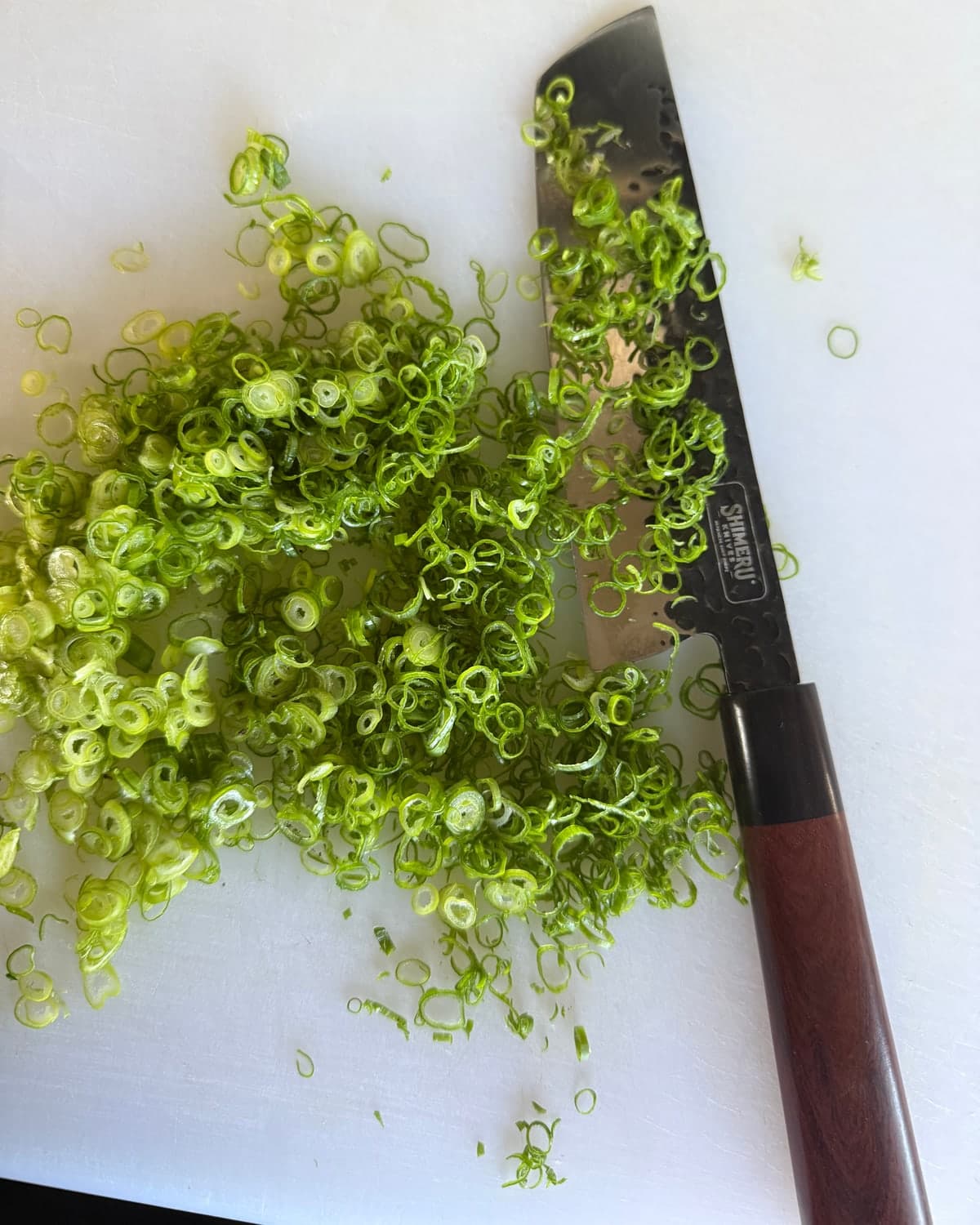
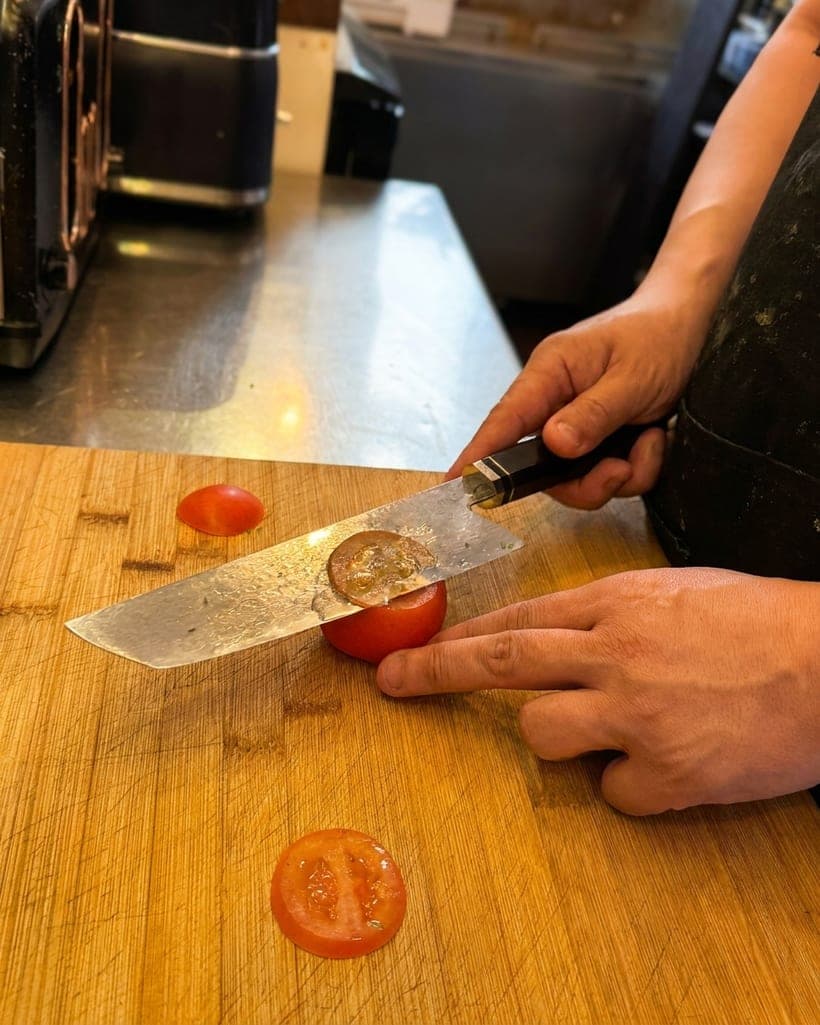
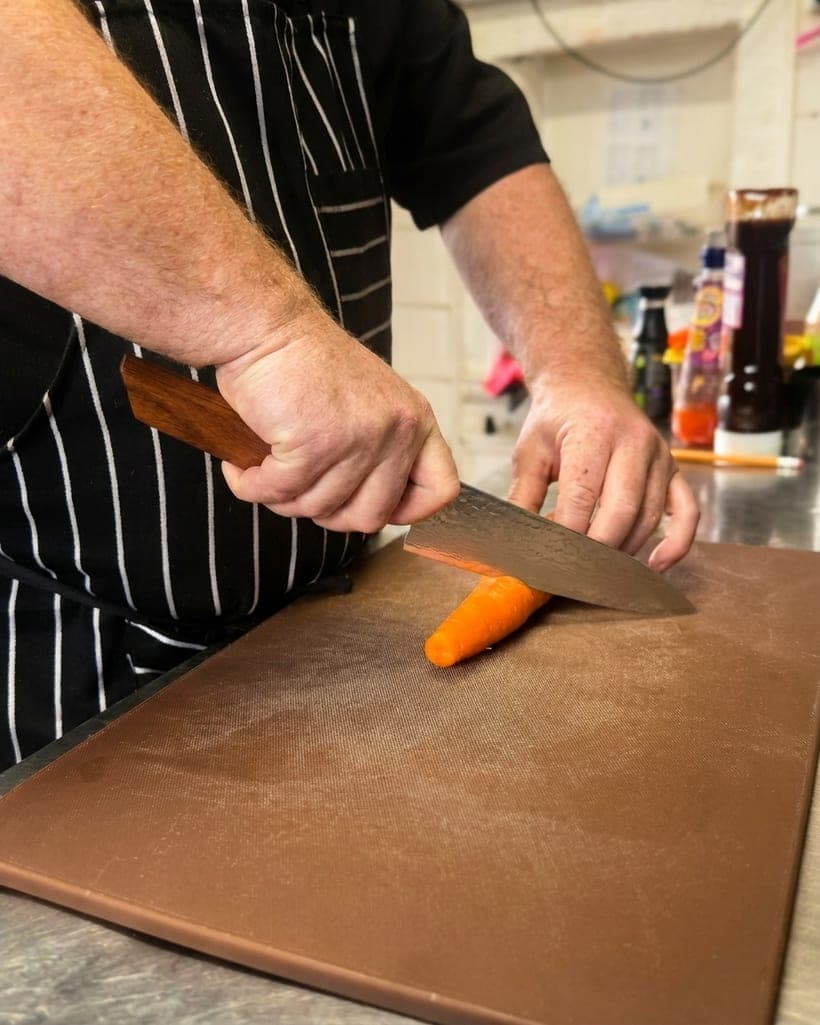
One of the biggest reasons people love gyutos is the thinness behind the edge. It helps the knife glide through onions, carrots, and proteins with less resistance. Cuts look cleaner. Prep feels easier. That's the magic people notice.
The trade-off is durability under misuse. A thin, hard Japanese blade should not be torqued sideways through squash, scraped harshly across the board, or used on bones. Better performance asks for a little more care.
For most home cooks, that care is simple. Use a wood or soft synthetic board, cut straight rather than twisting, hand wash, and store the knife safely. You don't need to be precious. You just need to be sensible.
Don't buy aesthetics alone
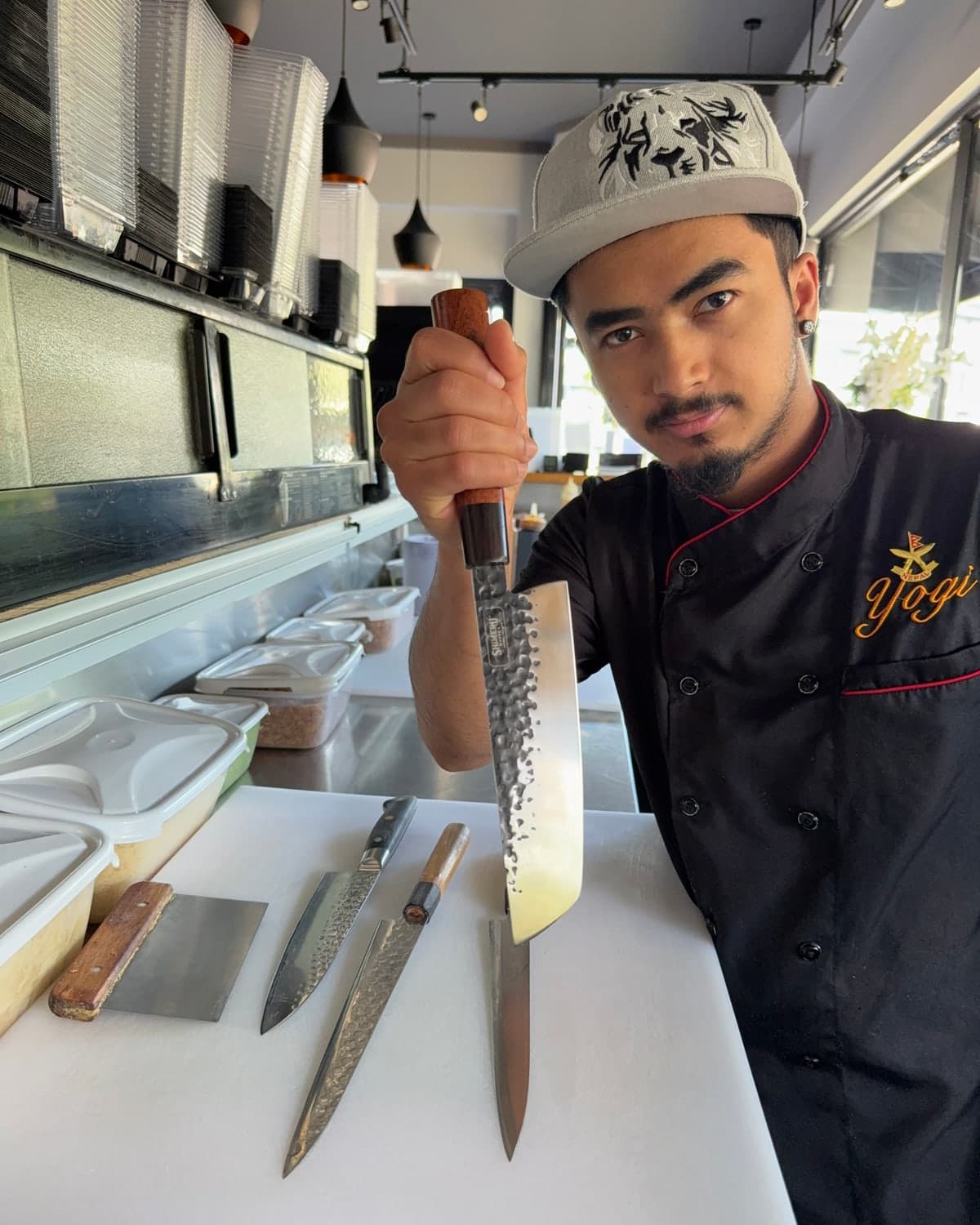
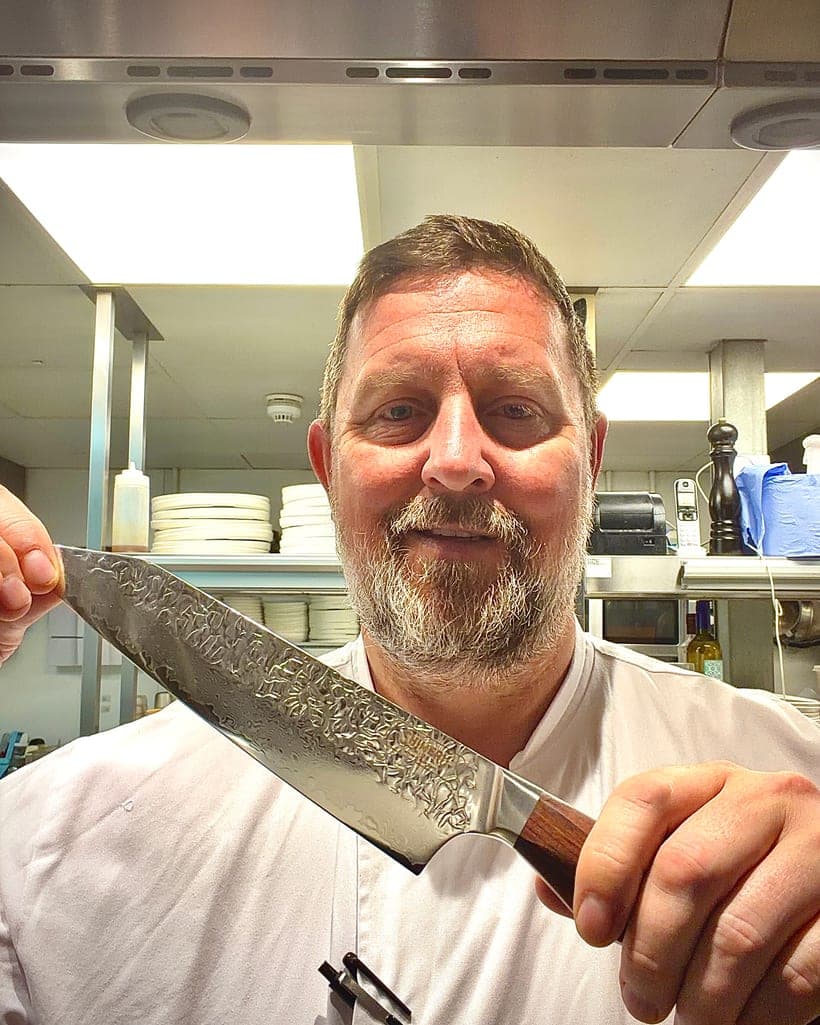
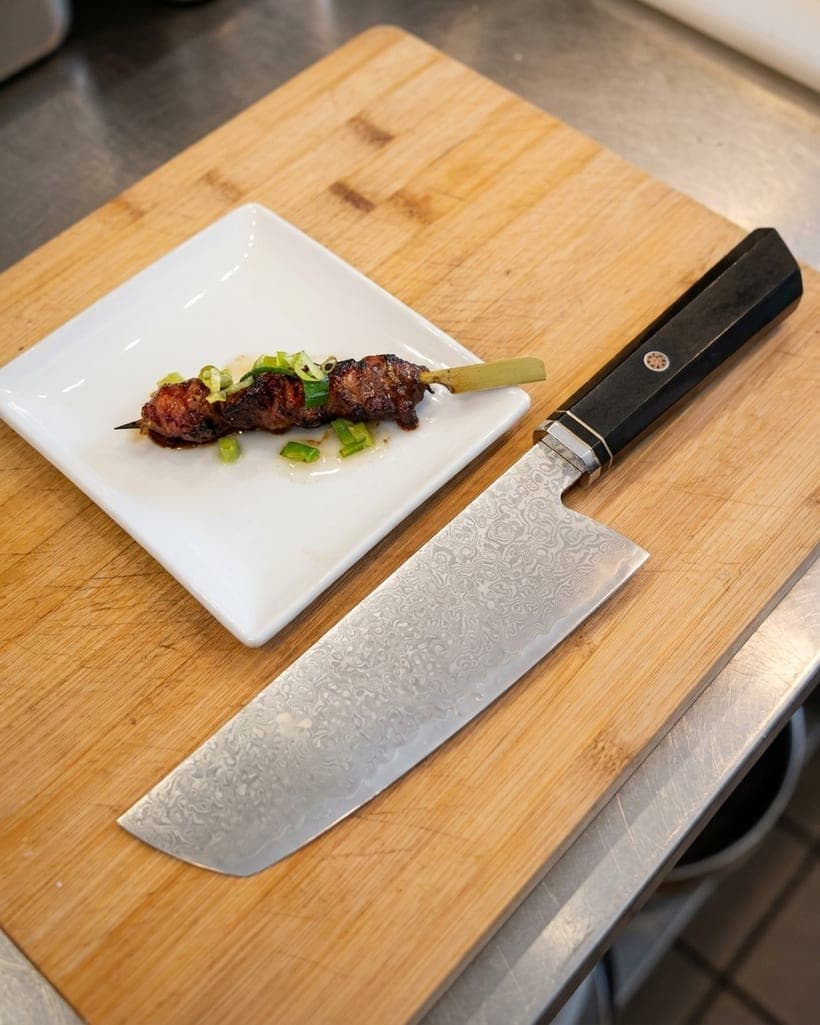
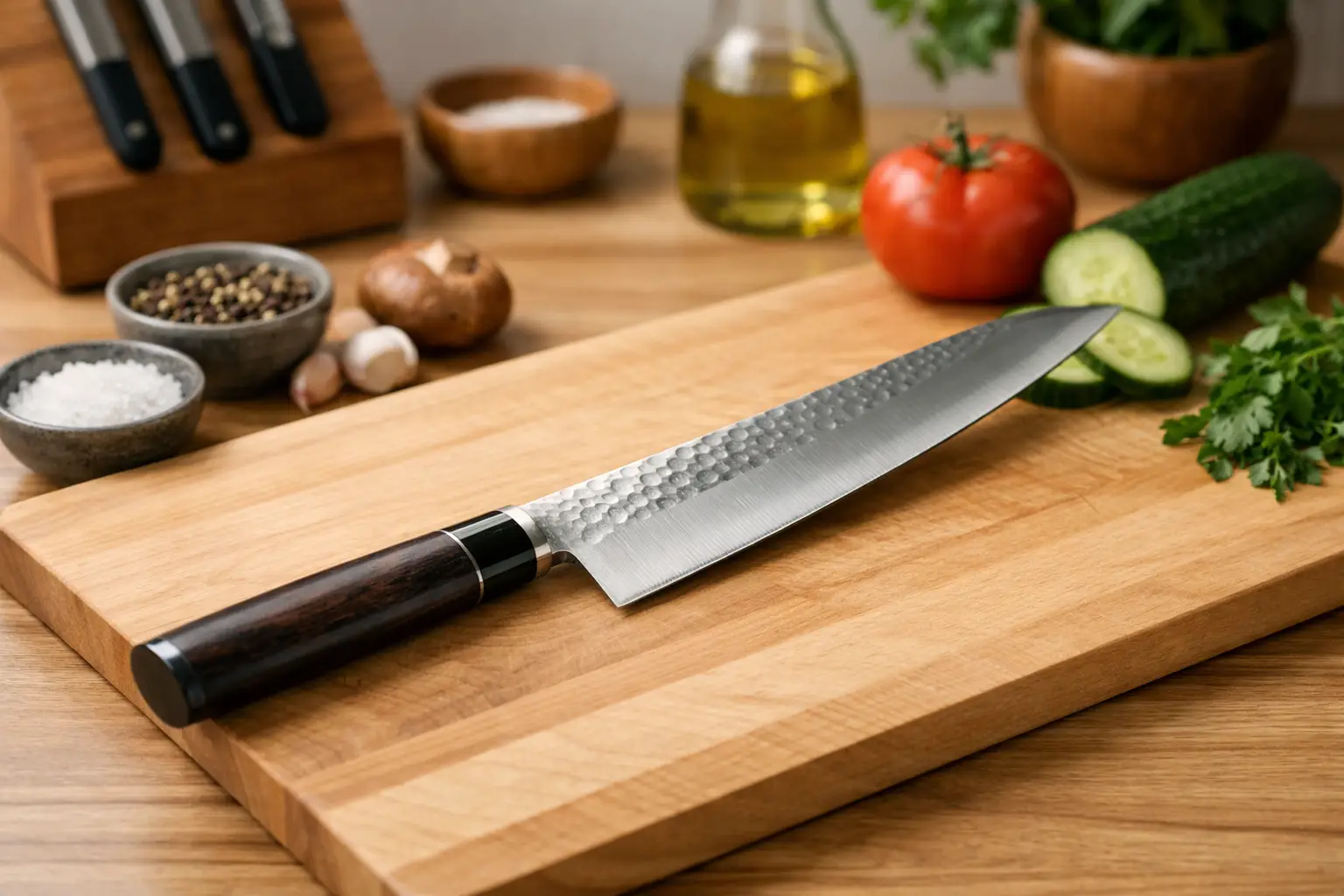
Hammered finishes, layered patterns, and polished cladding can be stunning. They're part of what makes Japanese knives so appealing. But beauty should follow performance, not replace it.
If you're choosing between a flashy knife with vague specifications and a simpler gyuto with the right size, steel, and grind, choose performance. The pleasure of a knife comes from the way it works every day, not just how it looks when you unbox it.
That said, appearance still matters. A knife you love reaching for is a knife you'll use and care for well. Just make sure the visual appeal sits on top of the fundamentals rather than distracting from them.
Who should buy a gyuto instead of a santoku
If you want one knife that covers almost everything, a gyuto usually gives you more flexibility than a santoku. It has more length for slicing and portioning, and it feels closer to a classic chef's knife while delivering Japanese precision.
A santoku can be a great choice for smaller hands, smaller kitchens, or cooks who mainly prep vegetables and boneless proteins. But if you want broader range and a more natural upgrade path from a Western chef's knife, the gyuto tends to win.
For many home cooks, it's the knife that makes the rest of the collection optional.
The best gyuto is the one you'll use often
A great gyuto should make dinner prep easier on ordinary days, not just impress you on special ones. That usually means choosing a practical length, easy-care steel, comfortable balance, and a profile that matches how you already cut.
At Shimeru Knives, that's the standard worth chasing - precision, balance, and craftsmanship that feel immediately useful at home. Buy for fit, not hype. The right gyuto won't ask you to become a different kind of cook. It will simply make you better at being the cook you already are.