
Santoku Knife Guide for Novices, Made Simple
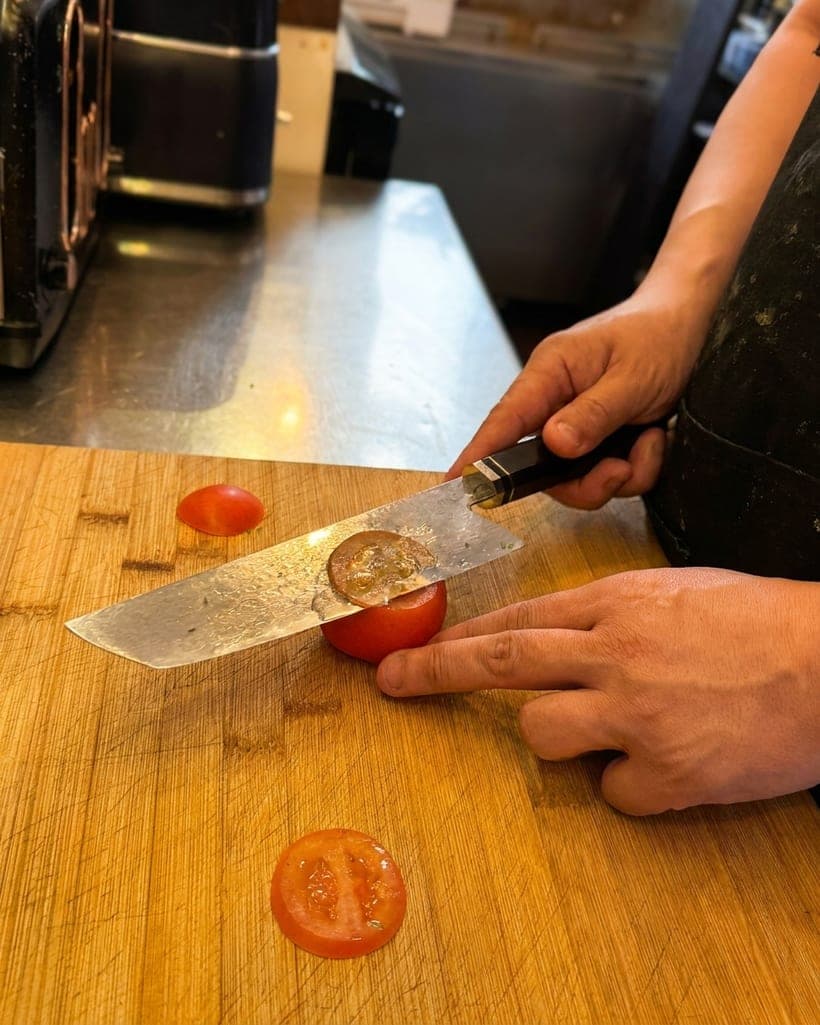
There is a moment when a well-made santoku meets a ripe tomato: the blade glides through with barely a whisper, leaving clean, even slices that hold their shape. This santoku knife guide for novices goes beyond the elegant Japanese silhouette to answer the practical question: is this the best everyday knife for your kitchen?
For many home cooks, the answer is yes. A santoku is compact, agile, and exceptionally capable with the ingredients that fill daily meal prep: vegetables, herbs, boneless proteins, fruit, and garlic. It is not meant to replace every knife, and it does ask for a little more thoughtful care than a basic supermarket set. In return, it makes prep feel more precise, more comfortable, and considerably more enjoyable.
Santoku Knife Review for Beginners: The Verdict
A santoku is one of the strongest first Japanese-style knife choices for a confident beginner. Its shorter blade feels approachable, its light balance rewards controlled cutting, and its broad face makes moving chopped food from board to pan easy. If your cooking leans toward weeknight dinners, stir-fries, salads, roasted vegetables, and boneless chicken or fish, it can quickly become the knife you reach for first.
The trade-off is blade length. Most santokus measure around 5 to 7 inches, while a classic Western chef's knife is often 8 inches. That extra reach is useful for large squash, watermelons, hefty cabbage, or big batches of food. Cooks who regularly break down large cuts of meat may also prefer the longer profile of a gyuto.
Think of the santoku as a precise all-purpose knife rather than a do-everything tool. It excels at nearly all everyday prep, but it is not for bones, frozen food, hard squash stems, or prying apart joints.
What Makes a Santoku Feel Different?
Santoku means “three virtues,” traditionally referring to its ability to handle slicing, dicing, and mincing. The name is useful, but the shape tells the more important story. The blade is generally broad and fairly flat through the cutting edge, with a gentle curve near the tip. Its blunt-looking sheep's-foot tip is designed for control rather than piercing.
That flatter edge changes the way you cut. A Western chef's knife often encourages a pronounced rocking motion. A santoku is happiest with a forward-and-down slice or a controlled up-and-down chop. You can make a small rocking motion near the tip, but a full, dramatic rock is not where this blade feels most natural.
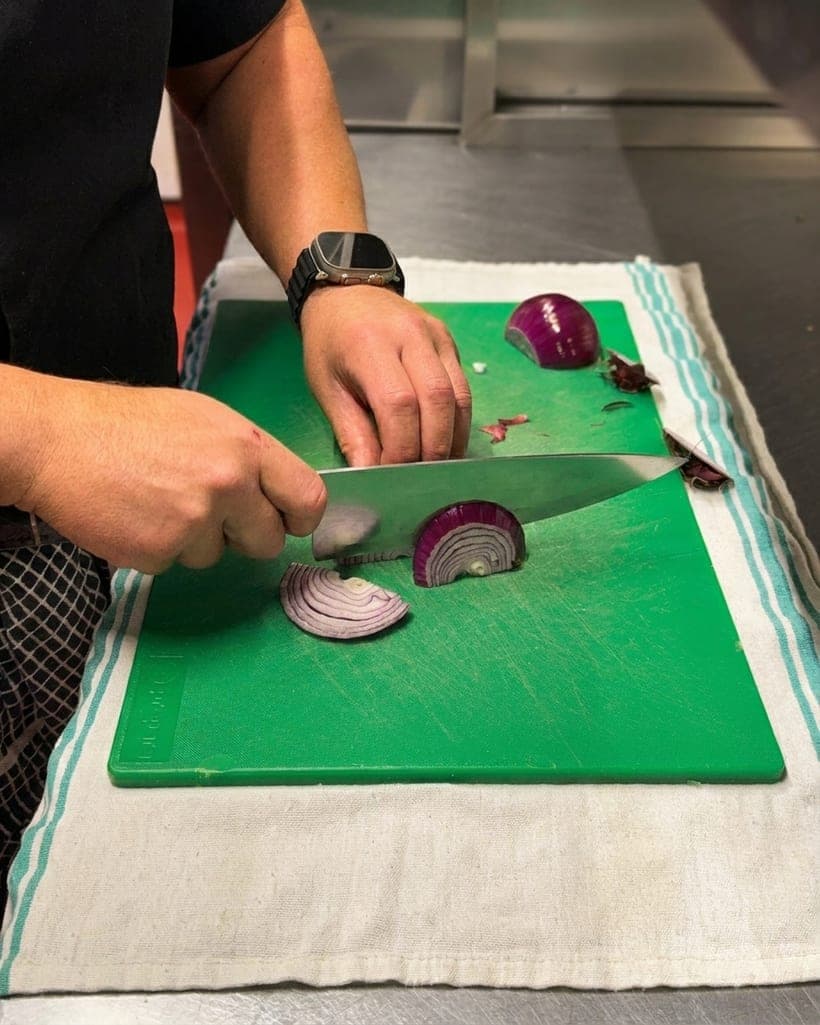
For beginners, this can be a genuine advantage. The blade stays in closer contact with the cutting board, giving you a stable, predictable rhythm. It is especially satisfying when finely chopping herbs, making neat vegetable slices, or cutting onions without turning their layers into a bruised mess.
The blade's width also matters. It gives your knuckles clearance from the board and creates a useful surface for scooping diced vegetables. Once you have cut a pile of peppers or carrots, turn the knife sideways and transfer them carefully. Use the spine, not the sharp edge, to scrape food from the board.
Sharpness, Balance, and Steel: What You Will Notice
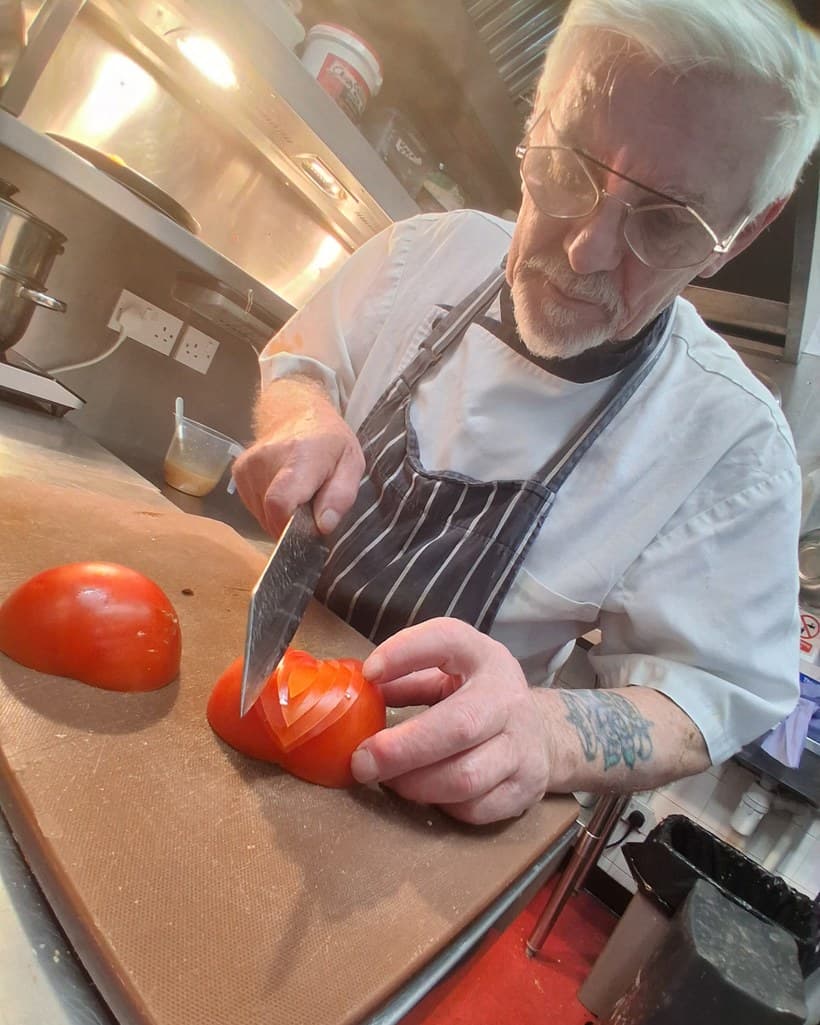
A premium Japanese-style santoku earns its place through feel as much as appearance. The best examples are thin behind the edge, meaning there is less blade forcing its way through food after the edge begins the cut. This reduces resistance and produces cleaner slices, particularly in tomatoes, herbs, and delicate fish.
Sharpness is only useful if you can control it. A santoku's lighter weight and shorter blade make it less intimidating than a large chef's knife, yet it should still feel planted rather than flimsy. Look for a balance point close to the pinch grip, where your thumb and index finger hold the blade just ahead of the handle. This helps the knife feel responsive without becoming tiring during a longer prep session.
Steel quality influences how long that satisfying edge lasts. Japanese knife steels are often hardened more than entry-level Western knives, allowing for a finer, keener edge with strong edge retention. In practical terms, you spend more time cutting cleanly and less time wondering why your knife is slipping on a pepper skin.
Harder steel does bring a responsibility: avoid twisting the blade through food, cutting on glass or stone, and tossing it loose in a drawer. A sharp knife is safer in use because it requires less force, but it deserves careful handling.
Santoku vs. Chef's Knife vs. Nakiri
Choosing among these popular formats comes down to how you cook and what feels natural in your hand.
A santoku is the adaptable middle ground. Its compact length is ideal for smaller kitchens, modest cutting boards, and cooks who prefer nimble control. It handles vegetables beautifully but still has enough versatility for boneless meat, fish, and fruit.
A gyuto, often called a Japanese chef's knife, offers more blade length and a pointed tip. Choose it if you cook for a crowd, want one knife for larger ingredients, or enjoy the rocking motion of a traditional chef's knife. An 8-inch gyuto gives you more range, though it can feel less manageable at first.
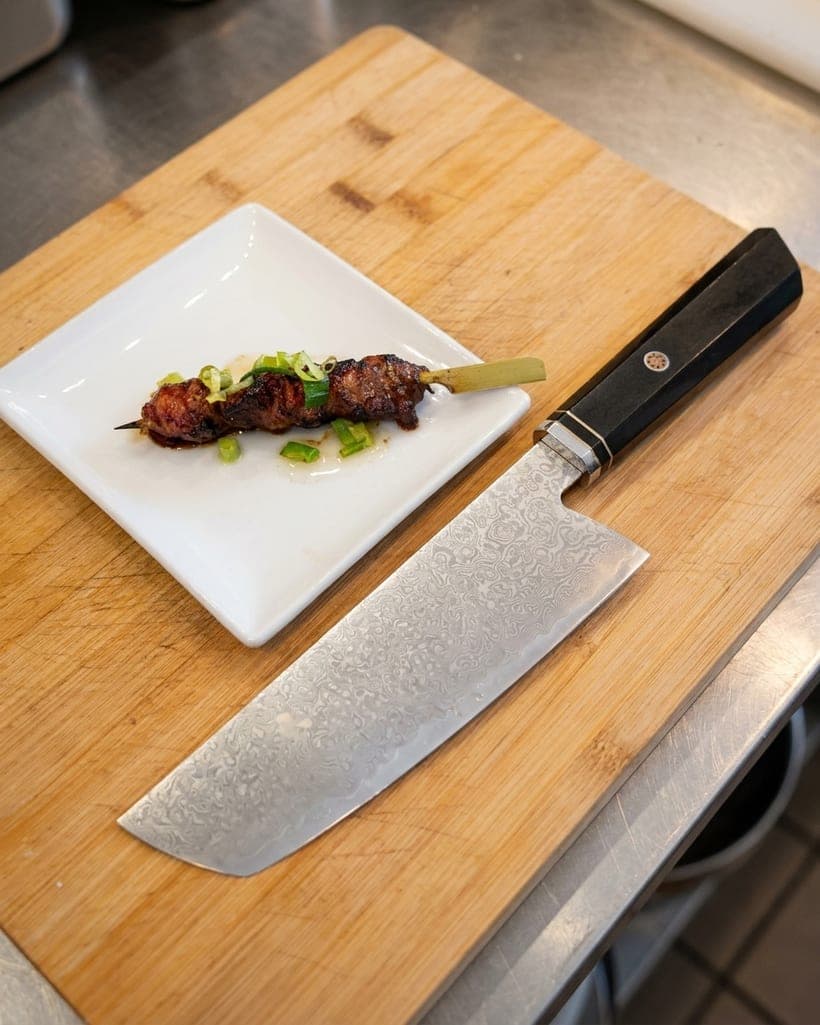
A nakiri is the dedicated vegetable specialist. Its rectangular blade and very flat edge make it a joy for repetitive chopping, but its squared-off tip makes delicate detail work less natural. If vegetables are the centre of your cooking, a nakiri is a wonderful second knife. For a first premium blade, the santoku is usually more flexible.
What to Look for in Your First Santoku
Start with size. A 6-inch or 7-inch santoku offers the best balance for most adults. A 5-inch blade can suit very small hands or tight workspaces, but it gives up useful board coverage. If possible, compare the blade length with the size of the cutting board you use most often.
Next, pay attention to the handle. There is no universal winner between a traditional Japanese-style wa handle and a more familiar Western-style handle. A wa handle is often lighter and can shift the balance slightly toward the blade. A Western-style handle may feel more familiar if you are moving from a standard knife block. The right choice is the one that lets you maintain a relaxed pinch grip without squeezing.
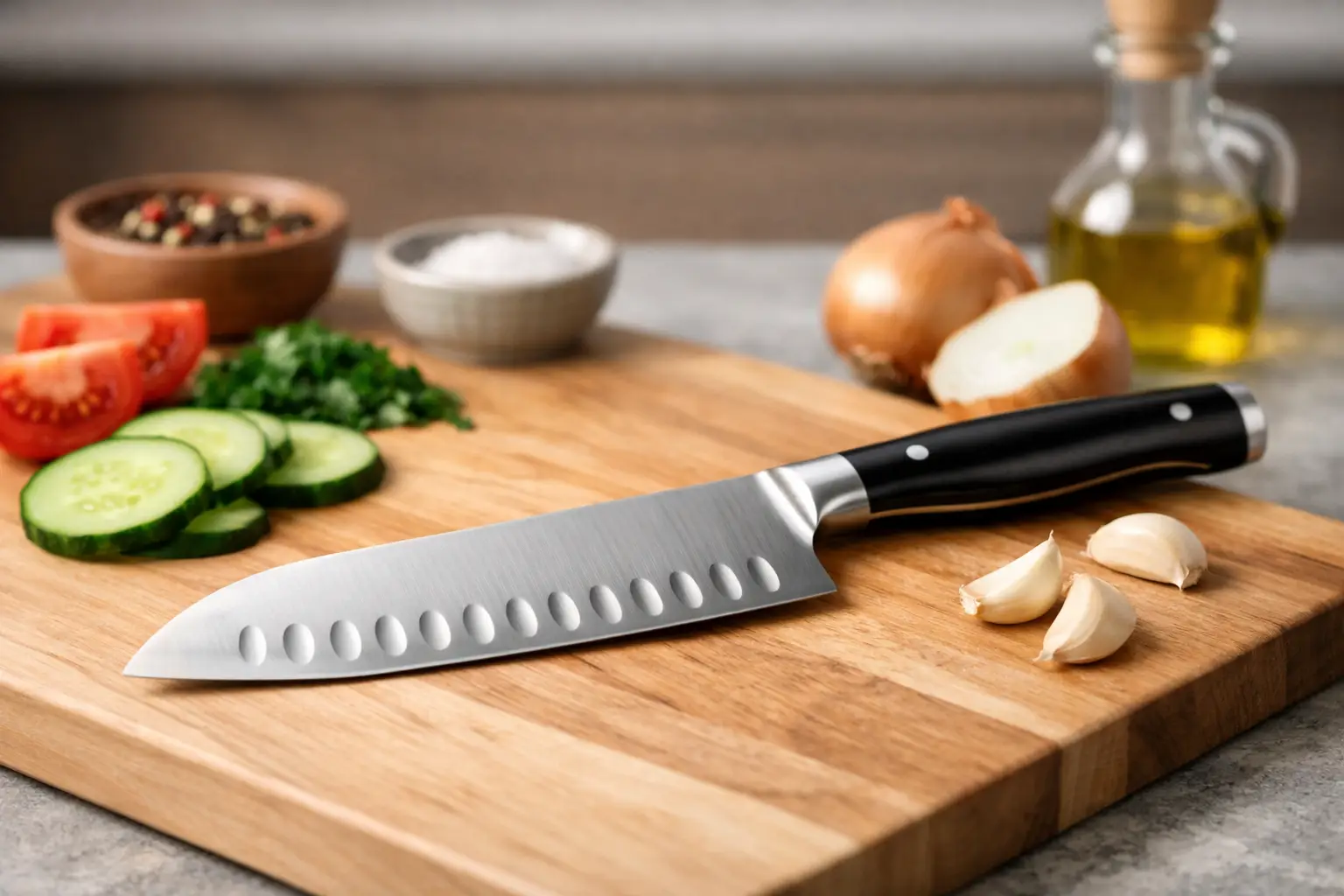
You may also see santokus with small oval dimples along the blade, often called grantons. These can reduce sticking with some wet, thin slices, such as potatoes or cucumber. They are a useful feature, not a reason to choose a knife on their own. Blade geometry, steel, handle comfort, and overall fit matter more.
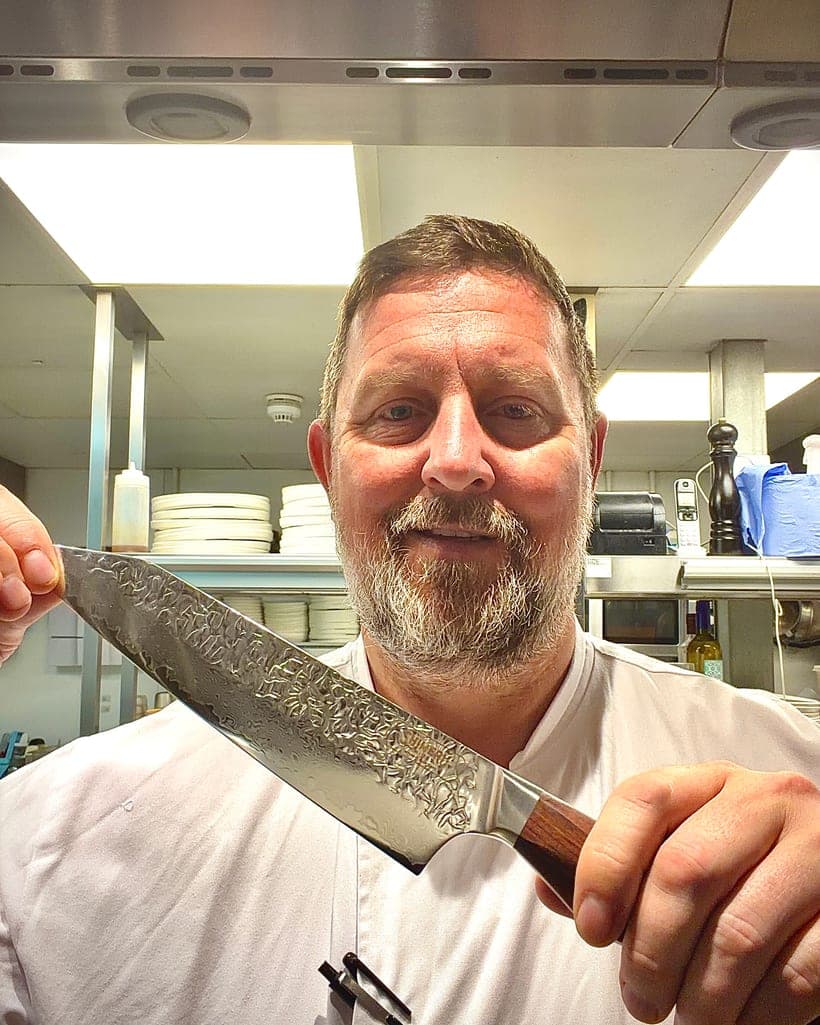
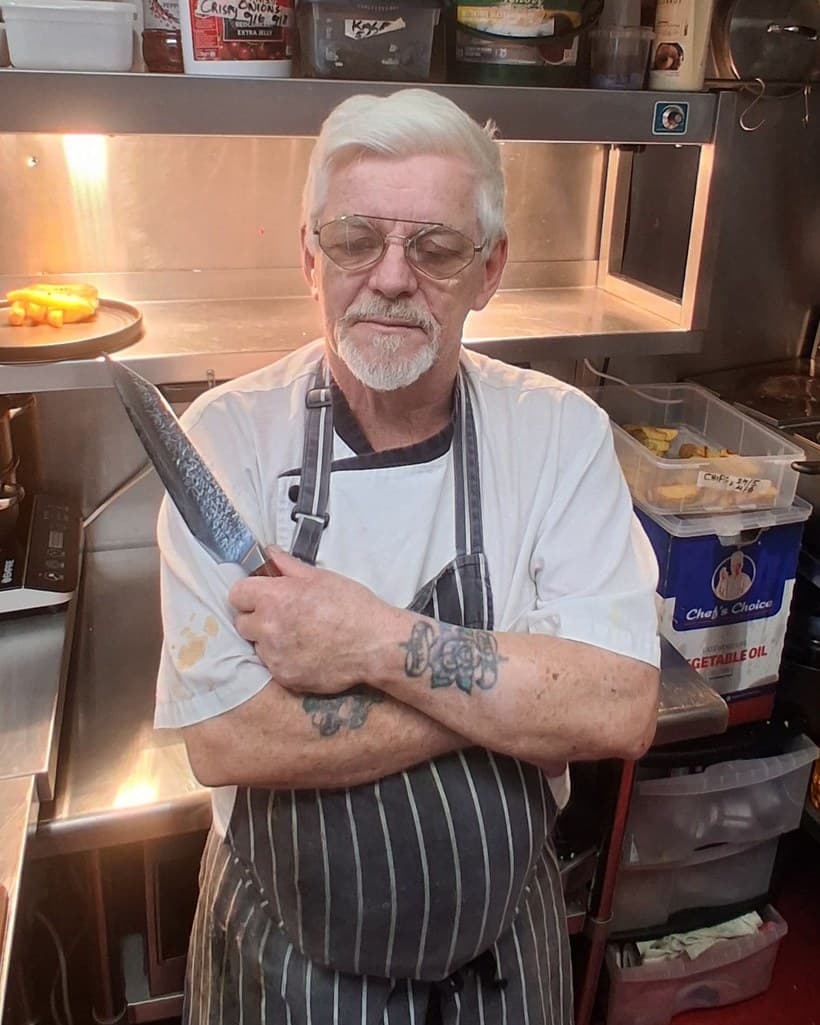
Finally, do not mistake decorative patterning for performance. Damascus cladding can be beautiful, and it may protect a harder steel core, but the quality of the edge and the knife's construction matter far more than visual drama. Choose the knife you will enjoy using every day, not just admiring on a magnetic rack.
A Beginner-Friendly Way to Use It
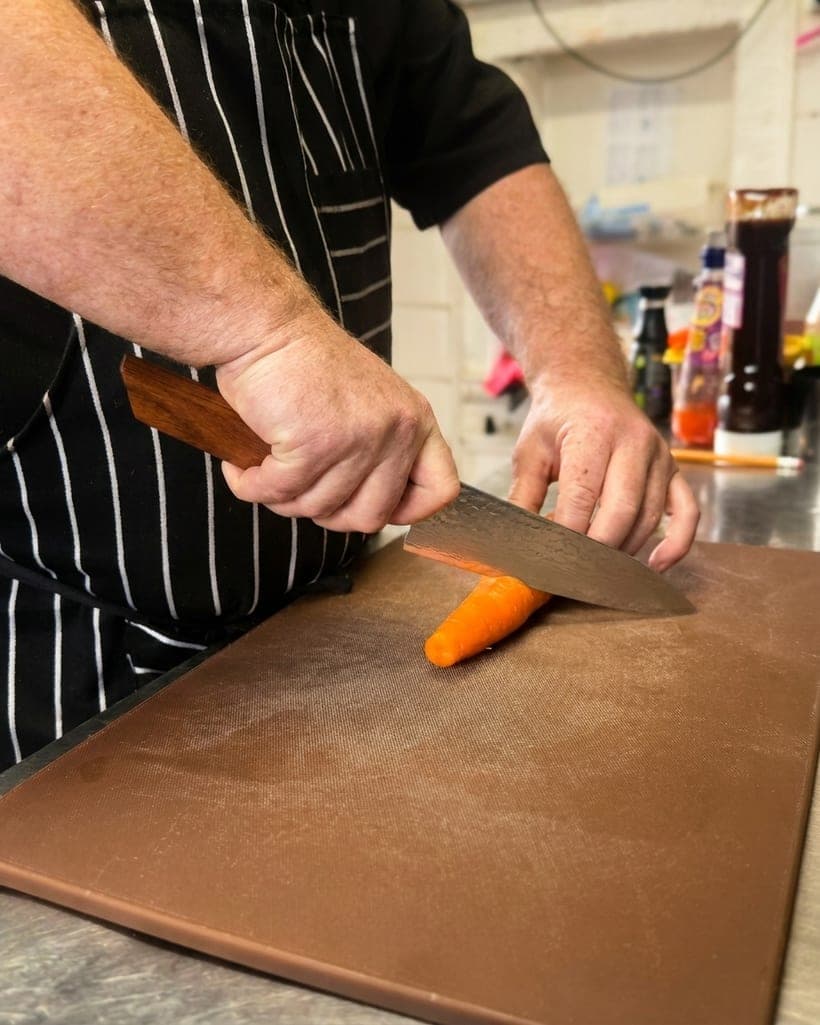
Set up a stable cutting board with a damp towel underneath it. Hold the handle with three fingers, then pinch the blade just in front of the handle with your thumb and index finger. Your guiding hand should curl its fingertips inward, using the flat of your knuckles as a guide for the blade.
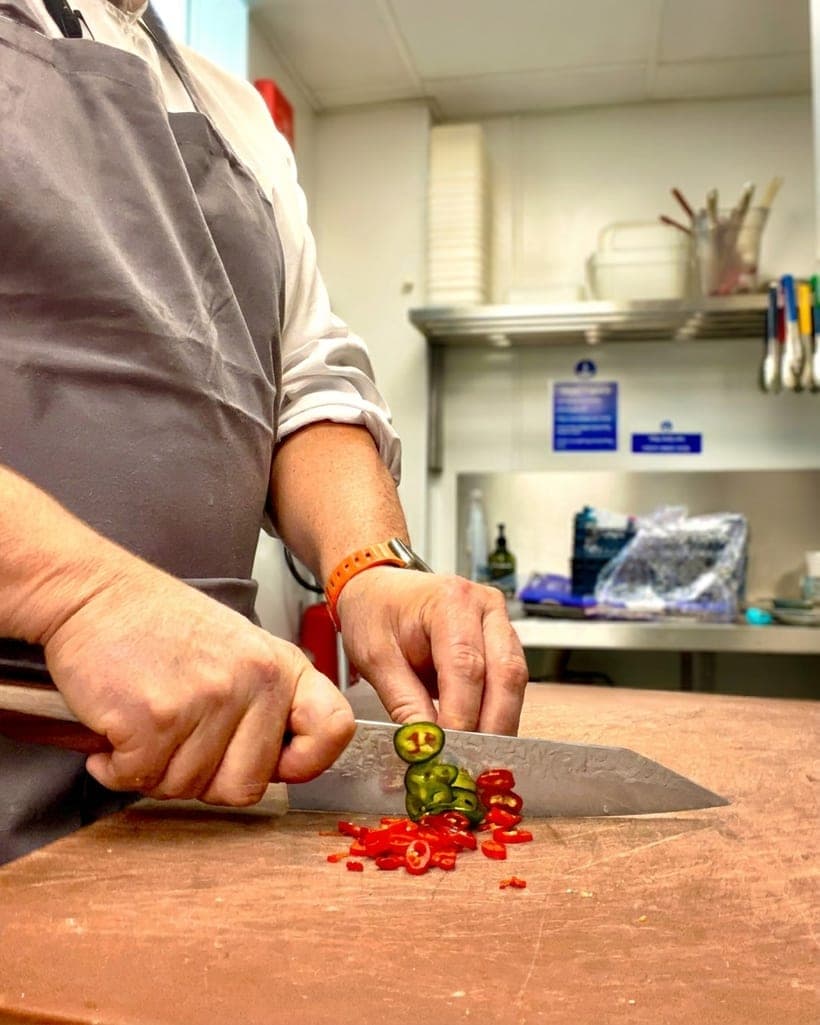
For vegetables, start with deliberate forward slices rather than fast chopping. Let the edge travel forward and down through the food. When mincing herbs, gather them into a small mound and use short, controlled strokes, keeping the tip near the board. Speed arrives naturally once your grip and rhythm are consistent.
A santoku's broad blade also makes it tempting to crush garlic with the side. This is usually fine if you apply gentle pressure to the flat of the blade, but avoid striking or bending it. Treat a fine Japanese edge with respect and it will reward you for a long time.
Care That Protects the Edge
Wash your santoku by hand with mild soap and warm water, then dry it immediately. The dishwasher is not worth the risk: harsh detergent, heat, and collisions with other items can damage both edge and handle.
Use a wood or quality plastic cutting board. Glass, marble, ceramic, and granite may look clean and modern, but they are punishing surfaces for a fine edge. Store the knife in a blade guard, on a magnetic strip with the edge facing up, or in a proper knife block where it cannot knock against other tools.
When the knife no longer glides through a tomato or onion skin, have it sharpened properly or use a suitable whetstone if you are ready to learn. A honing rod can help maintain some Western knives, but it is not a substitute for sharpening, and a coarse rod can be too aggressive for a thin Japanese edge.
Is a Santoku Worth It for a Beginner?
If you want one elevated knife that makes ordinary prep more satisfying, a santoku is absolutely worth considering. It offers the precision and lightness that draw cooks toward Japanese knives without demanding professional technique or a collector's budget. Shimeru Knives approaches this format as it should be approached: as a practical daily tool with real craft behind it.
Choose a santoku if you value control, cook plenty of vegetables, and want a compact blade that feels quick in the hand. Choose a gyuto instead if you regularly tackle large ingredients or want a longer, more traditional chef's-knife profile. Either way, the best first knife is the one that makes you want to put a cutting board on the counter and cook something good tonight.