







VG10 vs SG2 Steel: Which Knife Steel Comes Out on Top?
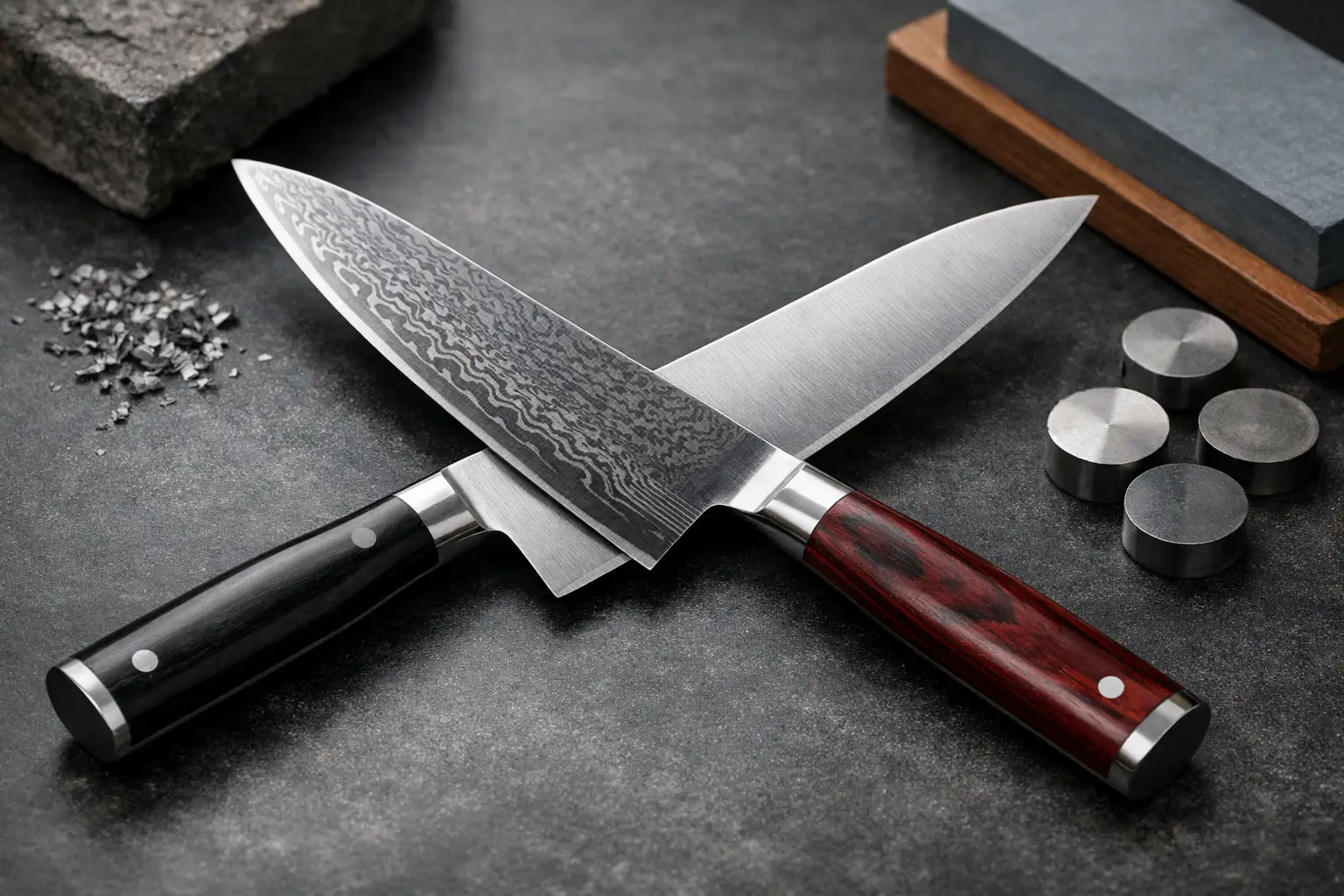
Choosing between VG10 and SG2 steel can feel like a technical decision, but for most home cooks it is really about how you want your knife to behave day in and day out. Both are respected Japanese knife steels, both can take a very sharp edge, and both show up in premium kitchen knives. But they do not deliver the same experience on the board.
If you are buying your first serious Japanese knife, the choice usually comes down to a simple question. Do you want a blade that is easier to live with, or one that pushes harder on pure performance? For most home cooks, that is the real difference between VG10 and SG2.
VG10 vs SG2 steel at a glance
VG10 is a stainless steel known for its balance. It gets sharp, holds an edge well, resists corrosion, and is generally easier to sharpen than more wear-resistant premium steels. That makes it a common recommendation for people moving up from standard Western knives.
SG2, sometimes labelled R2, is a powdered stainless steel built for finer grain structure and stronger edge retention. In practical terms, that often means a knife that stays sharp longer and can support a thinner, more refined edge. The trade-off is that it usually costs more and can take more time and skill to sharpen.
Neither steel is automatically better. The better choice depends on how often you cook, how much maintenance you are comfortable with, and whether you value convenience or maximum cutting performance.
What VG10 feels like in use
VG10 became popular for good reason. It offers a noticeable upgrade from softer mass-market stainless steel without demanding collector-level care. A well-made VG10 gyuto or santoku feels crisp, responsive, and precise, especially if you have spent years using thicker German-style knives.
For everyday prep, VG10 has a forgiving quality. It holds a sharp edge long enough to feel premium, but it does not punish you as much when it finally needs sharpening. If you cook three to five nights a week, slice vegetables, portion proteins, and want a knife that feels special without feeling precious, VG10 sits in a very comfortable middle ground.
That balance matters more than steel charts suggest. Many home cooks do not need the absolute longest edge life. They need a knife that performs beautifully, is realistic to maintain, and still feels like an upgrade every time it comes out of the drawer or onto the magnetic strip.
What SG2 feels like in use
SG2 is where things get a little more performance-driven. Because it is a powder metallurgy steel, it is made with a very fine and uniform structure. In a finished kitchen knife, that often translates to exceptional sharpness and edge retention.
The first thing many people notice with SG2 is how long it keeps that clean, eager bite. Onions, herbs, peppers, and proteins keep feeling precise deep into regular use. If you cook often and dislike the feeling of your knife gradually losing its snap, SG2 is appealing for exactly that reason.
There is, however, a catch. SG2 is less about easy ownership and more about refined performance. It tends to be harder, which helps with edge retention, but can make sharpening slower. It can also be less forgiving if the knife is misused, such as twisting through hard squash, hitting bones, or being dropped in a sink.
For careful home cooks, that is not necessarily a problem. It just means SG2 rewards good habits more than VG10 does.
Sharpness and edge retention
In a direct vg10 vs sg2 steel comparison, SG2 usually wins on edge retention. If both knives are made well and sharpened properly, SG2 will generally stay sharp longer. That makes it especially attractive if you cook often, prep large volumes, or simply hate frequent touch-ups.
Sharpness itself is a little more nuanced. Both steels can get very sharp. The bigger difference is how long that sharpness lasts and how refined the edge can feel. SG2 often supports a more laser-like cutting sensation, while VG10 still feels excellent but slightly more practical than extreme.
For most home cooks, the gap is real but not dramatic in every task. If you mostly slice vegetables, fruit, boneless meat, and herbs, both can feel outstanding. If you are sensitive to edge performance and want the knife to hold that fresh-sharpened feel for longer stretches, SG2 earns its premium.
Toughness and forgiveness
This is where VG10 often makes a stronger case than steel enthusiasts admit. Kitchen knives are tools for real life. They meet crowded cutting boards, rushed dinners, and imperfect technique.
VG10 is not soft, but it is often a bit more forgiving in day-to-day use than SG2. That matters if you are still refining your knife skills or sharing the kitchen with a partner who does not treat knives quite as carefully as you do. A slightly more forgiving steel can mean fewer worries about microchipping and less stress about every cut.
SG2 is not fragile when heat treated and ground well, but harder steels usually ask for better habits. Use a soft cutting board. Avoid frozen food and bones. Do not scrape the edge sideways across the board. Those are good rules for any Japanese knife, but they matter more as performance goes up.
Sharpening and maintenance
If you plan to sharpen at home, VG10 has a clear advantage for many buyers. It is generally easier and faster to sharpen than SG2. You can restore a great working edge without spending as much time on the stones, and that makes ownership simpler.
SG2 takes more patience. The reward is excellent performance, but the sharpening process can feel slower, especially for beginners. If you send your knife out for sharpening or already enjoy stone sharpening, this may not bother you. If you want the least intimidating path into Japanese knives, VG10 is usually friendlier.
Both steels are stainless, which is another point in their favour for busy home kitchens. They resist rust far better than carbon steel, though stainless never means no care at all. Wash by hand, dry promptly, and store the edge properly. Good steel deserves basic respect.
Price and value
Price is often where the decision becomes clear. VG10 knives tend to deliver excellent value. You get sharpness, stainless convenience, and a distinctly Japanese cutting feel at a more accessible price point.
SG2 usually sits higher in the market because the steel itself is more expensive and is often used in more premium builds. That does not make it overpriced. It means you are paying for longer edge retention and a more performance-focused steel.
For a first premium knife, VG10 often makes more sense. It gives you a meaningful upgrade without pushing too far into enthusiast territory. For a buyer who already knows they love Japanese knives and wants a step up in edge life and refinement, SG2 can feel worth every penny.
Which steel should you choose?
Choose VG10 if you want a premium Japanese knife that feels easy to own. It is ideal for first-time buyers, frequent home cooks, and gift recipients who want better sharpness and balance without a steeper learning curve.
Choose SG2 if you care deeply about edge retention, cook often enough to appreciate it, and are comfortable paying more for a higher-performance steel. It suits confident home cooks who want a knife that feels more exacting, more refined, and more specialised.
There is also a practical truth worth saying plainly. Heat treatment, grind, geometry, and handle design matter just as much as the steel stamp on the blade. A well-made VG10 knife can outperform a mediocre SG2 one in actual kitchen use. Steel matters, but the whole knife matters more.
For many home cooks, the smartest move is not chasing the hardest steel. It is choosing the knife you will enjoy using, caring for, and reaching for every day. That is usually the knife that makes you cook more, prep with more confidence, and notice how much easier good tools make dinner feel.
If you want one simple answer, here it is. VG10 is the better all-around choice for most people. SG2 is the better choice for people who know they want more edge retention and are happy to pay for it. The best knife is not the one with the most impressive spec sheet. It is the one that fits your kitchen, your habits, and the way you actually cook tonight.