

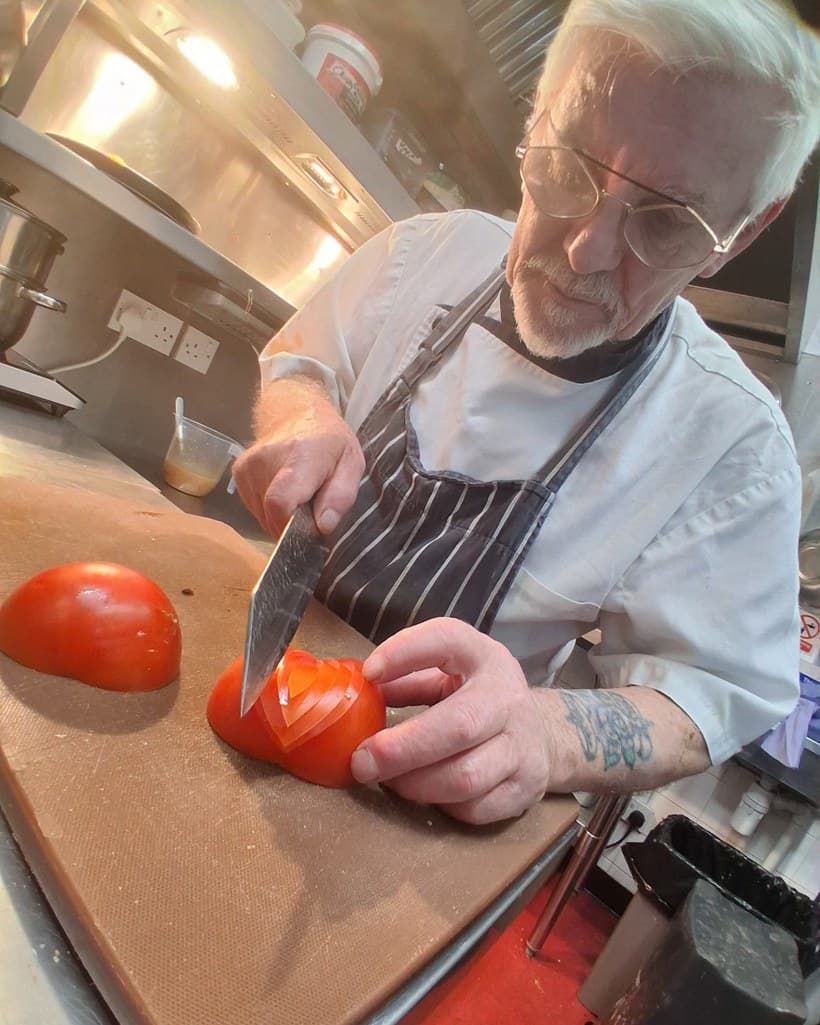
Gyuto vs Santoku: Which Knife Suits You?
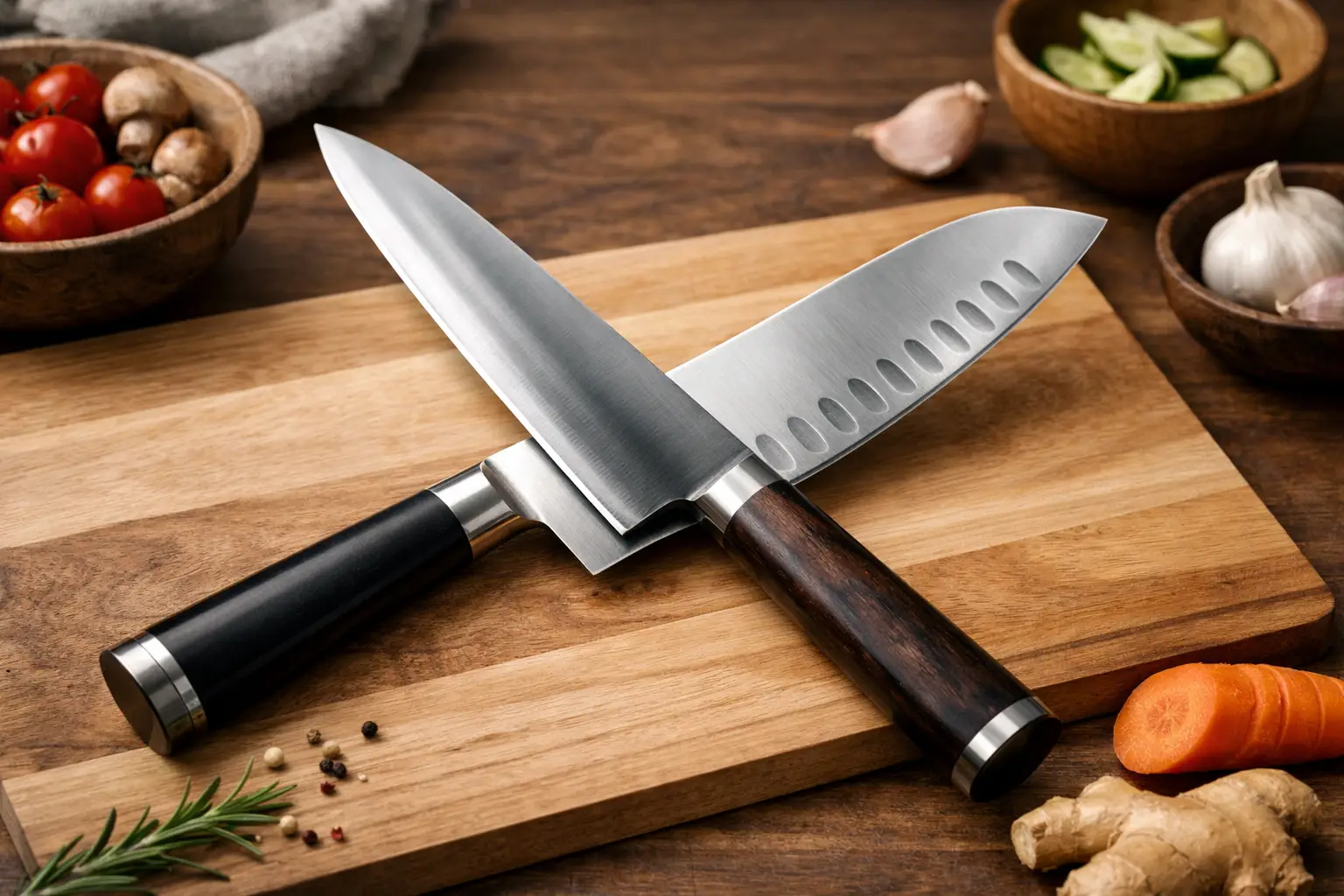
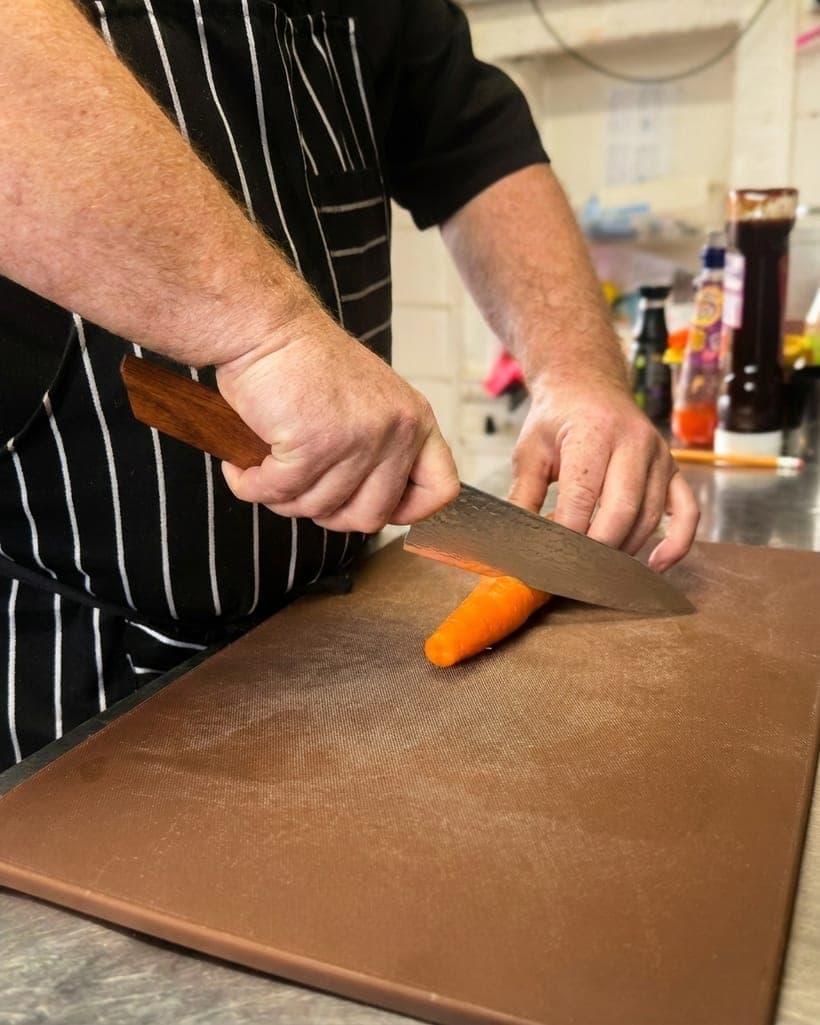
You notice it the first time you prep dinner with a better knife. Onions fall into clean slices. Herbs bruise less. Carrots stop fighting back. When people compare gyuto vs santoku, they are usually not choosing between a good knife and a bad one. They are choosing between two excellent Japanese blade styles that feel different on the board and reward different habits in the kitchen.
For most home cooks, this is not a technical debate. It is a practical one. Which knife makes weeknight cooking easier, feels more natural in your hand, and gives you the kind of control that makes prep faster and more enjoyable? That is the real question.
Gyuto vs santoku at a glance
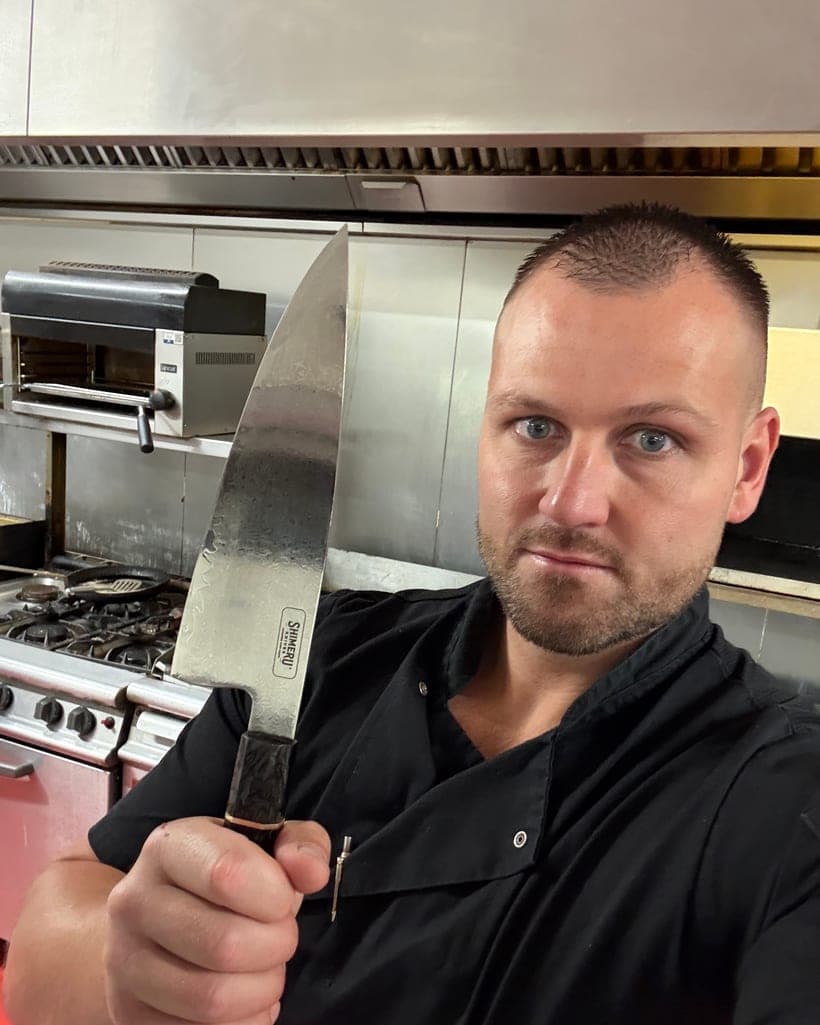
A gyuto is the Japanese answer to the Western chef’s knife. It usually has a longer blade, a pointed tip, and more curve along the edge. That shape makes it versatile and fluid, especially if you like a rocking motion for herbs, garlic, and repeated slicing.
A santoku is shorter, flatter, and a little more compact. The name is often translated as three virtues, referring to its all-purpose role for meat, fish, and vegetables. In practice, a santoku feels controlled and efficient. It excels at straight, clean cuts and tends to feel immediately approachable for home cooks.
Neither is inherently better. The better choice depends on what you cook, how much space you have, and what kind of cutting motion feels natural.
What a gyuto does best
A gyuto is often the knife people grow into and then never want to give up. The extra length gives you more slicing power, especially for larger ingredients like cabbage, melons, roasts, or piles of vegetables. If you regularly cook for a family or enjoy more ambitious prep sessions, that longer blade starts to feel like a real advantage.
The pointed tip also matters more than many shoppers expect. It helps with detail work such as trimming chicken, slicing shallots, segmenting citrus, or making precise starter cuts into onions and dense produce. A gyuto can feel like a true all-rounder because it combines volume, finesse, and rhythm in one blade.
There is also a familiarity factor. If you are upgrading from a standard Western chef’s knife, the gyuto often feels like a cleaner, sharper, lighter version of something you already understand. You keep the versatility, but gain better balance, a thinner grind, and the effortless cutting feel that draws so many home cooks toward Japanese steel in the first place.
The trade-off is that a gyuto can feel like more knife than some people want. On a small cutting board or in a compact apartment kitchen, the extra length is not always a benefit. It asks for a little more space and confidence.
Where the santoku shines
A santoku makes sense very quickly. Pick one up, and it often feels compact, balanced, and easy to place exactly where you want it. That is a big reason it has become such a popular upgrade knife for home cooks.
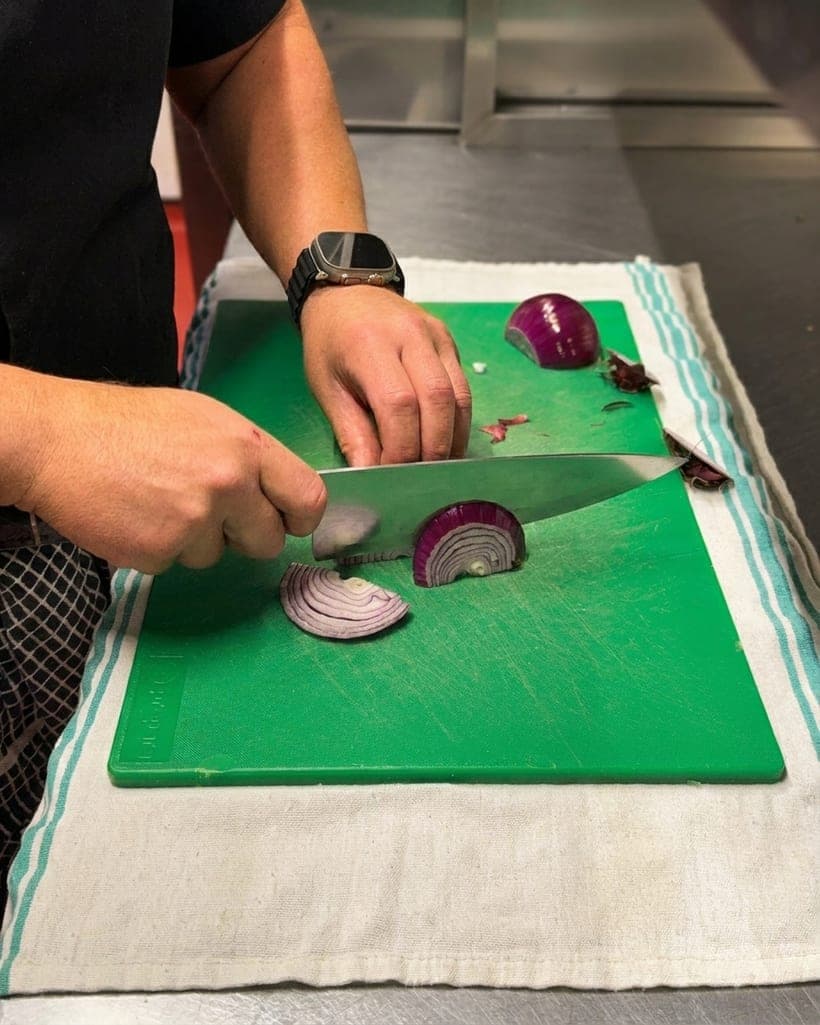
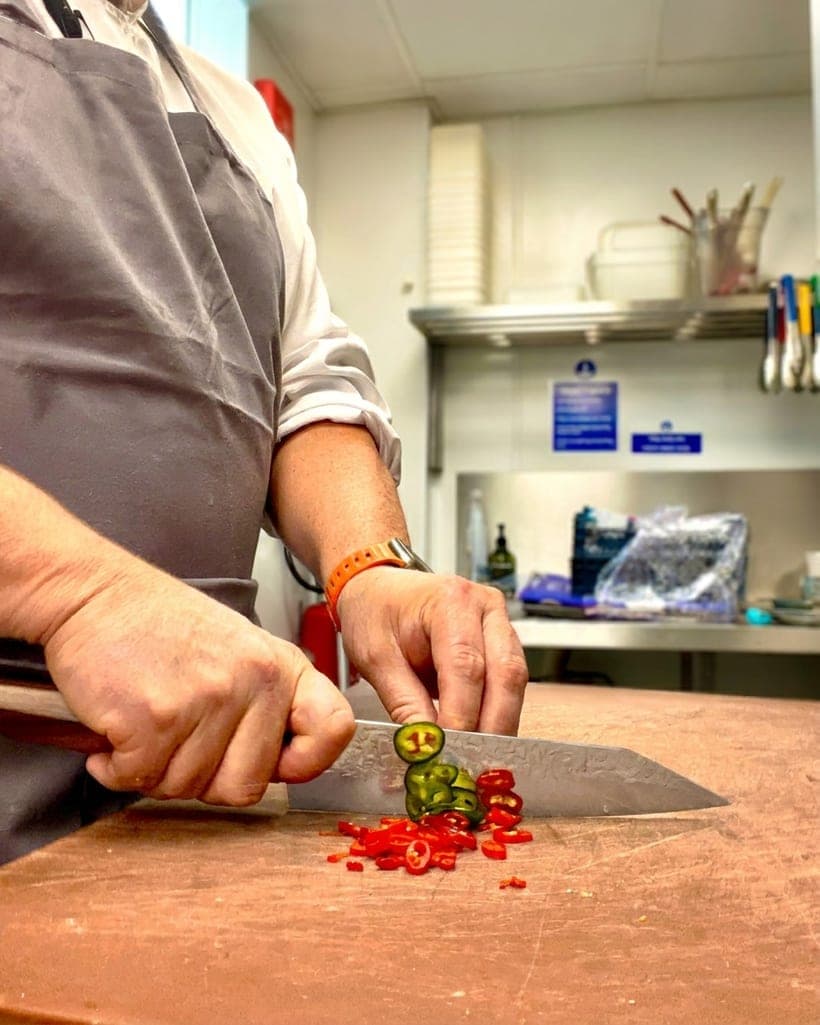
Its flatter edge encourages a push cut or chopping motion rather than a pronounced rock. If your prep style is mostly vegetables, boneless proteins, fruit, and herbs, a santoku can feel incredibly efficient. It gets down to business with very little wasted movement.
The shorter blade also inspires confidence. For newer cooks, or anyone who finds a full-size chef’s knife slightly unwieldy, a santoku often feels easier to control. It is a practical fit for everyday cooking, especially when your meals lean toward quick prep rather than large-scale carving or heavy batch work.
What you give up is a bit of reach and a bit of tip precision. Most santoku knives do not have the same fine point or blade length as a gyuto, so tasks that benefit from long draw cuts or delicate tip work may feel less natural. Not impossible, just less fluid.
Gyuto vs santoku for home cooks
If your cooking is varied and you want one knife to handle almost everything, the gyuto usually offers the broadest range. It is especially strong if you cut larger ingredients, use a rocking motion, or want a knife that can move easily between vegetables, proteins, and finer prep.
If you cook most nights, prefer a compact tool, and want a knife that feels intuitive from day one, the santoku is hard to argue against. For many kitchens, it is the sweet spot between performance and ease.
This is why the choice is so personal. Two home cooks can make the same meals and still prefer different knives. One wants reach, flow, and a pointed tip. The other wants control, simplicity, and a flatter edge that feels planted on the board.
How blade shape changes the cutting experience
Knife comparisons often sound abstract until you connect shape to motion. A gyuto’s gently curved belly supports rocking. If you naturally keep the tip near the board and move the heel up and down, a gyuto will usually feel smoother.
A santoku, with its flatter edge profile, favours clean forward cuts and straight downward chopping. That can make vegetable prep feel especially tidy and precise. You spend more time making direct contact with the board, and less time rolling through the cut.
This difference matters because comfort becomes speed. A knife that matches your natural movement feels easier, and easier usually means better technique, more consistency, and less fatigue over time.
Size, weight, and confidence
Japanese knives are often lighter and more agile than the average Western knife, but even within that category, gyuto and santoku feel distinct. Gyutos commonly run around 8 to 10 inches, while santokus are often closer to 7 inches. That inch or two changes the experience more than spec sheets suggest.
A longer blade can feel graceful and efficient once you are comfortable with it. It lets the knife do more of the work. But if you have smaller hands, limited counter space, or simply prefer a closer, more compact feel, the santoku can be the more confidence-building option.
That is not about skill level so much as preference. Plenty of experienced cooks love santokus precisely because they are direct and disciplined. Plenty of newer cooks prefer a gyuto because it feels familiar. The best knife is not the most advanced one. It is the one you reach for gladly.
Which knife is better for vegetables, meat, and fish?
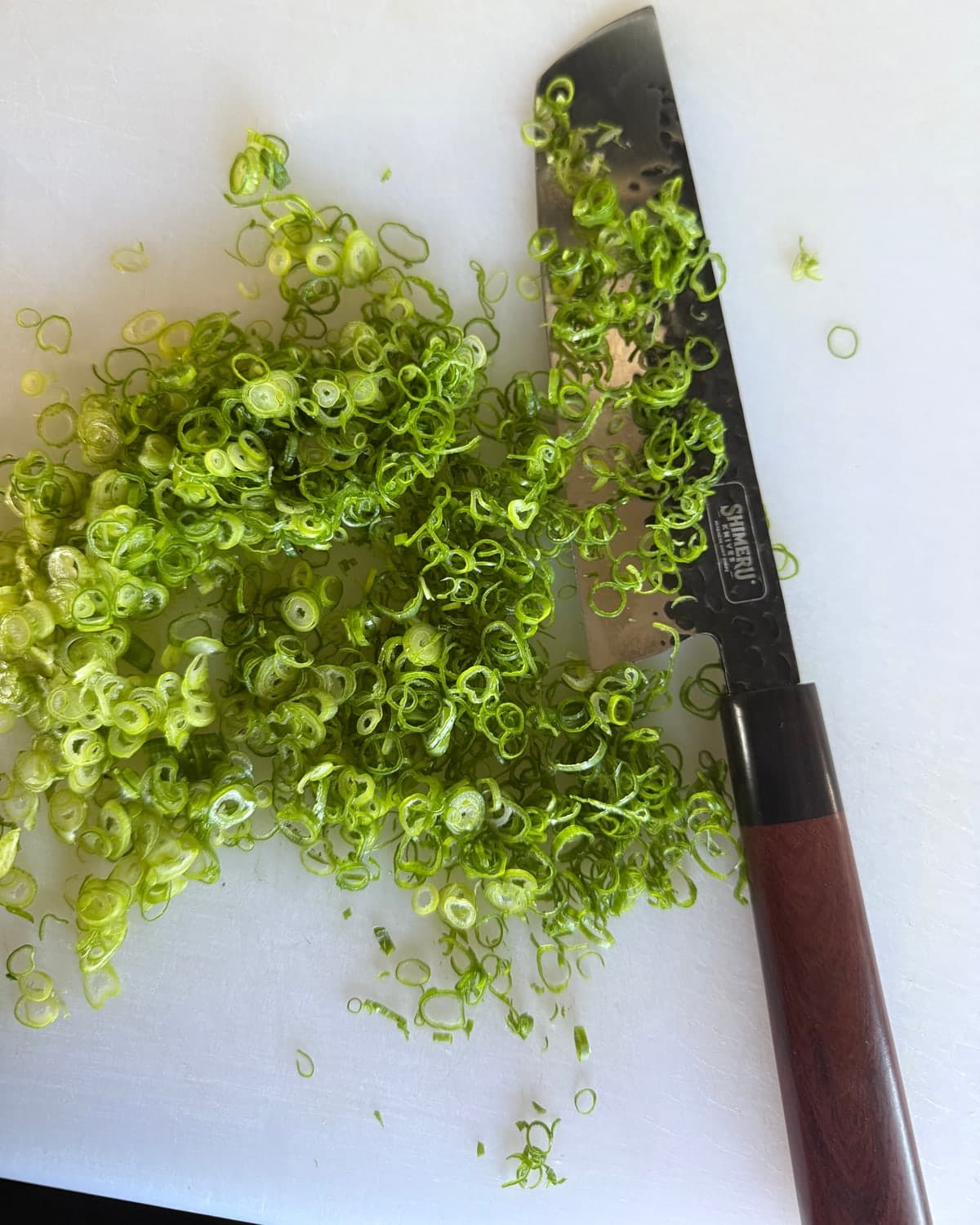
For vegetables, both perform beautifully, but in different ways. A santoku often feels especially good for repetitive prep: cucumbers, onions, peppers, carrots, mushrooms, herbs. Its flat profile gives you crisp, decisive cuts. A gyuto handles those tasks just as well, but comes into its own when the produce gets larger or the volume increases.
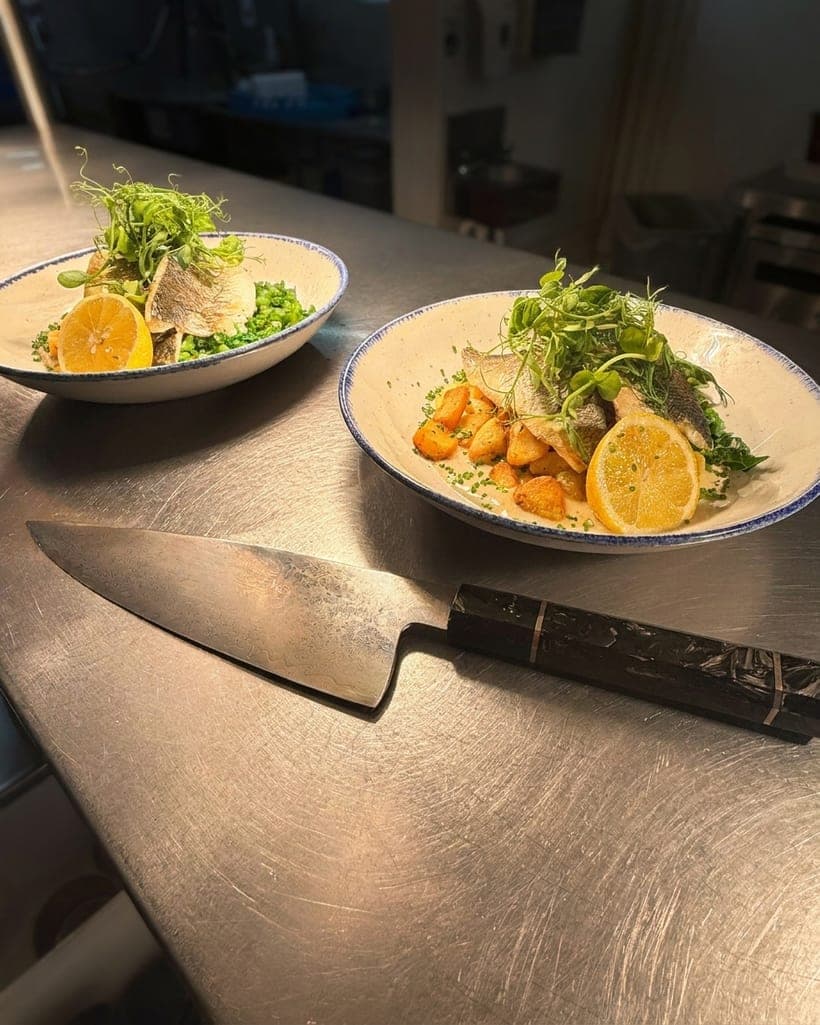
For meat and fish, the gyuto usually has the edge in versatility. The pointed tip helps with trimming and portioning, and the longer blade improves slicing. If you break down chicken breasts, trim silver skin, or slice cooked proteins often, that extra precision is useful.
For an all-around home kitchen, either works. The deciding factor is less about whether the knife can do the job and more about which blade shape makes that job feel smoother.
Who should choose a gyuto?
Choose a gyuto if you want a true do-it-all knife with maximum range. It suits cooks who prep in larger volumes, want a pointed tip for precision, or already like the feel of a Western chef’s knife but want something lighter, sharper, and more refined.
It is also a strong choice if this is your main knife investment and you want room to grow. A well-made gyuto can carry you from basic meal prep to more ambitious cooking without feeling limiting.
Who should choose a santoku?
Choose a santoku if you want everyday ease. It suits cooks who value control, use a push-cutting style, and prefer a knife that feels compact without feeling small. It is often the right fit for weeknight cooking, smaller kitchens, and anyone buying their first serious Japanese knife.
It also makes an excellent gift because it tends to feel accessible right away. Premium performance matters, but so does immediate comfort. The santoku offers both.
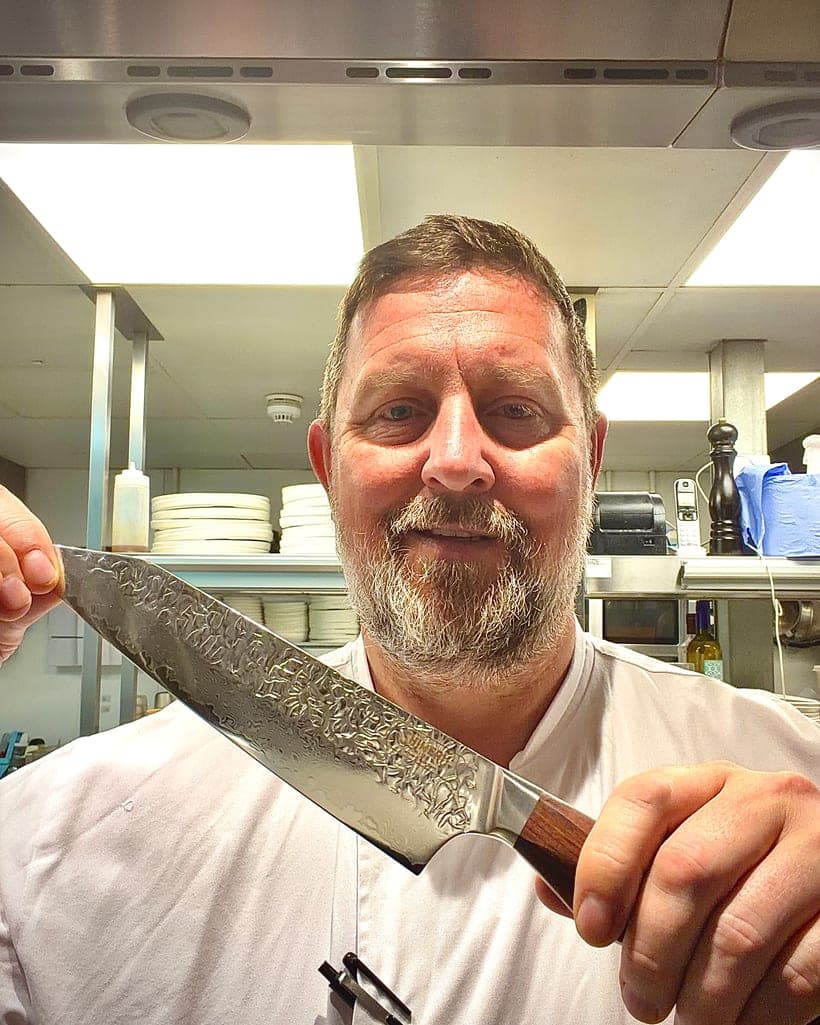
At Shimeru Knives, this is how we think about the category: not as a hierarchy, but as fit. Precision. Balance. Craft. The right blade is the one that turns prep from a chore into part of the pleasure.
The better question than gyuto vs santoku
If you are still torn, ask yourself two simple things. First, what do you cook most often? Second, how do you naturally cut? If your meals involve lots of vegetables and you like compact control, a santoku will likely feel right. If you want greater versatility, longer slices, and a more familiar chef’s knife profile, the gyuto is probably your knife.
A good Japanese blade should not feel intimidating. It should feel clear. The moment it lands on the board, you should sense the difference in balance, sharpness, and ease. Start there, trust your cooking habits, and the right choice becomes much simpler.